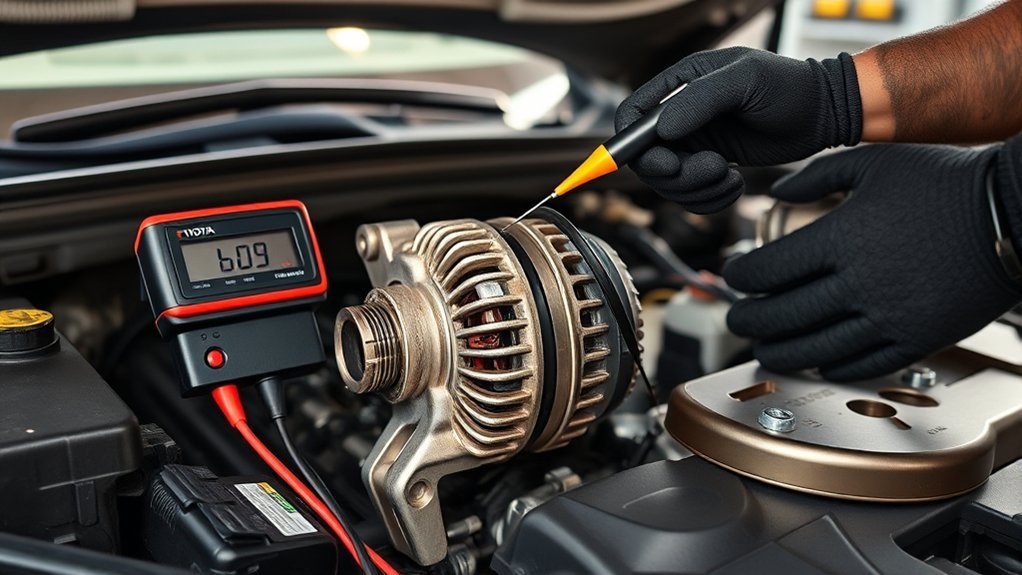
If your Toyota Camry’s alternator is not charging, treat it as a charging-system problem, not just a battery problem. Common signs include a battery warning light, dim headlights, slow cranking, repeated dead batteries, burning smells, whining noises, or stalling after the battery runs low. You can do a basic check with a digital multimeter, but avoid old shortcut tests that involve disconnecting the battery while the engine runs.
Last updated: July 4, 2026
Quick Answer
A Toyota Camry alternator may not be charging because of a weak alternator, loose or damaged drive belt, corroded battery terminals, bad ground, blown charging fuse or fusible link, damaged wiring, or a failing battery. Check resting battery voltage, running voltage, belt condition, terminals, grounds, and fuses before replacing parts.
Key Takeaways
- A healthy resting 12-volt battery often reads about 12.6 volts, while running charging voltage is commonly in the mid-13s to mid-14s.
- Do not disconnect the battery cable while the engine is running. Use a multimeter or professional charging-system tester instead.
- A low running-voltage reading can point to the alternator, belt, fuse, wiring, ground, or battery.
- Hybrid Camry models require extra caution. Never touch orange high-voltage cables or hybrid components.
At a Glance
| Time Required | 15 to 30 minutes for basic checks; longer if you trace wiring or parasitic draw |
| Difficulty | Beginner for voltage checks; intermediate for fuse, ground, and wiring diagnosis |
| Tools Needed | Digital multimeter, safety glasses, gloves, flashlight, battery terminal brush, and optional OBD2 scanner |
| Cost | Basic DIY testing is free if you already own a meter; shop diagnosis varies by location |
Warning: Do not disconnect a battery cable while the engine is running. Also keep hands, tools, jewelry, and loose clothing away from belts and pulleys. If your Camry is a hybrid, do not touch orange high-voltage cables or hybrid components. Stop and schedule professional service if you see smoke, melted wiring, a burning smell, or repeated stalling.
Identifying Symptoms of Alternator Failure in Your Toyota Camry
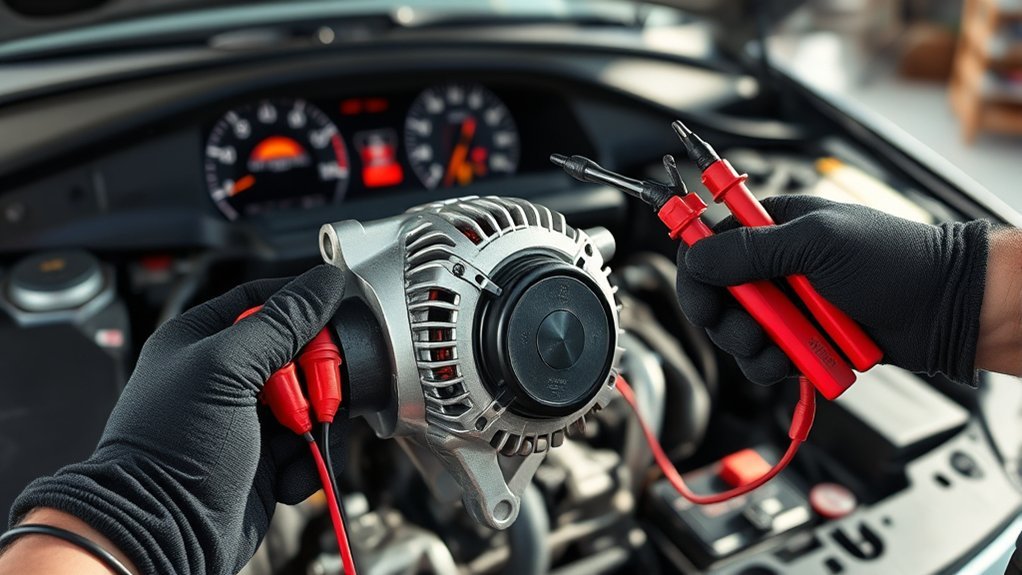
Start with the symptoms because they often tell you whether the issue is a weak battery, a charging fault, or a loose electrical connection. The biggest clue is the battery warning light. On most vehicles, that light points to a charging-system problem, not always a bad battery by itself. Toyota also recommends checking your vehicle’s warning-light information and model-specific Owner’s Manual when a dashboard warning appears.
Other signs include dim or flickering headlights, slow power windows, weak blower speed, a radio that cuts out, or warning messages that appear together. If the Camry cranks slowly after sitting overnight, the battery may be weak or something may be draining it while parked. If the battery warning light appears while you are driving, the alternator, belt, wiring, fuse, or voltage-control circuit needs attention.
Listen near the alternator area with the hood open and the engine off first. A failing alternator bearing, worn belt, or pulley issue can cause whining, grinding, chirping, or squealing. A burnt-rubber smell may point to a slipping belt. A hot electrical smell can point to wiring or alternator damage.
Note: A battery light that stays on while driving can leave you with limited time before the car loses electrical power. Turn off nonessential loads such as heated seats, rear defogger, and extra accessories, then head to a safe place or a repair shop.
How to Diagnose Alternator Issues With Voltage Testing
A digital multimeter gives you a safe first look at your Camry’s charging system. Park on level ground, set the parking brake, turn off accessories, and keep the meter leads away from moving belts. If the battery case is swollen, leaking, frozen, or smells strongly of acid, do not test it yourself.
First, measure the battery with the engine off. Place the red meter lead on the positive battery terminal and the black lead on the negative terminal. A fully charged 12-volt battery often reads about 12.6 volts after the car has rested. A reading near 12.2 volts usually means the battery is only partly charged. A reading under 12 volts suggests a deeply discharged or failing battery.
Next, start the engine and measure voltage again at the battery posts. In many 12-volt charging systems, a normal running reading is commonly around 13.5 to 14.8 volts. Your exact reading can vary with temperature, battery state, electrical load, and model year. If the reading stays around the same as the engine-off voltage, the alternator may not be charging. If it climbs too high, the voltage-regulation system may need diagnosis.
| Test Result | What It May Mean | Next Step |
|---|---|---|
| About 12.6 volts with engine off | Battery is likely charged enough for basic testing | Start the engine and check charging voltage |
| Around 12 volts or lower with engine off | Battery is discharged or weak | Charge and load-test the battery before blaming the alternator |
| About 13.5 to 14.8 volts with engine running | Charging system is likely working during this basic test | Check for parasitic draw if the battery dies while parked |
| Running voltage stays near 12 volts | Alternator output may not be reaching the battery | Inspect belt, fuses, fusible link, wiring, terminals, and grounds |
| Charging voltage is unusually high | Possible voltage-regulation fault | Stop driving if warning lights or electrical symptoms appear |
Pro Tip: Measure voltage directly on the battery posts first, then on the cable clamps. If the post reading and clamp reading differ, corrosion or a loose terminal may be blocking current flow.
Understanding How Your Camry’s Battery and Alternator Work Together
Your Camry’s battery provides the high current needed to start the engine. Once the engine runs, the alternator supplies electrical power and recharges the battery. The battery also acts as a stabilizer for the 12-volt system, helping smooth electrical demand from lights, computers, fans, and accessories.
Battery Functionality Overview
The battery can cause symptoms that look like alternator failure. A weak battery may accept a charge at first, then drop quickly after sitting. Loose or corroded terminals can also stop current from flowing even when the alternator works. Before replacing the alternator, inspect these items:
- Battery terminals: Look for white, green, or blue corrosion and loose clamps.
- Battery age and condition: A weak battery can overload the charging system.
- Ground cable: Check the negative cable from the battery to the body and engine ground points.
- Battery hold-down: A loose battery can vibrate and damage terminals or internal plates.
Alternator Operation Explained
The alternator converts engine rotation into electrical power. A belt turns the alternator pulley, internal windings create current, and rectifier diodes convert that current to DC power for the vehicle. A voltage regulator or vehicle control module manages output so the system does not undercharge or overcharge the battery.
If the alternator fails, your Camry may keep running briefly on battery power. Once battery voltage drops far enough, the engine computer, ignition system, fuel system, lights, and accessories can shut down. That is why a battery warning light while driving deserves quick attention.
Step-by-Step Troubleshooting for Charging Problems
Use this sequence before replacing the alternator. It helps you avoid replacing a good alternator when the real fault is a belt, terminal, fuse, or ground connection.
Check Voltage Readings
- Measure resting battery voltage with the engine off.
- Start the engine and measure voltage at the battery posts.
- Turn on headlights, blower fan, and rear defogger for a light load test.
- Watch whether voltage remains in a normal charging range or falls toward battery-only voltage.
- Do not remove either battery cable while the engine is running.
Inspect the Drive Belt and Pulley
A good alternator cannot charge if the belt slips or the pulley does not spin correctly. With the engine off, inspect the belt for cracks, glazing, missing ribs, fraying, or contamination from oil or coolant. Check whether the belt tensioner appears weak or noisy. If you heard squealing before the battery light came on, the belt system may be the cause.
Inspect Wiring Connections
Inspect the wiring between the alternator, battery, fuse box, and grounds. Look for loose connectors, damaged insulation, green corrosion, heat marks, or melted plastic near the alternator output wire. Check the battery terminals and main ground points. A poor ground can mimic alternator failure because current cannot return through the circuit properly.
Use a voltage-drop test if you know how to do it safely. With the engine running, a high voltage drop on the positive charging wire or ground side can point to resistance in the cable, connection, fuse, or ground path. If you are not comfortable with this test, ask a shop to test the charging circuit under load.
Check Fuses and Fusible Links
A blown charging-system fuse or fusible link can stop alternator output from reaching the battery. Check your model-year fuse-box diagram in the Owner’s Manual or fuse-cover label. Do not replace a blown high-amperage fuse with a larger one. If it blows again, the circuit may have a short that needs professional diagnosis.
Test for Parasitic Draws
If the alternator charges normally while the engine runs but the battery dies after the car sits, test for a parasitic draw. Start by checking simple causes: dome lights, trunk lights, glove-box lights, aftermarket alarms, dash cameras, phone chargers, and accessories plugged into power outlets.
For a draw test, the vehicle must be off, doors closed, and modules allowed to go to sleep. A technician can connect an ammeter in series with the battery or use an inductive current clamp. If the draw is too high after the sleep period, pull fuses one at a time to find the circuit. Because modern vehicles have many control modules, do this carefully so you do not wake modules and confuse the test.
When to Replace Your Alternator
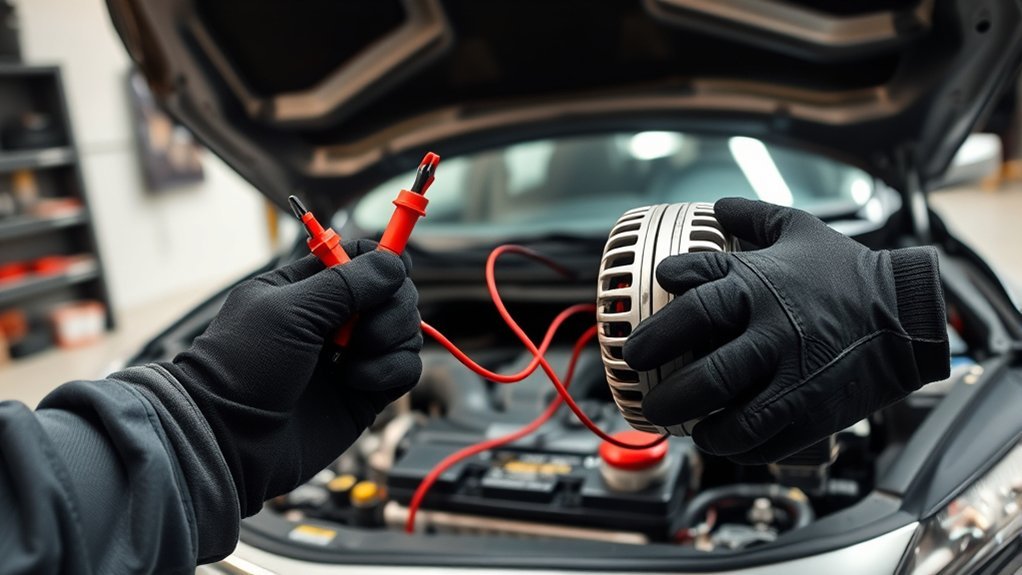
Replace the alternator only after you confirm that power, ground, belt drive, fuses, and the battery are not the real cause. A failed alternator often shows more than one symptom at the same time.
| Symptom | What It Suggests | Action Needed |
|---|---|---|
| Battery warning light stays on | Charging system is not meeting demand | Test voltage and inspect belt, wiring, fuses, and grounds |
| Running voltage stays near battery voltage | Alternator output may not be reaching the battery | Check circuit before replacing the alternator |
| Whining, grinding, or burning smell | Possible bearing, pulley, belt, or internal alternator issue | Stop driving if the smell is strong or wiring looks damaged |
| Battery tests good but keeps dying while driving | Likely charging-system fault | Have the alternator load-tested |
You may also need a battery replacement if the battery fails a load test, is old and weak, or has been deeply discharged many times. A bad battery can strain a new alternator, so testing both parts together is the safest path.
Why You Should Get a Professional Inspection for Electrical Problems
Basic voltage checks can tell you whether the system looks healthy, but they cannot always prove the root cause. A repair shop can test alternator output under load, check diode ripple, confirm battery health, inspect scan-tool data, and trace voltage drops through the charging circuit.
Get professional help if the battery light stays on, the Camry stalls, the alternator smells hot, the belt is damaged, the battery keeps dying, or you find melted wiring. You should also schedule service if your Camry is a hybrid and the issue may involve hybrid-system warnings. Toyota’s manuals and warranty resources are the right starting point for model-specific warning-light and maintenance information.
- Load testing: Confirms whether the alternator can supply current, not just voltage.
- Ripple testing: Helps identify bad alternator diodes.
- Voltage-drop testing: Finds resistance in cables, grounds, fuses, and connectors.
- Scan-tool checks: Help with late-model charging strategies and stored electrical codes.
How to Maintain Your Toyota Camry’s Charging System for Longevity
Good maintenance reduces the chance of repeat charging problems. Keep the battery terminals clean and tight, and repair corrosion before it spreads into the cables. Make sure the battery is secured in its tray because vibration can damage internal battery plates and loosen connections.
Inspect the belt during oil changes or before long trips. Replace a cracked, glazed, oil-soaked, or noisy belt. Check for coolant or oil leaks near the belt path because contamination can make the belt slip and reduce alternator output.
Limit unnecessary electrical loads when the engine is off. Dash cameras, phone chargers, lights, inverters, and aftermarket electronics can drain the battery if they stay powered. If you do not drive often, use a quality maintenance charger that matches your battery type, or have the battery tested before extreme heat or cold.
A new alternator will not solve a charging problem if the real fault is a weak battery, corroded terminal, blown fusible link, loose belt, or bad ground.
Frequently Asked Questions
How do you know if a Toyota Camry alternator is not charging?
Check the battery warning light, dim headlights, weak accessories, slow cranking, stalling, and battery voltage. If resting voltage is near 12.6 volts but running voltage does not rise into a normal charging range, the alternator output may not be reaching the battery.
What are two common symptoms of a failing alternator?
Two common symptoms are a battery warning light that stays on while driving and dim or flickering lights. You may also notice slow power windows, warning messages, whining noises, or a battery that dies even after being charged.
Can a blown fuse cause the alternator to not charge the battery?
Yes. A blown charging fuse, fusible link, or damaged main charging wire can stop alternator output from reaching the battery. Check the fuse diagram for your Camry’s model year and never replace a blown high-amperage fuse with a larger one.
What could be draining my battery if it is not the alternator?
A parked battery drain can come from a glove-box light, trunk light, dome light, aftermarket alarm, dash camera, stuck relay, module that will not sleep, corroded wiring, or an accessory left plugged in. If charging voltage is normal, test for parasitic draw after the vehicle modules go to sleep.
Should I replace the battery or alternator first?
Test both before buying parts. A weak battery can make the alternator work harder, and a weak alternator can leave a good battery discharged. Charge and load-test the battery, then test alternator output under load.
Can I drive my Camry with the battery light on?
Only drive far enough to reach a safe place if the car still runs normally. Turn off nonessential electrical loads and avoid restarting the engine unnecessarily. If the car stalls, smells hot, shows multiple warning lights, or loses electrical power, stop and arrange service or towing.
Conclusion
A Toyota Camry alternator that is not charging needs a careful, step-by-step diagnosis. Start with the battery warning light and symptoms, then check resting voltage, running voltage, terminals, belt condition, grounds, fuses, fusible links, and wiring. Never use the old battery-cable disconnect test on a modern Camry.
If your voltage readings stay low while the engine runs, or if you see smoke, melted wiring, repeated stalling, or hybrid-system warnings, stop troubleshooting and get professional service. A safe diagnosis protects the battery, alternator, wiring, and vehicle electronics while helping you avoid unnecessary parts replacement.
Sources
- Toyota Owners: Warning Lights: supports checking Toyota warning-light guidance and consulting the Owner’s Manual.
- Toyota Owners: Camry Manuals and Warranties: supports using model-specific Toyota owner information.
- eCFR 49 CFR 571.101: Controls and Displays: supports the role of vehicle telltales and indicators.
- Toyota Owners Resources: supports service, manual, and owner-resource direction for Toyota vehicles.
