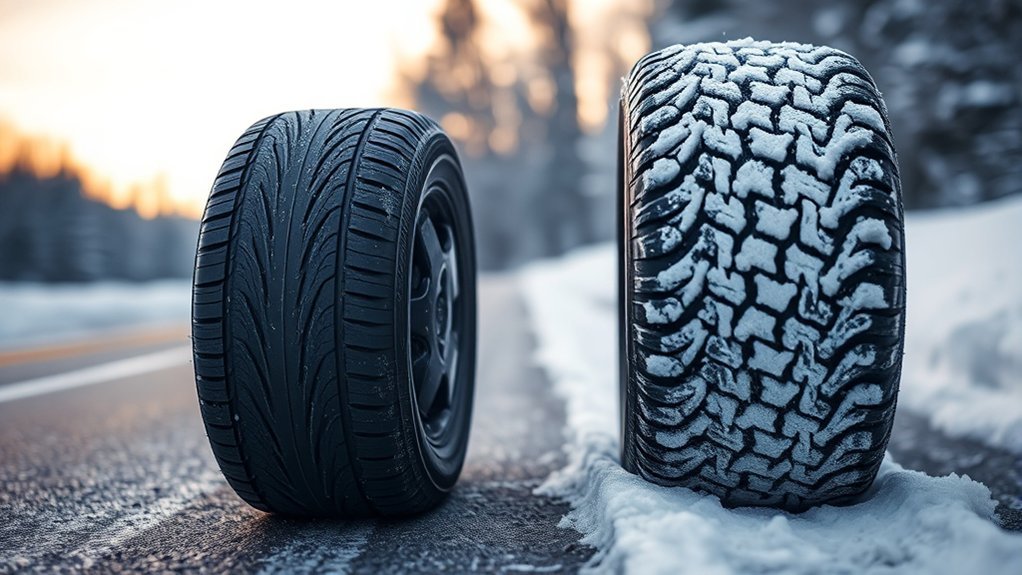
All-season and winter tires can both be safe choices, but they are designed for different conditions. Standard all-season tires balance dry-road comfort, wet traction, tread life, and limited light-snow capability. Winter tires focus more heavily on grip, braking, and steering control in sustained cold, snow, slush, and ice.
Your best choice depends on how cold your winters become, how often snow or ice covers the roads, and whether you can store a second set of tires. Understanding tire compounds, tread patterns, sidewall markings, and installation requirements will help you choose without relying on marketing labels alone.
Quick Answer
Winter tires provide better traction than standard all-season tires when temperatures stay near or below 45°F (7°C), especially on snow and ice. All-season tires remain practical for mild climates with little winter weather. Choose by your actual conditions, look for the 3PMSF symbol, and install matching tires on all four wheels.
Key Takeaways
- Winter tires usually provide the strongest braking, cornering, and starting grip in sustained cold, snow, and ice.
- Standard all-season tires suit moderate climates and occasional light snow, but they are not optimized for severe winter roads.
- The three-peak mountain snowflake, or 3PMSF, symbol confirms that a tire meets a defined severe-snow traction requirement.
- Install winter tires as a matching set of four to avoid an unstable difference in grip between the front and rear axles.
- Check pressure, tread depth, tire size, load index, and local winter-tire laws before the season begins.
All-Season vs. Winter Tires at a Glance
| Feature | Standard All-Season Tires | Winter Tires |
| Best conditions | Dry and wet roads, moderate temperatures, and occasional light snow | Sustained cold, packed snow, loose snow, slush, and ice |
| Cold-weather grip | Varies by model and generally declines as temperatures remain low | Compound is designed to remain flexible in low temperatures |
| Snow and ice | Limited performance, especially if the tire lacks a 3PMSF rating | More biting edges and snow-focused tread provide better control |
| Warm-weather use | Designed for year-round use in suitable climates | Can wear faster and feel less precise on sustained warm roads |
| Convenience | No seasonal change for drivers in mild climates | Requires seasonal installation and storage in most regions |
| Typical buyer | Driver who rarely encounters deep snow or prolonged freezing weather | Driver who regularly faces cold, untreated roads, snow, or ice |
All-Season Tire Features and Limitations
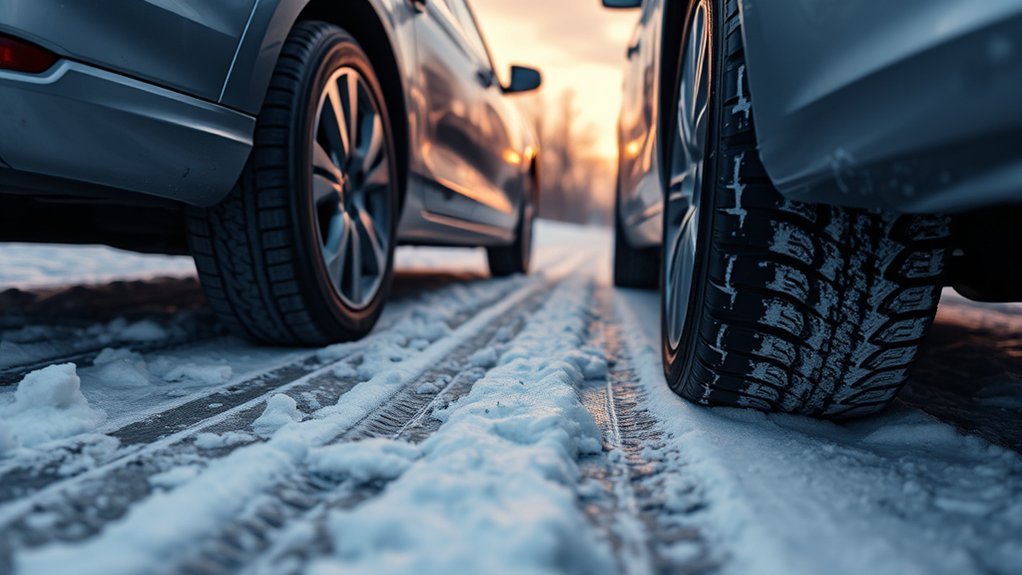
All-season tires are designed to provide balanced performance across a wide range of everyday conditions. They normally offer predictable handling on dry pavement, useful wet-road traction, relatively quiet operation, and longer tread life than a soft winter-focused compound.
They can also handle occasional light snow when they have adequate tread depth. However, the term “all-season” does not mean that every tire is suitable for deep snow, polished ice, mountain roads, or long periods of freezing weather.
Where All-Season Tires Perform Well
- Dry and wet commuting in moderate temperatures
- Areas with short, mild winters
- Occasional light snowfall on roads that are cleared quickly
- Drivers who prioritize tread life, quiet operation, and year-round convenience
- Vehicles that are not routinely driven on untreated winter roads
Where All-Season Tires Fall Short
As temperatures remain low, many standard all-season compounds lose some flexibility. That reduces the tire’s ability to conform to small surface changes and generate grip. Shallow or closely spaced tread blocks may also have less ability to bite into snow or clear heavy slush.
The exact change varies by tire model, so 45°F should be treated as a planning guideline rather than a point at which every all-season tire suddenly becomes unsafe. Still, Transport Canada advises that all-season and summer tires begin losing elasticity below 7°C, or about 45°F.
“All-season” describes a compromise across several conditions. It does not guarantee severe-snow or ice performance.
What Makes Winter Tires Different?
Winter tires combine a cold-focused rubber compound with tread features intended to create more usable grip on low-friction surfaces. Their advantages are most noticeable during braking and steering, where a small increase in available grip can make a major difference.
Flexible Cold-Weather Compound
Winter-tire compounds are designed to stay more flexible in cold conditions. This helps the tread maintain contact with uneven pavement, packed snow, and icy surfaces. Standard all-season compounds may become less compliant as temperatures fall, although the size of that change depends on the specific tire.
Different manufacturers use different blends, fillers, and surface technologies. No single compound design represents every winter tire, so performance should be judged by the complete tire and reliable comparison testing rather than one branded feature.
Deeper Tread Channels and More Sipes
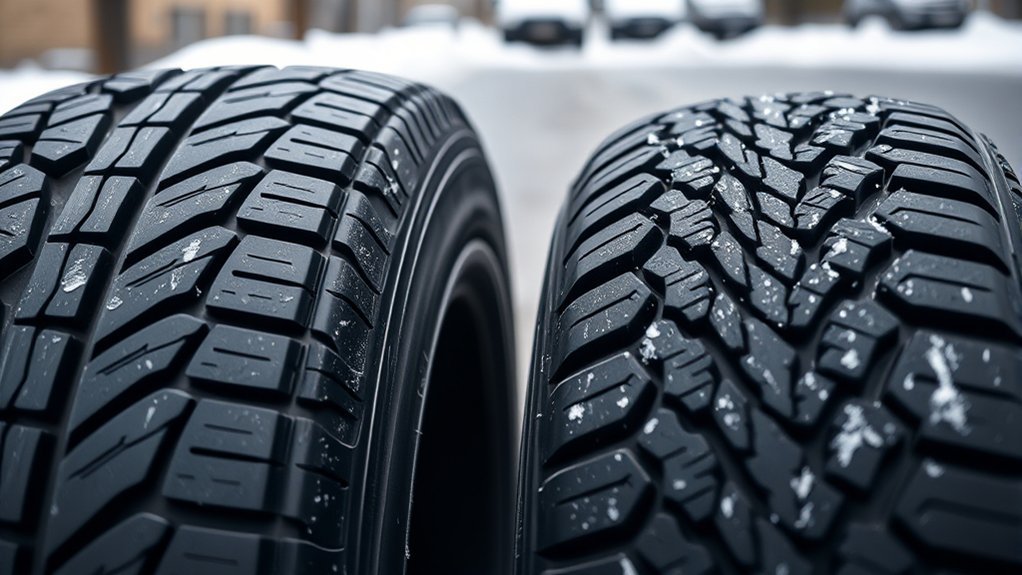
Winter tires generally use deeper channels, larger voids, and many small cuts called sipes. These features serve different purposes:
- Main grooves move water and slush away from the contact area.
- Open tread spaces help the tire work through loose snow.
- Sipes create additional biting edges on packed snow and ice.
- Flexible tread blocks help the tire conform to slippery surfaces.
Tread design is also one reason winter tires may feel less crisp on warm, dry pavement. More tread movement can reduce steering precision compared with a tire optimized for warm roads.
Traction, Braking, and Handling Comparison
Traction on Snow and Slush
Winter tires normally provide better starting and climbing traction in snow because their tread can engage the surface more effectively. Deeper channels also give slush and loose snow somewhere to move instead of allowing it to remain trapped under the contact patch.
All-season tires may work adequately in light snow, especially when new, but their advantage decreases as snow deepens or tread wears. A vehicle with powerful acceleration or AWD may still move forward, but that does not mean it will stop or turn well.
Braking on Snow and Ice
Controlled comparisons consistently show that a suitable winter tire can stop sooner than a standard all-season tire on snow or ice. However, no single percentage applies to every test. Speed, temperature, surface condition, tread depth, tire model, and the vehicle’s braking system all affect the result.
The safest conclusion is that winter tires can provide a meaningful braking advantage in severe winter conditions. That advantage does not make ice predictable or eliminate the need to reduce speed and increase following distance.
Warning: Winter tires increase the grip available to your vehicle, but they cannot make a snow-covered or icy road behave like dry pavement. Slow down, leave extra stopping space, and avoid abrupt steering, braking, or acceleration.
Handling on Cold Dry and Wet Roads
Winter tires can also improve cold-road control when no snow is present because their compounds remain more flexible. On warmer dry roads, however, that flexibility can increase tread movement and wear.
Wet performance depends on the individual design. Wide grooves and adequate tread depth help move water, while the compound influences how well the rubber grips the pavement. A winter label by itself does not guarantee the best wet-road braking, so compare the exact models you are considering.
How Temperature Affects Tire Performance
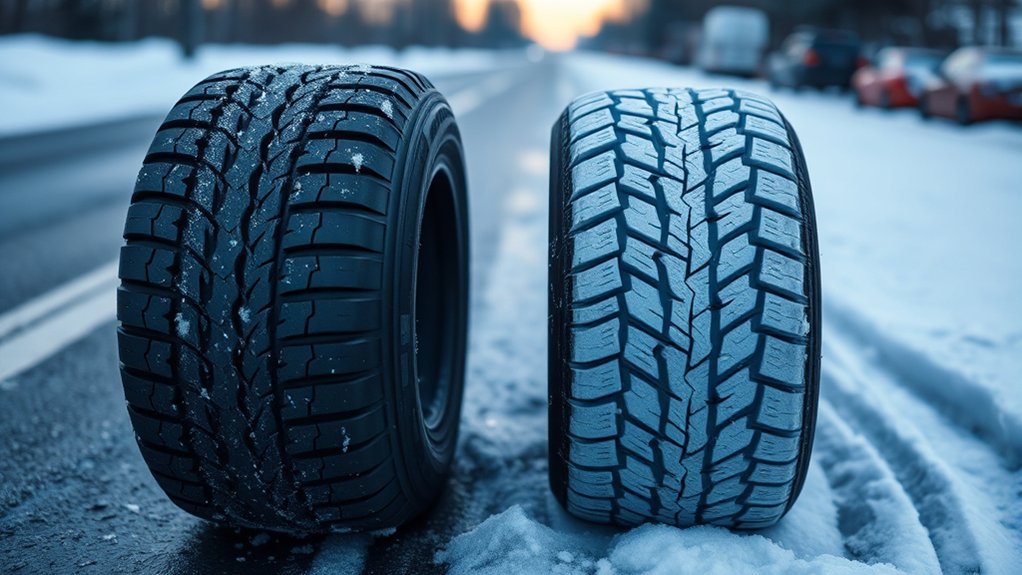
Temperature affects both rubber flexibility and tire pressure. A compound intended for warm conditions can become less compliant in sustained cold, while a winter compound is formulated to remain useful at lower temperatures.
Air pressure also falls as the weather becomes colder. A tire that was correctly inflated during warm weather may become underinflated after a sharp temperature drop. Underinflation can increase heat buildup, reduce steering response, and cause uneven wear.
Pro Tip: Check pressure when the tires are cold and use the pressure printed on the vehicle’s driver-door placard or listed in the owner’s manual. Do not use the maximum pressure molded into the tire sidewall as your normal inflation target.
How to Identify a Tire Designed for Winter Conditions
Three-Peak Mountain Snowflake Symbol
The three-peak mountain snowflake symbol, commonly shortened to 3PMSF, shows that a tire has met a defined snow-traction performance requirement. Transport Canada recommends looking for this symbol when shopping for tires intended for severe-snow conditions.
The symbol can appear on dedicated winter tires and on some all-weather or all-season products. It confirms a minimum snow-performance test, but it does not mean every 3PMSF tire performs equally well on ice, wet pavement, or deep snow.
M+S or Mud-and-Snow Marking
M+S, M/S, or Mud and Snow markings generally describe a tread pattern with certain spacing characteristics. The marking alone does not provide the same performance-based assurance as the 3PMSF symbol.
If severe winter traction is important, do not assume that an M+S marking by itself makes a tire equivalent to a dedicated winter tire.
Where All-Weather Tires Fit
All-weather tires are year-round tires that usually carry the 3PMSF symbol. They can be a useful middle-ground choice for drivers who face regular cold and moderate snow but cannot store a second set of wheels.
They still involve compromises. A strong dedicated winter tire normally remains the better choice for frequent ice, deep snow, steep untreated roads, or long periods of severe cold. An all-weather tire may also give up some warm-weather comfort, tread life, or handling compared with a standard all-season tire.
Note: Tire-category names are not applied consistently by every seller. Confirm the actual sidewall markings, size, load index, speed rating, and manufacturer specifications before buying.
When Are Winter Tires Worth Installing?
Winter tires are usually the safer choice when one or more of the following applies:
- Temperatures stay near or below 45°F for much of the season.
- You regularly drive before roads have been plowed or treated.
- Your area receives frequent snow, freezing rain, or black ice.
- Your route includes steep hills, mountain passes, rural roads, or shaded roads that remain icy.
- You cannot postpone travel during winter storms.
- You need dependable braking and steering in cold weather rather than only enough traction to start moving.
Standard all-season tires may remain suitable when winters are mild, freezing weather is brief, and snow is rare or roads are cleared quickly. A 3PMSF-rated all-weather tire can provide another option when conditions fall between those two extremes.
Does AWD or 4WD Replace Winter Tires?
No. AWD and 4WD can distribute engine power across more wheels, which often helps a vehicle start moving or climb a slippery hill. They do not create extra tire-to-road friction during emergency braking or most cornering situations.
Every vehicle depends on its four tire contact patches to accelerate, turn, and stop. An AWD vehicle on unsuitable tires may accelerate confidently and then take much longer than expected to stop.
Installing and Switching Winter Tires Safely
Install a Matching Set of Four
Transport Canada recommends installing winter tires in sets of four. Matching tires help keep braking, steering, and cornering behavior balanced between the front and rear axles.
Installing winter tires only on the drive wheels can create an unsafe grip imbalance. Extra front grip with weak rear grip can encourage the rear of the vehicle to rotate. Extra rear grip with weak front grip can reduce steering response and increase understeer.
Warning: Do not intentionally mix winter and standard all-season tires on the same vehicle unless the vehicle or tire manufacturer specifically approves the combination. Use matching size, construction, load capacity, and similar tread depth on all four positions.
When to Install Them
Do not wait until the vehicle is already stuck in the first storm. Arrange installation when daily temperatures begin staying near or below 45°F and before regular snow or ice arrives.
Remove winter tires after temperatures remain consistently warmer and the risk of winter weather has passed. Keeping them on during sustained warm weather can speed tread wear and reduce warm-road steering precision.
Seasonal Storage
Before storage, clean and dry the tires, mark their previous wheel positions, and inspect them for damage. Store them in a cool, dry area away from direct sunlight, ozone-producing equipment, petroleum products, and high heat.
Tires mounted on wheels can usually be stacked or hung securely. Unmounted tires are normally stored upright and rotated periodically. Follow the tire manufacturer’s storage guidance if it differs.
How to Maintain Tires for Winter Performance
Check Cold Tire Pressure
NHTSA recommends checking every tire at least once a month while the tires are cold. “Cold” generally means the vehicle has been parked for at least three hours.
Use the vehicle manufacturer’s recommended pressure from the door placard or owner’s manual. The number molded into the tire sidewall is a maximum tire rating, not the correct everyday pressure for your vehicle.
Monitor Tread Depth Before Snow Arrives
NHTSA identifies 2/32 inch as the point at which a tire is worn out and should be replaced. That minimum does not guarantee useful snow traction.
Transport Canada advises against using tires worn close to 4 mm, or about 5/32 inch, on snow-covered roads. Deeper tread gives the tire more room to engage snow and clear slush.
Rotation, Alignment, and Damage Checks
- Follow the rotation interval and pattern in your owner’s manual.
- If the manufacturer recommends rotation but gives no interval, NHTSA lists 5,000 to 8,000 miles as a general range.
- Check for cuts, punctures, bulges, cracking, exposed cords, or uneven wear.
- Have the alignment inspected if the vehicle pulls, the steering wheel sits off-center, or tread wears unevenly.
- Confirm that directional tires rotate in the correct direction.
- Check the manufacture date and follow age-related replacement guidance from the vehicle and tire manufacturers.
Choosing the Right Tire for Your Driving Conditions
Use your actual winter exposure rather than the tire’s marketing name:
- Choose standard all-season tires when winters are mild, snowfall is rare, and you can avoid driving during severe weather.
- Consider 3PMSF-rated all-weather tires when you need one year-round set and encounter regular cold with moderate snow.
- Choose dedicated winter tires when snow, ice, prolonged cold, steep roads, or mandatory winter travel are common.
Also verify the correct tire size, load index, speed rating, and approved specifications for your vehicle. Check your owner’s manual and the driver-door label, and ask a qualified tire professional when the vehicle uses staggered sizes, run-flat tires, unusual load requirements, or manufacturer-specific tire approvals.
Finally, check local laws before buying studded tires or traveling through regions with seasonal tire and chain requirements. Rules can vary by state, province, road, and date.
Related Guides
Frequently Asked Questions
Do winter tires provide better traction than all-season tires?
Yes, in sustained cold, snow, and ice, a suitable winter tire normally provides better starting, braking, and cornering traction than a standard all-season tire. The size of the improvement varies by tire model, tread depth, temperature, road surface, and vehicle.
Are traction tires the same as all-season tires?
Not necessarily. “Traction tire” is an informal or legal term that may refer to winter tires, 3PMSF-rated all-weather tires, studded tires, chains, or other approved traction devices. Check the definition used by the road authority in the area where you are driving.
Do snow tires have more traction on ice?
Winter or snow tires generally provide more ice traction than standard all-season tires because of their cold-flexible compounds and dense siping. Ice remains extremely slippery, and performance varies widely among winter-tire models, so slower speeds are still essential.
How can you tell a winter tire from an all-season tire?
Check the sidewall for the three-peak mountain snowflake symbol. Winter tires also tend to have many small sipes, open tread channels, and a winter-focused model description. An M+S marking alone is not the same as a severe-snow performance certification.
Are all-weather tires the same as all-season tires?
All-weather tires are a year-round category that usually carries the 3PMSF symbol. Standard all-season tires may not have that rating. All-weather tires provide stronger snow capability than many standard all-season tires but may not equal a dedicated winter tire in severe snow or ice.
Do AWD vehicles still need winter tires?
AWD can help a vehicle accelerate, but it does not replace the tire grip needed for braking and cornering. If you regularly drive in snow, ice, or sustained cold, winter tires can benefit an AWD vehicle just as they benefit a two-wheel-drive vehicle.
Can you install only two winter tires?
A matching set of four is recommended. Using only two can create a large front-to-rear traction imbalance during braking or cornering. If an emergency replacement leaves two tires with better tread, industry guidance commonly places the better pair on the rear axle to support directional stability, but this is not a substitute for four matching winter tires.
Conclusion
Standard all-season tires provide convenient year-round performance for moderate climates, but they cannot match a good winter tire in sustained cold, snow, and ice. Winter tires use cold-focused compounds, snow-clearing tread channels, and additional biting edges to improve acceleration, braking, and steering control.
Choose standard all-season tires for mild winters, consider 3PMSF-rated all-weather tires when you need one year-round set, and use dedicated winter tires when severe conditions are common. Whichever category you choose, install compatible tires on all four wheels, maintain the correct cold pressure, monitor tread depth, and adjust your speed to the road.
Sources
- National Highway Traffic Safety Administration: TireWise — tire selection, pressure, tread depth, rotation, aging, and maintenance guidance.
- National Highway Traffic Safety Administration: Winter Weather Driving Tips — cold-weather pressure checks, winter inspections, and safe-driving guidance.
- Transport Canada: Using Winter Tires — 3PMSF identification, cold-temperature performance, four-tire installation, pressure, and winter tread-depth guidance.
- Associated Press and Edmunds: Why You Need Winter Tires — practical comparison of all-season and winter-tire performance and seasonal use.
