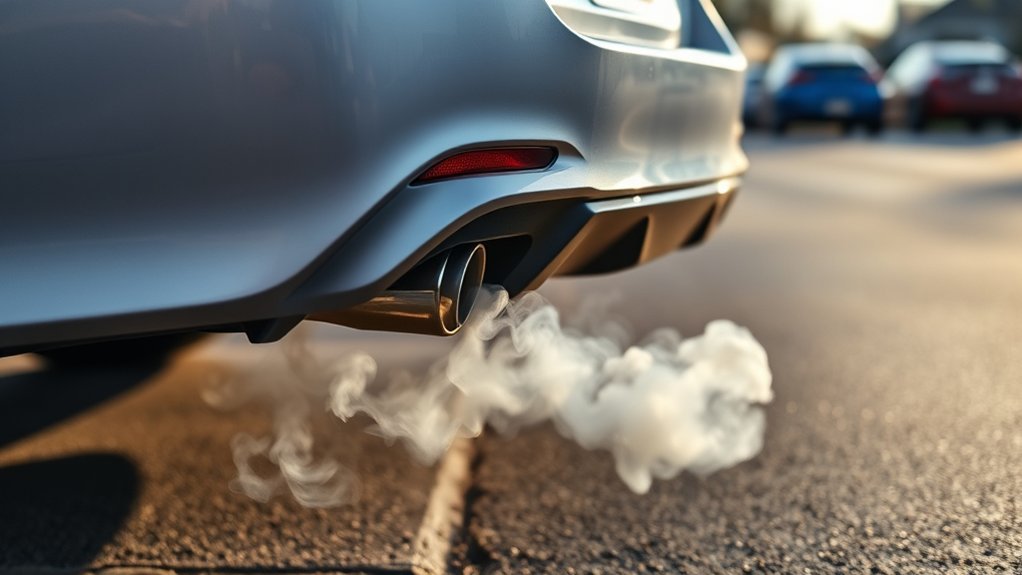
Blue smoke from a Toyota Camry’s exhaust usually means the engine is burning oil. A brief puff after startup often points toward valve-stem seals or oil that collected in the intake, while smoke under acceleration or load raises more concern about oil-control rings, piston rings, cylinder wear, or excessive crankcase pressure. Check the oil level, warning lights, PCV system, and smoke pattern before approving internal engine work.
Last updated: September 19, 2026. Editorial basis: Toyota owner and service information, NHTSA-hosted Toyota service bulletins, API engine-oil guidance, and U.S. EPA emissions resources. This guide does not claim hands-on diagnosis of a specific Camry.
Quick Answer
A brief blue puff when your Camry starts often points toward oil leaking past valve-stem seals or oil collecting in the intake while the engine sits. Blue smoke during acceleration or under load can point toward stuck or worn oil-control rings, piston-ring or cylinder wear, or excessive crankcase pressure. Check the oil level, warning lights, PCV system, intake tract, and smoke pattern before approving an internal engine repair.
Key Takeaways
- Blue or blue-gray tailpipe smoke usually means the engine is burning oil.
- Smoke at startup, after idling, during acceleration, or continuously can point toward different causes.
- Start with the oil level, oil specification, external leaks, PCV system, intake tract, and diagnostic codes.
- A normal compression reading does not fully rule out stuck or worn oil-control rings.
- Certain older 2AZ-equipped Camrys have documented Toyota oil-consumption service history, so model year, engine code, and VIN matter.
- Stop driving if the oil-pressure warning stays on, the engine knocks or overheats, or oil loss is rapid.
At a Glance
| Time Required | Varies by the checks required; oil-level and visual checks are simpler than compression, leak-down, borescope, or crankcase-pressure testing |
| Difficulty | Basic oil and visual checks are easy; internal engine testing is advanced |
| Tools Needed | Owner’s manual, gloves, clean rag, flashlight, and optional OBD-II scanner; a shop may use compression, leak-down, borescope, and crankcase-pressure equipment |
| Cost | Basic checks may cost nothing; diagnosis and repairs vary widely by model year, engine, cause, and local labor rate |
What Does Blue Smoke Mean for Your Toyota Camry?
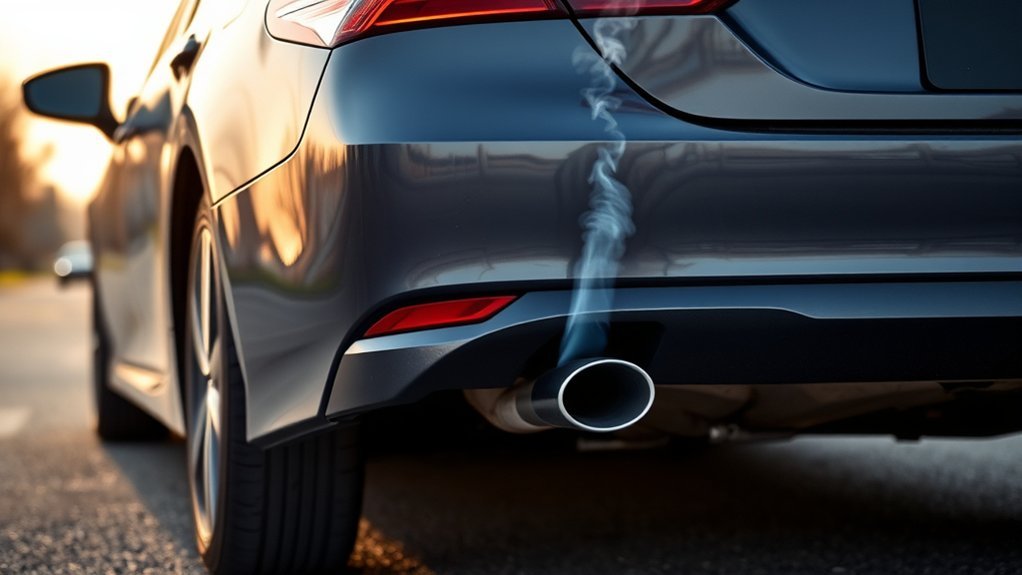
Blue or blue-gray smoke from the tailpipe generally means engine oil has reached the intake or combustion chamber and is burning. The smoke may look gray in bright light, so color alone is not enough to identify the failed part.
Valve-stem seals, valve guides, piston rings, cylinder walls, the PCV system, an overfilled crankcase, and oil collected in the intake can create similar symptoms. The timing of the smoke is often more useful than its exact shade.
Note: Confirm where the smoke starts. Blue smoke leaving the tailpipe points toward internal oil consumption. Smoke rising from under the hood may come from an external oil leak dripping onto a hot exhaust component.
Can You Drive a Camry That Is Blowing Blue Smoke?
Whether you should drive depends on the amount of smoke and the other symptoms. A small puff that appears only during startup may not require an immediate tow, but you should check the oil level and arrange a diagnosis soon.
Limit driving and inspect the car promptly if smoke continues after the engine warms, appears during acceleration, or comes with noticeable oil loss. Burning oil can foul spark plugs, increase emissions, and shorten the service life of oxygen sensors or the catalytic converter.
Toyota identifies a red low-engine-oil-pressure symbol as a condition requiring immediate attention. Check the warning-light information for your exact model and follow the instructions in its owner’s manual. You can use Toyota’s warning-light guide and manual portal to locate model-specific guidance.
Warning: Turn the engine off and arrange a tow if the red oil-pressure warning stays on, the engine knocks, the temperature enters the overheating range, the car misfires severely, oil is pouring from the engine, or dense smoke continues from the tailpipe. Continuing to run an engine without adequate lubrication can cause major damage.
What the Smoke Pattern Can Tell You
Observe when the smoke appears before anyone disassembles the engine. The pattern does not prove the cause, but it gives a technician a useful starting point.
| When Smoke Appears | Possible Explanation | Useful Next Check |
|---|---|---|
| One puff after the car sits overnight | Oil may be leaking past valve-stem seals or collecting in the intake while the engine is off | Inspect the spark plugs, intake tract, valve seals, and guides |
| After a long idle or deceleration, followed by throttle | High intake vacuum may draw oil past worn valve seals or guides | Have the valve train and cylinder condition evaluated |
| During hard acceleration or climbing | Piston-ring wear, stuck oil-control rings, cylinder wear, or excessive crankcase pressure may be involved | Check the PCV system and perform compression, leak-down, and borescope tests as needed |
| Continuously at idle and while driving | A large amount of oil may be entering the engine because of overfill, PCV trouble, severe seal wear, or internal wear | Check the oil level immediately and arrange professional diagnosis |
| Only from under the hood | External oil may be reaching a hot exhaust shield, manifold, or pipe | Inspect the valve-cover area, oil filter, drain plug, timing cover, and nearby surfaces |
Pro Tip: Record a short video of the exhaust during a cold start, after idling, and during a safe stationary throttle check. A technician may not be able to reproduce an intermittent puff after the engine is already warm.
What Causes Blue Smoke in a Toyota Camry?
Incorrect Oil Level or Specification
An overfilled crankcase can whip oil into foam or push excess oil through the crankcase ventilation system. Oil may then reach the intake and create smoke.
Check the dipstick on level ground using the procedure in your owner’s manual. Some Toyota manuals specify conditions such as warming the engine, shutting it off, and waiting before reading the dipstick. Follow the procedure for your exact model year and engine.
The reading should remain between the marked limits. If it is above the maximum mark, do not assume the excess will safely burn away. Have the level corrected and determine why it was overfilled.
Verify that the oil viscosity and performance specification match your Camry. Toyota’s manual and warranty portal provides model-specific information, and this Camry oil-viscosity guide explains why the correct grade varies by model year and engine. The American Petroleum Institute oil-category guide likewise tells owners to follow the vehicle manufacturer’s recommendation.
PCV System Problem
The positive crankcase ventilation system routes crankcase vapors back into the intake. A restricted valve or hose can raise crankcase pressure, while another type of failure may allow too much oil mist into the intake.
A technician can inspect the PCV valve, hoses, intake connection, and the amount of oil inside the intake tract. Replace a failed component with the correct part for the engine rather than choosing a universal valve based only on appearance.
Worn Valve-Stem Seals or Guides
Valve-stem seals control oil around each valve stem. As the seals harden or the guides wear, oil can enter the combustion chamber. A blue puff after startup or after extended idling is a common clue.
The repair method depends on the engine and its condition. Some seal replacements can be completed with the cylinder head installed, while other cases require more disassembly. A shop should confirm the source before estimating the repair.
Worn or Stuck Oil-Control Rings
The piston-ring pack helps seal combustion pressure and control the oil film on the cylinder wall. Worn cylinders, worn rings, or oil-control rings that cannot move freely can leave excess oil in the cylinder.
Possible signs include smoke during acceleration, rising oil consumption, oily spark-plug deposits, blow-by, and reduced performance. A normal compression result does not completely clear the oil-control rings because compression rings and oil-control rings perform different jobs.
External Oil Leaks
An external leak can lower the engine’s oil level and create a burning smell or smoke under the hood. Common inspection areas include the valve-cover gasket, oil filter, oil-pan drain plug, timing-cover seams, and areas disturbed during recent service.
An external leak by itself does not usually produce blue smoke from the tailpipe. If both under-hood smoke and tailpipe smoke are present, the car may have more than one problem.
Less Common Internal Causes
Less common possibilities include piston damage, a damaged cylinder wall, oil entering through a failed gasket or cracked casting, or oil left in the intake after previous work. A head-gasket failure can involve an oil passage, but coolant loss, overheating, cooling-system pressure, or persistent white vapor are more familiar head-gasket clues.
Model-Year and Engine Differences Matter
Camry engines and service procedures vary by year, market, and powertrain. Do not approve a repair based only on a symptom associated with another Camry generation. Check the VIN, engine code, maintenance history, and any applicable Toyota service information before choosing parts or a repair procedure.
Toyota’s subscription-based Technical Information System provides factory repair manuals, service bulletins, wiring information, and other service resources for North American Toyota vehicles. A dealer or qualified independent shop can also check whether a bulletin applies to the vehicle.
Does Your Camry Have a Known 2AZ Oil-Consumption History?
Some older Camrys have model-specific service history that is directly relevant to blue smoke and oil loss. Toyota bulletin T-SB-0094-11 Rev2 states that certain vehicles equipped with the 2AZ-FE engine may exhibit engine oil consumption and says the piston assembly was changed to minimize the condition. Toyota also issued Warranty Enhancement Program ZE7 for certain 2AZ-equipped vehicles, including certain 2007–2009 Camry and 2007–2011 Camry Hybrid models.
This service history is a diagnostic clue, not proof that every 2AZ Camry with blue smoke has the same fault. The old warranty enhancement was time-limited, so do not assume current coverage. Confirm the VIN, engine code, oil-consumption rate, external leaks, PCV operation, and the applicable Toyota inspection procedure before authorizing piston or short-block work.
How to Read Exhaust Smoke Colors
| Smoke or Vapor | What It Commonly Suggests | What to Observe |
|---|---|---|
| Blue or blue-gray smoke | Engine oil is entering the intake or combustion chamber | Oil level, smoke timing, oily plugs, PCV operation, and intake oil |
| Thin white vapor that disappears quickly | Normal condensation, especially during a cold start | Whether it stops as the exhaust warms |
| Persistent thick white vapor | Coolant may be entering a cylinder | Coolant loss, overheating, misfire, or cooling-system pressure |
| Black smoke | The engine may be receiving too much fuel or too little air | Fuel-trim data, air filter, injectors, sensors, and diagnostic codes |
Smoke color is a screening clue, not a complete diagnosis. Condensation, lighting, engine temperature, and oil or coolant residue in the exhaust can change what you see. If the exhaust is persistent white rather than blue-gray, use the separate Toyota Camry white-smoke guide to follow the coolant-focused checks.
How to Diagnose Blue Smoke Step by Step
- Check warning lights and engine temperature. Stop the engine if the oil-pressure warning remains on, the temperature is excessive, or the engine makes a knocking sound.
- Verify the oil level correctly. Park on level ground and follow the owner’s-manual procedure. Note whether the level is low, overfilled, or difficult to read because the oil is foamy.
- Confirm the oil specification. Review the viscosity and performance category listed for the exact model year and engine. Also check the service receipt if the smoke began after an oil change.
- Locate the smoke source. Determine whether smoke leaves the tailpipe or rises from the engine bay. Do not reach near hot or moving components.
- Record when the smoke appears. Note cold startup, hot restart, long idle, deceleration, acceleration, climbing, and continuous operation. Record the outside temperature and whether the engine was fully warm.
- Scan for diagnostic trouble codes. Read stored and pending OBD-II codes and save freeze-frame data before clearing anything. Misfire, fuel-trim, oxygen-sensor, or catalyst-efficiency codes can provide supporting evidence, but they do not identify the oil-entry path by themselves.
- Inspect for external leaks. Look around the valve cover, oil filter, drain plug, oil pan, timing cover, and recently serviced areas. Use a flashlight, but keep hands and clothing away from belts and fans.
- Inspect the PCV system and intake tract. Check the correct PCV valve and hoses for restriction, damage, wrong routing, or excessive oil. Oil pooling in the intake is an important clue.
- Inspect the spark plugs. Compare all cylinders. Wet, oily deposits on one plug may point toward a localized cylinder or valve-seal problem, while similar deposits across several cylinders may suggest a broader oil-control issue.
- Measure oil consumption. Correct the level, record the odometer, and recheck at consistent intervals using the same procedure. Do not rely only on the dashboard reminder or wait for the oil-pressure light. For a controlled logging method, see the Toyota Camry oil-consumption test guide.
- Approve professional testing when needed. A technician may use compression, wet-compression, leak-down, borescope, crankcase-pressure, and intake inspections. Results should be interpreted together rather than treating one test as final proof.
How a Shop Confirms the Cause
Compression Testing
A compression test compares the cylinders’ ability to build pressure while cranking. Low or uneven readings can support a diagnosis involving valves, compression rings, a head gasket, or cylinder damage.
Normal compression does not fully eliminate an oil-control problem. The oil-control ring can be stuck or worn while the compression rings still seal well enough to produce acceptable readings.
Leak-Down Testing
A leak-down test sends regulated air into a cylinder at top dead center and measures leakage. Air heard at the intake, exhaust, crankcase, or cooling system helps identify where pressure is escaping.
This test is useful for compression sealing, but it may not prove that a valve-stem seal or oil-control ring is the source of oil consumption. The technician should combine it with the smoke pattern and other inspections.
Borescope and Spark-Plug Inspection
A borescope can reveal wet oil, unusual deposits, cylinder-wall damage, or one cylinder that looks different from the others. Spark-plug condition may help confirm which cylinders are affected.
Deposits must be interpreted carefully. Fuel mixture, coolant, oil, short-trip driving, and ignition problems can create different plug patterns.
Crankcase-Pressure and PCV Testing
Checking crankcase vacuum or pressure can reveal a ventilation restriction or excessive blow-by. The expected reading and test method depend on the engine, so the technician should use Toyota service information rather than a universal pass-fail number.
How to Track Oil Consumption Accurately
Oil-consumption records help separate a one-time overfill or leak from an ongoing internal problem. Use the same oil-checking procedure each time. For a fuller model-specific workflow, see the Camry oil-consumption test guide; the steps below are the minimum record to keep while diagnosing blue smoke.
- Correct the oil to the proper level and record the date, odometer, oil type, and amount added.
- Recheck on level ground under consistent engine-temperature and wait-time conditions.
- Record every top-up instead of estimating later.
- Photograph the dipstick and any smoke when the symptom is intermittent.
- Tell the shop about recent oil changes, engine work, overheating, long storage, or a sudden change in consumption.
Do not intentionally run the oil low to measure consumption. The oil-pressure warning light is not a routine oil-level reminder, and it may not illuminate until lubrication pressure is already unsafe.
How Do You Fix Blue Smoke in a Toyota Camry?
The correct repair depends on the confirmed cause. Possible repairs include correcting an overfill, installing the proper oil, replacing a PCV valve or hose, repairing an external leak, replacing valve-stem seals, cleaning or replacing oil-control rings, repairing cylinder damage, or rebuilding or replacing the engine.
Ask the shop to explain which test result supports the proposed repair. An estimate for major internal work should identify the affected engine, the measured findings, the parts and machine work included, and whether the repair addresses the root cause.
What Not to Do When Your Camry Smokes Blue
- Do not keep topping up without checking the rate of loss. A rapidly falling level can become an engine-safety problem.
- Do not use a thicker oil or an additive as a substitute for diagnosis. Use only a viscosity and specification allowed by the owner’s manual unless a qualified professional provides model-specific guidance.
- Do not clear diagnostic codes before recording them. Stored and pending codes may help the technician understand related misfires or emissions faults.
- Do not approve an engine rebuild from smoke color alone. Confirm the oil level, PCV system, leak source, affected cylinders, and test results first.
- Do not ignore emissions problems. States with inspection programs may fail a vehicle for relevant OBD faults or excessive visible smoke under their applicable rules. The U.S. Environmental Protection Agency maintains information about vehicle emissions inspection and maintenance programs.
How to Reduce the Risk of Future Oil-Burning Problems
You cannot prevent every age-related seal or ring failure, but consistent maintenance reduces avoidable risk. Check the oil regularly, repair leaks promptly, use the specified oil and filter, and follow the maintenance schedule for your exact Camry.
Short trips, neglected oil changes, overheating, and running with a low oil level can worsen deposits or wear. If consumption begins to rise, document it early instead of waiting for visible smoke or a warning light.
Bottom Line
Blue smoke from a Toyota Camry should be treated as an oil-burning symptom until testing shows otherwise. Start with the oil level, correct oil specification, warning lights, smoke timing, external leaks, PCV system, intake tract, codes, and spark plugs. Use compression, leak-down, borescope, and crankcase-pressure testing when the basic checks do not isolate the cause. On older 2AZ-equipped Camrys, also check the applicable Toyota oil-consumption service history before approving major internal work.
Frequently Asked Questions
Why does my Toyota Camry blow blue smoke only when it starts?
A brief puff after the car has been sitting often points toward oil reaching the combustion chamber while the engine is off. Worn valve-stem seals or guides are common possibilities, but oil collected in the intake can create a similar symptom. Check the oil level, PCV system, intake tract, and spark plugs before treating the pattern as proof of a valve-seal failure.
Can a bad PCV valve cause blue smoke in a Camry?
Yes. A restricted or incorrect PCV valve or hose can disturb crankcase pressure, while another PCV-system fault can allow excess oil mist into the intake. Inspect the correct valve, hoses, routing, and intake for pooled oil before replacing internal engine parts.
Can you drive a Toyota Camry with blue smoke?
A small startup puff may allow limited driving while you arrange diagnosis, but continuous smoke, rapid oil loss, severe misfire, overheating, knocking, or a red oil-pressure warning changes the situation. Stop the engine and arrange a tow when lubrication, temperature, or reliable engine operation is in doubt.
Does normal compression rule out bad oil-control rings?
No. Compression rings and oil-control rings have different jobs. An engine can still build acceptable compression while the oil-control rings are stuck, worn, or not scraping enough oil from the cylinder wall. Interpret compression with smoke timing, leak-down results, spark-plug deposits, borescope findings, crankcase pressure, and measured oil use.
Will thicker oil stop blue smoke?
Do not use thicker oil as a substitute for diagnosis unless Toyota permits that viscosity for your exact engine or a qualified professional gives model-specific guidance. A viscosity change may alter the symptom without repairing the cause. Use the oil grade and performance specification listed for the vehicle.
Do some older Toyota Camrys have documented 2AZ oil-consumption issues?
Yes. Toyota published oil-consumption service information and the ZE7 warranty enhancement for certain 2AZ-equipped vehicles, including certain 2007–2009 Camry and 2007–2011 Camry Hybrid models. That history is useful when diagnosing an affected vehicle, but it does not prove that every blue-smoke complaint is caused by the same piston or ring condition.
Sources
- Toyota Manuals and Warranties: model-specific owner’s manuals, maintenance guidance, oil-checking procedures, and specifications
- Toyota Warning Lights: Toyota guidance on warning-light severity and low engine oil pressure
- Toyota Technical Information System: factory repair manuals, service bulletins, wiring information, and other North American service resources
- Toyota T-SB-0094-11 Rev2, hosted by NHTSA: Toyota service information for 2AZ-FE engine oil consumption and the related inspection procedure
- Toyota Warranty Enhancement Program ZE7 reference guide, hosted by NHTSA: historical applicability and coverage information for excessive oil consumption on certain 2AZ-equipped vehicles
- American Petroleum Institute Oil Categories: gasoline-engine oil-category guidance and manufacturer-first selection guidance
- U.S. Environmental Protection Agency: Vehicle Emissions Inspection and Maintenance: official information on state and local vehicle-emissions programs
