
If your Toyota Camry’s EVAP monitor shows “not ready,” the car’s computer has not completed its evaporative-emissions self-test. This commonly happens after the battery was disconnected, trouble codes were cleared, or the required fuel-level, temperature, driving, and key-off conditions were not met. It does not automatically mean an EVAP component has failed.
Quick Answer
Check for stored or pending trouble codes, keep the tank roughly one-quarter to three-quarters full, avoid clearing codes, and complete several cold-start, city, highway, and key-off periods. Because Toyota’s enabling conditions vary by Camry model year and powertrain, use model-specific service information if the monitor remains incomplete.
Key Takeaways
- “Not ready” means the EVAP self-test has not finished. It does not, by itself, confirm a leak or failed component.
- Clearing codes or disconnecting the battery resets readiness information and can delay an emissions inspection.
- Fuel level, ambient temperature, cold-soak time, driving conditions, and key-off time can all affect monitor completion.
- A loose cap, damaged vapor line, stuck purge valve, blocked vent valve, or faulty canister can cause EVAP trouble codes.
- Emissions-test rules vary by state and model year, so one incomplete monitor does not produce the same result everywhere.
At a Glance
| Time Required | About 30–60 minutes of mixed driving, plus one or more cold-soak or key-off periods |
| Difficulty | Easy for readiness checks; intermediate or professional for leak diagnosis |
| Tools Needed | OBD-II scan tool, flashlight, clean cloth, and model-year-specific Toyota service information when needed |
| Cost | Basic checks may cost nothing if you own a scan tool; parts and professional diagnosis vary by fault |
What Causes a Toyota Camry EVAP Monitor to Stay Not Ready?
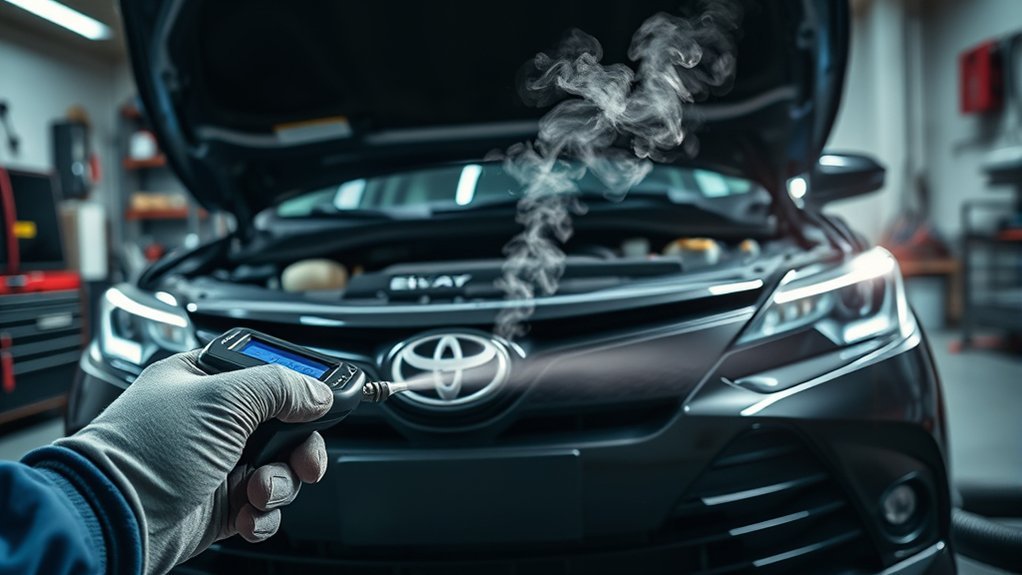
The EVAP system traps gasoline vapor inside the fuel system and stores it in a charcoal canister. Under controlled conditions, the engine draws those vapors through a purge valve and burns them. The onboard computer also checks the system for incorrect purge flow, pressure changes, and leaks.
“Not Ready” Is Different From “Failed”
An incomplete or “not ready” status means the computer has not finished the test since its diagnostic memory was reset. It does not mean the computer completed the test and found a leak.
Use an OBD-II scanner to check four separate pieces of information:
- Readiness status: Shows whether each emissions monitor has completed.
- Pending codes: Shows faults detected during recent operation that may not have turned on the check-engine light yet.
- Stored codes: Shows confirmed diagnostic faults.
- Check-engine light status: Indicates whether the computer is currently requesting the malfunction indicator lamp.
Note: An EVAP monitor can be incomplete while the check-engine light remains off and no EVAP code is stored. In that situation, the required test conditions may simply not have occurred yet.
Codes Were Recently Cleared
Using a scanner to clear diagnostic codes normally resets the non-continuous readiness monitors. Disconnecting, replacing, or losing power from the 12-volt battery can have a similar effect. The computer must then observe the required operating conditions again.
Do not clear codes just to turn off the check-engine light before an inspection. The light may return, and the inspection equipment may find several incomplete monitors.
The Required Conditions Have Not Been Met
The EVAP monitor does not run continuously. Depending on the Camry’s model year and calibration, it may require a suitable fuel level, specific ambient and fuel temperatures, a cold start, normal driving, and a key-off period.
Keeping the tank roughly between one-quarter and three-quarters full is a practical starting point. However, it should not be treated as an exact specification for every Camry. A nearly empty or completely full tank can prevent some EVAP tests from running.
Your Trips Are Too Short or Too Similar
Repeated short trips may warm the engine without providing enough steady cruising, deceleration, or key-off time. Likewise, highway-only driving may not provide the lower-speed operation and stops needed by other emissions monitors.
A Pending EVAP Fault Is Interrupting the Process
A loose fuel cap, leaking hose, stuck purge valve, blocked vent valve, damaged canister, or pressure-sensor problem may cause a pending or stored EVAP code. Common EVAP code families include P0441, P0455, and P0456, although code availability and definitions can vary by model year.
Camry Hybrid Operation Can Change the Pattern
On a Camry Hybrid, the gasoline engine may stop during portions of a trip. That can make generic non-hybrid drive-cycle instructions unreliable. Check the exact year and powertrain through Toyota’s manual portal, or have a qualified technician follow the applicable Toyota service procedure.
Troubleshooting an Incomplete EVAP Monitor
Start with scan data before replacing parts. A “not ready” status without codes calls for a different response than an incomplete monitor accompanied by a pending EVAP code or check-engine light.
| Scan Result | What It Usually Means | Next Step |
|---|---|---|
| EVAP not ready, no codes, light off | The monitor may not have seen all enabling conditions. | Check fuel level and complete several normal cold-start, city, highway, and key-off periods. |
| EVAP not ready after codes were cleared | Readiness memory was reset. | Stop clearing codes and allow the computer to rerun its tests. |
| Pending EVAP code | The computer has detected a possible fault that is not confirmed yet. | Record the code and freeze-frame data, then diagnose before clearing anything. |
| Stored EVAP code or check-engine light on | The system has detected a confirmed emissions fault. | Repair the fault and verify that the code does not return. |
| Several monitors not ready | The battery or diagnostic memory was probably reset recently. | Complete varied normal driving before scheduling the inspection. |
Inspect the Fuel Cap and Filler Neck
- Park safely, switch off the engine, and wait before opening the fuel door.
- Remove the cap and inspect its rubber seal for cracks, flattening, cuts, dirt, or missing sections.
- Check the filler-neck sealing surface for rust, dents, debris, or damage.
- Reinstall the cap until it is fully seated according to the cap’s design.
- Confirm that the cap is the correct type for the vehicle.
Do not replace a cap only because it is ten years old. Replace it when it is damaged, incorrect, unable to tighten properly, or proven unable to hold pressure or vacuum during diagnosis.
Check the Purge Valve
The purge valve controls vapor flow from the charcoal canister to the engine. If it sticks open, the engine may draw vapor when it should not. Possible symptoms include a rough start after refueling, extended cranking, unstable idle, or purge-flow trouble codes.
A stuck-open purge valve can also affect fuel trims because it creates an unintended path into the intake. This is different from a leak in an EVAP hose near the fuel tank, which normally does not behave like an intake-manifold vacuum leak.
Check the Vent Valve, Canister, and Vapor Lines
The vent valve allows filtered air into the EVAP system during purge and closes when the computer performs certain leak checks. Dirt, corrosion, wiring faults, or a blocked vent can stop it from working correctly.
Inspect visible vapor lines for disconnected fittings, cracks, rubbing damage, or impact damage. A saturated or physically damaged charcoal canister can also cause odor, venting problems, or difficulty refueling.
Use a Professional Smoke Test When Needed
A technician can seal and command parts of the EVAP system while introducing low-pressure diagnostic smoke through approved equipment. This can reveal small leaks that are difficult to find visually.
Warning: Gasoline vapor is flammable. Do not use cigarettes, flames, homemade smoke devices, shop air, or unapproved pressure near the fuel system. Stop driving and arrange an inspection if you smell a strong fuel odor or see liquid fuel leaking.
How to Help the Camry EVAP Monitor Become Ready
No single owner-level drive routine is guaranteed to work on every Camry. The following sequence provides varied normal operation that may help the computer encounter its enabling conditions. It is not a substitute for the exact Toyota procedure for your model year.
Step 1: Check the Scan Data Before Driving
Record all stored and pending codes. Confirm whether only the EVAP monitor is incomplete or several monitors are incomplete. Do not erase the codes or disconnect the battery.
Step 2: Set a Practical Fuel Level
Keep the fuel gauge roughly between one-quarter and three-quarters full. Avoid topping off the tank after the pump shuts off because excess fuel can enter the vapor-control system.
Step 3: Allow a Cold-Soak Period
Park the Camry for several hours, preferably overnight, before the next cold start. Do not repeatedly start the engine merely to move the car a few feet. Exact soak and temperature requirements vary by model year.
Step 4: Complete Mixed Driving
- Start the engine normally after the cold-soak period.
- Allow a brief warm-up without prolonged unnecessary idling.
- Drive for about 10–15 minutes in normal city conditions with several complete stops.
- When traffic and speed limits allow, continue with about 15–20 minutes of steady road or highway driving.
- Use smooth acceleration and include several natural closed-throttle decelerations without hard braking.
- Return to normal lower-speed driving before parking.
Warning: Never attempt to hold a speed, decelerate, or watch a scan tool when traffic conditions make it unsafe. Follow all speed limits, remain attentive, and have a passenger monitor live data when necessary.
Step 5: Include a Key-Off Period
Some Toyota EVAP strategies perform part of the system check after the ignition is turned off. Park the vehicle normally for several hours, then recheck readiness before the next trip.
Step 6: Repeat Normal Trips Without Clearing Data
The monitor may need more than one suitable trip. Repeat the cold-start, mixed-driving, and key-off pattern while keeping the fuel level in a moderate range.
Pro Tip: Take a photo of the scan tool’s readiness screen after each complete trip. This helps you see whether other monitors are completing and prevents unnecessary code clearing.
Step 7: Use the Model-Specific Procedure if It Still Will Not Set
If only the EVAP monitor remains incomplete after several varied trips, check the exact year, engine, hybrid status, stored calibration, and applicable Toyota instructions. Toyota’s Technical Information System provides repair information used for model-specific diagnosis.
Symptoms That May Point to an EVAP Fault
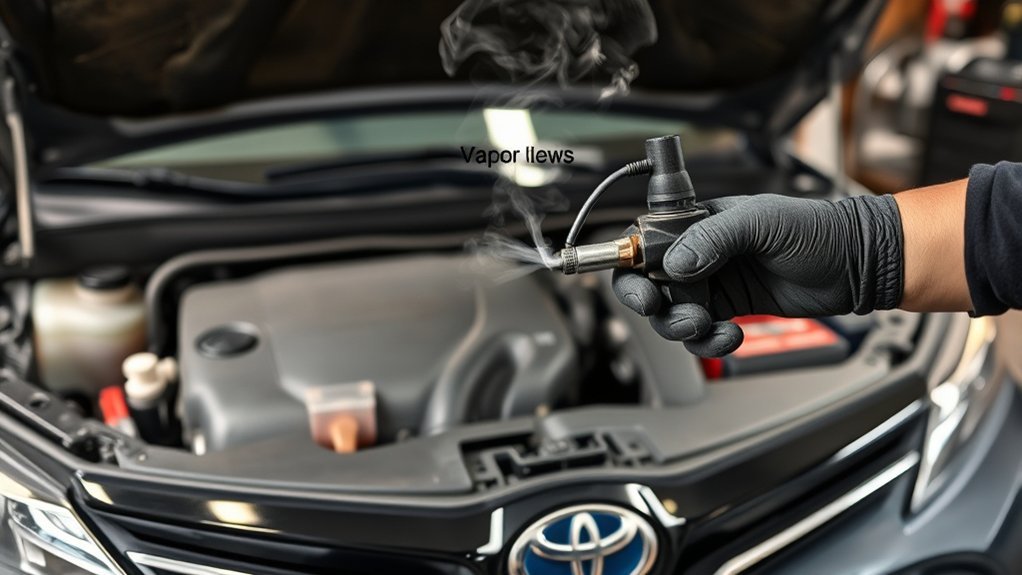
A small EVAP leak often causes no change in the way the Camry drives. The check-engine light may be the only symptom. More noticeable symptoms usually point to a purge, venting, canister, or fuel-sealing problem rather than a tiny vapor leak alone.
- Check-engine light: A stored EVAP code may illuminate the light even when the engine runs normally.
- Fuel odor: Vapor may escape through a damaged hose, cap seal, canister, or other connection.
- Hard starting after refueling: A purge valve stuck open may allow excessive vapor into the intake.
- Rough idle after refueling: Uncontrolled purge flow may temporarily disturb the air-fuel mixture.
- Difficulty filling the tank: A restricted vent path or saturated canister may cause the pump nozzle to shut off repeatedly.
- EVAP monitor stays incomplete: The required conditions may still be missing, or a sensor, valve, wiring, or sealing fault may require testing.
Poor acceleration, stalling under load, or major fuel-trim problems should not automatically be blamed on the charcoal canister. Those symptoms can come from ignition, fuel-delivery, air-metering, intake, exhaust, or other engine-control faults.
Preparing for an Emissions Inspection
Use your scan tool before visiting an inspection station. Confirm that the check-engine light is off, review stored and pending codes, and check how many supported monitors remain incomplete.
Do not assume that every state uses the same rule. The U.S. Environmental Protection Agency explains that inspection and maintenance programs are administered by state and local agencies and vary by area.
Some programs may accept one incomplete non-continuous monitor on certain model years. Others may require the EVAP monitor to be complete or may apply different rules to newer vehicles. Contact the applicable inspection program or review its current official guidance before your appointment.
For example, the California Bureau of Automotive Repair advises drivers to repair an illuminated check-engine light before testing and to allow readiness monitors to reset after a battery disconnection or replacement.
An incomplete EVAP monitor does not identify the failed part. Readiness status tells you whether the test finished; diagnostic codes and component tests tell you why a completed test found a problem.
When to Schedule Professional Diagnosis
Have the vehicle diagnosed if any of the following applies:
- The check-engine light is on.
- A pending or stored EVAP code returns after normal driving.
- The EVAP monitor remains incomplete after several suitable trips while other monitors complete.
- You smell strong gasoline vapor or see liquid fuel.
- The engine is difficult to start after refueling.
- The fuel nozzle repeatedly shuts off even when the tank is not full.
- The fuel cap and visible lines appear normal, but a leak code remains.
Frequently Asked Questions
Why is my Toyota Camry EVAP monitor not ready?
The monitor may have been reset by cleared codes or a battery disconnection, or the vehicle may not have met its required fuel-level, temperature, cold-start, driving, and key-off conditions. “Not ready” alone does not prove that the EVAP system has failed.
How do I get my Toyota Camry EVAP monitor ready?
Check for codes, keep the tank at a moderate level, allow an overnight cold soak, complete normal city and highway driving, and include a key-off period. Do not clear codes between trips. Use Toyota’s model-year-specific service procedure if the monitor remains incomplete.
How long does it take for the EVAP monitor to become ready?
It may complete after one suitable trip, but some Camrys need multiple trips and a key-off or overnight soak. No fixed mileage or number of days applies to every model year, especially when weather or fuel level falls outside the monitor’s enabling conditions.
Can a Toyota pass emissions with the EVAP monitor not ready?
Possibly. Some inspection programs allow one incomplete non-continuous monitor for certain model years, while others use stricter criteria. Check the current rules for the state or local program performing your inspection.
Will disconnecting the battery fix an EVAP problem?
No. Disconnecting the battery may temporarily erase some diagnostic information, but it does not repair a leak, valve, sensor, wiring, or canister fault. It also resets readiness monitors and may delay an emissions inspection.
Can a loose gas cap keep the EVAP monitor from becoming ready?
A loose or damaged cap can cause the EVAP system to fail a completed leak test and store a code. However, a monitor that only says “not ready” may simply not have run yet. Inspect the cap, scan for codes, and avoid assuming the cap is the only possible cause.
Conclusion
A Toyota Camry EVAP monitor that is not ready usually needs the correct operating conditions, not immediate parts replacement. Begin by reading readiness status and trouble codes, checking the fuel cap, maintaining a moderate fuel level, and completing varied normal trips without resetting the computer.
If the monitor remains incomplete or an EVAP code appears, diagnose the purge valve, vent valve, canister, pressure sensor, wiring, and vapor lines using the procedure for your exact Camry year and powertrain. Check your local inspection rules before assuming one incomplete monitor will automatically pass or fail.
Sources
- Toyota Manuals and Warranties — official model-year-specific owner information and warranty resources.
- Toyota Technical Information System — official Toyota repair and technical service information.
- U.S. EPA Vehicle Emissions Inspection and Maintenance Information — explains the purpose of inspection programs and differences among state and local requirements.
- California Bureau of Automotive Repair Smog Check Guidance — supports check-engine-light and readiness preparation guidance.
