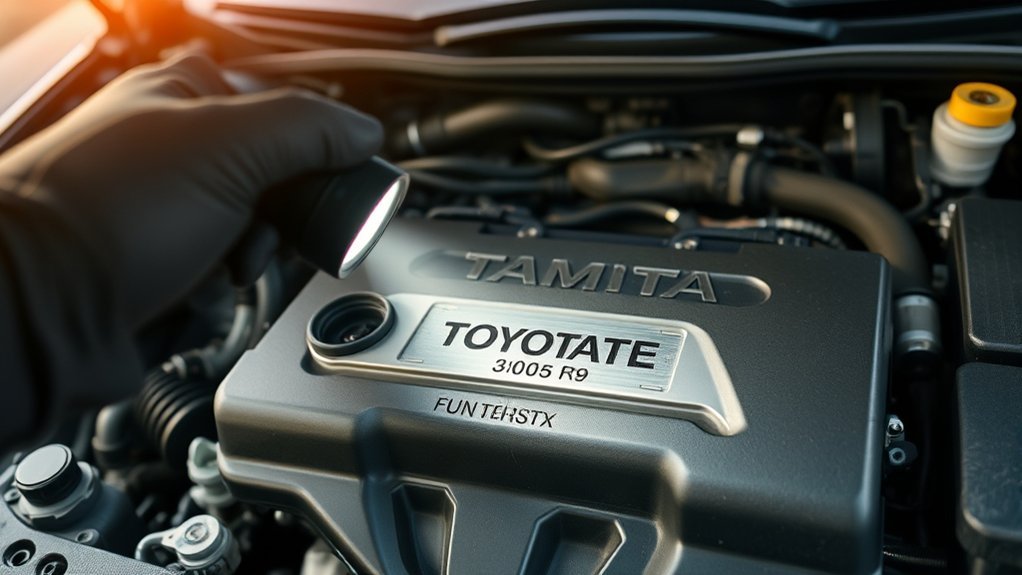
Finding the correct engine information for your Toyota Camry is easier when you know which identifier you actually need. The Toyota engine code, the stamped engine serial number, the emissions-family label, and the vehicle identification number are related, but they are not interchangeable. Using the wrong one can lead to incorrect parts, repair information, or paperwork.
Quick Answer
To find your Toyota Camry’s engine code, first use the VIN with Toyota’s owner resources, parts catalog, or a dealer. Then confirm the engine model in the owner’s manual or service information. Do not assume the under-hood emissions label or stamped engine serial number is the same as the Toyota engine code.
Key Takeaways
- A Toyota engine code such as 2AR-FE or A25A-FXS identifies an engine model, not one individual engine.
- The stamped engine number is a unique serial or production identifier and may be harder to locate.
- Your VIN can be decoded to identify the original engine type, although the full Toyota engine-model code may not appear literally in the VIN.
- Always verify parts by VIN, model year, market, drivetrain, and production date rather than relying on appearance alone.
At a Glance
| Time Required | 5 to 20 minutes |
| Difficulty | Easy for VIN verification; moderate if the stamped serial number is required |
| Tools Needed | Flashlight, phone camera, microfiber cloth, soft nylon brush, and inspection mirror |
| Cost | Usually free; up to about $20 if you need a light, mirror, or cleaning supplies |
How to Locate Your Toyota Camry’s Engine Code

The most reliable method is to identify the vehicle by VIN before searching the engine bay. Toyota Camrys have used different engines across model years, countries, trim levels, and hybrid or gasoline configurations. A location or code that applies to one Camry may not apply to another.
1. Record the Full VIN
The VIN is a 17-character vehicle identifier on modern U.S. vehicles. You can usually find it at the lower driver-side corner of the windshield, on the driver-door or door-jamb label, and on registration or insurance documents.
Enter the VIN into the official NHTSA VIN Decoder. The decoded result can identify the manufacturer-reported engine type and other vehicle attributes. The VIN may not display a Toyota designation such as “A25A-FXS” directly, but it provides the information needed to confirm the original powertrain.
2. Check the Correct Toyota Manual
Use Toyota’s Manuals and Warranties portal and select the exact year and model. Look in the specifications, maintenance, or vehicle-identification sections.
The owner’s manual may list engine displacement or engine model. For a precise stamping location, consult model-specific repair information through the Toyota Technical Information System or ask a Toyota service department.
3. Use a VIN-Based Parts Lookup
If your goal is to buy a filter, gasket, sensor, ignition component, or internal engine part, use the VIN with an authorized Toyota parts counter or the Toyota Genuine Parts catalog.
This is safer than selecting a part from the visible engine code alone. Production date, emissions specification, transmission, drivetrain, and regional configuration can also affect fitment.
4. Inspect the Under-Hood Labels
Open the hood and look for the Vehicle Emission Control Information label, certification labels, or manufacturer labels. Depending on the model, a label may appear on the underside of the hood, radiator support, engine compartment panel, or another visible surface.
Note: An emissions label may show an engine family or test group used for emissions certification. That value is not always the same as Toyota’s engine-model designation or the engine’s unique stamped serial number.
5. Inspect the Engine Stamping Only If Needed
If you specifically need the unique engine number, inspect the engine block for a machined pad or stamped area. Its position varies by engine family and may be near the block-to-transmission joint, cylinder-head area, front cover, or another model-specific location.
Use a flashlight and inspection mirror. A phone camera can often capture a number that is difficult to read directly. Take several photos from slightly different angles and compare them after increasing brightness or contrast.
Start with the VIN and Toyota documentation. Search the engine block only when you specifically need the stamped engine serial number.
Common Challenges in Finding Your Engine Code
Most identification problems occur because a label is difficult to read, the wrong identifier is being searched for, or instructions for a different Camry generation are being followed.
Visibility Issues Under the Hood
Engine components, wiring, hoses, intake parts, and protective covers can block your view. Stamped characters may also be shallow or partly obscured by dust, oxidation, or oil residue.
- Work in daylight or use a bright, focused flashlight.
- Use a small inspection mirror instead of placing your hands behind hot or sharp components.
- Photograph the area with and without the camera flash.
- Compare the character pattern with the engine information in the correct manual.
- Do not rely on a partial number when ordering expensive parts.
Location Variability by Engine
Camrys with four-cylinder, V6, and hybrid powertrains do not necessarily place their stamped numbers in the same location. Placement may also change between engine generations.
For example, codes such as 2AZ-FE, 2AR-FE, 2AR-FXE, 2GR-FE, A25A-FKS, A25A-FXS, and 2GR-FKS have appeared in different Camry generations or markets. Toyota officially identifies A25A-FXS as an engine model in its Camry technical specifications.
These are examples, not a universal fitment list. Confirm your engine through the VIN and documentation for the exact vehicle.
Engine Block Cleaning Tips
Warning: Turn the vehicle off, remove the key or disable the smart-key system, and let the engine cool fully before reaching into the engine bay. Keep hands, clothing, tools, and cleaner away from belts, fans, hot exhaust parts, high-voltage hybrid components, and electrical connectors.
Start with a dry microfiber cloth. If residue remains, apply a small amount of mild automotive cleaner to the cloth rather than spraying the engine. A soft nylon detailing brush can loosen dirt around a metal stamping.
- Do not use a wire brush on aluminum or a faint stamping.
- Do not scrape the surface with a screwdriver or metal pick.
- Do not soak labels, connectors, sensors, or wiring.
- Do not remove an engine cover unless the owner’s or repair manual provides a safe procedure.
- Stop if access requires working below the vehicle without proper lifting equipment.
Pro Tip: Hold the flashlight at a low angle across the stamped surface rather than pointing it straight at the number. Side lighting creates shadows in shallow characters and often makes them easier to photograph.
Tools You Can Use to Identify the Engine Code
You usually do not need specialist equipment. The most useful tools improve visibility and let you document what you find without dismantling the vehicle.
| Tool | Purpose | Safe-use note |
|---|---|---|
| Flashlight | Illuminates labels and stamped surfaces | Use side lighting to reveal shallow characters |
| Phone camera | Records hard-to-see numbers | Take several angles and review them outside the engine bay |
| Inspection mirror | Views the rear or underside of components | Keep it clear of belts, fans, and wiring |
| Microfiber cloth | Removes loose dirt and oil film | Work only on a cool engine |
| Soft nylon brush | Loosens residue around a metal stamping | Avoid aggressive brushing and printed labels |
| Owner’s or repair manual | Confirms the model-specific location and specifications | Select the exact model year and market |
Understanding the Difference Between Engine Number and Code
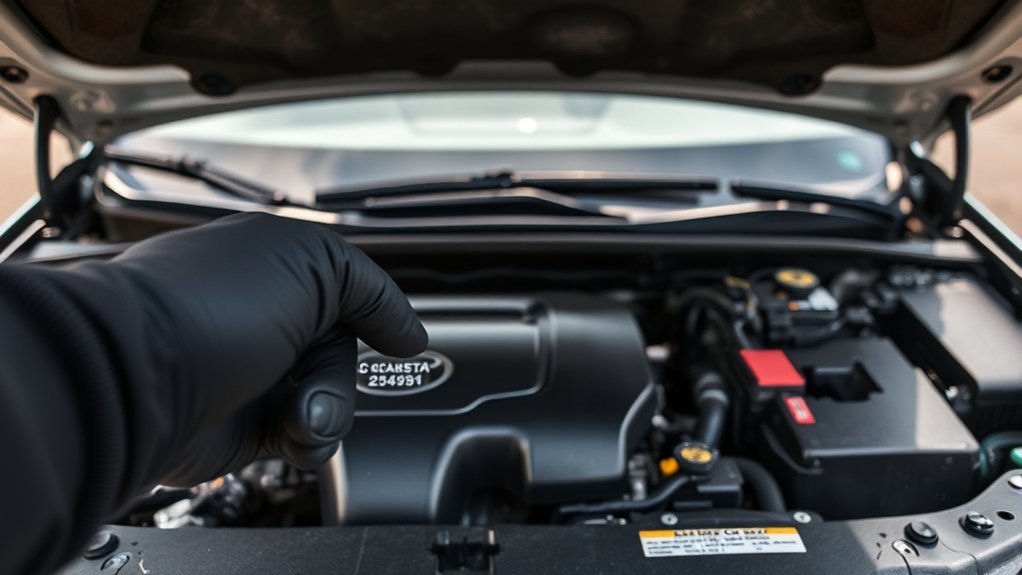
Correct identification begins with using the right term. Four values may appear in vehicle documents, databases, labels, or on the engine itself.
| Identifier | What it identifies | Typical use |
|---|---|---|
| VIN | The complete vehicle and its manufacturer-reported attributes | Registration, recalls, vehicle history, and VIN-based parts lookup |
| Engine-model code | The Toyota engine design or variant, such as 2AR-FE or A25A-FXS | Technical specifications, repair information, and engine-family identification |
| Engine serial number | One individual engine assembly | Inspection, rebuilding records, replacement-engine documentation, or jurisdiction-specific paperwork |
| Emissions family or test group | An emissions-certified engine and control-system configuration | Emissions inspection, certification, and emissions-component matching |
Engine Number Defined
The engine number is a unique sequence stamped, engraved, or marked on the engine assembly. It is not the same as a family code shared by thousands of engines.
The serial may be needed for an imported vehicle, a rebuilt engine, an inspection, theft verification, or paperwork in a jurisdiction that records engine numbers. In the United States, however, the VIN is the standardized vehicle identifier under 49 CFR Part 565.
A VIN does not normally contain the engine’s unique serial number. If you suspect the engine was replaced, compare the VIN-decoded original engine specification with repair invoices, service records, casting details, and the current engine configuration.
Engine Code Explained
A Toyota engine code identifies a model or variant. Examples include 2AR-FE, 2GR-FE, A25A-FKS, A25A-FXS, and 2GR-FKS.
The letters and numbers describe the engine series and certain engineering features, but they should not be treated as a complete parts-fitment key. Two vehicles using the same broad engine family may have different sensors, calibration, accessories, emissions equipment, wiring, or production revisions.
Importance of the Distinction
- Use the VIN for the original vehicle configuration, registration, recalls, and exact parts lookup.
- Use the engine-model code for technical specifications and repair-manual selection.
- Use the engine serial number when an inspector, rebuilder, authority, or buyer requests the identity of the individual engine.
- Use the emissions family when checking emissions certification or emissions-related components.
Keeping these identifiers separate prevents incorrect parts orders and avoids unsupported conclusions about replacement history.
Common Toyota Camry Engine-Code Examples
The following table provides general examples found across Camry generations and markets. It is not a substitute for a VIN check.
| Example code | General description | Verification note |
|---|---|---|
| 2AZ-FE | Older gasoline four-cylinder example | Verify year and market because not every Camry used it |
| 2AR-FE | Later gasoline 2.5-liter four-cylinder example | Do not confuse it with the hybrid 2AR-FXE variant |
| 2AR-FXE | Hybrid-oriented four-cylinder example | Hybrid components and procedures require model-specific information |
| 2GR-FE | V6 example used in certain earlier Camrys | Confirm trim and model year before ordering parts |
| A25A-FKS | Newer Dynamic Force gasoline four-cylinder example | Do not substitute hybrid A25A-FXS parts without verification |
| A25A-FXS | Dynamic Force hybrid engine example | Toyota documentation confirms this designation for Camry hybrid applications |
| 2GR-FKS | Later V6 example | Verify market, production date, and vehicle configuration |
What to Do If You Can’t Find or Read the Engine Code
Do not guess from the number of cylinders, engine-cover design, or a partial stamping. Use the following fallback process:
- Record the complete VIN from the windshield or door-jamb label.
- Decode it through NHTSA and note the displayed engine specifications.
- Open the Toyota manual for the exact model year.
- Contact a Toyota parts or service department and provide the VIN.
- Ask whether you need the engine-model designation or the unique engine serial number.
- If the stamped serial is legally required, have a qualified technician locate and document it.
If the stamping is corroded, damaged, altered, or inaccessible, do not grind, sand, restamp, or chemically strip it. Those actions can destroy evidence and may create legal problems. Seek help from a dealer, licensed repair facility, inspection authority, or law-enforcement vehicle-identification unit as appropriate.
Where to Get Help for Engine Code Questions
- Toyota owner resources: Use the official manual for the exact Camry year and configuration.
- Toyota parts department: Provide the full VIN and the name of the part you need.
- Toyota service department: Ask for the model-specific engine-number stamping location.
- Qualified independent mechanic: Choose a technician familiar with Toyota gasoline and hybrid systems.
- Inspection or registration authority: Use this option when an engine serial is required for paperwork.
- NHTSA VIN Decoder: Use it to confirm manufacturer-reported vehicle and engine-type information.
Owner forums and videos can help you recognize a general area, but verify their instructions against official information for your model year. A video for a different engine may direct you to the wrong side of the block or encourage unnecessary component removal.
Importance of Your Toyota Camry’s Engine Code for Maintenance

The engine code helps narrow down the correct repair procedures and specifications, but it should be used together with the VIN. This combination is especially important when selecting components affected by model year, emissions package, hybrid configuration, drivetrain, or production changes.
| Task | Best identifier | Why |
|---|---|---|
| Ordering routine maintenance parts | VIN plus model year | Reduces fitment errors caused by production variations |
| Selecting repair specifications | Engine code plus VIN | Connects the engine family to the exact vehicle configuration |
| Checking recalls or campaigns | VIN | Campaign eligibility is vehicle-specific |
| Documenting a replacement engine | VIN, engine code, serial number, and invoice | Creates a traceable record of the installed assembly |
| Meeting an inspection requirement | Identifier requested by the authority | Requirements differ between jurisdictions |
Before buying an expensive component, give the seller your complete VIN and ask for written fitment confirmation. Keep a photo of the engine code or serial number with your service records if it was difficult to locate.
Frequently Asked Questions
Where is the engine code on a Toyota Camry?
There is no single location that applies to every Camry. First verify the engine through the VIN, Toyota owner information, or a dealer. Under-hood labels may contain supporting information, while the unique engine serial number is normally stamped on a model-specific area of the engine block.
How do I find my Toyota Camry’s engine type?
Record the full VIN and decode it through NHTSA or provide it to a Toyota dealer or parts department. Then compare the result with the specifications in the owner’s manual for your exact model year.
How do I read a Toyota engine code?
A Toyota code such as 2AR-FE or A25A-FXS identifies an engine model or variant. The characters relate to the engine series and engineering features. Use Toyota technical information for the exact interpretation because naming conventions have changed between older and newer engine families.
Which part of the VIN is the engine code?
The full Toyota engine-model code is not usually printed literally as one section of the VIN. For U.S. passenger vehicles, positions 4 through 8 encode vehicle attributes that include engine type. Use an official decoder or Toyota database to translate those characters.
Is the number on the emissions label the Toyota engine code?
Not necessarily. An emissions label may show an engine family or test group created for emissions certification. Confirm the Toyota engine-model designation with the VIN, manual, parts catalog, or dealer.
What if my Camry has a replacement engine?
The VIN decoder normally describes the vehicle’s original engine type. Check repair invoices, service records, casting information, the current engine-model code, and the stamped serial number. Have a Toyota specialist verify compatibility before ordering internal engine or emissions-related parts.
Conclusion
The safest way to identify a Toyota Camry engine is to begin with the VIN and verify the result through Toyota documentation or a VIN-based parts lookup. Use the engine-model code for technical information and the stamped engine serial number only when you need to identify the individual engine. Because locations and codes vary by year, market, and powertrain, avoid relying on a generic under-hood location or a single label.
Sources
- Toyota Manuals and Warranties — provides model-specific owner manuals and warranty documents.
- NHTSA VIN Decoder — decodes manufacturer-reported vehicle and engine-type information.
- 49 CFR Part 565 — defines U.S. VIN requirements and the vehicle attributes encoded in a VIN.
- Toyota Technical Information System — provides model-specific Toyota service and repair information.
- Toyota Camry Technical Specifications — confirms the A25A-FXS Toyota engine-model designation.
