
A failing Toyota Camry hybrid battery can cause warning messages, fast swings on the battery gauge, weaker electric assist, longer gasoline-engine run time, and a lasting drop in fuel economy. However, none of these symptoms proves the traction battery is bad. A weak 12-volt battery, blocked cooling airflow, wiring faults, or another hybrid-system problem can create similar signs.
Quick Answer
The strongest signs of a failing Camry hybrid battery are a hybrid-system warning that returns after clearing, rapid charge-gauge changes, reduced electric assist, and battery-related diagnostic trouble codes. Do not replace the pack based on fuel economy or a dashboard message alone. Have all hybrid-control modules scanned and the 12-volt battery checked first.
Key Takeaways
- “Check Hybrid System” means the vehicle detected a hybrid-related fault, not that the traction battery has been confirmed as failed.
- A pattern of several symptoms is more meaningful than one isolated change in mileage, sound, or charge level.
- The correct diagnosis uses hybrid-capable scan data, battery voltage and temperature data, a 12-volt battery test, and a cooling-airflow inspection.
- Never open or probe the high-voltage battery pack unless you are trained and equipped for high-voltage service.
- Toyota’s current U.S. hybrid-battery warranty is 10 years or 150,000 miles for model year 2020 and newer vehicles, subject to the applicable warranty guide.
At a Glance
| Time Required | 5 to 10 minutes for basic owner checks; commonly 30 to 90 minutes for an initial professional scan and inspection |
| Difficulty | Easy for observation and airflow checks; advanced and hazardous for high-voltage diagnosis or repair |
| Tools Needed | Owner’s manual, phone or notepad, and a hybrid-capable scan tool for professional diagnosis |
| Cost | Basic checks are free; diagnostic and repair costs vary by model year, fault, labor rate, and warranty coverage |
How the Toyota Camry Hybrid Battery Works

Your Camry Hybrid has two different batteries. The small 12-volt auxiliary battery powers low-voltage electronics and helps the vehicle start its control systems. The high-voltage traction battery stores energy for the electric motor. The gasoline engine and regenerative braking recharge the traction battery, so a standard Camry Hybrid does not plug in.
During braking, the motor can work as a generator and return energy to the traction battery. During acceleration, the battery can provide electric assist. A control system manages battery charge, temperature, and power flow. The U.S. Department of Energy explains this basic hybrid operation in its hybrid-electric vehicle guide.
There is no universal mileage at which a Camry hybrid battery must be replaced. Toyota states that battery life varies and that its electrified-vehicle batteries are designed to last the average life of the vehicle when properly maintained. Age, heat exposure, cooling airflow, use, and individual cell condition can all affect performance.
Note: Warranty length is not a promised service life. A battery can remain healthy beyond its warranty, while a covered battery can still develop a defect before the warranty ends.
Warning Signs of a Failing Camry Hybrid Battery
Look for a repeatable pattern rather than one symptom on one trip. The following signs justify a proper inspection, but the battery should not be condemned until diagnostic data supports the decision.
| Possible Sign | What It May Indicate | What to Do |
|---|---|---|
| “Check Hybrid System,” master warning, or check-engine light | A stored fault in the battery, inverter, cooling system, wiring, engine controls, or another monitored system | Record the exact message and obtain a full-system scan |
| Charge gauge rises and falls unusually fast | Reduced usable battery capacity, uneven battery blocks, temperature limits, or misleading conditions from short trips | Compare behavior over several similar trips and request battery data testing |
| Gasoline engine runs more often than usual | Less electric assist, cold weather, cabin heat demand, a low state of charge, or another powertrain issue | Check for warnings and compare fuel use under similar weather and routes |
| Reduced acceleration or limited power | The hybrid system may be limiting output to protect a component | Avoid hard acceleration and arrange prompt service |
| Cooling fan becomes loud or runs often | High battery temperature, a blocked intake, dust or pet-hair buildup, or a fan-control issue | Keep the intake clear and have the cooling path inspected if the sound persists |
| Vehicle will not enter READY mode | A weak 12-volt battery, interlock issue, hybrid fault, or traction-battery problem | Do not assume the high-voltage pack failed; test the 12-volt battery and scan the vehicle |
1. A Hybrid-System Warning Appears
A hybrid-system message is the most important reason to schedule diagnosis. It confirms that a monitored system detected a fault, but it does not identify the failed part. Toyota advises owners to use the model-specific owner’s manual for warning-light instructions and to have important warnings inspected.
2. The Battery Gauge Changes Very Quickly
A healthy hybrid battery normally changes charge level as you accelerate, coast, and brake. Concern rises when the display repeatedly moves from high to low, or low to high, in a much shorter time than it did before under similar driving conditions. This can happen when usable capacity has fallen, but scan data is needed to separate battery wear from temperature limits or normal short-trip behavior.
3. The Engine Runs More and Fuel Economy Drops
A weak traction battery can force the gasoline engine to provide more of the vehicle’s power. That may reduce fuel economy. Still, weather, short trips, heater or air-conditioner use, low tire pressure, traffic, and engine faults can also lower mileage. FuelEconomy.gov notes that cold weather can reduce hybrid fuel economy substantially, so compare several tanks under similar conditions before blaming the battery.
4. Electric Assist and Acceleration Feel Weaker
You may notice slower response from a stop, less electric assistance, or an engine that revs more to produce the same acceleration. A protective reduced-power mode may also limit performance. These symptoms require prompt diagnosis because the cause could be the battery, inverter, motor-generator controls, engine, or another hybrid component.
5. The Battery Cooling Fan Is Unusually Loud
A louder fan is not proof of battery failure. It may be responding to battery temperature or restricted airflow. Locate the hybrid-battery air intake using the owner’s manual for your model year. Do not cover it with bags, seat covers, or clothing, and keep pet hair and lint away from the opening. If the fan stays loud after the intake is clear, have the fan and ducting inspected.
Dwindling Fuel Efficiency: Is the Hybrid Battery the Cause?
A deteriorated traction battery may reduce fuel economy because the gasoline engine must run more often and provide more of the power. The change is more meaningful when it lasts across several tanks and appears with fast charge-gauge swings, reduced electric assist, or a hybrid-system warning.
Do not use mileage alone as a battery test. Cold weather, short trips, heater or air-conditioner use, low tire pressure, traffic, fuel blend, and engine faults can all lower fuel economy. FuelEconomy.gov reports that cold conditions can affect hybrids more than conventional gasoline vehicles, so compare similar routes and weather before drawing a conclusion.
Signs of Decreased Power: When to Worry
A weak battery may provide less electric assist, which can make the Camry feel slower from a stop or cause the gasoline engine to work harder. The vehicle may also limit power when the hybrid control system detects a fault or an unsafe temperature.
Reduced power is urgent when it is sudden, severe, or paired with a red warning, unusual heat, smoke, or a burning smell. Pull over safely and follow the dashboard instructions. Mild but repeatable hesitation still needs prompt diagnosis because the battery is only one of several possible causes.
What Does “Check Hybrid System” Mean?

“Check Hybrid System” is a broad fault message. It can appear with a master warning light, check-engine light, or another indicator. The message means the control system found a problem that needs diagnosis. It does not mean the hybrid battery must be replaced.
Possible causes include:
- A deteriorated traction battery or an abnormal difference between battery sections
- A weak 12-volt auxiliary battery or unstable low-voltage supply
- A blocked battery-cooling intake, dirty fan, temperature-sensor fault, or fan-control problem
- Wiring, connector, fuse, or control-module faults
- Inverter, converter, motor-generator, or cooling-system faults
- Engine or emissions faults that affect hybrid operation
Warning: If the message is paired with a red warning, severe power loss, smoke, a burning smell, visible battery damage, flood exposure, or instructions to stop, pull over safely, switch the vehicle off, move away if conditions are unsafe, and contact roadside assistance or emergency services.
Symptoms That Do Not Prove the Battery Is Bad
Several common changes are easy to misread as battery failure:
- Lower mileage on one tank: Weather, traffic, short trips, tire pressure, fuel blend, and climate-control use can change fuel economy.
- The engine starts while parked: A Camry Hybrid may run the engine to warm up, provide cabin heat, maintain charge, or meet system demand.
- The charge display is not full: The vehicle manages the battery within a protected operating range. The display is not intended to remain at maximum.
- Less EV operation: Temperature, speed, acceleration demand, defroster use, and battery state of charge affect when the engine runs.
- A single warning after a low 12-volt event: Low voltage can create start-up or communication problems. The vehicle still needs a scan if the warning returns.
The battery is not diagnosed by one symptom. The best evidence is a repeatable complaint supported by hybrid-system trouble codes and live battery data.
What to Do When Warning Signs Appear
- Read and photograph the message. Capture all warning lights before switching the car off. Note the weather, speed, fuel level, and whether the vehicle entered READY mode.
- Follow the owner’s manual. Warning colors and instructions can differ by model year. Use Toyota’s manuals and warranties portal to find the correct guide.
- Decide whether it is safe to continue. Stop driving for a red warning, severe power loss, smoke, a burning smell, flood damage, or an instruction to stop. If the car drives normally with a yellow warning, avoid unnecessary trips and arrange prompt service.
- Check simple items without touching high-voltage parts. Make sure the battery-cooling intake is not covered. Look for obvious water intrusion or accident damage. Do not remove the traction-battery cover.
- Test the 12-volt battery. A weak auxiliary battery can cause no-READY or low-voltage symptoms. Testing it is faster and safer than assuming the traction battery failed.
- Request a full hybrid-system scan. A basic code reader may read only engine codes. The shop should scan the battery-control, hybrid-control, inverter, brake, and engine modules.
- Ask for the evidence. Before approving a battery replacement, request the stored codes, freeze-frame data, battery voltage or resistance results, temperature data, and cooling-system findings.
- Check warranty coverage by VIN. Toyota’s current U.S. coverage is 10 years or 150,000 miles for hybrid batteries in model year 2020 and newer vehicles, whichever comes first. Older models and emissions-related coverage can differ.
Pro Tip: Ask the technician to write the diagnostic trouble codes on the estimate. A replacement recommendation is easier to evaluate when it includes code numbers, measured battery data, and the reason other causes were ruled out.
How Technicians Diagnose a Camry Hybrid Battery
A trained technician should diagnose the whole system before recommending a battery pack. A thorough first inspection commonly includes:
- Testing the 12-volt auxiliary battery and charging voltage
- Scanning every relevant control module, not only the engine computer
- Reviewing stored and pending codes with freeze-frame data
- Comparing battery-section voltages and internal-resistance data
- Checking battery temperatures and cooling-fan commands
- Inspecting the cooling intake, fan, ducts, wiring, and connectors
- Road-testing the vehicle while monitoring charge and discharge behavior
- Checking for applicable warranty coverage, recalls, or service information by VIN
Some codes may point toward battery deterioration, but a code alone still needs context. For example, low-voltage events, cooling problems, damaged wiring, or a failed sensor can affect the data that the battery-control system sees.
Hybrid Battery Safety: What You Should Never Do
The traction battery and orange high-voltage cables can cause severe injury or death. The National Highway Traffic Safety Administration states that high-voltage batteries should not be serviced without proper training and specialized equipment.
- Do not open the traction-battery case.
- Do not probe orange cables or high-voltage connectors with a meter.
- Do not bypass service plugs, interlocks, relays, or fuses.
- Do not work on a flooded, burned, or crash-damaged battery.
- Do not assume switching the car off makes every high-voltage component immediately safe.
Use a Toyota dealer or an independent hybrid specialist with high-voltage training, insulated tools, correct personal protective equipment, and a scan tool that supports your Camry’s hybrid modules.
How Long Does a Camry Hybrid Battery Last?
There is no fixed replacement interval. Battery condition depends on age, temperature, cooling, use, and cell balance. A mileage figure such as 100,000 miles or 160,000 kilometers should not be treated as an automatic failure point.
For U.S. model year 2020 and newer Toyota hybrids, the hybrid battery has limited-warranty coverage for 10 years or 150,000 miles, whichever comes first. Toyota says the coverage follows the applicable terms and conditions. Older Camry Hybrids commonly have different limits, and emissions coverage can vary by state and vehicle certification. Confirm coverage with the VIN and the warranty guide for the exact model year.
Repair or Replacement Options
The correct repair depends on the confirmed fault. The traction battery may not be the part that needs replacement.
- Cooling-system service: Cleaning or repairing the intake, fan, ducts, or sensors may solve a temperature-related problem.
- Electrical repair: Wiring, connectors, relays, sensors, or control modules may be repairable without replacing the pack.
- New or manufacturer-authorized battery: This usually provides the clearest parts support and warranty, but cost varies by vehicle and region.
- Remanufactured battery: Quality and warranty terms differ widely. Ask how every module is tested, balanced, and matched.
- Module-level repair: Replacing only a weak module may cost less at first, but unmatched aged modules can lead to another imbalance. Ask about expected life and written warranty.
Get the complete installed price, warranty length, labor coverage, core charge, and disposal terms in writing before approving the work.
Strange Charging Patterns and What They Mean
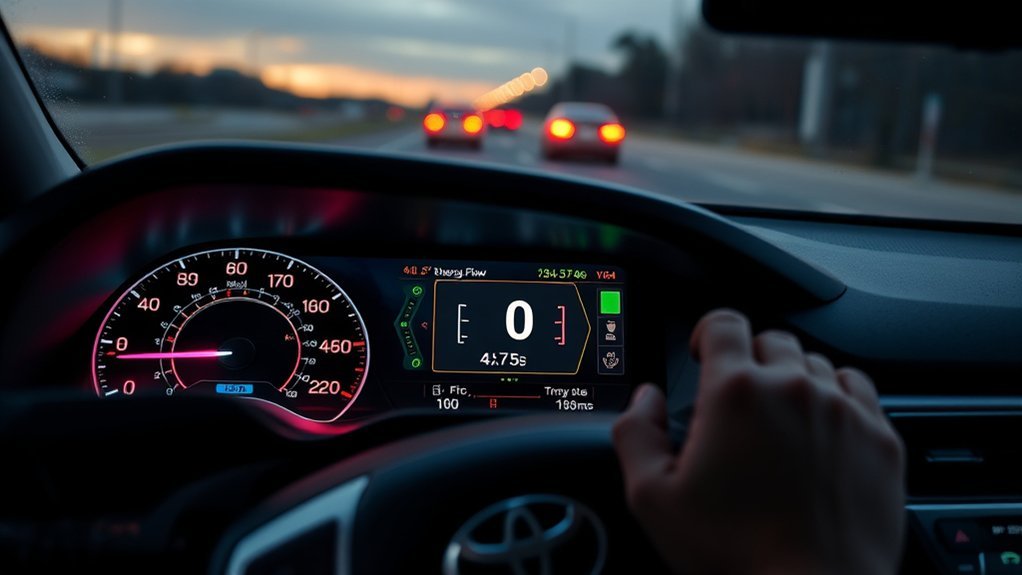
The dashboard charge display can move during normal driving because the car continually uses and recovers energy. What matters is a new, repeatable change. Rapid swings that occur during similar routes, along with warning codes, reduced assist, or a loud cooling fan, deserve testing.
A Camry Hybrid does not have a rated plug-in electric range. It may operate on electric power for short periods when conditions allow, but less EV operation by itself is not a reliable battery test. The control system may run the engine because of temperature, speed, climate-control demand, battery charge, or emissions requirements.
How a Failing Hybrid Battery Impacts Vehicle Performance
As usable battery capacity or power falls, the hybrid system may rely more on the gasoline engine. You may notice longer engine run time, weaker electric assist, less consistent regenerative-energy capture, reduced acceleration, or protective power limits. These effects can raise fuel use and make the car feel less smooth.
Similar symptoms can come from the inverter, engine, brakes, sensors, cooling system, or 12-volt electrical supply. That is why a full-system scan and live-data review matter more than a single symptom.
Steps to Take If You Suspect a Bad Hybrid Battery
Start by keeping a short symptom log. Record the date, outside temperature, warning text, charge-gauge behavior, fuel economy, and whether the vehicle entered READY mode. Bring photos and recent fuel records to the technician.
Ask the shop to separate the diagnosis from the repair quote. The report should state which codes returned, what battery or temperature values were abnormal, whether the 12-volt battery passed, whether airflow was restricted, and why the recommended repair addresses the confirmed cause. Check warranty coverage before authorizing parts.
Frequently Asked Questions
How do I know if my Camry hybrid battery is bad?
Suspect the battery when several signs occur together, such as a returning hybrid warning, fast charge-gauge swings, reduced electric assist, and battery-related trouble codes. Confirmation requires a hybrid-capable scan and battery data testing. Fuel economy or fan noise alone is not enough.
Does “Check Hybrid System” mean the battery must be replaced?
No. It means the vehicle detected a fault in a monitored system. The cause may be the traction battery, 12-volt supply, cooling system, inverter, wiring, engine controls, or another component. Read the codes before replacing parts.
Can I drive with a hybrid-system warning?
Follow the exact message in your owner’s manual. Stop for a red warning, severe power loss, smoke, a burning smell, flood exposure, or an instruction to stop. If the car drives normally with a yellow warning, limit driving and arrange prompt diagnosis.
Can a weak 12-volt battery mimic hybrid battery failure?
Yes, low auxiliary-battery voltage can contribute to no-READY, start-up, or communication symptoms. Test the 12-volt battery and scan the vehicle before concluding that the high-voltage battery is bad.
Is lower fuel economy proof of battery failure?
No. A weak traction battery can reduce fuel economy, but cold weather, short trips, tire pressure, traffic, climate-control use, and engine problems can do the same. Compare several tanks under similar conditions and check for diagnostic codes.
What is the Toyota Camry hybrid battery warranty?
In the United States, Toyota hybrid batteries in model year 2020 and newer vehicles have limited-warranty coverage for 10 years or 150,000 miles, whichever comes first. Older model years and emissions coverage may differ, so verify the VIN and applicable warranty guide.
Conclusion
The clearest Camry hybrid battery warning signs are a returning hybrid-system warning, abnormal charge-gauge swings, reduced electric assist, and diagnostic data that shows battery deterioration. Do not replace the pack based only on mileage, one tank of poor fuel economy, or a loud fan. Record the symptoms, keep the cooling intake clear, test the 12-volt battery, and get a full hybrid-system scan from a qualified technician.
Sources
- Toyota Manuals and Warranties: model-specific owner guidance and warranty documents
- Toyota Battery Warranty: current U.S. hybrid-battery coverage
- Toyota Warning Lights: official warning-light guidance
- U.S. Department of Energy Alternative Fuels Data Center: hybrid operation and regenerative braking
- National Highway Traffic Safety Administration: high-voltage battery and service safety
- FuelEconomy.gov: weather-related changes in hybrid fuel economy
