
How to Clean Toyota Camry Sunroof Drains Safely
If your Toyota Camry has a moonroof or sunroof, its drain channels move rainwater away from the roof opening. Dirt, pollen, leaves, and road grime can slow that flow and cause water to back up into the headliner, pillars, or carpet. For a basic DIY check, remove visible debris, test one drain at a time with a small amount of clean water, and stop if water backs up or enters the cabin.
Last updated: September 19, 2026
Quick Answer
Clean Toyota Camry sunroof drains by removing visible debris from the drain openings, testing each accessible corner with a small amount of clean water, and confirming the water leaves the roof tray without entering the cabin. If water pools, drains very slowly, or appears in the headliner or carpet, stop. A blocked tube, disconnected drain hose, or another body leak may require model-specific service information or professional inspection.
Key Takeaways
- Front drain openings usually sit near the front corners of the sunroof frame, but exact routing and outlet locations vary by model year and roof design.
- Start with visible debris removal and a low-volume water test rather than wire, sharp tools, or high-pressure air.
- Water that disappears from the tray but enters the cabin can point to a disconnected or leaking drain hose rather than a simple clog.
- If the drains appear to work but the cabin still gets wet, the leak may come from the windshield, cowl, door, body seam, or another water-entry point.
At a Glance
| Time Required | Varies by drain access and clog severity |
| Difficulty | Basic for visible debris and flow testing; more advanced if trim or headliner access is required |
| Tools Needed | Microfiber cloth, soft brush, flashlight, small cup or squeeze bottle of clean water, and absorbent towels |
| Best DIY Scope | Visible debris removal and low-volume flow testing; deeper hose access should follow model-specific Toyota service information |
Warning: Do not force sharp wire, metal coat hangers, or high-pressure compressed air into a sunroof drain tube. You can puncture the tube, disconnect it inside the pillar, or push debris deeper. If surface cleaning and a small water test do not restore normal flow, stop and use model-specific service information or have the drain inspected.
Why Clean Your Camry Sunroof Drains?
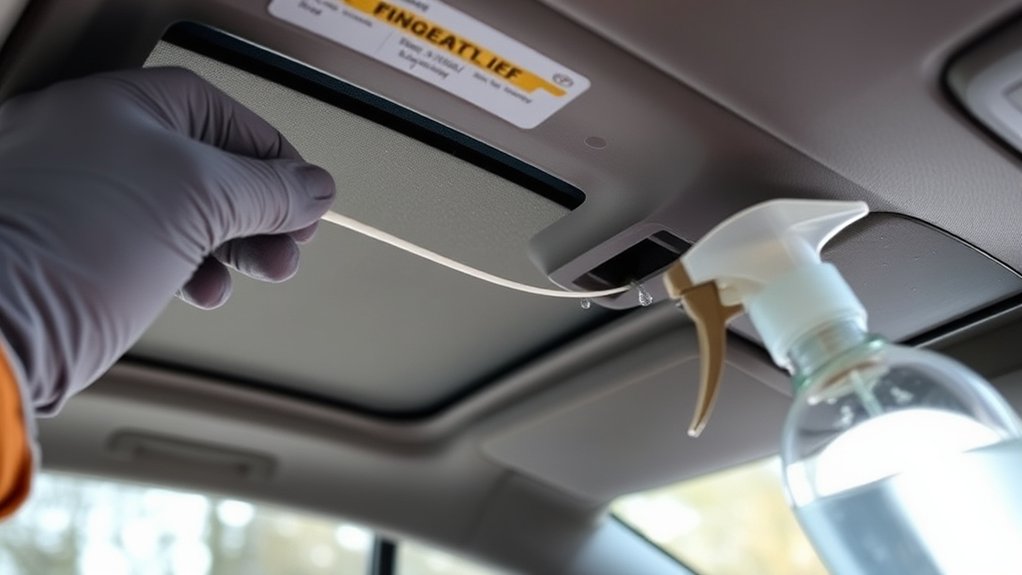
Cleaning your Toyota Camry sunroof drains helps prevent water from backing up around the roof opening. When drainage is restricted, water can reach the headliner, pillar trim, carpet, seat tracks, wiring areas, or electronic modules depending on the leak path.
Moisture also creates a mold risk if you leave wet trim or carpet untreated. The U.S. Environmental Protection Agency explains that moisture control is the key to mold control and recommends drying wet or damp materials within 24 to 48 hours when possible. If your Camry interior is already wet, dry it quickly and fix the water source before focusing on cosmetic stains.
Inspect the drain area after heavy leaf or pollen exposure, after parking under trees, and whenever you notice standing water in the roof tray, a musty smell, or damp interior trim.
Where to Find Your Toyota Camry Sunroof Drains
Camry moonroof drain openings are part of the roof tray around the glass opening. Front openings are generally easier to inspect near the front corners. Rear drain access and hose routing can be harder to see and can vary with model year, vehicle build, and roof design.
Note: Toyota Camry drain routing can vary by year, trim, production configuration, and roof design. For model-specific information, use the correct vehicle entry in Toyota Manuals and Warranties or factory repair information from the Toyota Technical Information System.
Front Roof Drain Locations
Open the sunroof and inspect the front corners of the sunroof frame or tray. Look for small drain openings or channels near the corners. Leaves, pollen, grit, and dirt can make the openings difficult to see.
When a front drain works correctly, a small amount of water placed at the opening should leave the tray without pooling or entering the cabin. The exact exterior outlet location varies, so do not rely on one universal fender or rocker-panel exit point for every Camry generation.
Rear Drain Access Points
Rear drains are usually less visible from above. Depending on the roof design, the rear tray area may be difficult to inspect even with the glass open or tilted, and the drain hoses can route through rear body or pillar areas.
Do not pull pillar trim or lower the headliner unless you know how the clips, side-curtain airbags, wiring, and model-specific service procedures are arranged. If a rear drain appears restricted but its opening is not safely accessible, have it inspected.
2007–2011 Camry Model-Year Note
Toyota T-SB-0037-11 addressed water leaks on certain 2007–2011 Camry and Camry Hybrid vehicles where one or more moonroof drain hoses could become loose or disconnected from the drain pan. If one of these vehicles has a wet headliner or footwell, do not assume the problem is only a clog. Check applicable factory information through Toyota TIS or have a technician inspect the hose connections.
Is It a Clog, Disconnected Hose, or Another Leak?
The water path tells you more than the wet spot alone. Use the drain tray and cabin together when deciding what to inspect next.
| What You See | What It Suggests | Next Step |
|---|---|---|
| Water pools in the roof tray | A drain opening or hose may be restricted | Remove visible debris and retest with a small amount of water |
| Water leaves the tray but appears in the headliner, pillar, or carpet | A hose may be loose, disconnected, damaged, or leaking inside the body | Stop adding water and have the hose path inspected |
| All accessible drains flow normally but the cabin still gets wet | The water may be entering somewhere other than the moonroof drainage system | Check broader rainwater-leak causes rather than repeatedly cleaning the drains |
If the drains pass the flow test but water still enters the car, see Toyota Camry rainwater leaks and wet carpet causes for a broader diagnosis covering the windshield, cowl, doors, body seams, HVAC drainage, and other possible entry points.
Gather Your Cleaning Tools
Use soft, low-pressure tools that remove visible debris without damaging the roof tray, seal, or drain connection. For a basic inspection and flow test, gather:
- A microfiber cloth or soft sponge
- A small soft-bristle brush
- A flashlight
- A small cup, squeeze bottle, or syringe-style water bottle filled with clean water
- Absorbent towels for the seats, console, and carpet
Avoid harsh cleaners, stiff metal tools, and heavy pressure. Plain clean water is enough for the flow test. If grime sits around the frame, use a mild soap solution on the cloth, then wipe the area clean and dry.
How to Clean Toyota Camry Sunroof Drains Step by Step
Work slowly and test one drain at a time. Keep the amount of test water small so you can stop quickly if the drain does not behave normally.
- Park on level ground. Choose a dry, well-lit area so you can see the roof tray and check for water beneath or inside the car.
- Open the sunroof. Move the glass far enough to inspect the accessible tray and drain corners.
- Protect the interior. Place towels over the seats, console, and nearby carpet in case water spills.
- Remove loose debris. Use a microfiber cloth and soft brush to clear leaves, grit, pollen, and dirt from the visible drain openings and surrounding tray.
- Test one drain gently. Pour only a small amount of clean water into one accessible drain opening.
- Watch the tray and cabin. The water should leave the tray without pooling or appearing in the headliner, pillars, dash edges, or carpet.
- Repeat on other accessible drains. Stop if any drain backs up, flows unusually slowly, or sends water into the cabin.
- Escalate instead of forcing the blockage. If visible cleaning does not restore normal flow, use the correct model-year Toyota service information or have the hose inspected rather than forcing wire or high-pressure air through it.
Pro Tip: Test one drain at a time and keep the water amount small. If water appears inside the car, testing one corner at a time makes it much easier to identify which drain path needs inspection.
How Do You Test Toyota Camry Sunroof Drains?
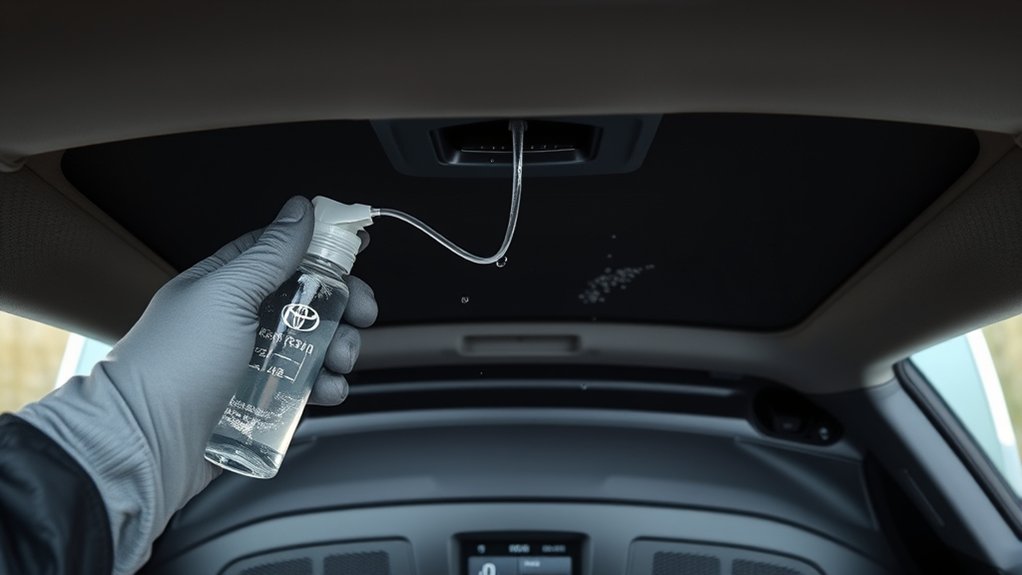
A working drain should move a small amount of water away from the sunroof tray without allowing it to pool or enter the cabin. Test each accessible drain separately so a problem can be tied to one corner.
Inspect Drain Openings
Before adding water, check each visible drain opening for leaves, seeds, pollen clumps, and dirt. Also inspect the surrounding tray and rubber seal. Remove loose material with a soft brush and cloth before testing.
| Inspection Step | What to Look For |
|---|---|
| Visual check | Leaves, dust, pollen, or mud around the visible opening |
| Water-flow test | Water leaves the tray instead of pooling around the opening |
| Interior check | No drips or dampness appear at the headliner, pillars, dash edges, or carpet |
| Exterior check | Water leaves the vehicle rather than entering the passenger compartment; the exact outlet location varies by model year |
Conduct Water Test
Pour a small amount of clean water into one accessible drain opening. Watch the tray first, then inspect the nearby headliner, pillar, and carpet. If the water rises, drains unusually slowly, or appears inside the car, stop testing that drain.
If surface cleaning does not restore normal flow, do not keep adding water or force a probe into the tube. Deeper restrictions and hose connections are better handled with the correct model-year repair information or professional access.
Identifying and Fixing Common Sunroof Drain Problems

Sunroof drain problems can show up as slow drainage, damp trim, wet carpet, or a musty smell. The symptom alone does not prove that the tube is clogged, so use the water path to decide what to do next.
| Symptom | Possible Cause | What to Do |
|---|---|---|
| Water pools in the sunroof tray | Blocked or restricted drain opening | Clean visible debris and retest with a small amount of water |
| Water drips from the headliner or pillar during a drain test | Backed-up, damaged, loose, or disconnected drain hose | Stop adding water and schedule an inspection |
| Front carpet is damp | Water may be entering through a drain hose, windshield area, cowl, door, body seam, or another leak path | Dry the carpet quickly and diagnose the actual entry point |
| Musty smell after rain | Hidden moisture in carpet, padding, or trim | Dry the area, inspect for water entry, and fix the moisture source |
| Only one accessible drain flows slowly | Partial restriction in that drain path | Clean visible debris once, then seek service if normal flow does not return |
| Drains flow normally but water still enters the cabin | Another roof, glass, cowl, door, HVAC, or body leak may be present | Broaden the leak diagnosis instead of repeatedly flushing the moonroof drains |
Tips for Regular Maintenance of Sunroof Drains
There is no single inspection schedule that should be assumed for every Camry generation and roof design. Use your vehicle’s model-specific information when available, and inspect the roof tray whenever conditions make debris buildup more likely.
- Inspect the sunroof tray after parking under trees or during heavy leaf fall.
- Clear loose leaves and pollen before they become packed into the drain openings.
- Use a light water test if you suspect drainage has slowed.
- Keep the sunroof seal and frame clean with a damp microfiber cloth.
- Dry wet carpet, padding, or trim as soon as you notice it.
- Check the correct Toyota owner’s manual or service information before removing trim or attempting deeper drain-hose work.
If you suspect a safety recall or service campaign may apply to your vehicle, check the VIN through the National Highway Traffic Safety Administration recall lookup and Toyota’s model-specific service resources.
When to Call a Professional
Some sunroof drain problems go beyond visible debris cleaning. Call a Toyota dealer or qualified repair shop if:
- Water enters the cabin during a drain test.
- The headliner, pillar trim, carpet, or carpet padding is already wet.
- A drain remains slow after visible debris has been removed.
- The same drain problem returns soon after cleaning.
- You cannot safely reach the rear drain area.
- You hear water moving inside the roof, pillars, or floor area.
- You need trim removed near side-curtain airbag areas.
- You own an applicable 2007–2011 Camry or Camry Hybrid with headliner or footwell water and a disconnected drain hose is suspected.
A technician can determine whether the problem is a clogged tube, loose or disconnected drain hose, damaged roof component, windshield leak, body seam leak, or another water-entry point.
Frequently Asked Questions
How do you clean out Toyota Camry sunroof drain tubes?
Remove visible debris from the sunroof tray and accessible drain openings with a soft cloth or brush. Then test one drain at a time with a small amount of clean water. If water backs up, drains very slowly, or enters the cabin, stop rather than forcing a tool through the hose and use model-specific service information or professional help.
Where are the Toyota Camry sunroof drains?
The accessible drain openings are located in the sunroof or moonroof tray around the glass opening, with the front corners usually easier to inspect. Rear access and exterior outlet locations vary by Camry model year and roof design, so use the correct Toyota manual or service information before removing trim.
Do Toyota Camry moonroofs have drains?
Camry moonroof assemblies use drainage paths around the roof opening to carry water away from the tray. The exact hose routing, access points, and outlets depend on the model year and roof design, so model-specific Toyota information is the safest reference.
How do I know if my Camry sunroof drains are clogged?
Common signs include water pooling in the roof tray, unusually slow drainage during a small water test, or one drain behaving differently from the others. Water entering the headliner or carpet can also indicate a loose, disconnected, or damaged hose, so stop testing if water appears inside the cabin.
Can I use compressed air to unclog a Camry sunroof drain?
Do not use high-pressure compressed air as a general DIY method. Excess pressure can push debris farther into the hose or disturb a hose connection. If visible cleaning and a small water test do not restore flow, follow the correct model-year Toyota service procedure or have the drain inspected.
Why does my Camry still leak if the sunroof drains flow normally?
If the drains move water normally but the interior still gets wet, the leak may come from a loose drain-hose connection, windshield area, cowl, door, body seam, HVAC drain, or another water-entry point. Diagnose the broader leak instead of repeatedly cleaning drains that already pass the flow test.
How often should I inspect Toyota Camry sunroof drains?
Use a condition-based inspection unless your model-specific Toyota information says otherwise. Check the roof tray when leaves, pollen, or dirt collect around the opening, after prolonged parking under trees, or whenever you notice standing water, slow drainage, damp trim, or a musty smell.
Conclusion
Clean Toyota Camry sunroof drains by removing visible debris, testing each accessible drain with only a small amount of water, and watching both the roof tray and the cabin. If water backs up or appears inside the car, stop rather than forcing the tube. A restriction, disconnected hose, or another leak path may need model-specific service. If the drains flow normally but your Camry still gets wet, continue with a broader Camry rainwater-leak diagnosis.
Sources
- Toyota Manuals and Warranties — model-specific Toyota owner-manual lookup.
- Toyota Technical Information System — Toyota repair manuals, service bulletins, wiring information, and technical resources; model-specific service information should be checked before deeper drain-hose or trim work.
- U.S. EPA: A Brief Guide to Mold, Moisture and Your Home — moisture control and drying guidance for wet materials.
- NHTSA Recalls Lookup — VIN-based vehicle safety recall lookup.

