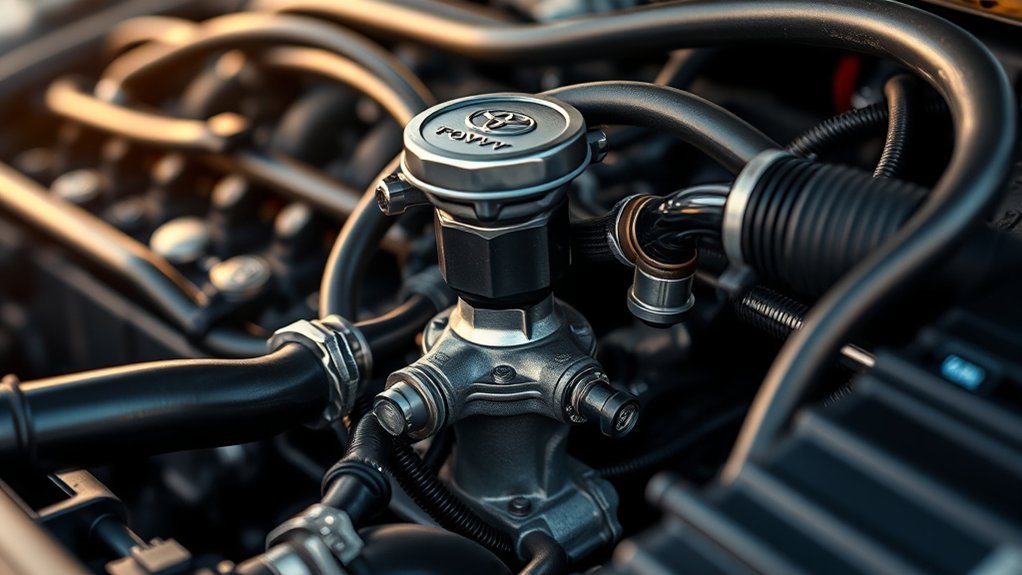
Your Toyota Camry’s positive crankcase ventilation system manages gases that escape past the piston rings during combustion. A restriction, split hose, failed valve, damaged diaphragm, or leaking connection can affect crankcase pressure and intake airflow. The resulting symptoms may include rough idle, oil seepage, unusual oil use, whistling, or a check-engine light, but the correct diagnosis depends on the Camry’s model year, engine, and market.
Quick Answer
Your Camry’s PCV system moves blow-by vapors from the crankcase into the intake for combustion. Inspect the complete system when you find cracked hoses, oil leakage, rough idle, unusual fuel trims, whistling, or unexplained oil use. Use the procedure and replacement part specified for your exact engine.
Key Takeaways
- Identify the model year, engine, market, and hybrid status before locating or ordering a PCV component.
- A restricted system can raise crankcase pressure, while an excessive-flow leak can disturb idle and fuel trims.
- A rattle, slight oil film, or change in idle is only a clue and does not prove correct PCV flow.
- Toyota does not use one component design or one replacement interval across every Camry generation.
- Treat trouble codes as diagnostic evidence, not instructions to replace a PCV valve.
At a Glance
| Time Required | About 15–60 minutes for an accessible valve, hose, or grommet after obtaining the correct procedure |
| Difficulty | Easy to moderate for an exposed serviceable component; higher when the system is integrated or hidden by the intake |
| Tools Needed | Flashlight, pliers, appropriate socket or wrench, clean shop towels, scan tool if available, torque wrench when specified, and Toyota service information |
| Cost | Usually modest for a separate valve, hose, seal, or grommet; integrated assemblies, diagnosis, and difficult access can increase the total |
How the PCV System Works in a Toyota Camry
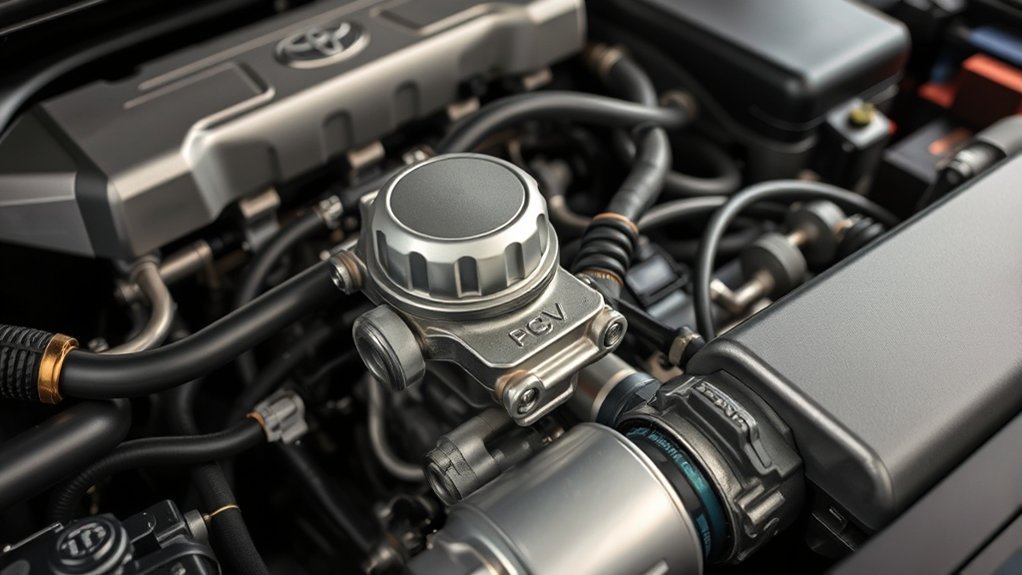
A small amount of combustion gas normally passes between the piston rings and cylinder walls. This gas, called blow-by, enters the crankcase with traces of fuel vapor, moisture, exhaust byproducts, and suspended oil droplets.
The PCV system gives those vapors a controlled route out of the crankcase. Filtered air normally enters through a breather connection, passes through the engine, and carries the vapors toward an intake connection. The vapors are then burned in the engine rather than released directly into the atmosphere.
Controlled ventilation helps limit crankcase pressure and moisture accumulation. If the route becomes restricted, pressure and deposits can increase. If a valve, diaphragm, hose, seal, or fitting allows too much airflow, the fault can behave like an intake-air leak.
The hardware is not identical across all Camrys. Depending on the year and engine, Toyota may use a separate spring-loaded valve, a diaphragm, a calibrated orifice, internal baffles, an oil separator, molded hoses, or a component integrated into a larger cover or assembly. Toyota’s 2025 U.S. Camry Warranty & Maintenance Guide, for example, refers to a “PCV valve or orifice.”
A PCV fault is a controlled-airflow problem involving the complete crankcase ventilation path, not automatically a failed removable valve.
Identify Your Camry Before Starting
Record the model year, engine information, market, and VIN before buying a part or following a repair video. A procedure for an older four-cylinder engine may not apply to a V6, a later Dynamic Force engine, or a hybrid Camry.
Use Toyota’s manual and warranty portal to select the correct vehicle. Factory component locations, removal methods, torque specifications, diagnostic charts, and wiring information are available through the Toyota Technical Information System.
Do not order by appearance alone. Two valves may share the same thread or hose size while using different internal flow calibration. A physically compatible but incorrectly calibrated part can create a new drivability or emissions problem.
Check Warranty Information Before Disassembly
Before paying for a repair, review the warranty booklet for your exact vehicle. Toyota has classified PCV valves or orifices and related hoses, clamps, fittings, seals, and hardware as parts of the emissions-control system in applicable U.S. documentation. Actual coverage depends on the vehicle, market, age, mileage, failed component, and cause of failure.
A maintenance guide explains scheduled owner service, while a repair manual supplies diagnostic and replacement procedures. A parts catalog identifies the applicable component. One document should not be used as a substitute for the others.
Common Symptoms of a Failing PCV System
Symptoms vary according to whether the system has excessive airflow, restricted airflow, a split hose, a leaking seal, oil carryover, or a separate engine fault. No single symptom confirms that the PCV valve has failed.
| Possible Condition | Possible Signs | Other Causes to Rule Out |
|---|---|---|
| Excessive PCV airflow or hose leak | Rough or high idle, hissing or whistling, positive fuel trims, hesitation, misfire, hard starting, or a check-engine light | Intake-gasket leak, brake-booster leak, damaged vacuum hose, purge-valve fault, contaminated MAF sensor, injector issue, or ignition fault |
| Restricted valve, orifice, hose, or separator | Oil seepage, recurring gasket leaks, sludge, moisture under the oil cap, or abnormal crankcase pressure | Overfilled oil, worn piston rings, damaged gaskets, poor oil-change history, fuel dilution, or repeated short-trip operation |
| Oil carried into the intake | Heavy oil deposits in intake plumbing, spark-plug fouling, blue-gray or pale exhaust smoke, or increased oil use | Piston-ring wear, valve-stem seals, incorrect oil level, cylinder damage, or another internal engine problem |
A light oil film inside a breather or intake hose can occur during normal operation. Heavy pooling, a rapidly falling dipstick level, recurring plug fouling, or visible exhaust smoke requires further diagnosis.
Note: Oil leakage and oil consumption do not automatically prove a PCV fault. Check the oil level, service history, external gaskets, fuel dilution, engine wear, and other intake leaks before replacing parts.
PCV Valve vs. EVAP Purge Valve
The PCV and evaporative-emissions systems both connect to the engine’s intake side, but they perform different jobs.
- PCV system: Moves blow-by gases, moisture, and oil vapor from the crankcase into the intake.
- EVAP purge system: Meters stored fuel vapor from the charcoal canister into the engine.
- Shared symptoms: A leak or uncontrolled flow in either system may contribute to rough idle, hard starting, fuel-trim changes, or a check-engine light.
A stuck purge valve can therefore imitate some symptoms of an excessive-flow PCV fault. Inspecting only the PCV valve may miss the true cause. A smoke test, component isolation test, scan data, and the applicable Toyota diagnostic chart can separate the two systems.
How the PCV System Controls Engine Airflow
The system must move enough vapor to ventilate the crankcase without allowing an uncontrolled amount of intake air. A calibrated valve, diaphragm, or orifice regulates that flow.
At idle, intake-manifold vacuum is generally high. The PCV component limits flow so the engine does not receive excessive additional air. As engine load and blow-by volume change, the component’s flow characteristics also change.
Some traditional valves also resist reverse flow during an intake backfire. Diaphragm and integrated systems may respond differently from an older spring-and-pintle valve, which is why a universal bench test cannot verify every Camry design.
Gates’ technical PCV overview explains that normal PCV airflow is accounted for by engine management. A leak or valve that allows uncontrolled flow can force the engine computer to make larger fuel-trim corrections.
Diagnostic Trouble Codes and Scan Data Related to PCV Problems
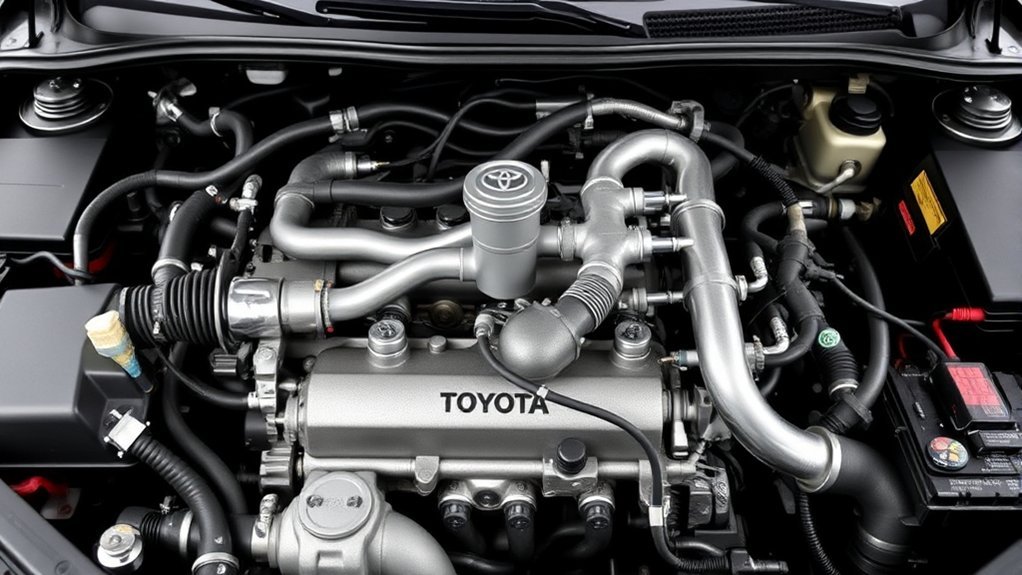
A Camry normally does not set a code that simply instructs you to replace the PCV valve. Instead, a leak or restriction may affect airflow, mixture control, idle quality, misfire detection, or another system the engine computer can monitor.
| Possible Scan Clue | What It May Suggest | Important Limitation |
|---|---|---|
| P0171 or P0174 | The engine computer has detected a lean condition on one or more banks. | Intake leaks, low fuel delivery, exhaust leaks, sensors, injectors, or purge-system faults may cause the same codes. |
| P0101 or another airflow-related code | Measured airflow does not agree with the computer’s expected operating range. | The MAF sensor, intake duct, air filter, wiring, throttle body, purge system, or another air leak may be responsible. |
| P0505 or an idle-control-related code on applicable models | The engine cannot maintain the expected idle condition. | Throttle deposits, electronic-throttle faults, other vacuum leaks, wiring, or mechanical problems may also affect idle. |
| High positive short- or long-term fuel trim | The computer is adding fuel to compensate for a mixture it interprets as lean. | Fuel-trim data identifies a pattern, not the specific leaking component. |
Record stored, pending, and permanent codes before clearing anything. Save freeze-frame information such as engine speed, coolant temperature, calculated load, vehicle speed, and fuel trims at the time the fault was detected.
If positive fuel trims are substantially higher at idle and improve at a steady raised engine speed, an intake-side leak becomes more likely. The pattern still requires physical testing because a PCV hose, intake gasket, purge valve, brake-booster connection, or another vacuum path can produce similar data.
Quick Tests That Do Not Prove PCV Condition
- Rattle test: Movement inside an older valve does not verify its flow calibration or sealing.
- Oil-cap suction: Suction, pressure, or an idle change must be compared with the factory procedure. Removing the cap deliberately changes the ventilation path.
- Crankcase pulsing: Some pressure pulsation is normal and is not a stand-alone failure test.
- Oil in a hose: A light film may be normal; heavy pooling or repeated oil ingestion needs diagnosis.
- Temporary improvement after hose pinching: This can help isolate an airflow path, but it does not identify which valve, hose, seal, or passage is defective.
Can You Drive With a Suspected PCV Problem?
A minor hose seep, light whistle, or stable check-engine light may allow a short trip to a repair facility, provided the oil level is correct and the engine runs normally. Check the dipstick before driving and avoid unnecessary high-load operation until the cause is known.
Stop driving and arrange inspection if the oil level is falling rapidly, oil is spraying or leaking heavily, exhaust smoke is persistent, the engine misfires severely, the malfunction indicator is flashing, the engine stalls, or crankcase pressure is forcing seals or the dipstick out of position. Continuing to drive can worsen oil loss, catalyst damage, or an underlying mechanical fault.
Warning: Shut the engine off immediately if the oil-pressure warning appears. A PCV diagnosis must never take priority over a low-oil-pressure warning or a dangerously low oil level.
How to Check Your Camry’s PCV System Safely
Warning: Let the engine cool before touching parts near the cylinder head or exhaust. On a hybrid Camry, confirm that the READY indicator is off, keep the key away from the vehicle, and do not touch orange high-voltage wiring or connectors. The gasoline engine can start automatically whenever READY is on, even when the engine compartment is initially silent.
- Identify the system. Use the VIN, model year, engine, and market information to locate the valve or orifice, breather hose, separator, intake connection, clamps, and seals.
- Check the oil first. Verify that the oil is not above or below the specified range. Look for sludge, unusual moisture, a strong fuel odor, or an oil level that changes quickly.
- Inspect the hoses and fittings. Look for splits, hardened rubber, collapsed sections, loose clamps, damaged grommets, oil saturation, kinked routing, and disconnected fittings.
- Inspect the valve, orifice, or separator. Remove it only when the applicable procedure permits. Check for sludge, broken plastic, damaged seals, blocked passages, and loose mounting points.
- Treat the rattle test as preliminary. A rattle in an older pintle-style valve only shows that an internal part can move.
- Test airflow or crankcase pressure correctly. Use Toyota’s specified connection point, units, operating condition, and acceptable range. Do not apply a universal vacuum target to every engine.
- Review scan data. Compare fuel trims at idle and at a steady raised engine speed. Check misfire counts, airflow data, pending codes, and freeze-frame information.
- Rule out competing faults. Test the EVAP purge system, other vacuum hoses, intake gaskets, ignition components, fuel delivery, sensors, and engine condition when the evidence does not isolate the PCV path.
Pro Tip: Photograph each hose, clamp, and connector before disassembly. Similar-looking breather, purge, and vacuum lines may route differently, and one incorrect connection can create a new fault.
When to Get Professional Diagnosis
Use a qualified technician when access requires substantial intake removal or when the valve, separator, or passages are integrated into a cover that is not intended for simple owner service.
Professional testing is also appropriate when the engine has heavy sludge, an oil-pressure concern, severe or repeated oil loss, abnormal crankcase pressure, persistent lean codes, or signs of piston-ring or valve-seal wear. A technician may use a smoke machine, low-pressure manometer, factory-capable scan tool, compression test, leak-down test, or Toyota’s model-specific diagnostic specifications.
Key Maintenance Tips for the Camry’s PCV System
The PCV system is generally low maintenance, but clean oil and intact hoses support reliable operation. Follow the maintenance guide for your exact Camry rather than applying one aftermarket mileage recommendation to every engine.
Regular Valve or Orifice Inspection
Inspect accessible PCV components during routine underhood service, when diagnosing an oil leak or lean condition, or whenever other work exposes the area. Look for deposits, brittle plastic, damaged seals, loose fittings, and restricted openings.
Replace a component when it is damaged, leaking, restricted, or outside the applicable factory test specification. Do not assume that one mileage number requires replacement on every Camry, and do not postpone a confirmed repair because the vehicle has low mileage.
Proper Hose Replacement
Use a hose or molded assembly intended for crankcase ventilation and compatible with hot oil vapor. A general-purpose vacuum or coolant hose may soften, swell, collapse, or kink in this application.
Replace a hose that is cracked, hardened, collapsed, oil-soaked, loose at its fittings, or obstructed internally. Inspect its clamps, grommets, O-rings, and sealing surfaces at the same time.
Follow the original routing. Avoid sharp bends, hot exhaust parts, moving components, and positions where an engine cover can pinch the hose.
Timely System Cleaning and Oil Service
Use the oil grade and service schedule specified for your Camry. Delayed oil changes, fuel dilution, and repeated short trips can encourage moisture and deposit accumulation in small ventilation passages.
Do not soak a plastic, rubber, diaphragm-style, or integrated PCV component in solvent unless Toyota’s service information specifically allows it. Replacement is usually safer when a modern component is brittle, contaminated, damaged, or unable to regulate flow correctly.
| Maintenance Task | Recommended Timing |
|---|---|
| Inspect accessible hoses, fittings, clamps, and seals | During routine underhood inspections and whenever related symptoms appear |
| Test the valve, orifice, diaphragm, or separator | When diagnosing oil leakage, abnormal crankcase pressure, rough idle, lean codes, or increased oil use |
| Replace a PCV component | When damaged, leaking, restricted, incorrectly flowing, outside specification, or required by the applicable Toyota schedule |
| Service the engine oil | At the mileage, time, and operating-condition interval specified for the exact Camry |
How to Replace Your Camry’s PCV Valve Safely
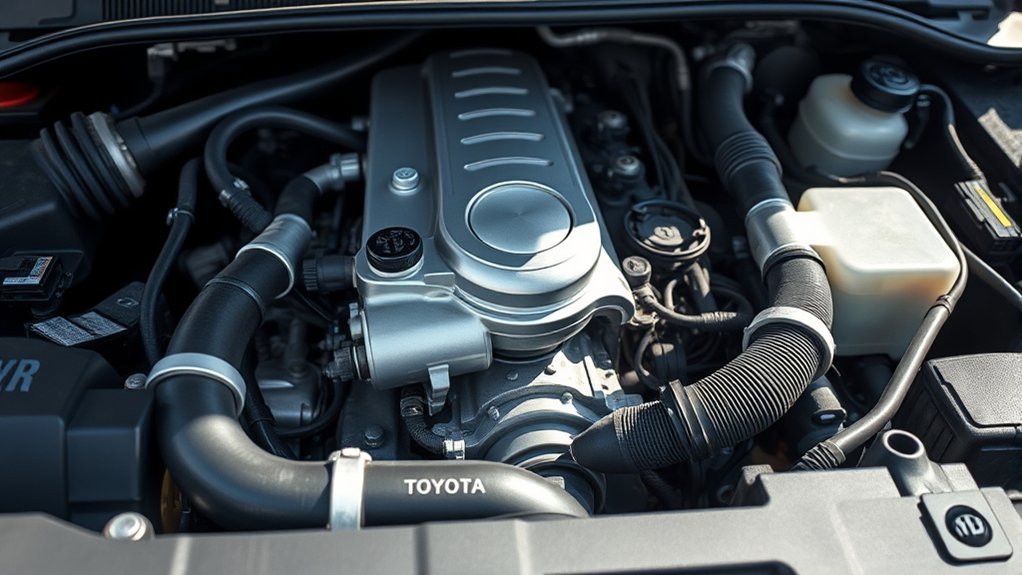
Replacement may be simple when a serviceable valve is exposed, but the correct part, access method, seal, and tightening specification depend on the engine. Determine whether the component is threaded, press-fit, hose-integrated, or part of a larger assembly before applying force.
Tools You’ll Need
- Flashlight
- Clean shop towels
- Pliers for the applicable hose clamp
- Correct socket, deep socket, or wrench for a threaded component
- Plastic trim tool if an engine cover uses removable clips
- VIN-matched PCV valve, orifice, hose, seal, grommet, or assembly
- Torque wrench when Toyota specifies a tightening torque
- OBD-II scan tool for post-repair checks, if available
Step-by-Step Replacement Guide
- Park safely. Use a level surface, apply the parking brake, turn the vehicle off, and let the engine cool.
- Make a hybrid Camry safe. Confirm that READY and the instrument cluster are off. Keep the key away from the vehicle and do not disturb orange high-voltage parts.
- Verify the replacement. Match the VIN, engine, connector size, hose orientation, seal, and flow design. A similar-looking part may use different calibration.
- Locate and photograph the system. Record hose routing, connector positions, clamp orientation, and nearby components.
- Remove only the necessary covers. Do not remove the valve cover or intake assembly unless the Toyota procedure specifically requires it.
- Detach the hose carefully. Release the clamp and rotate the hose gently to break its seal. Replace a hose that is hardened, cracked, swollen, collapsed, or bonded to the fitting.
- Remove the component according to its design. Unscrew a threaded valve with the specified tool, pull a press-fit component from its grommet as directed, disconnect a molded assembly at its retainers, or replace the larger cover or separator when the PCV device is not serviced separately.
- Inspect nearby parts. Check the grommet, O-ring, seal, threads, hose, fitting, clamp, and visible passage for damage or heavy deposits.
- Install the replacement. Seat a press-fit component fully or tighten a threaded part to Toyota’s exact specification. Do not guess the torque or overtighten a fitting in plastic, magnesium, or aluminum.
- Reconnect the hose. Restore the original routing and clamp position. Confirm that the hose is not kinked, stretched, or contacting a hot or moving part.
- Inspect before operation. Remove tools and rags, secure every cover and connector, and check the oil cap and dipstick.
- Verify the repair safely. With everyone and every tool clear of the engine compartment, follow the applicable Toyota procedure for any running test. On a hybrid, remember that the gasoline engine may start automatically whenever READY is illuminated.
Common Mistakes to Avoid
| Mistake | Possible Consequence | Better Approach |
|---|---|---|
| Buying by appearance alone | Incorrect flow calibration, poor fit, leakage, or a new drivability problem | Confirm the component by VIN, engine, and part supersession information |
| Assuming every component is threaded | Broken valve, fitting, grommet, separator, or valve cover | Verify whether the part unscrews, pulls out, disconnects, or is integrated |
| Reusing a brittle hose or grommet | Vacuum leakage, oil seepage, or a loose connection | Replace damaged sealing and connecting parts |
| Guessing the torque | Stripped threads, cracked housing, deformation, or leakage | Use the exact Toyota repair specification |
| Clearing codes before recording data | Loss of freeze-frame information and useful diagnostic evidence | Save codes, trims, and freeze-frame data before resetting anything |
| Assuming the PCV system caused every oil leak | Unnecessary replacement and a missed gasket, wear, or lubrication fault | Confirm the ventilation fault and inspect other leak sources |
Post-Repair Verification
Listen for new hissing or whistling, inspect the repaired connection for oil or air leakage, and confirm that every hose remains fully seated. Review idle quality, misfire data, and short- and long-term fuel trims after the engine reaches the operating condition specified by Toyota.
Do not clear codes merely to turn off the warning light. Record the original evidence first. If codes are cleared after a confirmed repair, remember that pending-code history and emissions readiness information may reset and require normal driving before all monitors complete again.
Recheck the oil level and repaired hose after several trips. A returning code, continued oil loss, persistent smoke, or abnormal fuel trims indicates that the original problem was not fully corrected or that another fault is present.
Alternative PCV Designs and Aftermarket Catch Cans
Toyota engines do not all use the same ventilation hardware. Depending on the design, the system may include one or more of the following:
- Calibrated valve: A spring, pintle, or diaphragm regulates flow as crankcase pressure and intake vacuum change.
- Fixed orifice: A precisely sized opening meters vapor without a traditional moving valve.
- Integrated separator: Baffles or a separator remove part of the oil mist before the vapors enter the intake.
- Integrated hose or cover assembly: The regulating component may not be available or serviceable as a separate valve.
An aftermarket catch can attempts to collect suspended oil before the vapor reaches the intake. It is not a substitute for repairing a blocked valve, split hose, failed separator, incorrect oil level, or excessive engine blow-by.
A poor installation can create vacuum leaks, restrictions, incorrect routing, frozen condensation, or an open path to the atmosphere. A catch can also requires inspection and draining. Any installation must preserve the factory system’s closed and calibrated airflow and must not interfere with required emissions equipment.
Warning: In the United States, do not vent the crankcase to the atmosphere, block the factory ventilation route, or install a device that defeats or reduces the effectiveness of certified emissions controls. The Clean Air Act prohibits emissions tampering and defeat devices. Owners in other countries should check the emissions and inspection rules that apply in their jurisdiction.
Frequently Asked Questions
What does the PCV system do in a Toyota Camry?
It moves blow-by gases, moisture, and oil vapor out of the crankcase and routes them into the intake for combustion. Controlled airflow helps manage crankcase pressure without creating an uncontrolled intake leak.
Where is the PCV valve located on a Toyota Camry?
The location varies by year and engine. It may be threaded into a cover, pressed into a grommet, attached through a molded hose, located near an intake passage, or incorporated into a separator or larger cover assembly. Use the VIN and Toyota service information to confirm the layout.
How often should a Toyota Camry PCV valve be replaced?
There is no single replacement interval that applies to every Camry generation and engine. Follow the maintenance information for the exact vehicle and replace the applicable valve, orifice, hose, seal, or assembly when it is damaged, restricted, leaking, outside specification, or specifically scheduled for service.
Does a rattling PCV valve mean it is good?
No. A rattle only suggests that an internal part in some older valve designs can move. It does not verify calibrated airflow, sealing, vacuum response, hose condition, or the operation of the complete ventilation path.
Can a bad PCV system cause a check-engine light?
Yes. Excessive or incorrect PCV airflow can contribute to lean fuel trims, rough idle, airflow discrepancies, or misfires. Codes such as P0171, P0174, P0101, or P0505 have several possible causes and do not identify a failed PCV component by themselves.
Can a PCV problem cause oil leaks or oil consumption?
A restriction may raise crankcase pressure and contribute to oil seepage. Excessive flow or a failed separator may carry more oil mist into the intake. Overfilling, worn rings, valve-stem seals, gaskets, and other mechanical problems can produce the same symptoms.
Should I clean or replace the PCV valve?
Replace a damaged, brittle, leaking, diaphragm-style, integrated, or incorrectly flowing component. Clean a part only when Toyota’s service procedure permits it because solvent can damage modern plastic, rubber, seals, and diaphragms.
Can I drive with a suspected bad PCV valve?
A short trip for diagnosis may be reasonable when the oil level is correct, the warning light is steady, and the engine runs normally. Stop driving for rapid oil loss, heavy leakage, persistent smoke, severe misfire, stalling, a flashing malfunction indicator, or an oil-pressure warning.
Is the EVAP purge valve the same as the PCV valve?
No. The PCV system handles crankcase gases, while the purge valve meters stored fuel vapor from the charcoal canister. Faults in either system can affect idle and fuel trims, so diagnosis may need to include both.
Could a Camry PCV component be covered by an emissions warranty?
Possibly. Toyota identifies PCV valves or orifices and related hardware as emissions-system components in applicable U.S. warranty documentation. Coverage depends on the exact vehicle, market, age, mileage, part, and cause of failure, so review the vehicle’s warranty guide before authorizing repair.
Conclusion
A healthy PCV system maintains controlled airflow through your Camry’s crankcase without creating an intake leak or allowing excessive pressure to build. Accurate diagnosis starts with the exact engine design, an inspection of the complete ventilation route, recorded scan data, and testing against the applicable Toyota specifications.
Do not rely on a universal replacement mileage, a rattle test, oil-cap behavior, or one trouble code. Replace only the confirmed faulty valve, orifice, hose, grommet, seal, separator, or integrated assembly. Afterward, verify hose routing, leaks, idle quality, fuel trims, oil level, pending codes, and any returning symptoms.
Sources
- Toyota 2025 Camry Warranty & Maintenance Guide — PCV valve-or-orifice terminology, emissions-component coverage, maintenance responsibilities, and hybrid high-voltage precautions
- Toyota Manuals and Warranties — year- and vehicle-specific owner manuals, warranty booklets, and maintenance guides
- Toyota Technical Information System — factory repair procedures, diagnostic charts, service bulletins, specifications, and wiring information
- Gates TechZone: The Role of the Positive Crankcase Ventilation Valve — blow-by, regulated airflow, oil separation, restrictions, uncontrolled flow, and fuel-trim effects
- Toyota Camry Hybrid Emergency Response Guide — READY-indicator awareness and automatic gasoline-engine starting and stopping
- U.S. EPA: Stopping Aftermarket Defeat Devices — U.S. Clean Air Act restrictions on emissions tampering and defeat devices
