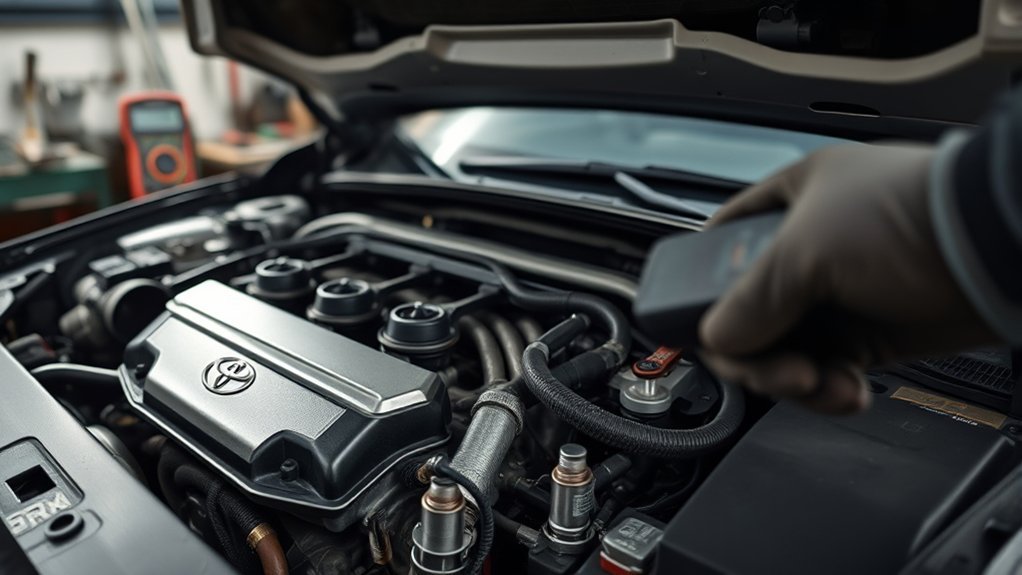
A rough idle in your Toyota Camry can come from an ignition misfire, an air or vacuum leak, incorrect airflow data, a fuel-delivery problem, or an internal engine issue. However, shaking at a stop does not always mean the engine is running badly. Worn engine mounts can transmit vibration even when engine speed remains steady. The safest approach is to observe the symptoms, scan for diagnostic codes, and test the most likely system before replacing parts.
Quick Answer
A Toyota Camry may idle roughly because of a vacuum leak, cracked intake hose, worn spark plug, weak ignition coil, dirty throttle body, incorrect MAF reading, fuel-delivery fault, purge-valve problem, or low compression. Scan for codes first, note when the problem occurs, and avoid replacing parts without testing them.
Key Takeaways
- Check whether the engine speed is actually unstable or the cabin is only vibrating because of worn mounts.
- Read stored and pending OBD-II codes before disconnecting the battery or clearing the check-engine light.
- Inspect the air-intake duct, PCV hoses, vacuum lines, spark plugs, coils, and electrical connections before buying parts.
- Use maintenance intervals and parts specified for your exact Camry year, engine, and powertrain.
- A flashing check-engine light can indicate a severe misfire that may damage the catalytic converter.
Warning: If the check-engine light is flashing, the engine is losing power, or you smell raw fuel, reduce engine load and stop driving as soon as it is safe. Let the engine cool before inspecting it. Keep your hands, clothing, tools, and test leads away from belts, pulleys, cooling fans, and hot exhaust components.
At a Glance
| Time Required | About 30 to 90 minutes for initial checks; longer if compression, fuel-pressure, or smoke testing is needed |
| Difficulty | Beginner for visual checks and code reading; intermediate to advanced for electrical, fuel, and mechanical testing |
| Tools Needed | OBD-II scan tool, flashlight, basic hand tools, gloves, and safety glasses; a multimeter, smoke tester, and compression gauge may also help |
| Cost | Visual checks may cost nothing. Repair cost depends on whether the fault is a hose, plug, coil, sensor, mount, injector, or internal engine problem. |
Common Causes of Rough Idle in a Toyota Camry
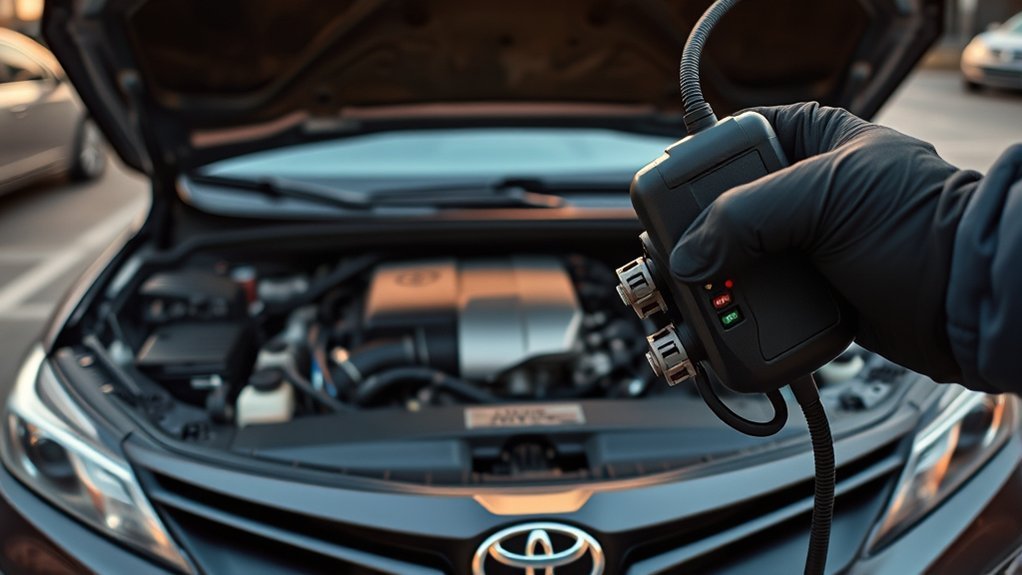
The cause of a Toyota Camry rough idle depends on the model year, engine, mileage, stored trouble codes, and conditions under which the symptom appears. Depending on the generation, your Camry may use a separate idle-air-control system, electronic throttle control, port fuel injection, a combination fuel-injection system, or a hybrid powertrain.
Common causes include:
- Ignition problems: Worn or fouled spark plugs, weak ignition coils, damaged coil connectors, or oil inside a spark-plug tube can cause one or more cylinders to misfire.
- Unmetered air: Split vacuum hoses, a cracked intake boot, a leaking intake-manifold gasket, or a disconnected PCV hose can allow air to enter after the MAF sensor.
- Airflow-control problems: Deposits around the throttle plate or an incorrect MAF signal can disturb airflow calculations at idle.
- Fuel-delivery problems: A restricted or leaking injector, incorrect fuel pressure, poor electrical connection, or contaminated fuel can cause uneven combustion.
- EVAP purge problems: A purge valve that allows too much vapor into the intake may cause a rough start or rough idle, sometimes after refueling.
- Mechanical problems: Low compression, valve leakage, incorrect valve timing, or an internal coolant leak may create a persistent cylinder-specific misfire.
- Mount problems: Worn engine or transmission mounts can make the cabin shake even when the engine maintains a normal, steady idle.
Note: A Camry Hybrid may stop and restart its gasoline engine during normal operation. Engine cycling by itself is not a rough-idle fault. Look for abnormal shaking, warning lights, misfire codes, unusual noise, or a failure to run smoothly when the gasoline engine is operating.
How to Identify Symptoms of a Rough Idle
A true rough idle means combustion or engine speed is uneven. You may feel repeated pulses, hear an irregular exhaust note, see the tachometer move, or notice that the engine nearly stalls. A small change in RPM when the air conditioning compressor engages can be normal, but severe shaking or repeated RPM drops are not.
Record the conditions under which the symptom appears:
- Only during a cold start
- Only after the engine reaches operating temperature
- Only in Drive or Reverse
- In Park and in gear
- Only with the air conditioning, headlights, or rear defroster on
- Immediately after refueling
- After battery disconnection, throttle-body work, or other repairs
- During acceleration as well as at idle
| Symptom Pattern | Possible Area to Check | Useful First Test |
|---|---|---|
| RPM fluctuates in Park | Vacuum leak, throttle body, MAF, purge valve, or misfire | Scan codes and view live RPM and fuel trims |
| RPM is steady, but the cabin shakes in Drive | Engine or transmission mounts | Compare vibration in Park, Drive, and Reverse |
| Rough only when cold | Intake leak, ignition fault, injector leakage, temperature input, or compression | Check cold-start codes, misfire counts, and intake hoses |
| Rough after refueling | EVAP purge system or overfilled fuel tank | Check EVAP codes and purge-valve operation |
| One cylinder repeatedly misfires | Plug, coil, injector, wiring, or compression | Compare that cylinder with the others |
How to Diagnose a Toyota Camry Rough Idle in Order
1. Scan for Trouble Codes Before Clearing Anything
Connect an OBD-II scan tool and check stored, pending, and permanent codes. Do this before disconnecting the battery or erasing the check-engine light. Codes such as P0300 through P0306 may identify a random or cylinder-specific misfire, while air-metering, fuel-trim, EVAP, or sensor codes can point toward another system.
Save the freeze-frame information when available. It can show engine temperature, RPM, load, speed, and fuel-trim conditions at the time the fault was detected. The California Air Resources Board’s OBD-II guidance explains that the system stores malfunction information to support accurate diagnosis.
2. Confirm Whether the Engine Is Actually Running Rough
Watch engine RPM in Park and Drive while the vehicle is stationary and the parking brake is applied. Listen to the exhaust and note whether the rhythm is uneven. If RPM and exhaust rhythm remain steady while the body vibrates, inspect the engine and transmission mounts before assuming the engine has a fuel or ignition problem.
3. Perform a Visual Inspection
With the engine off and cool, inspect:
- The air-filter housing and clamps
- The rubber intake duct between the air box, MAF sensor, and throttle body
- PCV and vacuum hoses
- Electrical connectors at coils, injectors, the MAF sensor, and the throttle body
- Battery terminals and visible ground connections
- Oil or coolant around spark-plug wells
- Loose components or recently disturbed wiring
Flex rubber intake ducts carefully because cracks may open only when the duct moves. A split after the MAF sensor can admit air that the engine computer did not measure.
4. Review Live Data
If your scan tool supports live data, compare short-term and long-term fuel trims at idle and at a higher steady RPM. Large positive correction at idle that improves when RPM rises can support the possibility of an intake or vacuum leak. Correction that remains abnormal across operating ranges may point toward broader airflow, fuel-pressure, sensor, or exhaust-measurement problems.
Fuel trims are diagnostic clues, not proof of a failed part. Compare the data with codes, symptoms, and factory specifications for your exact engine.
5. Test the Most Likely System
Use the evidence gathered so far to choose the next test. For example, a cylinder-specific misfire may justify checking that cylinder’s plug, coil, injector command, and compression. Lean codes affecting the entire engine may justify inspecting for unmetered air before replacing ignition parts.
6. Verify the Repair
After repairing the confirmed fault, restart the engine under the same conditions that produced the symptom. Check for returning codes, review fuel trims and misfire data, and take a controlled road test when safe. Do not consider the repair complete only because the warning light was cleared.
Pro Tip: Write down codes and freeze-frame data before moving coils, plugs, or injectors between cylinders. Keeping a record prevents you from losing the original evidence and makes it easier to see whether the fault follows a component.
Diagnosing Vacuum Leaks for a Smoother Idle
A vacuum or intake leak allows air to enter the engine without being measured correctly. The extra air can produce a lean mixture, unstable idle, hesitation, stalling, or lean diagnostic codes. The effect is often strongest at idle because the unwanted airflow represents a larger share of the engine’s total airflow.
Identifying Common Leak Sources
Inspect these common areas:
- Cracked or disconnected vacuum hoses
- PCV valve, PCV hose, and grommet
- Air-intake duct after the MAF sensor
- Intake-manifold gasket area
- Throttle-body gasket
- Brake-booster vacuum hose
- EVAP purge hoses and connections
- Loose clamps or fittings disturbed during recent service
A hissing noise may provide a clue, but many leaks are too small or too well hidden to hear.
Testing With an Automotive Smoke Machine
An automotive smoke machine can introduce low-pressure smoke into the intake system so escaping smoke reveals a leak. Follow the equipment maker’s pressure limits and connection instructions. Avoid introducing excessive pressure into sensors, diaphragms, seals, or the crankcase.
Warning: Do not spray carburetor cleaner, brake cleaner, starting fluid, or another flammable aerosol around a running or hot engine to search for leaks. Use equipment designed for automotive smoke testing and follow its safety instructions.
| Component | Possible Clue | Correct Response |
|---|---|---|
| Vacuum hose | Crack, loose connection, or escaping smoke | Replace or reconnect the damaged hose |
| Intake-manifold gasket | Lean idle, localized smoke, or abnormal fuel trims | Confirm the leak and replace the gasket correctly |
| Intake duct | Split that opens when the duct bends | Replace the duct and secure its clamps |
| PCV system | Damaged hose, loose grommet, or incorrect flow | Repair the leak and use the correct PCV part |
| Purge circuit | Roughness after refueling or unexpected purge flow | Test the valve and hoses before replacement |
How Spark Plugs and Ignition Coils Impact Idle
A worn, fouled, cracked, or incorrect spark plug can fail to ignite the mixture consistently. A weak ignition coil, damaged boot, loose connector, or poor power or ground circuit can create similar symptoms. Possible signs include cylinder-specific misfire codes, shaking, hesitation, poor acceleration, fuel odor, and reduced fuel economy.
If the plugs are near the end of their interval, replacing them is usually the first thing worth doing, since it is inexpensive and rules out the most likely cause. Our roundup of iridium and platinum plug options for the 2.4L Camry compares the sets that suit this engine.
Inspect the plug from the affected cylinder for:
- Excessive electrode wear
- Carbon, fuel, oil, or coolant deposits
- A cracked insulator
- An incorrect part number or heat range
- Damage caused by incorrect installation or torque
- Oil inside the plug tube
Do not replace spark plugs according to a generic interval. Use the schedule and plug specification in the Toyota manual and Warranty and Maintenance Guide for your exact year and engine.
If one cylinder has a repeatable misfire, a technician may move a suspected coil to another cylinder and check whether the misfire follows it. This test should be performed carefully, with codes and cylinder locations recorded before components are moved.
Fuel Injector Problems and Fixes

A fuel injector can contribute to a rough idle if it is restricted, leaking, electrically open, shorted, or not being commanded correctly. Injector problems may produce a cylinder-specific misfire, difficult starting, fuel odor, poor fuel economy, or an abnormal spark-plug appearance.
Do not assume every high-mileage Camry needs injector cleaner or new injectors. First check:
- Misfire codes and cylinder data
- Injector connector condition
- Wiring continuity and command signal when appropriate
- Fuel pressure and pressure retention
- Whether the suspected cylinder has good spark and compression
- Whether the fault follows an injector during a controlled professional test
Pour-in fuel additives cannot repair a failed injector coil, damaged wiring, low fuel pressure, severe blockage, or mechanical engine fault. Use only products compatible with the vehicle and follow both Toyota and product instructions.
Why Cleaning Your Throttle Body Matters
Deposits around the throttle plate can sometimes affect low-speed airflow or cause the plate to stick. However, cleaning the throttle body should follow an inspection or diagnostic reason rather than an invented mileage schedule.
Enhances Airflow Efficiency
A clean, freely moving throttle plate allows the engine-control system to regulate airflow as designed. Before cleaning, inspect the intake duct and confirm that the symptom is not caused by a vacuum leak, ignition misfire, or electrical fault.
Some Camrys use electronic throttle control. Do not force the throttle plate, flood the housing with cleaner, or allow liquid to enter electronic components. Follow the procedure for the exact model and engine.
Reduces Carbon Buildup
If deposits are present, use a product approved for throttle bodies and follow its label. Work with the engine off and cool, protect electrical connectors, and avoid damaging any coating inside the bore.
Idle behavior may change temporarily after throttle-body service or battery disconnection while the control system readjusts. Because procedures differ by model, do not perform an improvised relearn involving unsafe engine speeds or driving conditions. Use the owner information or Toyota service procedure for the vehicle.
Checking and Cleaning the Mass Airflow Sensor
The MAF sensor reports incoming airflow to the engine-control module. Contamination, wiring faults, an air leak after the sensor, or an incorrect replacement sensor can affect fuel calculations and contribute to hesitation, stalling, poor acceleration, abnormal fuel trims, or rough idle.
Before cleaning or replacing the sensor:
- Inspect the air filter and air box for improper installation.
- Check the intake duct for cracks after the sensor.
- Inspect the connector for loose pins, corrosion, or damaged wiring.
- Review codes and live airflow data.
- Confirm that the problem is not a vacuum leak or ignition misfire.
If cleaning is justified, use only a cleaner labeled for MAF sensors. Do not touch or scrub the sensing element. Follow the product’s drying time and safety instructions before reconnecting the sensor or starting the engine. The CRC MAF cleaner information, for example, specifies ventilation, safety glasses, gloves, and attention to the package precautions.
Note: Cleaning will not repair a sensor with damaged electronics, broken wiring, an incorrect calibration, or an internal failure. Confirm the diagnosis before replacing it.
Battery and Electrical Issues That Affect Idle
A weak battery is more likely to cause slow cranking, no-start symptoms, warning lights, or low-voltage faults than an isolated warm-engine rough idle. However, poor terminals, damaged grounds, low charging voltage, or unstable electrical power can interfere with ignition, fuel, throttle, and sensor operation.
Battery Health Check
Inspect the battery if you notice slow cranking, repeated jump starts, dimming lights, recent battery work, or voltage-related codes. Check that the case is secure and the terminals are clean and tight. A proper battery test is more useful than replacing the battery based only on age.
Do not select a replacement from an arbitrary CCA range. Match the group size, terminal layout, capacity, venting needs, and specifications required for your exact Camry. Hybrid models also have powertrain-specific electrical systems that should be handled according to Toyota procedures.
Ground Connection Issues
Inspect accessible engine, body, and battery ground connections for looseness, corrosion, damaged cable strands, or evidence of overheating. A connection can appear tight but still have excessive resistance under load, so voltage-drop testing may be needed.
Do not disconnect high-voltage hybrid components. Hybrid-system inspection and repair require the correct training, protective equipment, and service procedures.
Electrical System Inspection
A complete inspection may include battery condition, charging-system output, voltage drop, fuses, connectors, wiring, and scan-tool communication. Electrical testing should be guided by the symptoms and codes rather than by replacing coils, sensors, or the battery one at a time.
Other Problems That Can Feel Like a Rough Idle
Worn Engine or Transmission Mounts
If engine speed is stable but the steering wheel, seat, or dashboard shakes most strongly in Drive or Reverse, inspect the mounts. A mount may collapse, tear, leak fluid if it is hydraulically damped, or allow excessive engine movement.
Mount testing must be performed safely. Do not stand in front of or behind the vehicle while someone applies throttle in gear, and do not place hands near a moving engine.
Mechanical Compression Problems
A misfire that remains on the same cylinder after plug, coil, wiring, and injector checks may require a compression or cylinder-leakage test. Possible causes include a leaking valve, worn cylinder, head-gasket problem, valve-timing fault, or another internal condition.
Mechanical faults are especially important when the engine consumes coolant or oil, makes abnormal noise, produces smoke, or has a misfire that is strongest during a cold start.
Exhaust or Sensor Problems
An exhaust leak near an air-fuel or oxygen sensor can affect sensor readings. A restricted exhaust can reduce power and create poor running under load. Sensor codes should be diagnosed as circuit or system faults, not treated as automatic instructions to replace the named sensor.
Preventative Maintenance for Optimal Engine Performance

Preventative maintenance can reduce the chance of ignition, airflow, and fuel-related problems, but the correct schedule depends on your Camry’s year, engine, mileage, driving conditions, and service history. Use the official Toyota guide rather than a universal online interval.
| Task | When to Perform It | Why It Helps |
|---|---|---|
| Replace spark plugs | At the interval listed for the exact year and engine, or earlier if testing confirms a fault | Maintains reliable ignition and correct plug specification |
| Inspect intake and PCV hoses | During routine service and whenever lean or rough-idle symptoms appear | Finds cracks, loose clamps, and unmetered-air leaks |
| Inspect the air filter | According to the maintenance guide and more often in dusty conditions | Protects the intake system and supports correct airflow |
| Clean the throttle body or MAF sensor | When inspection, symptoms, data, or a factory procedure supports cleaning | Avoids unnecessary chemical service and component damage |
| Inspect battery terminals and grounds | During routine service or when starting and voltage symptoms occur | Reduces resistance and intermittent electrical faults |
| Check recalls and manufacturer communications | When diagnosing a recurring or model-specific concern | Identifies known issues and applicable repair information |
You can find model-specific manuals through Toyota’s Manuals and Warranties portal. You can also search NHTSA’s recall database by VIN or by year, make, and model.
When to Consult a Professional Mechanic
Arrange professional diagnosis when the rough idle persists after basic visual checks or when testing requires fuel-pressure equipment, an automotive smoke machine, an oscilloscope, compression tools, hybrid-system training, or factory scan data.
Seek service promptly if you notice:
- A flashing check-engine light
- Severe shaking or repeated stalling
- Loss of power or unsafe acceleration
- Raw-fuel odor or visible fuel leakage
- Overheating, coolant loss, or white exhaust smoke
- Abnormal knocking, tapping, or timing-related noise
- A misfire that remains on one cylinder
- Electrical burning odor, melted wiring, or repeated blown fuses
- Hybrid-system warnings
- No improvement after correctly testing the common ignition and intake causes
A trained technician can use Toyota repair information, wiring diagrams, service bulletins, and factory diagnostic procedures available through the Toyota Technical Information System.
Related Guides
Frequently Asked Questions
Why is my Toyota Camry idling rough?
Possible causes include a vacuum or intake leak, worn spark plug, weak coil, injector problem, dirty or faulty airflow component, EVAP purge fault, low compression, or another mechanical issue. Scan for codes and confirm when the symptom occurs before replacing parts.
Why is my Toyota Camry shaking at idle?
If RPM fluctuates or the exhaust rhythm is uneven, the engine may be misfiring or receiving incorrect air or fuel. If RPM remains steady and the vibration is much stronger in Drive or Reverse, worn engine or transmission mounts may be transmitting normal engine movement into the cabin.
What is the most common cause of a rough idle?
There is no single cause that applies to every Camry. Ignition misfires and unmetered-air leaks are common diagnostic categories, but the most likely cause depends on the model year, engine, codes, fuel trims, service history, and whether the roughness occurs cold, warm, in gear, or after refueling.
Why does my Toyota run rough only when the air conditioning is on?
The air-conditioning system adds load to the engine. A slight RPM adjustment can be normal, but strong shaking may expose a weak ignition component, dirty throttle body, airflow problem, charging issue, or worn mount. Compare RPM and vibration with the AC on and off.
Why does my Camry idle roughly after I fill the fuel tank?
Roughness after refueling can point toward an EVAP purge problem or an overfilled tank. Do not continue adding fuel after the pump shuts off automatically. Check for EVAP codes and have purge flow tested if the pattern repeats.
Can disconnecting the battery cause an unstable idle?
Idle behavior may change temporarily after battery disconnection or throttle-body work because learned values have been reset. Persistent roughness, stalling, or warning lights still require diagnosis. Use the procedure specified for the exact Camry rather than an improvised relearn.
Conclusion
A Toyota Camry rough idle should be diagnosed from evidence rather than guesses. Start by determining whether the engine is actually running unevenly, save all OBD-II codes and freeze-frame data, and note whether the symptom changes with temperature, gear selection, electrical load, or refueling.
Inspect simple items such as intake hoses, PCV connections, electrical connectors, and battery terminals before moving to ignition, fuel, airflow, compression, or mount testing. Use the maintenance schedule and repair information for your exact model year and engine. If the check-engine light flashes, the engine stalls, or specialized testing is required, have the vehicle inspected promptly.
Sources
- Toyota Manuals and Warranties — vehicle-specific owner manuals, warranty information, and maintenance guides
- Toyota Technical Information System — Toyota repair manuals, wiring diagrams, service bulletins, diagnostics, and technical information
- California Air Resources Board OBD-II Fact Sheet — check-engine-light, stored diagnostic information, and blinking-light guidance
- NHTSA Recall Lookup — recalls, investigations, complaints, and manufacturer communications by VIN or vehicle details
- DENSO Direct Ignition Coils and Wires — ignition-component information and vehicle-specific parts lookup
- CRC Mass Air Flow Sensor Cleaner Information — MAF-cleaner applications, flammability information, and handling precautions
