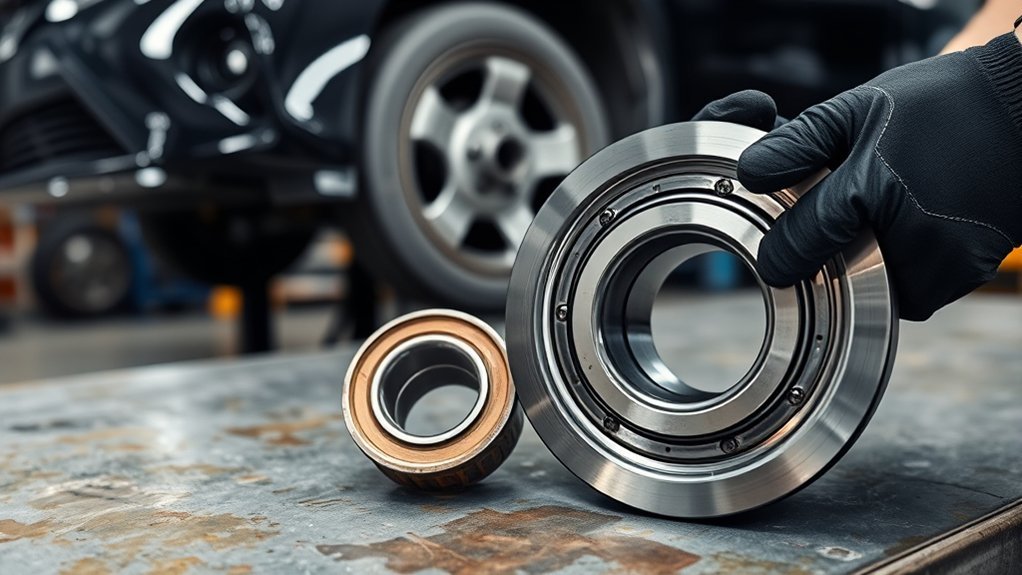
Toyota does not publish a universal wheel-bearing replacement interval for the Camry. As a general aftermarket benchmark, MOOG places average wheel-bearing life at about 85,000 to 100,000 miles, but that is not a Toyota Camry service schedule. Replace a bearing when diagnosis confirms wear or damage—not simply because the odometer reaches a certain number.
Last updated: September 19, 2026. U.S. guidance; research refreshed against Toyota warranty and maintenance information, NHTSA manufacturer communications, RepairPal, and MOOG.
Quick Answer
Toyota does not specify a routine Camry wheel-bearing replacement mileage. MOOG’s general guidance gives an average wheel-bearing lifespan of about 85,000 to 100,000 miles, but actual life varies widely with impacts, contamination, corrosion, loading, part quality, and installation. Replace the affected bearing or hub when inspection confirms noise, roughness, looseness, or damage.
Key Takeaways
- There is no required mileage at which every Toyota Camry wheel bearing must be replaced.
- MOOG’s general benchmark is about 85,000 to 100,000 miles, but Toyota does not publish a Camry-specific replacement interval.
- A hum, rumble, or growl that rises with vehicle speed is a common warning, but tire and brake problems can sound similar.
- Severe grinding, wheel wobble, smoke, or a major steering change means you should stop driving and arrange an inspection or tow.
- RepairPal’s estimate updated September 3, 2026 places Camry wheel-bearing replacement at about $309 to $515 before taxes, fees, location differences, and related repairs.
How Long Do Toyota Camry Wheel Bearings Last?
No single mileage applies to every Camry. MOOG’s general wheel-bearing guidance gives an average lifespan of 136,000 to 160,000 km, or about 85,000 to 100,000 miles. Treat that range as a broad aftermarket benchmark, not a Camry-specific promise: actual life depends on bearing quality, road impacts, water or salt exposure, wheel and tire setup, loading, and installation quality.
Toyota’s 2025 Camry Warranty and Maintenance Guide schedules maintenance through 150,000 miles without listing routine wheel-bearing replacement. That is stronger evidence than an online mileage rule: inspect and replace by condition, while checking the maintenance information for your exact model year and market.
| Bearing Condition | Recommended Action |
|---|---|
| Quiet, smooth, and free of looseness | No replacement is needed based only on mileage. |
| New hum or rumble that follows road speed | Arrange a diagnosis soon and rule out tire noise. |
| Confirmed roughness, excessive play, or damaged hub | Replace the affected bearing or hub assembly. |
| Grinding, major wobble, smoke, or severe steering change | Stop driving and arrange a tow or immediate professional inspection. |
Note: Mileage is a screening clue, not a replacement trigger. A high-mileage bearing that tests normally does not need automatic replacement, while a lower-mileage bearing can fail after a curb strike, pothole impact, flood exposure, contamination, or installation error.
What Wheel Bearings Do in a Toyota Camry
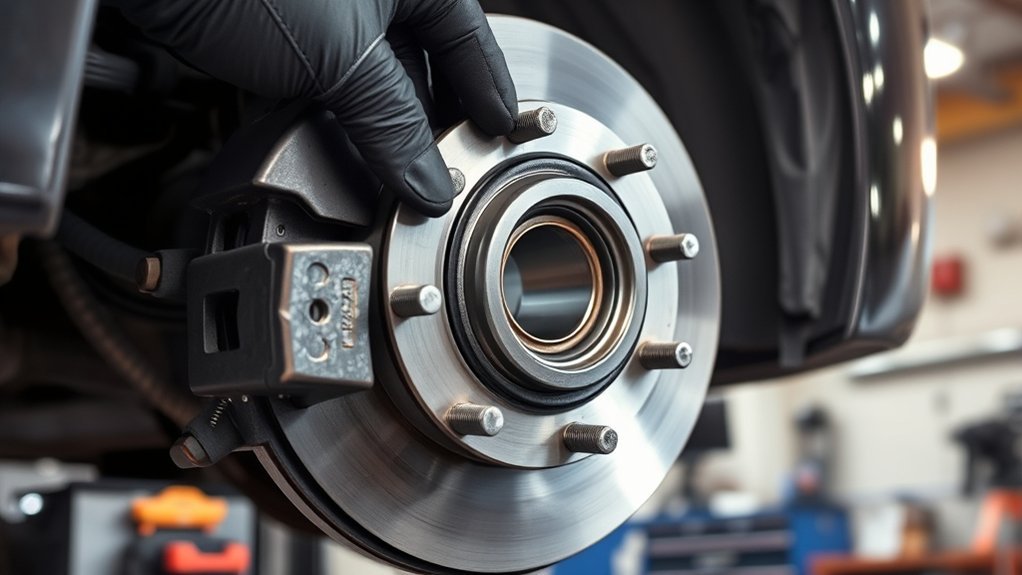
A wheel bearing contains hardened rolling elements and races that carry the vehicle’s load while reducing friction as the wheel turns. Most modern passenger-car bearings are sealed with grease inside. They are generally replaced rather than opened and repacked during routine maintenance.
The exact arrangement depends on the Camry’s model year, axle, and drivetrain. Some applications use a bolt-on hub and bearing assembly. Others use a bearing that must be pressed into the steering knuckle with specialized equipment. This difference affects labor time, parts cost, and whether nearby components must be removed.
A hub may also work alongside a wheel-speed sensor or tone ring used by the anti-lock braking and stability-control systems. Damage in that area can sometimes trigger a warning light, but the light alone does not prove that the bearing is defective.
Signs of a Failing Toyota Camry Wheel Bearing
The most useful clue is usually a noise that changes with vehicle speed rather than engine speed. However, no single symptom confirms a bad bearing without inspection. For a deeper symptom-by-symptom differential, see the site’s Toyota Camry wheel bearing symptoms and function guide; this page stays focused on lifespan, replacement timing, cost, and ownership decisions.
| Symptom | What It May Mean | Possible Lookalikes |
|---|---|---|
| Hum, rumble, or growl that increases with road speed | Common bearing warning | Cupped tires, aggressive tread, drivetrain noise |
| Noise changes during a gentle turn | Load may be changing on a worn bearing | Tires, CV joints, brake contact |
| Steering-wheel or body vibration | Possible advanced bearing or hub problem | Wheel balance, bent wheel, tire damage, suspension wear |
| Excessive wheel movement | Possible worn bearing or loose hub | Ball joint, tie rod, or other suspension looseness |
| ABS or stability-control warning | Possible sensor, wiring, tone-ring, or hub issue | Many unrelated electrical or braking-system faults |
| Uneven tire wear or pulling | May accompany looseness in severe cases | Alignment, tire pressure, tire damage, worn suspension |
Humming, Rumbling, or Grinding
A failing bearing often creates a low hum, rumble, or growl that becomes louder as the Camry speeds up. The sound may change during a broad left or right turn as vehicle weight shifts. That change can help a technician locate the problem, but it is not reliable enough to identify the failed side by itself.
Loud grinding is more urgent than a mild hum. It can indicate advanced internal damage, although brake contact and trapped debris can produce similar sounds.
Steering Changes, Vibration, and Wheel Play
A badly worn bearing may contribute to looseness, vibration, or an unstable feeling. These symptoms are not specific to wheel bearings. Tire defects, wheel imbalance, worn tie rods, ball joints, control-arm bushings, or damaged wheels can produce the same behavior.
ABS or Stability-Control Warning Lights
Some Camry hub assemblies operate near wheel-speed sensing components. A damaged sensor, wiring connection, tone ring, or hub can set an ABS or stability-control fault. A scan tool should be used to read the stored code before any bearing is replaced.
Common Causes of Premature Wheel-Bearing Failure
Wheel bearings eventually wear from repeated loading, but several conditions can shorten their life:
- Pothole or curb impacts: A hard strike can damage a race, rolling element, hub, wheel, or steering knuckle.
- Water and road-salt intrusion: A damaged seal can allow moisture and contamination to reach the bearing.
- Corrosion: Rust around the hub or knuckle can damage components and make correct installation more difficult.
- Incorrect axle-nut or hub-fastener torque: Improper clamping force can affect bearing preload or allow unwanted movement.
- Pressing force applied through the wrong race: Poor installation technique can damage a new bearing before the vehicle leaves the shop.
- Damaged mating surfaces: A worn hub, distorted knuckle, or contaminated mounting face can prevent correct seating.
- Severe loading or repeated rough-road use: Heavy impacts and unusually harsh service increase stress on the assembly.
- Normal fatigue: Even a correctly installed, sealed bearing can eventually wear out.
Wheel imbalance and alignment problems should still be corrected because they affect ride quality, tire wear, and suspension loading. However, vibration from a tire problem does not automatically mean the bearing caused it.
Pro Tip: If a hum appeared after new tires were installed or after the tires were rotated, inspect the tread for cupping and verify tire pressure and balance before authorizing a bearing replacement.
How to Diagnose a Bad Toyota Camry Wheel Bearing
At a Glance
| Time Required | About 10 to 20 minutes for basic observations; a complete shop diagnosis may take 30 minutes or longer. |
| Difficulty | Basic for listening and tire inspection; intermediate to professional for raised-wheel testing. |
| Tools Needed | Flashlight and tire-pressure gauge for basic checks; a lift or rated jack stands, wheel chocks, scan tool, and listening equipment for advanced diagnosis. |
| Cost | Basic observations cost nothing. Diagnostic charges vary. RepairPal’s estimate updated September 3, 2026 places Camry wheel-bearing replacement at $309 to $515 before taxes, fees, location differences, and related repairs. |
Warning: Never work beside, beneath, or around a vehicle supported only by a jack. Use the correct Toyota lift points, rated jack stands, wheel chocks, level ground, and proper procedures. Have a qualified technician perform raised-wheel testing if you lack the equipment or experience.
- Identify when the sound occurs. Note whether it follows road speed, engine speed, braking, acceleration, or steering input. Bearing noise usually follows vehicle speed.
- Inspect the tires. Check pressure, tread damage, cupping, uneven wear, and objects lodged in the tread. Run your hand lightly across a stationary tire to feel for a saw-tooth wear pattern.
- Perform a cautious road test. On a safe, smooth road, listen for a hum or growl that rises with speed. Notice whether it changes during broad, gentle steering inputs. Do not make abrupt maneuvers.
- Check for brake-related clues. A sound that changes mainly when the brake pedal is applied may come from the pads, rotor, backing plate, or debris rather than the bearing.
- Scan warning lights. If the ABS or stability-control light is on, read the stored diagnostic codes before replacing parts.
- Have the wheel raised safely. A technician may rotate the wheel, listen at the hub, feel for roughness, and test for movement. Lack of obvious play does not always prove the bearing is good.
- Inspect surrounding components. Tie rods, ball joints, CV joints, brakes, tires, and the steering knuckle must be checked so another problem is not mistaken for a failed bearing.
- Confirm the affected corner. A mechanic may compare all four hubs or use chassis microphones to identify where the sound is strongest.
Why Wheel Play Is Not Conclusive by Itself
A worn bearing can be noisy without showing obvious movement. Conversely, movement at the tire may come from a ball joint, tie rod, or another suspension part. The technician must observe which component moves while the wheel is being tested.
Safety Risks of Driving With a Bad Wheel Bearing
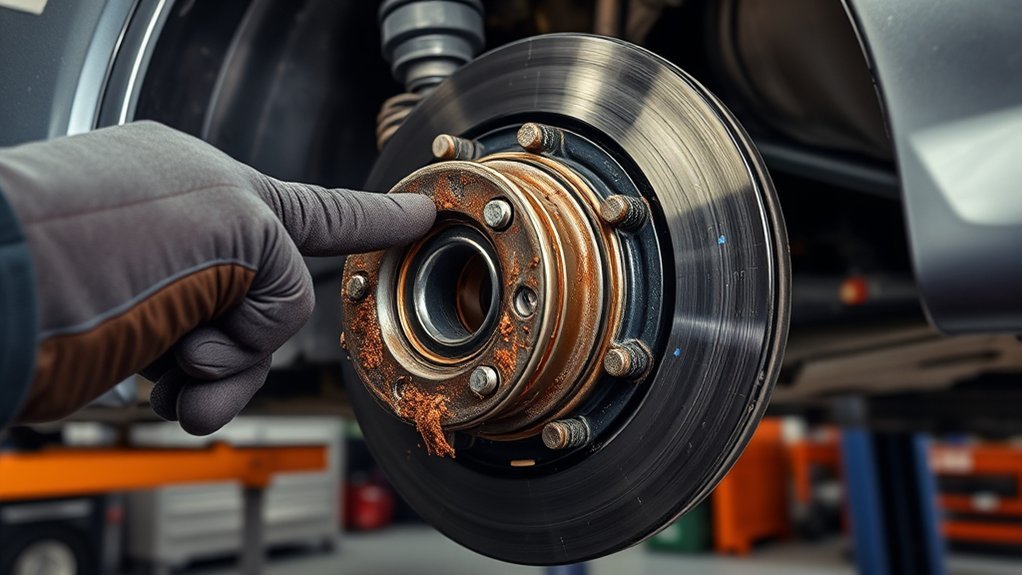
A mildly noisy bearing may continue operating for some time, but there is no dependable way to predict how quickly it will worsen. Continued driving can damage the hub, steering knuckle, axle, brakes, or wheel-speed sensing components.
In an advanced failure, the wheel may develop severe looseness, overheat, bind, or separate from the vehicle. These are possible late-stage outcomes, not proof that every quiet hum is an immediate wheel-detachment event.
Stop Driving: Pull over safely and arrange a tow if you notice severe grinding, visible wheel wobble, smoke, a burning smell, extreme heat near one hub, a sudden steering change, or a wheel that appears loose. Do not touch a suspected hot hub or brake assembly.
| Situation | Best Response |
|---|---|
| Faint new hum with normal handling | Limit unnecessary driving and schedule diagnosis soon. |
| Noise is quickly getting louder | Arrange prompt inspection and avoid highway travel. |
| ABS light without noise or handling symptoms | Drive cautiously if braking feels normal and have the system scanned promptly. |
| Grinding, smoke, severe vibration, or loose wheel | Stop and tow the vehicle. |
When to Get Professional Help
Schedule a professional inspection when a speed-related hum persists, when steering or vibration changes, when a wheel-speed fault appears with hub symptoms, or after a severe pothole or curb impact. You should not wait for a specific odometer reading.
Professional diagnosis is especially useful because uneven tires can sound almost identical to a damaged bearing. A technician can compare the hubs, inspect the suspension, scan ABS codes, and determine whether your Camry uses a replaceable hub assembly or a pressed bearing.
Seek immediate assistance rather than driving to a shop if the wheel is visibly loose, the vehicle is difficult to control, the noise has become harsh grinding, or the hub area is smoking or extremely hot.
Toyota Camry Wheel-Bearing Replacement Cost
As of September 3, 2026, RepairPal estimates an average Toyota Camry wheel-bearing replacement at $309 to $515. Its estimate includes approximately $255 to $374 in labor and $54 to $141 in parts. Taxes, fees, location differences, and related repairs are excluded.
RepairPal separately lists Camry wheel-hub-assembly replacement at $497 to $783. These figures are not interchangeable: a shop quote may cover a pressed bearing, a complete bolt-on hub assembly, or additional damaged hardware. Ask the estimate to identify the affected corner and whether the quoted part is the bearing, hub assembly, or another wheel-end component.
The model year and bearing design often affect the bill more than the odometer reading. A corroded pressed-in bearing can require more labor than an accessible bolt-on hub assembly.
Your final price may change because of:
- The Camry’s model year, axle position, and drivetrain
- A bolt-on hub versus a pressed bearing
- Local labor rates
- Rust or seized fasteners
- A damaged hub, steering knuckle, axle, sensor, or wiring
- The use of Toyota, original-equipment-equivalent, or economy parts
- Diagnostic charges, taxes, and shop fees
Do Both Sides Need to Be Replaced?
Not automatically. Unlike brake pads or tires on the same axle, wheel bearings do not always need to be replaced in pairs. If only one bearing is confirmed defective and the opposite side is quiet, smooth, and free of looseness, replacing the failed side is normally reasonable.
Replacing both may make sense when testing shows wear on both sides, both have been damaged by the same event, or labor overlap makes the second repair economical. Do not replace a good bearing solely because the opposite side failed.
Is an Alignment Needed After Bearing Replacement?
An alignment is not automatically required after every hub replacement. It may be recommended if the steering knuckle, strut, control arm, or alignment-related fasteners were disturbed, or if the vehicle already had pulling or uneven tire wear. Ask the shop which components were removed and whether alignment angles were checked.
How to Help Camry Wheel Bearings Last Longer
- Slow down for potholes, broken pavement, and raised road edges when it is safe to do so.
- Avoid striking curbs while parking.
- Keep tires at the pressure listed on the driver-door placard.
- Correct severe wheel imbalance, bent wheels, and abnormal tire wear.
- Have suspension and steering looseness repaired instead of allowing it to worsen.
- Inspect the hub area after flood exposure, a major impact, or damage to nearby seals and wiring.
- Use quality replacement parts and model-specific torque specifications.
- Do not reuse one-time-use fasteners when Toyota service information requires new ones.
Because most Camry wheel bearings are sealed, there is normally no routine owner lubrication procedure. Prevention focuses on avoiding damage and ensuring correct installation rather than periodically adding grease.
Check Warranty and Recalls Before Paying
Coverage depends on model year, mileage, the failed part, and the cause. For example, Toyota’s U.S. 2025 Camry guide lists the front hub and bearings under the front-wheel-drive system portion of the 60-month or 60,000-mile powertrain warranty. Damage from impacts, misuse, improper repairs, water contamination, or other exclusions may not qualify.
Use Toyota’s manual and warranty portal to locate documentation for your exact year. You can also enter the vehicle identification number in the NHTSA recall lookup to check for unrepaired safety recalls. A recall search is a general ownership step and does not mean that ordinary bearing wear will be covered.
2025–2026 Camry Hybrid: Front-Left Axle-Hub Squeak
Toyota Technical Service Bulletin T-SB-0031-26 addresses a specific condition on some 2025–2026 Camry Hybrid vehicles: a squeaking noise from the front-left axle hub at speeds below 5 mph. The bulletin’s repair procedure calls for confirming the condition and replacing the front-left axle hub with the revised part. This low-speed squeak is different from the more typical road-speed hum or growl discussed elsewhere in this guide.
The bulletin states that the specified repair is covered by Toyota’s 60-month/60,000-mile powertrain warranty when the described condition applies. Review the T-SB-0031-26 bulletin record and have a Toyota dealer confirm applicability to your VIN and symptom before assuming the bulletin covers your vehicle.
Frequently Asked Questions
How long do wheel bearings last on a Toyota Camry?
Toyota does not publish a universal Camry replacement interval. MOOG’s general guidance places average wheel-bearing life at about 85,000 to 100,000 miles, but actual life can be shorter or longer depending on impacts, contamination, corrosion, loading, part quality, and installation.
How much does a Toyota Camry wheel-bearing replacement cost?
RepairPal’s estimate updated September 3, 2026 places Camry wheel-bearing replacement at $309 to $515 before taxes, fees, location differences, and related repairs. A separate hub-assembly job may cost more, so confirm exactly what the quote includes.
Can a Camry wheel bearing last 200,000 miles?
It can happen, but neither Toyota nor the bearing guidance cited here guarantees 200,000 miles. A bearing at that mileage should be judged by condition and diagnosis, not by an assumption that it is either automatically worn out or automatically safe because it is still quiet.
How often should Toyota wheel bearings be replaced?
Replace them when diagnosis confirms wear or damage, not at a universal mileage. Toyota maintenance requirements vary by year, so check the guide for your exact vehicle and respond promptly to new noise, roughness, looseness, or impact damage.
Can I drive with a noisy wheel bearing?
A faint new hum should be inspected soon because failure progression is unpredictable. Stop driving and arrange a tow if the noise becomes severe grinding or you notice wheel wobble, smoke, extreme heat, a burning smell, or a major steering change.
Can a bad wheel bearing turn on the ABS light?
A hub, wheel-speed sensor, tone ring, or nearby wiring problem may trigger an ABS or stability-control warning on some Camrys. The warning has many possible causes, so read the diagnostic codes and inspect the system before replacing the bearing.
Should both wheel bearings be replaced at the same time?
Not necessarily. You can normally replace only the confirmed failed bearing if the opposite side tests correctly. Replace both when both show wear, both were damaged, or the shop identifies a practical labor or condition-based reason.
Conclusion
Your Toyota Camry’s wheel bearings do not have a Toyota-specified routine replacement mileage. MOOG’s broad 85,000-to-100,000-mile average is useful only as context; it is not a Camry service interval. Condition, symptom pattern, impact history, and a proper wheel-end inspection matter more than a preset odometer number.
Listen for a hum or growl that rises with road speed, but remember that tires, brakes, CV joints, and suspension parts can produce similar symptoms. Arrange a proper diagnosis before buying parts, and stop driving if you experience severe grinding, wheel wobble, smoke, extreme heat, or a major handling change.
Sources
- Toyota 2025 Camry Warranty and Maintenance Guide — scheduled maintenance and 60-month/60,000-mile front-hub-and-bearing powertrain warranty information.
- Toyota Manuals and Warranties — access to model-specific owner and warranty documents.
- MOOG Wheel-Bearing Lifespan Guidance — general 85,000-to-100,000-mile average, failure factors, and warning symptoms.
- RepairPal Toyota Camry Wheel-Bearing Replacement Estimate — September 3, 2026 cost range.
- RepairPal Toyota Camry Wheel-Hub-Assembly Replacement Estimate — separate hub-assembly cost range.
- Toyota T-SB-0031-26 Bulletin Record — 2025–2026 Camry Hybrid front-left axle-hub squeak condition.
- National Highway Traffic Safety Administration Recall Lookup — VIN-based recall checks.
