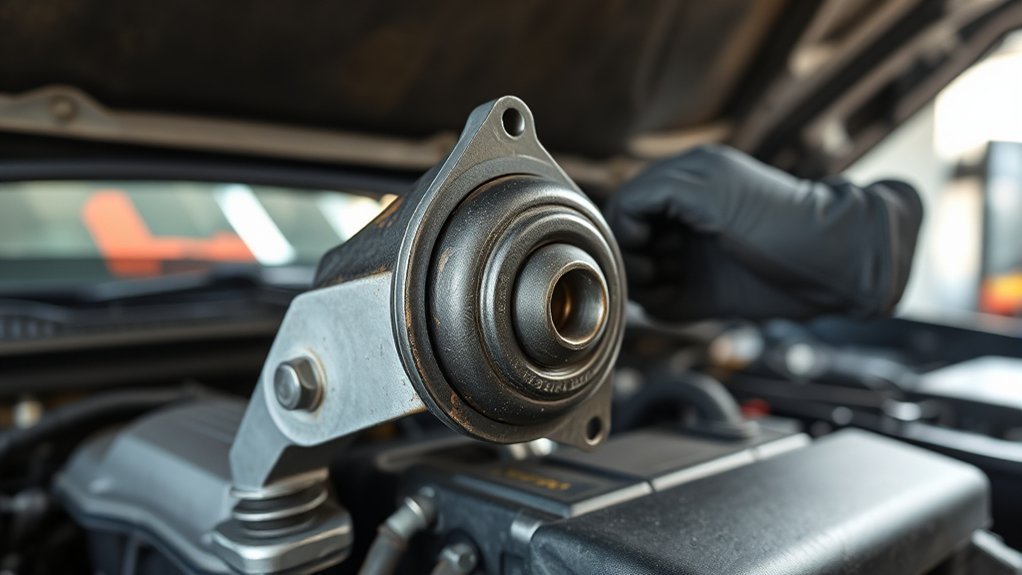
Toyota Camry motor mounts support the engine and transaxle while isolating vibration from the cabin. They do not have one guaranteed lifespan or a universal scheduled replacement mileage. Their condition depends on the Camry’s model year, powertrain, driving environment, fluid leaks, previous repairs, and how much movement each mount has absorbed.
Quick Answer
Toyota Camry motor mounts are not replaced on a fixed schedule. A practical service-life range is about 60,000 to 100,000 miles, but some last much longer and others fail early. Replace them when inspection confirms cracking, separation, fluid leakage, excessive engine movement, harsh vibration, or clunking.
Key Takeaways
- Toyota does not give every Camry a routine motor-mount replacement interval.
- Mileage is only a guide. Noise, vibration, visible damage, leakage, and engine movement matter more.
- Vibration alone does not prove a mount has failed because misfires, exhaust contact, pulleys, and suspension faults can feel similar.
- One failed mount does not always mean every mount must be replaced, but the complete set should be inspected.
- Use the VIN, model year, engine, and transmission to verify the correct replacement part and repair procedure.
Understanding Toyota Camry Motor Mounts and Their Role
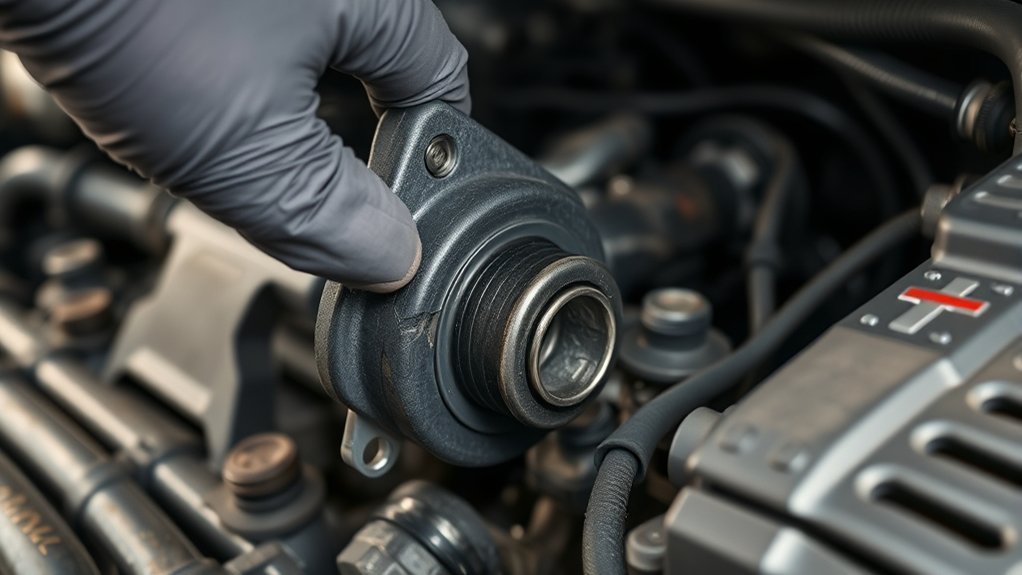
Motor mounts secure the Camry’s engine and transaxle to the vehicle structure. They also reduce the amount of engine vibration and noise that reaches the steering wheel, seats, dashboard, and body.
Depending on the model year and powertrain, a mount may use solid rubber, a rubber-and-metal insulator, or a fluid-filled design. A front-wheel-drive vehicle can have several engine, transaxle, and torque-control mounts positioned around the powertrain. The exact number and layout vary, so terms such as “dog bone mount” do not apply to every Camry.
As the rubber or internal hydraulic section deteriorates, the mount may allow more powertrain movement. That movement can produce vibration, a thump when shifting into gear, or a clunk during acceleration and deceleration. RepairPal’s engine-mount overview also notes that some failed fluid-filled mounts show visible leakage.
Note: The mount that appears easiest to see is not necessarily the source of the vibration. The engine, transaxle, exhaust, accessory drive, and remaining mounts should be checked before parts are ordered.
How Long Do Toyota Camry Motor Mounts Last?
There is no single mileage at which every Toyota Camry motor mount must be replaced. A useful general estimate is about 60,000 to 100,000 miles, but that range is not a Toyota replacement schedule. A well-protected mount can remain serviceable beyond 100,000 miles, while collision damage, fluid contamination, defective parts, harsh use, or incorrect installation can cause earlier failure.
Toyota’s 2025 Camry Warranty & Maintenance Guide lists routine maintenance through 150,000 miles without specifying scheduled engine-mount replacement. Owners of other model years should select their vehicle at Toyota’s manuals and warranties portal because maintenance and warranty details can differ.
Toyota’s current maintenance chart does not set a routine engine-mount replacement mileage. The mount’s physical condition and the symptoms it causes should guide the repair decision.
Typical Lifespan Expectations
| Mileage | What It Means | Recommended Action |
|---|---|---|
| Under 60,000 miles | Failure is possible but may point to impact damage, contamination, a defective part, or installation trouble. | Diagnose symptoms and check warranty coverage before approving replacement. |
| 60,000 to 100,000 miles | This is a common general service-life range, not a mandatory interval. | Inspect when vibration, clunking, leakage, or visible deterioration appears. |
| More than 100,000 miles | A mount may still be usable, but age and accumulated movement increase the chance of deterioration. | Include the mounts in a careful inspection and compare cabin vibration with known-good operation. |
Signs of Wear
Watch for a combination of symptoms rather than relying on mileage alone:
- Excessive vibration at idle: The steering wheel, seat, dashboard, or body may shake more than normal, especially when the transmission is in Drive and the vehicle is stopped.
- Clunking during load changes: A thump may occur when shifting between Reverse and Drive or when moving from acceleration to deceleration.
- Visible rubber damage: Cracks, splitting, separation from the metal bracket, or a collapsed mount can indicate deterioration.
- Fluid around a hydraulic mount: Wetness or residue can indicate that the mount’s internal fluid has escaped, although nearby engine-fluid leaks must also be ruled out.
- Excessive powertrain movement: The engine or transaxle may move farther than designed when torque is applied.
Replacement Timing Considerations
Replace a mount when a proper inspection confirms that it is damaged or is causing unacceptable movement, vibration, or noise. Do not replace a mount only because the odometer has crossed a round number.
Earlier inspection is sensible after a collision, curb strike, major drivetrain repair, severe fluid leak, or sudden change in vibration. A recently installed mount may also need its position and fastener torque checked if symptoms began immediately after repair.
Pro Tip: Record when the vibration occurs. Note whether it is strongest in Park, Drive, Reverse, during acceleration, at one engine speed, or while the air conditioner is running. This pattern can help a technician separate a mount problem from an engine-performance or accessory-drive problem.
Signs Your Toyota Camry Motor Mounts Are Failing
A failed mount becomes more likely when several symptoms appear together. Strong cabin vibration plus visible separation, fluid leakage, or abnormal engine movement is more persuasive than vibration alone.
| Symptom | Possible Mount Connection | Other Causes to Check |
|---|---|---|
| Rough vibration at idle | The mount may no longer isolate normal engine vibration. | Engine misfire, dirty throttle body, incorrect idle speed, damaged pulley, or exhaust contact. |
| Clunk when selecting Drive or Reverse | A torque-control or transaxle mount may allow excess movement. | Driveline play, transmission engagement concerns, exhaust movement, or loose hardware. |
| Knock over bumps | A badly separated mount can permit contact under body movement. | Sway-bar links, struts, control-arm bushings, subframe hardware, or loose exhaust parts. |
| Vibration only at road speed | Less typical of an isolated mount problem. | Wheel balance, tire damage, axle, wheel bearing, or alignment-related wear. |
A check-engine light is not a standard warning for a worn motor mount. However, a separate engine problem can create vibration that resembles a failed mount, so diagnostic trouble codes and engine operation should be checked when appropriate.
How a Technician Diagnoses a Camry Motor Mount
A thorough diagnosis normally includes:
- Confirming the complaint: The technician notes when the vibration, noise, or movement occurs.
- Checking engine operation: Misfires, unstable idle, damaged pulleys, exhaust contact, and other vibration sources are ruled out.
- Inspecting each mount: The rubber, brackets, fasteners, alignment, height, and signs of hydraulic leakage are examined.
- Observing controlled powertrain movement: A trained technician may watch the engine while load is applied under controlled conditions.
- Comparing all mounts: One failed mount can place abnormal load on the remaining mounts, so the complete system is assessed.
- Confirming the repair: After replacement, fastener torque, mount position, vibration, and noise are rechecked.
Warning: Engine-mount replacement requires the powertrain to be supported with the correct equipment. Do not place a jack or stand directly against the oil pan or work beneath an unsupported engine. Hybrid Camrys also contain dangerous high-voltage components and orange-colored cables that should not be touched or disconnected without the correct training and procedures.
The Impact of Driving Conditions on Motor Mount Longevity

Driving conditions can change how quickly a mount deteriorates. Frequent acceleration and braking repeatedly load the torque-control mounts. Rough roads, impacts, and collision damage can also stress the brackets and rubber sections.
Heat, age, outdoor exposure, and severe temperature changes can harden or crack rubber. Oil or other fluid leaking onto a rubber mount may contribute to deterioration, while a fluid-filled mount can lose its own internal fluid if its casing fails.
These conditions do not create a predictable replacement date. They simply justify closer inspection when the vehicle develops a new vibration, clunk, or visible mount damage.
Why Regular Inspections of Motor Mounts Matter
Motor mounts do not need to be replaced at every major service, but checking them can help catch deterioration before movement becomes severe. An inspection is especially useful on a high-mileage Camry or when the vehicle is already being serviced for a fluid leak, collision repair, transmission work, or unexplained vibration.
A useful inspection should check for:
- Rubber cracks, splitting, hardening, or separation
- A mount that has collapsed or sits lower than expected
- Leaking fluid from a hydraulic mount
- Engine oil or coolant contaminating the mount
- Loose, missing, corroded, or incorrectly positioned hardware
- Contact between the engine, exhaust, brackets, hoses, or body
- More movement than the remaining mounts can control
Early diagnosis can reduce the chance of continued clunking or movement damaging nearby hoses, wiring, exhaust joints, brackets, or other mounts.
When to Replace All Motor Mounts
Finding one failed mount is a reason to inspect every mount, not an automatic order to replace the entire set. Some Camrys may need only one mount, while others benefit from replacing several aging mounts during the same repair.
Signs of Mount Wear Across the Set
Replacing more than one mount may make sense when:
- Several mounts show cracking, collapse, leakage, or separation.
- The mounts are similar in age and more than one is close to failure.
- A failed mount has allowed enough movement to overload another mount.
- The repair requires overlapping disassembly that makes a second replacement more economical.
- A previous low-quality replacement has created new vibration or changed powertrain alignment.
Replacing only the failed mount may be appropriate when the remaining mounts are secure, correctly positioned, dry, and still isolate vibration properly.
Cost-Benefit Analysis
| Approach | Potential Advantage | Potential Drawback |
|---|---|---|
| Replace one confirmed failed mount | Lowest immediate parts cost and avoids replacing serviceable components. | Another similarly worn mount may require separate labor later. |
| Replace several worn mounts | Restores balanced support and may reduce repeated disassembly. | Higher initial cost and unnecessary expense if the other mounts remain healthy. |
| Replace a complete set without diagnosis | All mounts begin with similar age and condition. | Can waste money and may not fix vibration caused by another system. |
Toyota Camry Motor Mount Replacement Cost
As of June 18, 2026, RepairPal lists the average Toyota Camry engine-mount replacement at approximately $617 to $698, including an estimated $169 to $248 for labor and $447 to $450 for parts. Taxes, fees, location, and related repairs are not included.
The actual quote can be much lower or higher because cost depends on:
- The Camry’s model year and powertrain
- Which engine or transaxle mount has failed
- Whether one mount or several mounts are being replaced
- Access to the mount and the amount of disassembly required
- OEM, original-equipment-supplier, or aftermarket part selection
- Local labor rates
- Damaged brackets, bolts, fluid leaks, or related repairs
RepairPal’s year-specific figures range from roughly the mid-$100s for some older Camrys to more than $1,100 for certain model years. Obtain a written estimate identifying the exact mount, part brand, labor time, and warranty before approving the repair.
OEM vs. Aftermarket Motor Mounts: Which Is Right for You?
OEM and aftermarket mounts can both be reasonable choices, but fit and vibration control matter more with mounts than with many simple metal replacement parts.
| Factor | Toyota Genuine or OEM | Aftermarket |
|---|---|---|
| Fitment | Designed for the specified Toyota application. | Quality varies. Verify exact year, engine, transmission, and position. |
| Vibration tuning | More likely to reproduce the original isolation characteristics. | Rubber stiffness or hydraulic tuning may differ and can alter cabin vibration. |
| Price | Usually more expensive. | Often less expensive and available from several brands. |
| Warranty | Coverage depends on where and how the part is purchased and installed. | Ranges from limited coverage to long parts warranties, with labor often excluded. |
Use Toyota’s official parts catalog to search by VIN or vehicle information. When selecting an aftermarket mount, use a reputable manufacturer, confirm the exact mount position, and review whether the warranty covers only the part or also related labor.
Toyota’s Technical Information System contains model-specific repair manuals, service bulletins, wiring information, and procedures for North American Toyota vehicles. Professional technicians should follow the applicable repair manual for support points, mount alignment, fastener replacement, and torque specifications.
Frequently Asked Questions
How long do Toyota Camry motor mounts last?
A practical general estimate is 60,000 to 100,000 miles, but there is no universal Toyota replacement interval. Some mounts fail earlier, while others remain usable beyond 100,000 miles. Condition, symptoms, model year, powertrain, and driving environment matter more than mileage alone.
What is the life expectancy of a motor mount?
Motor mounts do not have a dependable age-only life expectancy. Rubber condition, heat, fluid exposure, impact damage, driving style, mount design, installation quality, and mileage can all affect service life. Replace a mount after diagnosis confirms deterioration or excessive movement.
How much does it cost to replace a motor mount on a Toyota Camry?
RepairPal’s June 2026 average estimate is $617 to $698 for a Camry engine-mount replacement before taxes, fees, location adjustments, and related repairs. The total can vary widely by model year, mount location, labor access, part choice, and whether several mounts are replaced.
Will a Toyota Camry last 300,000 miles?
Some well-maintained Camrys can reach 300,000 miles, but no vehicle is guaranteed to do so. Maintenance history, corrosion, collisions, engine and transmission condition, operating environment, and repair quality all influence total vehicle life. Motor mounts may need replacement one or more times during long-term ownership.
Can you drive with a bad Camry motor mount?
Gentle driving to a repair facility may be possible when symptoms are mild. Stop driving and arrange service if the engine moves severely, the vehicle produces harsh clunks, hoses or wiring are being pulled, or the powertrain contacts nearby components. Continued movement can damage surrounding parts.
Will a bad motor mount turn on the check-engine light?
A worn mount normally does not trigger the check-engine light by itself. A misfire or other engine fault can create similar vibration and may turn on the light. Scan the vehicle and diagnose engine operation before assuming the mount is the only problem.
Are Camry engine mounts covered by warranty?
Coverage depends on the model year, in-service date, mileage, cause of failure, and warranty terms. Toyota’s 2025 U.S. guide lists engine mounts under 60-month or 60,000-mile powertrain coverage for defects in materials or workmanship, while normal wear and outside damage may be excluded. Check the guide for your exact vehicle.
Conclusion
Toyota Camry motor mounts often remain serviceable for 60,000 to 100,000 miles or longer, but mileage alone cannot tell you whether a mount is good or bad. New vibration, clunking, leakage, visible separation, or excessive engine movement should prompt a complete diagnosis.
Have every mount inspected, rule out other vibration sources, and verify the replacement part with the Camry’s VIN and powertrain information. Replace only the failed mount when the others remain healthy, or replace several when inspection shows shared wear or meaningful labor overlap.
Sources
- Toyota 2025 Camry Warranty & Maintenance Guide — maintenance schedule, hybrid safety precautions, and model-year warranty information.
- Toyota Manuals and Warranties — model-year-specific owner manuals, maintenance guides, and warranty documents.
- Toyota Technical Information System — factory repair manuals, service bulletins, diagnostic information, and technical procedures.
- Toyota Genuine Parts Official Store — vehicle and VIN-based parts-fitment lookup.
- RepairPal Toyota Camry Engine Mount Replacement Estimate — current cost estimate, general service-life range, symptoms, diagnosis, and repair-safety guidance.

1 thought on “Toyota Camry Motor Mount Lifespan & Failure Signs Explained”