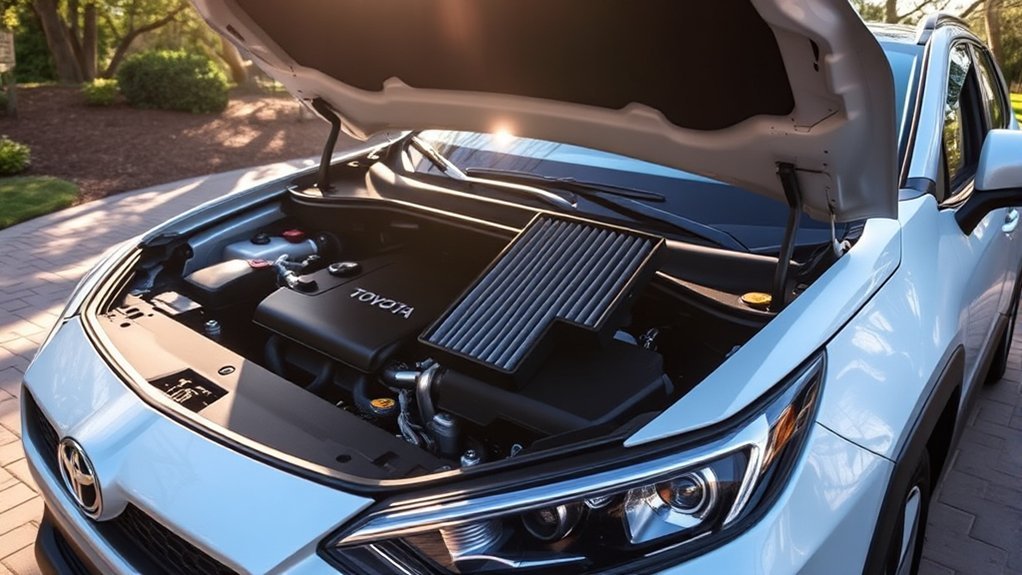
Quick answer: For recent U.S.-market Toyota RAV4s, Toyota schedules the engine air filter for replacement at 30,000 miles under the normal maintenance schedule. If you drive primarily on dirt or dusty roads, Toyota’s current schedule adds an engine air filter inspection at each 5,000-mile service point and still specifies replacement at 30,000 miles. Replace it sooner if inspection shows damaged media, a compromised seal, contamination, or heavy debris loading. Because maintenance requirements can vary by model year and market, confirm the schedule for your exact RAV4 in Toyota’s manuals and warranty guides.
Last updated: September 16, 2026 — maintenance intervals, ToyotaCare information, and fuel-economy guidance were rechecked against current Toyota and U.S. Department of Energy sources.
Toyota RAV4 Engine Air Filter Replacement Interval
| Driving situation | Recent Toyota guidance | What to do |
|---|---|---|
| Normal driving | Replace at 30,000 miles | Use the maintenance guide for your exact model year as the final authority. |
| Primarily dirt or dusty roads | Inspect at each 5,000-mile service point; scheduled replacement remains at 30,000 miles | Replace earlier if the filter is damaged, contaminated, poorly sealed, or heavily loaded with debris. |
| Unknown service history | Condition cannot be determined from mileage alone | Inspect the filter and verify the maintenance history before deciding whether replacement is due. |
- Do not use a blanket 15,000-mile replacement rule for every RAV4.
- Dirt and dusty-road driving justify more frequent inspection of the engine air filter.
- A severely clogged filter can reduce acceleration, but replacing one on a modern fuel-injected vehicle does not normally improve fuel economy.
- Inspect for heavy debris, torn or distorted media, contamination, and a damaged sealing edge rather than judging the filter by color alone.
- Use a filter matched to your exact model year and powertrain so it seals correctly inside the airbox.
Why Does the Toyota RAV4 Engine Air Filter Matter?
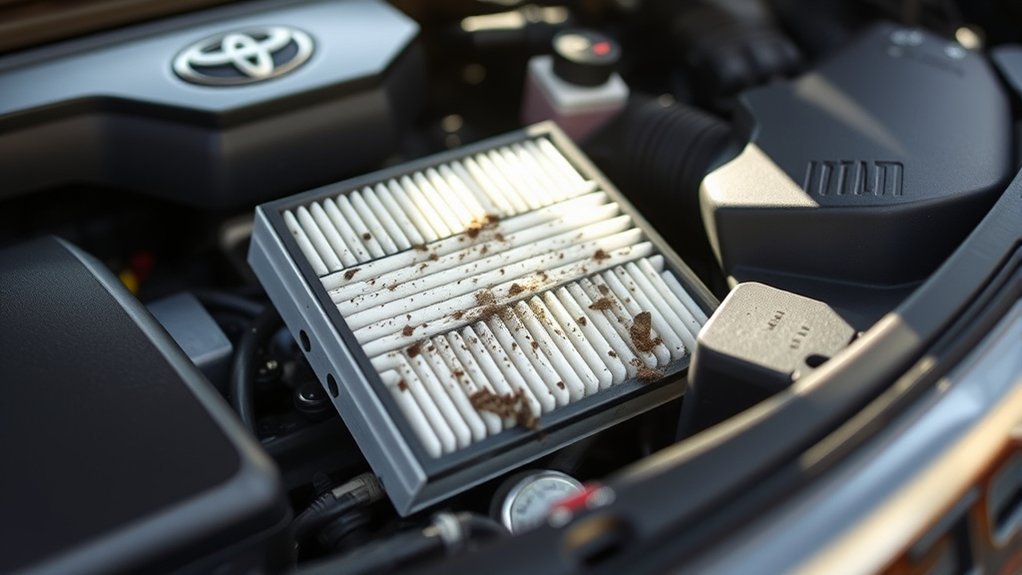
The engine air filter keeps airborne dirt and debris from entering the RAV4’s intake system and engine. A correctly fitted filter must do two jobs at the same time: trap contamination and allow enough airflow for the engine to operate normally.
If a filter becomes severely restricted, airflow at higher engine load can fall enough to hurt acceleration and throttle response. However, the fuel-economy effect is often misunderstood. According to FuelEconomy.gov, replacing a clogged filter on a modern fuel-injected, computer-controlled gasoline vehicle can improve acceleration but does not normally improve fuel economy.
The filter’s seal matters just as much as the media. A filter that is the wrong shape, installed crooked, or not seated against the airbox can allow unfiltered air to bypass the filter. That is why correct fitment and careful installation matter more than simply buying a filter because its dimensions look close.
What Does a Dirty RAV4 Engine Air Filter Look Like?
The strongest reasons to replace an engine air filter come from the filter itself. Remove it and inspect the pleats, sealing edge, and overall shape. Replace it if the media is torn or deformed, the seal is damaged, the filter has been contaminated by water or oil, or debris is heavily packed into the pleats.
Color alone is not a reliable pass-or-fail test. A used filter can become gray or dark while still remaining intact, so look at how much debris is trapped and whether light airflow paths through the media appear severely obstructed rather than judging only by whether the filter is still white.
A severely restricted filter can contribute to weak acceleration, but hesitation, rough running, sputtering, or a check-engine light can have many other causes. If the filter is reasonably clean and correctly installed, diagnose those symptoms rather than automatically replacing the filter.
[Amazon Products Picked for You]

[Vehicle Fitment]: CA10677 Compatible with Toyota RAV4 GAS 2013-2018, Camry FHEV 2012-2017, Avalon 2013-2018 2.5L; Lexus LS460 2007-2017, ES300h 2013-2018, HS250h 2010-2012, LS600h 2008-2016

Bosch Workshop Engine Air Filters are constructed with a high number of pleats for robust particle holding capacity

RUGGED CONSTRUCTION: K&N Advantage Plus Air Filters are manufactured with durable, premium materials to last for up to 18,000 miles of use.
Engine Air Filter vs. Cabin Air Filter
The engine air filter cleans air entering the engine. The cabin air filter cleans air moving through the heating and air-conditioning system before it reaches the passenger compartment. They have different locations, maintenance needs, and part numbers. See our cabin air filter vs. engine air filter guide for a fuller comparison.
This distinction matters when interpreting Toyota’s maintenance schedule. Conditions such as heavy urban traffic, desert dust, and dirt roads can shorten cabin-filter life, while Toyota specifically calls for added engine air filter inspections when the vehicle is driven on dirt or dusty roads.
Applicable hybrid RAV4 models can also have a separate hybrid-battery cooling intake filter. Do not confuse that maintenance item with either the engine air filter or cabin air filter.
[Amazon Products Picked for You]
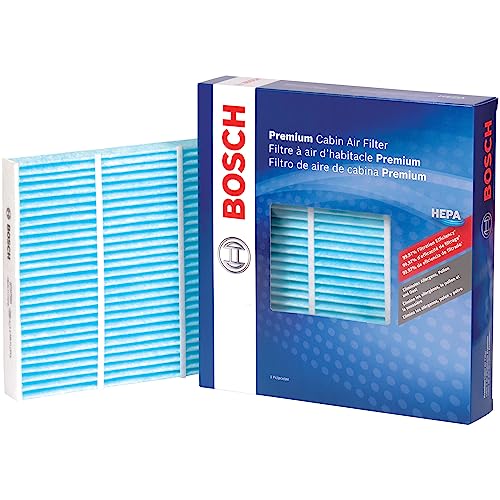
Bosch HEPA Premium Cabin Air Filters are designed and tested to meet High Efficiency Particulate Air (HEPA) standards based on ISO 29463-3:2011 and provide filtration efficiency of 99.97% at 0.3 microns

Compatible with Toyota Avalon (2019-2022), C-HR (Japan Built Models Only)(2018-2022), Camry (2018-2026), Corolla (2019-2025), Corolla Cross (2022-2025), Crown (2023-2025), Crown Signia (2025-2026), GR Corolla (2023-2025), Grand Highlander (2024-2026), Hiace (2020-2024), Highlander (2020-2025), Hilux (2017-2025), Prius (2016-2025), Prius AWD-E (2019-2022), Prius Prime (2017-2024), RAV4 (2019-2025), RAV4 Prime (2021-2024), Sienna (2021-2025), Venza (2021-2024)

Compatible with Toyota 4Runner (2010-2024), Avalon (2005-2018), Camry (2007-2017), Corolla (2009-2019), Corolla iM (2017-2018), Highlander (2008-2019), Land Cruiser (2008-2021), Matrix (2009-2014), Mirai (2016-2020), Prius (2010-2015), Prius C (2012-2021), Prius Plug-In (2012-2015), Prius V (2012-2018), RAV4 (2006-2018), Sequoia (2008-2022), Sienna (2011-2020), Tundra (2007-2021), Venza (2009-2016), Yaris (2006-2019), Yaris R (2016-2018), Hiace (2006-2019), Hilux (2004-2016)
How Do Dusty Roads Affect the RAV4 Engine Air Filter Schedule?
Toyota’s special operating condition for the engine air filter is straightforward: if you drive primarily on dirt roads or dusty roads, inspect the engine air filter more frequently. In the current RAV4 maintenance chart, that means an inspection at each 5,000-mile service point and scheduled replacement at 30,000 miles.
This is different from automatically replacing the filter every 15,000 miles. An inspection lets you respond to the actual condition of the filter. A RAV4 used daily on dusty unpaved roads may load the filter much faster than one driven mainly on clean pavement, while another filter may remain serviceable until its scheduled replacement.
Other unusually dirty environments can still justify a visual check if you suspect the intake has collected substantial debris. Use the condition of the filter and the maintenance guide for your exact vehicle rather than applying a made-up severe-service mileage interval.
How Do You Replace a Toyota RAV4 Engine Air Filter?
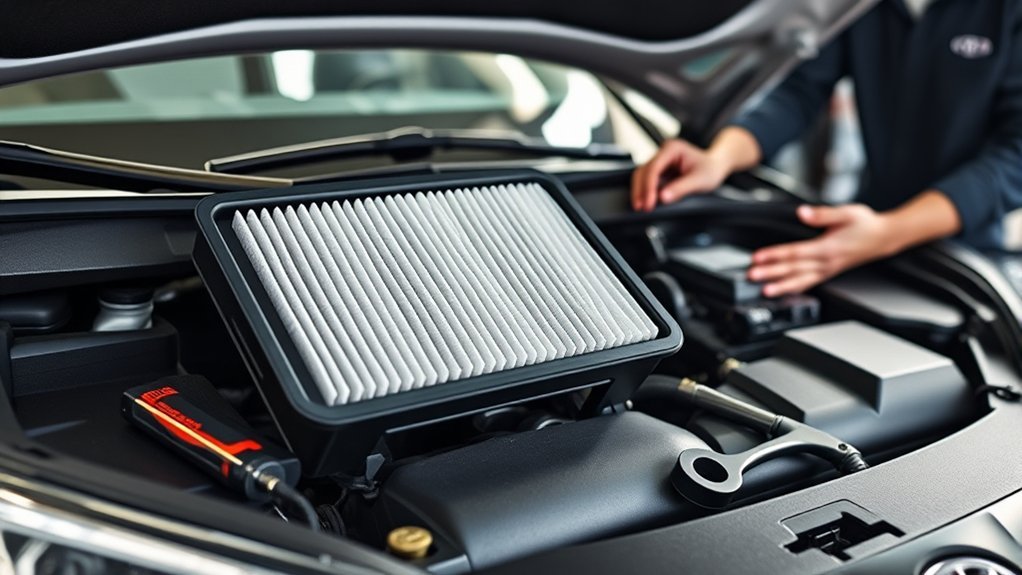
Many recent RAV4s use simple airbox clips or latches and do not require special tools for engine-filter replacement, but the airbox layout and fasteners can vary by model year and powertrain. Work with the vehicle parked and completely powered off, and confirm the airbox location for your exact RAV4 before opening anything.
- Verify the replacement filter. Confirm that it is listed for your exact RAV4 model year and powertrain. Do not rely on appearance alone.
- Locate the engine airbox. Identify the housing connected to the engine’s intake ducting and make sure the vehicle is powered off before opening it.
- Clear loose debris from the top. Brush away leaves, sand, or dirt around the housing so it does not fall inside when the cover is opened.
- Release the airbox fasteners. Undo the clips, latches, or other fasteners used on your model. Lift the cover only as far as necessary and avoid pulling on attached hoses, sensors, or wiring.
- Note the old filter’s orientation. Look at the shape of the filter and how its sealing edge sits in the housing before removing it.
- Inspect the housing. Remove loose debris with a clean, dry, lint-free cloth while keeping dirt away from the clean-side intake opening.
- Seat the new filter. Match its orientation to the old filter and make sure the sealing edge sits flat all the way around the housing.
- Close the airbox completely. Reinstall every clip or fastener and confirm that the cover closes evenly without pinching the filter or leaving a gap.
- Perform a final check. Make sure any intake hoses, connectors, and wiring you moved are secure before operating the vehicle.
Before closing the airbox, check the entire perimeter of the new filter. A filter that does not sit flat or prevents the cover from closing normally may be the wrong part or incorrectly positioned.
[Amazon Products Picked for You]

[Vehicle Fitment] Replacement for Toyota: Avalon Gas 2.5L (2021), Avalon Gas 3.5L (2019–2022), Camry Gas (2018–2024), GR Corolla (2023–2025), Grand Highlander Gas (2024-2025), Highlander Gas (2020-2025), RAV4 Gas (2019–2025).

RUGGED CONSTRUCTION: K&N Advantage Plus Air Filters are manufactured with durable, premium materials to last for up to 18,000 miles of use.
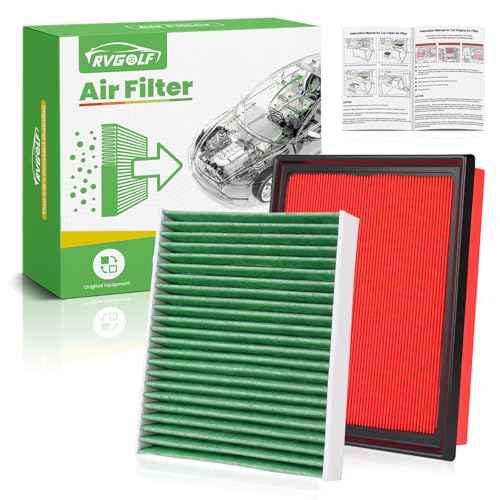
【Applicable Models】Air filter fits for 2019-2022 Toyota Avalon (3.5L); 2021 Toyota Avalon (2.5L); 2018-2024 Toyota Camry (3.5L); 2018-2024 Toyota Camry (2.5L); 2020-2025 2026 Toyota Highlander (3.5L); 2019-2025 Toyota RAV4 (2.5L); 2019-2025 Lexus ES350 (3.5L), (Not Fit Hybrid)
What Are the Benefits of RAV4 Engine Air Filter Maintenance?
Engine air filter maintenance is less about chasing extra MPG and more about maintaining proper airflow while keeping abrasive debris out of the intake.
- Normal Acceleration: If the old filter is severely restricted, a clean correctly fitted filter can restore normal airflow and acceleration.
- Intake Protection: Intact filter media and a properly seated seal help prevent airborne dirt from bypassing the filtration system.
- Early Problem Detection: Periodic inspection can reveal torn media, contamination, damaged seals, leaves, or debris inside the housing before the next scheduled replacement.
- Potential Labor Savings: On RAV4s with an easily accessible airbox, owners comfortable with basic maintenance can replace the filter themselves. Filter prices vary by brand, model year, and supplier.
Related Guides
Frequently Asked Questions
Can I Clean and Reuse My Toyota RAV4 Air Filter?
A disposable paper engine air filter should not be washed or oiled. If its media is heavily loaded, torn, contaminated, or otherwise damaged, replace it. A reusable aftermarket filter is different: follow that filter manufacturer’s specific cleaning, drying, and oiling instructions rather than treating it like a disposable paper filter.
What Type of Air Filter Should I Use for My RAV4?
Use a Toyota Genuine filter or a quality aftermarket filter explicitly listed for your exact RAV4 model year and powertrain. Correct dimensions and sealing are more important than choosing a filter based on brand name alone. If you are comparing replacement options, see our RAV4 air filter buying guide.
Is Changing the Air Filter a DIY Task?
For many recent RAV4s, yes. The engine airbox uses simple clips or latches and the filter can be replaced without special tools. However, airbox hardware varies by year and powertrain, so identify the correct housing and fasteners before starting. The most important installation step is making sure the new filter’s sealing edge sits flat before the airbox is closed.
Does a Clogged RAV4 Air Filter Reduce Fuel Economy?
On a modern fuel-injected RAV4, replacing a clogged engine air filter does not normally improve fuel economy. U.S. Department of Energy guidance says a clogged filter can reduce acceleration on modern computer-controlled vehicles, but the engine management system compensates for the reduced airflow well enough that fuel economy is generally unaffected.
Does ToyotaCare Cover RAV4 Engine Air Filter Replacement?
For U.S. Toyota vehicles from model year 2026 and earlier, standard ToyotaCare generally covers normal factory-scheduled maintenance for two years or 25,000 miles, while the recent RAV4 engine air filter replacement point is 30,000 miles. That means the normal 30,000-mile engine-filter service generally falls outside the included ToyotaCare period. ToyotaCare Plus and other prepaid maintenance plans can provide longer coverage, so check the terms of your specific plan on Toyota’s maintenance plans page.
The Bottom Line
For recent U.S.-market Toyota RAV4s, use 30,000 miles as the scheduled engine air filter replacement point rather than a blanket 15,000-to-30,000-mile range. If you drive primarily on dirt or dusty roads, inspect the filter at each 5,000-mile service point and replace it sooner when its actual condition warrants it. Always confirm the maintenance schedule and filter fitment for your exact model year and powertrain.
When you inspect the filter, look for heavy debris loading, damaged media, contamination, deformation, and a compromised seal. If you replace it yourself, keep debris out of the clean side of the airbox and make sure the new filter sits flat before closing the housing. A clean filter can restore acceleration when the old one is severely restricted, but on a modern fuel-injected RAV4 it should not be treated as a fuel-economy upgrade.
