
Your Toyota RAV4’s engine air filter protects the engine from dust, grit, leaves, and other airborne debris. Recent U.S. RAV4 maintenance guides schedule replacement at 30,000 miles or 36 months, but your exact interval can vary by model year, market, and driving conditions. Inspect it sooner when you regularly drive on dirt roads or in heavy dust.
Quick Answer
For many recent U.S. Toyota RAV4 models, replace the engine air filter at 30,000 miles or 36 months. Check it more often after driving on dusty roads, near construction, or in heavy airborne debris. Always confirm the schedule and filter part number for your exact model year.
Key Takeaways
- Recent U.S. RAV4 maintenance guides list engine air-filter replacement at 30,000 miles or 36 months.
- Dusty roads and similar harsh conditions justify more frequent visual inspections, not one universal early replacement interval.
- Replace a disposable paper filter when it is heavily loaded, wet, damaged, collapsed, or no longer sealing correctly.
- A Toyota Genuine filter offers factory-spec fitment, but a correctly specified, high-quality aftermarket filter can also be suitable.
- A fresh filter protects the engine and restores restricted airflow, but it does not guarantee a specific fuel-economy increase.
At a Glance
| Time Required | About 5 to 15 minutes |
| Difficulty | Easy for most owners |
| Tools Needed | Gloves, a clean cloth, and a flashlight; some model years may require a screwdriver or socket |
| Cost | Varies by model year, engine, filter type, brand, and seller |
What the Engine Air Filter Does in Your Toyota RAV4

The engine air filter sits inside the airbox on the engine’s intake side. Its job is to trap abrasive particles before the incoming air reaches the mass-airflow sensor, throttle body, cylinders, and other intake components.
The filter must balance two jobs. It needs to capture contaminants while allowing enough air to pass through the intake system. A filter that is torn or poorly sealed can allow unfiltered air around the media. A filter that is severely restricted can reduce airflow when the engine is under load.
Replace the filter to maintain effective filtration and designed airflow, not to chase a guaranteed fuel-economy increase.
How Often Should You Change a Toyota RAV4 Engine Air Filter?
The correct interval comes from the maintenance guide for your exact vehicle. In the United States, both the 2024 Toyota RAV4 Warranty & Maintenance Guide and the 2025 Toyota RAV4 Warranty & Maintenance Guide list engine air-filter replacement at 30,000 miles or 36 months.
That recent schedule is a useful starting point, but it should not be treated as a universal rule for every RAV4. Older models, vehicles sold outside the United States, and different powertrains may have different maintenance instructions. You can find the correct guide through Toyota’s manuals and warranties portal.
| Driving situation | Recommended approach |
|---|---|
| Normal paved-road driving | Follow the mileage and time interval in your model-year maintenance guide. |
| Frequent dirt or dusty-road use | Inspect the filter more often and replace it when debris loading, damage, or restriction justifies replacement. |
| Construction dust, wildfire ash, or heavy airborne debris | Inspect after prolonged exposure instead of waiting automatically for the normal interval. |
| Unknown service history | Inspect the filter now and record the mileage if you replace it. |
Note: The engine air filter and cabin air filter are different parts. The engine filter protects the engine’s intake, while the cabin filter cleans air entering the passenger compartment.
Signs Your Engine Air Filter May Need Replacement
Maintenance history and a physical inspection are more reliable than trying to diagnose the filter from one driving symptom. Replace the filter when you find one or more of these conditions:
- Heavy embedded debris: Dust, leaves, insects, or grit cover a large part of the filter media.
- Damaged media: The pleats are torn, separated, crushed, or collapsed.
- Seal damage: The rubber or foam perimeter seal is cracked, distorted, or unable to sit flat.
- Moisture contamination: The filter is wet, moldy, or water-stained.
- Oil contamination: Oil coats the filter unexpectedly. This may also justify inspection for another mechanical issue.
- Severe restriction: The filter is densely loaded and airflow through the media appears substantially restricted.
- Unknown age: You cannot confirm when it was last replaced and its condition is questionable.
A severely restricted filter may contribute to weak response at higher engine loads. However, poor acceleration, reduced fuel economy, black exhaust smoke, unusual noises, and a check-engine light can have many other causes. Do not replace the filter and assume the vehicle is repaired without checking for other faults.
Warning: Stop driving and investigate promptly if the engine overheats, produces heavy smoke, loses substantial power, or displays a flashing check-engine light. Those conditions are not reliable air-filter diagnoses and may indicate a more serious problem.
How to Replace a Toyota RAV4 Engine Air Filter

The exact airbox location and fastener design vary by model year, but the basic process is similar. Read your owner’s information first if the airbox layout differs from the steps below.
-
Confirm the replacement filter. Match the new filter by model year, engine, trim where applicable, VIN, or the verified Toyota or aftermarket part number. Compare its length, width, depth, seal, and shape with the old filter before installation.
-
Park safely and switch off the vehicle. Place the RAV4 on a level surface, engage the parking brake, turn the ignition off, and let hot engine-bay parts cool.
-
Open the hood and locate the airbox. The airbox is connected to the engine’s intake duct. Take a photo before opening it if the clip, hose, or connector arrangement is unfamiliar.
-
Release the airbox cover. Unfasten its clips, screws, or bolts. Do not force the lid. Check for a connected intake hose, wiring retainer, or sensor connector before moving it.
-
Remove the old filter. Note which side faces upward and how the perimeter seal sits in the housing. Lift the filter out without dropping loose debris into the clean side of the intake.
-
Clean the housing carefully. Wipe loose debris from the dirty side of the airbox with a clean, slightly damp cloth. Keep dirt and cleaning material away from the outlet leading toward the engine.
-
Install the new filter. Place it in the same orientation as the old filter. Make sure the seal lies flat around the entire perimeter and that no pleat or gasket is pinched.
-
Close and secure the airbox. Align the lid correctly before fastening every clip, screw, or bolt. Check that intake hoses, clamps, wiring retainers, and any disconnected electrical connector are secure.
-
Perform a final check. Remove all tools and cloths from the engine bay, close the hood, start the vehicle, and listen for an intake leak or unusual sound. Confirm that no new warning light appears.
Pro Tip: Write the replacement date, mileage, filter brand, and part number in your maintenance record. This prevents guesswork at the next inspection and makes it easier to order the correct part again.
Warning: Never run the engine with the air filter removed, and do not allow dirt to fall into the clean-air outlet. On hybrid and plug-in hybrid models, do not touch orange high-voltage cables or components while working under the hood.
Tools and Supplies You May Need
Many RAV4 airboxes use clips and can be opened without hand tools. Other versions may use screws or bolts. Inspect the housing before selecting tools rather than prying at it with the wrong equipment.
Basic Supplies
- Correct replacement engine air filter
- Clean gloves
- Clean shop cloth
- Flashlight
- Vehicle maintenance guide or verified replacement instructions
Depending on the model year and airbox design, you may also need a Phillips screwdriver, flat screwdriver, small ratchet, or correctly sized socket. Pliers are rarely necessary and should not be used to force plastic clips.
Safety Preparation
Gloves keep dust and grime off your hands. Eye protection is useful when the housing contains loose sand, ash, or leaf fragments. Work only after the engine is switched off and hot surfaces have cooled.
Do not spray cleaner into the intake, wash electrical components, or place tools on the battery. Keep the old filter upright while removing it so loose debris does not spill into the housing.
Common Installation Mistakes and Troubleshooting
Most problems after an air-filter replacement come from fitment or reassembly rather than the filter media itself.
| Problem after replacement | What to check |
|---|---|
| Airbox lid will not close | Confirm the part number, filter orientation, gasket position, and lid alignment. Do not force the fasteners. |
| Whistling or rushing-air sound | Check the airbox seal, lid clips, intake hose, hose clamps, and any disturbed duct connection. |
| Check-engine light appears | Verify that no airflow-sensor connector was left unplugged and no intake hose was loosened. Read the diagnostic code instead of guessing. |
| Filter shifts inside the housing | The filter may be the wrong size or may not be seated in its locating channel. |
| Performance problem remains | The air filter may not have caused the symptom. Continue diagnosis of ignition, fuel, sensors, intake leaks, exhaust restriction, or other systems. |
Should You Clean or Replace Your Engine Air Filter?
The answer depends on whether the filter is disposable or specifically designed for repeated cleaning.
Disposable Paper Filters
A standard disposable paper filter should normally be replaced when it is due or no longer serviceable. Washing it can damage the media, weaken its structure, or affect the seal. Aggressive compressed air can also tear the media or push particles deeper into it.
You can gently remove a loose leaf from the airbox during an inspection, but that is not the same as restoring a heavily loaded filter. Do not oil a dry paper filter.
Reusable Filters
A reusable filter can be used only when it is designed for your exact application and installed and serviced according to its manufacturer’s directions. Cleaning method, drying time, oil quantity, and service interval can differ by product.
Too much oil on an oiled reusable filter can contaminate nearby intake components. Too little oil, incomplete drying, or damaged media can reduce filtration performance. A reusable design is therefore not automatically lower-maintenance than a disposable filter.
How Driving Conditions Affect Filter Life
Two RAV4s with the same mileage can have very different filter conditions. The following environments can load a filter more quickly:
- Unpaved or dusty roads
- Construction zones
- Dry agricultural areas
- Wildfire smoke or ash
- Frequent off-road use
- Heavy pollen, seeds, or leaf debris
- Damaged or poorly sealed intake components
Stop-and-go traffic alone does not prove that a filter needs replacement at a fixed early mileage. Inspect the actual filter and follow any special-operating-condition guidance in your vehicle’s maintenance guide.
How a Serviceable Air Filter Supports RAV4 Performance
A correctly fitted filter helps keep abrasive contaminants away from internal engine and intake components. It also allows the intake system to operate within its intended airflow range.
Replacing a severely restricted filter may restore lost response under load. However, modern engine controls compensate for many changes in airflow, so you should not promise or expect a specific fuel-economy increase from routine filter replacement.
| Benefit | Realistic expectation |
|---|---|
| Contaminant control | Helps prevent dust and grit from entering through the normal intake path. |
| Airflow | Restores airflow when the previous filter was genuinely restricted. |
| Engine response | May improve response if severe filter restriction was limiting airflow. |
| Fuel economy | No specific improvement should be guaranteed for a modern fuel-injected RAV4. |
| Engine life | Proper filtration supports long-term protection, but no filter can guarantee a specific engine lifespan. |
How to Choose and Buy the Correct RAV4 Engine Air Filter
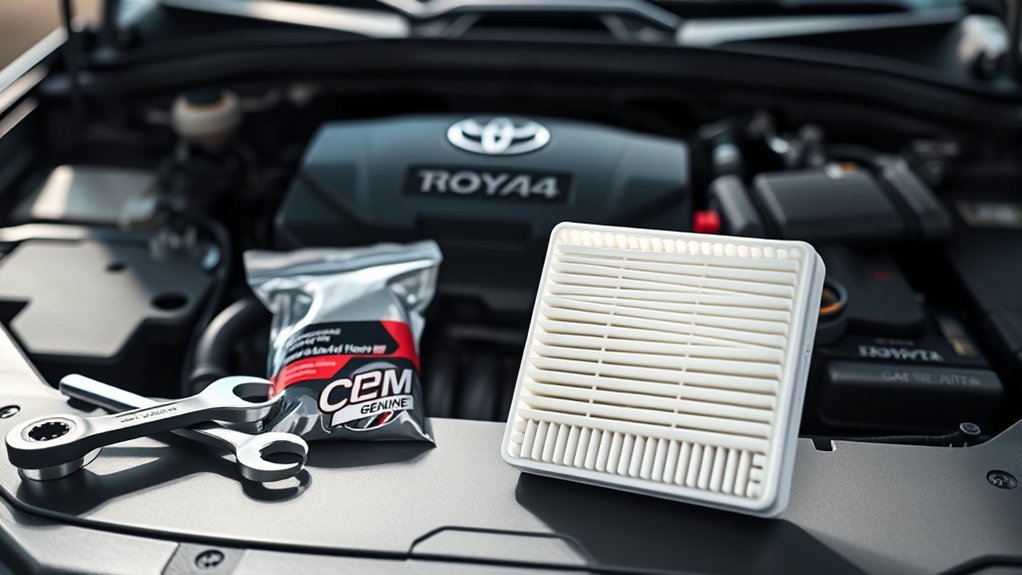
A Toyota Genuine engine air filter is a straightforward choice because it is designed to match Toyota specifications for the listed application. However, a reputable aftermarket filter can also be appropriate when its catalog clearly confirms compatibility with your exact RAV4.
Before buying, verify:
- Model year
- Engine or powertrain
- Trim or production variation, when the catalog requires it
- VIN-based fitment
- Toyota part number or verified cross-reference
- Filter dimensions and perimeter-seal shape
- Seller reputation and return policy
Do not choose a filter only because its listing says “fits RAV4.” One product may not fit every RAV4 generation or powertrain.
Note: In the United States, using an aftermarket maintenance part does not automatically cancel the entire vehicle warranty. However, warranty coverage may not apply to damage caused by an unsuitable or improperly installed part. See the Federal Trade Commission’s warranty guidance for additional context.
Related Guides
Frequently Asked Questions
How often should I change a Toyota RAV4 engine air filter?
Recent U.S. RAV4 maintenance guides list replacement at 30,000 miles or 36 months. Confirm the interval in the guide for your exact model year and inspect sooner when you frequently drive in dusty or dirty conditions.
Can a dirty air filter cause engine overheating?
A dirty engine air filter is not a common direct cause of overheating. If the temperature warning appears or the gauge rises abnormally, stop safely and investigate the cooling system, coolant level, leaks, fans, thermostat, water pump, and other possible causes.
What are the best brands for RAV4 air filters?
No single brand is best for every RAV4. Toyota Genuine is a dependable factory-spec option. A reputable aftermarket filter can also work well when its part number, dimensions, seal, and vehicle application match your exact model.
How do I know whether I installed the filter correctly?
The filter should sit flat in its locating channel with no folded or pinched seal. The airbox lid should close without force, every fastener should engage, and all hoses and electrical connectors should remain secure. Listen for an intake leak after starting the engine.
Is it necessary to inspect the engine air filter regularly?
Yes. An inspection is especially useful when the service history is unknown or the vehicle operates on dirt roads, near construction, or in heavy dust. Avoid replacing it only because its surface color has darkened; inspect the media, seal, debris loading, and overall condition.
Can I use a reusable air filter in my RAV4?
You can use one when it is specifically listed for your vehicle and you follow its cleaning, drying, and oiling instructions. Do not wash or oil a standard disposable paper filter, and avoid applying excess oil near airflow-sensing components.
Can a dirty air filter turn on the check-engine light?
Severe airflow restriction or a disturbed intake component may contribute to a fault, but a check-engine light does not prove the filter is responsible. Read the diagnostic code and check the airbox, intake hose, clamps, and sensor connectors before replacing parts.
Is the engine air filter the same as the cabin air filter?
No. The engine air filter cleans air entering the engine intake. The cabin air filter cleans outside air entering the heating, ventilation, and air-conditioning system. They use different parts, locations, and maintenance procedures.
Sources
- Toyota 2024 RAV4 Warranty & Maintenance Guide — supports the recent 30,000-mile or 36-month replacement schedule.
- Toyota 2025 RAV4 Warranty & Maintenance Guide — supports the replacement schedule and dusty-road inspection guidance.
- Toyota Manuals and Warranties — provides access to model-specific owner and maintenance information.
- Toyota Genuine Parts — explains Toyota Genuine replacement-part fitment and specifications.
- Federal Trade Commission Warranty Guidance — explains U.S. restrictions on mandatory brand-specific parts and services.
Conclusion
For many recent U.S. Toyota RAV4 models, the scheduled engine air-filter replacement point is 30,000 miles or 36 months. Your model-year maintenance guide remains the final authority, and dusty operating conditions may justify earlier inspection.
Use the correct filter, keep debris out of the intake, seat the perimeter seal evenly, and secure every airbox fastener and intake connection. Replace disposable filters instead of washing them, and diagnose warning lights, smoke, overheating, or serious performance problems rather than assuming the air filter is the only cause.
