
Choosing between the Toyota RAV4 LE and XLE becomes much easier once you compare the same model year, market, and powertrain. This guide focuses on the 2025 U.S.-market RAV4 LE and XLE, including gasoline and hybrid versions. It also explains why shoppers considering a redesigned 2026 RAV4 must use a separate set of specifications.
Quick Answer
The 2025 RAV4 LE offers the better value if you mainly need Toyota’s core safety, multimedia, cargo, and powertrain features. The XLE is worth the upgrade for dual-zone climate control, a power driver’s seat, Smart Key access, alloy wheels, and blind-spot monitoring. The redesigned 2026 RAV4 uses an electrified-only powertrain lineup.
Key Takeaways
- The 2025 LE and XLE share the same core powertrain when you compare equivalent gasoline or hybrid versions.
- The XLE mainly adds comfort and convenience, including a power driver’s seat, dual-zone climate control, Smart Key access, alloy wheels, and blind-spot monitoring.
- A moonroof, power liftgate, heated seats, and heated steering wheel depend on the selected package and are not standard on every XLE.
- The 2026 RAV4 is a redesigned model with electrified powertrains, so 2025 gasoline specifications do not apply to it.
- Always verify the exact vehicle’s window sticker because equipment can change by production date, drivetrain, package, and region.
Start With the RAV4 Model Year
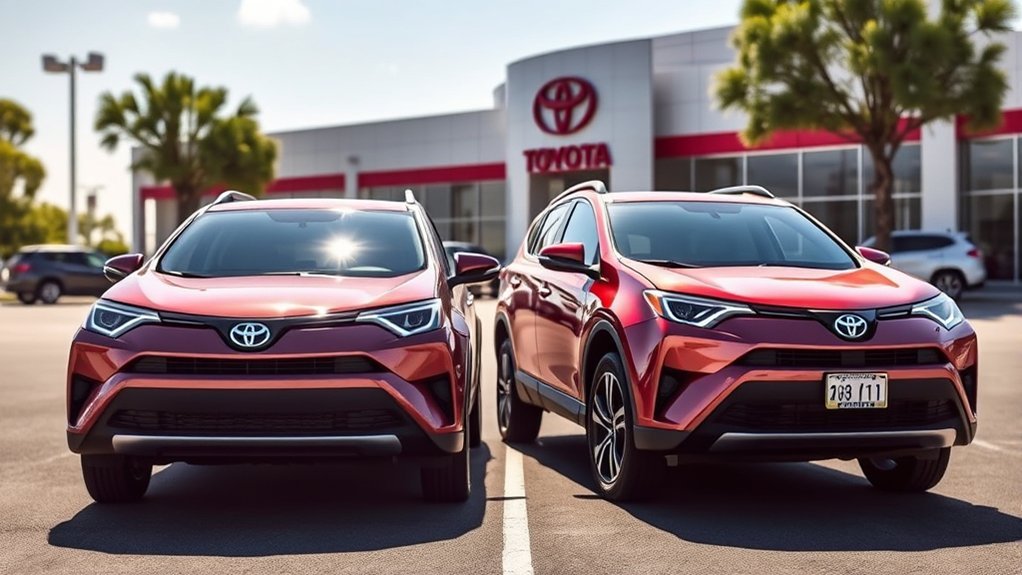
The RAV4 LE and XLE names have appeared across several model years, but their screens, engines, safety systems, packages, and standard features have changed. A comparison that does not identify the year can easily combine equipment from different generations.
This article uses Toyota’s 2025 RAV4 information as the main reference. The 2025 model is especially useful for this comparison because both the gasoline and hybrid ranges include LE and XLE trims.
Note: The current RAV4 lineup was redesigned for 2026 and moved to electrified powertrains. Its power output, displays, trim equipment, packages, and pricing differ from the 2025 models discussed below. Use the 2026 configurator when shopping for a new current-generation RAV4.
Within the 2025 lineup, the LE serves as the value-focused entry trim. The XLE keeps the same basic space and utility while adding features that make daily driving easier and more comfortable.
Key Features of the 2025 Toyota RAV4 LE and XLE
The main differences do not involve passenger capacity or basic practicality. They involve the wheels, driver’s seat, climate controls, keyless-access system, parking-assistance features, and available convenience packages.
Standard Features Comparison
| Feature | 2025 RAV4 LE | 2025 RAV4 XLE |
|---|---|---|
| Position in lineup | Value-focused base trim | Comfort and convenience step-up |
| Standard multimedia display | 8-inch Toyota Audio Multimedia touchscreen | 8-inch Toyota Audio Multimedia touchscreen |
| Wheels | 17-inch steel wheels with covers | 17-inch alloy wheels |
| Climate control | Manual climate control | Dual-zone automatic climate control |
| Driver’s seat | Manual adjustment | Eight-way power adjustment with lumbar support |
| Starting and entry | Conventional key system | Smart Key System with push-button start |
| Blind Spot Monitor and Rear Cross-Traffic Alert | Not standard | Standard |
| Moonroof and power liftgate | Not standard | Available through an optional package |
| Heated front seats | Not standard | Available through an optional weather package |
| Gasoline drivetrain | 203-horsepower 2.5-liter four-cylinder with eight-speed automatic; FWD standard and AWD available | Same core gasoline powertrain and drivetrain choices |
| Hybrid drivetrain | 219 combined horsepower with electronic on-demand AWD | Same core hybrid system and electronic on-demand AWD |
The exact equipment on a dealer vehicle can differ when packages, port-installed accessories, or regional options are added. Treat the table as a factory-trim comparison, then verify the specific vehicle before buying.
Interior Comfort Upgrades
The XLE’s eight-way power-adjustable driver’s seat is one of its most useful daily upgrades. The power controls make it easier to fine-tune your driving position, while the lumbar adjustment can provide better lower-back support during longer trips.
The XLE also replaces the LE’s manual climate system with dual-zone automatic climate control. The driver and front passenger can select different temperatures, and the system maintains them automatically.
Both trims use durable cloth seating surfaces in their standard configurations. Heated front seats and a heated steering wheel should not be assumed, because their availability depends on the XLE Weather Package and the vehicle’s exact build.
Technology and Safety Enhancements
Both 2025 trims include an 8-inch Toyota Audio Multimedia touchscreen with modern smartphone connectivity. The old 6.1-inch and 7-inch Entune systems described in some older comparisons do not represent the 2025 LE and XLE.
Both trims also include Toyota Safety Sense. Its driver-assistance functions are separate from the XLE Convenience Package.
The XLE adds a Blind Spot Monitor with Rear Cross-Traffic Alert as standard equipment. Blind-spot monitoring can warn you about a vehicle beside the RAV4, while rear cross-traffic alerts can help when reversing from a parking space.
Driver-assistance technology does not replace careful observation. Check mirrors, look over your shoulder, and confirm that the area is clear before changing lanes or reversing. You can also review the model’s official crash and safety information through the National Highway Traffic Safety Administration.
Performance, AWD, and Fuel Economy
When you compare equivalent 2025 LE and XLE versions, neither trim receives a major performance advantage. The trim choice mainly changes comfort and convenience equipment.
Gasoline LE and XLE
The 2025 gasoline LE and XLE use a 2.5-liter four-cylinder engine rated at 203 horsepower and paired with an eight-speed automatic transmission. Front-wheel drive is standard, while all-wheel drive is available.
Because the two trims share their core engine and transmission, acceleration and everyday driving behavior are similar when the drivetrain and equipment are matched.
Hybrid LE and XLE
The 2025 RAV4 Hybrid LE and Hybrid XLE use a gasoline-electric system with 219 combined horsepower. Electronic on-demand all-wheel drive is standard on these hybrid versions.
The hybrid provides stronger low-speed response and lower fuel use than the equivalent non-hybrid model in most driving situations. However, the purchase price, local fuel costs, annual mileage, and insurance rates should all be considered before deciding which powertrain provides the best long-term value.
Comparing Official Fuel-Economy Ratings
Do not rely on a single fuel-economy number for every LE and XLE. Ratings can vary by model year, gasoline or hybrid powertrain, front- or all-wheel drive, wheel configuration, and testing category.
Use the exact year and drivetrain on EPA FuelEconomy.gov. Matched LE and XLE versions usually have similar official ratings, while the hybrid’s efficiency advantage is more meaningful than the difference between the two trim levels.
Comfort and Convenience Differences

The XLE’s added features matter most when you drive frequently, share the vehicle, carry cargo, or park in busy areas. The LE remains practical, but it requires more manual adjustment and includes fewer convenience systems.
Climate and Seating Advantages
Dual-zone automatic climate control helps when the driver and passenger prefer different cabin temperatures. It also requires less adjustment than the LE’s manual system during changing weather.
The power driver’s seat is useful when more than one person drives the vehicle. Each driver can reach a comfortable position faster than with the LE’s manual controls, although the 2025 XLE does not provide a standard seat-memory system.
Cold-weather shoppers should inspect the package list carefully. Heated front seats, a heated steering wheel, rain-sensing wipers, and related equipment may be grouped into a weather package rather than included with every XLE.
Smart Key and Cargo Access
The XLE’s Smart Key System and push-button start allow you to unlock and start the vehicle without removing the key fob from your pocket or bag. This is helpful when carrying groceries, luggage, or a child’s equipment.
A height-adjustable power liftgate is useful in low garages and for drivers who do not want to lift the rear door manually. However, it is not standard on every 2025 XLE. It is commonly paired with a moonroof through the XLE Convenience Package.
The LE and XLE share the same basic body and cargo layout, so upgrading to the XLE does not create a major increase in passenger or cargo space. You are paying primarily for easier access, adjustment, and monitoring.
Packages, Options, and Retrofit Limits
The 2025 XLE can be configured with more factory comfort and convenience equipment than the LE. Package contents can change, so review the official build sheet rather than relying only on the trim badge.
- XLE Convenience Package: Commonly combines a power tilt-and-slide moonroof with a height-adjustable power liftgate. It does not replace Toyota Safety Sense or serve as the source of the vehicle’s forward-collision and lane-support technologies.
- XLE Weather Package: May add heated front seats, a heated steering wheel, rain-sensing windshield wipers, and a windshield-wiper de-icer.
- All-wheel drive: Available on the gasoline LE and XLE. Electronic on-demand AWD is part of the 2025 hybrid LE and XLE configuration.
- Accessories: Cargo liners, roof accessories, protective trim, and similar items can often be installed after purchase. Confirm load limits and compatibility before adding roof or towing equipment.
Pro Tip: Check the Monroney window sticker or VIN-specific dealer build sheet before paying a deposit. An XLE badge does not confirm that the vehicle has the Convenience Package, Weather Package, heated seats, moonroof, or power liftgate.
Some LE accessories can be added later, but factory-integrated XLE features are different. Retrofitting dual-zone climate control, a factory power seat, Smart Key access, or a factory-style power liftgate can require wiring, control modules, sensors, interior parts, and programming.
If you know you want several XLE features, buying the XLE from the start is usually more practical than trying to convert an LE after purchase.
Which RAV4 Trim Fits You Best?
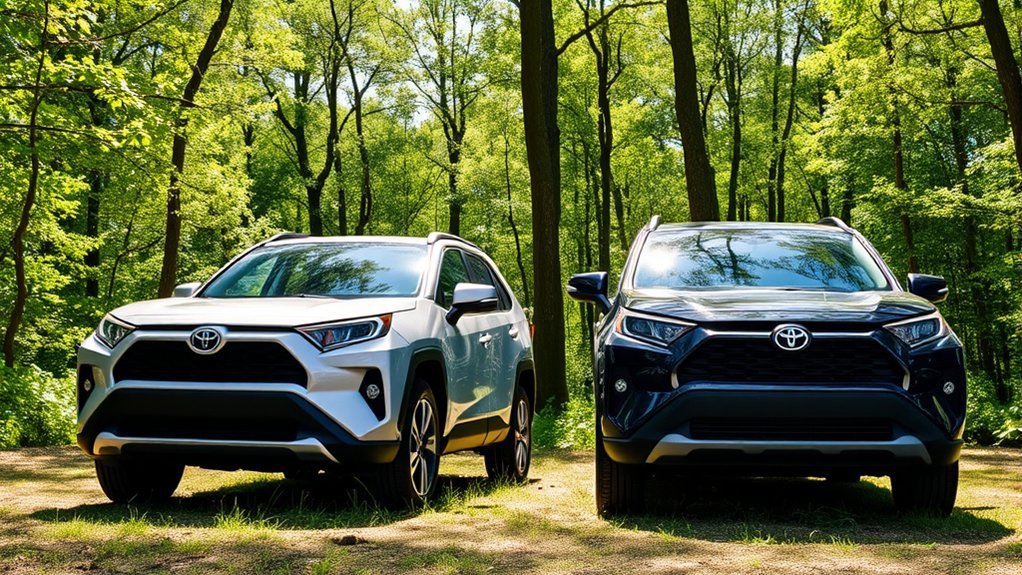
Choose the RAV4 LE If:
- You want the lowest entry price in the 2025 RAV4 range.
- You are comfortable with manual seat and climate controls.
- You do not need a moonroof, power liftgate, or heated-seat package.
- You want the same core gasoline or hybrid performance available in the equivalent XLE.
- You prefer steel wheels, which can be less expensive to replace after cosmetic damage.
Choose the RAV4 XLE If:
- You drive often and value a power-adjustable seat with lumbar support.
- You want dual-zone automatic climate control.
- You prefer Smart Key access and push-button start.
- You want standard blind-spot monitoring and rear cross-traffic alerts.
- You prefer alloy wheels.
- You want access to factory convenience or cold-weather packages.
| Buyer Priority | Better Starting Choice | Why |
|---|---|---|
| Lowest purchase price | LE | Provides the core RAV4 utility and powertrain with fewer convenience upgrades. |
| Daily commuting comfort | XLE | Power seating and automatic dual-zone climate control reduce daily adjustment. |
| Busy parking lots | XLE | Standard blind-spot monitoring and rear cross-traffic alerts add useful awareness. |
| Cold-weather equipment | XLE with Weather Package | The package may include heated seats, a heated steering wheel, and weather-related features. |
| Maximum fuel savings | Hybrid LE or Hybrid XLE | The powertrain choice affects fuel use more than the difference between LE and XLE equipment. |
For most value-focused buyers, the LE is sufficient. The XLE makes more sense when you will use its comfort and awareness features every day. Compare vehicles with the same powertrain and drivetrain so that packages do not distort the price difference.
Used-RAV4 shoppers should be especially careful. A 2018 XLE, 2022 XLE, and 2025 XLE can have different screens, safety systems, engines, packages, and standard features. Confirm the year and VIN before applying this comparison to a used vehicle.
Frequently Asked Questions
What is the price difference between the 2025 RAV4 LE and XLE?
The 2025 XLE’s base MSRP was roughly $1,500 higher than the equivalent gasoline LE before destination charges, packages, accessories, taxes, and dealer fees. Compare the same drivetrain and review each vehicle’s window sticker because an XLE with Convenience and Weather Packages can have a much larger total-price difference.
Does the RAV4 LE get better fuel economy than the XLE?
Matched LE and XLE versions generally have similar EPA ratings. The larger difference comes from choosing gasoline or hybrid power and front- or all-wheel drive. Check the exact model and drivetrain on EPA FuelEconomy.gov instead of assuming every LE is more efficient.
Does every RAV4 XLE include a moonroof and power liftgate?
No. On the 2025 XLE, those features are associated with an available convenience package rather than every standard XLE. Verify the package list or window sticker before buying.
Are any exterior colors exclusive to the XLE?
Color availability changes by model year, drivetrain, production schedule, and region. Do not rely on older color names such as Blue Flame or Moonlight Gray when shopping for a 2025 or 2026 vehicle. Use Toyota’s current configurator and confirm the paint code on the specific RAV4.
What warranty coverage do the 2025 LE and XLE receive?
Both trims receive the same basic factory warranty structure. Toyota’s 2025 U.S. warranty guide lists basic coverage for 36 months or 36,000 miles and powertrain coverage for 60 months or 60,000 miles, whichever comes first. Hybrid components have additional coverage described in the official warranty guide.
Can I upgrade an LE with all the XLE’s features later?
You can add accessories such as cargo mats, roof equipment, protective trim, or aftermarket electronics. Factory-integrated features such as dual-zone climate control, Smart Key access, a factory power seat, and a factory-style power liftgate can be expensive or impractical to retrofit. Buying an XLE is normally the better choice when you want several of those features.
Does this comparison apply to the 2026 Toyota RAV4?
No. The 2026 RAV4 begins a redesigned generation with an electrified-only powertrain lineup, newer multimedia technology, different output ratings, and revised trim equipment. Compare 2026 vehicles through Toyota’s current configurator rather than applying the 2025 gasoline specifications.
Conclusion
The 2025 Toyota RAV4 LE is the stronger value when you want the core RAV4 powertrain, safety technology, multimedia system, space, and reliability without paying for extra convenience features.
The 2025 XLE is the more comfortable everyday choice. Its power driver’s seat, dual-zone climate control, Smart Key access, alloy wheels, and blind-spot monitoring are meaningful upgrades for commuters, families, and drivers who spend substantial time in their vehicle.
Choose the trim based on the equipment you will use regularly, not the badge alone. Compare equivalent gasoline or hybrid versions, inspect the exact package list, and remember that the redesigned 2026 RAV4 requires a separate comparison.
Sources
- Toyota 2025 RAV4 — model-year trim, powertrain, multimedia, and equipment information.
- Toyota RAV4 — current-generation lineup and configuration information.
- Toyota Safety Sense — official explanation of Toyota driver-assistance technology.
- EPA FuelEconomy.gov — official fuel-economy comparisons by year, powertrain, and drivetrain.
- Toyota 2025 RAV4 Warranty and Maintenance Guide — basic, powertrain, hybrid, and other warranty coverage.
- National Highway Traffic Safety Administration Vehicle Ratings — official safety ratings, recalls, and vehicle information.
