Your Toyota Tacoma’s brakes can show several signs of wear, but not every squeak means the pads are finished. A mechanical wear indicator may produce a high-pitched sound when a pad becomes thin, while grinding, a sinking pedal, fluid loss, or a red brake-system warning can point to a more urgent problem. Because Tacoma brake equipment and specifications vary by model year, inspect the complete system and confirm every service limit in the documentation for your truck.
Quick Answer
A Toyota Tacoma brake-pad wear indicator is usually a small metal tab that may squeal when the friction material becomes thin. Not every Tacoma pad set uses the same indicator. Inspect both pads on each wheel, measure the thinnest friction material, and stop driving if you hear grinding or experience reduced braking.
Key Takeaways
- A mechanical wear indicator may create a high-pitched squeal, but indicator design and placement can vary by model year and installed pad set.
- Grinding, a sinking pedal, visible fluid loss, or sharply reduced braking requires immediate professional attention.
- Measure the friction material only, not the steel backing plate, and check the inner and outer pads.
- Use your Tacoma’s model-year repair information for the exact pad and rotor service limits.
- Confirm replacement parts by VIN, axle, trim, drivetrain, and brake configuration.
At a Glance
| Time Required | About 10–20 minutes for a basic visual check; longer if a wheel must be removed |
| Difficulty | Beginner for symptom checks; intermediate or professional for wheel removal and measurement |
| Tools Needed | Flashlight, brake-pad gauge or metric ruler, wheel chocks, gloves, and eye protection; jack stands and a torque wrench if removing a wheel |
| Cost | No added cost with existing tools; professional inspection charges vary by location and service provider |
Understanding Brake Pad Wear Indicators in Your Tacoma
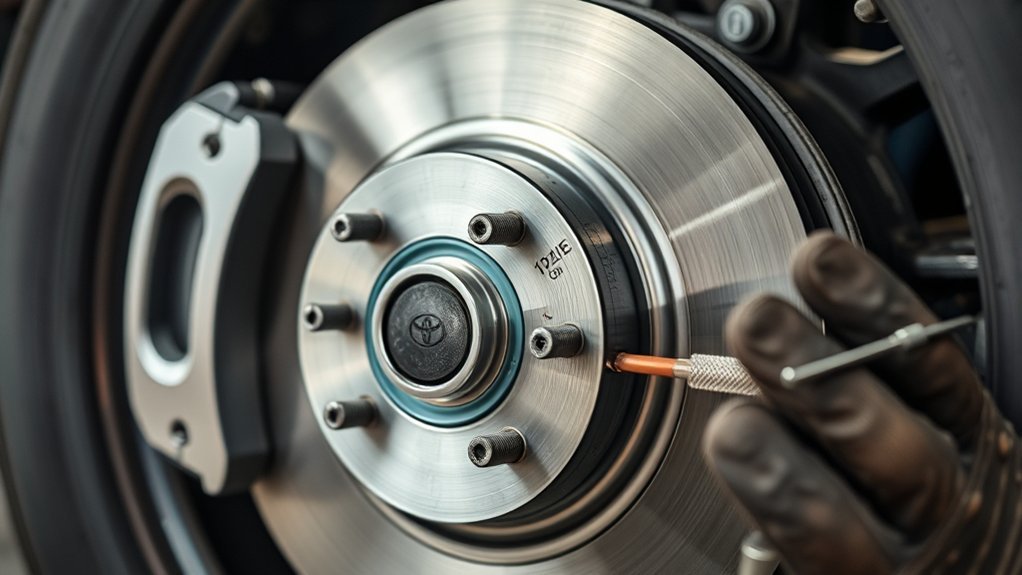
A mechanical brake-pad wear indicator, often called a squealer, is a small metal tab attached to or supplied with a brake pad. As the friction material becomes thin, the tab can contact the rotating brake rotor and produce a sharp, high-pitched sound.
Do not assume that every Tacoma, axle, or replacement pad set uses an identical indicator. Brake equipment can vary by model year, trim, axle, and installed component. Use the Toyota Manuals and Warranties portal to locate the information for your specific truck.
Note: A brake-system or ABS dashboard light is not normally a direct measurement of pad thickness. Toyota advises owners to select their exact vehicle and consult its manual for the meaning of each warning indicator.
A wear-indicator sound may occur while braking, while the wheel is rotating, or intermittently as the tab first begins touching the rotor. The noise can also change when you turn because the rotor, hub, or pad shifts slightly under load.
Brake squeal alone does not prove that a wear tab is touching the rotor. Moisture, surface rust, dust, glazed friction material, pad vibration, missing hardware, or contamination can also create noise. A complete inspection should identify the source before parts are replaced.
Common Signs of Worn Brake Pads and Brake Maintenance Tips
Brake-pad wear can affect noise, stopping feel, rotor condition, and pedal response. Evaluate all symptoms together instead of relying on one sound.
Common Warning Signs
- High-pitched squealing: A mechanical wear tab may be touching the rotor, although contamination or vibration can produce a similar sound.
- Grinding or harsh scraping: The friction material may be exhausted, or a damaged component may be contacting the rotor.
- Longer stopping distance: Reduced braking performance requires prompt inspection, even when no noise is present.
- Pulling while braking: Uneven pad wear, contamination, a restricted hose, or a sticking caliper may be affecting one side.
- Brake-pedal vibration: Rotor thickness variation, runout, deposits, loose components, or ABS operation may be involved.
- Uneven pad thickness: A large difference between the inner and outer pad can point to a sticking slide, piston, or hardware problem.
- Visible rotor damage: Deep grooves, cracks, severe rust, discoloration, or a pronounced outer lip require closer measurement.
Signs That Require Immediate Attention
Warning: Stop driving and arrange professional service if the pedal sinks toward the floor, braking ability drops sharply, brake fluid is leaking, grinding is continuous, or a red brake-system warning remains illuminated. These symptoms can involve more than normal pad wear.
A soft, spongy, or sinking pedal should not be treated as a routine worn-pad symptom. It can indicate air, fluid loss, boiling fluid, a hose problem, or another hydraulic fault. Do not continue driving merely because the pads still appear to have material.
Essential Maintenance Practices
Follow the inspection and maintenance schedule for your Tacoma’s model year rather than using a universal mileage number. Inspect the brakes sooner when you tow, carry heavy loads, drive in mountains, operate in stop-and-go traffic, travel through mud or road salt, or notice a change in noise or braking feel.
A useful routine is to inspect visible brake components whenever the wheels are removed for tire service. This gives you a better view of the inner and outer pads, rotor surfaces, hoses, caliper boots, slide hardware, and possible fluid leakage.
Brake fluid should be checked and serviced according to the applicable maintenance information, fluid condition, and repair procedure. A pad replacement does not automatically require a complete fluid replacement, although hydraulic work, contamination, or scheduled maintenance may make fluid service necessary.
How to Measure Brake Pad Thickness Effectively
A view through the wheel may provide a rough estimate, but it often shows only the outer pad. The inner pad can wear faster when a caliper piston or slide does not move correctly, so both pads should be checked whenever possible.
- Park on a firm, level surface. Apply the parking brake when appropriate, select Park or a low gear, and place wheel chocks at the wheels that will remain on the ground.
- Let the brakes cool. Rotors and calipers can remain hot after driving.
- Use a flashlight for an initial check. Look through the wheel opening for the pad, rotor, caliper, and visible hardware.
- Remove the wheel when visibility is limited. Use the correct lifting point, support the truck with properly rated jack stands, and follow the owner or repair manual.
- Measure the friction material. Do not include the steel backing plate. Check the thinnest point on both the inner and outer pad.
- Compare all pads on the axle. Uneven wear can be as important as the remaining thickness.
- Inspect the rotor. Look for deep scoring, cracks, severe corrosion, heat discoloration, or an uneven surface.
- Use the factory service limit. Confirm the exact minimum thickness and rotor specifications through the applicable repair information.
A remaining thickness near 3–4 mm is commonly treated as a reason to plan service soon, especially before towing, mountain travel, or a long trip. It should not replace the exact specification for your model year. Toyota’s Technical Information System is the official source for detailed North American repair information.
Warning: Never place any part of your body beneath a Tacoma supported only by a jack. Do not blow brake dust away with compressed air. Use suitable dust-control methods, gloves, and eye protection.
Pro Tip: Photograph each pad measurement and note the date and mileage. Comparing records at later inspections helps you identify unusually rapid or uneven wear.
What to Do When You Hear Squeaking or Grinding?
First, determine whether the sound is occasional or continuous and whether braking performance has changed. Do not repeatedly test the brakes at high speed.
If You Hear a Light Squeal
- Check whether the sound occurs only during the first few stops after rain or overnight parking.
- Inspect the pad thickness and wear-indicator position.
- Look for missing shims, clips, or other hardware.
- Check for glazing, contamination, rust, or embedded debris.
- Schedule service soon if the pads are approaching their service limit.
A short-lived sound caused by light surface rust may disappear after normal braking. A persistent squeal should still be inspected because noise can also come from worn or incorrectly installed components.
If You Hear Grinding
Grinding can mean the friction material has worn away and the pad backing plate is contacting the rotor. It may also result from a foreign object, damaged hardware, a seized component, or severe rotor corrosion.
Avoid driving the truck until the cause is identified. Continued metal contact can damage the rotor and caliper while reducing predictable braking. Transporting the Tacoma for service is safer than attempting to drive it when braking has deteriorated.
Choose the Right Replacement Brake Parts

Brake components should match the truck’s VIN, model year, axle, drivetrain, trim, wheel package, and brake configuration. Do not order parts based only on the word “Tacoma” or a broad year range.
Genuine Parts vs. Aftermarket
Toyota Genuine Parts are designed around Toyota vehicle specifications and can simplify fitment. Reputable aftermarket pads and rotors can also work well when the manufacturer lists the exact application and the parts meet appropriate quality and performance requirements.
Avoid choosing solely by price, advertising language, or an unverified marketplace fitment tool. Confirm the manufacturer’s part number and application through an authorized catalog or qualified parts professional.
Importance of Compatibility
| Item to Verify | Why It Matters | What to Confirm |
|---|---|---|
| Brake Pads | Shape, thickness, compound, hardware, and indicator placement must match the caliper | VIN, axle, caliper type, model year, and included hardware |
| Rotors | Diameter, thickness, offset, and vent design affect fit and heat control | Exact application, minimum thickness, and installation specifications |
| Calipers | Piston design and mounting dimensions must match the brake package | Left or right side, axle, casting, bracket, and hose connection |
| Brake Hoses and Lines | Length, routing, fittings, and pressure compatibility are safety-critical | Exact vehicle application and original routing |
| Brake Fluid | Using an unapproved type or contaminated fluid can damage the hydraulic system | The exact specification printed in the applicable owner or repair manual |
Some Tacoma generations use different rear-brake designs than others. Verify whether your truck has rear discs or drums before ordering rear friction components.
Performance Considerations
Choose a pad compound suited to how you use the truck. Daily commuting usually favors predictable cold braking, low noise, and manageable dust. Repeated towing, mountain descents, or heavy-load use may require parts designed to handle greater heat while remaining compatible with the factory system.
Inspect or measure the rotors whenever pads are replaced. New pads installed against a severely scored, cracked, contaminated, or undersized rotor may not bed correctly or deliver consistent braking.
Replace pads as an axle set rather than changing only one wheel. Service the source of uneven wear at the same time. Installing new pads without correcting a sticking slide, piston, or hose restriction can quickly damage the replacement parts.
Essential Tips for Maintaining Your Brakes and Ensuring Optimal Performance
- Follow the maintenance guide for your Tacoma’s model year and operating conditions.
- Inspect the brakes whenever you notice new noise, vibration, pulling, warning lights, or pedal changes.
- Check the inner and outer pads rather than judging the axle from one visible pad.
- Keep friction surfaces free of oil, grease, brake fluid, and unsuitable lubricants.
- Use only the specified lubricant at approved contact points and keep it away from pad and rotor surfaces.
- Inspect caliper boots, slide pins, hoses, clips, shims, and mounting hardware.
- Use the specified wheel-nut torque after wheel installation.
- Bed new components according to the brake-part manufacturer’s instructions when a procedure is provided.
- Recheck the system promptly if the pedal, noise, or stopping feel changes after service.
Do not add brake fluid simply to hide a falling reservoir level without finding the cause. The level can change as pads wear, but a leak or hydraulic fault must be ruled out before the truck returns to service.
Why Regular Brake Inspections Matter
Regular inspection helps you find thin friction material before the backing plate contacts the rotor. It can also reveal uneven wear, damaged boots, sticking slides, leaking components, deteriorated hoses, loose hardware, and rotor damage.
Early diagnosis often limits the repair to the parts that are actually worn. Ignoring noise or uneven wear can damage rotors, overheat components, and make braking less predictable.
Check the NHTSA recall database with your Tacoma’s VIN and review Toyota service information when you suspect a recurring brake or warning-system issue. A VIN search can identify unrepaired safety recalls associated with a specific vehicle, although it does not replace a mechanical inspection.
The safest time to investigate a new brake noise is before it becomes grinding, pedal loss, rotor damage, or reduced stopping ability.
Frequently Asked Questions
Do Toyota Tacoma brake pads have wear indicators?
Some Tacoma brake-pad sets may use a mechanical squealer or other visual wear feature, but the design can vary by model year, axle, and installed part. Do not assume the truck has an electronic pad-thickness warning. Inspect the pads and verify the applicable parts and repair information.
What is the 30/30/30 rule for brakes?
No universal Toyota 30/30/30 brake-maintenance rule applies to every Tacoma. Follow the maintenance guide and repair specifications for your model year, and arrange an inspection whenever you notice noise, pulling, vibration, warning lights, fluid loss, or a change in pedal feel.
What does a mechanical brake-pad wear indicator look like?
It commonly looks like a small bent metal tab attached near the edge of a brake pad. When the friction material becomes thin enough, the tab can touch the rotor and create a high-pitched sound. Its shape and location vary among pad designs.
How can you tell visually if Tacoma brake pads are worn?
Measure the remaining friction material without including the steel backing plate. Inspect the inner and outer pads for thin material, cracking, chipping, glazing, contamination, or uneven wear. Use the exact factory service limit for the truck’s model year.
Can you drive a Toyota Tacoma with grinding brakes?
You should avoid driving it. Grinding may indicate metal contact, damaged hardware, severe corrosion, or another condition that can reduce braking and damage the rotor or caliper. Arrange an inspection and transport the truck rather than continuing to drive it.
Conclusion
A Tacoma’s brake-pad wear indicator can provide an early audible warning, but it is only one part of a proper brake inspection. Check both pads on each wheel, measure the friction material, inspect the rotors and hardware, and confirm the exact service specifications for your model year.
Treat grinding, a sinking pedal, fluid loss, reduced braking, or an active red brake-system warning as urgent. Prompt diagnosis protects the rotors and calipers, but more importantly, it helps keep the truck’s braking response predictable.
Sources
- Toyota Manuals and Warranties — model- and year-specific owner and maintenance information
- Toyota Warning Lights — guidance on vehicle-specific dashboard indicators
- Toyota Technical Information System — factory repair information and specifications
- Toyota Genuine Parts — vehicle-specific Toyota replacement-parts information
- NIOSH: Control of Asbestos Exposure During Brake Drum Service — brake-maintenance dust-control precautions
- NHTSA Recall Lookup — VIN-based recall and manufacturer-communication checks