
Using the parking brake every time you park your Toyota Tacoma adds a second layer of protection against rollaway and keeps the truck from resting only on the transmission’s Park mechanism. The correct control and any automatic functions vary by model year, so combine the steps below with the owner’s manual for your exact Tacoma.
Quick Answer
Use your Toyota Tacoma’s parking brake every time you park, not only on hills. Keep the service brake pressed, apply the parking brake with the model-specific pedal, lever, or switch, confirm it is holding, then select Park or the correct manual-transmission gear. Follow the owner’s manual for your model year.
Key Takeaways
- Apply the parking brake whenever you park, including on level ground.
- Keep your foot on the brake until the parking brake is set and the transmission is secured.
- Turn the front wheels correctly on a slope and use wheel chocks when extra protection is needed.
- Do not assume every Tacoma uses the same pedal, lever, switch, or automatic-release behavior.
- Have the system inspected if it will not hold, will not release, drags, smells hot, or shows a warning.
At a Glance
| Time Required | About 20–30 seconds each time you park |
| Difficulty | Easy |
| Tools Needed | None for normal use; wheel chocks for added security |
| Cost | $0 for normal use |
Understanding the Purpose of the Parking Brake

The parking brake, also called the emergency brake, e-brake, or handbrake, is designed mainly to keep the truck stationary after you park. It is separate from the service brake you operate with the main brake pedal, although the exact hardware and control method depend on the Tacoma’s model year and configuration.
Using both the parking brake and the transmission’s parked position gives you two holding measures instead of relying on one. For model-specific operating steps, warning-light meanings, automatic features, and cold-weather guidance, check the Toyota owner’s manual for your exact vehicle.
Park is a transmission position. The parking brake is a separate holding system. Use both rather than treating either one as a complete substitute for the other.
Why You Should Always Use the Parking Brake on Hills
A slope increases the force trying to move your Tacoma downhill. Applying the parking brake before you release the service brake helps keep the truck from settling hard against the transmission’s Park mechanism. Wheel direction provides another safeguard if the truck moves despite those measures.
| Parking Position | Front-Wheel Direction |
|---|---|
| Uphill with a curb | Turn the wheels away from the curb so a backward roll brings a tire toward the curb. |
| Downhill with a curb | Turn the wheels toward the curb. |
| Uphill or downhill without a curb | Turn the wheels toward the road edge so the truck would move away from traffic. |
Warning: Never leave the truck unattended until you have confirmed it is stationary. On a steep grade, while loading, while towing, or whenever a rollaway would create a serious hazard, use properly placed wheel chocks as an added measure.
How to Properly Engage Your Tacoma Parking Brake
Do not assume your Tacoma has a hand lever. Depending on the model year, you may operate the parking brake with a foot pedal, a hand control, or an electronic switch. Use the control fitted to your truck and follow any instructions shown in its owner’s manual.
For an Automatic Transmission
- Bring the Tacoma to a complete stop and keep firm pressure on the service-brake pedal.
- Apply the parking brake fully using the installed pedal, lever, or switch.
- Confirm the parking-brake indicator or message shows that the system is applied.
- Shift the transmission into Park.
- Ease pressure from the service-brake pedal and verify that the truck remains stationary before you exit.
For a Manual Transmission
- Stop completely and continue holding the service brake.
- Apply the parking brake fully and confirm that it holds.
- Switch off the engine and leave the transmission in the gear specified by the owner’s manual for the slope. Do not leave the truck in Neutral.
- Ease off the service brake and confirm that the Tacoma does not move before you exit.
How to Release It
- Press and hold the service-brake pedal.
- Start the truck and select the intended driving gear when appropriate.
- Release the parking brake with the installed control.
- Confirm the parking-brake indicator turns off and make sure the truck rolls freely without drag.
Pro Tip: Apply the parking brake before taking your foot off the service brake. That sequence lets the parking brake carry the parked load instead of allowing the truck to roll first and then stop against the transmission.
Common Parking Brake Mistakes to Avoid
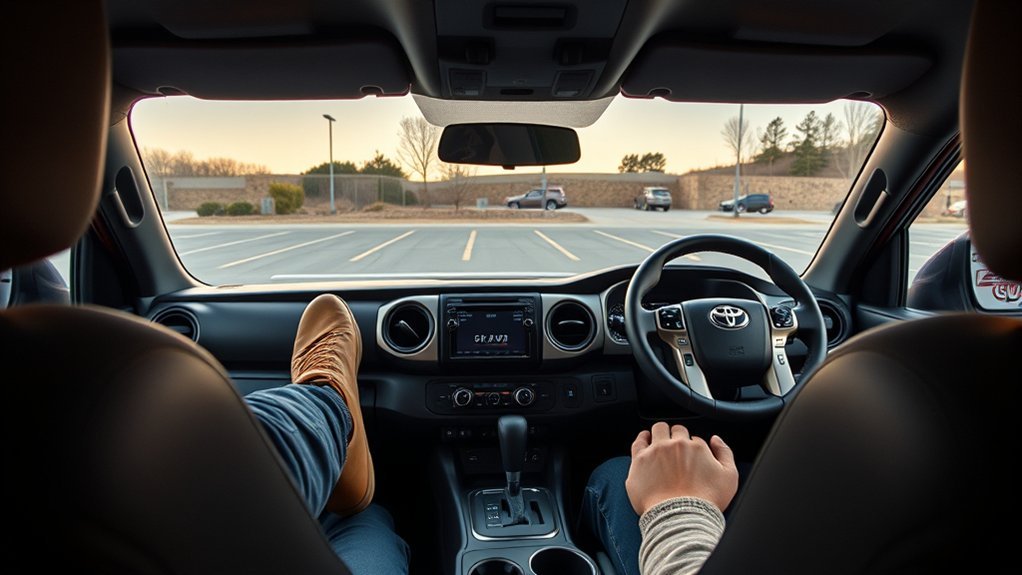
- Using it only on hills: Regular use on level ground helps make the correct parking sequence automatic.
- Letting the truck roll before applying it: Keep the service brake pressed until the parking brake is fully set.
- Driving with it partly applied: Drag can overheat and damage brake components. Stop safely if you notice resistance, odor, smoke, or unusual heat.
- Assuming Auto Hold replaces it: Auto Hold and hill-start assistance are temporary driving aids, not substitutes for securing a parked vehicle.
- Ignoring a warning light or message: A light that stays on after release, flashes, or appears with a malfunction message needs diagnosis.
- Applying it suddenly while moving: The parking brake is not a routine stopping control. Abrupt use can upset vehicle stability.
- Attempting an unverified adjustment: Cable, shoe, caliper, and electronic procedures vary. Use Toyota service information or a qualified technician.
Maintenance Tips for a Functional Parking Brake
You do not need an invented monthly or annual schedule. Instead, watch how the system behaves during normal use and follow the inspection interval in the maintenance guide for your exact model year.
| Check | What to Look For | Action |
|---|---|---|
| Normal operation | The brake applies and releases smoothly, the indicator behaves normally, and the truck remains stationary. | Continue normal use. |
| Holding ability | The truck moves after the brake is fully applied. | Reposition on level ground, use chocks, and arrange service. Do not test it on a steep slope. |
| Release and drag | The control will not release, the indicator stays on, or the truck feels held back. | Stop driving and have the system inspected before heat damages the brakes. |
| Scheduled service | Cables, linkage, parking-brake shoes, rear calipers, switches, and electronic actuators as applicable. | Follow Toyota’s model-specific maintenance and repair information. |
Road salt, mud, water exposure, long storage, and infrequent use can contribute to corrosion or sticking. If operation changes after those conditions, have the system checked rather than forcing the control or spraying lubricant on unknown components.
Effective Parking-Brake Practices
Consistent habits make the system easier to use correctly and help you notice changes early.
- Apply the parking brake every time you park, even on level pavement.
- Keep the service brake pressed until the parking brake and transmission are both secured.
- Before driving, confirm the brake has released and its indicator is off.
- Use wheel chocks when working around the truck, loading on a grade, or following trailer procedures that call for them.
- Teach every driver who uses the Tacoma where its parking-brake control is and how its indicator works.
Warning: A parking brake and wheel chocks do not make it safe to work beneath a truck. Use the correct lifting points and properly rated jack stands whenever the vehicle must be raised.
Understanding Electronic and Automatic Parking-Brake Features
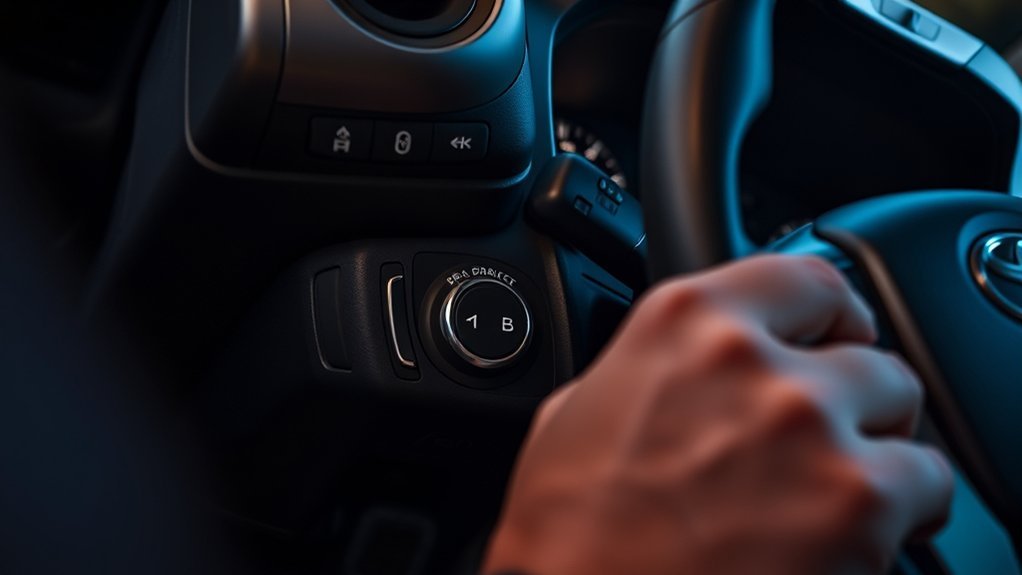
Some Tacoma configurations use conventional mechanical controls, while others may use an electronic parking-brake switch or model-specific automatic functions. Do not assume a feature applies because another Tacoma has it. Automatic application, automatic release, ignition requirements, door-related behavior, and trailer-maneuver behavior can differ.
If an electronic parking brake applies or releases unexpectedly, note the conditions, read the dashboard message, and consult the exact manual. Repeated unexplained operation, a flashing indicator, or a malfunction warning should be diagnosed rather than dismissed as normal cycling.
Note: Auto Hold, hill-start assist, and automatic emergency braking are not the same as the parking brake. They may use the service brakes temporarily, but you still need to secure the truck when parking.
Safety Considerations When Using the Parking Brake
The best parking routine combines the parking brake, the correct transmission position, sensible wheel direction, and added restraints when conditions call for them.
Preventing Vehicle Rollaway
Confirm the truck has stopped, apply the parking brake, secure the transmission, turn the wheels correctly on a slope, and verify the Tacoma does not move before you leave it. If the brake will not hold, do not trust the transmission alone on a grade.
Enhancing Parking Stability
Loads, trailers, loose surfaces, ice, and steep slopes can reduce your safety margin. Follow the trailer manufacturer’s coupling and chocking procedure, and never treat the Tacoma’s parking brake as a replacement for trailer wheel chocks or landing-gear instructions.
Reducing Transmission Strain
Applying the parking brake before releasing the service brake limits how far the truck can settle after you select Park. This reduces the load placed on the transmission’s parking mechanism and can also make it easier to shift out of Park on a slope.
Parking Brake vs. Emergency Brake: What Is the Difference?
In everyday vehicle terminology, parking brake, emergency brake, e-brake, and handbrake usually refer to the same secondary brake control. They are not two separate systems in which one uses only the rear brakes and the other applies all four brakes. The more useful distinction is between the parking brake, the service brake, and automatic emergency braking.
| Term | Main Purpose | Driver Control |
|---|---|---|
| Service brake | Normal slowing and stopping while driving | Main brake pedal |
| Parking brake, emergency brake, or e-brake | Holding the parked vehicle; limited backup use only as directed by the owner’s manual | Pedal, lever, or electronic switch, depending on the truck |
| Automatic emergency braking | Driver-assistance intervention intended to reduce certain collision risks | Vehicle-controlled service braking when system conditions are met |
What to Do If Your Parking Brake Fails
A parking brake that will not hold, will not release, or behaves unpredictably needs prompt attention. Your immediate response depends on whether the problem appears while parked or while the truck is moving.
Common Signs of Failure
- The fully applied brake does not keep the truck stationary.
- A mechanical pedal or lever has excessive travel, feels unusually loose, or sticks.
- An electronic switch does not apply or release the brake.
- The parking-brake indicator remains on after release, flashes, or appears with a malfunction message.
- The truck feels sluggish after release, pulls, or develops a hot-brake odor.
- You hear scraping, grinding, repeated actuator noise, or other new sounds.
If the Truck Will Not Stay Parked
- Keep firm pressure on the service-brake pedal.
- If possible, move to a level location away from traffic and people.
- Select Park in an automatic, or the correct gear in a manual, and switch off the engine when safely positioned.
- Use properly placed wheel chocks before leaving the driver’s seat.
- Do not leave the truck unattended on a grade. Arrange professional repair or towing.
If the Service Brakes Fail While Driving
Warning: Do not yank a mechanical parking brake or command full application at speed unless the owner’s manual specifically directs it. Sudden rear-wheel braking can cause a skid, and electronic systems may respond differently.
Keep control of the steering, switch on the hazard lights, ease off the accelerator, and downshift to a lower gear when it is safe. Try the service-brake pedal as directed by your manual. Use the parking brake only gradually and only according to the model-specific emergency procedure. Steer to a safe stopping area and call emergency services or roadside assistance as conditions require. General emergency-driving guidance is available in the California Driver’s Handbook, but your Toyota manual controls for vehicle-specific operation.
Seeking Professional Assistance
Do not keep driving if the brake is dragging, smoking, will not release, or produces a strong hot odor. A technician may need to inspect cables, linkage, parking-brake shoes, rear calipers, switches, wiring, or electronic actuators, depending on the system. You can also check the truck’s VIN with the NHTSA recall lookup for unrepaired safety recalls and manufacturer communications.
Frequently Asked Questions
When should I use the parking brake on a Toyota Tacoma?
Use it every time you park, whether the ground is level or sloped. It gives you an additional holding measure and helps you build a consistent parking routine.
In which parking situations is the parking brake especially important?
It is especially important on hills, loose surfaces, loading areas, and locations where a rollaway could reach traffic or people. Add wheel chocks when the slope, load, trailer procedure, or work situation calls for extra restraint.
How do I use the parking brake on my Tacoma?
Hold the service-brake pedal, apply the installed parking-brake pedal, lever, or switch fully, confirm the indicator, secure the transmission, and verify the truck remains still. Check the exact owner’s manual because controls and automatic functions vary by model year.
Should I apply the parking brake before shifting into Park?
Keep your foot on the service brake, apply the parking brake, and then select Park before releasing the service brake. This sequence helps prevent the truck from rolling and settling hard against the transmission’s parking mechanism.
When should I not apply the parking brake?
Do not use it as a routine brake while driving or apply it abruptly at speed. In a service-brake emergency, follow the exact procedure in your Tacoma owner’s manual because mechanical and electronic systems can respond differently.
Is Auto Hold the same as the parking brake?
No. Auto Hold is a temporary driving convenience that may maintain service-brake pressure after a stop. It does not replace the parking brake and the correct transmission position when you leave the truck parked.
Conclusion
Use your Tacoma’s parking brake every time you park, keep the service brake pressed until the truck is fully secured, and add correct wheel direction or chocks when conditions demand more protection. Because controls and automatic behavior vary across Tacoma generations, the exact owner’s manual should settle any model-specific question. Stop and arrange service if the brake will not hold, release, or operate normally.
Sources
- Toyota Manuals and Warranties — model-specific controls, warnings, indicators, and maintenance guidance.
- National Highway Traffic Safety Administration Recall Lookup — VIN-based recall, investigation, complaint, and manufacturer-communication checks.
- California Driver’s Handbook: Safe Driving — general emergency-driving and vehicle-control guidance.
- 2024 Toyota Tacoma eBrochure — confirms that current-generation Tacoma configurations include both automatic and manual transmissions.
