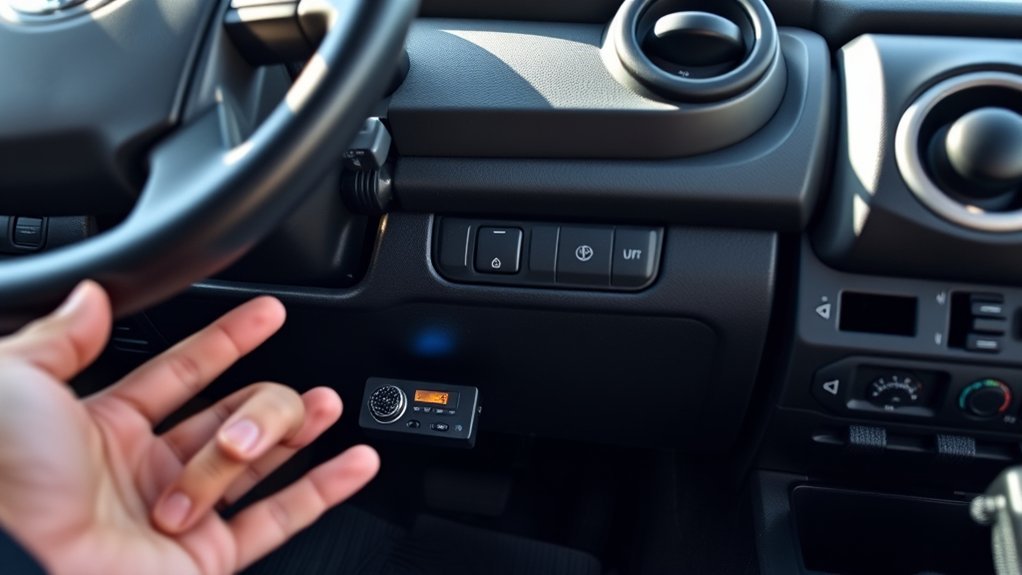
Setting up your Toyota Tacoma trailer brake controller starts with one simple rule: match the controller to the trailer you are actually towing that day. Confirm your Tacoma has the factory or properly installed brake controller, connect the trailer through a seven-pin connector, select the correct brake type, then adjust gain in a safe test area before you drive in traffic.
Quick Answer
To set up a Toyota Tacoma trailer brake controller, connect a trailer with compatible electric or electric-over-hydraulic brakes through the seven-pin connector, select the correct brake type, set gain to 5.0, then test at about 20–25 mph on a level, traffic-free road. Adjust gain until braking feels firm but the trailer wheels do not lock.
Key Takeaways
- Use this guide only if your Tacoma has a Toyota Genuine Trailer Brake Controller or a properly installed aftermarket controller.
- A four-pin trailer plug does not carry the brake-controller output needed for electric trailer brakes; you need the proper seven-pin connection.
- Toyota’s integrated controller works with most electric and electric-over-hydraulic trailer brake systems, but not hydraulic surge brakes.
- Set gain for the current trailer load, road surface, and weather. Recheck it whenever those conditions change.
- Toyota Safety Sense features such as Pre-Collision System and Automatic Emergency Braking are separate driver-assist systems, not a replacement for a correctly adjusted trailer brake controller.
At a Glance
| Time Required | 15–30 minutes, plus extra time if you need to inspect wiring or trailer brakes |
| Difficulty | Easy to moderate if the Tacoma and trailer are already equipped correctly |
| Tools Needed | Owner’s manual, wheel chocks, tire-pressure gauge, trailer light tester or helper, and a safe open road or lot |
| Cost | No cost for adjustment if the brake controller and trailer brake system are already installed and working |
How to Set Up Your Toyota Tacoma Trailer Brake Controller
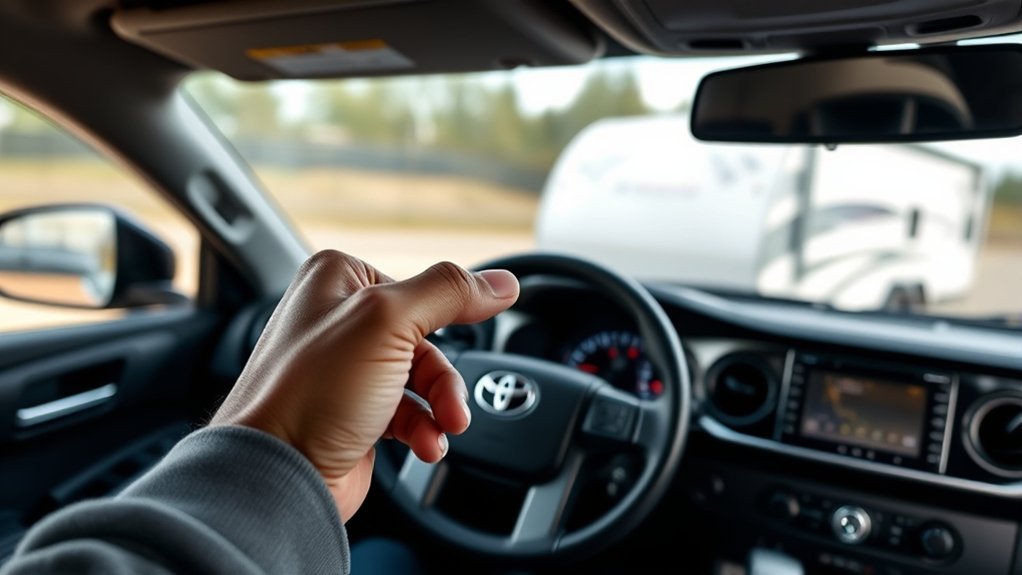
Before you adjust anything, confirm that your Tacoma actually has the trailer brake controller you plan to use. Toyota lists the trailer brake controller as an available towing feature on the Tacoma, so equipment can vary by model year, trim, market, and package. If your truck does not have the Toyota Genuine Trailer Brake Controller, follow the instructions for your installed aftermarket controller instead.
The Toyota Tacoma owner’s manual explains that the trailer brake controller works through the seven-pin connector. That connector carries the brake-controller signal along with trailer lighting and other circuits. A basic four-pin connector handles lights only, so it will not operate electric trailer brakes through the controller.
Next, identify your trailer brake type. The Toyota integrated controller supports most electric and electric-over-hydraulic trailer brake systems up to 3 axles with a 24A output to the trailer brakes. It does not work with hydraulic surge brakes, which use the trailer’s coupler and hydraulic pressure rather than an electronic brake-controller signal.
Warning: Do not test trailer brake gain in traffic, on a hill, or on a slippery road. Use a level, open, traffic-free area. If the trailer brakes do not respond to the manual slider, stop towing and inspect the trailer, wiring, connector, and controller before driving farther.
Once the trailer is connected, use the Tacoma’s multi-information display to select the correct trailer brake type. Choose electric for standard electric drum brakes. Choose electric-over-hydraulic only if your trailer uses an electric signal to power a hydraulic actuator. If you choose the wrong brake type, the controller may apply the wrong output and braking can feel weak, delayed, or too aggressive.
The right gain setting is not one universal number. It depends on trailer weight, cargo load, brake condition, road surface, and weather.
What You Need for a Smooth Trailer Setup
A smooth Tacoma trailer brake controller setup depends on more than the dashboard controls. Start with the physical towing setup before you touch the gain buttons.
- Compatible brake controller: Confirm your Tacoma has the Toyota integrated controller or a properly installed aftermarket controller.
- Seven-pin trailer connector: Make sure the plug is clean, fully seated, and not damaged.
- Compatible trailer brakes: Use electric or electric-over-hydraulic trailer brakes. Do not expect the controller to operate hydraulic surge brakes.
- Working trailer lights: Check running lights, brake lights, turn signals, and hazard lights before moving.
- Breakaway system: If your trailer has electric brakes and a breakaway kit, confirm the cable is attached to the tow vehicle and the trailer battery is charged.
- Correct loading: Keep the trailer within your Tacoma’s rated towing capacity, payload, gross combined weight rating, and tongue-weight limits.
- Safe test area: Use a level, dry, open road or lot with no traffic for gain adjustment.
Note: Toyota rates the 2024 Tacoma at up to 6,500 pounds of maximum towing capacity on certain properly equipped grades, but your exact rating depends on configuration. Always check the certification label, owner’s manual, hitch rating, and trailer weight before towing.
If the trailer has sat unused, inspect the brake wiring, magnets, brake shoes or pads, wheel bearings, tires, and breakaway battery before you rely on the controller. A brake controller can only command the trailer brakes; it cannot fix worn brakes, broken wiring, weak grounds, overloaded axles, or poor trailer loading.
Connecting Your Trailer: A Step-by-Step Guide
Connect the trailer carefully before you adjust the gain. A secure mechanical connection comes first, then the electrical connection, then the brake-controller setup.
- Park on a level surface. Set the Tacoma’s parking brake and chock the trailer wheels if needed.
- Couple the trailer to the hitch ball. Lock the coupler and confirm it is fully seated.
- Attach the safety chains. Cross the chains under the coupler and leave enough slack for turns, but not so much that they drag.
- Attach the breakaway cable. Clip it to a fixed point on the tow vehicle, not to the safety chains.
- Plug in the seven-pin connector. Push it in fully and close the connector door or latch if your setup has one.
- Check the lights. Test running lights, brake lights, left turn, right turn, and hazards.
- Select the trailer brake type. Use the Tacoma’s display to choose electric or electric-over-hydraulic.
- Confirm trailer detection. Check the multi-information display for trailer connection status or warning messages.
- Set an initial gain. Use 5.0 as the baseline for Toyota’s integrated controller, then test and adjust.
If the truck shows a trailer brake warning light or a brake-controller warning message, do not ignore it. That warning can point to a controller fault or trailer connector circuit issue. Stop, inspect the connection, and have the Tacoma checked by a Toyota dealer or qualified trailer technician if the warning remains.
How to Adjust Gain Settings for Your Tacoma Trailer Brake Controller

Gain controls how much braking power the controller sends to the trailer brakes. On Toyota’s integrated system, gain ranges from 0 to 10 in 0.5 increments. A gain setting of 0 disables trailer brake controller output, while higher numbers send more power to the trailer brakes.
Understanding Gain Adjustment
Start with a gain setting of 5.0 only as a baseline. It is not the automatic best setting for every trailer. A light utility trailer may need less gain, while a loaded camper or equipment trailer may need more.
Use this Toyota-style process to dial it in:
- Make sure the trailer brakes are in good working condition.
- Hook up the trailer and make the proper electrical connection.
- Select the correct trailer brake type in the Tacoma’s display.
- Drive with the trailer attached on a level, traffic-free road at about 20–25 mph.
- Set the starting gain to 5.0.
- Fully apply the manual trailer brake output slider while maintaining control.
- Increase or decrease gain until braking is strong but just below the point of trailer wheel lock-up.
- Repeat the test until the trailer stops smoothly and consistently.
Pro Tip: Recheck gain after you add cargo, drain or fill water tanks, move heavy items, drive in rain, or switch trailers. A gain setting that worked with an empty trailer may be too weak or too aggressive after the load changes.
Testing Trailer Brake Performance
Test the manual brake slider first because it applies the trailer brakes without using the Tacoma’s service brakes. At low speed, you should feel the trailer pulling back against the truck. If you feel nothing, the trailer brakes may not be receiving power.
After the manual-slider test, apply the Tacoma’s brake pedal at about 20–25 mph in the same safe area. The truck and trailer should slow together. If the trailer pushes the Tacoma, increase gain slightly. If the trailer tires squeal, skid, smoke, or grab too hard, reduce gain.
Do not chase the highest possible number. The best setting gives you controlled stopping without lock-up, jerking, or trailer push. If you cannot get stable braking with reasonable gain changes, inspect the trailer brakes and wiring before towing.
Achieving Optimal Braking Balance
Good braking balance feels calm. The Tacoma should not do all the stopping, and the trailer should not yank backward or lock its tires. You want both vehicles to slow as one combination.
- If braking feels weak: Increase gain in small steps and retest.
- If the trailer locks up: Reduce gain and retest.
- If braking feels delayed: Confirm the correct brake type, especially with electric-over-hydraulic systems.
- If braking changes during the trip: Stop and recheck gain, load shift, connector condition, and trailer brakes.
When the trailer is heavily loaded, the wheels may not lock even at a higher gain. In that case, use the highest setting that still feels controlled for the towing condition, and do not exceed Toyota’s instructions, trailer ratings, or safe driving judgment.
How to Effectively Test Your Trailer Brake System
Testing the trailer brake system before every towing trip helps you catch problems while you are still close to home. Start with a visual inspection, then test the manual slider, then test normal brake-pedal stops.
- Inspect the plug and socket. Look for corrosion, bent pins, loose wiring, dirt, or moisture.
- Check the trailer ground. A weak ground can cause lights to work while brakes act weak or uneven.
- Confirm trailer brake condition. Worn shoes, contaminated drums, damaged magnets, leaking hydraulic actuators, or bad wiring can all reduce braking.
- Test at low speed. Use the manual slider in a safe area and confirm the trailer brakes engage.
- Test at 20–25 mph. Make a controlled stop and adjust gain as needed.
- Retest after load changes. Cargo weight and tongue weight can change the correct gain setting.
If your trailer uses electric-over-hydraulic brakes, remember that some actuators need a minimum output before they respond. If braking feels delayed or uneven, confirm that the brake type is set correctly and test compatibility at low speed before you tow on public roads.
Understanding Safety Features of the Trailer Brake Controller
The trailer brake controller is a towing-control feature, not a full safety system by itself. Its job is to send the right amount of braking power to compatible trailer brakes. The Tacoma may also have other towing and driver-assist features, but you should understand what each one does.
Pre-Collision System Alerts
Toyota Safety Sense features, including Pre-Collision System with Pedestrian Detection, are separate from the trailer brake controller. Toyota says PCS can help detect certain vehicles, pedestrians, bicyclists, or motorcyclists and provide warning or automatic emergency braking under certain conditions. It does not replace your trailer brakes, your brake-controller gain setting, or your responsibility to leave more stopping distance when towing.
When towing, treat PCS as a backup driver-assist feature only. Your trailer adds weight and length, and the Tacoma-trailer combination needs more room to stop and turn. Keep extra following distance, brake earlier, and reduce speed in rain, wind, hills, traffic, and gravel.
Automatic Emergency Braking
Automatic Emergency Braking can help in certain frontal-collision situations when system conditions are met, but it is not a towing setup tool. It should never be used as a reason to skip brake-controller adjustment.
For trailer braking, focus on the systems directly related to towing: the seven-pin connector, selected brake type, gain setting, manual trailer brake slider, trailer brake warning messages, and trailer brake maintenance. If your Tacoma is equipped with Trailer Sway Control or Blind Spot Monitor with trailer recognition, read the owner’s manual so you know the limits before you tow.
Note: Driver-assist systems depend on road, weather, vehicle condition, sensor visibility, speed, and other factors. They cannot overcome an overloaded trailer, bad trailer brakes, poor wiring, or an incorrect gain setting.
Common Troubleshooting Tips for Trailer Brake Issues
Troubleshooting trailer brake issues works best when you start with the simple checks and move toward the more technical ones. Use the table below to narrow down the problem.
| Problem | Likely Cause | What to Do |
| Trailer not detected | Loose seven-pin plug, dirty pins, bad ground, or trailer wiring issue | Reconnect the plug, clean the socket, check the ground, and test the trailer on another tow vehicle if possible. |
| Brakes feel weak | Gain too low, worn trailer brakes, poor ground, or overloaded trailer | Increase gain in small steps, then inspect trailer brakes, load, wiring, and ratings if braking remains weak. |
| Trailer wheels lock up | Gain too high or trailer is lightly loaded | Reduce gain and retest. Check brake adjustment if one wheel locks before the others. |
| Braking feels jerky | Wrong brake type, uneven trailer brakes, loose cargo, or poor connector contact | Confirm electric vs electric-over-hydraulic setting, secure the load, and inspect the trailer brakes. |
| Warning light or warning message appears | Controller system fault or trailer connector circuit problem | Stop towing if braking is uncertain. Reconnect and inspect the trailer plug. If the message remains, contact a Toyota dealer or trailer technician. |
| Electric-over-hydraulic brakes delay | Actuator may need minimum output or may not be compatible | Select the correct brake type, test at low speed, and check the actuator manufacturer’s instructions. |
Never keep towing if you cannot confirm that the trailer brakes are working. Weak or unpredictable trailer brakes can increase stopping distance, overheat the Tacoma’s brakes, and make the trailer harder to control during an emergency stop.
Related Guides
Frequently Asked Questions
What should my Toyota Tacoma trailer brake controller be set to?
Use 5.0 as a starting point on Toyota’s integrated controller, then adjust after testing. The correct gain is the setting that gives strong, smooth trailer braking just below wheel lock-up. Recheck it whenever trailer weight, cargo position, road surface, or weather changes.
How do you properly use a trailer brake controller?
Connect the trailer, select the right brake type, set a baseline gain, test in a safe open area, and adjust until the trailer brakes match the Tacoma’s braking feel. Use the manual slider for testing or controlled trailer-only braking, but do not use it as a fix for poor trailer loading or worn brakes.
How do you use the Toyota Integrated Trailer Brake Controller?
Use the Tacoma’s multi-information display to select the trailer brake type, then use the gain buttons to set braking output. Toyota’s procedure starts at 5.0 gain, tests at about 20–25 mph on a level traffic-free road, and adjusts gain just below the point where the trailer wheels lock.
What is the best setting for electric trailer brakes?
The best setting is load-specific. Start low enough to avoid lock-up, then increase until the trailer helps stop the Tacoma without skidding, grabbing, or pushing the truck. A heavier trailer usually needs more gain than the same trailer when empty.
Can a four-pin trailer connector run electric trailer brakes?
No. A four-pin connector is normally for trailer lights, not brake-controller output. Electric trailer brakes need the correct brake-controller wiring, which is normally handled through a seven-pin connector on light-duty towing setups.
Does Toyota Safety Sense control trailer braking?
No. Toyota Safety Sense features such as Pre-Collision System and Automatic Emergency Braking are driver-assist features. They are separate from trailer brake gain setup and do not replace a working trailer brake controller, proper load balance, or safe following distance.
Conclusion
Setting up your Toyota Tacoma trailer brake controller is not just a dashboard adjustment. You need the right connector, compatible trailer brakes, correct brake-type selection, a safe gain test, and a trailer that is loaded and maintained properly.
Start with the official owner’s manual procedure, use 5.0 only as your baseline, then adjust gain until the Tacoma and trailer slow together without wheel lock-up. If the trailer brakes do not respond, the warning light stays on, or braking feels unstable, stop towing and fix the problem before your next trip.
Sources
- Toyota Owners: 2024 Tacoma Trailer Brake Controller — backs up seven-pin use, gain range, starting gain, brake-type selection, compatibility, and warning guidance.
- Toyota USA Newsroom: 2024 Tacoma — backs up Tacoma towing capacity context and available towing features.
- Toyota Safety Sense — backs up PCS/AEB feature descriptions and driver-assist limitations.
- CURT Towing 101: How to Use a Trailer Brake Controller — backs up general electric trailer brake controller operation and testing concepts.
- NHTSA Interpretation 23329ogm — backs up the regulatory context that electric trailer brake controllers supply and modulate electric power to trailer brakes.