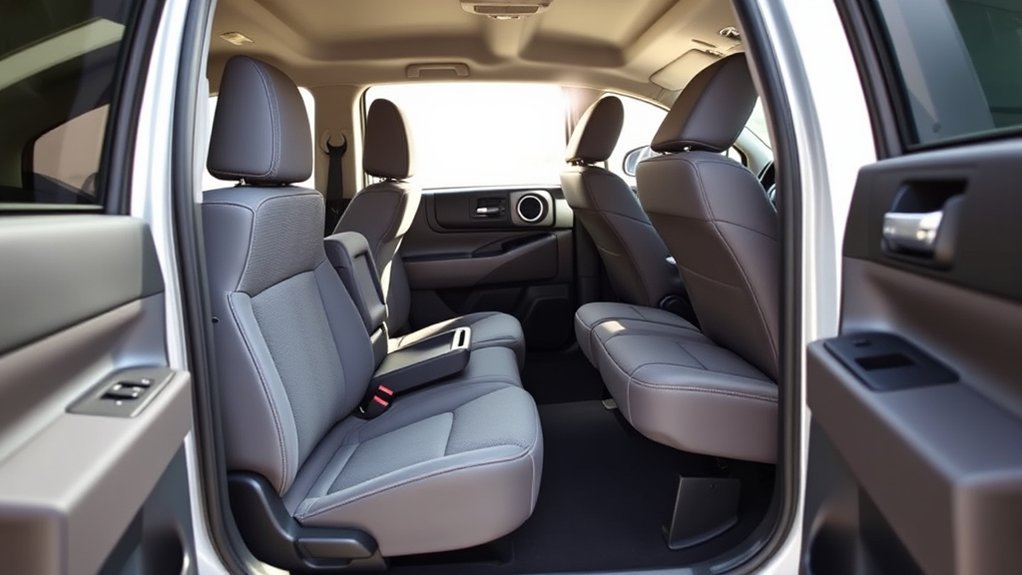
The 2024 Toyota Tacoma gives front occupants useful space, but comfort depends heavily on the cab, trim, seat, and options you choose. Front legroom measures 41.8 inches, while Double Cab rear legroom measures 33.7 inches. The two-seat XtraCab replaces the back seat with secure interior storage, so it serves a very different purpose from the passenger-focused Double Cab.
Quick Answer
The 2024 Toyota Tacoma provides 39.7 inches of front headroom and 41.8 inches of front legroom. Double Cab passengers get 38.4 inches of rear headroom and 33.7 inches of rear legroom. Choose Double Cab for rear seating; choose the two-seat XtraCab when secure cabin storage matters more than carrying passengers.
Key Takeaways
- Front legroom is 41.8 inches in 2024 Tacoma cab configurations covered by Toyota’s U.S. brochure.
- Double Cab rear legroom is 33.7 inches, which may feel tight for taller adults on long drives.
- Front headroom drops from 39.7 to 38.0 inches when the moonroof is installed.
- XtraCab seats two people and has no rear seat; the space behind the front seats is designed for secure cargo storage.
- Seat material, adjustment, heating, ventilation, and interior storage vary by trim, package, and powertrain.
How to Use This Guide
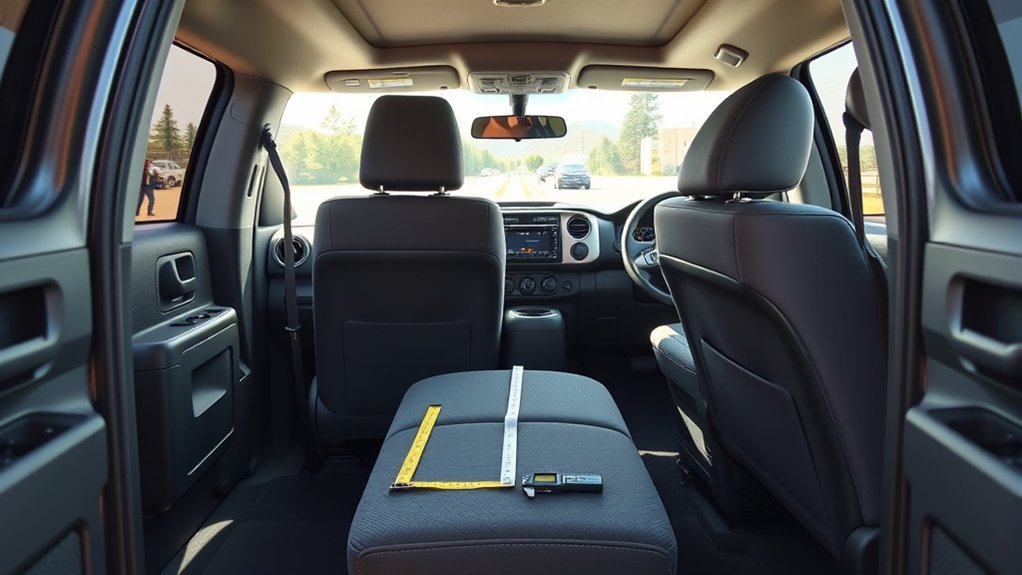
This guide covers U.S.-market 2024 Toyota Tacoma specifications. It connects published measurements with real-world considerations such as driving posture, rear-passenger comfort, child-seat placement, entry, and interior storage.
Measurements provide a useful starting point, but they cannot guarantee comfort. Your torso length, leg length, preferred seatback angle, footwear, and seating position can change how roomy the same cabin feels. Equipment also varies across trims, packages, cab styles, and powertrains, so check the exact truck rather than relying only on a trim name.
2024 Toyota Tacoma Interior Dimensions at a Glance
Toyota’s official 2024 Tacoma brochure lists the following U.S.-market interior measurements. Rear measurements apply to the Double Cab because the XtraCab has no rear seat.
At a Glance
| Front headroom | 39.7 in without moonroof; 38.0 in with moonroof |
| Rear headroom | 38.4 in in Double Cab |
| Front legroom | 41.8 in |
| Rear legroom | 33.7 in in Double Cab |
| Front/rear shoulder room | 58.3/57.8 in |
| Front/rear hip room | 56.8/56.3 in |
| XtraCab seating | Two front seats; no rear seat |
| Double Cab seating | Up to five occupants |
Note: The available moonroof reduces published front headroom by 1.7 inches, from 39.7 to 38.0 inches. If your hair or hat already sits close to the headliner, compare moonroof and non-moonroof trucks in person.
Front Cabin Dimensions and Comfort
The Tacoma’s front row gives you 39.7 inches of headroom without the moonroof, 41.8 inches of legroom, 58.3 inches of shoulder room, and 56.8 inches of hip room. Those measurements provide a useful baseline for comparing the Tacoma with other midsize trucks.
Legroom alone does not determine driving comfort. Check whether you can reach the pedals while keeping a slight bend in your knees, whether the steering wheel comes close enough without forcing your shoulders forward, and whether the seat cushion supports your thighs without pressing behind your knees.
The Tacoma provides 41.8 inches of front legroom, but seat shape, steering-wheel reach, and the moonroof can matter as much as the published number.
- Head clearance: Compare moonroof and non-moonroof models if you are tall or regularly wear a hat or helmet.
- Driving posture: Set the seat and wheel before judging knee, shoulder, and pedal clearance.
- Seat design: Cushion shape and side bolsters vary by trim, especially on the TRD Pro with its IsoDynamic front seats.
Rear Cabin Dimensions and Comfort
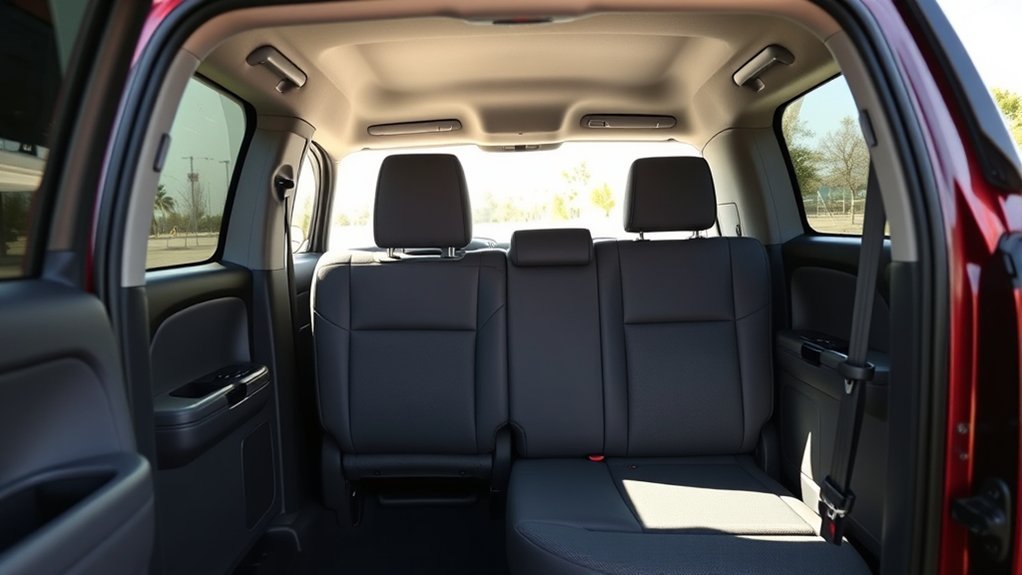
The Double Cab rear row provides 38.4 inches of headroom, 33.7 inches of legroom, 57.8 inches of shoulder room, and 56.3 inches of hip room. Shoulder width is reasonably generous for a midsize pickup, but knee clearance can become the limiting factor when a tall driver or front passenger moves the front seat rearward.
| Dimension | Double Cab measurement | Practical consideration |
|---|---|---|
| Rear headroom | 38.4 in | Check clearance while sitting upright against the seatback. |
| Rear legroom | 33.7 in | May feel tight for tall adults behind a tall front occupant. |
| Rear shoulder room | 57.8 in | Three passengers can fit, but comfort depends on body size. |
| Rear hip room | 56.3 in | Test three-across seating or child restraints before buying. |
For occasional short trips, many adults may find the rear row adequate. If adults regularly ride in back for an hour or more, place the front seats in their normal positions and have your usual passengers test the rear row before you decide.
XtraCab vs. Double Cab: Which Fits Your Needs?
The 2024 XtraCab and Double Cab are not simply two versions of the same passenger cabin. They serve different jobs. Toyota describes the XtraCab as a two-door, two-seat configuration with no rear seat. The Double Cab has four doors and a rear bench for passenger use.
| Feature | XtraCab | Double Cab |
|---|---|---|
| Seating | Two occupants | Up to five occupants |
| Doors | Two | Four |
| Rear area | Cargo-focused space with lockable floor and back-panel storage | Passenger bench with configuration-dependent folding and storage |
| Best for | One or two people carrying tools, equipment, or valuables | Families, work crews, child seats, and regular passengers |
Choose XtraCab when you rarely need more than one passenger and value protected interior cargo space. Choose Double Cab when anyone needs to ride behind the front seats. Do not select XtraCab expecting occasional rear seating because none is provided.
How Seating Layout Affects Everyday Comfort
The Tacoma’s seating layout affects more than passenger capacity. It changes access, storage, child-seat usability, and how you divide space between people and equipment.
Front-Seat Adjustability
Front-seat adjustment varies by trim and package. Some configurations use manually adjustable seats, while available higher-grade equipment includes power adjustment, heating, and ventilation. The TRD Pro uses IsoDynamic performance front seats designed to help manage body movement during aggressive off-road driving.
Before judging comfort, adjust the seat height, fore-aft position, seatback, steering wheel, and mirrors. Make sure you can press the brake fully without locking your knee and turn the wheel without lifting your shoulders from the seatback.
Second-Row Legroom and Child Seats
The Double Cab’s 33.7 inches of rear legroom may become restrictive behind a tall front occupant. Rear-facing child restraints can also require substantial front-to-back space, so a published legroom number cannot confirm whether your specific seat will fit.
The Insurance Institute for Highway Safety identifies two complete rear LATCH seating positions and a center position with a tether anchor but no lower anchors in the 2024 Tacoma crew cab. IIHS rates the system Acceptable for ease of use and notes that some tether anchors can be difficult to locate.
Warning: Never assume a child restraint fits safely from cabin measurements alone. Install your actual seat according to the restraint and vehicle instructions, confirm the required recline and anchor use, and have the setup checked by a qualified child-passenger-safety technician when needed.
Storage and Cabin Access
Storage features differ between cab styles. XtraCab uses the area behind the front seats for lockable floor and back-panel storage, and its front passenger seat can fold flat to create a work surface. Double Cab models provide a rear bench, with folding and storage arrangements that depend on the powertrain and configuration.
- XtraCab: Best when protected cabin storage takes priority over rear passengers.
- Gas Double Cab: Toyota highlights folding rear-seat functionality and storage beneath or behind the rear seating area.
- i-FORCE MAX Double Cab: Hybrid-component packaging changes the area under the rear seat, so inspect the exact truck if enclosed storage is important.
Interior Cargo and Storage: Folding Seats and Lockable Compartments
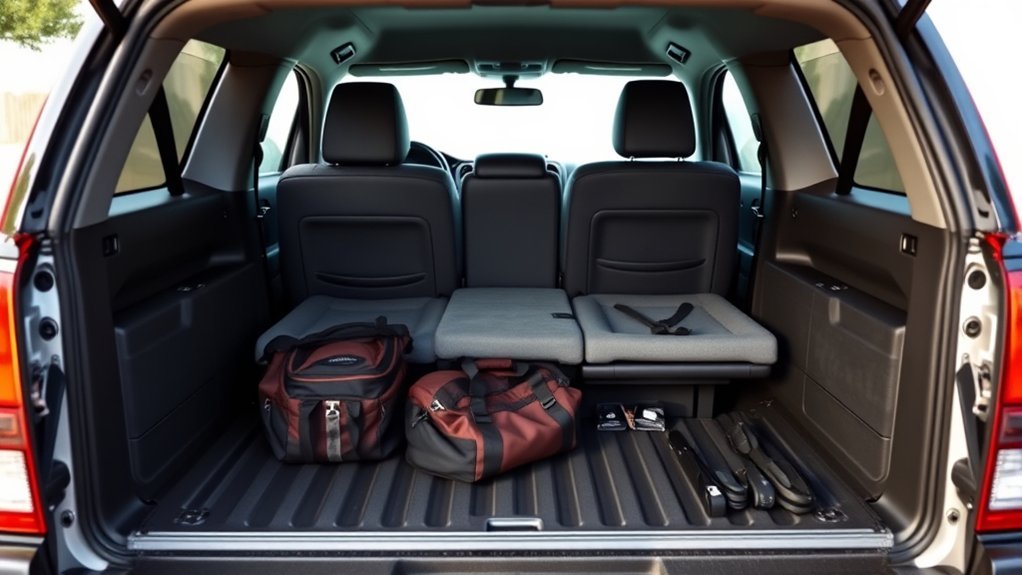
The Tacoma offers useful interior storage, but no single description applies to every cab and powertrain. In the XtraCab, Toyota replaces the rear seat with a dedicated cargo area that includes lockable floor and rear-panel compartments. The front passenger seat can fold flat, giving you a surface for a laptop, paperwork, or smaller equipment.
Applicable gas Double Cab models use rear seats that fold or flip to reveal storage below or behind them. This layout works well for small tools, recovery gear, charging cables, and personal items that you do not want loose in the bed.
Before buying, check whether the compartments hold the items you carry most often. Look at opening width and depth, not only total volume. A compartment may be large enough by volume but too narrow for a tool case, camera bag, or emergency kit.
Ergonomics and Access: Entry, Handles, and Controls
The effort required to enter a Tacoma varies with trim, suspension, tires, factory equipment, and accessories. Off-road-oriented configurations can feel noticeably taller than a street-focused model, so an exact experience cannot be predicted from a single step-in figure.
Toyota states that Double Cab models include assist handles positioned around the B-pillar and overhead area. Side steps also vary by trim and equipment. For example, power-retractable sidesteps are associated with selected configurations rather than every Tacoma.
- Test normal entry: Enter and leave the truck several times without using the steering wheel as a handhold.
- Check every passenger: Children, shorter adults, and people with limited hip or knee mobility may experience the same truck differently.
- Evaluate controls: Confirm that you can reach physical climate, drive-mode, and audio controls without leaning away from the seatback.
- Consider steps carefully: Running boards can improve access but may reduce clearance during off-road use.
Who Should Worry About Limited Rear Space?
You should pay close attention to rear-seat fit when adults, teenagers, or rear-facing child restraints will regularly occupy the Double Cab. The 33.7-inch rear legroom figure is usable for many trips, but it remains modest compared with the front row’s 41.8 inches.
| Use case | Main concern | What to test |
|---|---|---|
| Daily adult passengers | Knee clearance behind the normal front-seat position | At least 20 to 30 minutes in the rear seat |
| Long family trips | Legroom, seat angle, and access to personal items | Usual passengers with the cabin loaded normally |
| Rear-facing child restraint | Conflict with the front seat and required recline angle | Your actual child restraint installed correctly |
| Solo work use | Secure storage rather than rear comfort | XtraCab compartment dimensions and access |
| Occasional short rides | Basic knee and head clearance | Normal front-seat positions with all riders aboard |
Choosing Trims and Options to Improve Interior Comfort
Cab dimensions remain broadly consistent, but trim and package choices can change how comfortable the Tacoma feels. Focus on seat design, upholstery, adjustment range, climate features, and the effect of options such as the moonroof.
Trim-Level Seating Choices
Official 2024 Tacoma materials list fabric and SofTex seating, depending on configuration. Avoid assuming a higher trim automatically includes every comfort feature because packages and powertrains can change the equipment list.
- Work-focused configurations: Fabric seating and manual adjustments are straightforward, durable choices.
- Higher trims and packages: SofTex seating, power adjustment, heating, and ventilation may be available or included.
- TRD Pro: IsoDynamic performance front seats provide a specialized design for off-road body control, but their bolsters and hardware may feel different from conventional seats.
Available Comfort and Technology Features
Depending on trim and package, available cabin upgrades include heated and ventilated front seats, dual-zone automatic climate control, a heated steering wheel, a 14-inch multimedia touchscreen, wireless smartphone integration, and upgraded audio.
The larger display can improve map and camera visibility, but it does not create more physical space. Likewise, a moonroof makes the cabin feel more open to some occupants while reducing measured front headroom to 38.0 inches.
Practical Interior Accessories
Choose accessories that solve a specific need rather than filling the cabin with more objects. Useful options may include fitted floor liners, seatback organizers, console dividers, door-sill protection, and appropriate entry steps.
- Use floor liners if mud, snow, or job-site debris regularly enters the cabin.
- Choose storage organizers that do not obstruct seat movement, airbags, pedals, or child-restraint hardware.
- Confirm that seat covers are compatible with seat-mounted airbags and the exact seat design.
- Avoid thick cushions that change your driving position or reduce headroom without checking pedal and steering-wheel reach again.
How to Check Tacoma Interior Fit Before Buying
A focused test drive tells you more than repeatedly comparing specification sheets. Use the exact cab, powertrain, seat, and moonroof configuration you plan to purchase.
Pro Tip: Set the driver’s seat first, leave it in your normal position, and then sit directly behind it. This shows the real space available to a rear passenger in your household rather than an artificially generous showroom setup.
- Set the driver position: Adjust the seat, wheel, mirrors, and pedals as you would for daily driving.
- Check headroom: Sit upright and compare moonroof and non-moonroof trucks when possible.
- Test rear space: Sit behind the correctly positioned driver and front passenger seats.
- Bring regular equipment: Test your child restraint, tool case, mobility aid, camera bag, or other bulky item.
- Try entry repeatedly: Enter and exit from each seat your household will use.
- Inspect storage: Open every compartment and verify that locks, latches, and folding mechanisms are easy to operate.
- Drive long enough: A brief lap may not reveal pressure points, visibility problems, or awkward control placement.
Related Guides
Frequently Asked Questions
What are the 2024 Toyota Tacoma interior dimensions?
The 2024 Tacoma has 39.7 inches of front headroom without the moonroof, 41.8 inches of front legroom, 58.3 inches of front shoulder room, and 56.8 inches of front hip room. Double Cab rear measurements are 38.4 inches of headroom, 33.7 inches of legroom, 57.8 inches of shoulder room, and 56.3 inches of hip room.
Does the 2024 Tacoma XtraCab have a back seat?
No. The 2024 XtraCab is a two-seat, two-door configuration. Toyota uses the area behind the front seats for lockable floor and back-panel storage instead of a rear passenger seat.
How many people fit in a 2024 Tacoma Double Cab?
A Double Cab can seat up to five people. Actual comfort with three rear occupants depends on their body size, the front-seat positions, and whether child restraints are installed.
How much rear legroom does the Tacoma Double Cab have?
The 2024 Tacoma Double Cab has 33.7 inches of rear legroom. Taller adults may find it restrictive when sitting behind a tall driver or front passenger, so test the rear seat with the front seats in their normal positions.
Does the Tacoma moonroof reduce headroom?
Yes. Published front headroom is 39.7 inches without the moonroof and 38.0 inches with it, a reduction of 1.7 inches. Rear headroom in the Double Cab remains listed at 38.4 inches.
Is the redesigned Tacoma interior bigger than the previous one?
Not in every measurable way. The redesigned cabin adds updated storage, technology, and configuration choices, but you should compare the individual headroom, legroom, seat design, and storage features that matter to you instead of assuming the entire cabin is larger.
Will a child seat fit in the Tacoma Double Cab?
Many child restraints can be installed in the Double Cab, but fit depends on the restraint, recline requirement, front-seat position, and installation method. IIHS identifies two complete rear LATCH positions and a center tether-only position. Test your actual restraint and follow both manuals.
Conclusion
The 2024 Tacoma gives front occupants 41.8 inches of legroom and offers a practical Double Cab for passenger use, but its 33.7 inches of rear legroom deserves an in-person check when tall adults or child restraints will ride in back. The moonroof also reduces front headroom, which can affect taller drivers.
Choose the Double Cab when rear seating is essential. Choose XtraCab only when two seats are enough and protected interior cargo space is the priority. Whichever configuration you prefer, test the exact trim, seat, powertrain, and options you plan to buy because those details can change comfort and storage more than a single dimension suggests.
Sources
- Toyota 2024 Tacoma eBrochure — interior dimensions, cab configurations, seating equipment, packages, and storage features.
- Toyota: 2024 Tacoma Is the Ultimate Adventure Machine — XtraCab seating, lockable storage, Double Cab assist handles, interior technology, and rear-seat functionality.
- IIHS 2024 Toyota Tacoma Crew Cab Rating — child-restraint anchor positions, LATCH ease-of-use rating, and safety-test information.