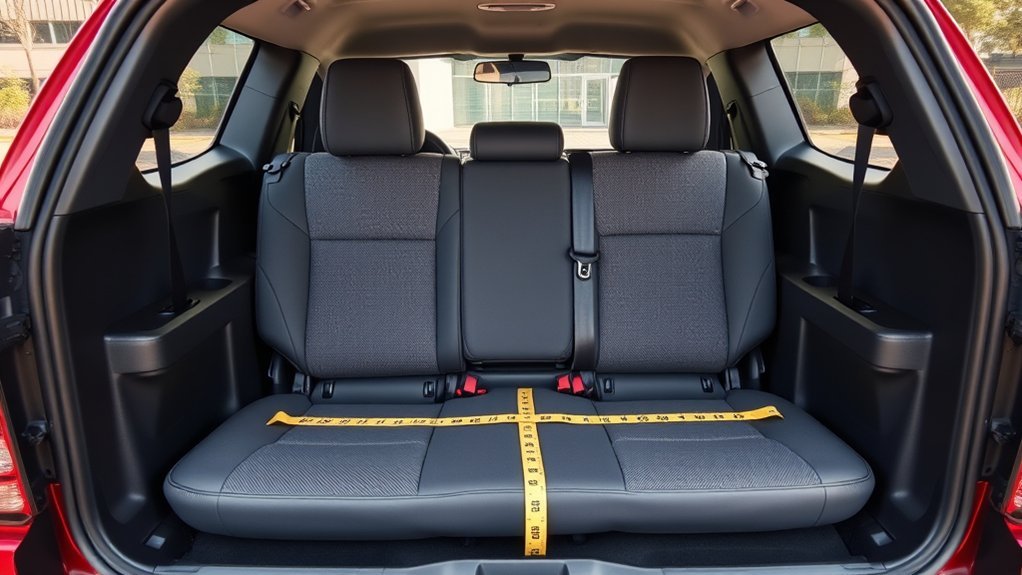
The Tacoma Double Cab offers 56.3 inches of rear hip room, 33.7 inches of legroom, and 38.4 inches of headroom. The Access Cab comes in at roughly 51.7 inches of rear hip room. The center seat is narrower and best for occasional use or a slim car seat. Three adults can fit, but it feels tight. For three car seats, use slim-shell boosters on the outboards and always test the LATCH anchors and belt fit. Keep reading for the exact measurements and installation tips.
Quick Answer
The Tacoma rear bench works great for two adults. The middle spot is tighter and best saved for short trips or kids. Here’s the quick breakdown:
- Double Cab rear hip room: 56.3 inches (roomy for two, snug for three)
- Rear legroom: 33.7 inches, headroom: 38.4 inches
- Access Cab: narrower at 51.7 inches hip room and less legroom
- Center seat is narrower and firmer
- Three car seats fit with slim boosters on the sides and a compact center seat
Tacoma Rear-Seat Width : Exact Measurements (Overall and Center)
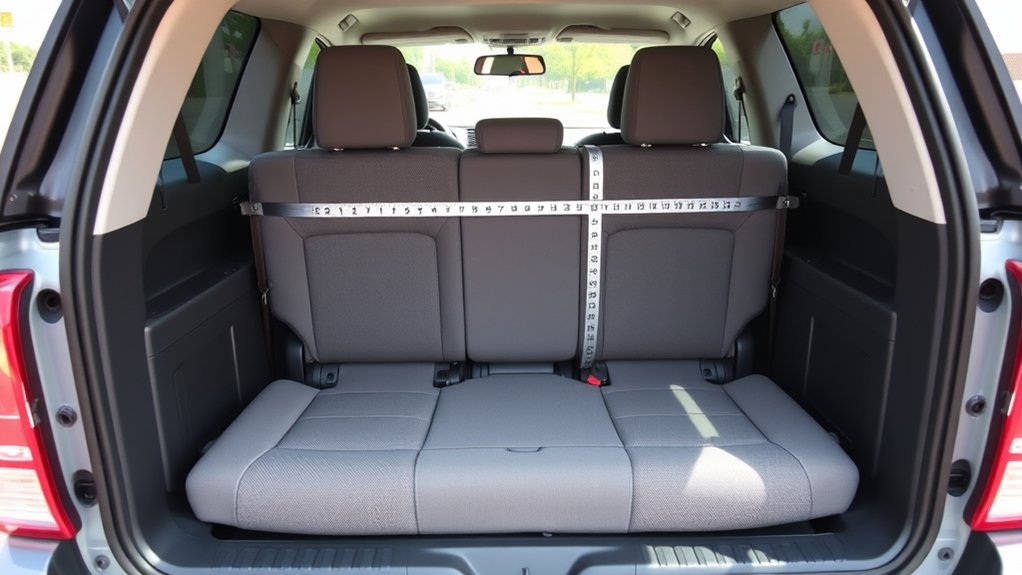
The Tacoma rear seating spans 56.3 inches of hip room. That gives two adults comfortable space and leaves the narrower center seat for occasional use. The seat contours put more support on the outer positions. Rear legroom in the Double Cab is 33.7 inches. It gives most people enough knee and thigh room, though taller passengers may need to adjust. This layout lets you carry two adults easily and add a third when you have to, while still leaving room for cargo or child seats and keeping everyone secure.
Middle Seat Width: Is the Center Actually Usable?
Wondering if the middle seat really works? It does, but it’s tight. The Tacoma rear hip room is 51.7 inches in the Access Cab and 56.3 inches in the Double Cab. That makes the center narrower than the sides. Three people can sit across, but it feels snug. The center cushion is firmer and has less padding. Rear legroom is 24.6 inches in the Access Cab and 33.7 inches in the Double Cab. Taller riders notice the limits more in the middle. If you want easy movement on long drives, stick to the outer seats. Save the center for short trips, extra passengers, or when you need to fit everyone.
Rear Headroom & Legroom: How They Affect Middle-Seat Comfort
Once you see how narrow the center is, look at the vertical and front-to-back space. The Tacoma Double Cab has 38.4 inches of rear headroom and 33.7 inches of rear legroom. These numbers shape how comfortable the middle passenger feels on longer rides. The headroom gives taller people enough room to sit straight without neck strain. The legroom is decent for average heights but can feel short for long legs. The new Tacoma improved legroom over older models, yet it still feels compact compared with bigger trucks. Seat shape, cushion height, and the floor hump all play a part in how you sit. Overall the numbers show solid space, but taller riders may shift around after a while in the middle.
Three Adults Across the Tacoma Rear: Comfort Guide & Seating Tips
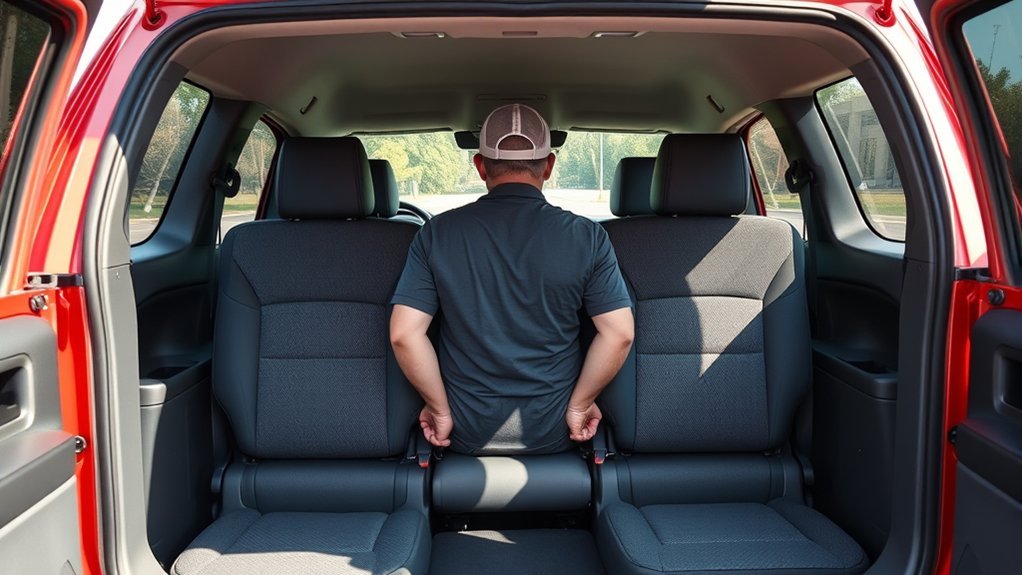
The Tacoma rear measures 56.3 inches wide with 33.7 inches of legroom and 38.4 inches of headroom. You can seat three adults across, but expect a snug fit and less comfort on long trips for taller people. Width per person averages about 18.7 inches. Legroom works for average-height riders, but taller passengers lose knee space and may need to move often. Headroom is fine for most, though very tall riders should check the seatback angle first. To make it better, clear bulky items, sit upright, and slide the front seats forward a bit if possible. Slim aftermarket cushions can help too. These small changes keep personal space and safety intact while making the most of what the Tacoma offers.
Fitting Three Car Seats/Boosters in a Tacoma: Recommended Setups
Since three adults can fit across the 56.3-inch rear, the same space rules apply to car seats. With 56.3 inches of hip room and 33.7 inches of rear legroom, the best setup uses two full-back slim boosters on the outboard seats and a narrower convertible or rear-facing seat in the center. Choose boosters with slim shells and narrow bases for the sides. The center works best with a low-profile, narrow model. Rear-facing seats can go in the middle when anchors and belts line up. Legroom gets a little tighter with seats installed. Always check LATCH and belt fit, and look at the car-seat maker’s guide for your models. Test the whole setup before long trips.
Access Cab vs Double Cab vs XtraCab: Rear-Seat Width Differences
The Double Cab clearly gives more rear-seat space. It has 56.3 inches of rear hip room and 33.7 inches of legroom. The Access Cab has 51.7 inches of hip room and 24.6 inches of legroom. The XtraCab trades even more passenger room for cargo options. The Double Cab’s wider hip room makes a big difference for two adults and reduces crowding. The Access Cab feels tighter on shoulders and hips, so longer trips are less comfortable. The XtraCab focuses on utility and often skips practical rear seating. If you want more comfortable rear space, pick the Double Cab. If you need a smaller footprint or extra storage, the Access Cab or XtraCab will feel more limited.
Middle-Seat Comfort Fixes and Easier Access (7 Quick Tips)
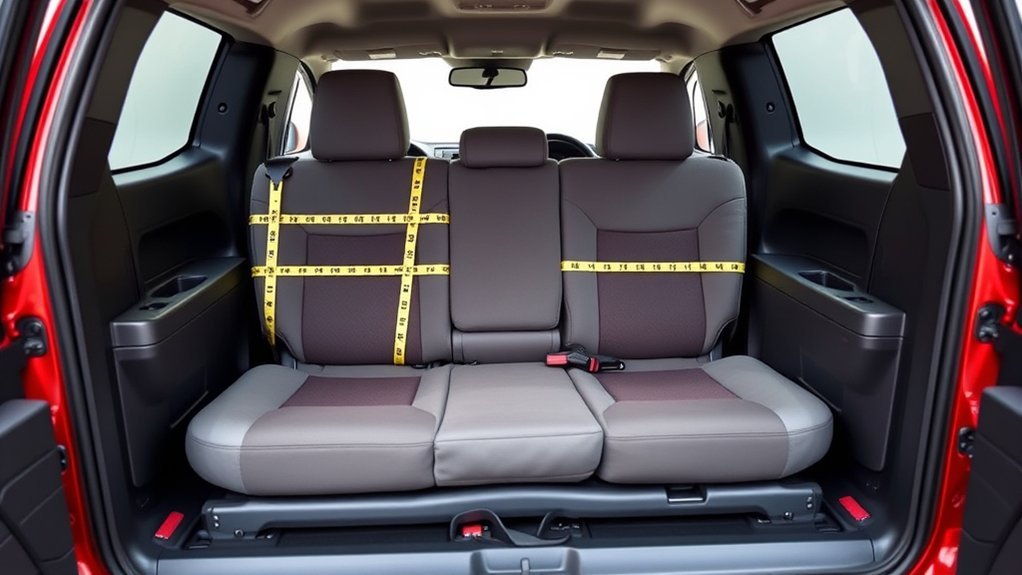
If you regularly put a third person in the Tacoma rear row, a few simple fixes help the middle seat feel better and make getting in easier. The Double Cab already has 33.7 inches of rear legroom and wider doors. Still, the center stays narrower than the sides. Try these seven quick steps: 1) Choose the Double Cab instead of the Access Cab for easier entry and more space. 2) Add thin supportive cushions made for center seats to improve the feel without hurting safety. 3) Put low-profile lumbar pads on the outer seats to cut shoulder crowding. 4) Swap bulky armrests for slim ones or remove them when three ride across. 5) Use the foldable rear seats smartly — fold one side for knee relief or cargo access. 6) Test child-seat placements; rear-facing seats often fit the center if clearances work. 7) Clear the central floor area so everyone can move freely.
How to Measure Your Tacoma’s Rear-Seat Width at the Curb (Checklist)
Start by measuring the seat cushion width with a tape measure from the inner edge of one cushion to the inner edge of the opposite cushion. Note any taper toward the center. Next, check the door-to-door span by measuring between the inner edges of the rear door frames to capture the maximum usable width. Keep the seat upright, clear obstructions, and take measurements at multiple points to account for curvature and middle-seat narrowing.
Measuring Seat Cushion Width
Park your Tacoma on level ground next to the curb. Open the rear doors fully and measure the distance between the inner edges of the two rear door panels. Then measure the usable cushion width front-to-back across the seating surface. Note contoured areas and any center hump. In the Tacoma Access Cab the rear seat cushion width runs about 51.7 inches — verify this on your vehicle and mark the anchor and LATCH locations. For the Double Cab, remember the outer rear shoulder room is 57.8 inches, which affects how much space you feel when three people sit. For car-seat planning, measure the outer seats separately because the middle is narrower and may limit full-back booster placement.
Checking Door-To-Door Span
You’ve already measured the cushion front-to-back. Now measure the door-to-door span at curb level to capture the full usable width. Use a tape measure between the inner edges of the rear doors. Keep it straight and level to find the widest point across the seat. The Tacoma Double Cab’s rear seat hip room is 56.3 inches — use that as your target.
- Place the tape at curb height, align with the seat plane, and pull taut.
- Measure driver and passenger sides separately to detect door frame variance.
- Record the maximum door-to-door distance for comparison with hip room.
- Test middle width against typical car seat configurations before installation.
- Repeat measurements after doors close to account for trim compression.
Frequently Asked Questions
What Are the Dimensions of the Back Seat of a Toyota Tacoma?
Back seat space changes with the cab style. The Double Cab offers 38.4 inches of headroom, 33.7 inches of legroom, 57.8 inches of shoulder room, and 56.3 inches of hip room (see KBB specs for details). The Access Cab gives 34.9 inches of headroom and 24.6 inches of legroom. The Tacoma interior balances passenger comfort with the truck’s overall size.
Can an Adult Fit in the Back Seat of a Tacoma?
Yes, an adult can fit. The rear seat accessibility and interior space provide decent comfort for average heights. Taller riders may find legroom and movement more limited, but it still works for most trips.
How Much Leg Room Does a Tacoma Have?
The Double Cab has 33.7 inches of rear legroom and the Access Cab has 24.6 inches. This difference affects how comfortable backseat passengers feel and how much room you have for storage behind the front seats.
Is the Backseat of a Tacoma Comfortable?
Yes, the backseat is comfortable enough for daily use. It balances limited legroom with good hip space, tough materials, and a solid ride. Taller riders may feel the limits on long drives, but it stays practical for most people.
Conclusion
The Tacoma rear bench is snug but not cramped. The width and center measurements work best for two adults, with the middle spot fine for short hops or smaller passengers. Headroom and legroom gently limit tall riders, and fitting three adults takes realistic expectations plus smart seating choices. For car seats, plan the layout carefully. Use the quick fixes and measuring checklist to improve comfort and access without expecting more space than the cab actually has.