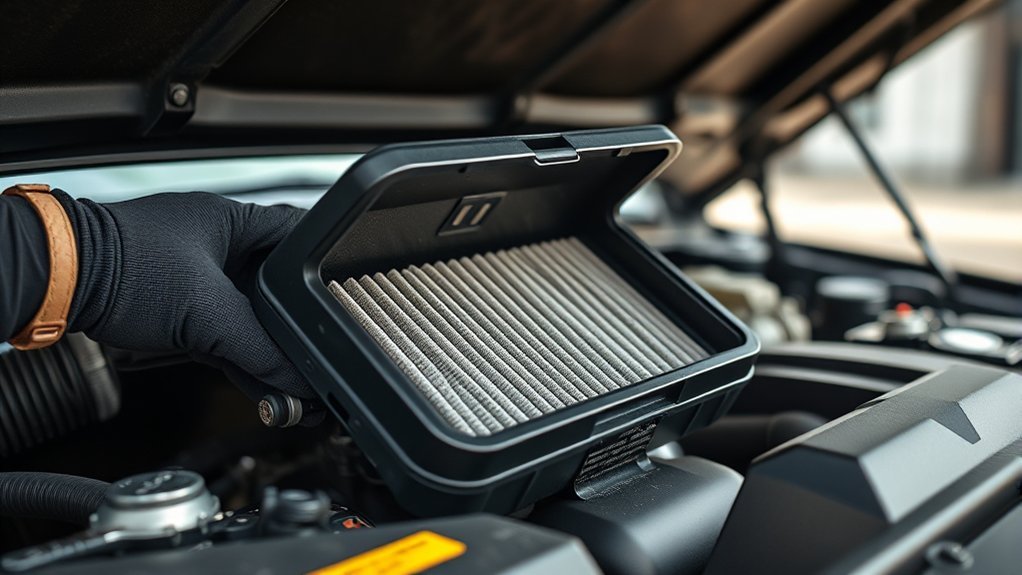
Replacing a Toyota Tundra engine air filter is usually a quick DIY job, but the air-box layout and number of filters vary by model year and engine. Before buying parts, confirm your truck’s fitment by VIN and look under the hood to see whether it has one air-cleaner housing or a dual-air-box setup.
Quick Answer
To replace a Toyota Tundra engine air filter, switch off the engine, open the air-cleaner housing, lift out the old element, remove loose debris without letting it enter the intake, seat the correct replacement evenly, and secure the housing. Newer dual-air-box Tundras need two matching filters, so confirm your layout and part fitment first.
Key Takeaways
- Confirm the correct filter quantity and part fitment using your Tundra’s year, engine, and VIN.
- Clean around the air box before opening it so loose dirt cannot fall into the intake.
- Seat the filter gasket evenly and make sure every clip or fastener closes without force.
- Toyota’s 2026 U.S. schedule lists normal replacement at 30,000-mile intervals and more frequent inspection for dusty-road use.
- Do not oil a disposable paper filter or substitute WD-40 for approved reusable-filter oil.
At a Glance
| Time Required | About 10 to 20 minutes |
| Difficulty | Easy for most clip-secured air boxes |
| Tools Needed | Flashlight, clean cloth, and optional gloves; some layouts may need a screwdriver or nut driver |
| Cost | Varies by model, filter quantity, and disposable or reusable design |
Warning: Park on a level surface, switch off the engine, remove the key, and let hot engine-bay components cool. Never run the engine with the air-cleaner housing open, and do not allow sand, leaves, tools, fasteners, or cleaning materials to fall into the exposed intake.
Benefits of Replacing Your Toyota Tundra Engine Air Filter
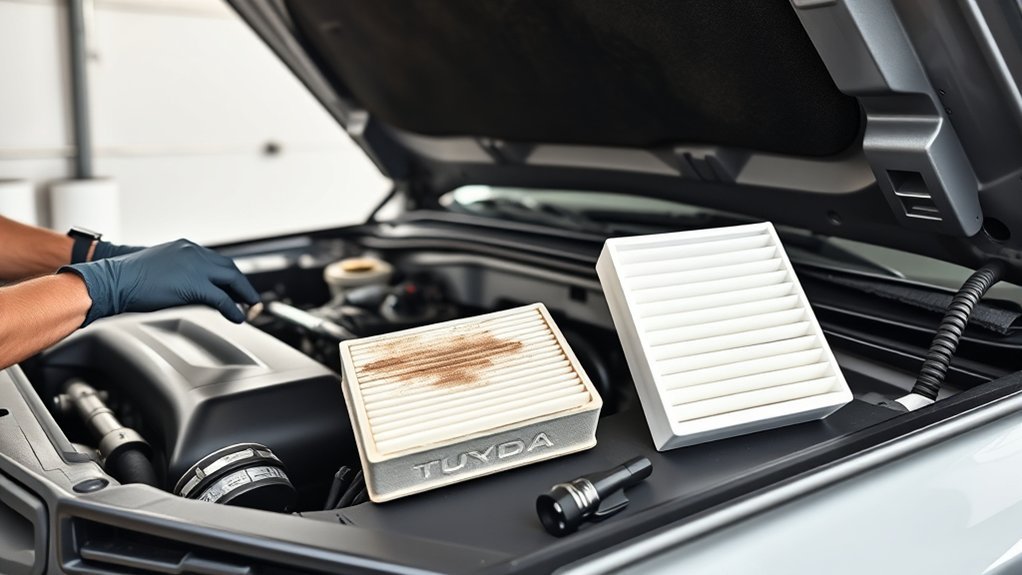
Your Tundra’s engine air filter traps dust, sand, insects, and other debris before they can enter the intake system. A correctly fitted filter also supports the airflow the engine-management system expects during normal operation.
Replacing a damaged or excessively restricted filter can restore normal airflow, but you should not expect a guaranteed horsepower or fuel-economy increase. The main goals are to protect the intake system, maintain proper filtration, and replace the element according to Toyota’s schedule or its actual condition.
The engine air filter does not clean the air inside the passenger compartment. Your truck’s cabin air filter handles air flowing through the heating and air-conditioning system.
Confirm Your Tundra’s Filter Layout Before Buying Parts
Check for One or Two Filter Housings
Some Tundra configurations have one engine air-filter housing, while applicable dual-air-box trucks use a filter on each side of the engine bay. Toyota’s current TRD performance-filter listing states that the relevant Tundra and Sequoia applications require two filters.
Do not assume that another Tundra’s filter will fit yours. Check the model year, engine, trim, and drivetrain, then confirm the part through Toyota’s manuals and warranty portal or an official parts lookup using your VIN.
Compare the New and Old Filters
Before removing the protective wrapping from the replacement, compare its overall dimensions, molded frame, gasket shape, and locating tabs with the old filter. If your truck uses two filters, confirm that you have the correct quantity before starting.
Essential Tools for Replacing Your Engine Air Filter
Many clip-secured Tundra air boxes open without special tools. However, some model years or aftermarket intake systems may use screws, bolts, or a duct clamp. Inspect your housing before deciding that the job is completely tool-free.
Necessary Parts Overview
| Item | Purpose | Fitment note |
|---|---|---|
| Replacement engine air-filter element | Filters air entering the engine intake | Buy one or two according to the truck’s verified layout |
| Clean lint-free cloth | Wipes the housing lip and surrounding surfaces | Do not leave the cloth inside the intake |
| Flashlight | Helps you inspect the gasket channel, clips, and lower housing | Useful for both single- and dual-air-box layouts |
| Screwdriver or nut driver | Removes a housing fastener or duct clamp when fitted | Not required on every Tundra |
Basic Tools Required
Keep a trash bag nearby for disposable filters and wear gloves if the housing contains animal debris or heavy dust. A small shop vacuum can help remove loose material from the lower air box, but keep the nozzle away from sensors and do not push debris toward the intake opening.
How to Locate the Engine Air Filter in Your Tundra
Open the hood and follow the large intake duct or ducts leading from the engine toward the air-cleaner housing. The housing is usually a black plastic box secured by metal clips, plastic latches, screws, or a combination of fasteners.
| Layout | Where to look |
|---|---|
| Dual-air-box layout | One housing near the front of the driver side and one near the front of the passenger side |
| Single-air-box layout | One housing connected to the engine by a large intake duct; the side varies by year and engine |
Pro Tip: Take a clear photo of the housing, filter position, tabs, and clips before removal. The photo gives you a quick reference if the lid or gasket does not line up during reassembly.
Steps to Remove the Old Engine Air Filter
- Clean the housing exterior. Wipe or vacuum loose dust, leaves, and sand from the lid and surrounding area before opening the air box.
- Release the clips or fasteners. Open each retaining clip by hand. Remove screws or loosen a duct clamp only when your housing design requires it.
- Lift the lid carefully. Move it only far enough to access the filter. Do not pull on attached wiring, sensors, hoses, or intake ducts.
- Note the filter position. Observe which side faces upward and how the molded edge fits into the housing.
- Lift out the old filter. Keep it level so trapped dirt does not spill into the clean side of the housing or the intake opening. Repeat the procedure on the second housing if your truck uses two filters.
Inspecting the Old Filter: What to Look For
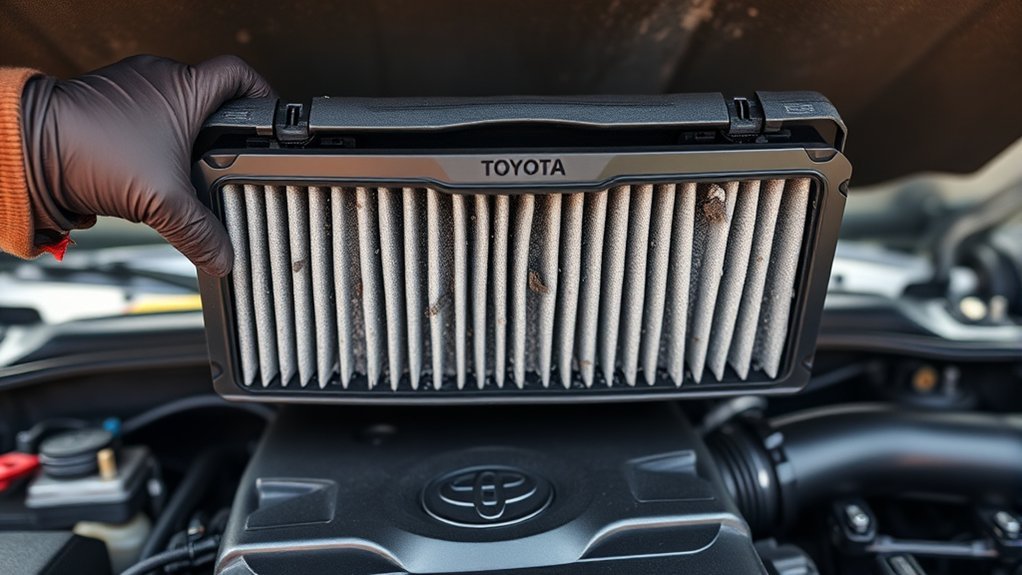
Inspecting the removed filter helps you identify unusual contamination and decide whether another engine-bay problem needs attention. Toyota advises checking an engine air filter for damage, excessive wear, and oiliness during inspection.
Check for Dirt Accumulation
Look between the pleats for thick dust, sand, leaves, insects, seeds, or animal nesting material. Light surface discoloration does not always mean the filter has failed, but heavy blockage, packed pleats, or material covering a large portion of the media supports replacement.
If you frequently drive on dirt roads, inspect the filter more often. Toyota also advises checking it after off-road operation through deep sand, mud, or water.
Look for Damage Signs
Replace the filter if you find torn media, holes, broken pleats, a split gasket, crushed corners, severe warping, or a frame that no longer sits flat. Oil or water saturation also deserves attention because it may indicate contamination from another source.
Inspect the lower housing for cracks, broken clips, loose fasteners, or a damaged sealing surface. Repeated animal debris may require a broader engine-bay inspection before you install the new filter.
Check Whether the Filter Is Disposable or Reusable
Do not wash, oil, or spray a standard disposable paper filter. Replace it when it reaches its scheduled interval or becomes damaged or excessively contaminated.
A washable or oiled reusable filter requires the exact service process specified by its manufacturer. For example, K&N’s official cleaning instructions require its prescribed cleaner and filter oil. WD-40 is not a substitute for air-filter oil.
How to Install the New Engine Air Filter Correctly
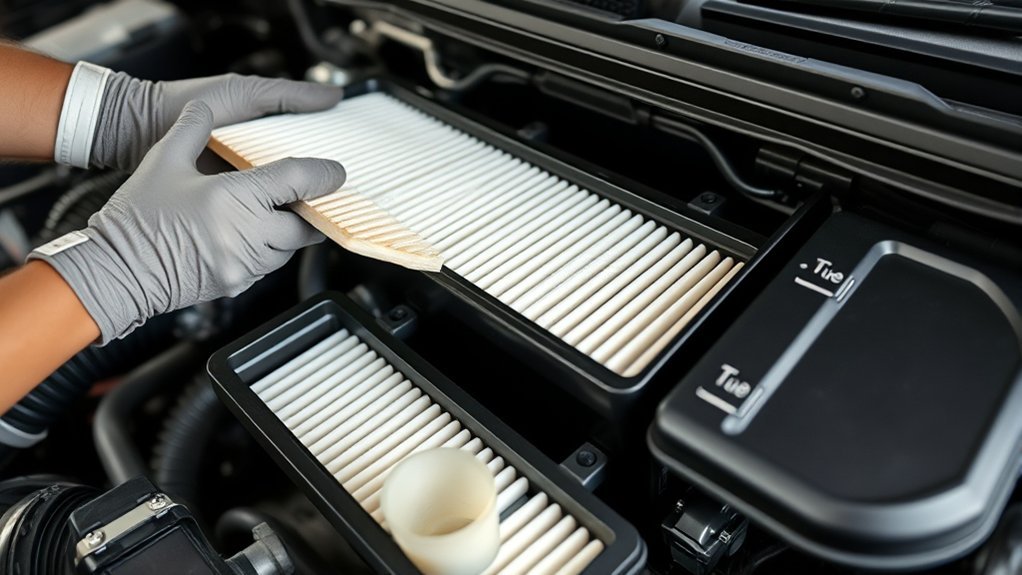
- Remove loose debris from the lower housing. Wipe or vacuum carefully without pushing material toward the open intake.
- Compare the replacement again. Confirm the frame, gasket, corners, locating tabs, and overall size match the removed filter.
- Place the filter into its seat. Follow any molded markings or directional instructions. If no arrow appears, match the shape and orientation of the original filter.
- Check the entire gasket. Run your eyes around the perimeter and confirm that the seal lies flat without folds, gaps, or pinched corners.
- Close the housing gently. Align all rear tabs or locating slots before lowering the lid. Do not force the cover against a filter that is sitting too high.
- Secure every clip and fastener. Each latch should close with normal hand pressure. Reconnect any duct or component you intentionally removed.
- Repeat on the second side when applicable. Install both filters during the same service so the dual intake system has matching elements of the same age and type.
Post-Installation Checks and Troubleshooting
Before starting the engine, inspect both housings and confirm that no tools, cloths, packaging, or loose fasteners remain in the engine bay. Check that the intake ducts and electrical connectors are in their original positions.
The Air-Box Lid Will Not Close
Do not force the lid or clips. Reopen the housing and check for a wrong filter, an upside-down frame, a pinched gasket, a missed locating tab, or debris in the sealing channel. Compare the new filter directly with the old one if necessary.
A Clip Will Not Latch
Make sure the opposite side of the lid has entered its locating slots. A clip that requires excessive force usually means the lid or filter is misaligned. Replace a cracked or badly bent retaining clip rather than relying on a loose housing.
The Engine Runs Roughly or a Warning Light Appears
Switch the engine off and recheck the housing seal, duct connections, clamps, and nearby electrical connectors. A loose intake connection or disturbed sensor plug can affect engine operation. Seek professional diagnosis if the warning remains or the engine continues to run poorly.
Debris Returns Quickly
Rapid dust buildup may reflect frequent off-road use, a damaged air box, a loose lid, or a poor gasket seal. Animal nesting material can also return unless the wider engine-bay access point is addressed.
Tips for Maintaining Your Engine Air Filter
- Follow the year-specific schedule. Use the maintenance guide for your exact model rather than a generic mileage rule.
- Inspect sooner in dusty conditions. Dirt roads, construction areas, farms, and off-road travel can load the filter faster.
- Keep the housing clean. Remove loose debris from the exterior before opening the lid.
- Replace damaged parts. A new filter cannot seal correctly against a cracked housing, broken tab, or damaged clip.
- Record the service. Note the date, mileage, filter brand, part number, and whether you replaced one or two elements.
Note: Mileage is only one factor. Replace the filter sooner when inspection reveals damage, heavy blockage, oil or water contamination, or a seal that can no longer sit flat.
Engine Air Filter vs. Cabin Air Filter
The engine air filter sits under the hood and filters air entering the engine intake. The cabin air filter is usually accessed from inside the passenger compartment and filters air moving through the heating and air-conditioning system.
Replacing the engine filter does not directly reduce dust or allergens entering the cabin. For interior airflow or odor concerns, inspect the cabin filter according to your owner and maintenance materials. Toyota’s cabin-filter information describes that filter’s role in reducing pollutants and supporting HVAC airflow.
When to Schedule Your Next Air Filter Change?
Toyota’s 2026 U.S. Tundra Warranty and Maintenance Guide lists engine-air-filter replacement at 30,000-mile intervals under normal service. The same guide calls for engine-filter inspection every 5,000 miles when the truck is primarily driven on dirt or dusty roads.
For a 2026 U.S.-spec Tundra, Toyota schedules normal engine-air-filter replacement at 30,000-mile intervals and more frequent inspection during primarily dusty-road use.
Your model year, market, engine, and operating conditions may have different instructions. Use Toyota’s official owner-manual lookup for the schedule that applies to your truck.
Related Guides
Frequently Asked Questions
How do you replace a Toyota Tundra engine air filter?
Switch off the engine, clean around the air box, release its clips or fasteners, lift out the old filter, clean loose debris from the housing, seat the correct replacement evenly, and secure the lid. Repeat on the second air box if your Tundra uses two filters.
How often should I change the engine air filter on my Toyota Tundra?
Follow the maintenance guide for your exact year and market. Toyota’s 2026 U.S. Tundra guide lists replacement at 30,000-mile intervals under normal service and inspection every 5,000 miles when primarily driving on dirt or dusty roads.
Does every Toyota Tundra use two engine air filters?
No. Filter quantity and air-box layout vary by model year and engine. Applicable dual-air-box Tundras require two matching filters, while other configurations may use one. Confirm the quantity and part number through a VIN-based parts lookup.
Can I use WD-40 as air-filter oil?
No. Do not oil a disposable paper filter. If you have a reusable oiled filter, use only the cleaner and oil specified by that filter’s manufacturer and follow its exact service instructions.
Can I wash or blow out a disposable paper engine air filter?
Do not wash or oil a disposable paper element. High-pressure air can damage its media or force particles deeper into it. Replace the filter when it is damaged, heavily contaminated, or due according to the applicable maintenance schedule.
Why will the air-box lid not close after I install the filter?
The filter may be the wrong size, upside down, outside its locating channel, or pinching the gasket. A rear housing tab may also be misaligned. Reopen the housing and correct the fit instead of forcing the clips.
Can a loose air box cause a warning light or rough running?
A loose housing, disconnected intake duct, or disturbed electrical connector can affect measured intake airflow. Switch off the engine, inspect the installation, and obtain professional diagnosis if the warning or poor running continues.
Sources
- Toyota 2026 Tundra Warranty and Maintenance Guide — normal replacement intervals, dusty-road inspections, off-road checks, and filter-condition guidance
- Toyota Manuals and Warranties — year-specific owner and maintenance documents
- Toyota TRD Performance Air Filter — applicable Tundra dual-filter requirement and filter construction
- Toyota Genuine Cabin Air Filter — cabin-filter purpose and passenger-compartment airflow distinction
- K&N Air Filter Cleaning Instructions — approved cleaning and oiling process for compatible reusable filters
Conclusion
A Toyota Tundra engine air filter replacement is straightforward when you start with the correct part and understand your truck’s air-box layout. Keep debris out of the open intake, seat each gasket evenly, secure every clip, and inspect the installation before starting the engine. For future service, follow your model-specific Toyota maintenance guide rather than a generic mileage rule.