2004–2006 Toyota Tundra frame rust repair starts with identifying whether the corrosion is surface-only or structural. Light surface rust on sound metal can be cleaned and protected after inspection. Holes, cracks, heavy scale, deformation, or corrosion around suspension, steering, fuel-tank, brake-line, cab, bed, or hitch mounts require a professional structural inspection; if those areas are weakened, do not drive the truck. Before paying for welding or coating, check the VIN, document the damage, and compare localized repair, full-frame replacement, and vehicle-retirement costs.
Last updated: September 11, 2026. Toyota and NHTSA campaign documents and current Toyota VIN-lookup pages were rechecked for this revision. This guide is document-based and does not claim a hands-on structural inspection of your truck.
Quick Answer
Surface rust on a 2004–2006 Tundra may be cleaned and protected after the metal is confirmed sound. Holes, cracks, heavy scaling, deformation, or corrosion around load-bearing mounts require professional structural evaluation. Toyota’s U.S. D0D and DSD frame campaigns for these model years had a July 31, 2015 inspection deadline, so use the VIN with Toyota or dealer records to confirm current status and prior campaign work before comparing repair, replacement, and vehicle-retirement options.
Key Takeaways
- Do not judge frame safety from surface appearance alone. Flaking scale can hide severe metal loss.
- Stop driving and arrange a tow if the frame is perforated, cracked, separating, sagging, or weakened around critical mounts.
- Toyota’s D0D and DSD programs covered certain 2004–2006 Tundras, but the inspection deadline was July 31, 2015.
- Structural welding is not a general DIY job. The repair method must match the damage location, remaining metal, and applicable Toyota procedures.
- Repair cost and service life cannot be predicted responsibly without inspecting the individual truck.
Warning: Do not drive, tow, haul, or crawl beneath the truck if you see frame perforation, cracking, loose suspension or steering mounts, damaged brake or fuel supports, severe hitch-area corrosion, or visible frame deformation. Have the Tundra transported to a qualified frame or collision-repair shop.
At a Glance
| Time Required | A preliminary visual check varies with access and condition. Suspected structural corrosion needs a professional hoist inspection; repair time depends on disassembly, parts availability, seized hardware, and hidden damage. |
| Difficulty | DIY scope: visual inspection plus cleaning and protection of confirmed non-structural surface rust. Structural welding, section repair, and frame replacement require a qualified professional. |
| Tools Needed | Flashlight, inspection mirror, phone or camera, gloves, eye protection, wheel chocks, and safe access. A professional shop needs a lift, measuring equipment, welding equipment, and corrosion-protection tools. |
| Cost | Quote-based. Toyota’s historical DSD bulletin listed 40.6 flat-rate hours for dealer-performed 2WD frame replacement and 42.6 hours for 4WD. Those are historical campaign labor times, not current retail estimates. |
2004–2006 Toyota Tundra Frame Rust: What Did the Campaigns Cover?
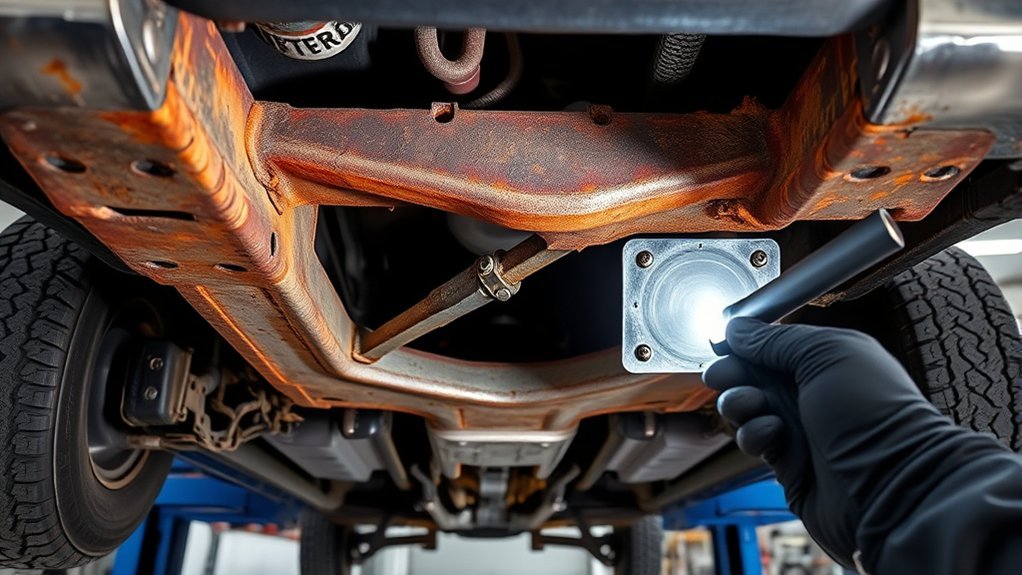
Toyota documented reports of more-than-normal frame corrosion on certain 2004–2006 Tundras used in areas with frequent road-salt exposure. The company first operated Limited Service Campaign D0D in cold-climate states and later expanded inspection support through DSD.
The Toyota DSD campaign bulletin covered certain trucks produced from September 12, 2003, through January 2, 2007. Under that historical program, a qualifying truck with significant perforation could receive a frame replacement.
However, the inspection deadline for the 2004–2006 D0D and DSD programs was July 31, 2015. An expired campaign does not create current free-repair eligibility, and model year alone cannot confirm whether a truck received an earlier inspection, coating, or frame replacement.
Which Toyota frame campaign applied to 2004–2006 Tundras?
| Program | Historical Coverage | Historical Remedy | Inspection Deadline |
|---|---|---|---|
| D0D | Certain 2004–2006 Tundras registered in Toyota’s defined Cold Climate States and the District of Columbia. | Toyota inspection; corrosion-resistant compounds when significant perforation was not found; frame replacement when it was found. | July 31, 2015 |
| DSD | Certain 2004–2006 Tundras registered outside the D0D Cold Climate States in Toyota’s listed DSD states. | Toyota frame inspection; no further DSD action if the frame passed; frame replacement when significant perforation met Toyota’s criteria. | July 31, 2015 |
Historical campaign criterion: Toyota’s D0D and DSD inspection flowcharts used perforation of 10 mm or larger in designated inspection areas as a frame-replacement trigger. That was an eligibility criterion for those expired campaigns, not a current safety threshold. Any hole, crack, deformation, or weakened mount deserves structural evaluation.
Note: Enter the full 17-character VIN in the Toyota U.S. recall and campaign lookup and the NHTSA recall lookup. Canadian owners should use the Toyota Canada VIN lookup.
Surface Rust, Scaling, and Perforation Are Not the Same
| Condition | What It Looks Like | Appropriate Response |
|---|---|---|
| Light surface rust | Thin orange or brown discoloration with firm metal beneath it. | Inspect, clean, dry, and apply a compatible corrosion-protection system. |
| Scaling rust | Layered flakes, swelling seams, heavy pitting, or pieces falling away. | Obtain a professional thickness and structural assessment before grinding or coating. |
| Perforation | Pinholes, open holes, torn edges, or missing frame material. | Treat as structural damage. Do not cover it with filler, paint, or undercoating. |
| Cracking or deformation | Split welds, opened seams, distorted mounts, sagging, or misalignment. | Stop driving and arrange professional transport and inspection. |
When Is Tundra Frame Rust Unsafe to Drive?
The frame carries loads from the cab, bed, suspension, steering, drivetrain, hitch, and cargo. Corrosion becomes a safety concern when it reduces the frame’s ability to hold those components in their designed positions.
A small visible hole may be surrounded by a much larger area of internally thinned steel. Rust can also build between overlapping sections, inside boxed rails, around welds, and behind brackets where a driveway inspection cannot show the full extent.
Arrange a tow instead of driving when you find any of the following:
- Open holes, cracks, torn metal, or large pieces of scale falling from a frame rail or crossmember.
- A loose or separating suspension, steering, spring, shock, sway-bar, cab, bed, or drivetrain mount.
- Rust affecting brake lines, fuel lines, the fuel-tank support system, or their attachment points.
- Severe corrosion where a receiver hitch or bumper attaches to the frame.
- A cab, bed, bumper, or wheel opening that suddenly appears crooked or uneven.
- New clunks, steering changes, unstable braking, or movement between a bracket and the frame.
- A failed safety inspection or a technician’s written statement that the frame is unsafe.
Do not assume the truck is safe because it still drives straight or because the outer surface looks solid. Structural corrosion must be assessed with the vehicle safely raised and the relevant components visible.
How to Inspect a Tundra Frame Before Choosing a Repair
You can perform a preliminary visual check, but it does not replace a hoist inspection. Never crawl beneath a truck supported only by a tire jack. Use a professional lift or properly rated stands on a stable surface, and follow all lifting instructions for the vehicle.
- Record the VIN and service history. Look for invoices showing a previous frame inspection, corrosion-resistant compound application, structural repair, or frame replacement.
- Remove dirt and salt. Rinse the underbody and allow it to dry before evaluating the metal. Mud can hide perforation and trap moisture.
- Use strong lighting. Examine the outside and accessible inside surfaces of both frame rails and every crossmember.
- Inspect critical attachment areas. Check suspension and steering mounts, spring and shock brackets, sway-bar brackets, cab and bed mounts, drivetrain crossmembers, fuel-tank supports, brake-line brackets, and hitch mounting points.
- Look beyond the obvious patch. Inspect several inches in every direction, including the opposite rail and matching mount.
- Photograph the damage. Take wide and close images with a ruler or other size reference. Record the date and location on the frame.
- Get a hoist inspection. Ask a qualified shop to identify perforation, metal loss, cracking, deformation, hidden corrosion, and affected systems in writing.
Pro Tip: Ask the inspector to mark each damaged area on printed photos or a frame diagram. This makes competing estimates easier to compare and prevents a quote from covering only the most visible hole.
Should You Repair or Replace a Rusted Tundra Frame?
No dependable national flat rate exists for Tundra frame-rust repair. A price makes sense only after the shop defines the damaged area, proposed repair method, required parts, labor, corrosion protection, and final checks.
Repair-or-retire decision: Work through four gates in order: safety, extent, repairability, and economics. If the truck is unsafe, tow it. If corrosion extends into multiple critical mounts or the shop cannot reach sound metal with an accepted repair method, compare full-frame replacement with vehicle retirement instead of pricing a cosmetic patch.
| Option | Best Fit | Main Cost Drivers | Expected Outcome |
|---|---|---|---|
| Clean and protect | Confirmed surface rust with no meaningful section loss. | Cleaning, preparation, converter or primer, cavity treatment, and topcoat. | Slows additional corrosion but does not restore lost metal. |
| Localized structural repair | Limited damage in a location a qualified shop determines is safely repairable. | Disassembly, removal to sound metal, fabrication, welding, measuring, coating, and reassembly. | May restore the affected area when the repair is properly designed and documented. |
| Full frame replacement | Widespread damage, multiple critical mounts, or a frame that is not suitable for localized repair. | Frame assembly; Toyota’s historical DSD dealer flat-rate times were 40.6 hours for 2WD and 42.6 for 4WD, plus seized hardware, lines, bushings, fluids, alignment, and hidden damage in a current retail job. | Replaces the main structure but may not be economical on a truck with major additional defects. |
| Retire the vehicle | Unsafe or widespread corrosion where total repair cost exceeds the truck’s practical value. | Transport, disposal, parts recovery, and replacement-vehicle cost. | Avoids investing in a structure that cannot be repaired confidently or economically. |
Toyota’s historical DSD bulletin listed 40.6 flat-rate hours for a dealer-performed 2WD frame replacement and 42.6 hours for a 4WD replacement. Those figures show the size of the operation, but they are not current retail prices or a promise that every private replacement requires the same time.
An itemized estimate should identify:
- The exact damaged areas and whether the corrosion is surface, scaling, perforated, cracked, or deformed.
- The proposed repair procedure and the technical information used to select it.
- Frame, bracket, fastener, line, bushing, mount, and hardware costs.
- Labor for disassembly, fabrication, welding, reassembly, measuring, and alignment.
- Brake-line, fuel-line, fuel-tank, suspension, steering, and hitch work affected by the repair.
- Internal and external corrosion protection after welding or replacement.
- The written workmanship and corrosion-protection warranty.
- Any conditions that could increase the price after disassembly.
Note: A responsible shop cannot promise that a rust repair will last a fixed number of years without knowing the remaining metal thickness, repair design, salt exposure, drainage, coating quality, and future maintenance.
What Frame-Rust Repairs Actually Work on a Tundra?

The correct repair depends on where the damage is located and how much sound metal remains. Paint, rust converter, body filler, fiberglass, and rubberized undercoating cannot restore a perforated load-bearing frame.
A qualified shop may recommend corrosion treatment, replacement of a serviceable bracket or crossmember, an engineered localized repair, or complete frame replacement. Ask the shop to explain why its proposed method is suitable for that exact location.
[Amazon Products Picked for You]
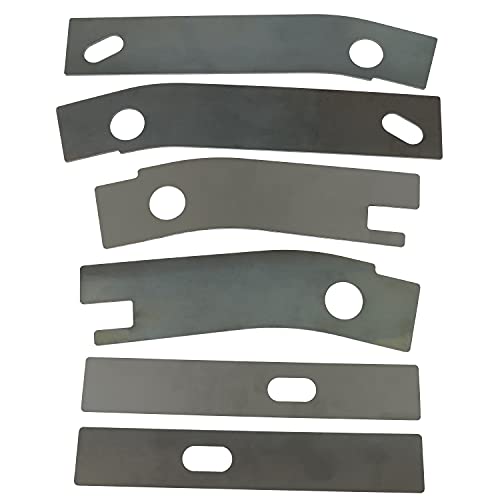

Fitment: Kojem Repair Plate compatible with 1995-2004 Toyota Tacoma. Note: Suitable for standard cab, extended cab & double cab frame rails

These M8 Caster Wheel Bolt length:2.29 inch (58.1mm),Diameter: 0.3 in, Built for Carts,shopping cart and Light Vehicle Maintenance.
Effective Welding Techniques
No single welding process is automatically the safest choice for every Tundra frame repair. The technician must consider the frame material, metal thickness, joint location, surrounding corrosion, heat control, access, and vehicle-specific repair information.
Toyota’s Technical Information System provides service and repair information for Toyota vehicles. A credible structural repair should follow applicable manufacturer information and accepted collision-repair practices rather than relying on a universal “weld a plate over it” approach.
| Repair Stage | What the Shop Should Address |
|---|---|
| Assessment | Determine the full corrosion boundary, remaining sound metal, nearby mounts, and frame alignment. |
| Preparation | Remove affected components and corrosion as required without thinning usable structure unnecessarily. |
| Repair design | Define the approved joint, replacement section, plate geometry, weld locations, and heat-control procedure. |
| Corrosion protection | Protect exposed seams, welds, cavities, drainage paths, and external surfaces after the structure has cooled and been inspected. |
| Validation | Confirm dimensions, alignment, component torque, line routing, roadworthiness, and local inspection requirements. |
Rust Treatment Strategies
Rust treatment is appropriate only after the structure has been judged sound or repaired correctly. Coating active perforation can hide the problem and make future inspection harder.
For confirmed non-structural surface rust, the process generally includes washing away salt and dirt, drying the frame, removing loose oxidation, applying a compatible converter or primer when appropriate, sealing exposed metal, and protecting enclosed cavities.
Keep factory drainage openings clear. Do not fill boxed rails with foam or thick material that traps water. Avoid spraying rubberized coating over damp metal, loose scale, brake components, exhaust parts, wiring connectors, identification labels, or moving suspension parts.
Reinspect treated areas after winter and after any impact, scraping, or repair that damages the coating.
Essential Tools for DIY Rust Treatment
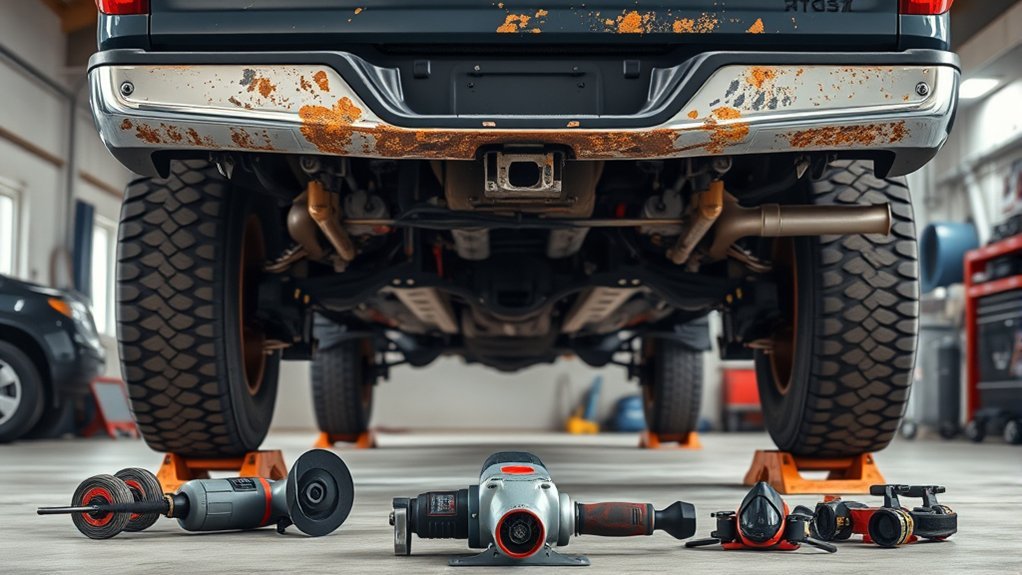
DIY work should be limited to inspection, cleaning, and protection of metal already confirmed to have non-structural surface rust. Stop as soon as you uncover perforation, deep pitting, cracking, swelling seams, or movement at a mount.
[Amazon Products Picked for You]

EVAPO-RUST RUST REMOVER: Evapo-Rust effortlessly removes rust from automotive parts, hardware, tools, cookware, and antiques without any scrubbing or sanding.

【Complete Rust Proofing Kit】 All-in-one undercoating spray gun kit includes 1000 mL (34 fl oz) aluminum snap lock cup, rust proofing spray gun, truck bed liner coating accessories, 20"&25" flexible extension wands, straight hose, pressure gauge, air connectors, cleaning brush, and tape—ready for car underbody protection jobs.

The information below is per-pack only
Protective Gear Essentials
Wear chemical-resistant gloves, safety glasses or a face shield, long sleeves, and hearing protection when using powered cleaning tools. Use a respirator selected for the dust, coating, or solvent listed on the product’s safety data sheet.
Work in a well-ventilated area away from flame, sparks, fuel vapors, hot exhaust components, and combustible material. The Canadian Centre for Occupational Health and Safety outlines welding and hot-work hazards, including fumes, radiation, fire, and electrical risks.
Do not grind or weld near the fuel tank, fuel lines, brake lines, wiring, undercoating, or enclosed frame cavities without professional controls and component removal where required.
Rust Removal Tools
Useful tools for non-structural surface preparation include a pressure washer or underbody rinse tool, plastic scraper, hand wire brush, abrasive pads, inspection mirror, shop vacuum, and strong lighting.
A powered wire wheel or grinder can remove material quickly, including usable frame metal. Use powered tools only after a qualified inspection confirms that the area is structurally sound and suitable for surface preparation.
Do not use aggressive grinding to make deep pits or holes appear smooth. That changes the appearance without restoring the missing section.
Application Equipment Needed
A basic surface-treatment kit may include:
- Cleaning equipment: An underbody rinse tool, detergent approved for automotive finishes, brushes, and clean drying materials.
- Preparation tools: Hand brushes, abrasive pads, masking materials, and a vacuum for removed debris.
- Compatible coating products: A rust converter or primer, topcoat, seam protection, and cavity wax selected as one compatible system.
- Application equipment: Brushes, disposable trays, a controlled sprayer, or a cavity wand suitable for the chosen product.
Follow the coating manufacturer’s temperature, ventilation, curing, surface-preparation, and recoat instructions. Keep the product off brakes, tires, exhaust components, electrical connectors, rubber bushings where prohibited, and all drainage openings.
Caution: Rust converter, paint, and undercoating are protective finishes, not structural repairs. Never use them to conceal perforation before a sale or inspection.
What Should a Professional Tundra Frame Inspection Include?
A professional evaluation should cover more than the visible rust patch. The shop should inspect the entire frame, nearby systems, matching structures on the opposite side, and any component that must be removed during repair.
| Repair Aspect | What to Expect |
|---|---|
| Initial assessment | A hoist inspection, photographs, corrosion mapping, and identification of unsafe areas. |
| Structural measurements | Checks for frame distortion, altered mounting positions, and alignment concerns. |
| Repair plan | A written explanation of what will be treated, repaired, replaced, or left unchanged. |
| Related systems | Inspection of brakes, fuel supports, suspension, steering, drivetrain mounts, cab and bed mounts, and hitch attachments. |
| Corrosion protection | Treatment of external metal, weld seams, enclosed cavities, replacement hardware, and damaged factory coatings. |
| Final verification | Torque checks, line routing, fluid inspection, wheel alignment where needed, road test, and repair documentation. |
Ask whether the shop regularly performs body-on-frame structural repairs, has access to Toyota repair information, carries suitable insurance, and will provide photographs before, during, and after the work.
A professional repair does not automatically guarantee lifetime durability. The written warranty should state exactly which workmanship, welds, parts, coatings, and time periods are covered.
How Do You Choose a Replacement Frame or Structural Parts?
Independent parts sourcing can reduce or increase the final cost depending on condition, shipping, compatibility, return terms, and the labor needed to correct missing or damaged components. Confirm every part by VIN before ordering.
- Identify the exact application. Cab style, bed length, drivetrain, engine, suspension equipment, production date, and market can affect frame and hardware compatibility.
- Ask the installer before buying. Some shops will not install customer-supplied structural parts or will provide a different labor warranty.
- Inspect a used frame completely. Require clear photographs of rails, crossmembers, enclosed areas, mounts, seams, identification marks, and shipping points.
- Check its history. Avoid a frame with collision deformation, previous section repairs, perforation, fire exposure, flood history, or heavy scale hidden by fresh coating.
- Budget for related components. Rusted brake lines, fuel supports, fasteners, bushings, mounts, shields, clips, and brackets may not survive disassembly.
- Keep records. Save part numbers, receipts, photographs, measurements, and the installer’s written acceptance of the parts.
A low purchase price does not make a used frame economical if freight, cleaning, missing hardware, corrosion repair, or incompatibility adds labor later.
[Amazon Products Picked for You]

Direct Replacement without Trim: This License plate Bracket is direct replacement accessories for Toyota Tundra 2007 2008 2009 2010 2011 2012 2013

【Compatible Vehicle】This Front License Plate Bracket is compatible with Toyota Tundra 2014-2021

Other Names: Frame Snap, Handle, Outside Snap, Housing Snap, Handle, Outside Clip, Exterior Door Handle Base Clip, Lock Assembly Snap, Handle, Outside Retainer, Handle, Outside Retainer Clip, Interior Door Handle Clip, Exterior Door Handle Base, Snap Door Outside H
How Can You Slow Future Tundra Frame Rust?
Road salt and trapped moisture accelerate corrosion, so prevention depends on removing contamination and maintaining protective coatings before deep scale or perforation develops.
- Rinse the underbody after salt exposure. Pay attention to frame rails, crossmembers, suspension brackets, fuel-tank supports, and the hitch area.
- Perform a spring cleanup. Remove packed mud and salt after winter, then allow the frame to dry fully.
- Inspect at least annually in salt-use areas. Check more often if the truck launches boats, drives on beaches, works in mud, or remains outdoors.
- Repair coating damage promptly. Clean chips and scrapes before corrosion spreads beneath the surrounding finish.
- Use cavity protection correctly. Apply products only to clean, dry, structurally sound areas and keep drain openings clear.
- Inspect before towing or heavy hauling. Give extra attention to hitch mounts, rear rails, crossmembers, spring mounts, and brake lines.
- Control storage moisture. A dry, ventilated shelter helps. A warm but wet garage can speed corrosion when salty slush repeatedly melts beneath the truck.
Do not wait for a safety inspection to reveal the problem. Early surface treatment is far less disruptive than repairing a perforated structural mount.
Community Experiences: Lessons From Tundra Owners
Owner forums and repair discussions can help you locate inspection points, experienced shops, discontinued parts, and questions to ask. However, one owner’s price or repair method cannot establish what another truck needs.
The cheapest visible patch is not the cheapest repair if corrosion continues beyond the plate, inside the rail, or around the next mounting point.
Useful lessons from owner experiences include:
- Get a second structural opinion. Compare the damage map and repair method, not only the bottom-line price.
- Request photographs and measurements. Documentation helps you understand hidden work and supports future resale disclosure.
- Compare total project cost. Include transport, seized hardware, lines, mounts, alignment, coatings, and follow-up inspection.
- Verify campaign history by VIN. Do not rely on a seller’s statement that the truck “had the recall done.”
- Consider the whole vehicle. Engine, transmission, body, brake, suspension, and electrical condition affect whether a large structural investment makes sense.
Community advice is most valuable when it helps you ask better questions. A qualified inspection should still determine whether the truck is safe and repairable.
Related Guides
Frequently Asked Questions
Is a rusted frame worth fixing?
It may be worth fixing when corrosion is limited, the remaining frame is sound, an accepted repair method is available, and the truck’s mechanical and body condition justify the total cost. Widespread perforation, multiple damaged mounts, or major additional defects may make frame replacement or vehicle retirement more sensible.
Can you drive a Toyota Tundra with a rusted frame?
Light surface rust does not automatically make a truck unsafe. Do not drive when you see perforation, cracking, separation, deformation, loose structural mounts, or corrosion affecting steering, suspension, brakes, fuel supports, or the hitch. Arrange a tow and obtain a structural inspection.
Will insurance cover a rusted-out frame?
Coverage depends on the policy and the cause of loss. Do not assume a rusted frame is covered or excluded without checking the policy. Contact the insurer, provide the inspection report, and request a written coverage decision.
Does Toyota still replace 2004–2006 Tundra frames for free?
The D0D and DSD Limited Service Campaigns for these model years had a July 31, 2015 inspection deadline, so those expired programs should not be treated as current free-repair coverage. Enter the VIN in Toyota’s current campaign lookup and ask a Toyota dealer to confirm any open action or prior frame work tied to that VIN.
How do I know if my Tundra frame is too rusty to repair?
There is no reliable driveway cutoff based on the size of one visible rust spot. Widespread perforation, cracking, deformation, corrosion around multiple suspension, steering, cab, bed, or hitch mounts, or too little sound metal for an accepted repair are reasons to compare full-frame replacement with vehicle retirement. A professional hoist inspection should make that decision.
What was the Toyota frame rust lawsuit?
The widely cited 2017 U.S. frame-corrosion settlement covered 2007–2008 Tundras, 2005–2010 Tacomas, and 2005–2008 Sequoias. The 2004–2006 Tundra used separate Toyota Limited Service Campaigns D0D and DSD, whose inspection deadline was July 31, 2015.
How much does it cost to repair rust on a truck frame?
The cost depends on whether the truck needs cleaning and coating, a localized structural repair, replacement brackets or crossmembers, or a complete frame. Ask for an itemized quote covering labor, parts, related lines and mounts, alignment, corrosion protection, transport, and possible hidden damage.
How do you check whether a Tundra has an open recall or campaign?
Enter the 17-character VIN in Toyota’s official recall and campaign lookup. U.S. owners should also check NHTSA. Canadian owners should use Toyota Canada and Transport Canada resources. A model-year search cannot show whether an individual truck remains eligible or previously received campaign work.
Can you weld a rusted Tundra frame yourself?
Structural frame welding should be performed by a qualified technician who can evaluate the metal, select an appropriate repair procedure, control heat, protect nearby systems, verify alignment, and document the result. DIY treatment should be limited to confirmed non-structural surface rust.
Conclusion
A rusted 2004–2006 Toyota Tundra frame is worth evaluating carefully, but it should never be judged by a generic price range or a quick plate welded over the visible damage. Start with a VIN check and full structural inspection. Then compare surface treatment, an approved localized repair, complete frame replacement, and vehicle retirement based on documented damage and total project cost.
After any repair, keep photographs and invoices, confirm alignment and related-system checks, and maintain the corrosion protection. Regular underbody cleaning and inspection can slow new corrosion, but no coating can substitute for sound frame metal.
Sources
- Toyota Limited Service Campaign D0D bulletin — cold-climate-state coverage, CRC remedy, frame-replacement criteria, and July 31, 2015 deadline.
- Toyota Limited Service Campaign DSD bulletin — 2004–2006 Tundra campaign scope, inspection remedy, production range, historical labor times, and frame-replacement criteria.
- Toyota D0D campaign expiration notice — July 31, 2015 inspection and corrosion-treatment deadline.
- Toyota frame-corrosion warranty enhancement FAQ — 2017 settlement model-year scope for Tacoma, 2007–2008 Tundra, and 2005–2008 Sequoia.
- Toyota U.S. Safety Recall and Service Campaign Lookup — current vehicle-specific VIN status.
- National Highway Traffic Safety Administration recall lookup — U.S. VIN recall information and safety-defect reporting.
- Toyota Canada Recalls and Campaigns Lookup — Canadian VIN-based recall and campaign information.
- Toyota Technical Information System — Toyota service, repair, and technical information.