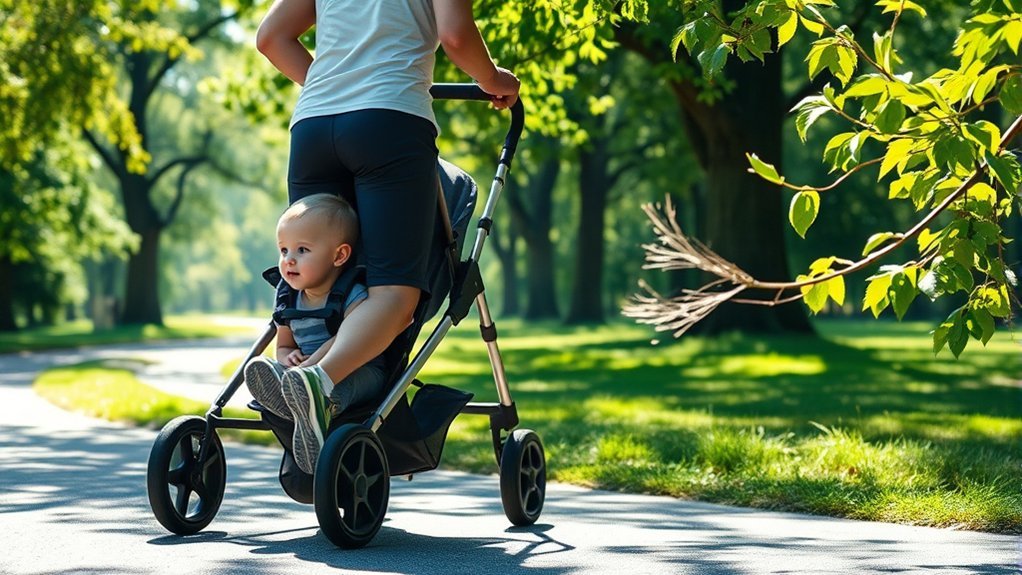
Imagine pushing a stroller while jogging. It looks simple, but the added load, steering effort, and terrain can make the workout feel much harder than jogging alone. Pushing a jogging stroller can raise your calorie burn, often by about 5% to 20% depending on speed, stroller weight, hills, surface type, and your form. When you understand those factors, you can make stroller workouts safer, more effective, and easier to fit into your parenting routine.
Quick Answer
Yes, pushing a jogging stroller can burn more calories than jogging or walking without one. The increase often falls around 5% to 20%, mainly because you push extra weight, steer, stabilize your body, and work harder on hills or rough surfaces.
Key Takeaways
- Pushing a stroller can raise calorie burn because your arms, shoulders, core, hips, and legs work harder.
- Stroller weight, child weight, speed, hills, wind, and surface type all affect your total energy use.
- A dedicated jogging stroller is safer than a regular stroller for running because it offers better stability and control.
- Good posture, a steady pace, and safe routes matter more than trying to run fast with poor form.
- Stroller workouts can support physical fitness, mental health, and social connection for busy parents.
At a Glance
| Best For | Parents who want a cardio workout while safely bringing a child along. |
| Calorie Impact | Often about 5% to 20% more than walking or jogging without a stroller, depending on conditions. |
| Difficulty | Easy to moderate on flat paths; harder on hills, gravel, grass, or windy routes. |
| Equipment Needed | A dedicated jogging stroller, fitted harness, wrist strap, comfortable shoes, water, and a safe route. |
Understanding Caloric Expenditure While Jogging
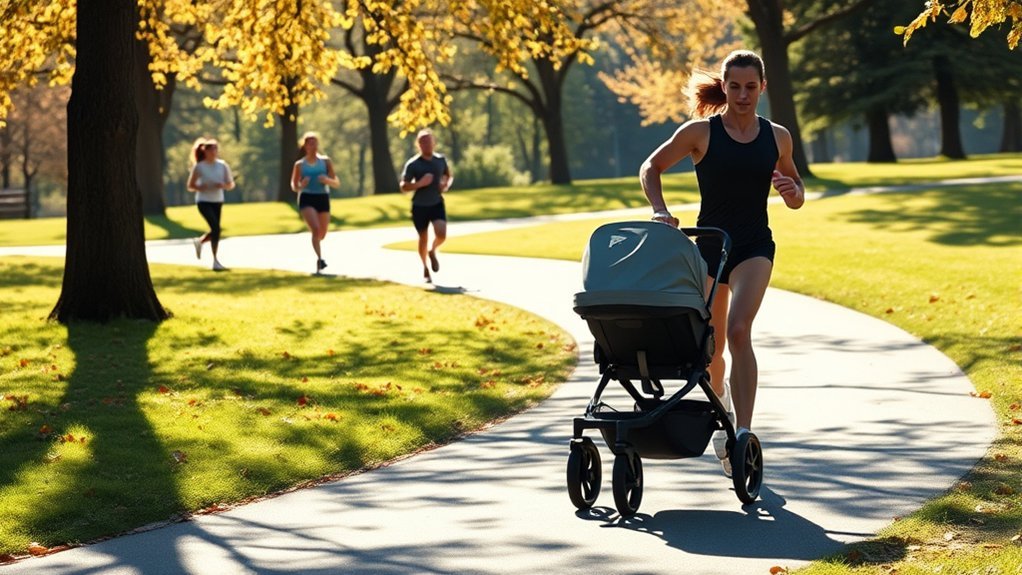
When you push a jogging stroller, you’re not just taking your little one along for the ride. You are also adding resistance to your workout. That extra effort can increase your calorie burn compared with jogging or walking without a stroller.
Many estimates place the increase around 5% to 20%, depending on your pace, body weight, stroller weight, child weight, and terrain. For example, at a casual pace, pushing a stroller may add a modest number of calories over the same walk without one. At a brisk pace, the difference can become more noticeable because your body must push, steer, and stabilize at the same time.
This extra burn comes from engaging more muscle groups. Your arms and shoulders help control the stroller. Your core helps keep your posture steady. Your legs and hips work against the added load, especially when you go uphill or move over uneven surfaces.
Still, stroller jogging is not automatically harder every second. Some parents slow down, shorten their stride, or stop more often when pushing a stroller. That can lower the total workout intensity. To get the most benefit, focus on a steady pace, safe stroller control, and smooth form.
Warning: Do not jog with a standard everyday stroller unless the manufacturer says it is safe for jogging. Use a dedicated jogging stroller, secure the harness, lock or control the front wheel as directed, and choose smooth routes.
Factors Influencing Calorie Burn With a Stroller
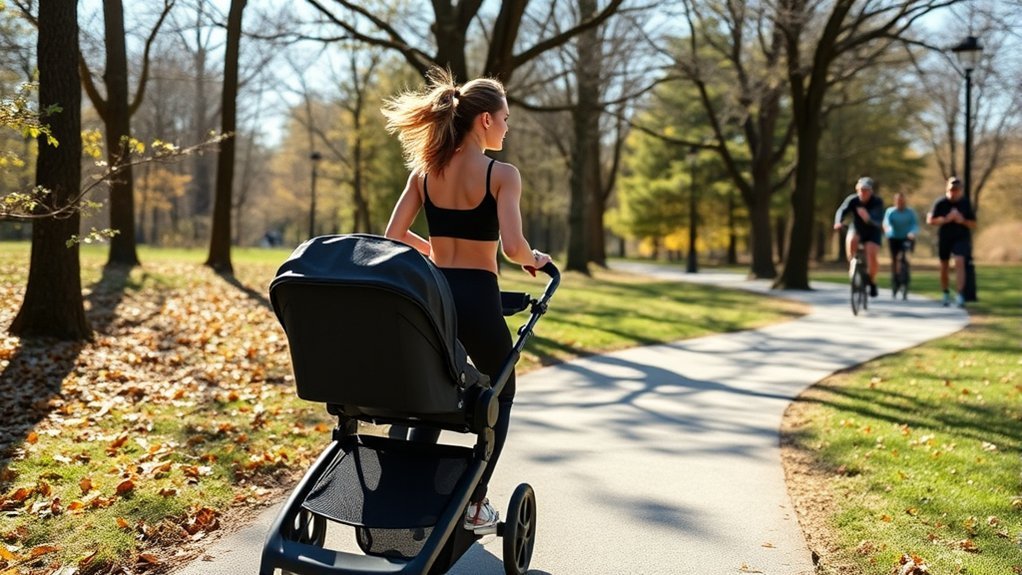
When you push a stroller, several factors influence how many calories you burn. The weight of the stroller, the weight of your child, the terrain, the wind, your walking or jogging speed, and your pushing style all play important roles in your energy expenditure.
Think of stroller jogging as a loaded movement. You are not just moving your own body forward. You are also moving a stroller system that needs steering, braking, and balance. The harder that system is to control, the more effort your body usually uses.
Stroller Weight Impact
Pushing a stroller not only provides a convenient way to transport children but also influences the calories you burn during your workout. The stroller’s weight and design play a big role in your effort level. Heavier strollers usually require more energy, especially when you start, stop, turn, or climb.
| Stroller Weight | Calorie Burn Increase |
|---|---|
| 20 lbs | 5-10% |
| 30 lbs | 10-15% |
| 35 lbs | 18-20% |
| 40 lbs | 20%+ |
These numbers are best used as rough estimates, not exact guarantees. A smooth, well-balanced 30-pound stroller may feel easier than a lighter stroller with poor wheels or bad alignment. Child weight also matters, so the same stroller can feel harder as your child grows.
Better weight distribution can help you engage more muscle groups without wasting energy. A stroller that rolls smoothly, tracks straight, and fits your height can make the workout feel more controlled while still adding resistance.
Terrain Variations Explained
The terrain you navigate while pushing a stroller can greatly affect your calorie burn and overall workout quality. On flat pavement, the stroller adds steady resistance. On hills, your legs, glutes, core, and upper body work harder to move the stroller safely.
When you tackle uphill paths, your energy expenditure can rise because gravity increases the load. Your heart rate may climb, and your breathing may become heavier. Conversely, downhill terrain can feel easier for your legs, but it demands more control. You may need to slow down, brake carefully, and keep the stroller from pulling you forward.
Rough, uneven surfaces engage stabilizing muscles because you must steer around cracks, grass, gravel, roots, or bumps. These surfaces may increase effort, but they also increase risk. Choose routes that match your stroller’s design and your comfort level.
Speed and Intensity Factors
Calorie burn while pushing a stroller is heavily influenced by your speed and workout intensity. At an easy walking pace, the stroller may add only a small boost. At a brisk pace, your body usually works harder because you must push and control the stroller while maintaining rhythm.
When you walk at a casual pace of about 3 km/h, you might burn more calories with a stroller than without one. As you pick up the pace to around 5 km/h, the difference may become larger. Some estimates suggest up to 20% more calorie burn at moderate walking speeds, though results vary by person.
If you jog slowly with a stroller, your total calorie burn depends on whether you can keep a natural stride. Some runners shorten their steps or reduce pace, which can offset part of the added resistance. To maximize your calorie burn, aim for a brisk, controlled pace instead of pushing too fast with poor form.
The Role of MET Values in Caloric Calculation
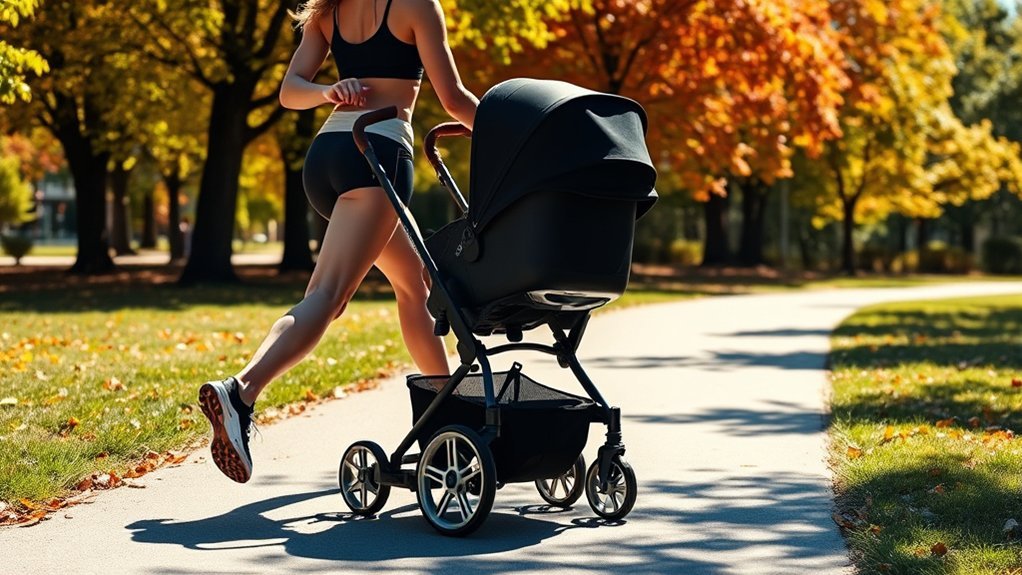
When you estimate how much energy you burn during physical activities, MET values can help. MET stands for metabolic equivalent. It compares the energy cost of an activity with the energy your body uses at rest.
Higher MET values usually mean higher effort. A slow walk has a lower MET value than a brisk walk. Running has a higher MET value than walking. Pushing a stroller can raise the activity level because you are moving both your body and the stroller.
Pushing a stroller is often estimated around 4 to 5 METs, depending on speed and effort. That can be higher than easy walking without a stroller. This difference helps explain why stroller workouts may burn more calories even when the pace feels manageable.
For new parents, MET values are useful because they offer a simple way to compare activities. They are not perfect, though. Your actual calorie burn can change based on body size, fitness level, stroller load, weather, route, and how efficiently you move.
Note: Calorie trackers and fitness watches can estimate stroller workouts, but they may undercount or overcount because they do not always detect pushing resistance, terrain, and stroller weight.
Comparing Calorie Burn: Stroller vs. No Stroller
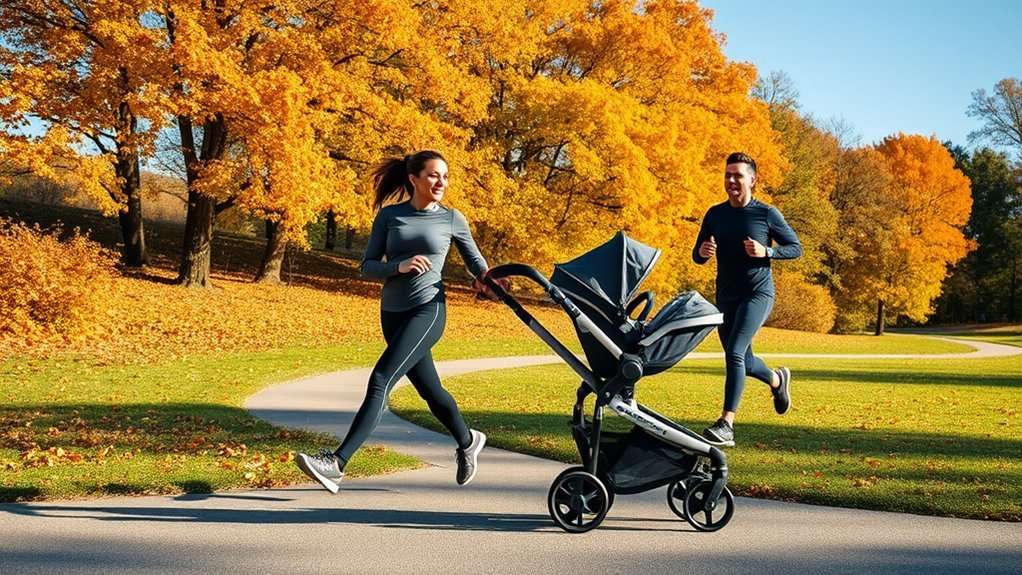
When you push a stroller, you’re not just transporting your little one. You’re also adding resistance, changing your arm movement, and asking your core to help stabilize your body. That can increase your energy expenditure by about 5% to 20%, depending on the workout.
Without a stroller, your arms swing naturally and your stride may feel smoother. With a stroller, your arms often stay in front of you, your shoulders work harder, and your core helps keep your torso steady. Those small changes can make the same route feel more demanding.
Increased Resistance Impact
Pushing a stroller can transform a regular walk into a more dynamic workout. The added resistance may increase your calorie expenditure, especially when you push a heavier stroller, climb hills, or walk at a brisk pace.
For a 150-pound person, this can mean burning extra calories over a 30-minute session. The exact number depends on pace, terrain, and stroller load. A short, flat walk with a lightweight stroller may add only a small increase. A longer route with hills and a heavier child may add much more effort.
This added effort engages multiple muscle groups, including your arms, shoulders, legs, hips, back, and core. That makes stroller jogging feel more like a full-body workout than a simple walk.
MET Values Comparison
While some might think that walking or jogging without a stroller always offers the best calorie burn, pushing a stroller can raise workout intensity at similar speeds. With a MET value often estimated between 4 and 5, stroller pushing can sit above easy walking and below faster running.
| Activity | MET Value |
|---|---|
| Walking (no stroller) | 2.5 |
| Pushing stroller | 4 – 5 |
| Running (no stroller) | 6 – 8 |
| Running (with stroller) | Lower |
| Walking uphill | Higher |
These MET values are general estimates. A fast runner without a stroller may burn more than a slow jogger pushing one. But at the same walking speed, stroller resistance can raise the effort level. Stroller safety is essential, so secure your child before trying to maximize calories.
A stroller workout is not just about speed. The extra calorie burn often comes from resistance, steering, posture control, and terrain.
Impact of Terrain on Caloric Burn While Pushing a Stroller
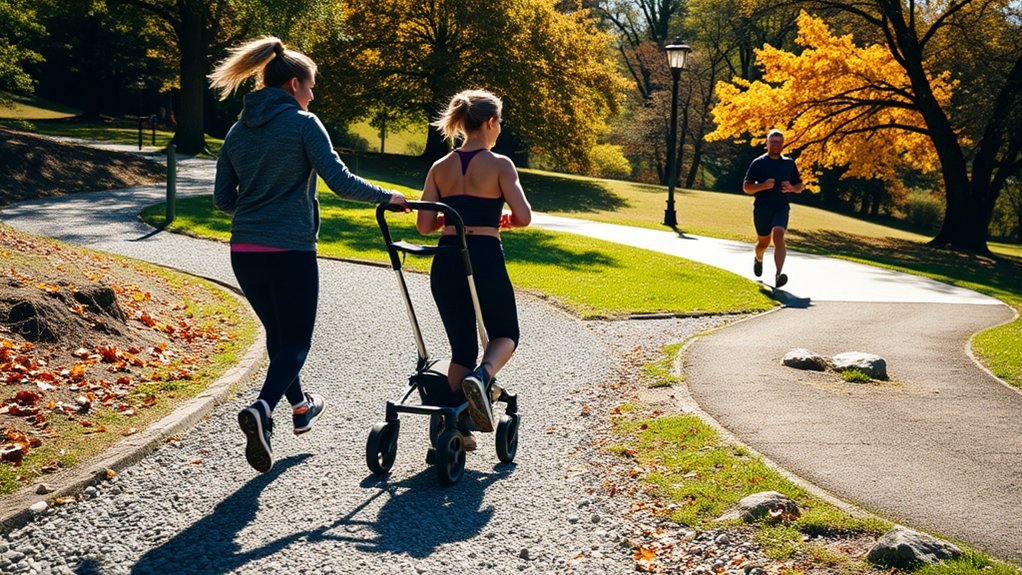
Maneuvering different terrains can affect the calories you burn when pushing a stroller. Smooth pavement usually allows an easier, steadier pace. Hills, rough paths, grass, and gravel often demand more control and effort.
When you tackle uphill terrain types, your muscles work harder because you are pushing the stroller against gravity. That can raise your heart rate and increase calorie burn compared with flat ground. The added resistance also makes your glutes, hamstrings, calves, and core work harder.
On rough or uneven paths, you may engage more stabilizing muscles because you must guide the stroller carefully. That can raise effort, but it also requires caution. Jogging fast over uneven terrain can increase the risk of tripping, tipping, or losing control.
Downhill routes deserve special attention. They may feel easier for your lungs, but they can be harder for control. Keep your pace slow, use the wrist strap if your stroller includes one, and avoid steep downhills if you feel pulled forward.
If you weigh around 150 pounds, pushing a stroller on challenging terrain may add noticeable effort over a 30-minute workout. Still, the safest route is the best route. Make stroller adjustments before you start, check the wheels, and choose paths that let you move confidently.
Benefits of Using a Stroller During Workouts
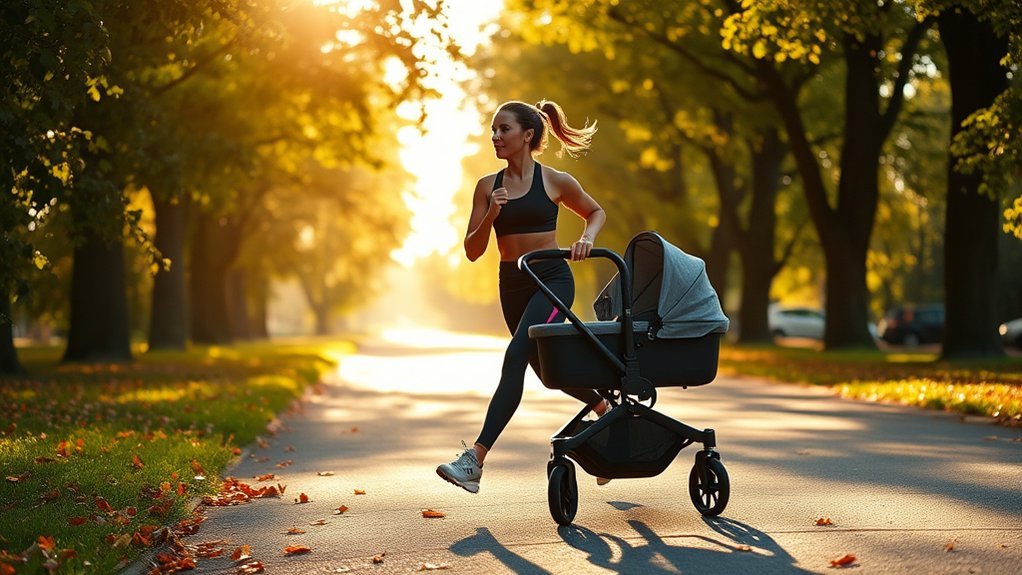
Using a stroller during your workouts can boost calorie burn, improve consistency, and help you stay active without needing separate childcare. As you push, you activate your arms, shoulders, core, and legs, making every step more useful.
Stroller workouts also fit real life. You can get outside, move your body, and spend time with your child at the same time. For many parents, that convenience makes exercise easier to maintain.
Enhanced Calorie Burn
When you push a stroller during your workout, you enjoy fresh air while adding resistance to your movement. Estimates often suggest that pushing a stroller can increase calorie expenditure by about 5% to 20% compared with the same pace without one.
For instance, if you weigh around 150 pounds, you might burn extra calories over a half-hour stroller walk or jog. At speeds around 3 mph to 3.5 mph, the increase may become more noticeable because the stroller adds work while you maintain forward movement.
This added resistance can raise your heart rate and workout intensity. If you use caloric tracking, treat the number as an estimate. Watch your breathing, effort level, and recovery too. Those signs often tell you more than the calorie number alone.
Improved Muscle Engagement
Pushing a stroller can upgrade your workout by engaging multiple muscle groups. Your biceps, triceps, shoulders, chest, back, and core all help push, steer, and stabilize the stroller.
Your lower body still does most of the forward movement. Your glutes, quads, hamstrings, calves, and hips help drive each step. When you go uphill or push a heavier stroller, those muscles usually work harder.
Stabilizing the stroller also encourages better posture when you do it correctly. Keep your chest lifted, ribs stacked over hips, and shoulders relaxed. Avoid leaning heavily onto the handlebar because that can strain your neck, back, and wrists.
As your child grows and the stroller gets heavier, you may notice greater arm and shoulder endurance. Varying your hand and arm positions can reduce fatigue and help you target different muscles, but always keep control as your top priority.
Techniques to Maximize Caloric Burn
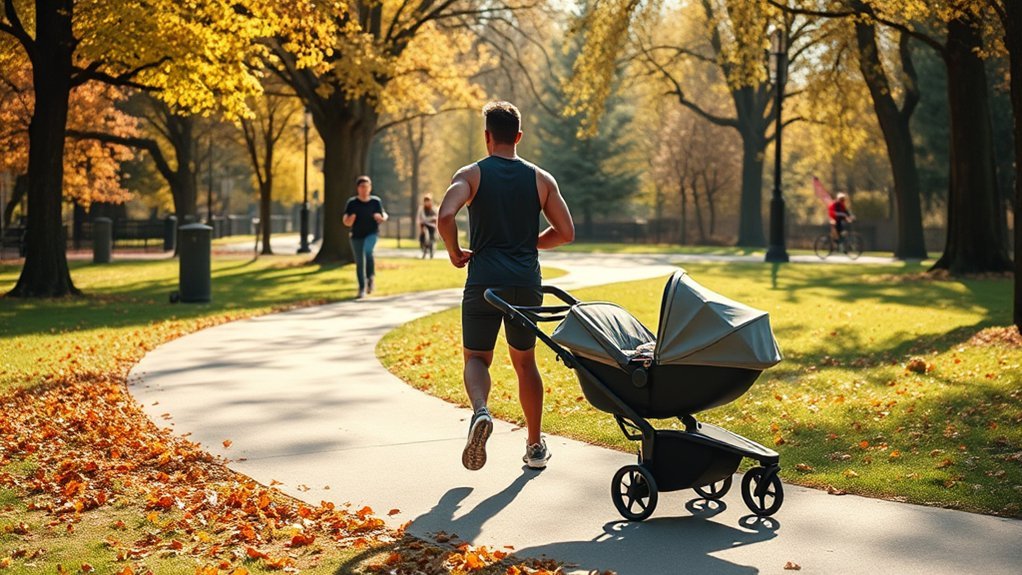
To maximize the caloric burn during your stroller workouts, use techniques that raise intensity without sacrificing safety. Start by adding short bursts of faster walking or light jogging into your route. These intervals can raise your heart rate and make the workout feel more effective.
Tracking that intensity is easier with a wrist heart-rate monitor than by feel, since pushing a stroller changes your arm swing and throws off simple step-based estimates. A fitness watch with built-in heart-rate tracking gives you a far more honest calorie figure for these walks.
Try simple intervals like one minute brisk, two minutes easy, repeated several times. You can also use landmarks, such as walking faster between two light poles, then recovering at a comfortable pace.
Experiment with safe pushing techniques. Keep both hands on the handlebar when turning, going downhill, crossing streets, or moving through crowds. On clear, flat stretches, some runners use one hand for short periods while the other arm swings naturally. Switch sides often to avoid uneven strain.
Engage your abdominal muscles for stability. A strong core helps protect your lower back and keeps your posture tall. Avoid hunching your shoulders or locking your elbows.
Do not shy away from gentle hills if your stroller is built for them and your route is safe. Pushing the stroller uphill requires more effort and can increase workout intensity. On the way down, slow your pace and keep firm control.
Pro Tip: Use effort level instead of speed as your main guide. A stroller jog should feel controlled. If you cannot steer smoothly, talk in short phrases, or stop safely, reduce your pace.
The Importance of Proper Form When Jogging With a Stroller
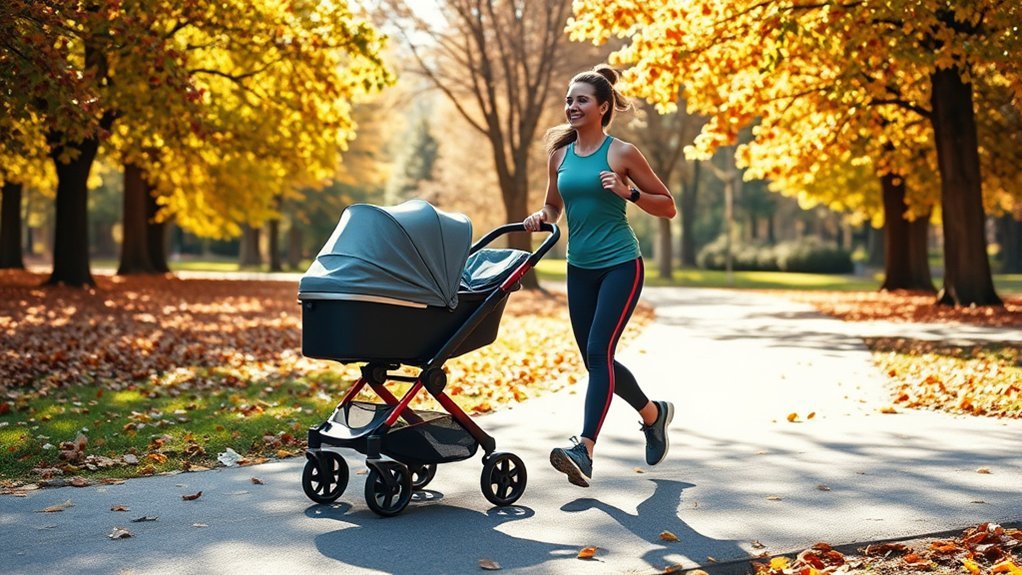
While jogging with a stroller can be a great way to stay active, proper form is vital for safety and comfort. Good alignment helps you prevent strain and ensures you use the right muscle groups for a balanced workout.
| Key Focus | Tips for Proper Form |
|---|---|
| Hand Placement | Keep both hands on the handlebars for stability. |
| Core Engagement | Engage your abdominal muscles for back support. |
| Speed Awareness | Monitor your pace to maintain a challenging workout. |
Keep your shoulders relaxed and your elbows slightly bent. Stay tall through your chest, and avoid leaning your body weight onto the stroller. Your arms should guide the stroller, not hold you up.
Watch your stride length. Some runners overstride when pushing a stroller, while others take choppy steps. Aim for a smooth, natural rhythm. If your stride feels awkward, slow down and reset your posture.
Using the “push and chase” method means giving the stroller a light push and briefly jogging behind it before reconnecting. Only use this technique on safe, flat, open paths and only if your stroller is designed for jogging. For most parents, steady two-hand control is the safer choice.
Your form and muscle engagement matter. The goal is not only to burn calories but also to move safely, protect your body, and keep your child comfortable during the ride.
Mental Health Benefits of Stroller Jogging
Stroller jogging offers physical fitness benefits, but it can also support mental well-being, especially for new parents. Regular movement, fresh air, sunlight, and a change of scenery can help improve mood and reduce stress.
Physical activity may support emotional balance by increasing endorphins and helping you feel more capable. For parents managing long days, interrupted sleep, and changing routines, even a short stroller workout can feel like a reset.
Outdoor movement also gives you time away from indoor stress. You can breathe fresh air, notice your surroundings, and create a healthy routine with your child. That routine can become a small but meaningful part of your day.
Stroller jogging is not a replacement for medical care. If you feel persistent sadness, anxiety, hopelessness, or symptoms of postpartum depression, talk with a qualified healthcare professional. Exercise can support well-being, but you deserve proper help when symptoms feel heavy or ongoing.
Community and Social Connections Through Stroller Workouts
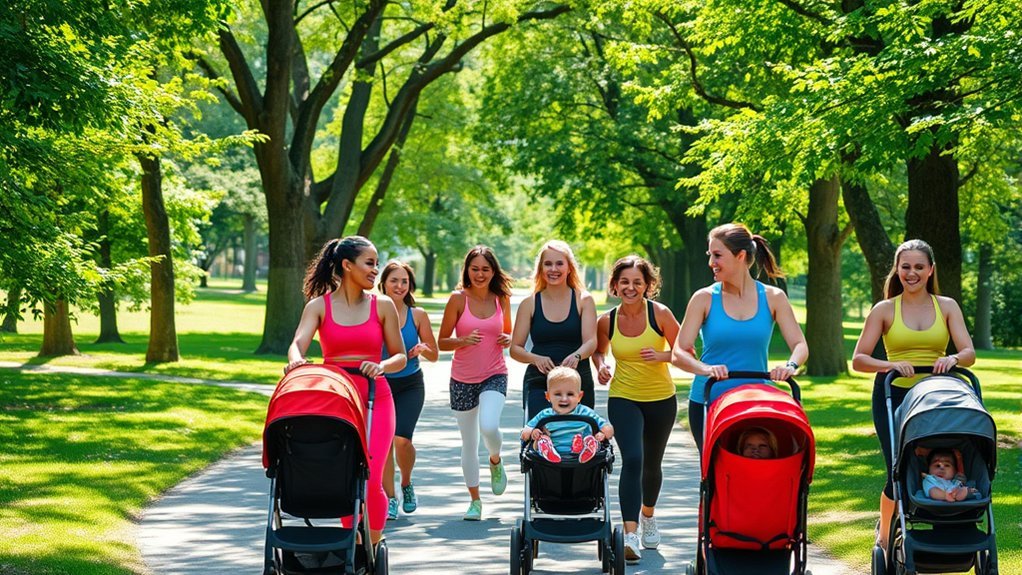
Joining a stroller workout group can turn your exercise routine into a more social experience. These sessions can boost your physical fitness while helping you connect with other parents who understand the same stage of life.
As you engage with other parents, you may find encouragement, accountability, and practical support. You can share route ideas, stroller tips, baby-care challenges, and small wins. That kind of community can reduce isolation and make workouts more enjoyable.
Stroller workouts can also help you stay consistent. When other parents expect to see you at the park, trail, or class, you may feel more motivated to show up. That accountability can make fitness feel less like a chore and more like a shared habit.
Ultimately, these workouts create a nurturing space where parents uplift each other. By participating, you’re not just pushing a stroller. You’re building friendships, protecting your health, and making movement a joyful part of parenting.
How to Build a Safe Stroller Jogging Routine
A safe stroller jogging routine starts with the right equipment and a realistic pace. Choose a stroller designed for jogging, read the manufacturer’s instructions, and make sure your child meets the age, weight, and developmental requirements.
Before each workout, check the tires, brakes, frame, harness, and handlebar. Make sure the stroller tracks straight and the wheels are secure. Pack water, weather-appropriate layers, and any child essentials you may need.
Start with short sessions. A 15- to 20-minute route may be enough at first, especially if you are returning to exercise after pregnancy, injury, or a long break. Increase time or intensity gradually.
Choose safe routes with wide paths, low traffic, and smooth surfaces. Avoid crowded sidewalks, steep downhills, loose gravel, and areas where you need to stop suddenly. If visibility is low, use reflective gear and proper lights.
Listen to your body. If you feel pain, dizziness, pelvic pressure, unusual shortness of breath, or sharp discomfort, stop and rest. Parents recovering postpartum should follow guidance from a healthcare professional before returning to jogging.
Common Mistakes That Reduce Calorie Burn
Some stroller workouts feel hard but do not deliver the result you expect because poor habits reduce efficiency. The most common mistake is leaning too much on the handlebar. That can shorten your stride, strain your shoulders, and reduce natural movement.
Another mistake is choosing a route that is too difficult. Rough paths and steep hills can raise effort, but they may also force frequent stops. A smoother route where you keep moving may burn more calories overall than a difficult route filled with pauses.
Going too fast too soon can also backfire. If speed ruins your form, you may tire quickly and cut the workout short. A steady, controlled pace often works better than a hard start followed by a long recovery.
Finally, ignoring stroller maintenance can make workouts harder in the wrong way. Low tires, sticky wheels, poor alignment, or loose parts can waste energy and reduce safety. A well-maintained stroller lets you work hard without fighting equipment problems.
Related Guides
Frequently Asked Questions
Can I use any stroller for jogging?
No. You should not use just any stroller for jogging. Stroller compatibility is essential for jogging safety. Choose a dedicated jogging stroller designed for stability, control, and higher-speed movement.
How can I ensure my baby is safe while jogging?
Use a dedicated jogging stroller, secure the harness, follow the stroller maker’s age and weight guidance, choose smooth paths, and keep control at all times. Avoid fast turns, steep downhills, traffic-heavy areas, and rough terrain.
What type of terrain is best for stroller jogging?
Flat, smooth, wide surfaces are best for stroller jogging because they offer stability and easier control. Gentle inclines can boost workout intensity, but steep hills, loose gravel, grass, and uneven paths require extra caution.
How does pushing a stroller affect my running technique?
Pushing a stroller changes your running technique by limiting your natural arm swing and requiring more core stability. You may shorten your stride, adjust your posture, and use your shoulders and arms more than usual.
Are there specific strollers designed for jogging?
Yes. Jogging strollers are designed with sturdy frames, larger wheels, better suspension, safety harnesses, and features that improve control while moving faster. Always follow the manufacturer’s instructions before jogging.
Does stroller jogging burn more calories than regular jogging?
It can burn more calories at the same pace because you push extra weight and use more upper-body and core effort. However, if the stroller makes you slow down a lot, your total calorie burn may be similar or lower.
How often should I do stroller workouts?
Start with two or three short sessions per week if you are new to stroller workouts. Build gradually as your fitness improves. If you are postpartum or recovering from injury, ask a healthcare professional before increasing intensity.
Conclusion
To summarize, pushing a stroller while jogging can be a powerful way to boost your fitness and bond with your little one. The added resistance may help you burn extra calories, engage more muscles, and make a normal route feel more rewarding.
The biggest factors are stroller weight, child weight, pace, hills, terrain, and form. A smooth, safe, controlled workout matters more than chasing a perfect calorie number. Use the right jogging stroller, secure your child, choose safe routes, and build intensity gradually.
With the right approach, stroller jogging can become more than exercise. It can give you fresh air, structure, confidence, and a healthy routine that benefits both you and your child.