
There is no single age when every child should stop using a stroller. Around age 3, many families can begin using a stroller less for routine outings if their child walks confidently, follows basic safety directions, and can handle the usual distance. The stroller can still be useful for long trips, crowds, fatigue, illness, or other situations where walking is not practical. The hard stop is your stroller’s own weight, height, and fit limits.
Last updated: September 11, 2026
Quick Answer
Most families can start using a stroller less often around age 3, but age is not a strict cutoff. Use three checks: fit, function, and context. Your child should still fit safely within the stroller’s manufacturer limits, be able to handle ordinary walking when appropriate, and use the stroller mainly when the outing genuinely calls for it. Stop using a stroller if your child exceeds its weight or height limit or no longer fits the harness correctly.
Key Takeaways
- Age 3 is a useful time to encourage more walking, not a deadline for every child.
- Your child may be ready for less stroller use when they walk well, follow “stop” and “wait,” and manage normal short outings.
- Children ages 3 to 5 should be physically active throughout the day, according to CDC guidance, so stroller rides should not routinely replace active play.
- Long trips, crowded places, fatigue, illness, sensory overload, or additional mobility needs can justify continued stroller use.
- The stroller manufacturer’s weight, height, seating, and harness limits are the hard safety limits.
Purpose of a Stroller
Strollers are useful tools for parents managing outdoor trips with babies, toddlers, and young children. They make errands, walks, travel days, and family outings easier because your child has a place to sit and rest when they feel tired, overwhelmed, or unable to keep walking safely.
The benefits go beyond transportation. Many strollers include storage space for diapers, snacks, water bottles, extra clothes, toys, and shopping bags. That storage helps you stay organized so you can focus on your child instead of juggling everything by hand.
Strollers also help in crowded areas, long-distance outings, airports, theme parks, busy sidewalks, and unfamiliar locations. In those settings, a stroller can keep your child close, reduce wandering, and provide a predictable place to take a supervised break.
Still, a stroller should support your child’s routine rather than replace normal opportunities to move. The CDC says children ages 3 to 5 should be physically active throughout the day. As your child gets older, balance stroller convenience with walking, active play, exploration, and age-appropriate safety practice.
What Age Should a Child Stop Using a Stroller?

There is no birthday that automatically makes a child too old for a stroller. Around age 3, many children can begin walking more during ordinary errands because they are steadier on their feet, understand simple directions, and can manage short distances without needing to ride the whole time.
A useful decision rule is Fit, Function, Context. First, make sure your child still fits within the stroller’s stated weight, height, seating, and harness limits. Second, consider whether they can walk the distances that are normal for your family. Third, consider the outing itself. A child who walks through a grocery store may still reasonably use a stroller during an airport connection, theme-park day, illness, crowded event, or unusually long city walk.
Development also varies. Some children are ready for routine stroller-free outings earlier, while others need more time because of stamina, temperament, developmental differences, sensory needs, medical needs, or safety concerns. Readiness matters more than comparing birthdays.
Should You Stop Using a Stroller at Age 3?
No. Turning 3 does not require you to remove the stroller completely. It is better to treat this age as an opportunity to give your child more chances to walk when the distance and environment are reasonable.
Start with short, low-pressure trips where walking feels easy and safe. A quick walk to the mailbox, a short grocery trip, or a relaxed stroll through the park can build stamina without turning the change into a test.
Here are a few stroller alternatives to think about:
- Walking: Let your child explore at their own pace during short, safe outings.
- Scooters or bikes: Use these in appropriate traffic-free areas with age-appropriate protective gear and close supervision.
- Backpacks or child safety harnesses: These may help keep a young child close in situations where the product is designed for their age and size.
- Wagons: These may work for parks, zoos, festivals, or long family outings when the wagon is designed to transport children and is used within its limits.
- Ride-on boards: These can give an older toddler short riding breaks when the board is approved for the stroller and the child meets its age and weight requirements.
Individual Readiness Factors
Every child develops at a different pace. Look at your child’s whole pattern rather than one good or difficult day. A child may walk confidently at home but struggle in crowded stores. Another may enjoy walking at the park but need more support when tired, hungry, overstimulated, or far from a familiar routine.
| Signs of Readiness | What to Check |
|---|---|
| Walks easily and confidently | Can manage the normal distance for a short outing |
| Follows simple instructions | Can stop, wait, and hold hands when needed |
| Shows desire for independence | Often asks to walk instead of ride |
| Stays reasonably close | Can remain near you in an age-appropriate public setting |
| Handles short walks without distress | May still need breaks on longer or unfamiliar outings |
Encouraging your child to explore on foot can support active play and independence. Keep the expectations realistic for the distance, environment, and your child’s energy level.
Common Signs: Your Child Is Ready to Graduate From the Stroller

Instead of focusing only on age, look for repeated signs that your child can walk, listen, and stay reasonably safe during everyday outings.
Stroller readiness is not about one perfect outing. It is about seeing a consistent pattern that your child can walk normal short distances, follow basic safety directions, and take breaks without needing the stroller every time.
- Walking confidently: Your child walks easily and usually prefers moving over sitting.
- Curiosity and exploration: They want to engage with their environment on foot.
- Following instructions: They understand simple directions such as “stop,” “wait,” and “hold my hand.”
- Staying close: They can remain near you in age-appropriate public settings.
- Handling short walks: They can complete ordinary short errands without repeatedly needing to be carried.
- Resisting the stroller: They consistently ask to walk instead of ride.
These signs can support a gradual shift toward more walking, but they do not mean the stroller must disappear from every long or demanding outing.
Note: Readiness can change by day. A child who walks well in the morning may still need more support after a long nap-free afternoon, a busy event, an illness, or a tiring travel day.
Is It Bad to Use a Stroller for Too Long?
Using a stroller with an older toddler is not automatically good or bad. What matters is whether the stroller is still safe for your child’s size and whether riding is replacing opportunities for normal movement.
Strollers offer real benefits. They can provide practical transportation, carry essentials, and give a tired child a supervised place to take a break during a long outing. They can also help parents manage crowded spaces, airports, travel days, shopping trips, and events where a child may become exhausted or overwhelmed.
The concern is not occasional stroller use. It is relying on the stroller so often that a child gets fewer opportunities to walk and engage in active play. CDC guidance says preschool-aged children from 3 through 5 should be physically active throughout the day for growth and development.
Walking with you can also give your child practice with everyday safety habits, such as stopping at curbs, holding hands near traffic, waiting before crossing, and staying close in public places.
A balanced approach works well for many families: encourage walking during manageable everyday trips while keeping the stroller available for situations where it adds genuine safety, rest, or logistical support.
Transition Techniques: How to Ease Your Child Out of the Stroller

A gradual transition usually works better than suddenly removing the stroller from every outing. Start with predictable trips where the distance is short, the environment is familiar, and you have enough time to move at your child’s pace.
Avoid making the first stroller-free attempt during a rushed errand, crowded event, airport connection, or full-day trip.
- Start small: Let your child walk part or all of a short outing.
- Use positive reinforcement: Praise specific safe actions, such as stopping at a curb, holding hands, or staying nearby.
- Create adventure: Try nature walks, color hunts, counting games, or simple scavenger hunts.
- Set clear expectations: Explain when your child will walk, when a break is possible, and which safety rules apply.
- Offer walking breaks: Use a bench, water stop, or short rest before continuing.
- Try “walk first, stroller later”: Let your child begin on foot, then use the stroller if the distance or fatigue becomes too much.
Stroller alternatives can help in the right setting, but they are not interchangeable safety devices. A scooter, balance bike, wagon, or ride-on board should only be used where it is appropriate for your child’s age, size, ability, and surroundings.
Pro Tip: Keep the first stroller-free outings short and achievable. Finishing while your child still has energy can make the next walking trip easier.
How to Build Stroller-Free Routines
A stroller-free routine works best when your child knows what to expect. Children may resist a sudden change, so use simple, repeated expectations.
You might say, “We walk to the playground, then rest on the bench,” or “You walk inside the store and hold my hand.” Clear language helps your child understand both the plan and the safety boundary.
You can also build walking into daily habits. Let your child walk from the car to the house, along a short neighborhood route, or from the stroller parking area to the playground. These small opportunities build familiarity without requiring a long outing.
If your child asks for the stroller immediately, offer a simple choice when the setting is safe: “You can hold my hand or walk beside me.” If the child is genuinely exhausted or the environment is unsafe, adjust the plan instead of turning the stroller into a reward or punishment.
When It Still Makes Sense to Use a Stroller
Reducing routine stroller use does not mean you must never bring one again. Many families keep a stroller as backup while a child builds stamina and safety skills.
A stroller can still make sense in these situations:
- Long trips: Theme parks, airports, zoos, festivals, and long city walks can involve far more walking than a normal day.
- Crowded places: Busy streets, markets, malls, and public events may make close supervision more difficult.
- Rest during long outings: A supervised stroller break can help when a child becomes tired. Follow the stroller manufacturer’s instructions and do not treat the stroller as a replacement for the child’s normal sleep space.
- Illness or recovery: A tired or recovering child may temporarily have less stamina.
- Safety concerns: A child who runs away, cannot yet follow stop instructions, or becomes overwhelmed may still benefit from the stroller in certain environments.
- Multiple children: Parents managing a baby and an older toddler may need the stroller for practical reasons.
Using a stroller in these situations does not erase progress toward more independent walking. It means you are matching the tool to the outing.
Warning: Never exceed your stroller’s stated weight, height, age, seating-position, or cargo limits. Use the restraint system as directed by the manufacturer. A child who has outgrown the seat or harness should not continue riding just because the stroller still rolls.
What About Children With Disabilities or Medical, Sensory, or Developmental Needs?
Some children appropriately need wheeled support longer than their peers because of mobility limitations, fatigue, developmental differences, sensory needs, medical conditions, or safety concerns. In these cases, age-based comparisons are not useful.
The same product-safety rule still applies: a standard stroller should not be used after the child exceeds its stated limits or no longer fits its restraint system correctly. If a child needs wheeled mobility after outgrowing a standard stroller, their pediatrician, physical therapist, occupational therapist, or other qualified clinician can help the family consider an appropriate adaptive mobility option.
Are There Any Specific Strollers Designed for Older Toddlers?
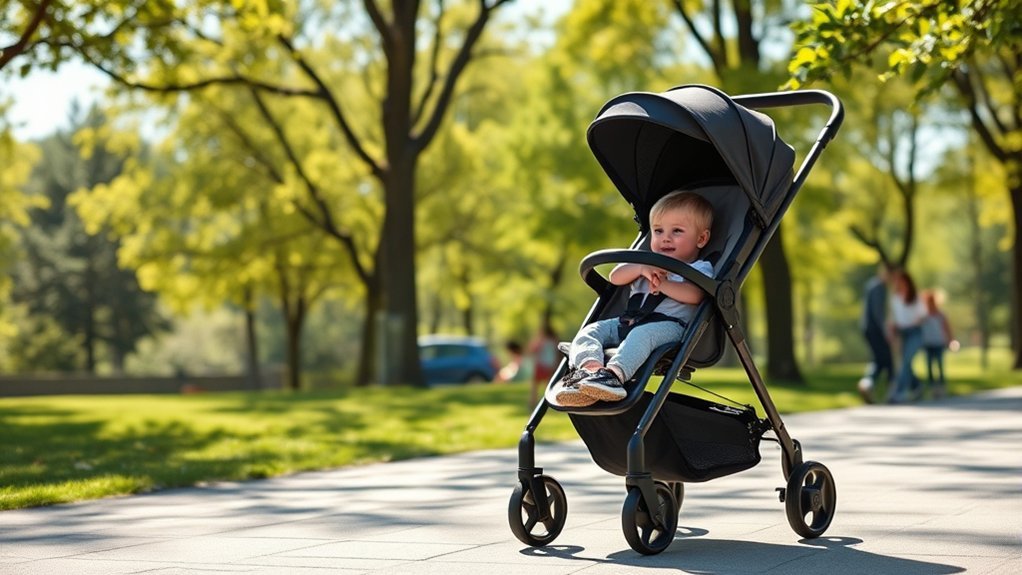
Some strollers are better suited to larger toddlers because they have roomier seats, taller seat backs, stronger frames, larger wheels, or higher stated child-weight limits. Sit-and-stand designs can also give an older sibling the option to walk and then ride briefly when the product allows it.
Do not choose a stroller solely because a marketing page describes it as suitable for “big kids.” The manufacturer’s child-weight limit, height limit, seat fit, harness fit, and instructions are more important.
Features of Toddler Strollers
When an older toddler still needs occasional stroller support, focus on fit and safe handling rather than infant-oriented extras.
Useful features include:
- Adjustable seat or leg support: Can improve comfort as a child grows.
- Standing platforms: Useful when the manufacturer specifically approves the platform for the child’s age and weight.
- Good maneuverability: Larger children add weight, making steering quality more noticeable.
- A suitable child-weight limit: Check the limit for the exact seat or platform being used.
- Roomy seat dimensions: The child should not be cramped against the frame or canopy.
- Correctly fitting restraint system: The harness must still adjust and buckle as the manufacturer intends.
- Reliable brakes and stable frame: These are important safety features at any child size.
The American Academy of Pediatrics’ HealthyChildren guidance recommends an easy-to-operate brake, a stable base, correct restraint use, and avoiding heavy bags on the handle that could make a stroller tip.
Examples of Current Stroller Limits
Specifications below were checked against manufacturer information on September 11, 2026. Always recheck the exact model and manual before use because manufacturers can revise products and limits.
- Baby Jogger City Mini GT2: supports a child up to 65 lb.
- Bumbleride Indie: child weight capacity 55 lb, with a listed maximum height of 40 inches.
- Thule Urban Glide 3: maximum child weight 49 lb. Its 75 lb figure is the maximum total stroller capacity, not the child limit.
- Joovy Big Caboose: current manufacturer specifications list 40 lb per front seat and 45 lb for the rear bench/standing platform.
- Baby Trend Sit N Stand Ultra: maximum 50 lb in the front seat and 50 lb for the rear stand-on/jump-seat position; the rear position is intended for a child at least 2.5 years old and no taller than 40 inches.
These examples show why a single “older toddler stroller limit” is misleading. Two strollers that look similar can have very different child, cargo, height, and seating-position limits.
What Is the Weight Limit for Most Strollers?
There is no universal stroller weight limit. The safe number is the limit printed in the instructions or labeling for your exact stroller and seating position.
Current manufacturer examples vary considerably: the Thule Urban Glide 3 lists a 49 lb maximum child weight, the Bumbleride Indie lists 55 lb, and the Baby Jogger City Mini GT2 lists 65 lb. Tandem and sit-and-stand strollers may use different limits for the front seat, rear seat, bench, and standing platform.
Also distinguish child weight from total stroller capacity. A total-capacity figure can include the child plus cargo. For example, Thule lists 49 lb as the Urban Glide 3 child limit but 75 lb as its maximum total stroller capacity.
Before using a stroller with an older child:
- Read the current manufacturer manual and product label.
- Check the limit for the exact seat, bench, or platform being used.
- Check any listed height or age restriction as well as weight.
- Make sure the harness or restraint still fits correctly.
- Stay within basket and cargo limits.
- Do not hang heavy bags from the handle unless the manufacturer specifically permits it.
Is It Safe for My Older Child to Ride in a Stroller?
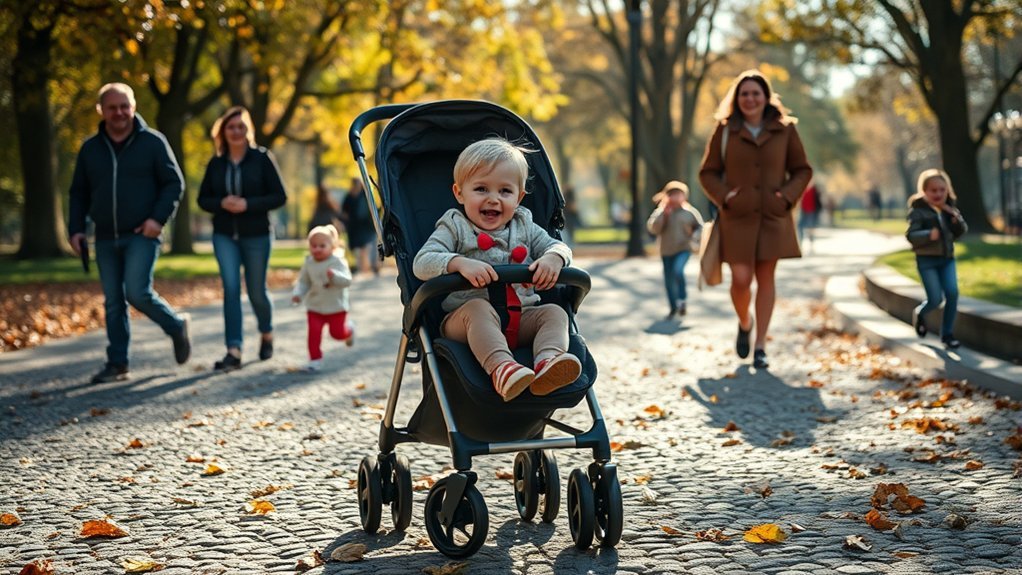
An older child can continue riding if the stroller is designed for their size and seating position and is used according to the manufacturer’s instructions. Age alone does not determine whether the stroller is safe.
The U.S. Consumer Product Safety Commission’s stroller requirements address hazards involving stability, brakes, restraint systems, folding and locking mechanisms, structural integrity, wheels, and other components. The American Academy of Pediatrics’ HealthyChildren guidance also recommends correct harness use, using the brake when stopped, choosing a stable stroller, and keeping heavy bags off the handle.
For an older toddler or preschooler, confirm that the seat is not cramped, the child has not exceeded any weight or height limit, and the restraint still fits as intended. Stop using the stroller if the frame, brakes, wheels, latches, harness, or folding system are damaged.
If you buy or inherit a used stroller, check its model information and current recall status before using it.
Can I Use a Stroller for My Child if We’re Going on a Long Trip?

Yes. A stroller can be practical on a long trip even when your child normally walks during everyday errands, as long as the child still fits within the stroller’s limits.
Travel often demands much more walking than a normal day. A young child may cover airports, sightseeing routes, queues, parking areas, unfamiliar sidewalks, and long attractions while also dealing with schedule changes and less rest.
Reasons to bring a stroller can include:
- Rest: Your child has a place to take a supervised break when fatigue sets in.
- Crowd management: A stroller can help keep a young child close in a busy environment.
- Carrying essentials: The approved storage area can hold supplies within its stated cargo limit.
- Backup flexibility: Your child can walk when energetic and ride when the outing becomes too demanding.
- Family logistics: A stroller can make it easier to manage siblings, luggage, or long transfers.
Even if your child is over three, decide based on the distance, environment, fatigue, and your child’s actual ability that day rather than assuming they must either walk everywhere or ride everywhere.
What if My Child Won’t Give Up the Stroller?
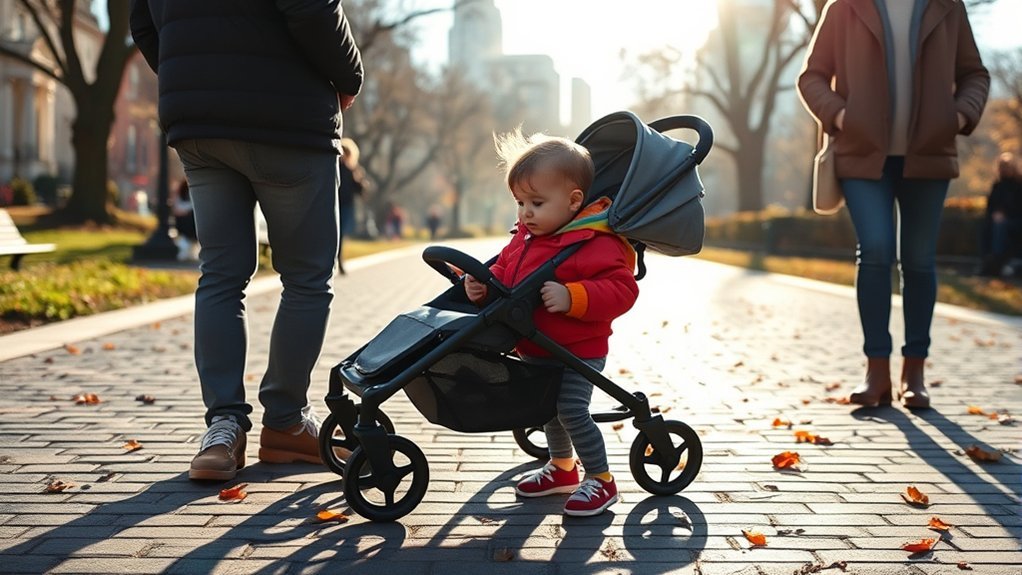
If your child resists giving up the stroller, avoid making it a power struggle. The stroller may feel comfortable, familiar, and predictable, or your child may simply be unsure how far they will have to walk.
Start by gradually reducing stroller use. Begin with short distances, then increase the walking portion as your child becomes comfortable. You might say, “We’ll walk to the corner, then decide if you need a break,” or “You walk inside the store, and we’ll keep the stroller as backup.”
Use specific praise when your child follows safety directions, holds hands, waits at a curb, stays nearby, or completes a planned walking section.
Fun activities such as nature walks, color spotting, counting steps, or looking for birds can make walking more interesting without turning it into a competition.
If your child frequently chooses walking and comfortably completes normal short outings, you can leave the stroller home more often. If they are consistently exhausted, unsafe, or overwhelmed, shorten the walking goal and try again under easier conditions.
Stroller Transition Mistakes to Avoid
A stroller transition can feel harder when expectations are unclear or the change happens too fast.
- Stopping suddenly: Removing the stroller from every outing at once can create unnecessary resistance.
- Starting with a long trip: A full-day outing is not the best test of normal stroller-free readiness.
- Ignoring genuine tiredness: Fatigue after an unusually long day does not mean your child failed the transition.
- Forgetting safety practice: Walking near roads and crowds requires skills such as stopping, waiting, and holding hands.
- Comparing children: Siblings and friends may have different stamina, development, routines, or additional needs.
- Using the stroller as a threat: Keep the stroller a practical transportation tool rather than a punishment or reward.
- Ignoring manufacturer limits: A child who exceeds a stroller’s limit needs a different solution even if they still want to ride.
The goal is not to reach a particular birthday without a stroller. It is to help your child walk more when appropriate while keeping transportation safe and realistic.
Frequently Asked Questions
What are the signs my child is becoming too big for a stroller?
Your child may be outgrowing the stroller if they reach its weight or height limit, no longer fit the harness correctly, look cramped in the seat, or cannot use the approved seating position as intended. Wanting to walk more often is a readiness sign, but exceeding a manufacturer limit is a safety stop.
Can I use a stroller for multiple children at different ages?
Yes, if the stroller is designed for that configuration. Double, tandem, and sit-and-stand models can accommodate children of different ages, but each seat, bench, board, or platform may have its own age and weight limits.
How do I choose a stroller suitable for an older child?
Check the exact child-weight and height limits, seat dimensions, harness fit, brakes, wheel design, folded size, and cargo limits. A high total stroller capacity does not automatically mean the full amount can be used as child weight.
Are there alternatives to strollers for older toddlers?
Yes. Depending on the environment and the child, options may include walking, a child-carrying product, a child-rated wagon, a scooter or balance bike in an appropriate traffic-free area, or an approved ride-on stroller board. Follow the age, weight, safety-equipment, and supervision requirements for the specific option.
What safety features should I look for in a stroller for older kids?
Look for a restraint system that still fits your child, reliable brakes, a stable frame, secure folding and locking mechanisms, sound wheels, and clearly stated weight and height limits. Follow the manufacturer’s instructions for the exact seating position.
Should I stop using a stroller exactly at age 3?
No. Age 3 is a practical time to encourage more walking, not a universal cutoff. A stroller can still be useful for long outings, travel, crowds, fatigue, illness, additional needs, or other demanding situations if your child remains within the stroller’s limits.
Is 4 too old for a stroller?
Not automatically. Many 4-year-olds walk through normal daily routines but still use a stroller for airports, theme parks, long sightseeing days, illness, crowds, or additional mobility needs. The important safety question is whether the child still fits within the exact stroller’s limits.
How do I handle meltdowns during the stroller transition?
Keep walking goals short, explain the plan before the outing, give reasonable breaks, and praise specific safe behavior. If your child is exhausted, hungry, ill, or overstimulated, adjust the plan and try a shorter stroller-free outing another day.
Conclusion
Deciding when to stop using a stroller is better treated as a gradual transition than a birthday deadline. Use the Fit, Function, Context test: confirm that your child still fits safely, consider what they can comfortably walk during an ordinary day, and decide whether the specific outing genuinely requires stroller support.
Around age 3, many children can begin walking more during routine short outings. That does not make a stroller inappropriate for travel, long days, crowds, illness, fatigue, additional mobility needs, or other demanding situations.
Most importantly, follow the manufacturer’s exact limits. Once your child exceeds the stroller’s weight or height limit or can no longer use its restraint system correctly, stop using that stroller and choose a safer transportation option.