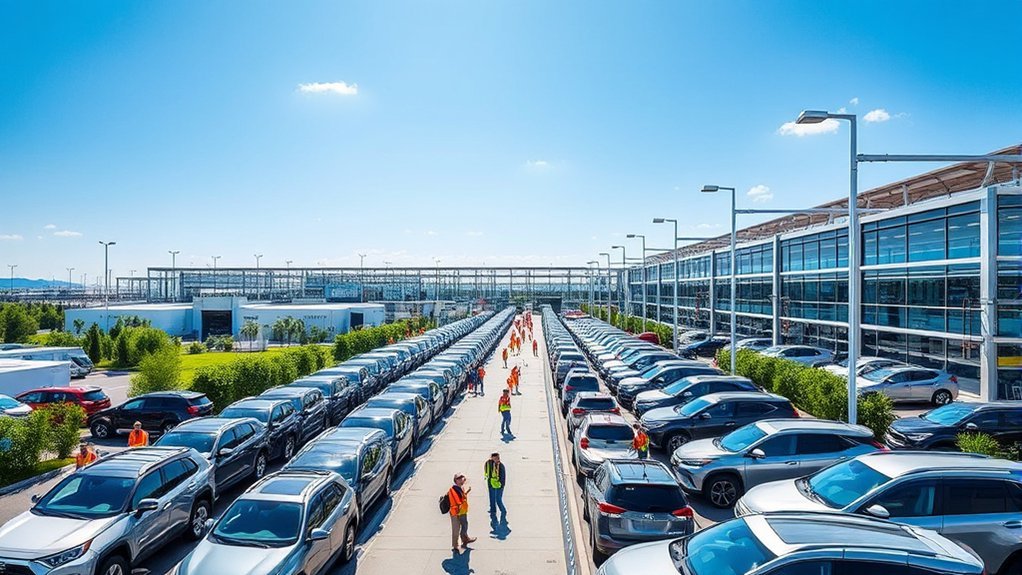
Toyota RAV4s are built in several countries, not at one single factory. As of 2026, current RAV4 production includes plants in the United States, Canada, Japan, and China, with the exact source depending on the model, powertrain, destination market, and production schedule. For North American buyers, important plants include Georgetown, Kentucky; Cambridge and Woodstock, Ontario; and the Takaoka and Nagakusa plants in Japan.
Quick Answer
Toyota RAV4s are manufactured in multiple locations. Current plants include Georgetown, Kentucky; Cambridge and Woodstock, Ontario; and Takaoka and Nagakusa in Aichi, Japan. Toyota also lists RAV4 production in China for that market. Your specific RAV4’s VIN can identify its country and assembly plant.
Key Takeaways
- Toyota does not build every RAV4 in Kentucky; RAV4 production is spread across several countries and plants.
- Toyota Kentucky in Georgetown currently builds the RAV4 Hybrid and began assembling the all-new generation there in June 2026.
- Toyota Motor Manufacturing Canada builds RAV4s in Ontario and started production of the sixth-generation RAV4 in January 2026.
- Japan remains an important RAV4 production base, including Toyota’s Takaoka Plant and Toyota Industries’ Nagakusa Plant.
- The most reliable way to identify the factory for one specific vehicle is to check its VIN with the official NHTSA VIN Decoder.
Where Toyota RAV4s Are Made in 2026
Toyota’s manufacturing network allows the company to build RAV4s closer to major markets while sharing production among several factories. Plant assignments can change between model years, so a statement that was accurate for an older RAV4 may not describe a 2026 model.
| Country | Plant / Location | Current RAV4 Role |
| United States | Toyota Motor Manufacturing Kentucky, Georgetown, Kentucky | RAV4 Hybrid production |
| Canada | Toyota Motor Manufacturing Canada, Cambridge and Woodstock, Ontario | Major North American RAV4 and RAV4 Hybrid production |
| Japan | Takaoka Plant and Toyota Industries Nagakusa Plant, Aichi | RAV4 production, including Japanese-market and export vehicles |
| China | FAW Toyota Motor Changchun Fengyue operations | RAV4 and hybrid production primarily serving the Chinese market |
Toyota Motor Manufacturing Canada began producing the all-new sixth-generation RAV4 in January 2026. Toyota said at the time that its Canadian operation had produced more than four million RAV4s since its first one was assembled there in 2009.
Toyota Motor Manufacturing Canada has produced more than four million RAV4s since 2009 and began building the sixth-generation model in January 2026.
In the United States, Toyota Kentucky expanded its role on June 22, 2026, when it began assembling the all-new RAV4 Hybrid. Toyota’s current Kentucky facility information lists the RAV4 Hybrid alongside the Camry Hybrid and the plant’s engine and component operations.
How to Tell Where Your RAV4 Was Made
The most reliable answer for an individual vehicle comes from its 17-character Vehicle Identification Number, or VIN. You can find the VIN at the base of the windshield, on the driver’s door-area certification label, and on registration or insurance documents.
For the 2026 RAV4 and RAV4 Plug-In Hybrid, Toyota’s filing with the U.S. National Highway Traffic Safety Administration lists these World Manufacturer Identifier codes:
- JTM — Toyota Motor Corporation, Japan
- 2T3 — Toyota Motor Manufacturing Canada
- 4T3 — Toyota Motor Manufacturing Kentucky, United States
The 11th VIN character can identify the specific factory. Toyota’s 2026 filing lists codes for Cambridge and Woodstock in Canada, Georgetown in Kentucky, and the Nagakusa and Takaoka plants in Japan.
Note: VIN codes can change with model years and production plans. For a specific vehicle, use the official NHTSA VIN Decoder rather than relying only on a general country-code list.
Why the Kentucky Powertrain Facility Matters in Production
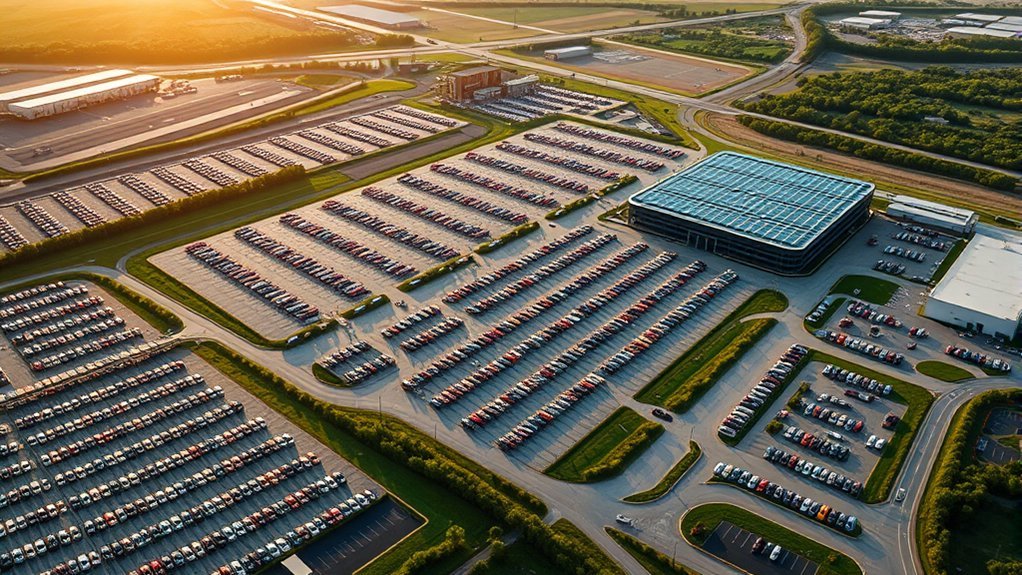
The powertrain operation at Toyota Motor Manufacturing Kentucky is an important part of Toyota’s North American manufacturing network, but it is important to describe its role accurately. Toyota currently lists the Georgetown operation as producing four-cylinder and V6 engines along with several powertrain-related components.
The plant should not be described as producing all RAV4 engines and transmissions on site. Toyota’s North American manufacturing information separately identifies Toyota Motor Manufacturing West Virginia as an engine, transmission, and hybrid-transaxle operation.
Kentucky has continued to expand its engine capabilities. In 2023, Toyota launched a flexible engine line capable of producing different engine types on the same line, including 2.4-liter turbo and 2.5-liter engines for Toyota and Lexus hybrid applications. Toyota later announced another investment in hybrid-compatible four-cylinder engine capacity scheduled for production in 2027.
That flexibility helps Toyota adjust production as demand changes without implying that every RAV4 powertrain component is manufactured in Georgetown.
Essential Steps in the Toyota RAV4 Manufacturing Process
Exact equipment and line layouts differ between factories, but vehicle production generally moves through body forming, welding, painting, component installation, final assembly, and quality checks. Toyota plants also operate under the broader Toyota Production System, which emphasizes eliminating waste while building quality into the process.
Raw Material Preparation
Vehicle production begins with carefully specified materials and stamped body panels. Large presses form sheet metal into components such as doors, body sides, hoods, and structural pieces.
Those pieces then move into body assembly, where sections are joined to create the vehicle’s body structure. Robots can perform highly repeatable welding and handling operations, while team members monitor equipment, inspect work, and respond to abnormalities.
Rather than assuming every RAV4 factory uses identical machines or transport systems, it is more accurate to focus on the production principles Toyota applies across its manufacturing network.
Assembly Line Process
After the body is formed and joined, it proceeds through corrosion protection and paint processes before final assembly. During assembly, workers and automated equipment install major systems and components such as the powertrain, suspension, electrical equipment, dashboard, interior trim, glazing, seats, wheels, and other parts.
Toyota’s production system relies heavily on Just-in-Time. The goal is to provide the necessary parts in the necessary quantity when they are needed rather than keeping excessive inventory beside the line.
Production flexibility is also increasingly important. Toyota has invested in flexible manufacturing and new equipment at Kentucky and other plants so factories can respond to changes in vehicle and powertrain demand.
Quality Control Measures
Toyota’s documented production philosophy includes jidoka, sometimes described as automation with a human touch. When a machine, process, or worker detects an abnormality, production can be stopped so the problem is addressed instead of knowingly allowing a defect to continue through the line.
This principle works together with kaizen, or continuous improvement. Team members identify problems, investigate causes, and refine processes over time.
Quality checks can occur throughout body, paint, assembly, and completed-vehicle operations. The exact inspection equipment differs by plant, so unsupported claims about proprietary systems should not be treated as universal RAV4 manufacturing features.
Innovations That Enhance Efficiency at TMMK
Toyota Kentucky has undergone major manufacturing upgrades as the company expands hybrid and battery-electric vehicle production in the United States.
One verified example is the flexible engine line introduced in 2023, which allows multiple engine types to be produced on the same line. Toyota has also invested in a new advanced paint facility designed to improve production efficiency, process accuracy, finish quality, and manufacturing flexibility.
Toyota Kentucky’s recent improvements focus on flexible engine production, more efficient paint operations, electrification, and the ability to adapt the plant as Toyota’s vehicle mix changes.
In June 2026, Toyota Kentucky also received a U.S. Department of Energy Better Project Award for an existing paint-shop project. Toyota reported that the redesign reduced outside airflow into the affected fresh-air system by more than 55% and reduced annual paint-booth energy costs by more than 80%.
These documented changes provide stronger evidence of manufacturing innovation than unsupported references to unnamed or unverifiable data platforms.
How RAV4 Manufacturing Impacts the Kentucky Community
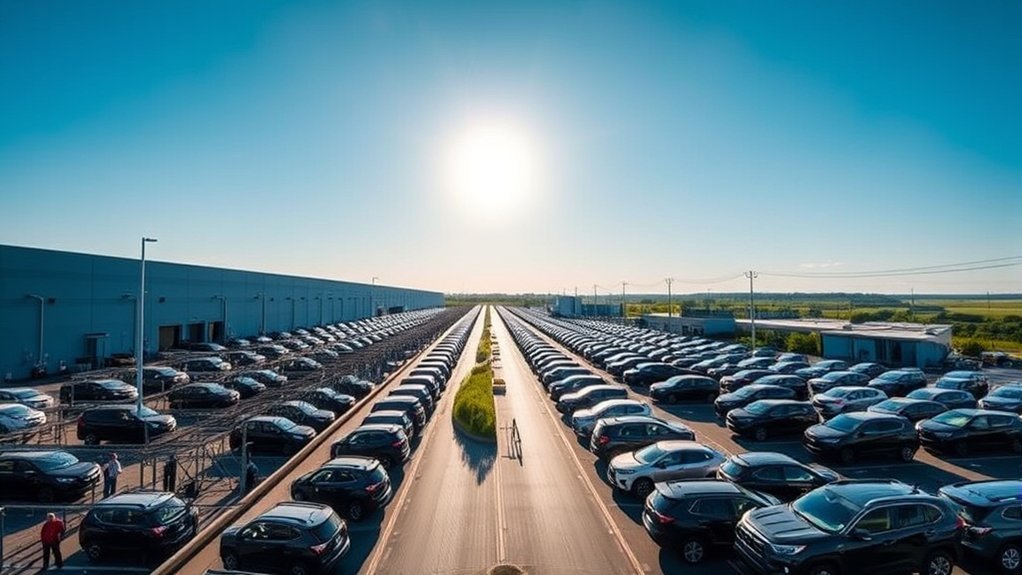
RAV4 Hybrid production is one part of a much larger Toyota manufacturing operation in Georgetown. Toyota’s current plant information lists approximately 10,000 employees at Toyota Kentucky, making the facility an important employer in the region.
- Toyota Kentucky assembles the RAV4 Hybrid and Camry Hybrid.
- The site also manufactures engines and a range of other components.
- Toyota supports manufacturing education, workforce-development, and community programs in Kentucky.
- Expansion projects can create additional skilled manufacturing and technical jobs.
Toyota reports that it has invested billions of dollars in the Georgetown operation since breaking ground in 1986. Its community role therefore extends well beyond RAV4 production alone.
The connection between the plant and the surrounding area is clearest in employment, workforce training, education partnerships, supplier activity, and long-term capital investment rather than vague claims that one vehicle program alone drives Kentucky’s economy.
What’s Next for RAV4 Production and Sustainability?
The biggest recent RAV4 production change is already underway. Toyota Motor Manufacturing Canada began building the sixth-generation RAV4 in January 2026, followed by Toyota Kentucky’s start of all-new RAV4 Hybrid assembly in June 2026.
At the same time, Toyota is investing in lower-emission manufacturing, renewable electricity, hybrid production capacity, batteries, and battery-electric vehicles across North America.
Future Electric Vehicle Production
Toyota Kentucky is expanding into battery-electric vehicle manufacturing, but that development should not be described as confirmation of an electric RAV4.
Toyota announced that Kentucky would assemble a new three-row battery-electric SUV, and in February 2026 the company identified the next-generation 2027 Toyota Highlander as an all-electric model assembled at Toyota Motor Manufacturing Kentucky.
Note: Kentucky’s battery-electric SUV program and its RAV4 Hybrid program are separate. Toyota has not identified the Kentucky-built BEV described here as an electric RAV4.
Kentucky is also adding battery-pack assembly capability, while Toyota’s battery plant in North Carolina supplies modules for several electrified Toyota vehicles. These investments give Toyota more flexibility as demand shifts among hybrids, plug-in hybrids, and battery-electric vehicles.
Enhanced Sustainability Practices
Toyota Kentucky has also invested in renewable energy and manufacturing-efficiency projects. In October 2025, Toyota opened a nearly 30-acre solar installation at the Georgetown facility. Toyota said the system is expected to generate about 15 million kilowatt-hours of electricity per year, equivalent to the annual electricity use of roughly 1,400 average U.S. homes.
The solar project forms part of Toyota’s broader North American environmental strategy. The company has set a goal of carbon neutrality at its North American facilities by 2035 while continuing to reduce operational energy use and increase renewable electricity.
Manufacturing improvements can also reduce environmental impact without changing the vehicle itself. Paint-process efficiency, lower energy demand, logistics improvements, waste reduction, and renewable electricity are all relevant parts of Toyota’s factory-level sustainability work.
How Community Engagement Supports Toyota’s Manufacturing Workforce
Toyota Motor Manufacturing Kentucky has long participated in education and workforce-development programs in the region. These programs help prepare students and workers for careers involving manufacturing, robotics, maintenance, engineering, and other technical fields.
- Career education: Toyota supports programs that introduce students to modern manufacturing careers.
- Technical training: Workforce programs help develop maintenance, electrical, robotics, and manufacturing skills.
- School partnerships: Educational investment can strengthen the future pipeline of skilled workers.
- Community investment: Toyota funds nonprofit and educational initiatives in communities surrounding its operations.
Community programs should not be confused with the engineering process itself. Production technology is developed through Toyota’s manufacturing, engineering, quality, and production teams. Community and education programs primarily support the people and skills needed to operate and improve those systems over time.
Sources
- Toyota Motor Manufacturing Kentucky — current Kentucky products, employment, production and investment information.
- Toyota Motor Manufacturing Canada — January 2026 start of sixth-generation RAV4 production in Canada.
- Toyota Motor Corporation — Japanese Production Sites — current Japanese plant and model information.
- Toyota Motor Corporation — Asia Manufacturing Operations — current RAV4 production information for China.
- National Highway Traffic Safety Administration VIN Decoder — official tool for identifying vehicle manufacturing information from a VIN.
- Toyota Kentucky Powers Up With New Solar Field — Kentucky renewable-energy project and generation estimates.
Frequently Asked Questions
What specific RAV4 models are produced at Toyota’s RAV4 plants?
Production differs by plant, model year, powertrain, and destination market. Toyota Kentucky currently builds the RAV4 Hybrid. Toyota Motor Manufacturing Canada builds RAV4 and RAV4 Hybrid models, while Japanese plants also manufacture RAV4 variants. Do not assume that every trim or powertrain comes from the same factory.
How many employees work at the RAV4 manufacturing plants?
There is no single RAV4 workforce because the model is produced at several larger Toyota manufacturing operations. Toyota currently lists about 10,000 employees at its Georgetown, Kentucky facility, while Toyota Motor Manufacturing Canada employs more than 8,500 people across its Ontario operations. Those employees build other Toyota and Lexus models in addition to the RAV4.
What environmental practices are used at these manufacturing facilities?
Practices vary by plant but include energy-efficiency improvements, renewable electricity, waste reduction, process optimization, and lower-emission manufacturing projects. Toyota Kentucky, for example, opened a nearly 30-acre solar installation in 2025 and has implemented energy-saving improvements in its paint operations.
How does Toyota ensure quality control in RAV4 production?
Toyota uses principles from the Toyota Production System, including jidoka, Just-in-Time, and continuous improvement. Jidoka allows a process to stop when an abnormality is detected so the problem can be addressed rather than intentionally passing a defect to the next stage. Plants also conduct inspections during production and before completed vehicles are released.
Are there plans for new RAV4 manufacturing locations in the U.S.?
As of September 2026, Toyota has not announced another U.S. RAV4 assembly location beyond Georgetown, Kentucky. Toyota is expanding other U.S. manufacturing operations, but those investments should not be described as new RAV4 factories unless Toyota specifically assigns RAV4 production to them.
How can I tell whether my RAV4 was built in Japan, Canada, or the United States?
Check the vehicle’s VIN. For 2026 U.S.-market RAV4s, Toyota’s NHTSA filing uses JTM for Japan, 2T3 for Canada, and 4T3 for Toyota Kentucky. The 11th VIN character identifies the specific assembly plant. For the most reliable result, enter the complete VIN in NHTSA’s official VIN Decoder.
Is a Japan-built RAV4 automatically better than one made in Canada or Kentucky?
No reliable evidence shows that assembly country alone makes one RAV4 consistently better. Toyota applies its production and quality principles across its manufacturing network. When evaluating an individual vehicle, its condition, maintenance history, recalls, repairs, build date, and inspection results are more useful than country of assembly alone.
Conclusion
The Toyota RAV4 has a genuinely global manufacturing footprint. In 2026, important production locations include Toyota Kentucky in Georgetown, Toyota Motor Manufacturing Canada’s Cambridge and Woodstock facilities, Japan’s Takaoka and Nagakusa plants, and Toyota’s RAV4 operation in China. Kentucky plays an important role by building the RAV4 Hybrid, but it is only one part of that network. If you want to know exactly where a particular RAV4 was assembled, its VIN—and an official VIN decoder—is more reliable than assuming every vehicle came from the same country or factory.