
If you want a Toyota SUV smaller than the RAV4 that is easier to park and manage, you have two main mainland U.S. choices: the Corolla Cross and the all-electric C-HR. The Corolla Cross favors familiar gas or hybrid ownership, while the C-HR prioritizes electric performance and charging-based driving.
Quick Answer
The 2026 Toyota Corolla Cross and 2026 Toyota C-HR are the main U.S. Toyota alternatives that are smaller than the RAV4. Choose the Corolla Cross for gas or hybrid convenience and practical cargo access. Choose the C-HR for all-electric power, standard AWD, quick acceleration, and up to 287 miles of EPA-estimated range.
Key Takeaways
- The Corolla Cross is the most conventional smaller RAV4 alternative, with gas and hybrid choices.
- The current U.S. C-HR is an all-electric SUV, not the gasoline C-HR sold during earlier model years.
- The Corolla Cross Hybrid earns up to an EPA-estimated 42 combined MPG.
- The C-HR has standard AWD, 338 combined horsepower, and up to 287 miles of EPA-estimated range.
- The RAV4 remains better when you need more cargo room, greater towing capability, or plug-in-hybrid availability.
Last updated: July 15, 2026. This guide covers vehicles marketed by Toyota in the mainland United States. Specifications, prices, and availability may vary by trim, configuration, and region.
Toyota SUV Smaller Than the RAV4: Your Two U.S. Options
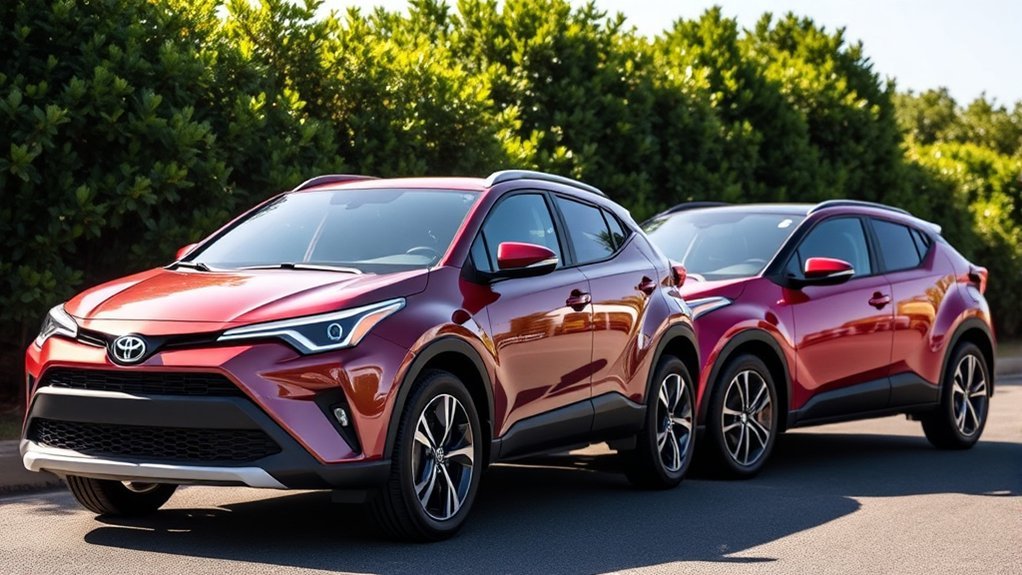
The two clearest current Toyota alternatives are the Corolla Cross and the C-HR. Both are positioned as more city-friendly choices than the RAV4, but their powertrains and intended uses differ substantially.
Note: “Smaller” does not mean every exterior measurement is lower. Compare overall length, body and mirror width, turning circle, garage clearance, and cargo-opening shape for the exact trim you plan to buy.
| Model | Powertrain | Toyota-listed starting MSRP | Key advantage | Best for |
|---|---|---|---|---|
| Corolla Cross | Gas or hybrid | $25,235 | Familiar ownership, useful cargo access, and strong hybrid efficiency | Commuters, small families, renters, and drivers without home charging |
| C-HR | Battery electric | $37,000 | Standard AWD, strong acceleration, and no gasoline use | EV buyers with reliable home, workplace, or nearby public charging |
| RAV4 | Hybrid or plug-in hybrid | $31,900 | More cargo capacity and higher available towing capability | Families, road-trippers, and drivers who carry more equipment |
Starting MSRPs were listed by Toyota on July 15, 2026. Destination charges, taxes, registration, dealer fees, options, and regional pricing can change the final amount.
Note: Older U.S. C-HR specifications do not describe the current vehicle. Toyota previously sold a gasoline C-HR, but the 2026 U.S. model revives the name as an all-electric SUV.
U.S. Versus International Toyota SUVs
Toyota sells other small SUVs in international markets, including models such as the Yaris Cross and Raize. They are not part of Toyota’s current mainland U.S. new-vehicle lineup, so U.S. shoppers should focus on the Corolla Cross and C-HR when looking below the RAV4.
Advantages of the Toyota Corolla Cross
The Corolla Cross is the easiest recommendation when you want a smaller Toyota SUV without changing how you fuel or plan long trips. Toyota offers both a conventional gas engine and a hybrid powertrain, giving you more flexibility than an EV-only model.
According to Toyota’s 2026 Corolla Cross information, the hybrid reaches up to an EPA-estimated 42 combined MPG. Gas models can return up to an EPA-estimated 32 combined MPG, depending on configuration.
Compact Urban Design
The Corolla Cross is easier to place in narrow parking spaces and crowded streets than the larger RAV4. It still seats up to five and uses 60/40-split folding rear seats, helping you balance passengers and cargo.
Toyota lists 8.1 inches of ground clearance, which can help on steep driveways, poorly maintained roads, and light gravel routes. However, the Corolla Cross is primarily a road-focused crossover rather than a dedicated off-road vehicle.
Gas and Hybrid Options
Choose the gas model when a lower initial cost and simple refueling matter most. Choose the hybrid when you drive frequently in traffic and want better fuel economy without plugging in.
Gas versions offer front-wheel drive or available all-wheel drive, depending on trim. The hybrid combines its gas engine with electric motors and uses all-wheel drive, giving you added traction without requiring external charging.
Key Features of the Toyota Corolla Cross
Cargo and Everyday Versatility
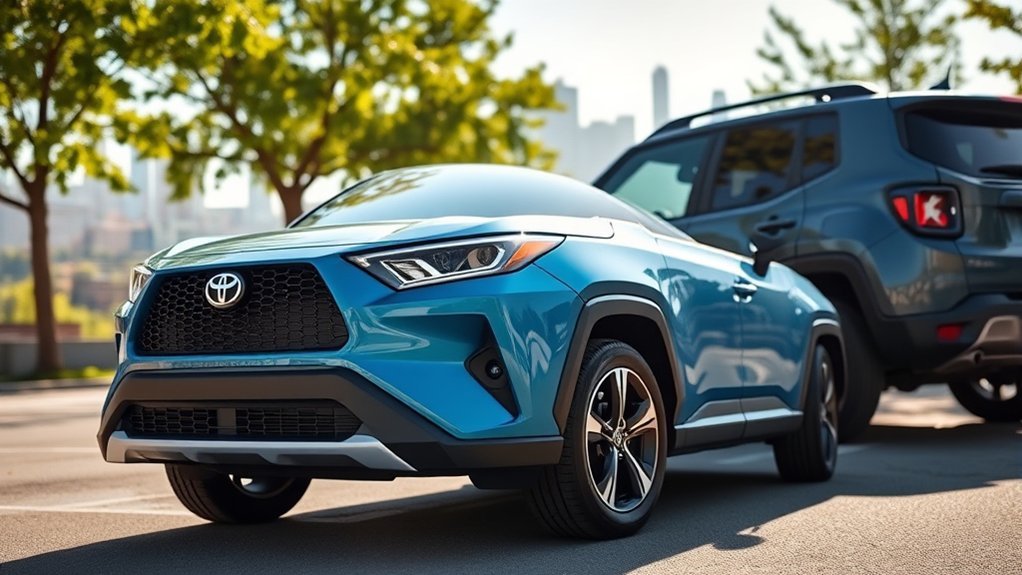
The Corolla Cross favors a practical, upright body rather than the C-HR’s sportier roofline. That shape generally makes it easier to load groceries, strollers, luggage, pet crates, and other tall items.
It can also tow up to 1,500 pounds when properly equipped. That capacity may suit a small utility trailer or lightweight recreational equipment, but you should confirm the rating, tongue-weight limit, hitch requirements, and trailer-brake rules for your exact trim.
Advanced Safety Features
The 2026 Corolla Cross includes Toyota Safety Sense 3.0. The suite includes technologies designed to support collision avoidance, lane awareness, adaptive cruising, road-sign recognition, and nighttime visibility.
Available features can also include a blind-spot monitor, rear cross-traffic alert, and parking assistance. Equipment varies by trim, so compare the actual window sticker and specification list rather than relying only on the model name.
Warning: Driver-assistance systems have operating limits and do not replace attentive driving. Review the owner’s manual before relying on any safety feature.
Advantages of the Toyota C-HR for Urban Drivers
The current C-HR takes a very different approach. It is a battery-electric SUV with standard all-wheel drive, 338 combined system horsepower, and responsive acceleration.
Toyota states that the C-HR can accelerate from 0 to 60 mph in 4.9 seconds. The SE trim has an EPA-estimated range of up to 287 miles, while the XSE is rated at up to 273 miles because its equipment and larger wheels affect efficiency.
The C-HR suits drivers who can charge regularly at home, work, or dependable public stations. It may be less convenient when you live in an apartment without reliable charging or make frequent trips through areas with limited charging infrastructure.
Charging the C-HR
The C-HR supports Level 1, Level 2, and DC fast charging. Toyota states that a compatible DC fast charger can take the battery from approximately 10% to 80% in around 30 minutes under ideal conditions.
Its 11-kW onboard AC charger can charge from approximately 10% to 100% in around seven hours on a suitable Level 2 connection. Level 1 charging through a household outlet is better for short daily mileage and topping up than for quickly replenishing a low battery.
Actual charging time and driving range depend on battery temperature, charger output, starting charge, weather, speed, climate-control use, and other conditions. Public charging prices also vary by network and location.
Note: Before buying an EV, ask a qualified electrician whether your home can support the charger you want. Apartment and condominium residents should also confirm parking-space access, billing rules, and installation approval.
C-HR Safety and Technology
The C-HR includes Toyota Safety Sense 3.0 and a 14-inch Toyota Audio Multimedia display. Standard AWD and adjustable regenerative braking also distinguish it from the previous gasoline C-HR.
Regenerative braking recovers some energy as the vehicle slows. You can adjust the amount of deceleration with the steering-wheel paddles, although the C-HR still uses conventional brakes when required.
Comparing the Toyota RAV4, Corolla Cross, and C-HR
The RAV4 remains the better all-around utility vehicle, while the Corolla Cross and C-HR prioritize easier urban use. Your decision should focus on cargo needs, powertrain preference, charging access, purchase price, and towing requirements.
| Category | Corolla Cross | C-HR | RAV4 |
|---|---|---|---|
| Power source | Gas or hybrid | Battery electric | Hybrid or plug-in hybrid |
| Efficiency highlight | Up to 42 combined MPG for the hybrid | Up to 287 miles of EPA-estimated range | Up to an estimated 47 city/40 highway MPG on selected trims |
| Drivetrain | FWD or AWD, depending on configuration | Standard AWD | FWD or AWD, depending on grade |
| Cargo priority | Practical upright access for everyday errands | Useful space, but the sportier roofline can reduce flexibility | Up to 37.8 cubic feet behind the rear seats |
| Towing highlight | Up to 1,500 pounds when properly equipped | Toyota’s U.S. overview does not advertise a towing capacity; do not tow unless the owner’s manual permits it | Up to 3,500 pounds when properly configured |
| Best reason to choose it | Simple, efficient daily transportation | Electric performance and zero gasoline use | More room and capability |
Top Competitors to the Toyota Corolla Cross and C-HR
Your best alternatives depend on the powertrain you want. Model-year availability can change quickly, especially among EVs, so confirm current inventory before comparing prices or incentives.
Gas and Hybrid Competitors
- Honda HR-V: A road-focused small SUV with straightforward controls and a roomy cabin for its class.
- Subaru Crosstrek: A strong choice when standard all-wheel drive and rough-road confidence matter.
- Mazda CX-30: A more premium-feeling option with responsive handling and a smaller cargo area.
- Kia Niro: An efficiency-focused alternative available with electrified powertrains.
Electric Competitors
- Subaru Uncharted: A closely related electric crossover for buyers comparing AWD EVs.
- Nissan Leaf: The all-new 2026 model is an electric subcompact crossover with a conventional front-wheel-drive layout.
- Hyundai Kona Electric: A city-friendly EV with a conventional crossover shape; verify current model-year availability.
- Volvo EX30: A small, performance-focused EV that may have limited U.S. availability depending on model year and local inventory.
Compare cargo measurements, rear-seat comfort, charging speed, insurance costs, warranty coverage, and local dealer support before deciding. A vehicle that looks competitive on paper may not fit your passengers, parking space, or routine.
Comparing Fuel Efficiency and Electric Range
MPG and electric range measure different things, so you should not place them in a single ranking without context. Fuel cost also depends on local gasoline and electricity rates, charging losses, weather, and how much highway driving you do.
- Corolla Cross gas: Best when fast refueling and a familiar ownership experience matter most.
- Corolla Cross Hybrid: Best when you want strong city efficiency without charging.
- C-HR: Best when you can charge regularly and want to eliminate gasoline use.
- RAV4 Hybrid: Best when you need more space while retaining good fuel economy.
- RAV4 Plug-in Hybrid: Best when you want electric commuting plus gasoline backup for longer trips.
The most efficient vehicle for your life is the one that matches your charging access, trip length, passenger load, and driving conditions.
Safety Features in Smaller Toyota SUVs
The Corolla Cross and C-HR include Toyota Safety Sense 3.0. These systems can support braking, lane guidance, adaptive cruising, road-sign awareness, and other driving tasks.
The redesigned 2026 RAV4 introduces Toyota Safety Sense 4.0. Exact functions and availability can differ by trim, software status, and subscription requirements, so review the official specification sheet and owner’s manual for the vehicle you plan to buy.
Toyota Safety Sense Features
Common Toyota Safety Sense functions may include:
- A pre-collision system with pedestrian detection
- Lane-departure alert and steering assistance
- Lane-tracing or lane-keeping support
- Adaptive cruise control
- Automatic high beams
- Road-sign assistance
Enhanced Driver Assistance Systems
Higher trims may add blind-spot monitoring, rear cross-traffic alert, parking sensors, automatic braking, or camera-based parking assistance. These features improve awareness, but they cannot detect every object or prevent every collision.
Interior Space and Comfort: Which SUV Is Right for You?
Choose the Corolla Cross when you want an upright seating position, practical cargo access, and a compact exterior. Its conventional shape works well for groceries, small-family equipment, and daily commuting.
Choose the C-HR when front-seat technology, electric performance, and sporty styling matter more than maximum cargo flexibility. Before buying, sit in the rear seat and check headroom and outward visibility because its sloping shape may feel less open than the Corolla Cross.
Choose the RAV4 when you regularly carry adults in the second row, pack for long trips, transport bulky equipment, or tow a trailer. Its larger body provides more versatility but requires more parking space.
How to Choose the Right Smaller SUV for You
- Decide whether you can charge: The C-HR makes the most sense with reliable home, workplace, or nearby public charging. Choose the Corolla Cross when charging is unavailable or unpredictable.
- Measure your parking space: Check garage length, body and mirror width, door-opening room, and turning space instead of relying only on the “small SUV” label.
- Measure your cargo: Bring the stroller, mobility device, pet crate, or luggage you carry most often and test the cargo opening.
- Check rear-seat comfort: Sit behind your normal driving position and confirm headroom, knee room, and child-seat access.
- Compare actual trims: Safety systems, screens, heated seats, AWD, wheels, and parking aids vary by trim.
- Consider long trips: A hybrid offers fast gasoline refueling. An EV requires charging stops and route planning.
- Review towing needs: The Corolla Cross handles light towing when properly equipped, while selected RAV4 configurations offer substantially more capability.
- Get insurance quotes: Premiums can differ because of repair costs, powertrain, driver-assistance hardware, theft rates, and local claim history.
Pro Tip: Test-drive each vehicle on the roads you use every day. Parking visibility, seat comfort, road noise, brake feel, and control layout often matter more than a small difference in a specification table.
Frequently Asked Questions
What Is the Starting Price of the Toyota C-HR?
As of July 15, 2026, Toyota lists the 2026 C-HR SE with a starting MSRP of $37,000. The XSE starts higher. Destination charges, taxes, registration, dealer fees, options, and regional availability can change the final price.
How Does the C-HR Perform Off-Road?
The C-HR has standard all-wheel drive, but Toyota positions it as a road-focused electric crossover rather than a serious trail vehicle. Its AWD can help with traction on wet, snowy, or loose surfaces, but you should avoid deep mud, large rocks, and routes requiring substantial ground clearance.
What Are the Color Options for the Toyota C-HR?
Color availability varies by trim, production period, and region. Toyota displays Midnight Black Metallic on its current C-HR page, while other exterior and two-tone choices may depend on configuration. Check the official build tool for current availability before ordering.
Does the C-HR Have a Hybrid Version?
The 2026 U.S. C-HR is a battery-electric vehicle, not a conventional hybrid. Toyota uses the C-HR name differently in some international markets, so specifications from Europe or other regions may not apply to a U.S. vehicle.
What Is the Warranty Coverage for the Toyota C-HR?
The C-HR includes Toyota’s applicable new-vehicle and electrified-vehicle warranty coverage. Different limits apply to the basic vehicle, restraint systems, corrosion, electric-drive components, and traction battery. Review the official warranty guide for the exact model year and VIN because terms can vary by component and location.
Is the Corolla Cross Smaller Than the RAV4?
Yes. The Corolla Cross has a more compact exterior and less cargo capacity than the RAV4, making it easier to park and maneuver. The RAV4 provides more room and greater available towing capability.
Which Smaller Toyota SUV Is Best if I Cannot Charge at Home?
The Corolla Cross is usually the better choice. Its gas and hybrid versions refuel at ordinary gas stations, while the C-HR works best when you have dependable access to home, workplace, or nearby public charging.
Does Toyota Sell the Yaris Cross in the United States?
As of July 15, 2026, the Yaris Cross is not part of Toyota’s mainland U.S. new-vehicle lineup. U.S. shoppers looking for a small Toyota crossover should compare the Corolla Cross and the electric C-HR.
Conclusion
The Corolla Cross is the best smaller RAV4 alternative for most drivers because it combines a compact exterior with gas or hybrid flexibility, practical cargo access, and straightforward long-distance travel.
The 2026 C-HR is the more specialized choice. Its all-electric powertrain, standard AWD, strong acceleration, and estimated driving range suit buyers who want an EV and can charge consistently. Choose the RAV4 instead when cargo room, towing, and family versatility matter more than minimizing exterior size.
Sources
- Toyota: 2026 Corolla Cross — current powertrains, MPG estimates, drivetrain choices, ground clearance, towing, pricing, technology, and safety information
- Toyota: 2026 C-HR — current electric powertrain, AWD, horsepower, range, charging, pricing, regenerative braking, and technology information
- Toyota: 2026 RAV4 — current cargo, efficiency, towing, safety, trim, pricing, and powertrain information
- Toyota USA Newsroom: 2022 C-HR Archive — historical context for the former gasoline-powered U.S. C-HR
- Nissan: All-New 2026 Leaf — current crossover body style and U.S. market positioning
