
You may hear that a Japan-built Toyota RAV4 has better paint, tighter panel gaps, or a more refined interior than one assembled in North America. Individual vehicles can differ, but the assembly country alone does not provide enough evidence to rank one RAV4 above another. A fair decision requires current production information and a careful inspection of the specific vehicle.
Quick Answer
No reliable evidence proves that a Japan-built Toyota RAV4 is consistently better than one assembled in Canada or the United States. Toyota uses shared production principles across its plants, and its Canadian RAV4 operation has earned a major plant-quality award. Judge the specific vehicle by its VIN, condition, recalls, service history, and inspection results.
Key Takeaways
- Toyota RAV4 production currently involves plants in Japan, Canada, and the United States.
- Assembly origin does not automatically predict paint quality, panel alignment, interior noise, or long-term reliability.
- Comparing a RAV4 Plug-in Hybrid with a differently equipped RAV4 Hybrid does not isolate factory workmanship.
- The VIN, build date, inspection results, recall status, maintenance records, and repair history provide more useful buying information.
Where Are Toyota RAV4 Models Built?
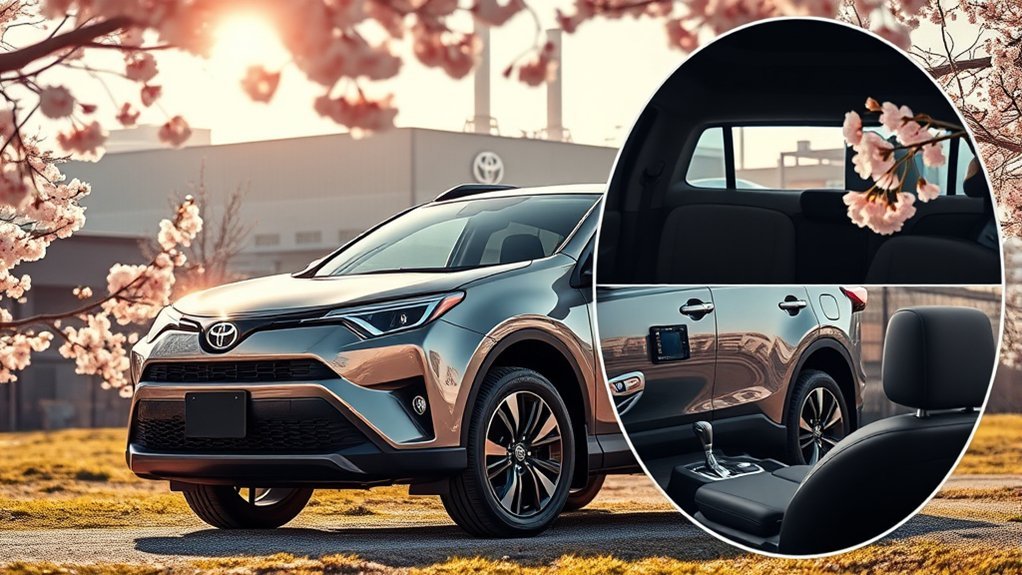
Toyota assigns RAV4 production to more than one plant. Its official manufacturing information lists the RAV4 among the products made at the Takaoka Plant in Japan.
Toyota Motor Manufacturing Canada began producing the sixth-generation RAV4 in Woodstock, Ontario, in January 2026. Toyota’s Kentucky operation also began assembling the all-new RAV4 Hybrid in June 2026. These assignments can change according to the model year, market, powertrain, production capacity, and supply needs.
Note: Do not assume that every RAV4 trim comes from one country. Confirm the build origin of the exact vehicle rather than relying on a general model description or an older article.
Are Japan-Built RAV4 Models Better Quality?
No dependable public evidence shows that Japan-built RAV4s are consistently better than Canadian- or U.S.-built examples. Owners may notice differences between individual vehicles, but one or two observations cannot establish a plant-wide quality ranking.
Toyota uses the Toyota Production System across its manufacturing operations. Its principles include building quality into the production process and stopping work when an abnormality occurs. Shared principles do not make every vehicle identical, but they show that quality control is not exclusive to one country.
North American production should not be treated as automatically inferior. Toyota Motor Manufacturing Canada’s North Plant, which builds RAV4 and Lexus models, received a Silver award in the 2026 J.D. Power Plant Quality Awards. The award concerns plant quality performance, not a guarantee about every vehicle or its long-term reliability.
A country code tells you where a RAV4 was assembled. It does not grade the quality of that individual vehicle.
Why Prime Versus Hybrid Is Not a Fair Factory Comparison
The RAV4 Prime, called the RAV4 Plug-in Hybrid in current Toyota materials, and the standard RAV4 Hybrid are different versions of the vehicle. Their powertrains, equipment, interior materials, price positions, curb weights, and production schedules may differ.
A more expensive or highly equipped version may feel more refined because of its trim content rather than its assembly plant. Model-year updates can also change insulation, switches, upholstery, exterior trim, and manufacturing processes.
To evaluate assembly quality fairly, compare vehicles with the same model year, trim, wheel size, option package, mileage, repair history, and general condition. Even then, a small sample cannot prove that one country consistently builds better vehicles.
How Do Body Panel Alignments Compare?
The original comparison used exact millimeter gaps and percentage differences without identifying the vehicles, measuring tool, panel locations, sample size, or Toyota’s acceptable tolerances. Those figures cannot support a reliable conclusion.
Instead, inspect the individual vehicle from several angles in even daylight. Compare the hood-to-fender gap on the left and right sides, then check the doors, tailgate, bumper covers, lamps, and exterior trim.
- Look for gaps that remain reasonably even along the full edge of each panel.
- Check whether doors and the tailgate sit flush with neighboring panels.
- Open and close every door, the hood, and the liftgate.
- Listen for rubbing, binding, popping, or unusual latch effort.
- Look for loose clips, displaced seals, or trim that lifts away from the body.
A visibly uneven panel may result from assembly variation, transportation damage, a previous collision, or a repair. Ask the seller to document and correct concerns before delivery.
Comparing Paint Quality and Finish

Paint thickness and finish cannot be ranked by assembly country from a single measurement. Readings can vary between panels and vehicles, while previous body repairs can produce much larger differences than normal factory variation.
Inspect the RAV4 outdoors or under bright, neutral lighting. View each panel straight on and from a shallow angle.
- Compare color and metallic flake across adjacent plastic and metal panels.
- Look for dirt nibs, runs, sanding marks, overspray, thin edges, or cloudy clear coat.
- Check whether the surface texture changes sharply from one panel to the next.
- Inspect bolts, weatherstripping, wheel wells, and door jambs for repair evidence.
- Ask a qualified inspector to use a calibrated paint-depth gauge when prior repairs are a concern.
Some difference between painted plastic bumpers and metal body panels can occur because the materials and painting conditions differ. A sudden mismatch, masking line, overspray, or unusually high gauge reading deserves closer investigation.
Pro Tip: Inspect the paint before signing the delivery paperwork. Photograph any defect and make sure the dealer records the concern in writing.
How Do RAV4 Interiors Measure Up?
Interior quality depends on the trim, equipment, model year, vehicle condition, and individual assembly. A plug-in hybrid or upper trim may use different upholstery and convenience features than a lower-trim hybrid, so a direct comparison may reflect specification differences rather than factory workmanship.
Sit in both front seats and the rear seat. Press gently around the dashboard, console, door panels, headliner edges, and cargo trim. Check whether clips remain secure and whether the gaps around switches, screens, vents, and storage compartments look consistent.
During the road test, drive over smooth pavement and a moderately rough road with the audio system turned off. Listen for buzzes, squeaks, rattles, wind noise, and movement from the cargo area. Confirm that the seats, seat belts, windows, locks, climate controls, charging ports, liftgate, and infotainment controls work correctly.
What Do Reliability Reports Show?
Plant quality, initial owner complaints, and long-term reliability are related but different measurements. A plant award may reflect low defect rates soon after production, while long-term reliability depends on component design, software, maintenance, climate, driving conditions, mileage, and repair history.
Toyota Motor Manufacturing Canada’s 2026 plant-quality award shows why buyers should avoid assuming that North American assembly means lower workmanship. However, the award does not prove that every Canadian-built RAV4 will outperform or equal every Japan-built vehicle.
For a used RAV4, the service history and current condition usually matter more than the country code. Confirm that scheduled maintenance was completed, investigate warning lights, review collision and title records, and arrange an independent pre-purchase inspection.
How to Identify Where a RAV4 Was Built
The 17-character VIN identifies the vehicle and contains manufacturing information. You can find it at the lower corner of the windshield, on the driver-door label, and on registration or insurance documents.
- Copy the complete VIN directly from the vehicle.
- Open the official NHTSA VIN Decoder.
- Enter all 17 characters and submit the VIN.
- Review the decoded plant and country information.
- Compare the result with the driver-door certification label and seller’s description.
A VIN beginning with “J” generally identifies a vehicle manufactured in Japan, but you should use the complete VIN decoder rather than relying only on the first character. The first character does not tell you whether the vehicle is defect-free, properly maintained, or free from collision repairs.
How Manufacturing Origin Affects Your RAV4 Choice

Manufacturing origin can affect availability, delivery timing, parts sourcing, and the mix of trims supplied to a market. It can also matter to buyers who prefer locally assembled vehicles or have a personal preference for a particular plant.
Origin should remain one factor rather than the deciding quality score. A carefully maintained Canadian-built RAV4 with a clean history may be a better purchase than a neglected or repaired Japan-built example. The reverse can also be true.
Imported vehicles require extra attention. Confirm that the warranty applies in your country, the vehicle complies with local regulations, recall work can be completed locally, and replacement parts and software support are available.
What to Check When Picking Your RAV4
Use the following checklist whether you are comparing Japan-, Canada-, or U.S.-built vehicles:
- VIN and build label: Confirm the plant, production date, model year, and seller’s description.
- Comparable specification: Compare the same trim, powertrain, options, wheel size, and model year.
- Exterior fit: Inspect panel alignment, seals, lights, trim, doors, hood, and liftgate operation.
- Paint condition: Check color consistency, surface defects, overspray, masking lines, and repair evidence.
- Interior quality: Test switches, seats, windows, locks, climate controls, screens, ports, and cargo fittings.
- Road-test behavior: Listen for rattles, wind noise, suspension sounds, brake vibration, and drivetrain concerns.
- Recall status: Ask a Toyota dealer to verify outstanding campaigns using the VIN.
- Maintenance records: Confirm oil changes, fluid services, inspections, and previous repairs.
- Vehicle history: Review title, collision, ownership, mileage, and insurance-loss information.
- Independent inspection: Have a qualified technician inspect a used vehicle before purchase.
- Warranty: Verify coverage for the vehicle’s model year, original sales market, and import status.
The best RAV4 is not automatically the one from a preferred country. It is the correctly specified vehicle that passes inspection, has a clean and documented history, and meets your needs and budget.
Frequently Asked Questions
What are the warranty differences between RAV4 models made in different countries?
Assembly country alone usually does not determine warranty coverage. The original sales market, model year, warranty booklet, registration status, and whether the vehicle was officially imported matter more. Confirm coverage with a Toyota dealer using the exact VIN before buying an imported vehicle.
How does Toyota maintain quality control across different manufacturing plants?
Toyota applies Toyota Production System principles across its operations. These include building quality into the process, identifying abnormalities, stopping work when necessary, and addressing the cause before production continues. Individual plants still have their own employees, equipment, suppliers, and production assignments.
Are specific features unique to Japan-made RAV4 models?
Features usually depend on the sales market, model year, trim, powertrain, and option package rather than the assembly country alone. Use the original window sticker, build sheet, owner’s manual, or VIN-based dealer information to confirm the equipment on a specific vehicle.
What environmental standards do Toyota factories in Japan meet?
Toyota factories must follow the environmental laws and regulatory requirements that apply to their locations, along with Toyota’s internal environmental policies. Environmental performance may affect energy, emissions, water, and waste management, but it does not by itself prove that an individual vehicle has better panel fit or paint quality.
How do labor costs affect RAV4 pricing across regions?
Labor cost is only one pricing factor. Exchange rates, tariffs, shipping, local content, equipment, taxes, incentives, supply, and market demand can also affect the final price. A higher or lower regional price does not provide a dependable measure of assembly quality.
Does a VIN beginning with J guarantee a better RAV4?
No. A VIN beginning with J generally indicates Japanese manufacture, but it does not guarantee better paint, panel alignment, reliability, maintenance, or repair history. Inspect the individual vehicle and compare it with equivalent alternatives.
Sources
- Toyota Motor Corporation: Production Sites in Japan — identifies the RAV4 among the products manufactured at Toyota’s Takaoka Plant.
- Toyota Canada: Sixth-Generation RAV4 Production — confirms Canadian production of the new-generation RAV4 beginning in January 2026.
- Toyota Canada: 2026 Plant Quality Award — documents the Silver Plant Quality Award received by Toyota Motor Manufacturing Canada’s North Plant.
- Toyota USA: Kentucky RAV4 Hybrid Production — confirms the start of all-new RAV4 Hybrid assembly in Kentucky in June 2026.
- Toyota Motor Corporation: Toyota Production System — explains Toyota’s shared manufacturing and built-in quality principles.
- National Highway Traffic Safety Administration: VIN Decoder — provides official VIN-based manufacturing information for U.S.-market vehicles.
Conclusion
A Japan-built RAV4 may appeal to you because of personal experience, availability, or preference, but the country of assembly does not prove that it has better quality. Toyota produces RAV4 models through several plants that use shared manufacturing principles, and current evidence does not support a universal Japan-versus-North-America ranking.
Compare equivalent model years and trims, decode the VIN, inspect the body and interior, complete a proper road test, review recalls and service records, and obtain an independent inspection when buying used. Those steps reveal much more about a RAV4 than its assembly-country label alone.
