Choosing a trail light usually comes down to one question: will it actually let you ride confidently after dark without weighing down your helmet or dying halfway through a route? The Dango Design Navigator LED Trail Light answers that with 2,100 lumen rated Cree LEDs, an external battery that shows exactly how much charge is left, and action-camera-style mounting that works on helmets, bars, and gear. This review walks through what those specs mean on the trail, where the external battery helps and where it adds hassle, and who should buy it versus skip it.
Affiliate disclosure:. As an Amazon Associate I earn from qualifying purchases. This review is reader-supported. When you click through Amazon links, we may earn a referral commission on qualifying purchases.
By the Editorial Review Team · Last updated July 2026
Quick Verdict
Best for: riders who want a bright helmet or GoPro-mount trail light for night riding, enduro routes, snowmobile rides, camping, or hands-free outdoor lighting.
Skip it if: you want a fully self-contained light with no external battery cable, or you prefer user-replaceable battery cells for long-term service.
Bottom line: The Navigator is a strong fit if brightness, flexible mounting, and battery visibility matter more to you than a cable-free setup.
TL;DR
| Feature | Verdict |
|---|---|
| Brightness & Beam | ⭐️⭐️⭐️⭐️⭐️ 🔦 – 2,100 lumen rated Cree output gives strong trail reach and a wide fan that helps you read roots, rocks, turns, and obstacles at speed. |
| Battery & Runtime | ⭐️⭐️⭐️⭐️ ⏱️ – External rechargeable battery with a digital readout helps with ride planning; the pack-style design adds cable routing and is not user-replaceable. |
| Mounting & Compatibility | ⭐️⭐️⭐️⭐️ 🔧 – Works with action-camera finger mounts for helmets and bars, giving flexible placement; cord length can limit head movement unless you route it carefully. |
| Durability & Build | ⭐️⭐️⭐️⭐️ 🛡️ – Aluminum housing suits rough trail conditions, but there is no official waterproof rating, so dry the connectors after wet rides. |
| Ease of Use | ⭐️⭐️⭐️⭐️ 🎛️ – Three simple brightness modes and a readable battery indicator keep operation easy, though the external pack needs setup before technical rides. |
Key Specifications
| Spec | Detail |
|---|---|
| Brand | Dango Design |
| Model | Navigator Helmet LED Trail Light (Model 130004) |
| Product type | Mountable LED trail and helmet light kit |
| Light output | 2,100 lumen rated LEDs, Cree LED technology |
| Brightness modes | Three settings (low, medium, high) |
| Housing | Ultra-low-profile aluminum, black |
| Battery | External lithium-ion rechargeable pack with digital percentage readout |
| Runtime | Up to 3 hours on high, up to 12 hours on low |
| Power-bank function | Yes (USB 2.0 output for devices, USB-C input for recharging) |
| Mounting | Action-camera finger mounts, included adhesive mounts, cable extension; Gripper Mount for chin guards sold separately |
| In the box | LED light, battery pack with canvas case, cable extension, wall charger with USB-C cable, camera mounting hardware, EVA travel case |
| Water resistance | No official IP or waterproof rating stated; built for outdoor use, avoid heavy rain |
| Best use | Dirt bike, motocross, mountain bike, enduro, ATV, motorcycle, snowmobile, camping |
Dango Navigator LED Trail Light
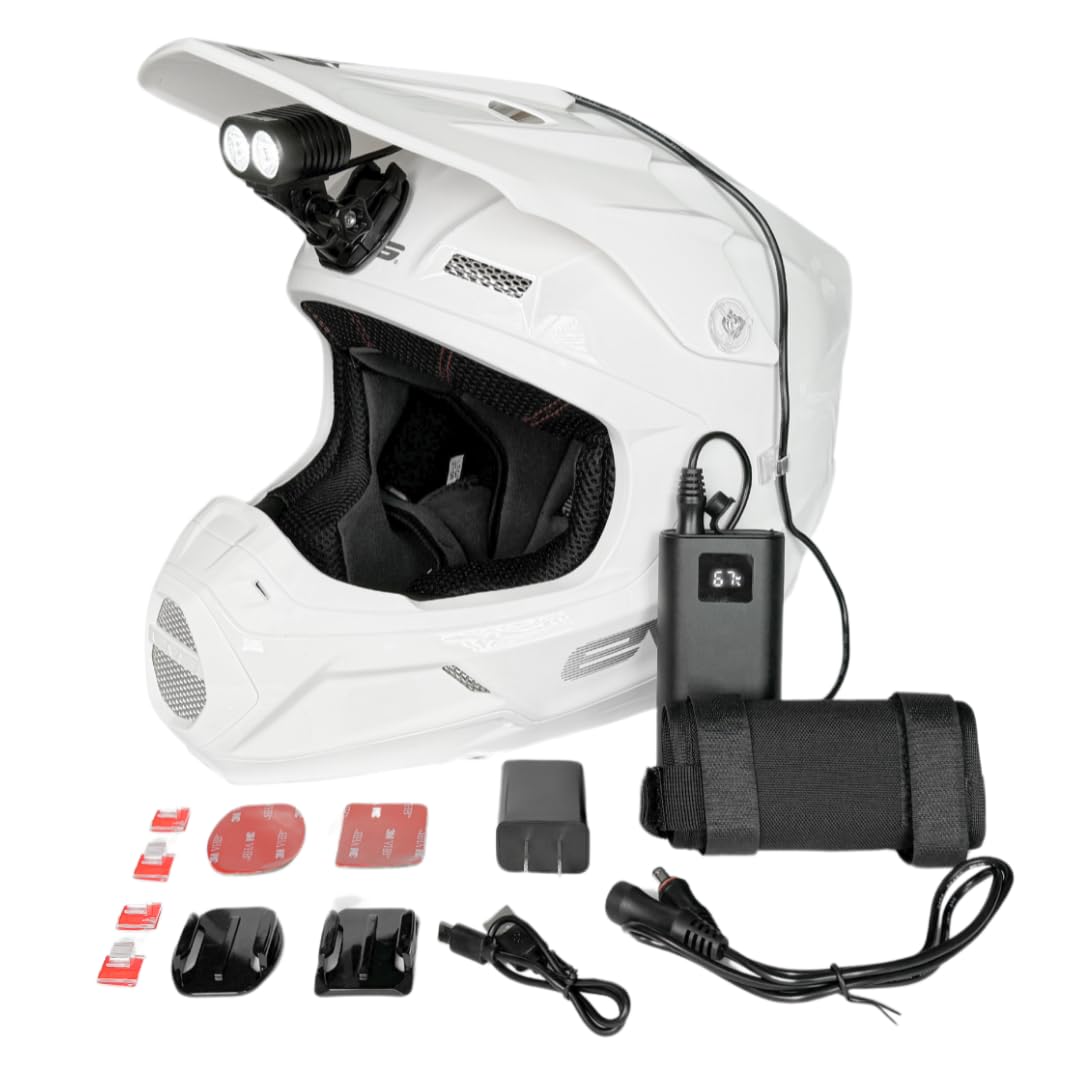
If you ride after dark or need a reliable helmet light for early-morning trail runs, this is the kind of kit that quietly makes rides easier. You get a 2,100 lumen rated Cree LED setup in a low-profile aluminum housing, so it stays compact on a helmet, bar mount, or action-camera-style mount.
The external battery pack shows charge on a digital readout and is listed for up to about 3 hours on high or up to 12 hours on low, depending on the mode and conditions. It can also double as a power bank for your phone, which is useful on longer outdoor rides. Mounting is flexible because it works with helmet chin guards (using the separate Gripper Mount), action-camera finger mounts, and included adhesive hardware. In practice, that covers night trail riding, snowmobiling, camping, and hands-free hiking.
If you want a helmet light that is bright, modular, and built for multi-sport use, the Navigator is worth considering. Just plan your battery placement and cable routing before you ride technical terrain.
Brightness and Beam
The 2,100 lumen rated Cree LEDs are the headline feature, and the beam is tuned as a mix of long throw and a wider fan. That combination lets you see farther down the trail while still catching the roots, rocks, and turn markers at the edges. Three brightness settings let you trade output for runtime, so you can run high for fast, technical sections and drop to low on mellow fire roads or around camp.
Battery and Runtime
Instead of a sealed internal cell, the Navigator uses an external lithium-ion pack with a digital percentage screen. That readout is the practical win here: you see the exact charge left rather than guessing from a blinking indicator. The pack also has a USB 2.0 output so it can top up a phone in the field, and it recharges over USB-C. The trade-off is a cable between the light and the pack, plus the fact that the battery is not user-replaceable, so long-term service depends on the built-in cell.
Mounting and Compatibility
The light uses action-camera-style finger mounts, which opens up placement on helmets, handlebars, chest rigs, and frames. Included adhesive mounts and a cable extension help you dial in cord routing. For a fast on-and-off setup on a helmet chin guard, Dango sells a separate Gripper Mount. The main thing to check is that your helmet or bars can accept a secure action-camera or adhesive mount before you rely on it for a technical ride.
Pros and Cons
| Pros | Cons |
|---|---|
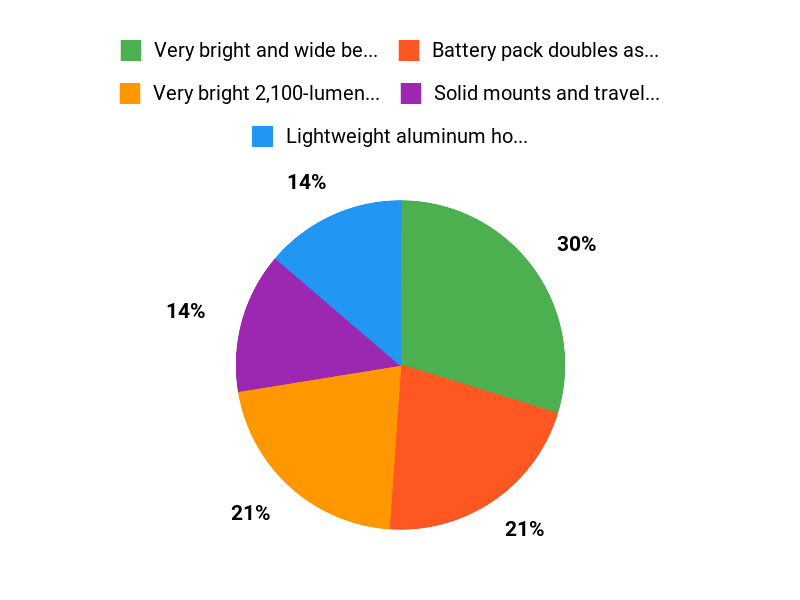
| ✅ Bright, wide 2,100 lumen rated beam for trail work | ❌ Cord can feel short for some helmet setups |
| ✅ Battery pack doubles as a phone charger | ❌ Battery pack is not user-replaceable |
| ✅ Solid mounts, cable extension, and EVA travel case included | ❌ External battery adds setup time and cable management |
| ✅ Compatible with common action-camera mounts | ❌ No official waterproof rating, so heavy rain needs caution |
What People Say
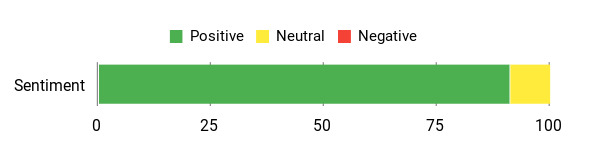
The Navigator is a newer release from a small brand, so verified review volume is still limited. Based on manufacturer descriptions and general feedback in the helmet-light category, the features riders tend to value most are the brightness, the beam spread, and being able to see the exact battery percentage. The most common concerns raised about external-battery lights like this one are cord length, battery placement, and the non-user-replaceable pack.
Overall Sentiment: Early and positive, though based on a small feedback pool rather than a large verified review base.
🗣️ Reviewer highlight
Feedback commonly points to strong white light, good trail reach, useful beam spread, and battery performance that stays helpful in cold-weather rides.
🗣️ Rider use case
Night riders like that the light mounts on helmet setups for better visibility when daytime riding is too hot or trail timing pushes into darkness.
How It Performs in Real Use
Night trail riding: On high, the beam reaches far enough to pick a line at speed while the wider fan keeps the trail edges lit. A helmet mount points the light where you look, which helps in switchbacks and tight singletrack.
Enduro and motocross: The aluminum housing and low profile keep bulk down, and running medium mode balances reach against runtime for longer sessions. Routing the battery to a jacket or chest rig keeps weight off your neck.
Snowmobiling and cold weather: Cold saps battery life on any pack, so keeping the external battery inside a jacket layer helps it hold charge. The digital readout is especially handy here, since you can watch how fast the cold is draining the pack.
Camping and hands-free tasks: Off the trail, the same light works around a campsite, and the battery can recharge a phone. It is a more capable option than a basic headlamp when you want serious output and a power bank in one kit.
Safety and Setup Notes
The main safety benefit is visibility: a bright, wide beam helps you spot trail changes, rocks, roots, turns, and low-light hazards sooner. Secure mounting and a stable housing matter just as much, because a trail light needs to stay put when the ride gets rough.
Before you ride fast: test the mount, tilt angle, and cable routing first. Avoid blocking helmet vents or impact zones, keep the cord clear of moving parts, and angle the beam so it lights the trail without shining into other riders’ eyes.
Durability and Build
The aluminum housing and included EVA travel case make the setup feel more trail-ready than a basic flashlight, and the design targets outdoor and cold conditions. The catch is the battery: because the pack is not user-replaceable, long-term service depends on that built-in cell and on the brand’s support if it fails.
Key Benefits
- 2,100 lumen rated Cree LEDs for clear trail visibility
- Low-profile aluminum housing that keeps bulk down on a helmet
- External battery with a digital percentage readout and power-bank function
- Action-camera mounting compatibility for helmets, bars, and gear
- Three brightness settings for balancing output against runtime
- Useful for dirt bike riding, enduro, snowmobiling, camping, and hands-free outdoor tasks
Who Should Buy This
- Riders who need a bright helmet light for night trail riding or early-morning rides
- Motocross, enduro, snowmobile, and adventure riders who already use action-camera mounts
- Campers or outdoor users who want a mountable light plus a phone charger instead of a handheld flashlight
- Anyone who wants a visible battery percentage instead of guessing remaining charge
Who Should Avoid This
- Riders who want a fully cable-free helmet light
- Users who prefer standard replaceable batteries
- Minimalist riders who do not want to route a battery pack to a pocket, chest rig, or backpack
- Anyone who needs guaranteed heavy-rain or submersion protection, since no waterproof rating is published
Check Current Amazon Availability
Pricing and Value
The Navigator sits in the mid-range to premium tier for helmet and trail lighting. You are paying for high rated output, an aluminum body, and a battery that adds a digital readout and a power-bank function, rather than for the cheapest possible headlamp. That combination is a smart buy for riders who genuinely ride at night and want reliable brightness plus power tracking in one kit.
Where it earns its value is versatility: one light covers helmet, bar, camp, and phone-charging duty. Where it may not be worth it is if you only need occasional low-light visibility, in which case a simpler self-contained headlamp is easier to live with. It is better for buyers who care about output and battery visibility, and not the best fit if you want a cable-free, replaceable-battery design.
How It Compares
Compared with all-in-one helmet lights that build the battery into the housing, the Navigator trades a little simplicity for more output and a phone-charging pack, at the cost of a cable to manage. If you want the lightest, cord-free setup, a self-contained headlamp is easier. If you care more about maximum rated brightness, a visible charge percentage, and using one light across dirt bike, snowmobile, and camping use, the Navigator makes the most sense.
Before You Buy
| Check This | Why It Matters |
|---|---|
| Helmet or mount compatibility | It works best when your helmet, bars, or gear can accept a secure action-camera or adhesive mount. |
| Battery placement | The external battery can sit in a jacket, backpack, chest pouch, or on the bike, but you need to route the cord safely. |
| Ride length | Higher brightness drains faster, so use lower modes when full throw is not needed and start with a full charge. |
| Weather care | There is no published waterproof rating, so drying the housing and connectors after wet rides helps protect long-term reliability. |
| Beam angle | Test the beam in a safe area so it reaches far enough down the trail without shining into other riders’ eyes. |
Related Guides
FAQ
Will this light work on my trail helmet, and how easy is it to mount?
The Navigator is designed to be flexible because it uses action-camera-style finger mounts and ships with adhesive mounting hardware and a cable extension. If your helmet has a flat area or an action-camera mount, you can attach it directly, or use the separately sold Gripper Mount for a chin-guard setup. Test the placement and cable routing before technical terrain so the light does not shift when you turn your head, and make sure the mount does not block vents, interfere with goggles, or sit in an impact-sensitive area.
How long will the battery last on trails, and how do you manage power?
Runtime is listed at up to 3 hours on high and up to 12 hours on low, and it varies with the brightness mode, temperature, and battery age. The digital readout shows the remaining charge so you can plan instead of guessing. To stretch power, use lower modes when you do not need full throw, start with a full charge, carry the included USB-C charger or a compatible power source, and keep the pack warm in cold weather inside a jacket pocket. Because it uses a rechargeable pack rather than replaceable cells, long-term service depends on the built-in battery.
Is the beam pattern and weight good for technical trail riding?
The Cree LEDs mix long throw with a wider fan, so you see farther down the trail while still getting peripheral light for roots, rocks, and turns. The aluminum housing is low profile, but the full-system weight can feel noticeable depending on where you place the battery. For longer rides, route the battery off your head to a jacket, chest pouch, backpack, or bike-mounted position, then adjust tilt and test at night in a safe area so the beam suits your speed and trail type.
Is the Navigator waterproof or safe in the rain?
Dango does not publish an official waterproof or IP rating for the Navigator, and the manufacturer advises avoiding heavy rain exposure. Treat it as water-resistant for trail dust, cold, and light moisture rather than fully waterproof. Dry the housing and connectors after wet or muddy rides, and do not submerge it.
Can I use it on a bike instead of a helmet?
Yes. The action-camera mounting compatibility gives you options beyond a helmet. A handlebar or frame mount reduces helmet weight and simplifies battery placement. The trade-off is that a bar-mounted light points where the bike points, while a helmet light points where you look. Many riders prefer helmet mounting for technical trails and bar mounting for smoother routes or backup lighting.
What comes in the box, and do I need to buy anything extra?
The kit includes the LED light, the external battery pack with a canvas case, a cable extension, a wall charger with a USB-C cable, camera mounting hardware, and an EVA travel case. The main optional add-on is the Dango Gripper Mount for quick on-and-off mounting on a helmet chin guard, which is sold separately.
What is the biggest limitation?
The external battery system. It helps with runtime planning and keeps the light body compact, but it adds a cable, a separate pack, and extra setup time, and the battery is not user-replaceable. If you want a small all-in-one light with no cord, this design will feel more involved than you prefer.
Why Riders Choose It
Riders pick the Dango Navigator for a powerful, focused beam paired with dependable battery visibility for technical trail riding. It is rugged, mount-friendly, and simple to operate, which makes it practical for anyone who wants one light for helmets, bars, camping, and other outdoor tasks.
Final Verdict
Buy the Navigator if you need high, reliable output for night and technical trail riding and you value seeing an exact battery percentage. The 2,100 lumen rated Cree LEDs deliver a long, usable beam with a wide fan, the external battery doubles as a phone charger and holds up in cold conditions, and action-camera mounting lets you place it on a helmet, bars, or gear.
Skip it if you want a cord-free, all-in-one light or replaceable battery cells, or if you need guaranteed heavy-rain protection, since no waterproof rating is published. The main compromises are the battery-pack form factor, the added cabling, and the non-user-replaceable design. If strong illumination, battery visibility, and flexible mounting matter most to you, this light is a practical choice to compare closely.
Check Product Details on Amazon
This review is reader-supported. When you click through links we may earn a referral commission on qualifying purchases.