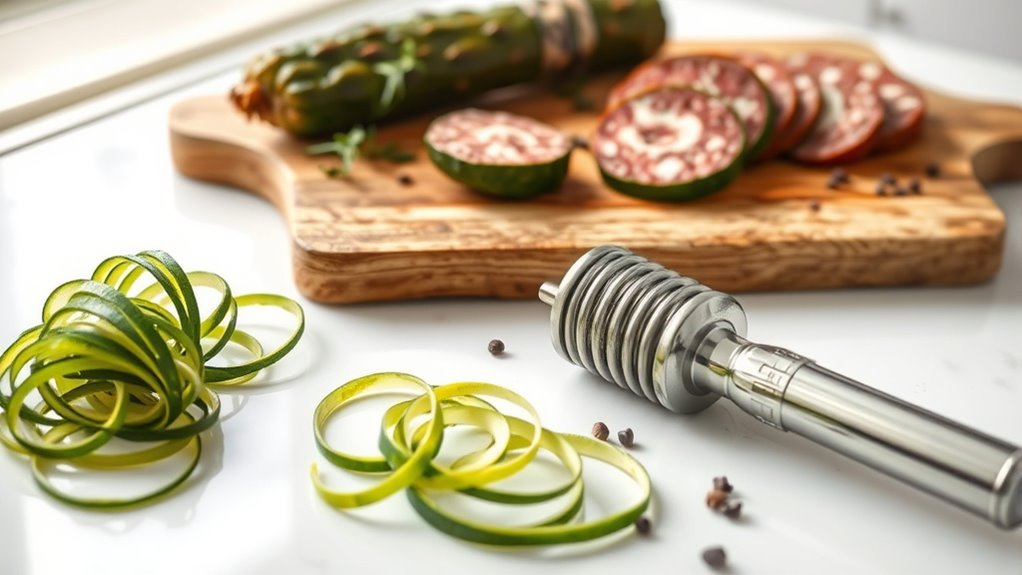
The Zampone spiralizer is presented as a compact vegetable noodle maker for zucchini, carrots, cucumbers, and other firm produce. Its appeal lies in simple preparation, manageable storage, and the ability to create different vegetable shapes without a large appliance. Before buying, however, it is worth understanding how its blade design, stability, and cleaning requirements affect everyday use.
Quick Answer
The Zampone spiralizer is intended for making fresh vegetable noodles in small kitchens. Zucchini is its most practical everyday ingredient, while carrots and cucumbers offer different textures. Its compact design and manual operation suit quick preparation. Before purchasing, confirm the exact blade attachments, countertop stability, and dishwasher compatibility for the model being sold.
Key Takeaways
- A compact spiralizer is practical for single servings, small side dishes, and kitchens with limited storage.
- Centering vegetables correctly helps produce longer, more consistent strands and reduces unnecessary waste.
- Different blades create thin noodles, thicker spirals, or ribbons, depending on the attachments included.
- A secure base and comfortable grip help maintain control, especially when cutting firm vegetables.
- Wash removable parts promptly and confirm dishwasher compatibility before exposing them to machine-washing temperatures.
- Use a food holder or guard when available, and keep your fingers away from exposed blades.
What Is the Zampone Spiralizer?
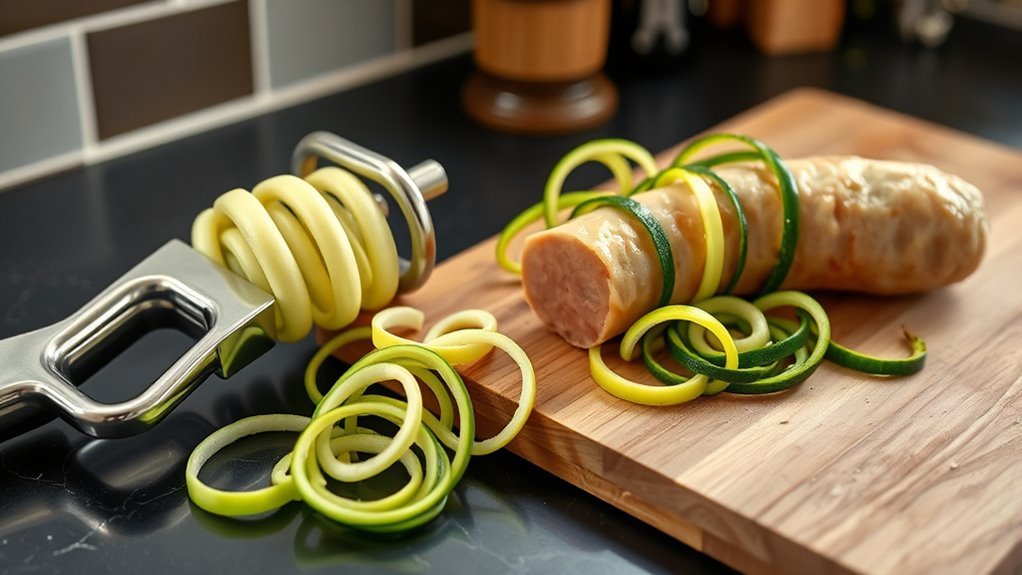
The Zampone spiralizer is described as a compact kitchen tool that turns vegetables into spiral-shaped noodles. It offers an alternative to cutting vegetables into strips by hand and can make zucchini noodles, salad ribbons, and vegetable garnishes.
A manual spiralizer works by guiding produce against a sharp cutting blade. The vegetable rotates or advances through the cutter, creating strands whose shape depends on the blade design.
These strands can replace pasta in some dishes, add texture to salads, or provide a colorful base for stir-fries and grain bowls.
The main appeal is convenience. Instead of using a knife to create many thin strips, you can prepare vegetable noodles through a repeated turning motion.
For buyers, the important distinction is whether the product uses a handheld twisting mechanism or a crank-operated countertop frame. These designs require different amounts of effort and offer different levels of stability.
Multiple blade attachments can increase versatility, but the exact number and types supplied with a Zampone model should be confirmed before purchase.
How Easy the Zampone Is to Use
The Zampone is intended to simplify vegetable preparation for beginners and occasional home cooks. Its manual design avoids complicated controls, although the effort required depends on the firmness and shape of the vegetable.
An ergonomic handle helps you maintain a comfortable grip, while a compact body makes the tool easier to move and store.
For the cleanest results, start with a straight, firm zucchini. Very soft produce may bend or break instead of producing continuous noodles.
How to Make Zucchini Noodles
Prepare your workspace before inserting a vegetable. You will need a clean cutting board, a knife, a bowl, and the spiralizer’s appropriate cutting attachment.
- Wash the zucchini. Rinse it under cool running water and remove any damaged areas.
- Trim the ends. Cut both ends flat so the vegetable can sit evenly against the cutting mechanism.
- Secure the spiralizer. If your model has suction cups, attach them to a clean, smooth countertop.
- Select the blade. Choose a thin noodle, thicker spiral, or ribbon attachment if your model includes these options.
- Position the zucchini. Center it against the cutting blade and secure the opposite end with the food holder.
- Turn the handle steadily. Maintain gentle, even pressure while the vegetable passes through the blade.
- Collect the noodles. Stop before your fingers approach the cutting area and remove the remaining vegetable with the holder.
These preparation principles are consistent with the design of established manual spiralizers, including the OXO Tabletop Spiralizer.
Once finished, inspect the strands. Long, relatively even noodles indicate that the vegetable was centered and remained in contact with the blade.
If the strands break repeatedly, straighten the vegetable, check the blade position, and use more consistent pressure.
Zampone Blade Options and Spiral Quality
Blade choice determines the thickness, texture, and appearance of your vegetable noodles. The Zampone is described as offering multiple cutting options, although the exact attachments supplied with the product remain unconfirmed.
A thin cutting blade produces delicate strands suited to raw salads and light sauces. A wider blade creates sturdier noodles that can hold their shape better during brief cooking.
Ribbon blades make broad strips suitable for vegetable salads, garnishes, and layered dishes.
The following comparison explains the practical differences between common spiralizer cuts.
| Blade Type | Result | Suitable Uses |
|---|---|---|
| Fine spiral blade | Thin vegetable noodles | Raw salads and light noodle dishes |
| Wide spiral blade | Thicker vegetable strands | Sautés and vegetable pasta |
| Ribbon blade | Broad, flat vegetable strips | Salads, garnishes, and layered dishes |
Blade quality matters as much as variety. A sharp, properly aligned cutter produces cleaner edges and requires less force than a dull or damaged blade.
Even, clean spirals produce sturdy ribbons and noodles, while reducing waste by turning more produce into usable strands.
To get more usable noodles from each vegetable:
- Choose straight produce with a diameter that fits the spiralizer.
- Keep the vegetable centered throughout cutting.
- Use steady pressure rather than forcing the handle.
A spiralizer will normally leave a small center core or end piece. This is part of the cutting process, not necessarily a defect.
Use the remaining vegetable in soup, stir-fries, or another recipe to reduce food waste.
Best Vegetables for the Zampone
Zucchini is a practical starting point for the Zampone because its long shape and tender flesh make it easier to spiralize. Carrots and cucumbers also provide useful results, although their texture and moisture content affect the finished strands.
Different vegetables require different amounts of pressure. Hard produce may need a sturdier frame and sharper blade.
| Vegetable | Expected Result | Preparation Tip |
|---|---|---|
| Zucchini | Soft, flexible noodles | Choose firm, straight zucchini. |
| Carrots | Firm, crisp ribbons or spirals | Use thick carrots that fit the holder. |
| Cucumber | Cool, moist vegetable strands | Use firm cucumbers and drain excess liquid. |
| Sweet potato | Firm, dense spirals | Use only if the tool supports hard vegetables. |
How to Keep Zucchini Noodles From Becoming Watery
Zucchini contains substantial moisture, so long cooking or heavy sauces can make the noodles soft. Preparing them correctly helps preserve their texture.
After spiralizing, pat the strands dry with a clean towel or paper towel. For a cooked dish, sauté them briefly rather than simmering them like traditional pasta.
You can also serve the noodles raw in salads or toss them with an already-prepared sauce just before eating.
For safe preparation, follow the FDA’s produce handling guidance. Wash whole vegetables under running water before cutting, and keep preparation surfaces clean.
Zampone Stability, Grip, and Safety
A spiralizer needs a secure cutting position because rotating firm produce creates sideways pressure. The Zampone is described as having a sturdy frame, ergonomic grip, and non-slip suction cups to support controlled cutting.
These features are especially useful when preparing carrots and other vegetables that resist the blade more than zucchini.
The original product description also mentions a safety lock. Its presence and exact operation should be confirmed for the specific model.
- Secure the base. Attach the suction cups to a smooth, clean surface before beginning.
- Maintain a comfortable grip. Keep the handle steady and avoid twisting your wrist excessively.
- Use the food holder. Keep fingers away from the cutting area, especially near the end of a vegetable.
- Store blades securely. Use any supplied blade cover, storage box, or safety mechanism when the spiralizer is not in use.
Warning: Spiralizer blades are sharp. Never use your fingers to push small vegetable pieces directly against an exposed blade. Stop using the tool if a blade is loose, damaged, or incorrectly seated, and keep removable blades away from children.
If the base slips during operation, stop turning immediately. Reposition the spiralizer and secure it before continuing.
Do not compensate for a loose base by applying more force. This can reduce control and increase the chance of injury.
How to Clean and Store the Zampone
Cleaning the Zampone promptly helps prevent vegetable fibers from drying around its blades. Remove detachable components carefully, rinse away food residue, and dry everything before storage.
The original article identifies the spiralizer as dishwasher-safe, but its cleaning guidance also warns against machine washing without manufacturer approval. The exact care instructions must therefore be confirmed for the model you own.
Cleaning Steps
- Remove the vegetable holder and any detachable blades according to the product instructions.
- Rinse away loose vegetable pieces under warm running water.
- Use a soft cleaning brush to remove fibers caught between blade teeth.
- Wash removable components with mild dish soap and water.
- Rinse thoroughly and allow the parts to dry completely.
- Reassemble the tool only after checking that the blades and attachments are undamaged.
For a manufacturer example, see OXO’s vegetable preparation tool cleaning guide, which explains blade removal, rinsing, drying, and model-specific dishwasher care.
Do not assume that dishwasher approval for one spiralizer applies to another. Different manufacturers may use different plastics, blade housings, and removable parts.
Storage Tips
Store the spiralizer in a cool, dry drawer or cabinet. Keep blades in their designated holders or protective packaging to prevent accidental contact.
A compact model should be easy to put away, but loose accessories can become difficult to locate if they are stored separately.
Inspect the blade edges, handle, suction cups, and any safety mechanism periodically. Replace damaged components rather than continuing to use a tool that no longer holds vegetables securely.
Zampone vs. Other Spiralizers
The Zampone is positioned as a compact manual spiralizer for everyday vegetable preparation. Its main alternatives are basic handheld cutters, larger countertop machines, and electric spiralizers.
The best design for your kitchen depends on how often you prepare vegetable noodles, which ingredients you use, and how much storage space you have.
| Type | Main Advantage | Main Limitation |
|---|---|---|
| Compact manual spiralizer | Convenient storage and simple operation | May require more effort with hard produce |
| Basic handheld cutter | Very small storage footprint | Often limited cutting options |
| Countertop crank model | Secure vegetable positioning and comfortable operation | Requires more counter and cabinet space |
| Electric spiralizer | Motorized cutting reduces manual turning | More components, storage needs, and cleaning |
Zampone Blade Versatility
Multiple blades can make a compact spiralizer more useful than a basic single-blade cutter. Different cutting widths allow you to prepare vegetable noodles for several dishes without switching to another tool.
The Zampone’s described blade range supports this versatility, although the included attachments need confirmation.
When comparing products, look at the actual cutting shapes rather than blade count alone. Several attachments that produce nearly identical results may offer less practical value than a smaller set of clearly different cutters.
For reference, established tabletop designs commonly offer spaghetti-style strands, wider noodles, and ribbons.
Check how easily the blades can be removed and whether the product includes safe storage for unused attachments.
Zampone Size And Stability
The Zampone’s compact design makes it appealing for kitchens where counter and cabinet space are limited. A smaller tool is easier to store, but the base must remain secure during operation.
A suction mechanism can help stabilize a countertop spiralizer, while a handheld model relies more heavily on grip and controlled pressure.
For comparison, the OXO Hand-Held Spiralizer uses a compact twisting design with a food holder that also serves as a storage cap.
Countertop models generally offer a different operating position, allowing the vegetable to be held between the cutting blade and a rotating holder.
For frequent large batches, an electric or larger crank-operated machine may reduce repetitive effort. For occasional zucchini noodles, a smaller manual tool can be easier to manage.
Who Should Buy the Zampone Spiralizer
The Zampone spiralizer is aimed at people who want fresh vegetable noodles without keeping a large kitchen appliance. It is particularly relevant to cooks preparing small portions, quick salads, or vegetable-based pasta alternatives.
Its practical appeal depends on how well the actual product balances blade quality, handling, stability, and cleaning.
Best For Small Jobs
A compact spiralizer is useful when you need one serving of zucchini noodles or a small vegetable side dish. It avoids the setup and storage demands of a larger machine.
The Zampone is described as lightweight and straightforward to operate, making it approachable for beginners.
Its most suitable everyday tasks include:
- Preparing zucchini noodles for a single meal.
- Making carrot ribbons for salads.
- Adding cucumber spirals to cold dishes.
- Preparing vegetable garnishes without lengthy knife work.
For large family meals or repeated preparation of hard vegetables, consider whether a larger machine would provide more comfortable operation.
Good For Limited Space
Small kitchens benefit from equipment that can be stored quickly after use. The Zampone’s compact design makes it relevant to apartment kitchens, narrow countertops, and cabinets with limited room.
| Feature | Benefit | Best For |
|---|---|---|
| Lightweight | Easy handling and storage | Small drawers and cabinets |
| Simple setup | Convenient preparation | Quick meals |
| Affordable positioning | Lower entry cost than elaborate equipment | Budget-conscious shoppers |
| Compact size | Reduced storage needs | Limited kitchens |
Before purchasing, compare the complete product dimensions with your available storage space, including any blade holders and attachments.
Also confirm the supplied accessories and manufacturer details. Without a verified product specification, claims about the Zampone’s exact weight, number of blades, safety lock, and dishwasher compatibility should not determine your purchase on their own.
Frequently Asked Questions
What Is the Best Tool for Spiralizing Zucchini?
A countertop spiralizer is useful for making long, consistent zucchini noodles, while a handheld cutter suits smaller kitchens and occasional use. The OXO Good Grips Tabletop Spiralizer is an established option with interchangeable blades and a suction base. Choose according to your storage space, preferred noodle shapes, and preparation frequency.
How Long Will Spiralized Zucchini Last in the Fridge?
For best quality, use refrigerated spiralized zucchini within 1–2 days. Store the raw noodles in a clean, covered container, with paper towels to absorb excess moisture. Keep your refrigerator at 40°F (4°C) or below, and discard noodles that develop mold, unusual odors, or a slimy texture.
Are Spiralizers Worth Buying?
Spiralizers are worth considering if you regularly prepare vegetable noodles, ribbons, or garnishes. They reduce the need for repetitive knife work and make it easier to create consistent shapes. A compact manual model suits occasional use, while larger countertop and electric designs are more practical for frequent preparation or bigger batches.
What Is the Best Zucchini Noodle Cutter?
The OXO Good Grips Tabletop Spiralizer is a suitable option for cooks wanting different noodle widths and stable countertop operation. Its interchangeable blades make spaghetti-style noodles, wider strands, and ribbons. If you need only occasional zucchini noodles and have little storage space, a compact handheld cutter may be sufficient.
Can the Zampone Spiralizer Cut Sweet Potatoes?
The original product description indicates that the Zampone can handle sweet potatoes, but this capability has not been confirmed through manufacturer documentation. Hard vegetables require greater cutting force than zucchini. Use sweet potatoes only if your specific model supports them, and stop if the handle or blade begins to flex.
Is the Zampone Spiralizer Dishwasher-Safe?
Dishwasher compatibility for the Zampone has not been independently confirmed. Some spiralizers allow machine washing, while others require certain parts to be cleaned by hand. Follow the instructions supplied with your model. Until dishwasher approval is established, wash removable components carefully by hand and dry them completely before storage.
Conclusion
The Zampone spiralizer is described as a convenient option for preparing zucchini noodles, carrot ribbons, and other vegetable spirals in a small kitchen. Its intended strengths are simple handling, compact storage, and flexible cutting options.
For everyday results, choose firm produce, center it carefully, and clean the blades after use. Before purchasing, confirm the actual model specifications and accessories so the spiralizer matches your cooking needs.
Sources
- OXO — Tabletop Spiralizer: Manufacturer specifications for blade types, vegetable noodle preparation, suction stability, and blade storage.
- OXO — Hand-Held Spiralizer: Reference for compact manual cutting, food-holder design, and storage.
- U.S. Food and Drug Administration — Selecting and Serving Produce Safely: Produce washing, safe preparation, and refrigeration guidance.
- OXO — The Right Way to Clean Your Veggie Prep Tools: Spiralizer blade cleaning, rinsing, drying, and dishwasher care.
- Colorado State University Extension — How to Use Zucchini: Zucchini preparation, refrigerator storage, and guidance for cut vegetables.
