Choosing the right tent shapes your whole trip. Whether you prioritize weight, weather protection, or quick setup, the tent you bring affects comfort, safety, and how far you can hike with your pack.
This guide compares backpacking tents for solo hikers and pairs, helping you spend less time fussing and more time enjoying the trail.
Last updated: July 15, 2026
Affiliate disclosure:. As an Amazon Associate I earn from qualifying purchases. This roundup is reader-supported. We may earn a commission from qualifying purchases made through Amazon links, at no extra cost to you.
Quick Verdict
Best overall: The Kelty Grand Mesa 2P offers the strongest balance of dependable materials, straightforward setup, and manageable packed weight.
Best value for two: The Clostnature 2-Person gives you two doors, two vestibules, and a high listed waterproof rating at a budget-focused position.
Best simple solo option: The Night Cat works for campers who prioritize quick setup and low cost over premium poles, double-wall ventilation, or minimum weight.
Top Picks
|
Category |
Product |
Key Fit |
|---|---|---|
|
Best Budget Solo |
Fast setup for casual solo trips |
|
|
Best Value 2-Person |
Two doors and two vestibules |
|
|
Best Overall |
Balanced durability and usability |
|
|
Best Compact Solo |
Double-wall 1-person shelter |
|
|
Best Cold-Weather Versatility |
Seller-rated 4-season design |
|
|
Best Roomy 3-Season Pick |
Ventilation and interior space |
|
|
Best Budget Two-Door Pick |
Comfort-focused 2-person layout |
|
|
Best for Tall Solo Campers |
Long 8.2-foot sleeping area |
How We Picked These Tents
We compared published packed weight, waterproofing, floor construction, pole material, setup design, interior space, vestibules, and intended season. We also weighed how each tent fits common backpacking needs, including solo trips, two-person weekends, bikepacking, and cooler-weather camping.
We used current product listings to correct key specifications and treated seller season labels cautiously. This is an editorial comparison, not a claim of hands-on laboratory testing, and you should confirm the current size and included parts before ordering.
Before You Buy
- Compare packed weight, not only minimum trail weight.
- Check floor length and width against your sleeping pad and height.
- Decide whether you need one door or two, plus enough vestibule space for packs.
- Treat 4-season labels as a starting point, not proof of mountaineering performance.
- Confirm whether a footprint, repair sleeve, extra guylines, or stronger stakes are included.

The Night Cat is a simple solo shelter for campers who value quick pitching and a modest packed size more than premium materials. Its 7.0 by 3.8-foot floor gives one adult space for a sleeping setup and small gear, while the single-layer build keeps assembly straightforward.
The seller lists PU3000 mm rain protection, taped seams, a mesh door, and a roof vent. Because it uses fiberglass poles and a single-wall-style layout, it is better suited to casual three-season trips than technical mountain weather, even though the listing may use broader season language.
Who should buy this: Budget-minded solo campers, scouts, festivals, motorcycle trips, and short backpacking weekends.
Who should avoid this: Long-distance hikers chasing minimum weight, two adults, or campers expecting sustained snow and severe alpine wind.
Common Review Themes
The source article summarizes these common themes: you’ll notice most customers praise how easy the tent is to stash in a pack and pitch quickly after a long hike. People frequently mention staying dry in rain thanks to the waterproof fabric and taped seams, and they like the ventilation and usable interior height.
Common gripes center on pole quality and the single-layer design causing some condensation and a feeling that a few components could be more rugged.
Review note: These qualitative themes come from the source article and may not reflect every recent review. Check the latest verified-purchase feedback before buying.

Setup & Use
|
Feature |
Ease Level |
|---|---|
|
Setup Time |
Easy |
|
Packing / Storage |
Easy |
|
Pole Assembly |
Moderate |
|
Zipper & Door Handling |
Moderate |
Where To Use It
Use it for mild-weather backpacking, festivals, motorcycle trips, beach camping, or backyard overnights. Its single-layer design and fiberglass poles make it a poor choice for sustained winter storms or exposed alpine sites.
Why You’ll Like It
- Compact, straightforward shelter for shorter solo trips
- Strong rain protection with PU3000mm fabric and taped seams
- Quick setup that takes about 1-2 minutes
- Good ventilation via mesh door and roof window to reduce condensation
- Sized for one adult plus small gear; not recommended for two adults

The Clostnature 2-Person stands out for usable space and convenient access. Two doors reduce nighttime climbing over a partner, while two vestibules give boots and small packs a covered place outside the sleeping area.
The current listing gives a 5.29 lb total weight and a 4.52 lb minimum trail weight. That is reasonable for shared weekend loads, but it is not an ultralight two-person shelter. The double-wall design, mesh inner, aluminum poles, factory-sealed seams, and listed PU5000 mm coating make it a practical value pick for typical three-season conditions.
Who should buy this: Couples, two friends splitting the load, and solo campers who want extra room and two vestibules.
Who should avoid this: Solo thru-hikers who need a much lighter shelter or winter campers facing heavy snow loads.
Common Review Themes
The source article summarizes these common themes: most folks appreciate how quick this tent is to set up and how small it packs, which makes it a favorite for weekend hikers and casual backpackers. Customers frequently call out the waterproof fabric and the ventilation from the mesh inner for comfortable nights, and they like having two doors and vestibules for gear.
Typical gripes revolve around a thin floor and some questions about long-term durability in very rough use, so many people suggest a footprint for extra protection.
Review note: These qualitative themes come from the source article and may not reflect every recent review. Check the latest verified-purchase feedback before buying.

Setup & Use
|
Feature |
Ease Level |
|---|---|
|
Setup Time |
Easy |
|
Packing / Storage |
Easy |
|
Pole Assembly |
Moderate |
|
Rainfly Attachment |
Moderate |
|
Zipper & Door Handling |
Easy |
Where To Use It
Use it for three-season backpacking, bikepacking, car camping, and festivals. A footprint can help protect the floor on abrasive ground, while a more specialized shelter is safer for heavy snow or severe alpine wind.
Why You’ll Like It
- Strong weather protection with PU5000mm coating and factory-sealed seams
- Spacious interior for a 2-person footprint with dual doors and mesh walls
- Two vestibules give you dry storage for boots or packs
- Freestanding aluminum poles and clip attachment for easy pitching
- Manageable shared weight for weekend and multi-day outings
- Quick assembly; most users can pitch it in minutes

The Kelty Grand Mesa 2P is the most balanced choice in this group for regular backpacking and campground use. Quick Corners help hold the poles during setup, color-coded attachments reduce guesswork, and the Shark Mouth stuff sack makes repacking less frustrating.
Its 68D polyester fabric and aluminum poles favor durability over ultralight performance. The main limitation is the single-door, single-vestibule layout, which is less convenient for two sleepers than a dual-door tent. For one person or a cooperative pair, it offers a dependable mix of space, weather protection, and simple handling.
Who should buy this: Weekend backpackers who want a durable, easy-to-use tent from an established outdoor brand.
Who should avoid this: Pairs who insist on separate doors or hikers who need a sub-3-pound shelter.
Common Review Themes
The source article summarizes these common themes: you’ll see a lot of happy campers calling out how easy this tent is to pitch and pack; the Quick Corners and carry bag make a real difference on the trail. People also appreciate the waterproof seams and roomy vestibule for keeping gear dry.
Common notes mention it’s slightly heavier than ultralight shelters and that zippers can feel firm at first, but overall reviewers describe it as sturdy, dependable, and surprisingly roomy for a compact two-person tent.
Review note: These qualitative themes come from the source article and may not reflect every recent review. Check the latest verified-purchase feedback before buying.

Setup & Use
|
Feature |
Ease Level |
|---|---|
|
Setup Time |
Easy |
|
Packing / Storage |
Easy |
|
Pole Assembly |
Easy |
|
Rainfly Attachment |
Easy |
|
Zipper & Door Handling |
Moderate |
Where To Use It
Use it for three-season weekend backpacking, car camping, and motorcycle trips. The durable build suits regular use, but the weight and single-door layout are less appealing for ultralight thru-hikes or pairs wanting separate entrances.
Why You’ll Like It
- Fast, intuitive setup with Kelty Quick Corners
- Shark Mouth carry bag speeds packing and storage
- EZ-Zip vestibule gives dry, usable gear space
- Durable 68D polyester and fully taped seams for reliable weather protection
- Freestanding design so you can fine-tune your campsite
- Aluminum poles provide good strength without excess bulk
This Clostnature solo tent gives one camper a conventional double-wall shelter without taking up much pack space. The freestanding two-pole frame is easy to position, and the side vestibule keeps footwear or a compact pack out of the sleeping area.
The listing separates total weight from minimum trail weight, so compare it carefully with tents that advertise only their lightest configuration. Its mesh inner and full rainfly should manage condensation better than basic single-layer designs, while the listed PU5000 mm coating and bathtub floor add reassurance in routine rain.
Who should buy this: Solo backpackers who want a compact double-wall tent with a vestibule and aluminum poles.
Who should avoid this: Very tall campers who need more interior length or winter users expecting snow-load strength.
Common Review Themes
The source article summarizes these common themes: buyers commonly praise how compact and light this tent packs and how easy it is to pitch by yourself. Many note that the PU5000 coating and bathtub floor keep them dry in rain, and the vestibule and interior pockets are handy. A recurring critique is the stakes and some quality-control hiccups, and taller campers sometimes find the length a little tight.
Review note: These qualitative themes come from the source article and may not reflect every recent review. Check the latest verified-purchase feedback before buying.

Setup & Use
|
Feature |
Ease Level |
|---|---|
|
Setup Time |
Easy |
|
Packing / Storage |
Easy |
|
Pole Assembly |
Easy |
|
Rainfly Attachment |
Moderate |
|
Guyline & Staking |
Moderate |
Where To Use It
Use it for solo three-season backpacking, bikepacking, canoe trips, and short car-camping stays. Add a footprint on rough ground and use a winter-specific shelter for sustained snow or severe cold.
Why You’ll Like It
- PU5000mm-coated rainfly and bathtub floor for solid wet-weather protection
- Packs down small and trims weight for backpacking and bikepacking
- Freestanding design with two aluminum poles for quick solo setup
- Interior mesh keeps airflow and reduces condensation
- Side vestibule offers dry storage for boots and a small pack
- Included repair kit and multiple stakes for on-trail fixes
The OneTigris Stella is aimed at campers who want more coverage for cool, wet, and windy shoulder-season trips without carrying a large expedition tent. It uses a compact crossed-pole structure, a mesh inner, and a removable outer fly for changing ventilation needs.
The seller describes it as a 4-season tent, but that label should not be treated as proof of technical mountaineering performance. Its 4.4 lb listed weight and snug two-person floor make it more appealing as a roomy solo shelter or a close-fitting option for two campers who pack carefully.
Who should buy this: Solo campers or compact pairs seeking cooler-weather versatility for backpacking or motorcycle travel.
Who should avoid this: Expedition mountaineers, heavy-snow trips, or two people who need generous interior and gear space.
Common Review Themes
The source article summarizes these common themes: customers often highlight how fast and simple the setup is, and that the Stella feels more protective than many three-season options; people notice warmth retention and good rain performance. Reviewers frequently mention the tent packs down small and is light enough for motorcycle or backpack trips, while a common critique is that the floor material is a bit thin and the interior can feel snug for two adults with gear.
Review note: These qualitative themes come from the source article and may not reflect every recent review. Check the latest verified-purchase feedback before buying.

Setup & Use
|
Feature |
Ease Level |
|---|---|
|
Setup Time |
Easy |
|
Packing / Storage |
Easy |
|
Pole Assembly |
Easy |
|
Rainfly Attachment |
Moderate |
|
Guyline & Staking |
Moderate |
Where To Use It
Use it for cool, wet, and windy shoulder-season trips, motorcycle touring, and compact backpacking camps. Do not assume the seller’s 4-season label makes it suitable for technical mountaineering or heavy snow loading.
Why You’ll Like It
- Quick, user-friendly setup with crossing aluminum poles and clips
- 3000 mm waterproof rating and removable fly for flexible use
- Moderate packed weight for backpacking, bike, or motorcycle travel
- Seller-rated 4-season design adds coverage for cooler conditions
- Interior pockets and a ceiling hook keep small items organized
- Comes with 10 stakes and 4 guylines so you’re ready to pitch

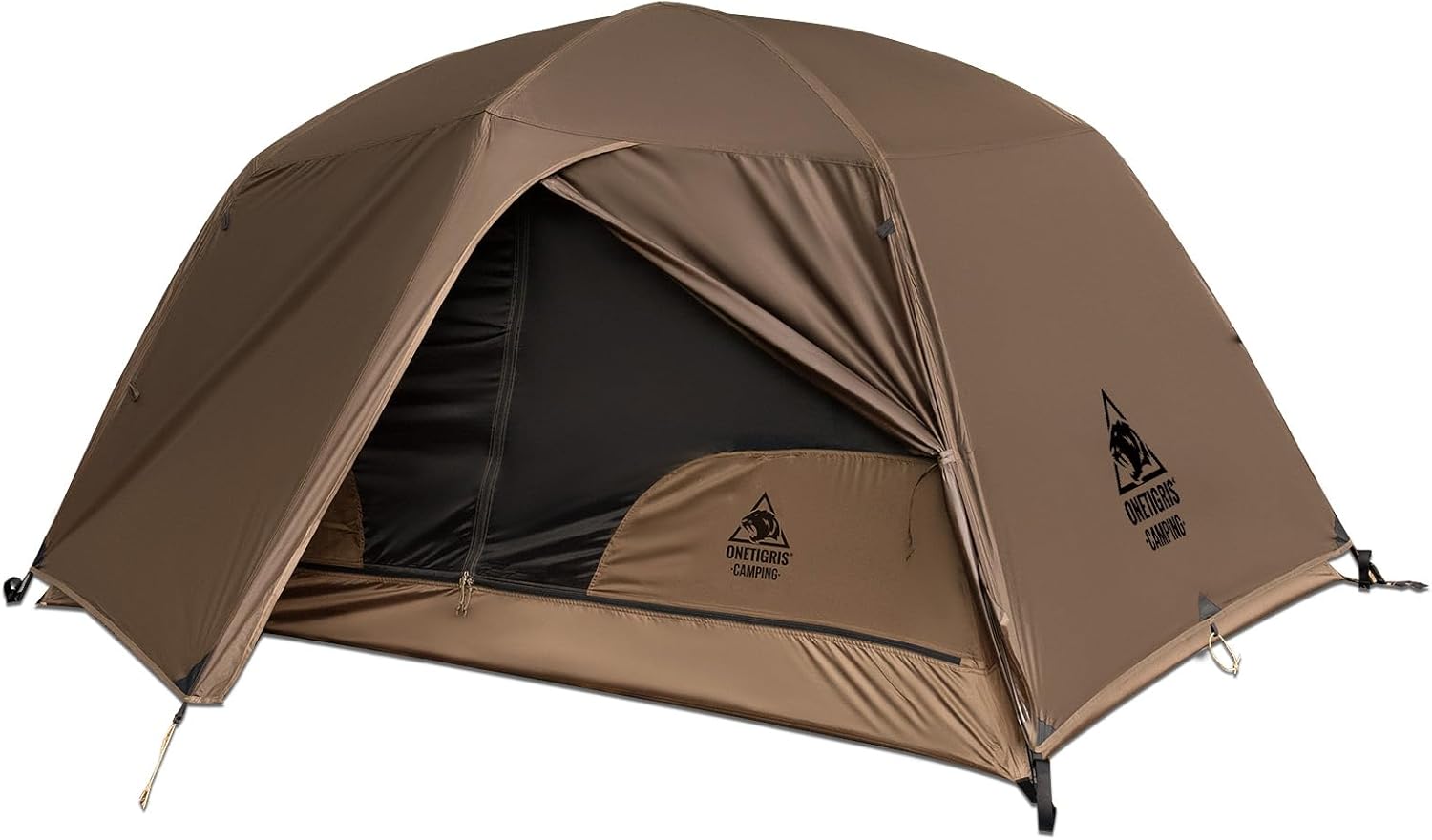
The OneTigris COSMITTO favors interior room, ventilation, and a stable freestanding shape over minimum packed weight. Its broad mesh inner is useful in warmer weather, while the outer fly and guy-out points add coverage for normal three-season rain and wind.
The current listing shows a 1500 mm waterproof rating in the main specifications, although some brand content may reference a different figure. For that reason, it is best viewed as a general three-season shelter rather than a storm-specialist tent. It works especially well as a roomy solo setup or a close two-person shelter.
Who should buy this: Campers who prioritize room, airflow, and straightforward setup on three-season trips.
Who should avoid this: Ultralight hikers or users planning prolonged heavy rain, deep snow, or exposed alpine camps.
Common Review Themes
The source article summarizes these common themes: most folks praise how quickly it goes up and how dry it keeps them; reviewers frequently note solid seam sealing, sturdy stitching and a fly that handles heavy rain. You’ll also see compliments about stability in wind and the roomy feel for a solo sleeper; common critiques mention that it can be snug for two with lots of gear and that vestibule space is limited.
Review note: These qualitative themes come from the source article and may not reflect every recent review. Check the latest verified-purchase feedback before buying.

Setup & Use
|
Feature |
Ease Level |
|---|---|
|
Setup Time |
Easy |
|
Packing / Storage |
Easy |
|
Pole Assembly |
Easy |
|
Rainfly Attachment |
Moderate |
|
Guyline & Staking |
Moderate |
Where To Use It
Use it for three-season backpacking, motorcycle travel, festivals, and campground weekends. Choose a more weather-specialized shelter for exposed sites, prolonged heavy rain, or winter mountaineering.
Why You’ll Like It
- Fast, solo-friendly setup with clipped poles
- 20D ripstop fly with a 1500 mm listed rating for ordinary three-season rain
- Stable design with well-placed guylines for windy conditions
- Packable for shared weekend backpacking or bike trips
- Good ventilation through full inner mesh to reduce condensation
- Interior pockets and thoughtful storage keep small gear organized

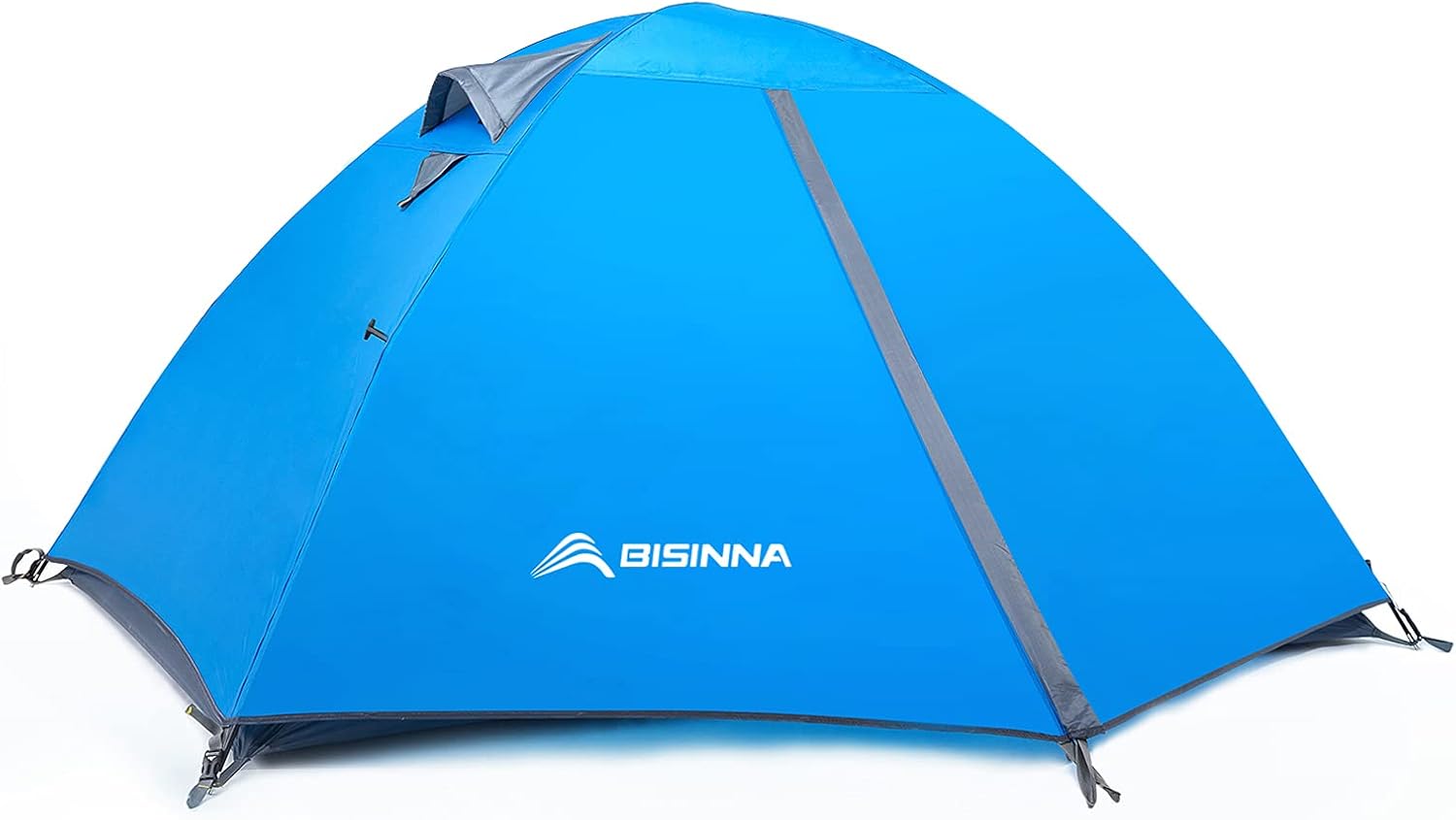
The BISINNA is a comfort-focused budget tent for two people. Two D-shaped doors improve access and ventilation, while the freestanding aluminum-pole frame is easier to pitch and reposition than a fully staked shelter.
Its listed 4.7 lb weight is manageable when split between two campers but heavy for a solo ultralight load. The PU2000 mm rainfly is better suited to ordinary three-season rain than prolonged severe weather, so careful staking, proper fly tension, and a protected campsite still matter.
Who should buy this: Budget-conscious couples, bikepackers, and weekend campers who value two-door convenience.
Who should avoid this: Ultralight solo hikers or campers who expect repeated severe storms and winter snow.
Common Review Themes
The source article summarizes these common themes: buyers frequently mention how easy the tent is to set up and how well it holds up in normal rainy conditions. Folks like the roomy layout for two people, the dual doors and vestibules for storing packs, and the sturdy aluminum poles; common caveats are that it isn’t ultralight and very heavy rain can sometimes require extra protection like a tarp or footprint.
Review note: These qualitative themes come from the source article and may not reflect every recent review. Check the latest verified-purchase feedback before buying.

Setup & Use
|
Feature |
Ease Level |
|---|---|
|
Setup Time |
Easy |
|
Packing / Storage |
Moderate |
|
Pole Assembly |
Easy |
|
Rainfly Attachment |
Moderate |
|
Guyline & Staking |
Moderate |
Where To Use It
Use it for three-season backpacking, bikepacking, motorcycle trips, and family campgrounds. Its two-door layout favors comfort, while its weight and PU2000 mm fly make it less suitable for ultralight or severe-weather objectives.
Why You’ll Like It
- Quick, one-person friendly setup with a free-standing pole design
- Two doors and dual vestibules for easy access and dry gear storage
- PU2000 mm-rated rainfly and double-wall layout for ordinary three-season conditions
- Aluminum poles and 10 lightweight stakes balance strength and packability
- Spacious interior for two people and their packs, with good ventilation
- Compact packed size that fits or straps to most backpacks

The Camppal MT051 is the strongest fit here for taller solo sleepers who care more about floor length and weather coverage than sitting height. Its 8.2-foot interior can leave room at the ends for clothing or a compact pack.
The listing describes a 3.75 lb package, a single-ridge aluminum pole, taped areas, and 3500 to 4000 mm water resistance. Although the seller markets it for 4-season use, the low-profile design and limited headroom make it a specialized solo option, not a substitute for an expedition tent built for heavy snow.
Who should buy this: Tall solo campers, hunters, kayak campers, and backpackers who prefer a long, low-profile shelter.
Who should avoid this: Campers who want generous sitting height, minimum trail weight, or proven high-alpine snow performance.
Common Review Themes
The source article summarizes these common themes: buyers commonly praise how easy the tent is to pitch and its ability to stay dry in heavy rain, with many noting the thoughtful length for taller campers. People also appreciate the durable-feeling fabric and lightweight stakes, while some mention condensation and snug interior space as recurring caveats.
Review note: These qualitative themes come from the source article and may not reflect every recent review. Check the latest verified-purchase feedback before buying.

Setup & Use
|
Feature |
Ease Level |
|---|---|
|
Setup Time |
Easy |
|
Pole Assembly |
Easy |
|
Packing / Storage |
Moderate |
|
Rainfly Attachment |
Easy |
|
Ventilation Management |
Moderate |
Where To Use It
Use it for solo backpacking, kayak camping, hunting, and low-profile shoulder-season camps. Its long floor helps tall sleepers, but limited headroom and seller-provided season claims should not be confused with expedition-level winter protection.
Why You’ll Like It
- Long interior length fits taller sleepers and stashes a pack at the foot
- High water-resistance fabric and taped seams for solid rain protection
- Single-ridge aluminum pole design for quick, straightforward pitching
- Compact for a weather-focused solo shelter, though not ultralight
- Simple, low-profile shape that works well for discrete or windy campsites
- Includes rainfly, stakes and a roomy carry bag for easy transport
FAQ
How Do I Choose The Right Backpacking Tent For My Trip?
You want a tent that matches the conditions you plan to face and the way you hike. Prioritize weight and packed size if you’re carrying the shelter day after day, but don’t sacrifice durability if you expect wind, rain, or cold. A 4-season label generally signals more weather coverage, but construction and intended use still vary.
Think about occupancy honestly: tents labeled 1 to 2 person often fit one person plus gear comfortably and are snug for two adults. Check pole material (aluminum is stronger and often lighter than fiberglass), floor and fly hydrostatic head or PU rating to judge waterproofing, number of doors and vestibules for gear storage and easy exits, ventilation options to reduce condensation, and whether the tent has taped seams or a separate rainfly. Also factor in setup style and time. If you’ll be arriving after long days, quick-pitch designs save energy.
Practical steps you can take right now are to try pitching the tent at home to confirm fit and speed, carry a lightweight footprint to protect the floor, and bring or upgrade to sturdier stakes and guylines for windy or loose-soil sites.
Can A Budget Backpacking Tent Keep Me Dry?
A budget tent can handle ordinary rain when the fly is pitched correctly, seams are intact, and the floor is protected from standing water. Waterproof ratings are useful comparison points, but construction quality, seam taping, fly coverage, ventilation, campsite choice, and maintenance also affect real-world performance.
Tents do not create warmth. Your sleeping bag, pad, clothing, wind protection, and moisture management do most of that work. Single-layer tents may collect more condensation, while double-wall models usually separate moisture from the sleeping area more effectively.
What Is The Difference Between Packed Weight And Minimum Trail Weight?
Packed weight usually includes the tent body, fly, poles, stakes, guylines, stuff sacks, and repair items. Minimum trail weight often counts only the tent body, fly, and poles. Compare the same weight type across models so a tent does not look lighter simply because accessories were excluded.
How Do I Care For, Set Up, And Troubleshoot Common Tent Problems On The Trail?
You’ll get the most life and best performance from a tent if you care for it and know a few simple fixes. When you choose your campsite, pick higher, level ground and clear sharp debris; stake at a 45-degree angle away from the fabric and tension guylines to keep the fly from flapping. Open vents and slightly unzip doors to reduce condensation overnight, and avoid touching the inner walls with sleeping bags.
If wind or rain kicks up, add extra guylines and stake the vestibule points; if poles break, use a sleeve or splint from a repair kit to bridge the damaged section. Carry seam sealer, patch tape, a bit of spare shock cord, and a zipper lubricant. These small items solve most common issues.
After a trip, dry the tent fully before storing it to prevent mildew, hand-wash dirty areas rather than machine washing, and store loosely (not compressed) if you won’t use it for months. Practicing setup, teardown, and basic repairs at home will save you time and stress on the trail and keep your shelter ready for your next adventure.
Backpacker Favorites
Choose the Kelty Grand Mesa 2P for the best all-around balance, the Clostnature 2-Person for two-door value, and the Night Cat for simple solo setup at a budget-focused level. The OneTigris Stella and Camppal add cooler-weather coverage, but their seller-provided 4-season labels should not replace a careful check of expected wind, snow, and exposure.

Wrapping Up
The best backpacking tent is the one that matches your real carrying weight, sleeping-space needs, expected weather, and tolerance for setup complexity. For most hikers, a dependable three-season double-wall tent is the safest starting point.
Before ordering, confirm the current variant, packed weight, floor dimensions, included stakes, and warranty details on the product page. Practice pitching at home and dry the tent fully before storage.
| Product | Image | Best For | Packed Weight | Water Resistance | Occupancy |
|---|---|---|---|---|---|
| Night Cat 1-Person Backpacking Tent |
 |
Simple solo setup | About 4.4 lb | PU 3000 mm | 1 person |
| Clostnature 2-Person Tent |
 |
Two-person value | 5.29 lb total; 4.52 lb minimum | PU 5000 mm | 2 person |
| Kelty Grand Mesa 2P |
 |
Best overall balance | About 4 lb 7 oz packed | 3300 mm listed | 2 person |
| Clostnature Lightweight 1-Person Tent |
 |
Compact double-wall solo | 4 lb total; 2.97 lb minimum | PU 5000 mm | 1 person |
| OneTigris Stella 2-Person Tent |
 |
Cooler-weather versatility | About 4.4 lb | 3000 mm | 2 person |
| OneTigris COSMITTO 2-Person Tent |
 |
Roomy 3-season use | About 5.1 lb | 1500 mm listed | 2 person |
| BISINNA 2-Person Backpacking Tent |
 |
Budget two-door comfort | About 4.7 lb | PU 2000 mm | 2 person |
| Camppal 1-Person Tent |
 |
Tall solo sleepers | About 3.75 lb | 3500-4000 mm listed | 1 person |