
You work on heavy, rusted panels, brackets, seized bolts and welded repairs, and the right plasma cutter can make those jobs faster, cleaner and less physically demanding. This guide walks you through 10 plasma cutters that make sense for truck mechanic work, from compact 110V-friendly units for light repairs to higher-amp dual-voltage machines for shop fabrication. Match the cutter to your power supply, compressor, material thickness and duty cycle before buying, and you will get cleaner cuts with less grinding, fewer wasted consumables and fewer setup headaches.
Affiliate disclosure:. As an Amazon Associate I earn from qualifying purchases. This roundup is reader-supported. When you click through Amazon links, we may earn a referral commission on qualifying purchases at no extra cost to you.
Quick Verdict
Best overall balance: ARCCAPTAIN CUT 50 if you want a compact dual-voltage cutter with simple controls and broad garage usefulness.
Best for rusty or painted truck parts: ARCCAPTAIN CUT 55 or ARCCAPTAIN CUT55 Pro because the non-touch pilot arc helps start cuts with less surface prep.
Best higher-output shop pick: YESWELDER CUT-65DS PLUS if you want more amperage and extra cutting, gouging and marking functions.
Best light-duty 110V option: bestarc CUT35A for thin sheet, small brackets and beginner-friendly garage work.
Top Picks
|
Category |
Product |
Score |
|---|---|---|
|
🏆 Best Overall |
90/100 |
|
|
🎯 Best Pilot-Arc |
88/100 |
|
|
🔰 Best App Control |
92/100 |
|
|
💼 Best for CNC/Table Use |
84/100 |
|
|
🚀 Best Multifunction |
82/100 |
|
|
⭐ Best for Beginners |
89/100 |
|
|
💰 Best Budget |
80/100 |
|
|
🔋 Best Value |
91/100 |
|
|
🛠️ Best for DIY Shops |
86/100 |
|
|
🎨 Best for Light-Duty |
76/100 |
Selection Criteria
You need a cutter that fits the way you work. We evaluated these machines on four practical factors: 1) Cutting performance, including how well the cutter suits common truck metals; 2) Power compatibility, especially whether it supports 110/120V convenience and 220/240V full-power shop use; 3) Air and duty requirements, including compressor needs, dry air, regulators, filters and cool-down time; and 4) Usability and value, including portability, pilot arc, controls, consumable availability, setup simplicity and buyer confidence.
Before You Buy
- Check your circuit first: 120V is convenient for light work, but 240V is usually better for thicker steel and cleaner cuts.
- Use dry, steady air: Moisture and weak airflow cause rough cuts, arc dropout and fast consumable wear.
- Choose pilot arc for rusty parts: Non-touch pilot arc helps on painted, dirty or corroded metal.
- Plan for consumables: Keep nozzles, electrodes and tips ready so a worn tip does not stop a repair.
- Respect duty cycle: Long heavy cuts need cooling breaks or a higher-capacity machine.

If you work on trucks, this cutter is useful because it does not take up much space but still gives you dual-voltage flexibility. You can use lower input power for lighter sheet, small brackets and quick trimming, then move to a stronger circuit when you need cleaner performance on thicker steel.
The large LED display helps you see settings and error codes quickly, while the built-in regulator simplifies setup. It still needs a steady compressor and dry air, so do not treat it as a plug-in-only tool. Pair it with the right air supply and it becomes a strong all-around choice for repair work, weekend fabrication and shop backup use.
What People Say
Buyers commonly like the portability, simple controls, LED display and dual-voltage setup. The most useful feedback is also practical: this type of cutter performs best when the air supply is dry, steady and matched to the job.
Overall Sentiment: Generally Positive

How It Helps
|
Situation |
How It Helps |
|---|---|
|
Mobile Jobsites |
Compact body and shoulder strap make it easier to move between trucks, benches and tight work areas. |
|
Garage Repairs |
Simple controls and built-in regulation help with patchwork, small brackets and light repair cuts. |
|
Heavier Shop Work |
Dual-voltage support gives you more headroom when you have access to a proper higher-voltage circuit. |
|
DIY Fabrication |
2T/4T modes and post-flow control help on longer cuts and can help protect consumables. |
Versatility
You can use it for light garage cuts, truck brackets, mild steel patches, small fabrication pieces and occasional non-ferrous work when the material, power and air supply are appropriate.
Key Benefits
- Dual-voltage design for home-garage and shop flexibility
- Large LED display for easier setting checks
- Built-in regulator and gauge for faster setup
- Portable body with shoulder strap
- Best results require clean, dry compressed air and proper grounding
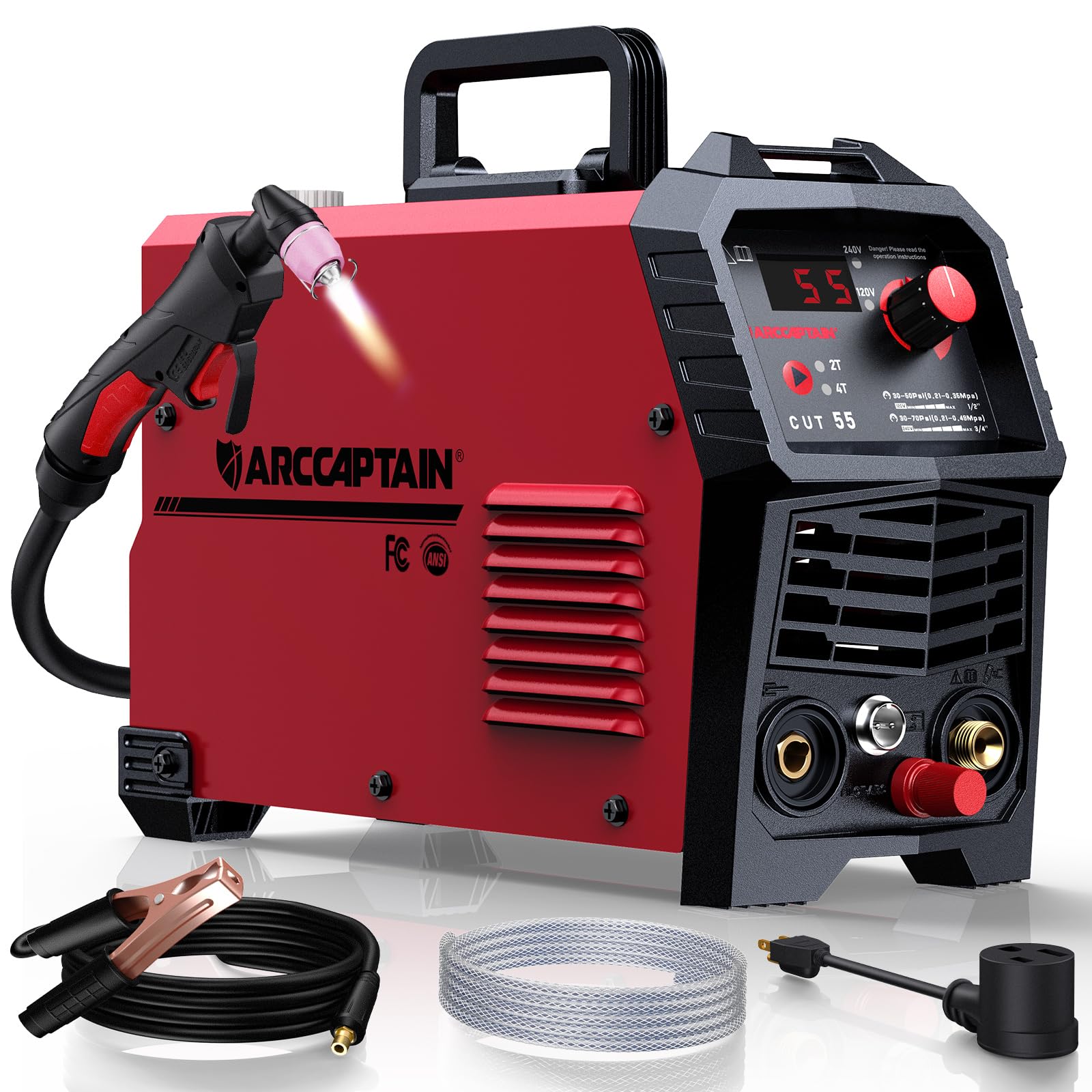
The CUT 55 makes sense when surface prep slows you down. The non-touch pilot arc helps start a cut without dragging the torch tip across every rough panel, which is useful on old brackets, painted supports and rusted truck components.
It is still not magic. Heavy cuts need the right circuit, clean grounding, dry air and patience with duty cycle. For routine repair work, small fabrication and occasional thicker cutting, it gives you a practical step up from lighter 35A and 50A machines.
What People Say
Common praise focuses on the pilot-arc start, portable size and useful dual-voltage setup. Common cautions involve air fittings, setup details and the need for a good compressor.
Overall Sentiment: Generally Positive

How It Helps
|
Situation |
How It Helps |
|---|---|
|
On-the-Road Repairs |
Portable enough for emergency brackets, mounts or patch jobs when your air and power setup can support it. |
|
Everyday Garage Work |
Built-in regulation and clear controls help reduce setup time for repeat repair jobs. |
|
Shop Plate Cutting |
Higher-voltage power gives cleaner results on thicker material than a light-duty 110V-only cutter. |
|
Weekend Fabrication |
2T/4T modes and post-flow control help with longer cuts and consumable management. |
Versatility
You can use it in a cramped garage for lighter work or move it to proper shop power for more demanding cuts. It is best for mechanics who often deal with imperfect metal surfaces.
Key Benefits
- Non-touch pilot arc for easier starts on rusty or painted parts
- Dual-voltage design for garage and shop flexibility
- Built-in regulator and filter for quicker setup
- 2T/4T and post-flow controls for longer cutting sessions
- Requires adequate dry air and a strong ground for best performance
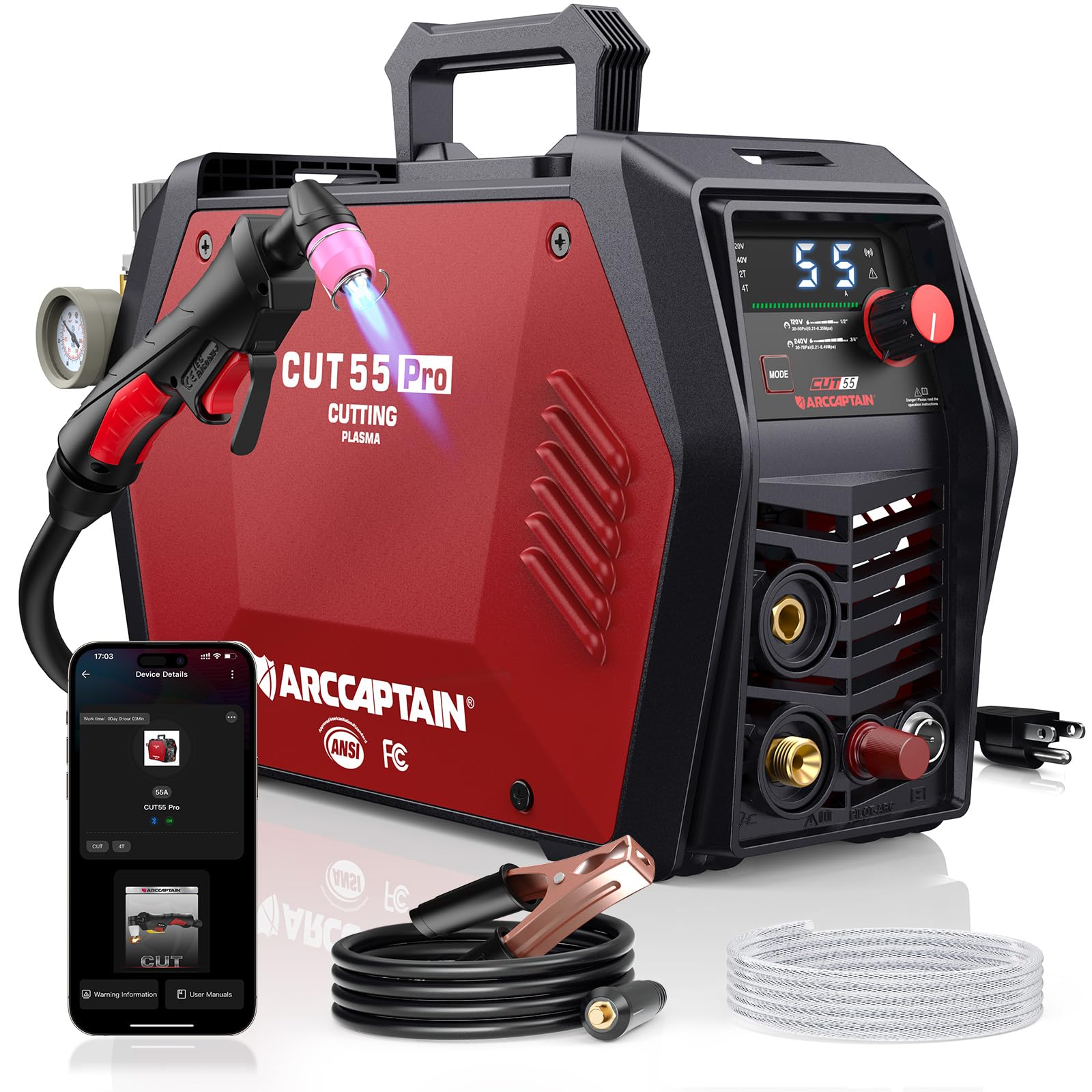
The CUT55 Pro fits mechanics who like seeing and adjusting settings quickly. The app and LED display can make it easier to fine-tune cuts, especially when you move between quick patch jobs, bracket trimming and thicker shop work.
The non-touch pilot arc is the main practical advantage for truck repairs because many parts are painted, rusty or dirty. It still depends on compressor quality and correct setup, so plan for dry air, spare consumables and the right input power.
What People Say
Owners tend to like the cutting power for the size, the pilot-arc start and the app/LED control combination. Setup complaints usually involve fittings, air supply or learning the best settings.
Overall Sentiment: Generally Positive

How It Helps
|
Situation |
How It Helps |
|---|---|
|
Roadside Brackets & Patches |
Portable form makes it easier to move to the truck instead of bringing every part to the bench. |
|
Shop Repairs |
Dual-voltage support lets you adapt to light repairs or stronger shop circuits. |
|
Rusty or Painted Metal |
Non-touch pilot arc helps start cuts with less scraping and grinding before the cut. |
|
Weekend Fabrication |
App control, 2T/4T modes and post-flow settings help with longer cuts and repeated work. |
Versatility
Use it for quick repairs, light fabrication, coated parts and shop cuts where digital visibility and non-touch starts are worth the upgrade.
Key Benefits
- App control and large LED display for easier adjustment
- Non-touch pilot arc for painted, rusty or coated metal
- Dual-voltage support for garage and shop use
- 2T/4T modes for longer cuts
- Best for users who want more control, not just the lowest price

The YESWELDER CUT-55DS Pro sits between a compact repair cutter and a more specialized table-friendly unit. The non-high-frequency blow-back start is the main differentiator, especially if you care about reducing electrical interference around nearby electronics.
For truck mechanics, it is useful on rusty panels, mounts, brackets and general fabrication when you have the right air supply. It is not the lowest-cost option, but it gives you a strong mix of pilot arc, digital controls and practical shop compatibility.
What People Say
Users often praise the cutting power, non-touch starts and clear display. Cautions usually involve hose/fitting setup, dry air and choosing the right consumables.
Overall Sentiment: Generally Positive

How It Helps
|
Situation |
How It Helps |
|---|---|
|
Roadside Fixes |
Portable enough for brackets and emergency patches when your compressor setup is ready. |
|
Shop Work |
Digital controls help fine-tune amperage and air pressure for more repeatable cuts. |
|
Rusty or Painted Panels |
Non-touch pilot arc starts more easily on imperfect metal than a basic contact-start torch. |
|
Table or CNC Prep |
Non-high-frequency start is helpful if you plan to use a plasma table or work near sensitive electronics. |
Versatility
It works well for truck repair, light-to-medium fabrication and table-minded setups where non-HF start is a priority.
Key Benefits
- Non-high-frequency blow-back start for lower interference concerns
- Non-touch pilot arc for painted or rusty metal
- Large LED display and digital controls
- Dual-voltage support for flexible shop use
- Best results depend on dry air, good grounding and compatible consumables
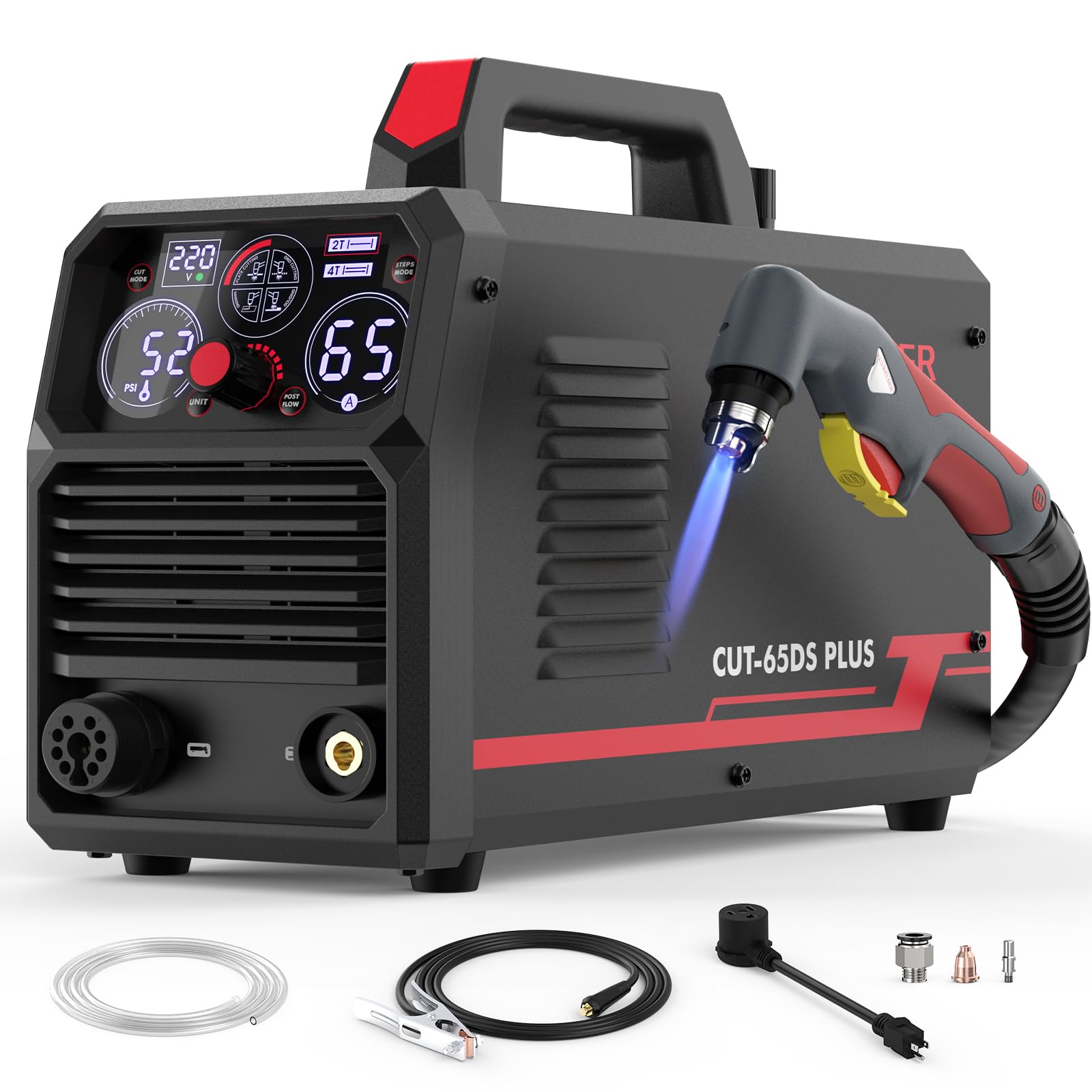
The CUT-65DS PLUS is the pick for mechanics who want more output and more modes instead of the smallest possible machine. The extra amperage gives you more headroom, while the gouging and marking functions can help in fabrication and repair workflows.
Because it has more capability, setup matters more. Use the correct torch accessories for the job, keep the air clean and dry, and make sure your circuit can support the work you expect from a 65A-class cutter.
What People Say
Owners tend to like the feature set, non-touch pilot arc and cutting strength. The main buyer hesitation is whether they truly need the extra modes and whether their shop has the right power and air setup.
Overall Sentiment: Generally Positive

How It Helps
|
Situation |
How It Helps |
|---|---|
|
Roadside Repairs |
Portable enough for field work if you bring suitable power, dry air and consumables. |
|
Shop Fabrication |
Higher output gives more headroom for thicker work than lighter cutters. |
|
Rusty or Painted Parts |
Non-touch pilot arc reduces the need to clean every surface perfectly before cutting. |
|
CNC/Table Setup |
Non-high-frequency start is a useful feature near sensitive electronics or table systems. |
Versatility
This is the most versatile YESWELDER option in the roundup because it combines cutting, gouging and marking. It is better for mechanics who do more than occasional thin-sheet repair.
Key Benefits
- 65A class output for more cutting headroom
- 4-in-1 cutting, grid cutting, gouging and marking functions
- Non-touch pilot arc for imperfect metal surfaces
- Non-high-frequency start for lower interference concerns
- Better for equipped shops than minimal home-garage setups
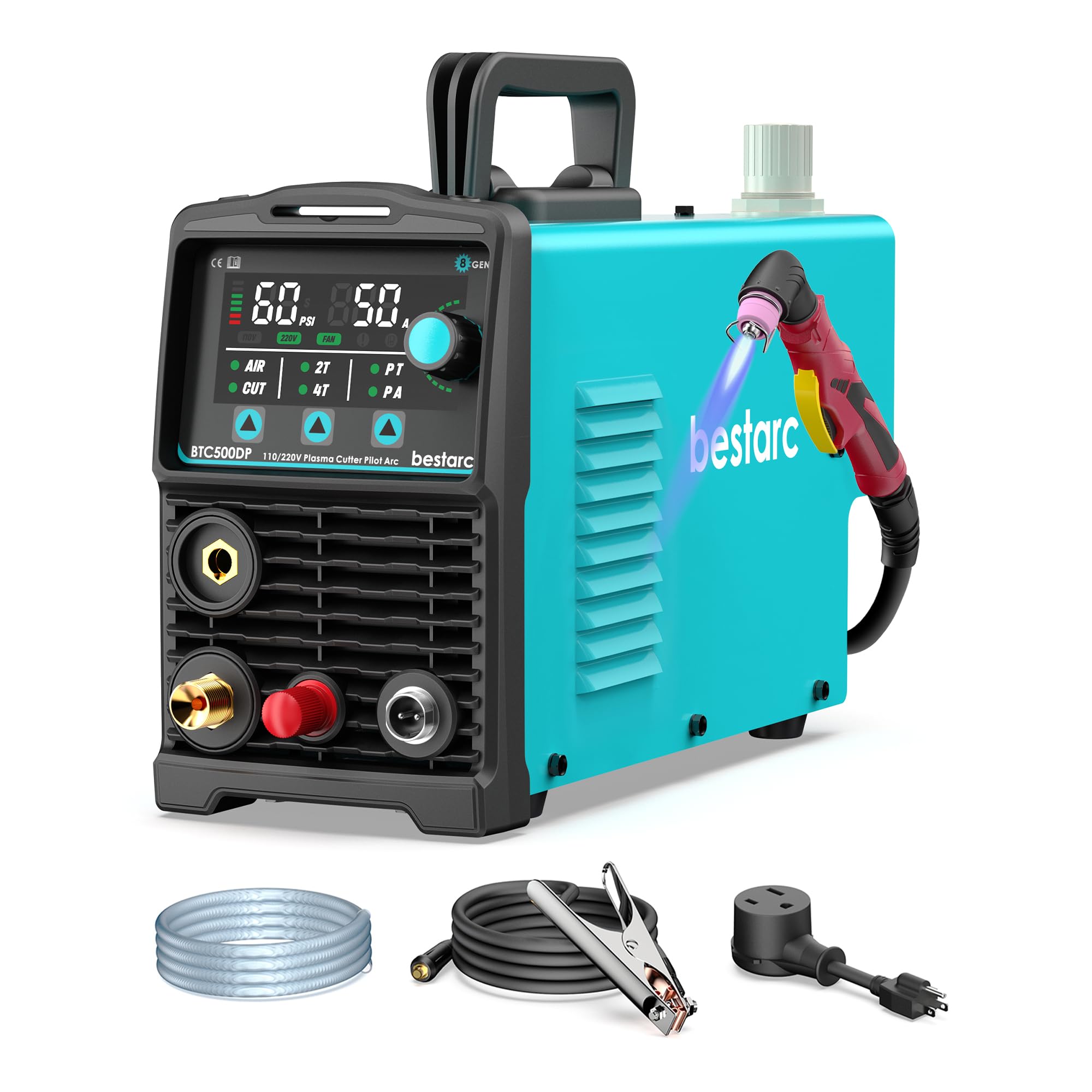
The Bestarc BTC500DP gives new users a friendlier path into plasma cutting because it combines a readable display, air monitoring and pilot arc. That makes it easier to learn settings without immediately outgrowing the machine.
For truck work, it is best for brackets, panels, bolt removal and small-to-medium fabrication. It is still a compact cutter, so match expectations to power, air flow and material thickness.
What People Say
Buyers often like the pilot arc, LED readout and dual-voltage setup. A few common cautions involve checking air fittings, keeping spare tips and learning the right air pressure for each cut.
Overall Sentiment: Generally Positive

How It Helps
|
Situation |
How It Helps |
|---|---|
|
Roadside Repairs |
Portable design helps you bring the cutter to brackets, mounts and panels instead of moving awkward parts. |
|
Shop Fabrication |
Dual voltage gives more room to work when a higher-voltage circuit is available. |
|
Cutting Painted or Rusted Parts |
Pilot arc reduces surface-prep time compared with contact-start-only cutters. |
|
Long or Continuous Cuts |
Post-flow and 2T/4T modes help with torch cooling and finger fatigue. |
Versatility
It covers light truck repair, general fabrication and DIY metalwork well, especially if you want features that make setup easier while learning.
Key Benefits
- Pilot arc for painted or rusty surfaces
- Large LED display and air sensor
- Dual-voltage design for garage and shop use
- 2T/4T and post-flow settings
- Good match for beginners who still want room to grow

The S7 CUT50 is appealing if you want a lower-cost cutter for common garage and truck repair tasks. It includes useful starter pieces, so it can reduce the number of accessories you need on day one.
The tradeoff is that budget machines often require more setup checking. Inspect fittings, confirm air pressure, check the ground clamp and keep spare consumables ready before relying on it for urgent jobs.
What People Say
Common positive feedback centers on value, pilot arc, included accessories and portability. Common cautions mention ground leads, fittings and occasional quality-control issues.
Overall Sentiment: Generally Positive

How It Helps
|
Situation |
How It Helps |
|---|---|
|
Roadside Repairs |
Portable enough for small brackets, panels and onsite trimming when your power and air setup is ready. |
|
Shop Fabrication |
Dual-voltage support gives more flexibility than a 110V-only machine. |
|
Cutting Painted or Rusty Parts |
Pilot-arc ignition can save prep time on imperfect surfaces. |
|
Portable Onsite Jobs |
Included regulator and consumables help you start faster, though a better hose or longer ground lead may be useful. |
Versatility
It is suited to mild steel, stainless, aluminum and general repair cuts when properly set up. It is strongest as a budget tool for casual and light-shop use rather than heavy continuous production.
Key Benefits
- Budget-friendly dual-voltage setup
- Pilot arc for painted or rusty surfaces
- Includes regulator and starter consumables
- Portable enough for garage and field use
- Inspect fittings and leads before heavy use
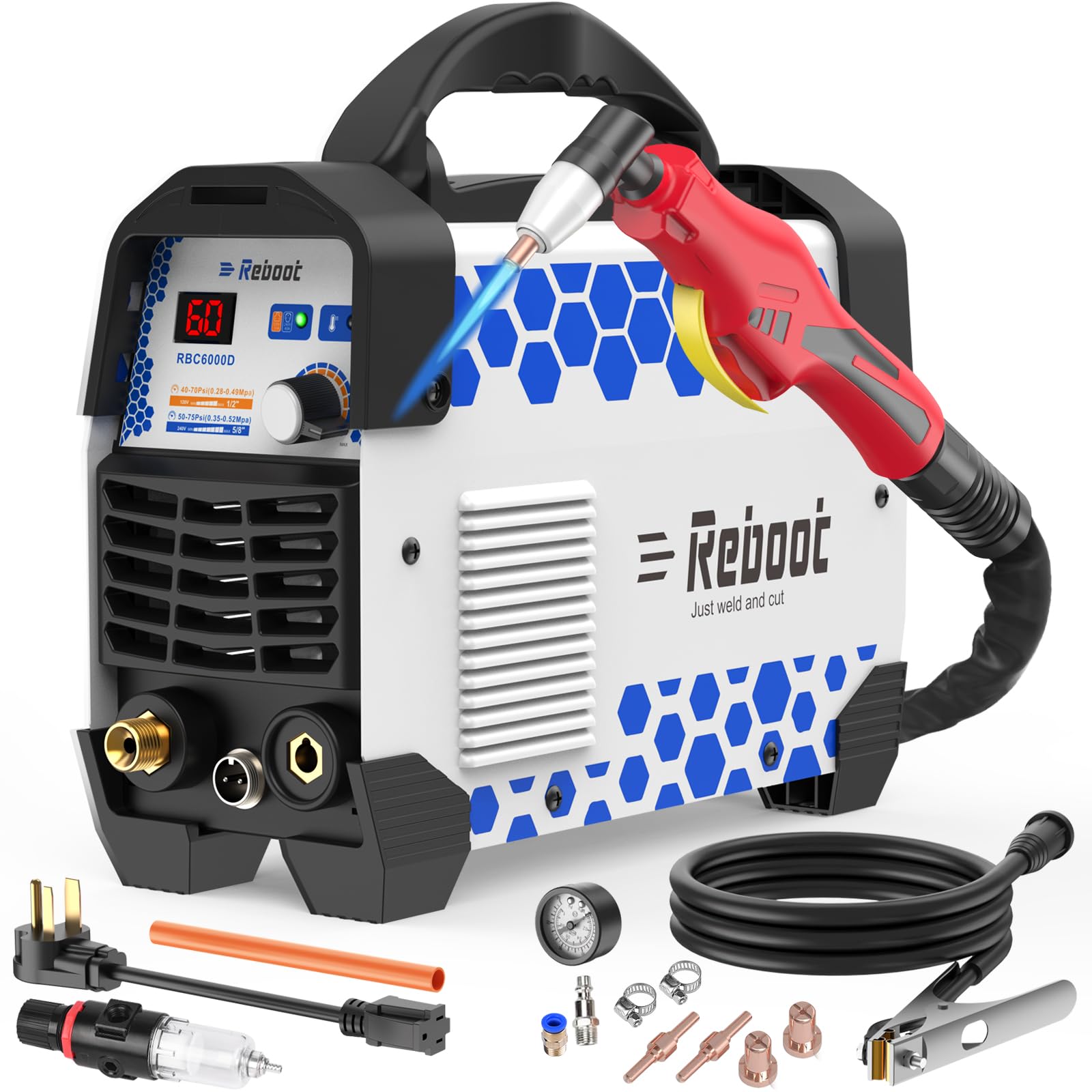
The Reboot 60A is useful if you want a compact cutter with more headroom for occasional heavier work. It is especially appealing if you mostly cut brackets, bolts, patch panels and smaller fabrication pieces but want room to step up when the circuit and air supply allow.
For best results, treat 240V operation as the stronger mode for demanding cuts. On 120V, keep expectations focused on lighter material and short repair work.
What People Say
Users often like the straightforward setup, included torch and tips, and portability. Most cautions focus on using the right circuit, checking air fittings and keeping spare tips nearby.
Overall Sentiment: Generally Positive

How It Helps
|
Situation |
How It Helps |
|---|---|
|
Quick Roadside Fixes |
Works for small jobs like cutting bolts, trimming brackets and field repairs when air and power are available. |
|
Shop Fabrication |
Higher-voltage operation gives better headroom for cleaner cuts on thicker material. |
|
Rusty or Painted Parts |
The included torch and consumables help you get started quickly, but surface prep may still improve cut quality. |
|
Mobile Jobs |
Compact footprint makes it easier to carry in a service truck or move around the shop. |
Versatility
It is useful for home metal projects, light shop work and truck repairs where you want simple controls and more listed amperage than many entry-level cutters.
Key Benefits
- 60A class output with dual-voltage flexibility
- Includes torch and spare tips
- Compact and portable for truck or garage use
- Simple controls for beginners and occasional users
- Better suited to heavier cuts when used with proper 240V power
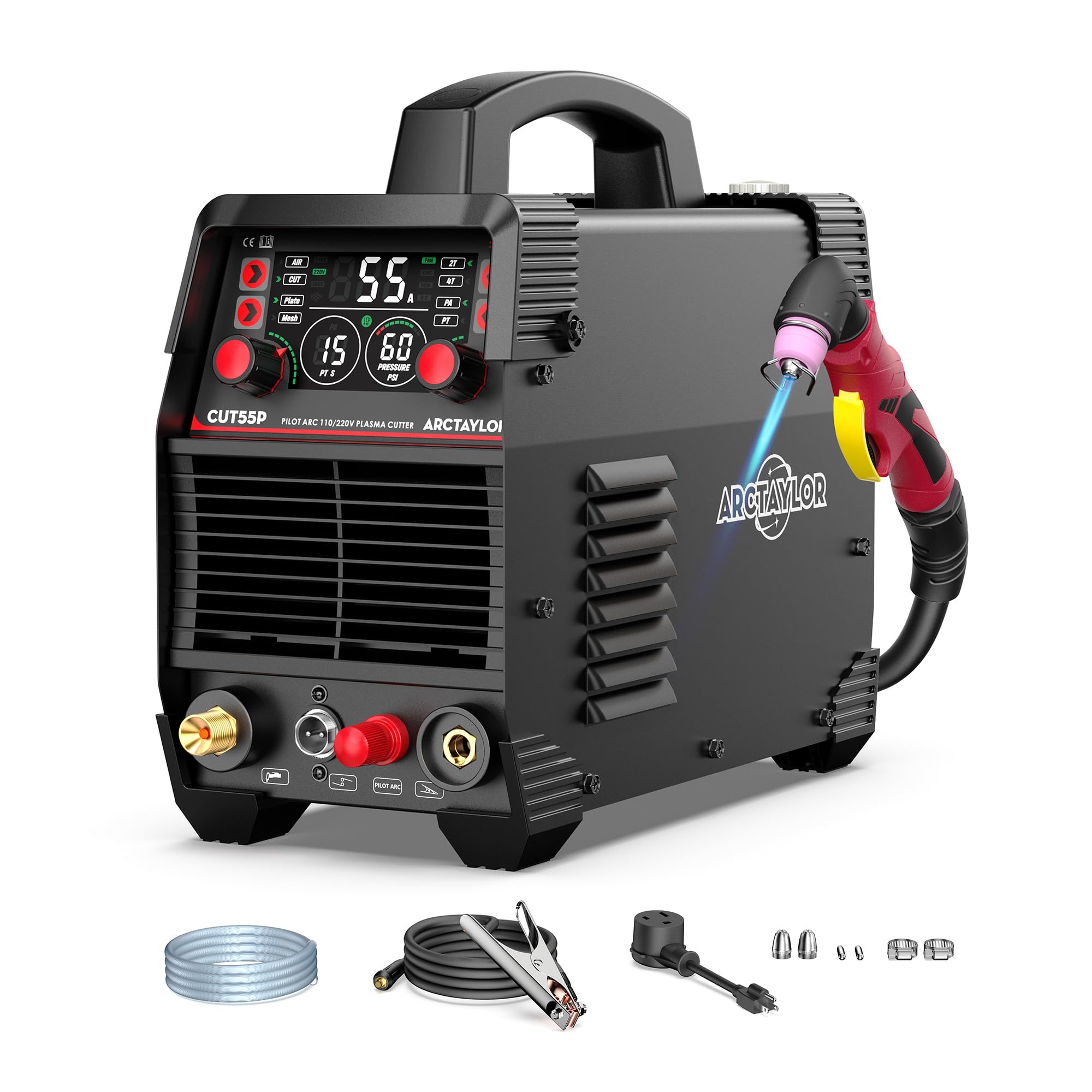
The ARCTAYLOR CUT55P is a good fit if you want a small cutter with modern controls instead of a bare-bones box. The air sensor and display help reduce guessing when setting up cuts.
It is most useful for garages, small shops and mechanics who do repair work rather than all-day production cutting. Use 220V for stronger performance, and keep the 110V side for lighter tasks.
What People Say
Users tend to like the compact size, pilot arc, display and quick setup. The common limitation is that beginners may still need time to learn air pressure, torch distance and consumable care.
Overall Sentiment: Generally Positive

How It Helps
|
Situation |
How It Helps |
|---|---|
|
On-Truck Repairs |
Compact size makes it easier to move around a truck, bench or small garage. |
|
Shop Fabrication |
220V use gives more headroom for cleaner passes on thicker material. |
|
Cutting Rusted or Painted Parts |
Non-touch pilot arc helps reduce prep time on old components. |
|
Weekend Projects |
Simple controls and display feedback help casual users get better repeatability. |
Versatility
This unit suits home garages, truck repair tasks and light fabrication where portability and simple controls matter more than industrial duty cycle.
Key Benefits
- Non-touch pilot arc for rusty or painted metal
- Dual-voltage design for light tasks and shop power
- Large digital display and air sensor
- Compact body for smaller garages
- Good fit for DIY shops, not heavy production cutting
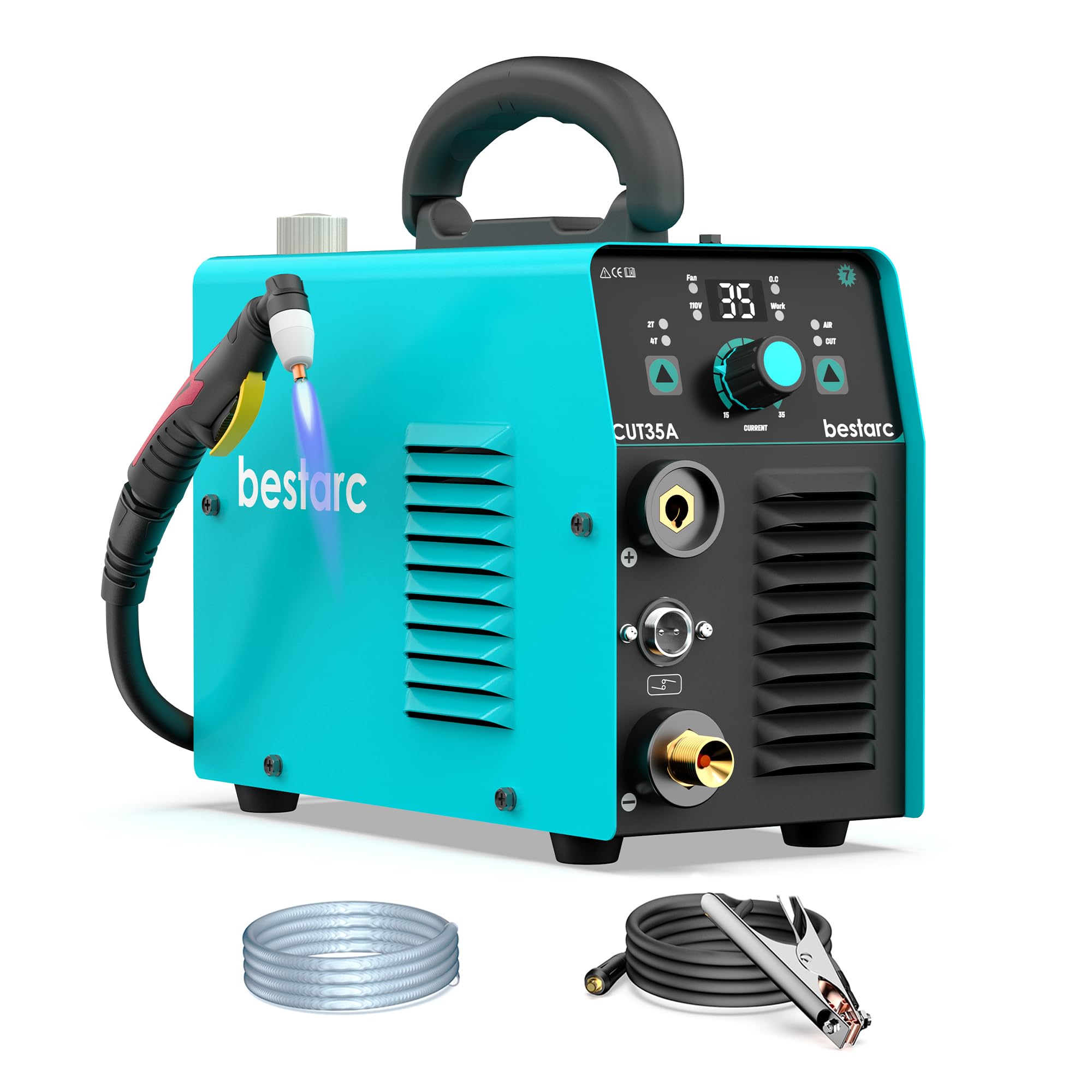
The bestarc CUT35A is not trying to be a heavy shop cutter. It is best when you need a small 110V machine for thin sheet, light brackets, hobby metal and simple truck-related trimming.
The key limitation is contact start. You need the torch tip to touch the work to start the arc, so it is less convenient on heavily painted or rusty metal than a pilot-arc cutter. If you mainly cut dirty truck parts, step up to a pilot-arc model. If you mostly cut lighter clean material, this keeps things simple.
What People Say
Buyers tend to like the small size, simple setup and light-duty usefulness. The most important limitation is that it is a 110V contact-start cutter, so it is not the best choice for thick, dirty or production-style cutting.
Overall Sentiment: Generally Positive

How It Helps
|
Situation |
How It Helps |
|---|---|
|
On-Truck Repairs |
Useful for thin brackets, small bolt removal and light trimming when a larger cutter is not needed. |
|
Shop Fabrication |
Good for short runs on lighter material, but not the right pick for heavy plate or continuous production work. |
|
Thin Sheet and Art Work |
The PT31 torch and simple controls make it manageable for thin metal and detail cuts. |
|
Quick Rust Repairs |
Can help with light rust repair, but heavy rust and paint may require more prep because it is contact start. |
Versatility
This is the light-duty option for 110V users. It is useful for thin to moderate material, quick garage work and occasional truck repair, but pilot-arc dual-voltage models are better for dirtier or thicker truck components.
Key Benefits
- 110V single-phase convenience for home garages
- Simple contact-start PT31 torch
- Post-flow and 2T/4T trigger modes
- Compact and beginner-friendly
- Best for thin sheet, light brackets and short cuts
FAQ
How Do You Choose The Right Plasma Cutter For Truck Mechanic Work?
Start with the jobs you do most. If you mainly cut thin panels, small brackets and bolts, a 35A or 50A cutter may be enough. If you often cut thicker steel, frame-related brackets, crossmembers or fabrication plate, look at 55A to 65A dual-voltage machines and plan to run them on proper shop power.
Choose a non-touch pilot arc cutter if you frequently cut rusty, painted or coated truck parts. Choose a non-high-frequency model if you plan to use a plasma table or work near sensitive electronics. Also check consumable availability, torch type, duty cycle, warranty support and whether the included fittings match your compressor setup.
What Power And Air Setup Should You Use To Get Reliable Cuts?
Power and air are the two things that most often limit real-world plasma cutter performance. A 120V outlet can be convenient for lighter work, but 240V usually gives cleaner, stronger results on thicker material. Use the circuit recommended by the manufacturer and avoid weak extension cords.
For air, use a compressor that can maintain steady pressure and flow. Dry air matters because moisture can clog nozzles, cause arc dropout and shorten consumable life. A filter, regulator and dryer between the compressor and cutter are smart additions for repeat truck repair work.
Ground the workpiece well, keep the torch lead protected, and give the machine cooling time after longer cuts. If your cut quality drops, check the nozzle, electrode, air moisture and ground clamp before blaming the cutter.
Is Pilot Arc Worth It For Truck Repairs?
Yes, for many mechanics. Truck parts are often painted, rusty, oily or coated. A non-touch pilot arc starts the cut without needing the torch tip to drag directly on the workpiece, so it can save prep time and reduce tip wear on rough material.
A contact-start cutter can still work well on clean, thin metal and small garage tasks. It just requires more surface prep and a little more care with torch position.
How Do You Maintain, Troubleshoot, And Stay Safe With A Shop Plasma Cutter?
Keep spare nozzles and electrodes on hand, inspect hoses and fittings for leaks, and clean slag from the torch nozzle between cuts. Replace worn tips when cut quality gets rough or dross increases. If the arc is intermittent, check for moisture in the air line, poor grounding, damaged consumables or an overheated machine.
For safety, wear a proper shaded face shield or welding helmet, gloves, flame-resistant clothing and hearing protection when needed. Use good ventilation because plasma cutting can produce fumes and fine particulates, especially on painted or coated metal. Never cut sealed containers, fuel tanks or unknown coated parts without proper preparation and safety procedures.
What Mechanics Prefer
Truck mechanics usually choose based on cutting power, duty cycle, pilot arc, portability and how often they work away from a fully equipped shop. The ARCCAPTAIN CUT 50 appeals if you want a compact all-around cutter, the ARCCAPTAIN CUT 55 makes more sense if rusty or painted metal is common, and the ARCCAPTAIN CUT55 Pro adds more digital control for users who like app-based setup and a larger display.
If you work near electronics or want table compatibility, the YESWELDER non-HF models deserve attention. If you only need thin-sheet and light bracket work from a 110V outlet, the bestarc CUT35A is the simpler light-duty choice.
Wrapping Up
You now have a clear shortlist of plasma cutters depending on whether you need portability, pilot arc, app control, non-HF start, higher amperage or the lowest practical upfront cost. Match the cutter’s voltage and air demands to your actual shop or service-truck setup before buying, and keep nozzles and electrodes in stock so one worn consumable does not stop the repair.
If you want one practical recommendation, choose the model that matches your common material thickness and the circuits you already have. That fit matters more than chasing the highest amp number on paper.
| Product | Image | Best For | Power Output | Cutting Role | Portability Note | Amazon Details |
|---|---|---|---|---|---|---|
| ARCCAPTAIN Plasma Cutter |
 |
Best overall balance | 50 Amps | General garage and truck repair | Compact, shoulder-strap style portability | Check on Amazon |
| ARCCAPTAIN 55A Plasma Cutter |
 |
Best pilot arc pick | 55 Amps | Rusty or painted metal | Portable class, but verify current listing weight | Check on Amazon |
| ARCCAPTAIN iControl Cut55 Pro |
 |
Best app control | 55 Amps | Digital setup and pilot-arc cutting | Portable, feature-rich design | Check on Amazon |
| YESWELDER 55 Amp Plasma Cutter |
 |
Best non-HF 55A option | 55 Amps | Table-minded and electronics-aware setups | Shop-portable size | Check on Amazon |
| YESWELDER CUT-65DS PLUS |
 |
Best multifunction pick | 65 Amps | Cutting, grid cutting, gouging and marking | Better for equipped shops than minimal setups | Check on Amazon |
| bestarc Plasma Cutter |
 |
Best beginner pilot-arc pick | 50 Amps | General repair and DIY fabrication | Portable class with useful controls | Check on Amazon |
| S7 Plasma Cutter |
 |
Best budget option | 55 Amp class | Budget garage and field repairs | Portable, but inspect included fittings | Check on Amazon |
| Reboot 60A Plasma Cutter |
 |
Best value headroom | 60 Amps | Garage work and occasional heavier cuts | Compact value-focused unit | Check on Amazon |
| ARCTAYLOR 55Amps Plasma Cutter |
 |
Best for DIY shops | 55 Amps | Compact pilot-arc garage cutting | Small-shop friendly | Check on Amazon |
| bestarc Plasma Cutter, 35Amps |
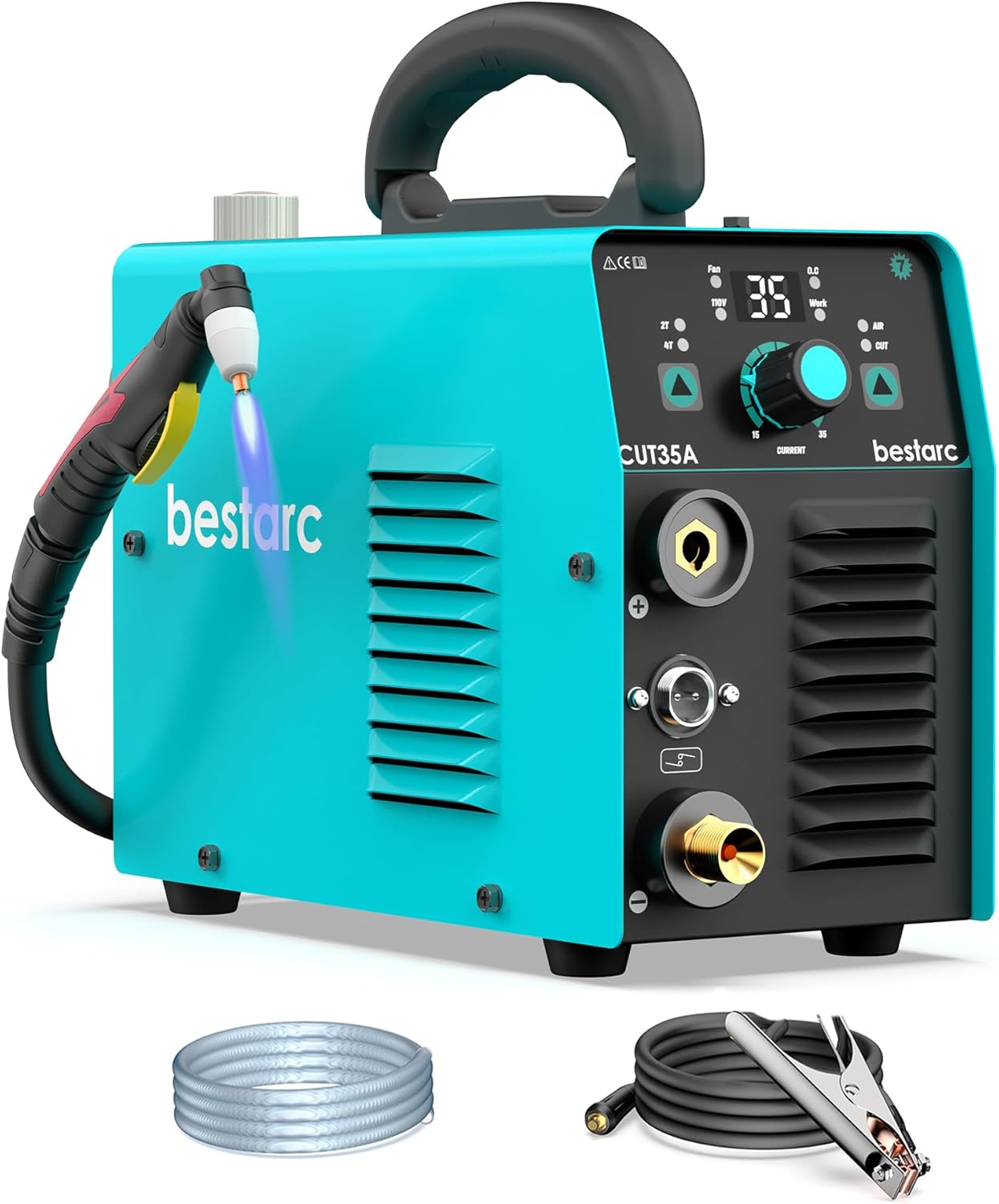 |
Best light-duty 110V pick | 35 Amps | Thin sheet, light brackets and short cuts | Light and simple, but not pilot arc | Check on Amazon |
This Roundup is reader-supported. When you click through links we may earn a referral commission on qualifying purchases.
