The ARCCAPTAIN CUT55 air compressor requirement depends on the exact CUT55 version, but the current standard HF CUT55 is specified for 5.3 CFM at 57.5 PSI. Its regulated operating-air range is 30–50 PSI on 120V and 50–70 PSI on 240V. Compressor capacity, clean dry air, hose condition, and pressure under load all affect how consistently the plasma arc cuts.
Quick Answer
For the current ARCCAPTAIN CUT55 HF model, size the compressor around the manufacturer’s 5.3 CFM at 57.5 PSI air requirement. The cutter operates at 30–50 PSI on 120V and 50–70 PSI on 240V. A larger receiver tank can reduce cycling, but airflow at pressure matters more than tank gallons.
Key Takeaways
- The current standard ARCCAPTAIN CUT55 is rated for 5.3 CFM at 57.5 PSI.
- Its operating pressure is 30–50 PSI on 120V and 50–70 PSI on 240V; do not confuse compressor tank pressure with regulated cutter pressure.
- Choose a compressor by its delivered CFM or SCFM at the required pressure, not horsepower or tank size alone.
- A larger receiver tank can reduce compressor cycling and provide short-term reserve, but it cannot compensate for inadequate CFM during long cuts.
- Use clean, dry compressed air and check the regulator, filter, hose, fittings, and leaks if pressure falls while cutting.
Note: ARCCAPTAIN sells several machines in the CUT55 family, including standard CUT55, CUT55 Pro, CUT55 Prolux, CUT55 MP, and Non-HF versions. Their air specifications are not identical. Confirm the exact model on the machine label and use its manual before setting pressure.
What CFM Does the CUT55 Need?
For the current standard HF CUT55, ARCCAPTAIN lists an air requirement of 5.3 CFM at 57.5 PSI. The manufacturer’s broader specification page gives the airflow as 150 L/min, which is approximately the same 5.3 CFM.
The useful compressor number is airflow at pressure: the standard CUT55 calls for about 5.3 CFM at 57.5 PSI.
That figure is more useful than compressor horsepower, maximum PSI, or tank capacity by themselves. A compressor must be able to deliver enough air while the torch is flowing. A machine with a large tank but a low-CFM pump may work for short cuts and then force pauses while the tank recovers.
Conversely, a compressor with adequate continuous CFM can support longer cutting even if its receiver is not exceptionally large. Extra airflow above the cutter’s requirement provides useful operating margin, but ARCCAPTAIN does not currently specify 7 CFM as a universal requirement for the standard CUT55.
ARCCAPTAIN’s current standard CUT55 specifications are available on the official CUT55 product page.
Minimum Air Requirements for the CUT55
The compressor needs to satisfy three separate conditions: sufficient airflow, correct regulated pressure, and clean, dry air. Treating any one of those numbers in isolation can produce misleading results.
[Amazon Products Picked for You]

[55A 110V/220V Cutting Power]: The SILATU STC550P plasma cutter delivers up to 55A of cutting power with advanced IGBT inverter technology. Use 110V at 15-40A for home garage and lighter-duty jobs, or switch to 220V at 15-55A for thicker metal and more demanding projects. Maximum cutting capacity reaches 1/2" (12mm) at 110V/40A and 7/10" (18mm) at 220V/55A under recommended air pressure (Note: For circuit protection, this machine must be used with 40A circuit breaker)

CUTTING THICKNESS UP TO 20MM: Featuring a brand-new MCU technology upgrade, the plasma cutter machine has a high degree of internal integration, combining full digitalization for more precise control of cutting parameters such as current and voltage. This results in better cutting effects and improved stability. Cutting thickness: Quality 12mm (1/2"), maximum 20mm (3/4").

BUILT-IN AIR COMPRESSOR: With this plasma cutter machine, you're ready to cut as soon as you connect it to a power source, no additional air compressor needed. Designed for effortless outdoor work, it also offers compatibility with external compressors for versatile use
Minimum CFM Needs
For the current standard CUT55, use 5.3 CFM at 57.5 PSI as the manufacturer specification. When comparing compressors, look at the unit’s rated CFM or SCFM near 60 PSI if that rating is available. If the manufacturer lists only 40-PSI and 90-PSI airflow, the 90-PSI rating gives a conservative comparison because compressor airflow normally falls as discharge pressure rises.
- Confirm that the compressor can supply at least the cutter’s specified airflow.
- Allow some reserve rather than choosing a compressor whose published output barely equals the cutter demand.
- Check pressure while air is flowing, because static gauge pressure can look normal even when the compressor cannot keep up.
Pro Tip: When shopping for a compressor, compare its delivered CFM or SCFM rating at the stated pressure. A “150 PSI” compressor is not automatically suitable if its pump cannot continuously supply roughly 5.3 CFM at the pressure the CUT55 requires.
Clean Dry Air
Plasma cutters depend on clean, dry compressed air. Water, compressor oil, rust, and debris can interfere with the torch and accelerate consumable wear. The standard CUT55 package includes an air-filter component, but the rest of the compressed-air system still needs routine maintenance.
| Air Requirement | Standard CUT55 Guidance | Why It Matters |
|---|---|---|
| Airflow | 5.3 CFM at 57.5 PSI | Supports the required plasma-air flow |
| 120V operating pressure | 30–50 PSI | Manufacturer operating range |
| 240V operating pressure | 50–70 PSI | Manufacturer operating range |
| Air quality | Clean and dry | Helps protect cut quality and consumables |
Drain the compressor receiver regularly according to the compressor manufacturer’s instructions. Inspect the water separator and filter, and add additional drying equipment if condensation is a recurring problem in a humid shop.
Why Tank Size Matters on the CUT55
Tank capacity affects how often the compressor pump must run and how much short-term reserve is available, but tank size does not determine continuous airflow. The compressor pump’s delivered CFM is ultimately what determines whether pressure can be maintained during a long cut.
A larger receiver can make a marginal system feel stronger at first because it stores more compressed air. Once that stored air is depleted, however, the compressor must supply the torch from its own pump output. If pump output is below CUT55 demand, pressure will begin falling regardless of how large the tank is.
- A larger tank gives more stored-air reserve.
- More reserve can reduce rapid compressor cycling during short or intermittent cuts.
- The pump must still produce enough CFM for sustained cutting.
- Tank capacity does not replace an air filter, water separator, or dryer.
Some newer CUT55-family variants have their own receiver-size recommendations. For example, ARCCAPTAIN lists at least a 10-gallon tank for the CUT55 Pro and a 20-gallon-or-larger compressor for sustained CUT55 Prolux use. Those recommendations should not automatically be applied to every CUT55 model.
[Amazon Products Picked for You]
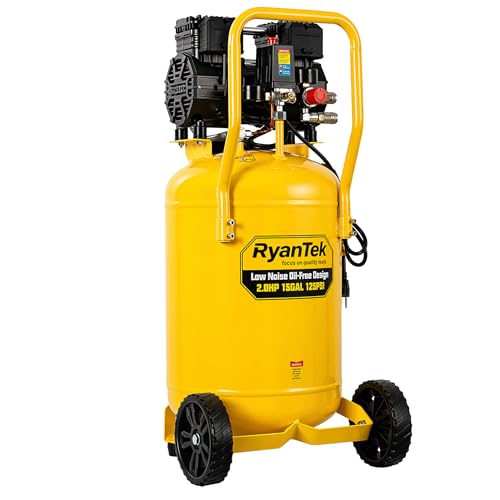
Low-Noise & Oil-Free Technology: Dual-Cylinder pump operates at 66 dBa at 4m for quiet operation and clean air suitable for indoor and sensitive tasks
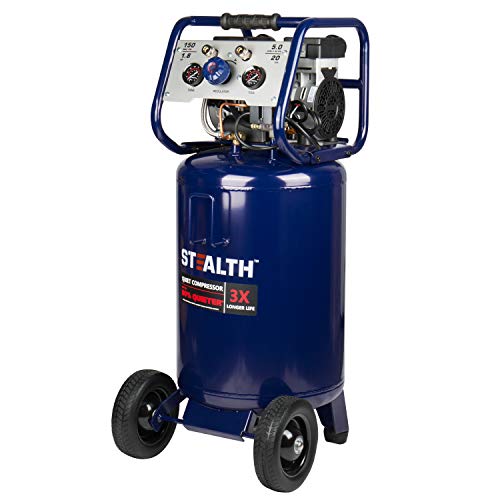
Powerful motor: Generates 1.8 horsepower power for tough projects

RELIABILITY: Portable air compressors like the Klutch 20-Gallon model offer consistent, reliable performance thanks to their 2.0 HP series motor. With air compressors like this, you can trust in their thermal overload protection to prevent overheating during prolonged use, extending the unit's lifespan and providing peace of mind.
Recommended Compressor Setup for the CUT55
For the standard CUT55, start with a compressor capable of supplying at least the manufacturer’s 5.3 CFM at 57.5 PSI requirement and choose additional airflow reserve when practical. The compressor’s receiver pressure may be much higher than 57.5 PSI; a regulator reduces that stored pressure to the pressure required by the cutter.
A practical setup includes:
- A compressor with enough delivered CFM for the CUT55.
- A receiver large enough for the desired cutting duration and compressor cycling behavior.
- A working pressure regulator.
- A moisture separator or filter between the compressor and cutter.
- A properly sized air hose with unrestricted fittings.
- Leak-free connections.
- Regular receiver draining and filter maintenance.
Warning: Do not set the cutter inlet to 90 PSI simply because the compressor can store or produce 90 PSI or more. The standard CUT55 specifies a lower operating-pressure range. Regulate pressure according to your exact model’s manual, and never bypass the regulator or other required air-system components.
Also remember that compressor capacity does not override the plasma cutter’s own duty-cycle limit. ARCCAPTAIN lists a 60% rated duty cycle for the standard CUT55. Follow the machine’s manual for cooling periods and thermal-protection guidance during extended work.
[Amazon Products Picked for You]

【Industrial Performance】The air drying system features two rugged 3/4“ NPT air ports and 1/4” NPT gauge ports to handle high-pressure environments (up to 240 PSI) for a variety of industrial applications. Note: To prevent air leakage, please wrap the sealing tape around the threads appropriately before connecting the screws.
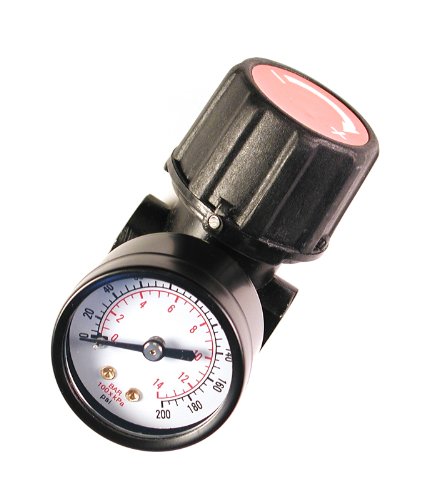
Air regulator for precisely regulating and maintaining constant air pressure

3/8" NPT Piggyback Air Filter/Regulator Combo
How Air Pressure Affects Cut Quality
Correct air pressure helps the plasma system form and maintain a stable jet. Too little pressure or airflow can contribute to poor arc behavior and incomplete or rough cutting. Excess pressure is not automatically better; the regulator should remain within the operating range specified for the machine.
PSI and Cut Quality
The current standard CUT55 lists 30–50 PSI on 120V and 50–70 PSI on 240V as its operating-air ranges. The separate air-consumption specification is 5.3 CFM at 57.5 PSI.
These numbers describe different aspects of the air system. The compressor stores and generates compressed air, while the regulator controls the pressure delivered to the cutter. A compressor with a 125- or 150-PSI receiver can therefore be perfectly normal while the cutter receives much lower regulated pressure.
When diagnosing cut quality, watch the pressure gauge while air is actually flowing. If the reading falls sharply once the torch opens, investigate compressor output, leaks, restrictions, or regulator performance rather than simply increasing the regulator setting beyond the specified range.
Dry Air Matters
Moisture is common in compressed-air systems because cooling compressed air causes water vapor to condense. Drain the receiver, service the filter or water separator, and inspect the airline for contamination. Shops with persistent moisture may need additional coalescing filtration or an air dryer.
| Condition | Likely Effect | What to Check |
|---|---|---|
| Clean, dry air | More consistent operation | Filter and separator condition |
| Water in line | Contamination and consumable problems | Tank drain, separator, dryer |
| Oil contamination | Dirty air reaching torch | Compressor and filtration system |
| Restricted airflow | Pressure drop under load | Filter, hose, fittings, regulator |
Stable Pressure Flow
A pressure gauge that reads correctly before cutting does not prove that the system can maintain adequate airflow. Pressure must remain reasonably stable after the torch begins consuming air.
Common causes of pressure loss under load include:
- Compressor output below the cutter’s required CFM.
- A clogged or waterlogged filter.
- An undersized or excessively long air hose.
- Restrictive quick-connect fittings.
- Air leaks at couplers or threaded joints.
- An incorrectly adjusted or failing regulator.
- A compressor that has not recovered to its normal cut-in/cut-out range.
Correcting the restriction or supply problem is preferable to compensating by feeding the cutter pressure outside its specified operating range.
Check Which CUT55 Model You Own
ARCCAPTAIN’s current lineup contains several similarly named CUT55 machines, and their air specifications differ. This is one reason online recommendations for “CUT55 compressor size” can appear contradictory.
| Model | Published Air Guidance | Important Detail |
|---|---|---|
| CUT55 HF | 5.3 CFM at 57.5 PSI | 30–50 PSI on 120V; 50–70 PSI on 240V |
| CUT55 Pro | At least 90-PSI compressor supply, 5 CFM | At least 10-gallon tank listed by manufacturer |
| CUT55 Prolux | 60 PSI and 4–5 CFM minimum | 20-gallon-or-larger compressor recommended for sustained cutting |
| CUT55 MP | 60 PSI and 4–5 CFM minimum | Operating pressure varies with material and thickness |
Before buying a compressor or changing regulator settings, compare the model number on your machine with ARCCAPTAIN’s official user-manual directory or plasma-cutter comparison page.
Fixing CUT55 Air Supply Problems
If the CUT55 sputters, loses the arc, cuts inconsistently, or shows pressure-related problems, check the air system systematically instead of immediately increasing pressure.
- Verify the exact CUT55 model. Different versions use different air specifications.
- Confirm compressor output. For the current standard CUT55, compare the compressor rating with the 5.3 CFM at 57.5 PSI requirement.
- Check dynamic pressure. Watch the regulator gauge while air is flowing through the cutter.
- Drain the compressor tank. Remove accumulated condensate according to the compressor manufacturer’s instructions.
- Inspect the filter and water separator. Replace or service clogged components.
- Check the hose and fittings. Look for kinks, restrictions, damaged couplers, or undersized components.
- Check for leaks. Air leaking before the cutter reduces available flow.
- Allow the compressor to recover. If pressure repeatedly falls during long cuts, the pump may not provide enough continuous airflow.
- Inspect consumables. If air supply is correct but cut quality remains poor, worn torch consumables may be contributing to the problem.
Note: Compressor duty cycle and plasma-cutter duty cycle are separate limitations. A compressor that overheats or cannot recover fast enough can interrupt cutting even when its tank initially contains plenty of air.
CUT55 Compressed-Air and Plasma-Cutting Safety
Plasma cutting produces an electric arc, intense light, sparks, molten metal, heat, noise, and potentially hazardous fumes. Keep combustible materials away from the cutting area and follow the safety instructions supplied with the cutter.
OSHA requires appropriate eye and face protection where workers are exposed to harmful optical radiation, flying particles, or molten metal. Its eye-protection tables also provide minimum protective-shade guidance for plasma arc cutting. See the OSHA eye and face protection standard.
Ventilation also matters. Cutting coatings, painted metal, galvanized material, stainless steel, or other alloys can create hazardous fumes. OSHA’s welding and cutting requirements address ventilation and other hot-work precautions.
Warning: Wear suitable eye and face protection, gloves, protective clothing, and other PPE required for the job. Provide adequate ventilation, keep the work area dry, and disconnect power before servicing air connections or internal components. Follow the CUT55 manual and applicable workplace safety requirements.
Frequently Asked Questions
What Is the Recommended Air Pressure for an ARCCAPTAIN CUT55 Plasma Cutter?
For the current standard HF CUT55, ARCCAPTAIN lists an operating range of 30–50 PSI on 120V and 50–70 PSI on 240V. The separate air requirement is 5.3 CFM at 57.5 PSI. Other CUT55 variants differ, so confirm the exact model before adjusting the regulator.
How Many CFM Does the ARCCAPTAIN CUT55 Need?
The current standard CUT55 specification is 5.3 CFM at 57.5 PSI. Choose a compressor that can deliver at least that airflow at the required pressure, preferably with reasonable reserve rather than relying on a pump that barely meets the specification.
What Is the Best Air Compressor for a CUT55 Plasma Cutter?
The best match is a compressor whose delivered CFM satisfies the specification for your exact CUT55 model, while also providing clean, dry air and enough receiver capacity for your cutting pattern. For the standard CUT55, start with the 5.3 CFM at 57.5 PSI requirement rather than choosing by horsepower or maximum PSI alone.
Will a 20-Gallon Air Compressor Run an ARCCAPTAIN CUT55?
It can, but tank size alone does not answer the question. Check the compressor’s delivered CFM at the required pressure. A 20-gallon receiver with inadequate pump output will eventually lose pressure during sustained cutting, while a properly rated compressor can keep up much better.
Does a Higher PSI Make the CUT55 Cut Better?
Not automatically. The cutter should be operated within the pressure range specified for its exact model. A compressor may store air at 90, 125, or 150 PSI, but the regulator reduces that pressure before it reaches the cutter. Increasing inlet pressure beyond the specified range is not a substitute for adequate CFM.
Conclusion
The standard ARCCAPTAIN CUT55 does not need an arbitrary 7 CFM supply or 90 PSI at the torch. The current manufacturer specification is 5.3 CFM at 57.5 PSI, with regulated operating pressure of 30–50 PSI on 120V and 50–70 PSI on 240V. Choose a compressor by delivered airflow first, then consider receiver size, filtration, hose restrictions, recovery time, and how long you normally cut.
A larger tank can make intermittent work smoother, but it cannot make an undersized compressor pump produce more continuous airflow. Clean, dry air and stable pressure under load are the practical goals. Because specifications differ across CUT55 variants, verify the model number and manual before changing pressure or buying a compressor.
Sources
- ARCCAPTAIN CUT55 Technical Specifications — standard CUT55 airflow, operating pressure, voltage, duty cycle, air inlet, and cutting specifications.
- ARCCAPTAIN CUT55 Specifications — manufacturer airflow, pressure range, duty-cycle, and technical data.
- ARCCAPTAIN Plasma Cutter Comparison — distinguishes CUT55-family models and their features.
- ARCCAPTAIN User Manual Directory — official manuals for current CUT55-family machines.
- OSHA 29 CFR 1910.133 — Eye and Face Protection — eye/face protection requirements and plasma-cutting shade guidance.
- OSHA 29 CFR 1910.252 — Welding, Cutting and Brazing — ventilation and general cutting-safety requirements.
