
When you build or restore custom cars, the welder you choose shapes how fast, clean, and repeatable your work turns out. You need a machine that can handle thin sheet metal, brackets, aluminum panels, exhaust tabs, and chassis repairs without fighting the arc every step of the way.
Picking the right TIG-capable welder helps you reduce rework, improve fit and finish, and expand the kinds of custom car jobs you can tackle in your garage. This guide focuses on Eastwood machines that balance power, control, portability, AC/DC TIG capability, multi-process flexibility, and value so you can choose a welder that fits your shop and your projects.
Affiliate disclosure:. As an Amazon Associate I earn from qualifying purchases. This roundup is reader-supported. When you click through links, we may earn a referral commission on qualifying purchases.
Top Picks
|
Category |
Product |
Fit Score |
|---|---|---|
|
🏆 Best Overall |
92/100 |
|
|
🎯 Best for Heavy Work |
89/100 |
|
|
⭐ Best Interface & Presets |
91/100 |
|
|
💰 Best Value Portable |
Eastwood MP140i Multi Process Welder Consumable Kit Multi Process Welder Consumable Kit |
84/100 |
|
🚀 Best for Aluminum |
Eastwood Tig 200 Ac/Dc Foot Pedal 5 Pin Low Profile Adjustable |
87/100 |
How We Picked
You want a welder that matches your shop goals. We evaluated machines on performance, amperage range, duty-cycle information, control, AC/DC capability, foot-pedal support, high-frequency start, process flexibility, reliability, support, and value for the money.
We also considered portability if you work in tight spaces or move your welder around the garage. Practical features such as dual-voltage operation, programmable presets, included torch gear, and support from the maker helped separate similar machines.
Quick Verdict
Choose the Eastwood MP200i if you want the strongest all-around TIG-capable multi-process pick for custom car work. Choose the MP250i if you need more power for heavier fabrication. Choose the TIG 225 if presets, AC controls, and a modern interface matter most. Choose the TIG 200 AC/DC if aluminum TIG is your main goal. Choose the MP140i if you want a lighter 120V machine for smaller garage projects and basic TIG-capable flexibility.
Before You Buy
- For aluminum panels: choose an AC/DC TIG machine, not just a basic DC TIG setup.
- For mixed garage work: a multi-process welder can cover MIG, TIG, stick, brackets, tabs, and patch panels with one machine.
- For thin automotive sheet metal: look for smooth low-amp control, a responsive pedal, and practice time on scrap panels.
- For heavier fabrication: duty cycle, amperage headroom, and 240V shop power matter more than compact size.
- For safety: plan for proper shielding gas, ventilation, gloves, fire-resistant clothing, and an auto-darkening helmet rated for the process you use.
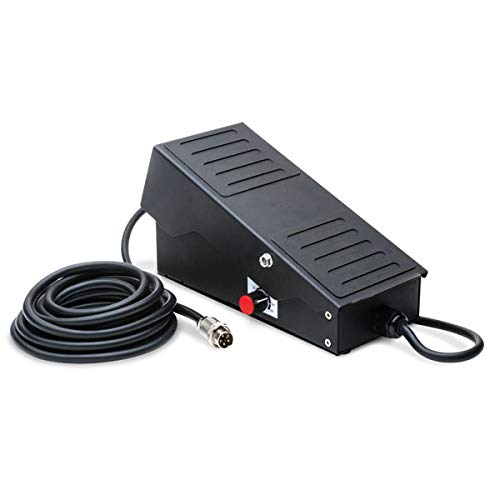
Eastwood Tig 200 Ac/Dc Foot Pedal 5 Pin Low Profile Adjustable
Eastwood Tig 200 Ac/Dc Foot Pedal 5 Pin Low Profile Adjustable
$209.99
- Precise Control With No Fatigue Delivers Better Welds When Using This Rocker Style Foot Pedal
- Works With 20565 Tig Ac/Dc & 14100 Tig 200 Dc Welder
- Low Profile Design For Maximum User Comfort
- Infinitely Adjustable Amperage Limiting Knob , 4.5 X 10 Inch Footprint
Who Should Buy This
- Garage builders who want AC/DC TIG for aluminum and steel
- Custom car owners working on visible panels, brackets, and trim pieces
- Welders who value foot-pedal control more than MIG flexibility
Who Should Avoid This
- Buyers who need MIG, flux-core, and stick in the same machine
- Shops that mainly weld heavy structural parts for long sessions
What People Say
Buyer feedback in the source commonly highlights forgiving setup, helpful HF start, and useful presets for aluminum. Many users also like the included foot pedal and torch.
A few call out small accessory issues such as the ground clamp, so upgrading consumables may be worthwhile if you weld often.
Overall Sentiment: Positive

Ease Of Use
|
Feature |
Ease Level |
|---|---|
|
Initial setup |
Easy |
|
Control presets |
Easy |
|
Foot pedal modulation |
Moderate |
|
Aluminum welding and cleaning prep |
Challenging |
|
Maintenance and parts |
Moderate |
Speed & Response
High-frequency start provides quick arc initiation, and the foot pedal gives smoother amperage changes for thin panels and heat-sensitive aluminum work.
Why You’ll Like It
- AC/DC capability so you can weld both aluminum and steel
- Dual-voltage input for flexible shop setups
- High-frequency inverter for a stable, contamination-free arc start
- Rocker-style foot pedal and presets for better control while learning
- Source-listed 3-year limited warranty support
Eastwood Tig 200 Ac/Dc Foot Pedal 5 Pin Low Profile Adjustable

Eastwood MP250i Elite
Multi-process 250 A welder for MIG/TIG/ARC work, dual 120/240 V operation, IGBT inverter, source-listed 60% duty cycle at 250 A, optional spool gun support for aluminum, and source-listed 3-year limited warranty.
Best for: heavier custom car fabrication where you want one machine for MIG, TIG, and stick work.
Best Heavy-Work Pick
You get a seriously flexible machine that can handle many custom car welding chores without forcing you into several separate welders. The MP250i runs MIG, TIG, and stick on 120 or 240 V and uses an IGBT inverter so arcs feel responsive on thicker work.
It is set up for brackets, patch panels, suspension tabs, and heavier fabrication. It also gives you a path into aluminum MIG work with the optional spool gun. The source-listed duty-cycle rating is useful if you spend time on longer welds or heavier material.
Keep in mind: this is the heavier shop-focused pick, so it is better for a dedicated garage or fabrication space than frequent carrying.
Who Should Buy This
- Builders who need more power for brackets, tabs, and heavier fabrication
- Garages that want MIG, TIG, and stick capability in one machine
- Users who have access to 240V power and a more permanent shop setup
Who Should Avoid This
- Buyers who need a lightweight welder they can carry often
- People focused only on fine aluminum TIG control
What People Say
Most users like that it works as a one-machine solution. Feedback in the source praises its versatility and durable build for both light repair work and heavier fabrication tasks.
A minority note that fine-tuning wire feed and low-amp TIG control can take patience, so expect a learning curve if you are new to multi-process machines.
Overall Sentiment: Positive

Ease Of Use
|
Feature |
Ease Level |
|---|---|
|
Initial setup |
Easy |
|
Switching processes (MIG/TIG/ARC) |
Easy |
|
Wire feed tuning |
Moderate |
|
TIG low-amp precision |
Challenging |
|
Warranty & support |
Easy |
Speed & Response
The IGBT inverter gives a quick, responsive arc for MIG and stick. Some users report wire-feed and low-amp TIG settings take practice, so test settings on scrap before welding visible panels.
Why You’ll Like It
- True multi-process flexibility for MIG, TIG, and ARC work
- Dual 120/240 V operation for shop or mobile use
- IGBT inverter with source-listed high-output duty-cycle information
- Optional spool gun support for aluminum MIG work
- Source-listed three-year limited warranty and customer support
Check Product Details on Amazon

Eastwood MP200i Elite
Multi-process 200 A AC/DC welder for MIG, TIG, and Stick with high-frequency start, rocker foot pedal, dual 120/240 V operation, cooling fan, and Eastwood tech support.
Best for: custom-car builders who want one flexible machine for most garage fabrication jobs.
Best Overall Pick
If you want one machine that covers most custom car work, this is the most balanced pick in the lineup. You can run MIG, TIG, and stick on either 120 or 240 V, and the high-frequency start plus rocker-style foot pedal make TIG feel more controllable once you get used to the machine.
It is a strong fit for patch panels, brackets, exhaust hangers, suspension tabs, and larger fabrication jobs when set up correctly. The AC/DC TIG capability also gives it extra value if aluminum work is part of your build plan.
Keep in mind: multi-process machines give you flexibility, but you still need the right gas, torch setup, consumables, and practice to get clean TIG results.
Who Should Buy This
- Custom car builders who want one welder for MIG, TIG, and stick
- Garage fabricators who move between steel, stainless, and aluminum tasks
- Buyers who want the best balance of flexibility, power, and TIG capability
Who Should Avoid This
- Users who only want a dedicated TIG interface with saved presets
- Buyers who need the smallest and lightest possible 120V machine
What People Say
Most buyers appreciate that this unit handles multiple welding processes without forcing them to juggle several machines. Feedback in the source points to strong weld quality on thicker steel, useful AC capability for aluminum, and helpful support.
A smaller group says dialing in fine wire feed or very low-amp TIG can take patience, but overall it is described as a dependable, shop-ready machine.
Overall Sentiment: Positive

Ease Of Use
|
Feature |
Ease Level |
|---|---|
|
Initial setup |
Easy |
|
Switching processes (MIG/TIG/Stick) |
Easy |
|
Wire feed tuning |
Moderate |
|
TIG low-amp finesse |
Challenging |
|
Warranty & support |
Easy |
Speed & Response
High-frequency start delivers a snappy TIG initiation, and the inverter gives quick response for MIG and stick. Some users note wire feed and very low-amp TIG steps can feel coarse until settings are fine-tuned.
Why You’ll Like It
- True multi-process capability so you do not need separate MIG, TIG, and stick machines
- AC/DC TIG with HF start and rocker foot pedal for better control on aluminum and steel
- Dual 120/240 V operation for use in the shop or on the road
- Robust construction and accessible tech support from Eastwood
- Good for typical custom car tasks, from thin patch panels to heavier fabrication work
Check Product Details on Amazon
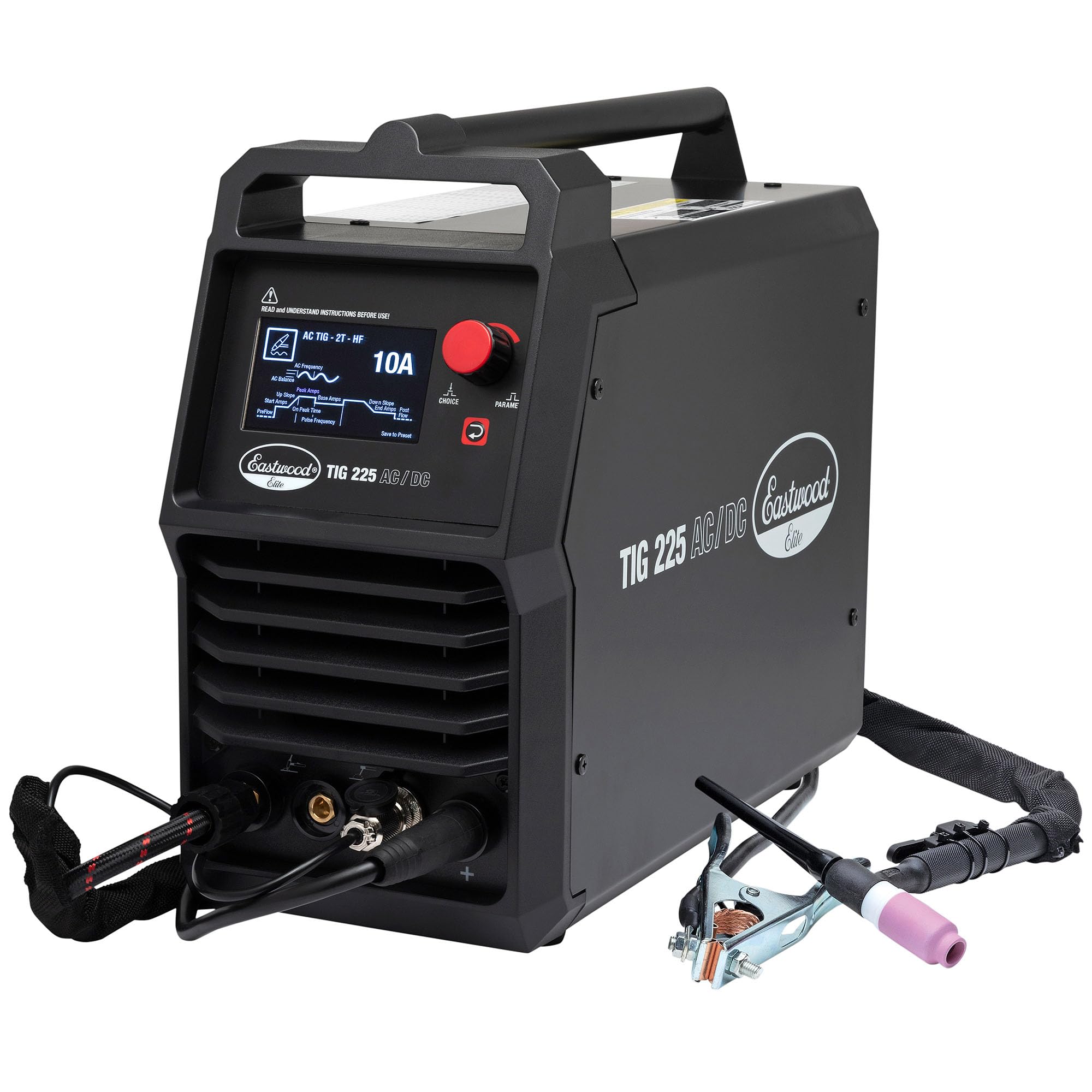
Eastwood Elite TIG 225
Versatile professional TIG 225 AC/DC welder with stick capability, color LCD interface, five programmable presets, configurable pulse and AC controls, and included flex-head WP-17 torch.
Best for: fabricators who want more TIG control, saved settings, and a modern interface for repeatable work.
Best Interface & Presets
The Eastwood Elite TIG 225 is built for people who want a capable TIG-focused machine for serious custom car work. You get AC/DC TIG plus stick welding in a compact inverter package, an easy-to-read color LCD, five programmable presets, and configurable pulse, AC balance, and frequency.
Those controls matter when you switch between thin patch panels, stainless trim, and aluminum body repairs. The HF start and included WP-17 torch help you get to work quickly, while the duty-cycle ratings listed in the source give you predictable guidance for both short bursts and longer seam runs.
Keep in mind: this is the better choice when TIG control matters more than MIG flexibility. If you also want MIG in the same box, the MP200i or MP250i will make more sense.
Who Should Buy This
- Fabricators who repeat similar TIG jobs and want saved settings
- Builders working on aluminum, stainless, or visible custom parts
- Users who prefer a TIG-focused interface over a multi-process control panel
Who Should Avoid This
- Buyers who need MIG welding in the same machine
- People who want the simplest budget welder for occasional patch work
What People Say
Customers commonly praise the intuitive color display and the convenience of saving presets. That makes repeating setups easier when you move between similar automotive jobs.
A few mention that very low-amp TIG and ultra-fine settings take patience, but most find the unit reliable for shop and hobby projects.
Overall Sentiment: Positive

Ease Of Use
|
Feature |
Ease Level |
|---|---|
|
Initial setup |
Easy |
|
Navigating the color LCD |
Easy |
|
Saving and recalling presets |
Easy |
|
Switching AC/DC and Stick |
Moderate |
|
Very low-amp TIG finesse |
Challenging |
Speed & Response
High-frequency start gives snappy TIG ignition, and the inverter reacts quickly when you change amps. Fine low-amp adjustments may still require careful setup and practice.
Why You’ll Like It
- AC/DC TIG plus Stick lets you handle steel and aluminum without swapping machines
- Color LCD and five programmable presets speed up recurring setups
- Configurable pulse, AC balance, and frequency for finer control on tricky alloys
- High-frequency start and included WP-17 flex-head torch make starts consistent
- Sturdy inverter design with useful duty-cycle information for planning welding runs
Check Product Details on Amazon

Eastwood MP140i Multi Process Welder Consumable Kit
Eastwood MP140i Multi Process Welder Consumable Kit
- Keep your Eastwood Elite MP140i Running at peak performance
- Replace Contact tips regularly for optimum weld performance and minimal spatter
- Consumables Designed for Trafimet Ergoplus 15 Torch
- Includes (2) Nozzles, (1) Gas Diffuser, (1) spring, (5).023" contact tips, (5) .030" contact tips, (5) .035" Contact tips
Who Should Buy This
- DIY builders who want a lighter welder for small garage repairs
- Users limited to standard 120V power
- Buyers who value portability and lower entry cost over high-output TIG control
Who Should Avoid This
- Shops that need AC TIG for aluminum panels
- Fabricators welding thick parts or long seams often
What People Say
People tend to like how much the MP140i can do for a small shop. Reviews in the source mention thin patch panels, heavier small parts, household power, and easy carrying as key positives.
Some users mention it can take patience to dial in fine wire feed and very low-amp TIG settings, but many also praise support and warranty coverage.
Overall Sentiment: Positive

Ease Of Use
|
Feature |
Ease Level |
|---|---|
|
Initial setup |
Easy |
|
Switching between MIG/TIG/Stick |
Moderate |
|
Dialing in wire feed and low-amp TIG |
Challenging |
|
Portability and moving the unit |
Easy |
|
Using built-in spot weld timer |
Moderate |
Speed & Response
The inverter starts quickly and responds well to larger amperage changes. Fine adjustments, especially wire-feed resolution, may feel abrupt until you get used to the controls.
Why You’ll Like It
- Multi-process capability: MIG, TIG, flux-core, and stick in one unit
- Runs on standard 120V power for easy garage use
- Portable source-listed 34-lb design makes it simple to move around the shop
- Built-in spot weld timer and inverter tech improve workflow
- Source-listed 3-year limited warranty and accessible customer support
Eastwood MP140i Multi Process Welder Consumable Kit
FAQ
Which Features Matter Most When Choosing A TIG Welder For Custom Car Work?
When you shop for a TIG machine for custom car creations, prioritize a few core features. Look for AC/DC capability if you plan to weld aluminum as well as steel, and choose a unit with dual-voltage 120V and 240V support if you want the flexibility to run at home or in a shop.
Pay attention to the rated duty cycle at useful amperages so you do not lose time waiting for the machine to cool during longer seams. A responsive foot pedal and a high-frequency or lift-start system will give you better control on thin sheet metal and body panels.
Programmable presets and a clear user interface make repeatable settings easier when you switch between steel, stainless, and aluminum tasks.
Should I Buy A Dedicated TIG Welder Or A Multi-Process Welder?
Choose a dedicated TIG welder if your main goal is clean bead control, aluminum panels, stainless trim, or precise body work. Dedicated TIG machines usually give you better fine control and a simpler TIG-focused setup.
Choose a multi-process welder if you want one machine for MIG, TIG, stick, and general garage fabrication. Multi-process units are useful for brackets, tabs, patch panels, and mixed repair work, but very fine TIG control may take more setup and practice.
How Do I Get Clean, Consistent Aluminum Welds On Body Panels And Sheet Metal?
Aluminum success comes down to surface prep, heat control, and the right technique. Remove oil, paint, and oxide with a dedicated stainless wire brush or chemical cleaner before you weld.
Use AC mode with proper balance control if the machine offers it. That helps break up oxide while maintaining a stable arc. Rely on a foot pedal or fingertip amperage control to feather heat in and out on thin panels so you avoid burn-through and warping.
Use a gas lens, the appropriate tungsten, and clean shielding gas. Practice on scrap the same thickness as your car panels before welding visible parts.
What Maintenance, Safety, And Accessories Should You Plan For?
Expect routine maintenance and a small inventory of consumables to keep your welder reliable. Replace collets, cups, and tungsten as they wear. Consider a better ground clamp and torch consumables if the included accessories feel flimsy.
For safety, use an auto-darkening helmet rated for TIG, quality gloves, fire-resistant clothing, and adequate ventilation or a fume extractor when welding painted, coated, galvanized, or dirty panels.
Useful accessories include a foot pedal if not included, a gas regulator with a reliable flowmeter, spare TIG torches or cups, a gas lens kit for thin work, and scrap metal for setup practice.
Can A Smaller 120V Welder Handle Custom Car Work?
A smaller 120V machine can work well for light repairs, patch panels, small brackets, exhaust tabs, and practice projects. The tradeoff is lower amperage headroom and less comfort on heavier parts.
If you expect to weld thicker suspension tabs, frame-related parts, or long beads often, choose a more powerful 240V-capable machine and confirm the duty-cycle information before buying.
Customers Top Picks
When choosing between the Eastwood TIG 200 AC/DC, MP250i Elite, MP200i Elite, TIG 225, and MP140i, start with your main job type. If aluminum body work is your priority, AC/DC TIG control matters most. If you want one machine for a wider mix of custom car work, a multi-process welder gives you more flexibility. If portability and price matter most, the smaller MP140i is easier to move and run from standard 120V power.
Wrapping Up
Choosing the right TIG-capable welder changes how you approach custom car work. Better control helps you make cleaner seams, AC capability lets you tackle aluminum body panels, and multi-process units let you switch between MIG, TIG, and stick as the job requires.
If you want the most balanced all-around option, the Eastwood MP200i is the strongest fit for many custom car builders. If heavier fabrication is your priority, look at the MP250i. If aluminum TIG control matters most, the TIG 200 AC/DC or TIG 225 will be more focused choices. If portability and price matter, the MP140i gives you a lighter entry point for smaller garage jobs.
Spec note: Product bundles, accessories, warranty details, ratings, and availability can change. Check the Amazon listing before buying to confirm the current included accessories and specifications.
| Product | Image | Best For | Process Type | Source-Listed Duty Cycle / Capacity Note | Source-Listed Weight | Check Details |
|---|---|---|---|---|---|---|
| Eastwood Tig 200 Ac/Dc Foot Pedal 5 Pin Low Profile Adjustable |
 |
Aluminum-focused TIG work | AC/DC TIG | Up to 1/4 inch thick; 60% at 190 amps listed in source | 61.7 lbs | Eastwood Tig 200 Ac/Dc Foot Pedal 5 Pin Low Profile Adjustable |
| Eastwood MP250i Elite Multi-Process Welder |
 |
Heavier fabrication | MIG/TIG/Stick | 60% at 250 amps listed in source | 149 lbs | Check Current Amazon Availability |
| Eastwood Elite 200 Amp Multi-Process Welder |
 |
Best all-around custom car pick | MIG/TIG/Stick | Variable duty cycle listed in source; confirm current details on listing | 143 lbs | Check Current Amazon Availability |
| Eastwood Elite TIG 225 AC/DC Welder |
 |
Repeatable TIG presets and interface control | AC/DC TIG/Stick | 20% @ 225A, 60% @ 130A listed in source | 54.2 lbs | Check Current Amazon Availability |
| Eastwood MP140i Multi Process Welder Consumable Kit Multi Process Welder Consumable Kit |
 |
Portable 120V light repair work | MIG/TIG/Flux-core/Stick | Variable duty cycle listed in source; best for lighter work | 34 lbs | Eastwood MP140i Multi Process Welder Consumable Kit Multi Process Welder Consumable Kit |
This Roundup is reader-supported. When you click through links we may earn a referral commission on qualifying purchases.

Tony B. Hensel
Tony B. Hensel is the founder and lead author of GoMyReview.com, a trusted source for honest, hands-on product reviews and buyer’s guides. With over 10 years of experience in consumer research and a background in journalism, Tony combines clarity, accuracy, and real-world testing to help readers make smarter buying decisions.
Before starting GoMyReview.com, Tony worked as a freelance tech writer, contributing to online publications and staying current with trends in home gadgets and electronics. Today, he leads a small team of reviewers, ensuring every article is practical, unbiased, and easy to follow.
When he’s not writing, Tony enjoys home cooking, photography, and DIY projects. Based in the Midwest, he brings personal passion and professional integrity to every review—so readers can shop with confidence.