When you plan a winter car-camping or glamping retreat, the right shelter can make cold-weather camp more manageable by blocking precipitation, providing room for insulated sleep systems, and helping you control ventilation. The tents compared here prioritize spacious interiors, stove-jack compatibility, breathable or heavy-duty fabrics, and basecamp comfort. They are substantial shelters intended mainly for vehicle-supported trips rather than backpacking, so packed size, setup style, ventilation, and weather anchoring should guide your decision.
Affiliate disclosure:. As an Amazon Associate I earn from qualifying purchases. This article contains affiliate links. We may earn a commission from qualifying purchases at no additional cost to you.
Quick Verdict
KAIJIENOO Inflatable is the most convenient option when fast setup is your priority. Mohuihui Inflatable is a close alternative for buyers who prefer a canvas-like technological cotton shelter with skylights and generous floor space. DANCHEL Wall Tent is the better fit when high walls, an open glamping layout, and a traditional cabin-like atmosphere matter more than quick assembly.
Top Picks
|
Category |
Product |
Why It Stands Out |
|---|---|---|
|
🏆 Best Quick Setup |
Inflatable structure, roomy layout, stove jack, and vehicle-supported basecamp convenience. |
|
|
💎 Best Canvas-Like Inflatable |
Technological cotton fabric, skylights, mesh ventilation, and a large shared living area. |
|
|
🎪 Best Traditional Glamping Layout |
High sidewalls, an open interior, stove-jack compatibility, and a cabin-like camping atmosphere. |
How We Chose These Tents
We compared the seller-listed materials, shelter layouts, stove-jack designs, ventilation features, setup methods, usable interior space, and portability trade-offs. We also considered buyer concerns that matter in winter car camping: condensation management, anchoring, packed bulk, access, headroom, and the amount of work required to pitch and repack each shelter.
Trust note: This is an editorial comparison based on available product information and practical buying criteria, not a claim of hands-on testing. Specifications can vary by size, color, or listing configuration, so confirm the selected model’s current details before ordering.
Before You Buy
- These are bulky, vehicle-supported shelters rather than lightweight backpacking tents.
- Check the exact dimensions, packed weight, included pump or frame components, and stated occupancy for the size you select.
- A “four-season” description does not guarantee suitability for every wind, snow, or extreme-temperature condition.
- Practice setup at home and inspect seams, valves, guy lines, stakes, and stove-jack components before a remote trip.
- Plan an insulated sleep system separately; a tent alone does not provide dependable warmth.
Stove and carbon-monoxide safety: A stove jack provides a designated flue opening but does not make indoor combustion risk-free. Use only a compatible stove and properly installed chimney system, maintain the manufacturer’s required clearances, protect the floor, keep ventilation open, use a working carbon-monoxide detector, and never leave a lit stove unattended. Follow all tent, stove, campground, and fire-restriction instructions.
KAIJIENOO Inflatable Tent Review
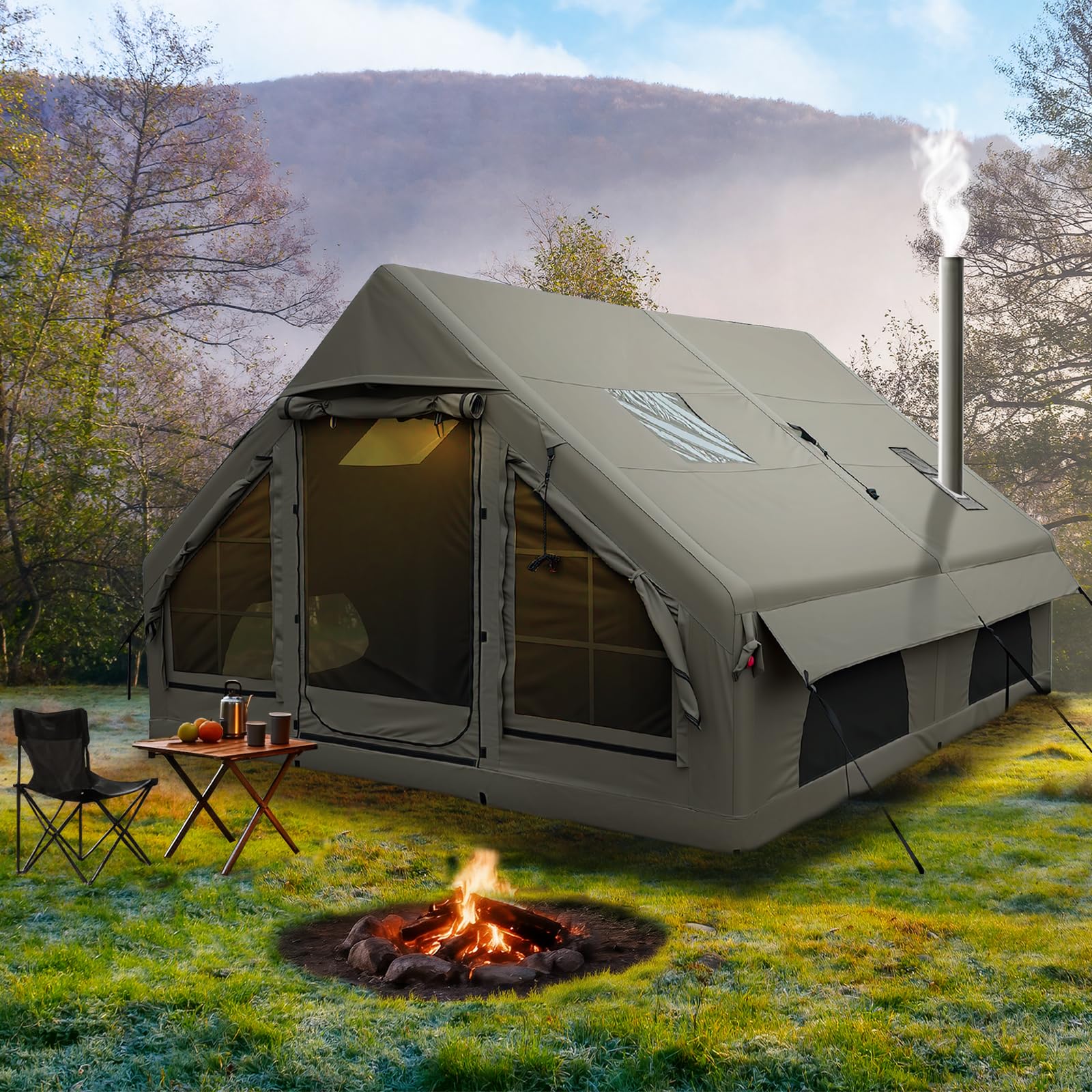
The KAIJIENOO is positioned as a large inflatable shelter for car camping, family trips, and longer basecamp stays. Its seller-listed configuration combines a cotton-style shell, an inflatable support structure, multiple access points, and a stove jack. That combination may reduce the amount of frame assembly required while still providing enough room for sleep systems, equipment, and a small shared area.
The source listing describes an approximately eight-minute inflation time, a 12 m² floor plan, and a 3800 mm water-resistance specification for the featured configuration. Treat those as listing claims rather than universal specifications, because size variants and current product details can change. The packed shelter is substantial and should be planned around vehicle transport.
Why You’ll Like It
Its main appeal is convenience: the inflatable frame can simplify the initial pitch, while the roomy interior and stove-jack opening suit buyers building a comfortable cold-weather base. Cotton-style fabric may also feel more residential and less plasticky than a conventional synthetic dome tent, although ventilation is still necessary to manage moisture.
Who Should Buy This
Choose it for vehicle-supported family camping, hunting camp, festival lodging, or a multi-night winter base where quick structural inflation and generous floor space matter.
Who Should Avoid This
Skip it for backpacking, long manual carries, very small campsites, or trips where you cannot dry and repack a large fabric shelter after wet weather.
|
Pros |
Cons |
|---|---|
|
✅ Inflatable structure can reduce conventional frame assembly |
❌ Heavy and bulky compared with ordinary camping tents |
|
✅ Cotton-style shell is intended to balance weather protection and breathability |
❌ Manual inflation may be tiring without a compatible electric pump |
|
✅ Stove jack and multiple doors support cold-weather basecamp use |
❌ Requires careful stove installation, ventilation, and carbon-monoxide precautions |
|
✅ Large floor plan can accommodate beds, gear, and shared living space |
❌ Needs adequate drying and storage space after wet trips |
Situations
|
Situation |
How It Helps |
|---|---|
|
Vehicle-Supported Winter Trips |
The inflatable frame can shorten the initial structural setup while the stove-jack design supports a properly planned hot-tent system. |
|
Family Weekends |
The broad floor plan gives occupants more flexibility when arranging mattresses, insulated bedding, and equipment. |
|
Basecamp or Hunting Stays |
The shelter can serve as a central sleeping and gear area when weight is less important than interior room. |
Aesthetic
The red exterior, canvas-like body, vinyl skylights, and structured air columns give it a distinctive luxury-basecamp appearance rather than the look of a standard nylon dome tent.
Key Benefits
- Seller-listed quick inflatable setup for the featured configuration
- Cotton-style fabric intended to provide a more breathable shelter feel
- Stove-jack opening for a compatible, correctly installed flue system
- Large listed floor area for vehicle-supported group camping
Check Product Details on Amazon
Mohuihui Inflatable Tent Review
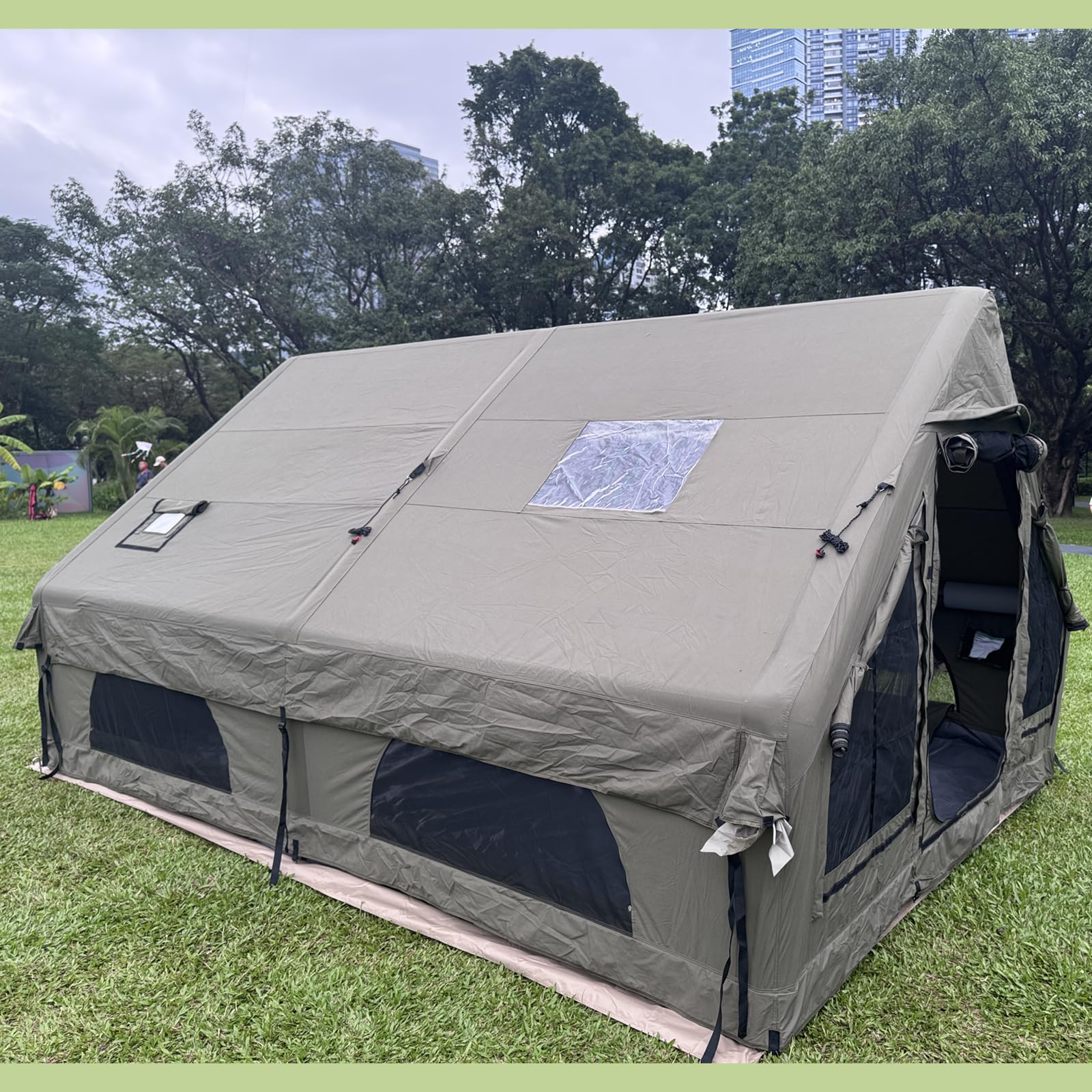
The Mohuihui follows a similar inflatable-glamping concept but emphasizes technological cotton fabric, skylights, mesh windows, and a large shared interior. It is designed for buyers who want a canvas-inspired atmosphere without assembling a traditional rigid frame.
The featured source describes approximately eight-minute inflation, a 12 m² interior, and a 3500 mm water-resistance specification. Verify those details against the exact size and configuration shown on Amazon before purchasing. Like the KAIJIENOO, it is best treated as a car-camping or basecamp shelter because the packed tent, pump, stakes, and accessories create a substantial load.
Why You’ll Like It
The skylights and mesh openings can make a large shelter feel brighter and less enclosed, while the inflatable structure is intended to simplify pitching. Its roomy floor plan is useful when you want separate sleeping and living zones inside one shelter.
Who Should Buy This
It suits couples, families, and small groups who prioritize a spacious canvas-like interior, natural light, ventilation options, and vehicle-supported transport.
Who Should Avoid This
It is a poor match for minimalist campers, small storage spaces, long carries, or buyers who do not want to maintain and dry a large fabric tent.
|
Pros |
Cons |
|---|---|
|
✅ Inflatable support system is designed for straightforward pitching |
❌ Heavy and bulky for transport away from a vehicle |
|
✅ Technological cotton offers a canvas-like appearance and feel |
❌ Large packed volume requires substantial storage space |
|
✅ Large interior supports flexible sleeping and living layouts |
❌ Exact warranty and included accessories should be confirmed before purchase |
|
✅ Skylights, mesh windows, and stove jack improve versatility |
❌ Skylights and multiple openings add components that must be closed and checked in poor weather |
Situations
|
Situation |
How It Helps |
|---|---|
|
Couples’ Glamping Trips |
The roomy interior allows a full sleep setup plus space for clothing, chairs, and other comfort-focused equipment. |
|
Family Weekends |
Multiple openings and a broad floor plan can make it easier to organize beds, equipment, and a shared indoor area. |
|
Car-Camping Basecamp |
Vehicle transport makes the heavier package practical while the inflatable structure reduces the need for a conventional pole frame. |
Aesthetic
The green canvas-like body, structured air columns, and skylights create a polished luxury-camping look with more natural light than many enclosed winter shelters.
Key Benefits
- Seller-listed quick inflation for the featured size
- Technological cotton construction with a canvas-inspired appearance
- Skylights and mesh openings for light and adjustable airflow
- Stove jack and broad floor plan for vehicle-supported cold-weather camping
Check Product Details on Amazon
DANCHEL Wall Tent Review
The DANCHEL takes a more traditional approach than the two inflatable tents. Its high sidewalls, circular or cabin-like profile, and heavy-duty Oxford construction are aimed at glamping, group camping, and extended basecamp use. The layout prioritizes standing room and flexible furniture placement rather than lightweight portability or rapid inflation.
The featured listing describes 900D Oxford fabric, a stove jack, and capacity for a group in the selected configuration. Confirm the exact dimensions, frame components, occupancy guidance, fabric treatment, and included accessories for the current size before ordering. Expect a more involved pitch and repack process than with an inflatable structure.
Why You’ll Like It
High walls make more of the floor area usable because occupants can stand or place beds and furniture closer to the perimeter. The open layout also creates a cabin-like social space for meals, equipment organization, or longer stays.
Who Should Buy This
Choose it for family glamping, hunting camp, event camping, or a semi-permanent vehicle-supported base where headroom and a traditional shelter layout matter more than setup speed.
Who Should Avoid This
Avoid it for backpacking, solo trips that require frequent campsite changes, or situations where one person must carry and assemble every component quickly.
|
Pros |
Cons |
|---|---|
|
✅ Spacious interior supports flexible furniture and sleeping layouts |
❌ Heavy package is intended for vehicle-supported transport |
|
✅ Heavy-duty Oxford fabric is intended for repeated basecamp use |
❌ Assembly is more involved and may be easier with two people |
|
✅ High walls improve standing room and usable perimeter space |
❌ Not appropriate for backpacking or lightweight travel |
|
✅ Stove-jack design supports a properly installed compatible flue |
❌ Large fabric panels require careful drying, cleaning, and storage |
Situations
|
Situation |
How It Helps |
|---|---|
|
Family Glamping |
The high walls and broad layout provide room for beds, chairs, storage, and a communal area. |
|
Winter Basecamp |
The stove-jack opening and substantial fabric support a carefully planned cold-weather camp with appropriate ventilation and safety equipment. |
|
Event or Group Camping |
The tall profile and open floor plan create a useful central shelter for gathering, meals, or gear organization. |
Aesthetic
The khaki exterior, tall profile, and high-wall silhouette resemble a compact yurt or canvas cabin, creating a more traditional glamping presentation than an inflatable tent.
Key Benefits
- High sidewalls increase usable vertical and perimeter space
- Seller-listed 900D Oxford construction for the featured configuration
- Open interior supports flexible sleeping and living arrangements
- Stove-jack opening makes a compatible hot-tent setup possible when installed correctly
Check Product Details on Amazon
FAQ
Can I Use a Stove Inside?
A stove may be used only when the tent’s current manufacturer instructions approve the specific setup and the stove, chimney, flashing, and clearances are compatible with the stove jack. Keep ventilation open, place the stove on a stable heat-resistant surface, protect nearby fabric and flooring, and use a working carbon-monoxide detector.
Never assume a stove jack makes any stove safe. Follow the tent and stove manuals, campground rules, fire restrictions, and local regulations, and never leave a burning stove unattended.
How Easy Are Setup and Breakdown?
The two inflatable tents are advertised as faster to erect than a conventional framed wall tent once they are unfolded and connected to a suitable pump. They still need to be staked, guyed, tensioned, and checked for secure valves and weather protection. The DANCHEL requires a more traditional multi-component assembly process and may be easier to pitch with another person.
Repacking can take longer than pitching because large fabric panels should be dry, clean, and folded carefully. Practice at home before traveling and confirm that the packed shelter fits your vehicle and storage area.
Are These Tents Really Suitable for Winter?
They are marketed for cold-weather or four-season use, but suitability depends on the exact model, forecast, wind exposure, snow load, anchoring, campsite selection, and your sleeping and heating systems. Do not treat a four-season label as permission to use a shelter beyond its documented limits.
Use appropriate stakes and guy lines, clear accumulating snow when the manufacturer requires it, maintain ventilation, and bring an insulated sleeping pad and cold-rated sleep system even when using a stove.
Do Cotton-Style Tents Eliminate Condensation?
No. Breathable fabric and adjustable vents may help manage moisture, but condensation can still form from occupants, wet equipment, cooking, temperature differences, and insufficient airflow. Keep vents open as conditions allow, avoid drying soaked gear inside, and wipe or air out the shelter before packing.
How Much Campsite Space Do I Need?
Plan for more than the listed floor dimensions. You also need clearance for guy lines, doors, chimney routing, spark protection, safe stove distances, and movement around the shelter. Check the exact footprint and guy-out requirements before reserving a compact campsite.
What Campers Prefer
Choose an inflatable model when reducing frame assembly is your main priority and you are comfortable transporting a large pump-supported shelter. Pick the KAIJIENOO for an emphasis on straightforward inflatable setup, or the Mohuihui when skylights and a technological cotton interior are more appealing.
Choose the DANCHEL when high walls, standing room, and a traditional glamping atmosphere outweigh the extra assembly work. In every case, confirm packed weight, exact dimensions, current accessories, fabric specifications, and weather guidance for the configuration you intend to purchase.
Wrapping Up
The KAIJIENOO Inflatable is the strongest fit for buyers prioritizing convenient inflation and a spacious winter car-camping layout. The Mohuihui Inflatable offers a similar basecamp concept with a canvas-inspired technological cotton body, skylights, and multiple ventilation openings. The DANCHEL Wall Tent is the better choice for buyers who prefer high walls, an open traditional layout, and a cabin-like glamping experience.
None is a lightweight shelter, and no stove-ready tent removes the need for careful fire and carbon-monoxide precautions. Base the final decision on the current listing’s dimensions, packed weight, included components, setup instructions, and documented weather limitations.
Detailed Comparison
Specification note: The entries below reflect details stated in the supplied product information for the featured configurations. Verify the current Amazon listing because specifications and included components may vary by size or seller update.
| Large Luxury Inflatable Camping Tent by KAIJIENOO | Large Luxury Inflatable Camping Tent by Mohuihui | DANCHEL OUTDOOR B6 Luxury Glamping Wall Tent | |
|---|---|---|---|
 |
 |
 |
|
| Best For | Quick inflatable basecamp setup | Canvas-like inflatable glamping | High-wall traditional glamping |
| Listed Occupancy | Up to 10 people for the featured configuration | Up to 10 people for the featured configuration | Up to 7 people for the featured configuration |
| Listed Material | Waterproof cotton | Technological cotton fabric | 900D Oxford fabric |
| Listed Water Resistance | 3800 mm for the featured configuration | 3500 mm for the featured configuration | Described as waterproof; verify current test rating |
| Listed Setup Information | Approximately 8 minutes to inflate, before staking and guying | Approximately 8 minutes to inflate, before staking and guying | No verified assembly time provided |
| Main Trade-Off | Large packed size and manual-pump effort | Bulky transport and storage requirements | More involved frame assembly and repacking |
| Check Amazon Availability | Check Amazon Availability | Check Amazon Availability |
This roundup is reader-supported. When you click an affiliate link, we may earn a commission from qualifying purchases at no additional cost to you.