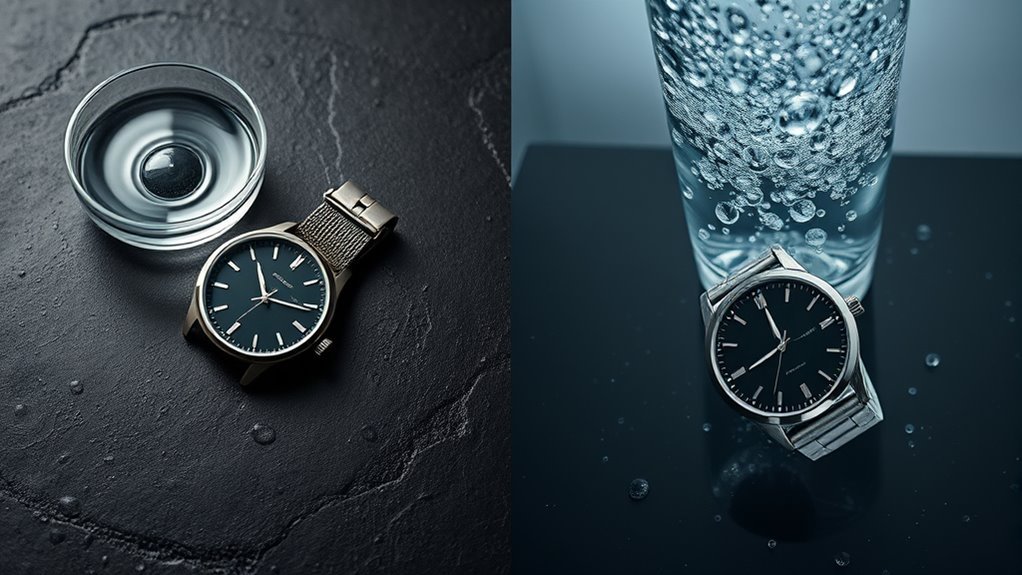
5 ATM and 10 ATM are the two most common watch water-resistance ratings, and they are not interchangeable. Both are based on static pressure testing in a lab, not real-world motion. 5 ATM handles rain, handwashing, showers, and brief shallow swimming. 10 ATM adds a bigger safety margin for swimming, snorkeling, and more active movement in water. Neither rating is permanent — seals, gaskets, and crown position all affect how well it actually holds up.
Quick Answer
5 ATM (about 50m of static pressure) is built for rain, handwashing, and brief shallow swimming. 10 ATM (about 100m) adds a larger safety margin for swimming, snorkeling, and active water sports. Both figures come from lab testing, not guaranteed real-world diving depths.
Key Takeaways
- 5 ATM handles everyday water exposure: rain, handwashing, and brief shallow swimming.
- 10 ATM adds a larger safety margin and is better suited to swimming, snorkeling, and active water use.
- ATM ratings reflect static lab pressure tests, not real-world motion, impacts, or temperature swings.
- ATM and IP ratings measure different things, so a higher IP number doesn’t automatically mean “more water resistant” than an ATM number.
- Water resistance depends on intact seals and a fully closed crown, so it needs regular maintenance, not a one-time check.
What 5 ATM and 10 ATM Mean for Watches
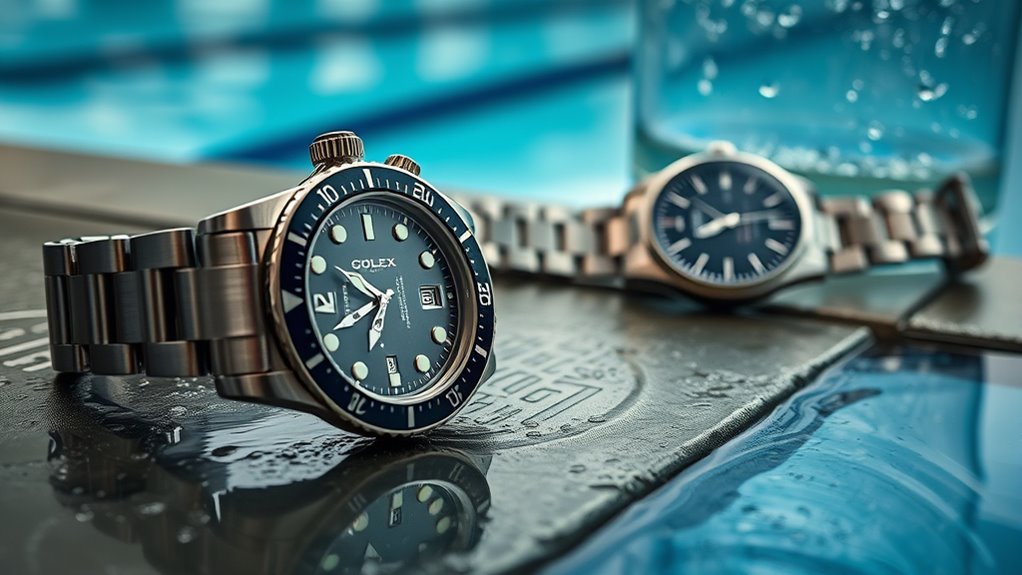
A watch’s ATM rating shows how much static water pressure the case can withstand, tested under the international standard ISO 22810:2010, Horology — Water-resistant watches. 5 ATM corresponds to about 50 meters of pressure, and 10 ATM to about 100 meters.
In practical terms, 5 ATM supports light swimming and routine contact with water, but it isn’t designed for diving or high-pressure jets. A 10 ATM rating extends that protection to swimming, snorkeling, and many water sports.
These numbers come from controlled lab conditions, not dynamic use — so motion, impacts, and temperature shifts can reduce real-world performance. A properly sealed screw-down crown matters here: if it’s loose or left unscrewed, even 10 ATM protection can fail. Both ratings also depend on seals that degrade over time, which is why regular inspection matters as much as the number on the case back.
Full ATM Rating Chart: From Splash-Resistant to Dive-Ready
5 and 10 ATM sit in the middle of a wider scale. Here’s how the common ratings break down, based on manufacturer documentation and ISO 22810:
| Rating | Approx. depth | Typical use |
|---|---|---|
| 1 ATM | 10m | Light splashes only — no washing or rain exposure |
| 3 ATM | 30m | Rain, handwashing — not swimming |
| 5 ATM | 50m | Showering, brief shallow swimming |
| 10 ATM | 100m | Swimming, snorkeling, water sports |
| 20 ATM+ | 200m+ | Recreational diving on watches with a dedicated dive rating |
A 20 ATM number alone doesn’t make a watch a dive watch. Watches intended for actual diving are certified separately under a distinct diving standard, ISO 6425, which tests things ordinary water-resistance ratings don’t, like performance in cold water and magnetic resistance.
5 ATM Water Resistance in Real Life
In practical use, a 5 ATM watch is suited to everyday water exposure: rain, handwashing, showering, and brief swimming in shallow water. It’s built for light contact, not sustained submersion under pressure.
It’s generally fine for swimming in pools or calm water when the exposure is brief and controlled. But prolonged exposure can overwhelm the seals, especially if the watch is hit with high-pressure jets or repeated impacts.
Warning: Hot water is harder on seals than cold water. Avoid wearing any water-resistant watch — 5 ATM or 10 ATM — into a hot tub, sauna, or steam room. The heat and sudden temperature swings soften gaskets faster than normal use does.
For routines that include damp environments, outdoor movement, or limited aquatic activity, 5 ATM offers practical protection without excess. It isn’t intended for diving or aggressive water sports, and gaskets still degrade over time regardless of how carefully the watch is used, so periodic servicing is what actually keeps the rating meaningful.
When to Choose 10 ATM Over 5 ATM
10 ATM becomes the better choice when a wearer needs more headroom for active movement in water. A 10 ATM case equals about 100 meters of pressure resistance, while 5 ATM stops at 50 meters and is built for light exposure. For water sports specifically, sudden pressure spikes from strokes or splashes make 10 ATM the safer standard. Many 10 ATM models also use screw-down crowns, which cuts ingress risk and improves the seal.
Past 10 ATM you are no longer looking at watches at all. Scuba use needs a rated dive computer with a depth sensor, not a water-resistant sports watch — our Garmin Descent comparison covers that category.
| Rating | Use case |
|---|---|
| 10 ATM | Swimming, snorkeling |
| 5 ATM | Showering, splashes |
| 10 ATM | Better pressure tolerance |
| 5 ATM | Lower ingress margin |
| 10 ATM | Better fit for frequent water sports |
10 ATM isn’t a marker for professional diving, but it does offer more durability and a wider margin for error. 5 ATM suits occasional, controlled water contact; 10 ATM suits people who are regularly swimming, snorkeling, or moving through water without wanting to think about it each time.
5 ATM Vs 10 ATM for Swimming
For swimming specifically, 10 ATM is the more capable rating because it provides a higher pressure margin than 5 ATM, reducing ingress risk during arm movement, splashes, and brief pressure spikes.
A 5 ATM watch is rated to about 50 meters and supports light swimming and everyday water contact, but it’s less suited to sustained or vigorous aquatic use. 10 ATM, rated to about 100 meters, is better aligned with swimming, snorkeling, and broader water sports.
A swimmer’s arm stroke can generate pressure well beyond what the watch’s static depth number implies — which is exactly why the extra margin in a 10 ATM rating matters more in the water than the number alone suggests.
Moving water creates dynamic pressure that can exceed static depth assumptions, so 10 ATM offers a more reliable buffer than 5 ATM. Both ratings provide useful protection, but neither removes the need for maintenance — seal and gasket integrity has to stay intact for either one to hold up consistently.
ATM Ratings vs. IP Ratings: Why They’re Not the Same Scale
ATM and IP (Ingress Protection) ratings are often compared as if they’re on one ladder, but they test different things. ATM ratings measure resistance to static water pressure — how deep the case could theoretically go without leaking in a lab. IP ratings, like IP67 or IP68, measure resistance to dust and to a specific, time-limited immersion test defined under IEC 60529; they don’t test ongoing pressure the way ATM does.
That means a device with an IP68 rating isn’t automatically “more water resistant” than one rated 5 ATM — they were tested against different criteria for different kinds of exposure. Some devices, including several Apple Watch models, carry both an ATM-equivalent depth rating and a separate dust-resistance IP rating, because the two numbers describe different protections rather than one being an upgrade of the other.
How to Maintain Watch Water Resistance
Even a 10 ATM rating depends on maintenance to stay dependable in water. Water resistance isn’t permanent — it relies on intact seals, gaskets, and a secure screw-down crown.
These parts should be inspected regularly, since wear quietly reduces a watch’s water-resistant performance over time. Extreme temperatures, soaps, and chemicals should be avoided, since they accelerate seal deterioration.
Pro Tip: Before any water exposure, check that a screw-down crown is fully tightened, not just pushed in. A crown left in the “unscrewed” position is one of the most common causes of water damage on watches that are otherwise rated for swimming.
Professional maintenance every few years is worth doing — it replaces aging gaskets and verifies case integrity. After heavy use, impacts, or any crown disturbance, a pressure test at a watchmaker or jeweler confirms the seal is still sound. The crown should always be fully screwed down before contact with water, since that’s the single most common failure point.
What to Do If Your Watch Gets Wet Beyond Its Rating
If a watch is exposed to more water than its rating supports — dropped in a pool while rated only for splashes, for example, or worn in a hot tub — a few steps limit the damage:
- Dry the outside immediately with a soft cloth, and don’t press any buttons or pull the crown while the case is wet.
- Watch for fogging or condensation under the crystal — that’s a clear sign moisture got inside.
- Don’t try to dry it with direct heat (a hair dryer, an oven, direct sunlight); heat can push moisture further into the movement and damage gaskets further.
- Have it checked by a watchmaker as soon as possible. Moisture left inside a case can corrode the movement within days.
Frequently Asked Questions
Can I swim with a 10 ATM watch?
Yes. A 10 ATM watch generally supports swimming and light snorkeling. Diving limits are still lower, though, so check the specific model’s documentation before treating it as dive-ready.
How far underwater is 10 ATM?
10 ATM equals roughly 100 meters of static water pressure in lab testing — not a guaranteed real-world diving depth. It reflects pressure resistance under controlled conditions, not performance during actual movement underwater.
Is 3 ATM enough for showering?
No. 3 ATM is generally built for rain and handwashing, not sustained water contact like showering. For regular shower use, 5 ATM or higher is the safer minimum.
Is 5 ATM better than IP68?
Not directly comparable. ATM measures static water-pressure resistance; IP68 measures dust resistance plus a specific, time-limited immersion test. A watch can carry both ratings because they describe different kinds of protection, not one being a stronger version of the other.
Does a 10 ATM rating mean a watch is dive-ready?
No. A 10 ATM number by itself only describes static pressure resistance. Watches built for actual diving carry a separate certification, ISO 6425, which tests additional factors like cold-water performance that a standard ATM rating doesn’t cover.
Conclusion
To sum up, 5 ATM and 10 ATM ratings indicate different levels of practical water resistance, not absolute waterproofing. A 5 ATM watch suits everyday exposure, handwashing, and brief surface contact with water, while 10 ATM offers more confidence for swimming and active use. Regular gasket checks, a fully secured crown, and periodic servicing are what actually preserve that protection over time — the rating on the case back is only the starting point.
Sources
- ISO 22810:2010, Horology — Water-resistant watches — governing international standard for ATM/meter water-resistance testing
- Apple Support: About the water-resistance of your Apple Watch — real-world activity guidance by rating tier
- Raymond Weil Care Recommendations — manufacturer guidance on crown position, temperature, and seal maintenance
