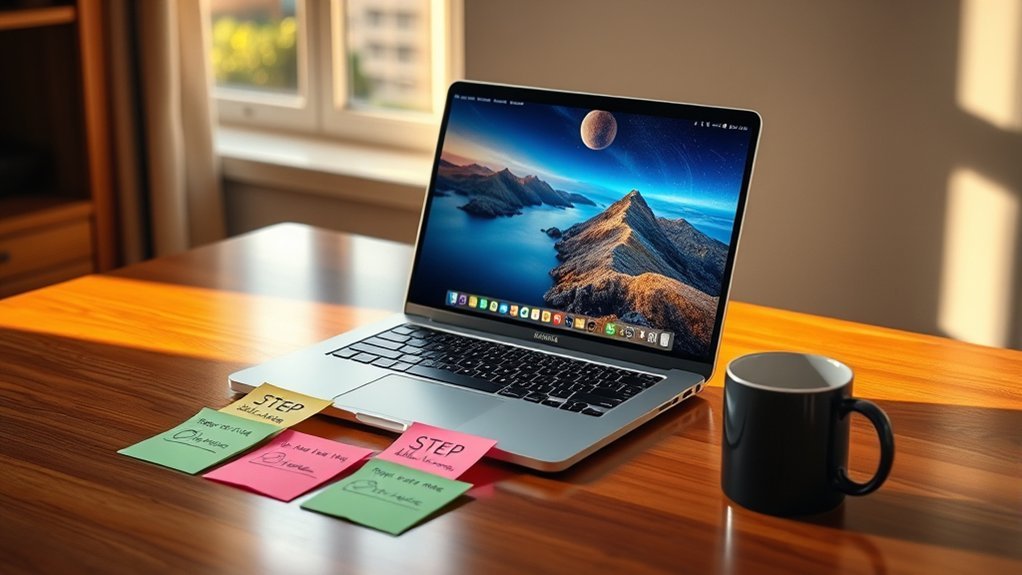
To change your laptop’s refresh rate in Windows 11, open Settings > System > Display > Advanced display, choose the correct screen, then select an available option under Choose a refresh rate. On macOS, open Apple menu > System Settings > Displays and use the Refresh Rate menu when the selected display supports multiple rates.
A higher refresh rate can make scrolling, gaming, cursor movement, and other motion look smoother, but you can only choose modes supported by your display and connection. For an external monitor, the laptop output, cable, adapter or dock, monitor input, resolution, and display mode can all affect which refresh rates appear.
Last updated: September 22, 2026. The operating-system steps in this guide were checked against current Microsoft and Apple support guidance.
Quick Answer
Windows 11: Settings > System > Display > Advanced display > Choose a refresh rate. macOS: Apple menu > System Settings > Displays > Refresh Rate, if that display supports multiple rates. Choose only an available supported mode, then switch back if the screen becomes unstable.
Key Takeaways
- Refresh rate is measured in hertz (Hz), which shows how often your display refreshes each second.
- Higher refresh rates can make motion look smoother, but they do not increase screen resolution or automatically increase a game’s frame rate.
- Your laptop display or external monitor, graphics hardware, connection, resolution, and any adapter or dock must support the mode you choose.
- Higher refresh rates can use more battery power, while Windows 11 Dynamic Refresh Rate can balance smoothness and power use on supported hardware.
- If 120Hz, 144Hz, or another expected option is missing, check the selected display, resolution, connection path, driver, and device specifications before assuming the screen is faulty.
At a Glance
| Time Required | 3 to 5 minutes |
| Difficulty | Easy |
| Tools Needed | Laptop display settings and a supported display; for external monitors, a compatible cable, adapter, or dock may also be required |
| Cost | Free to change the setting; hardware costs apply only if your current display or connection cannot support the target mode |
How to Change Laptop Refresh Rate in Windows 11 and macOS
The exact menu depends on your operating system. Select the screen you actually want to change before choosing a new refresh rate, especially if your laptop is connected to one or more external monitors.
How Do I Change Refresh Rate on Windows 11?
- Select Start or press the Windows key, then open Settings.
- Choose System, then Display.
- Open Advanced display.
- If more than one screen is connected, select the display you want to change.
- Under Choose a refresh rate, select one of the available rates.
Windows only lists modes exposed by the selected display and current configuration. Microsoft also notes that an asterisk can appear beside a refresh rate that is not supported at the current resolution; selecting that mode can change the display resolution as well.
For Microsoft’s current instructions, see Change the refresh rate on your monitor in Windows.
Windows 10 note: The path is similar on Windows 10, but Microsoft ended normal Windows 10 support on October 14, 2025. Dynamic Refresh Rate is a Windows 11 feature.
How Do I Change Refresh Rate on a Mac?
- Open the Apple menu.
- Choose System Settings, then Displays.
- Select the built-in display or external monitor you want to adjust.
- If a Refresh Rate menu appears, choose an available setting.
The Refresh Rate menu only appears when the selected Mac display or connected monitor exposes supported alternative rates. Apple documents fixed options including 60Hz, 59.94Hz, 50Hz, 48Hz, and 47.95Hz on certain supported devices, plus adaptive refresh up to 120Hz on compatible hardware.
For video work, Apple recommends choosing a refresh rate that divides evenly into the content’s frame rate when an appropriate option is available. For example, 48Hz can be used with 24fps material.
In macOS Catalina and macOS Big Sur, Apple says you may need to hold the Option key while selecting Scaled to display the refresh-rate menu. See Apple’s MacBook Pro and Apple display refresh-rate guide for current details.
Understanding Refresh Rate
Refresh rate is the number of times a display can update the image each second. It is measured in hertz (Hz). A 60Hz screen can refresh up to 60 times per second, while a 120Hz screen can refresh up to 120 times per second.
A higher refresh rate can make scrolling, cursor movement, animations, and gaming look smoother. It does not make the laptop’s processor faster, raise video resolution, or guarantee that a game will produce the same number of frames per second.
[Amazon Products Picked for You]

27” QHD IPS DISPLAY: Enjoy stunning detail and vibrant color with a 2560x1440 Quad HD resolution on a 27-inch IPS panel, offering wide viewing angles and precise image quality.

1800R curve monitor the curved display delivers a revolutionary visual experience with a leading 1800R screen curvature as the images appear to wrap around you for an in depth, immersive experience

Smooth motion: 240Hz refresh rate and fast 0.5ms response time provide crisp visuals and fluid movement with less input lag.
Refresh Rate vs Frame Rate vs VRR
Refresh rate describes how often the display can update. Frame rate, usually measured in frames per second (fps), describes how many frames an app or game produces. You can run a 144Hz display while a game produces fewer than 144fps; the two numbers are related but not identical.
Variable Refresh Rate (VRR) allows a compatible display to vary its refresh timing to better follow the frames being produced. Windows 11 also offers Dynamic Refresh Rate (DRR) on supported laptops. DRR can change the refresh rate according to what you are doing so the system can use smoother motion when useful and reduce power use during lighter activity.
Microsoft states that DRR requires a VRR-capable display with a refresh rate of at least 120Hz. On supported Windows 11 systems, you can manage it under Settings > System > Display > Advanced display.
Before You Change the Refresh Rate
First, check whether your built-in laptop display actually supports more than one refresh rate. Many standard panels expose only 60Hz, while gaming and premium laptops may offer 120Hz, 144Hz, or higher modes.
For an external monitor, think of the connection as a chain: the laptop’s graphics output, physical port, cable, adapter or dock, monitor input, selected resolution, and monitor itself must all support the mode you want. A weak link anywhere in that chain can make a higher refresh-rate option disappear.
A display may also support its highest advertised refresh rate only at particular resolutions or through particular inputs. Check the laptop and monitor specifications rather than assuming every port provides every advertised mode.
Save open work before changing display settings. A display can briefly flicker or go black while it switches modes.
Warning: Do not force unsupported custom refresh rates through third-party utilities unless you understand the display’s limits. If a mode causes flickering, repeated signal loss, or other instability, return to a supported setting.
What Refresh Rate Should You Choose?
Choose a refresh rate based on both your workload and the modes your display officially supports. The highest number is not automatically the best setting for every situation.
For basic browsing, documents, email, and other mostly static tasks, 60Hz is often sufficient and may reduce power use. Higher rates are most noticeable when there is frequent motion, such as fast scrolling, gaming, animation, or pen input.
If your Windows 11 laptop supports Dynamic Refresh Rate, DRR can be a useful middle ground because it can change the refresh rate automatically instead of forcing the highest rate for every task.
[Amazon Products Picked for You]
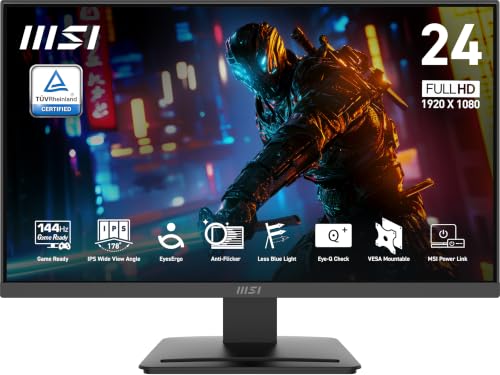
MSI's 23.8-inch Full HD IPS gaming monitor (1920×1080) delivers a 1500:1 contrast ratio with wide 178°/178° viewing angles — producing deeper blacks, brighter highlights, and accurate colors from virtually any position for gaming and productivity.

【INTEGRATED SPEAKERS】Whether you're at work or in the midst of an intense gaming session, our built-in speakers provide rich and seamless audio, all while keeping your desk clutter-free.

16.1" 144Hz Display: Arzopa Z1FC 16.1" portable monitor has 144Hz ultra-high refresh rate for higher motion clarity and smoother gaming visuals. The 144Hz high refresh rate brings lower input latency and higher videos, work and game screen quality(no adaptive sync or freesync)
60Hz vs 120Hz vs 144Hz for Common Tasks
- 60Hz: Suitable for web browsing, email, writing, video calls, office work, and situations where battery life matters more than maximum smoothness.
- 75Hz to 100Hz: Provides a modest smoothness increase for general use and light gaming when the display supports it.
- 120Hz: A useful high-refresh option for smoother scrolling, pen input, gaming, and motion-heavy work on supported laptops.
- 144Hz or higher: Most useful for fast gaming and other motion-heavy workloads, especially when the graphics hardware can generate high frame rates.
Pro Tip: If battery life matters, compare 60Hz with your laptop’s higher fixed mode or use Dynamic Refresh Rate when supported. The actual battery difference varies by laptop, panel, workload, brightness, and power settings.
What Happens After You Choose a New Refresh Rate?
On current Windows 11 systems, selecting a rate under Choose a refresh rate normally applies the new display mode directly. If Windows presents a confirmation prompt, keep the new setting only if the screen remains stable and looks correct.
On macOS, selecting another available refresh rate also changes the selected display’s mode. If motion looks wrong or the display becomes unstable, return to the previous supported setting.
A brief flicker or black screen can occur while a display changes modes. Persistent flickering, repeated signal loss, or visible instability is a reason to switch back and check the display connection and supported modes.
How Do You Check Whether the New Refresh Rate Is Working?
Start with the operating system’s own display information. On Windows 11, Advanced display shows information about the selected display and its current refresh configuration. On macOS, return to Displays and check the selected mode.
Then test normal motion. Scroll through a long webpage, drag a window, move the pointer, or use an app with smooth animation. A move from 60Hz to 120Hz or 144Hz is usually most visible during motion rather than on a static image.
If you play games, also check the game’s own display settings. A high-refresh desktop setting does not guarantee a matching game frame rate. Frame-rate caps, V-Sync, VRR, DRR, full-screen settings, and GPU performance can all affect what you actually see in a game.
Do not judge refresh rate by resolution or video sharpness. Raising the refresh rate does not increase the pixel resolution or bitrate of a video stream.
Why Is 120Hz or 144Hz Missing?
If an expected refresh rate is missing, identify which part of the display chain is imposing the limit instead of changing several settings at once.
| Symptom | What to Check First |
|---|---|
| Only 60Hz appears | Confirm that the selected laptop panel or monitor supports a higher rate, then check the current resolution and connection. |
| 144Hz appears only at a lower resolution | Check the supported resolution-and-refresh combinations for the laptop output, monitor input, cable, adapter, and dock. |
| High refresh works directly but not through a dock or adapter | The intermediate device or connection path may not support the required display mode. Compare its specifications with the direct connection. |
| Desktop is high-refresh but a game is not | Check the game’s refresh-rate selection, frame-rate cap, V-Sync, full-screen mode, VRR settings, and Windows 11 DRR behavior. |
| A previously available rate disappeared | Restart the laptop, reconnect the display, confirm the correct screen is selected, and check graphics-driver and display-detection updates. |
If you use Windows, update graphics drivers through Windows Update, your laptop manufacturer’s support utility, or the graphics provider’s official software when appropriate. A driver or display-detection problem can prevent supported modes from appearing.
For an external monitor, test a direct connection when possible. If the desired refresh rate works when the monitor is connected directly but disappears when a dock or adapter is added, the intermediate device or its connection path becomes the main troubleshooting target.
If changing resolution is also part of the problem, see the related Windows 11 screen resolution guide.
[Amazon Products Picked for You]
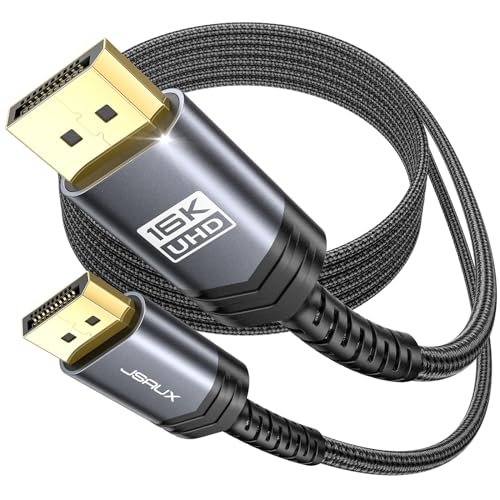
【Displayport 2.1/2.0】Displayport 2.1/2.0 backward compatible with DP1.4/DP1.2. It supports 16K@60Hz, 8K@120Hz, 4K@360Hz/240Hz/165Hz/144Hz, 2K@360Hz/240Hz/165Hz/144Hz, 80Gbps bandwith, HDR, 3D, DSC1.2a, HDCP2.2, FreeSync, G Sync, audio, which ensures high quality content transfer and lossless audio output, giving you a smooth using experience.

⚠️ 𝗜𝗠𝗣𝗢𝗥𝗧𝗔𝗡𝗧 𝗖𝗢𝗠𝗣𝗔𝗧𝗜𝗕𝗜𝗟𝗜𝗧𝗬 𝗡𝗢𝗧𝗘𝗦 This is a video-only USB C to DisplayPort 1.4 Adapter. To ensure compatibility:1.Not suitable for multiple conversions, not suitable for docking stations.2. The USB C port of the device supports video signals; 3. It does not have charging and data functions; 4. Use a cable with a USB C 3.2 20Gbps or higher specification. (If you are not sure whether the model is suitable before purchasing, you can email for consultation. Thank you)

All-in-One Connectivity: The 10-in-1 design features one HDMI 2.1 port, one DisplayPort 1.4 port, one 100W max PD-IN port for up to 80W host charging, one 10 Gbps USB-C port, one 10 Gbps USB-A data port, two 5 Gbps USB-A ports, one Gigabit Ethernet port, and SD/microSD 3.0 card slots. (Note: Charger not included. For optimal performance, use a 65W or higher USB-C charger.)
Related Guides
Frequently Asked Questions
Can I change my refresh rate for gaming only?
Yes. You can select a higher supported refresh rate before gaming and switch back when you want to reduce power use. Some games also have their own refresh-rate, frame-rate, V-Sync, or display-mode settings, so check both the operating system and the game.
What if my laptop doesn’t support higher refresh rates?
If the built-in panel only supports 60Hz, normal display settings cannot turn it into a 120Hz or 144Hz panel. You may still be able to use a high-refresh external monitor if the laptop’s graphics output, port, cable, and any adapter or dock support the required display mode.
Will changing the refresh rate affect battery life?
It can. A higher refresh rate may increase power use, although the size of the difference depends on the laptop, panel, brightness, workload, and power settings. If runtime matters, try 60Hz or Windows 11 Dynamic Refresh Rate when your hardware supports it.
Do different refresh rates impact video streaming quality?
Refresh rate can affect how motion is displayed, but it does not increase a stream’s resolution, bitrate, or source frame rate. Movies and shows often use fixed frame rates, so a higher refresh rate will not turn a low-resolution or low-bitrate stream into higher-quality video.
Can I revert to the original refresh rate easily?
Yes. Return to the same display settings, select the previous supported refresh rate, and check that the display remains stable. You do not need to keep the highest available setting.
Why is my higher refresh rate not showing?
The selected display may not support that rate, the current resolution may require a different mode, or the laptop port, monitor input, cable, adapter, or dock may limit the connection. On Windows, also confirm that the correct display is selected and that the graphics driver is working correctly.
Should I use the highest refresh rate all the time?
Not necessarily. A higher rate is useful when smoother motion matters, while 60Hz can be sufficient for documents, email, and other mostly static work. On supported Windows 11 laptops, Dynamic Refresh Rate can automatically balance smoothness and power use.
What is Dynamic Refresh Rate in Windows 11?
Dynamic Refresh Rate, or DRR, is a Windows 11 feature that can automatically change the display refresh rate based on what you are doing. Microsoft says DRR requires compatible variable-refresh hardware and a display capable of at least 120Hz. When supported, the control appears under Advanced display settings.
Is refresh rate the same as frame rate?
No. Refresh rate is how often the display can update and is measured in hertz. Frame rate is how many frames an app, video, or game produces per second. A 144Hz screen can still display a game that is running below 144fps.
Conclusion
To change your laptop refresh rate, use Advanced display in Windows 11 or Displays in macOS, select the correct screen, and choose one of the supported rates. Higher settings can make motion noticeably smoother, while lower settings can be useful when battery life is more important.
If 120Hz or 144Hz is missing, check the whole display path rather than only the Windows or macOS setting: the screen, selected resolution, laptop output, cable, adapter or dock, monitor input, and graphics driver can all affect which modes are available.

1 thought on “Change Your Laptop’s Refresh Rate in 5 Guided Steps”