When you pick up an ammo box, the label tells you whether that ammunition matches your firearm and your intended use. You’ll usually see details such as caliber or gauge, bullet type, grain weight, velocity, energy, manufacturer, lot number, and safety warnings. Reading those details carefully helps you avoid unsafe combinations, choose the right load, and store your ammunition properly.
Quick Answer
To read an ammo box label, first match the caliber or gauge exactly to your firearm. Then check the bullet type, grain weight, velocity, energy, case type, manufacturer, lot number, and safety warnings. If anything does not match your firearm manual, do not use that ammunition.
Key Takeaways
- The caliber or gauge must match your firearm exactly, not “close enough.”
- Bullet type, grain weight, velocity, and energy affect recoil, accuracy, expansion, and intended use.
- Manufacturer and lot numbers help you track ammunition quality issues, recalls, or performance concerns.
- Safety warnings, storage instructions, and firearm manual guidance always matter more than general advice.
At a Glance
| Time Required | 2-5 minutes per ammo box |
| Difficulty | Beginner-friendly, but safety-critical |
| Tools Needed | Ammo box label, firearm owner’s manual, and good lighting |
| Cost | No added cost |
Understanding Caliber and Gauge
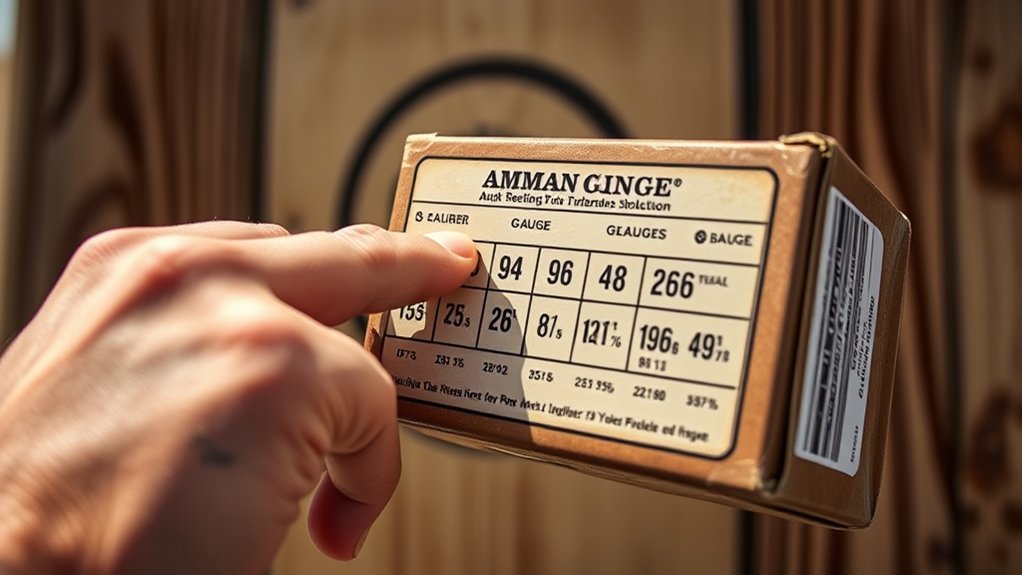
When you pick up an ammo box, understanding caliber and gauge is the first safety step. Caliber refers to the bullet or bore diameter and is usually shown in inches or millimeters. For example, a box may list .45 ACP, .223 Remington, .308 Winchester, or 9mm Luger. These names are not interchangeable, even when numbers look similar.
Gauge applies mainly to shotguns and indicates the size of the shotgun bore. A lower gauge number means a larger bore, so a 12-gauge shotgun has a larger bore than a 20-gauge shotgun. Shotgun labels may also show shell length, such as 2 3/4 inches or 3 inches. Your shotgun must be marked for that shell length before you use it.
Knowing the correct caliber or gauge guarantees you select ammunition compatible with your firearm, which improves safety and performance. Always check the markings on your firearm barrel and compare them with your owner’s manual before buying or loading ammunition.
Warning: Never use ammunition because it “looks close” to the correct caliber. Similar cartridges can have different pressures, dimensions, and chamber requirements.
Cartridge Name vs. Caliber Marking
An ammo box may show both a caliber number and a full cartridge name. The full name matters. For example, “.380 Auto,” “.38 Special,” and “.357 Magnum” all include similar-looking numbers, but they are different cartridges. The same idea applies to rifle rounds such as “.223 Remington” and “5.56 NATO,” which may have different pressure and chamber considerations depending on the firearm.
Before you buy or load ammunition, match the full cartridge name printed on the box to the markings on your firearm and the approved ammunition list in your manual. If the manual gives specific limits, such as “standard pressure only” or “no +P ammunition,” follow those limits.
Bullet Type and Designation
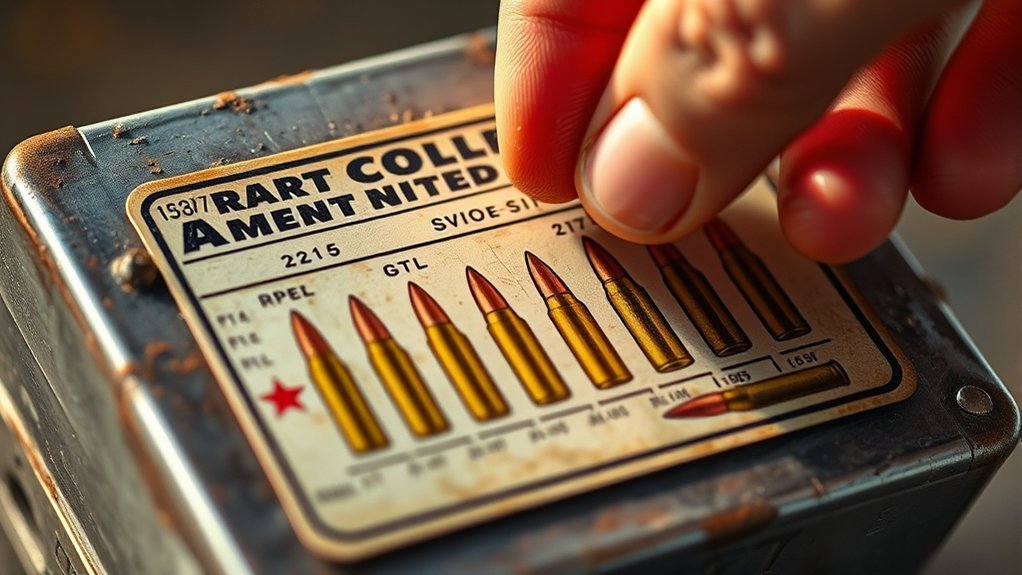
When you look at an ammo box label, understanding bullet type and designation is essential. Different bullet types, like hollow points or full metal jackets, serve specific purposes, and the designation codes help identify these characteristics. Knowing what each type means can improve your shooting experience and help you choose ammunition that fits your needs.
Common Bullet Types
Understanding common bullet types and their designations helps you choose the right ammunition for your activity. Each type serves a specific purpose and may perform differently in paper targets, steel targets, hunting situations, or defensive firearms. Here are four common bullet types you should know:
- Full Metal Jacket (FMJ): Common for target practice and training. FMJ bullets have a harder outer jacket and usually do not expand like hollow points.
- Hollow Point (HP): Designed to expand under the right conditions, often used for lawful self-defense or hunting where permitted.
- Soft Point (SP): Built with an exposed soft lead tip for controlled expansion, often used for hunting medium or larger game.
- Boat Tail (BT): Designed with a tapered rear section that can improve aerodynamics and long-range stability.
Knowing these types helps you choose the right ammo for your shooting activities. Always confirm that the bullet type is legal and appropriate for your range, hunting area, or local rules.
Designation Codes Explained
Decoding ammunition designation codes can seem intimidating, but it’s crucial for choosing the right bullet. Each code typically includes information about the bullet type, caliber, cartridge length, or design. For example, a designation like “5.56x45mm NATO” refers to a cartridge with a 5.56mm bullet diameter and a 45mm case length. Bullet types, such as FMJ, HP, SP, JHP, BTHP, or JSP, describe the bullet construction or intended use.
Understanding these codes helps you select ammunition suited for specific purposes, whether it’s target shooting, hunting, or defensive use. Look for additional specifications like weight in grains, pressure markings, and case material. Familiarity with these designations helps you make safer, more informed choices.
Velocity and Energy Ratings
When you look at an ammo box label, pay close attention to the velocity numbers and energy values listed. These ratings can tell you a lot about how the ammunition may perform under test conditions. They also help you compare loads within the same cartridge family.
However, the numbers on the box are usually based on the manufacturer’s test barrel and controlled conditions. Your firearm’s barrel length, chamber, temperature, and ammunition lot can affect real-world velocity and energy.
Understanding Velocity Numbers
Velocity numbers on an ammo box label help you evaluate a cartridge’s performance. They show how fast a bullet travels when fired, which affects trajectory, bullet drop, wind drift, and terminal performance. Understanding these numbers helps you choose ammunition that fits your needs.
- Measurement: Velocity is usually measured in feet per second (FPS) in the United States.
- Trajectory: Higher velocity can create a flatter trajectory over some distances.
- Ballistics: Velocity influences bullet drop, wind drift, and retained energy.
- Applications: Hunting, target shooting, and training may call for different velocity ranges.
Interpreting Energy Values
To assess ammunition performance, look at energy values along with bullet weight and velocity. Energy is usually expressed in foot-pounds or joules and is calculated from the bullet’s weight and speed. When you see an energy rating on the box, it gives you an estimate of the kinetic energy the bullet carries at the muzzle or at a listed distance.
This value helps you compare different loads, but it does not tell the whole story. Bullet design, shot placement, penetration, expansion, and reliability also matter. Higher energy values can suggest more impact force, but you still need to match the ammunition to your firearm, target, and intended use.
Impact on Performance
Understanding the impact of velocity and energy ratings on performance is essential for selecting the right ammunition. These ratings directly influence how your ammunition behaves, affecting everything from accuracy to recoil and terminal performance. Here are some key points to evaluate:
- Velocity: Higher speeds can lead to flatter trajectories and reduced wind drift at certain distances.
- Energy: Greater energy can increase impact force, but it does not replace proper bullet selection.
- Bullet Design: Different designs perform better at specific velocities and energy levels.
- Application: Match your ammo’s performance with its intended use, whether for target shooting, hunting, training, or defensive carry.
Note: Velocity and energy printed on the box are useful comparison points, but your firearm may produce different results than the manufacturer’s test barrel.
Grain Weight and Its Importance
When it comes to ammunition, grain weight plays a crucial role in performance. The grain measurement refers to the bullet’s weight, with one grain equal to 1/7000th of a pound. You may see this printed as “115 gr,” “124 grain,” “150 gr,” or a similar format.
In general, lighter bullets can offer higher velocities and flatter trajectories in some cartridges, which may suit varmint hunting, competition, or target shooting. Heavier bullets often deliver more momentum and may perform better for larger game or specific defensive loads. However, the best choice depends on your firearm, barrel twist rate, recoil tolerance, and intended use.
Choosing the right grain weight affects accuracy, recoil, point of impact, and overall effectiveness. A firearm may shoot one bullet weight more accurately than another. If you switch from one grain weight to another, test the ammunition safely at the range before relying on it.
Pressure Markings: Standard, +P, +P+, and Magnum
Some ammo boxes include pressure-related markings such as standard pressure, +P, +P+, or Magnum. These markings matter because higher-pressure ammunition can increase recoil, wear, and stress on a firearm. A firearm must be rated for that pressure level before you use it.
+P ammunition is loaded to higher pressure than standard ammunition for that cartridge. +P+ is less standardized and should be used only when the firearm manufacturer clearly approves it. Magnum cartridges are separate cartridge types and are not automatically interchangeable with similar-looking non-magnum rounds.
Always check your firearm manual before using pressure-marked ammunition. If the manual does not approve a load, do not use it.
Case Material, Primer, and Boxer vs. Berdan
An ammo label may also tell you the case material and primer type. Brass cases are common and often preferred for reliability and reloading. Steel and aluminum cases can be more affordable, but some ranges restrict them, and some firearms may not cycle them as smoothly.
You may also see “Boxer primed” or “Berdan primed.” Boxer-primed cases are common in the United States and are easier to reload. Berdan-primed cases are harder to reload and are more common in some imported ammunition. If you do not reload, primer type may matter less, but it can still affect range rules and cleanup policies.
Types of Ammunition (Rimfire vs. Centerfire)
Ammunition comes in two primary ignition types: rimfire and centerfire. Each has distinct characteristics and uses. Understanding these differences helps you choose the right ammo for your needs.
Ammunition is commonly categorized as rimfire or centerfire based on where the priming compound or primer is located.
- Rimfire: Common in .22 caliber firearms, rimfire ammunition has priming compound inside the rim of the cartridge case.
- Centerfire: Common in most modern handguns and rifles, centerfire ammunition has a primer located in the center of the cartridge base.
- Recoil: Rimfire cartridges typically produce less recoil, making them useful for training and beginner practice.
- Cost: Rimfire ammo is often more affordable than centerfire options, allowing for more practice at a lower cost.
Centerfire ammunition is generally more powerful and more common for hunting, defensive use, and many rifle or handgun platforms. Rimfire ammunition is often used for target practice, small-game hunting where legal, and basic marksmanship training.
Shotgun Label Details: Shot Size, Shot Weight, and Shell Length
Shotgun ammunition labels include details that look different from rifle and handgun boxes. Along with gauge, you may see shell length, shot size, shot weight, dram equivalent, velocity, and payload type.
- Shell length: Common examples include 2 3/4 inches and 3 inches. Your shotgun chamber must be rated for the shell length.
- Shot size: Smaller numbers usually mean larger pellets. Birdshot, buckshot, and slugs serve different purposes.
- Shot weight: Often shown in ounces, this tells you the payload weight inside the shell.
- Slug: A single projectile used for specific hunting or target applications where allowed.
Shotgun labels require careful reading because gauge alone is not enough. Always match gauge, shell length, and load type to your shotgun and your intended use.
Manufacturer and Lot Number
Knowing the type of ammunition you’re using is just the beginning. Next, pay attention to the manufacturer and lot number printed on the box. The manufacturer’s name tells you who produced the ammunition, which can be essential for quality assurance and consistency. Familiarizing yourself with reputable brands can help you make informed choices.
The lot number is equally important because it identifies a specific batch of ammunition. This number can be useful for tracking any potential issues, such as recalls, defects, or performance inconsistencies. If you experience a problem with your ammo, having the lot number handy allows you to report it accurately.
Keep the box or take a photo of the label until you finish that ammunition. That simple habit helps you track what performed well and gives you useful information if you need to contact the manufacturer.
Safety Warnings and Recommendations
While you’re examining the ammo box, don’t overlook the safety warnings and recommendations provided by the manufacturer. These essential guidelines support safe handling, storage, and use. Here are some key points to keep in mind:
- Always keep ammunition away from heat sources, open flame, and moisture.
- Use only firearms that are specifically marked for the ammo type.
- Store ammo in a cool, dry place, ideally in a locked cabinet or secure container.
- Follow local laws and regulations regarding ammunition purchase, transport, use, and storage.
- Wear proper eye and ear protection when shooting.
- Stop using ammunition if you notice corrosion, split cases, damaged bullets, or unusual odors.
If a round sounds weak, feels unusual, or does not fire as expected, stop shooting and follow safe firearm-clearing procedures from your firearm manual or range officer.
Packaging and Storage Information
When you look at an ammo box, the packaging and storage information is essential for keeping ammunition effective and safe to use. Proper storage helps reduce moisture exposure, temperature swings, and physical damage. Always read the label for specific instructions.
Here’s a quick guide to common packaging and storage details:
| Storage Condition | Recommended Temp | Humidity Level |
|---|---|---|
| Ideal for Long-Term | 60-70°F | 30-50% |
| Short-Term Storage | 70-85°F | Below 70% |
| Avoid Extreme Heat | Above 100°F | N/A |
| Moisture Protection | Sealed Containers | Use Desiccants |
| Store Upright | N/A | N/A |
Following these guidelines helps your ammunition stay in good condition. Use the original box whenever possible because it keeps the label, lot number, and cartridge information together.
Pro Tip: Write the purchase date on the ammo box and keep different calibers stored separately. Clear labeling reduces mix-ups and makes rotation easier.
How to Read an Ammo Box Label Step by Step
If the label feels crowded, use a simple order of checks. Start with safety-critical details, then compare performance details.
- Confirm the full cartridge name: Match the exact caliber, gauge, and cartridge name to your firearm manual.
- Check shell length or pressure markings: Look for shotgun shell length, +P, Magnum, or other pressure-related notes.
- Review bullet type: Make sure FMJ, HP, SP, BT, slug, buckshot, or birdshot fits your intended use.
- Check grain weight or payload weight: Compare the bullet or shot weight to what your firearm handles well.
- Read velocity and energy: Use these numbers to compare performance, recoil, and expected trajectory.
- Find the manufacturer and lot number: Save this information in case you need to track performance or report a problem.
- Read every warning: Follow all label warnings, firearm manual instructions, and range rules.
Common Ammo Label Mistakes to Avoid
Many ammunition mistakes happen because the label looks familiar at a glance. Slow down and check the full wording before loading any round.
- Mixing similar cartridge names: Similar numbers do not mean the cartridges are compatible.
- Ignoring shell length: A shotgun’s gauge is not enough; chamber length must match too.
- Overlooking +P or Magnum markings: Higher-pressure ammunition can be unsafe in firearms not rated for it.
- Choosing by price only: Reliability, accuracy, and firearm compatibility matter more than cost alone.
- Throwing away the box too early: The box contains the lot number and performance details you may need later.
Conclusion
Reading an ammo box label becomes much easier when you know what each number, word, and abbreviation means. Start with the full cartridge name, caliber or gauge, shell length, and pressure markings. Then review bullet type, grain weight, velocity, energy, manufacturer, lot number, and storage instructions.
The most important rule is simple: the ammunition must match your firearm exactly. When in doubt, check your firearm manual, ask a qualified range officer, or contact the firearm or ammunition manufacturer before using it. Smart ammunition choices help you shoot more safely, more consistently, and with better confidence.