If you are choosing your first drone, start with what you actually want to do with it. For most first-time camera-drone buyers, a strong starting point is a lightweight GPS/GNSS drone with a 3-axis mechanical gimbal, reliable return-to-home, roughly 30 minutes or more of manufacturer-rated flight time, and obstacle sensing if your budget allows.
If your main goal is hands-free selfies or follow shots, a protected palm-style drone may suit you better than a traditional camera drone. If you want FPV racing or freestyle flying, choose an FPV training system instead. The best first drone is the one designed for the kind of flying you actually plan to do.
Last updated: September 11, 2026
How this guide was checked: Current aircraft specifications were cross-checked against manufacturer information from DJI and Potensic, while U.S. regulatory guidance was checked against FAA and FCC information. Manufacturer battery, wind-resistance, and transmission figures are maximum test figures, not guaranteed real-world results. This guide does not claim hands-on testing of every model listed.
Quick Verdict: How to Choose Your First Drone
Choose the type first, then compare specifications. A traditional GPS camera drone is the best starting category for most people who want travel photos and smooth aerial video. A selfie or follow drone is easier if automated filming matters more than manual piloting. A toy drone is useful for cheap practice, while FPV is a separate path with a steeper learning curve.
- For smooth aerial video: prioritize a 3-axis mechanical gimbal before chasing higher megapixel numbers.
- For easier learning: prioritize stable hovering, GPS/GNSS positioning, return-to-home, beginner limits, and clear controller feedback.
- For extra crash protection: consider obstacle sensing, but never treat it as permission to fly close to trees, wires, buildings, or people.
- For portability: a sub-250g model is easier to carry and may simplify some recreational requirements, depending on your country and flight purpose.
- For longer sessions: buy an extra battery before paying for features you may rarely use.
In the U.S., a drone under 250 g can avoid FAA registration only when flown solely under the recreational exception. Recreational pilots still need to complete TRUST and follow applicable airspace, visual-line-of-sight, and operating rules. A drone that is required to be registered, or that is registered, generally must comply with Remote ID requirements.
[Amazon Products Picked for You]

【Under 0.55lb Mid-sized Drone, No FAA Registration】Designed with a unique material composition, the N11 PRO is a remarkably valuable mid-sized GPS drone (not mini ones). Its weight is kept under 0.55lb, eliminating the need for FAA registration. This drone provides a perfect solution for hassle-free flying in the States without FAA, making it ideal for capturing stunning footage on the go.

Screen Controller, No Phone Needed: This drone comes with a 4.5-inch remote controller with a built-in screen, making connection simple and convenient. No smartphone connection or app download is required, allowing you to fly and view real-time footage directly on the controller. Without distractions from incoming calls, messages, or notifications, you can enjoy an immersive flying experience. The all-in-one design also reduces reliance on mobile devices.
Current First-Drone Examples to Compare
The models below are examples of four different buying positions, not a claimed hands-on ranking. Specifications are manufacturer-rated maximums and can change by battery, region, firmware, controller, or package.
| Example Drone | Weight | Camera / Stabilization | Rated Flight Time | Main Trade-Off | Best Fit |
|---|---|---|---|---|---|
| DJI Mini 4K | 246 g | 1/2.3-inch 12MP sensor, 4K/30fps, 3-axis gimbal | Up to 31 minutes | No obstacle avoidance | First traditional camera drone on a tighter budget |
| Potensic ATOM 2 | Under 249 g | 1/2-inch 48MP sensor, 4K HDR, 3-axis gimbal | Up to 32 minutes | No obstacle avoidance | Non-DJI alternative with stabilized video and tracking tools |
| DJI Mini 5 Pro | 249 g with the standard configuration | 1-inch 50MP sensor, 4K HDR, advanced gimbal system | Up to 36 minutes with the standard battery | Much higher cost than entry-level models | Premium compact option with stronger imaging and obstacle sensing |
| DJI Air 3S | 724 g | Dual-camera system with 1-inch main sensor | Up to 45 minutes | Heavier, more expensive, and subject to additional weight-related rules | Serious creator who values camera flexibility over simplicity |
Important: Do not compare drones by transmission distance alone. Those figures are measured under controlled conditions, while legal visual-line-of-sight requirements and real interference often limit how far you should actually fly.
2026 U.S. marketplace note: The FCC updated its Covered List on December 22, 2025 to restrict equipment authorization for newly introduced foreign-produced UAS and certain critical components on a going-forward basis. The FCC stated that the action did not prevent continued use, import, marketing, or sale of models that had already received applicable authorization. U.S. buyers should therefore check current regional availability, seller authorization, warranty support, and exact model status before buying a newly released foreign-made drone.
Understanding Your Budget
Before comparing drone specs, decide how much you are comfortable spending on the full flying kit. The drone itself is only one part of the cost. You may also need extra batteries, a charging hub, a memory card, replacement propellers, a case, propeller guards, or repair coverage.
A useful rule is to buy the least expensive setup that already meets your real needs. If you only want to learn the controls, you do not need a premium camera. If you want travel video you plan to keep, spending more for reliable GPS positioning, a mechanical gimbal, a better sensor, and readily available batteries can prevent an early upgrade.
Set your drone budget around the full flying kit, not only the drone body. Batteries, storage, protection, controllers, and repairs can change the real cost of ownership.
[Amazon Products Picked for You]

No Registration Needed - Under 249 g, this drone with camera for adults 4K does not require FAA registration or Remote ID for recreational use. Visit the FAA's official website for requirements related to drone registration and Remote ID. [1]

No Registration Needed - Under 249 g, this drone with camera for adults 4K does not require FAA registration or Remote ID for recreational use. Visit the FAA's official website for requirements related to drone registration and Remote ID. [1]

No Registration Needed - Under 249 g, this drone with camera for adults 4K does not require FAA registration or Remote ID for recreational use. Visit the FAA's official website for requirements related to drone registration and Remote ID. [1]
What Should You Pay For on a First Drone?
| Buyer Type | Pay For | Do Not Overpay For | Best Fit |
|---|---|---|---|
| Casual Learner | Stable hover, simple controls, spare parts, protected propellers where appropriate | Large sensors, extreme range, advanced color profiles | Basic or protected starter drone |
| First Camera-Drone Buyer | GPS/GNSS, return-to-home, 3-axis gimbal, usable 4K video | Megapixel claims without good stabilization | Compact GPS camera drone |
| Travel Creator | Low weight, compact controller, RAW support, vertical capture, spare batteries | Maximum transmission range you cannot legally use | Sub-250g camera drone |
| Serious Hobbyist | Larger sensor, obstacle sensing, stronger wind handling, advanced camera controls | Professional features that do not solve a real need | Premium mini or larger camera drone |
For most camera-drone buyers, a practical starter kit is the drone, controller, at least one spare battery, compatible storage, spare propellers, and a protective case. Filters and specialized accessories can wait until you know how and where you actually shoot.
Which Camera Features Matter on a First Drone?
The camera is one of the biggest reasons people buy drones, but resolution alone does not tell the full story. A 4K camera is a strong starting point, yet the sensor size, lens quality, mechanical stabilization, bitrate, exposure controls, and shooting modes can matter just as much.
For smooth traditional aerial video, look for a drone with a 3-axis mechanical gimbal. It actively stabilizes the camera as the aircraft pitches, rolls, and yaws. This is usually more useful for cinematic footage than choosing a cheaper drone simply because its product listing advertises a large megapixel number.
For better photos, RAW support gives you more editing flexibility. HDR modes can help with high-contrast scenes, while vertical capture is useful if most of your work is for TikTok, Instagram Reels, or YouTube Shorts.
If you regularly shoot sunrise, sunset, cloudy landscapes, or shaded areas, a larger image sensor becomes more valuable. Premium compact drones can now pair larger sensors with relatively low aircraft weight, but you pay significantly more for that image-quality improvement.
[Amazon Products Picked for You]
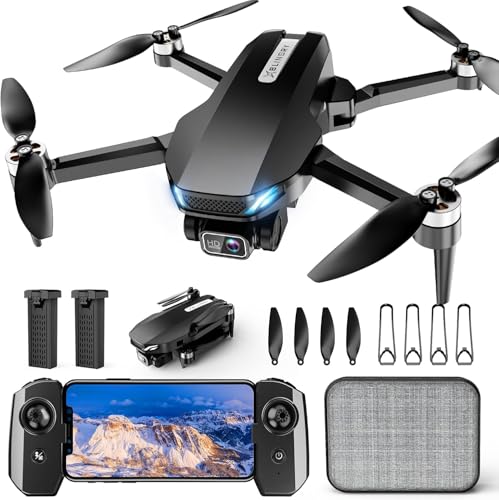
【Clear 2K Camera & Real-Time FPV View】Capture clear photos and videos with the built-in 2K HD camera and adjustable 90° lens. Connect the drone to the BLINORY GO app to enjoy real-time FPV viewing, save your footage directly to your phone or SD card, and easily share family moments, travel views, or outdoor fun.

Ultra-Clear 4K UHD Camera: The PL-511 drone with camera features a 4K HD camera with a 120° wide-angle lens and a 90° adjustable lens. Combined with ultra-smooth FPV transmission, it offers an unparalleled immersive flying experience, capturing stunning 3840x2160P photos and 4K videos from any angle

【Clear 2K Camera & Real-Time FPV View】Capture clear photos and videos with the built-in 2K HD camera and adjustable 90° lens. Connect the drone to the BLINORY GO app to enjoy real-time FPV viewing, save your footage directly to your phone or SD card, and easily share family moments, travel views, or outdoor fun.
Camera Features That Matter Most
- 4K video: A useful baseline for travel, family, and social-media footage.
- 3-axis mechanical gimbal: One of the most important features for smooth traditional aerial video.
- Sensor size: Larger sensors generally give the camera more light-gathering area and can improve challenging-light performance.
- RAW photos: Useful if you want greater editing control.
- HDR or flat color profiles: Helpful for difficult contrast or more advanced color work.
- Vertical shooting: Useful for mobile-first social platforms.
How Much Flight Time and Range Do You Need?
Flight time and connection quality affect how relaxed your flying feels. Longer battery life gives you more time to frame shots, practice controls, react to changing conditions, and return with a safe reserve.
Do not treat the advertised maximum as your normal real-world flight time. Manufacturer tests are conducted under specified controlled conditions. Wind, temperature, aggressive flying, battery age, accessories, hovering, repeated takeoffs, and the need to land with reserve can all reduce usable time.
How Much Flight Time Does a Beginner Need?
For a traditional camera drone, a manufacturer rating around 30 minutes or more gives most beginners useful breathing room. One spare battery is often more valuable than moving to a much larger aircraft purely for a higher endurance figure.
| Example Drone | Manufacturer-Rated Maximum | Beginner Takeaway |
|---|---|---|
| DJI Mini 4K | 31 minutes | Enough rated endurance for basic practice and short camera sessions |
| Potensic ATOM 2 | 32 minutes | Similar endurance class with a stabilized 4K HDR camera |
| DJI Mini 5 Pro | 36 minutes with the standard battery | Premium compact option with more camera and sensing capability |
| DJI Air 3S | 45 minutes | Longer endurance, but in a much heavier and more advanced aircraft |
How Much Drone Range Do You Actually Need?
A long advertised transmission range does not mean you should fly that far away. In the U.S., recreational pilots generally must keep the drone within visual line of sight or use a co-located visual observer under the recreational rules. Similar requirements exist in many other jurisdictions.
Buildings, terrain, Wi-Fi congestion, radio interference, antenna orientation, and weather can also reduce connection quality. For a first drone, focus less on the biggest range number and more on a stable live view, clear signal warnings, sensible return-to-home behavior, and a controller you can use confidently.
What Reduces Real-World Drone Battery Life?
Cold weather, strong wind, aggressive acceleration, repeated climbing, Sport mode, heavier accessories, battery age, and extended hovering can all reduce usable flight time.
Build the habit of returning early rather than waiting for a critical-battery warning. A safe reserve matters more than squeezing the last advertised minute from the pack.
What Makes a Drone Easy for Beginners?
Your first drone should reduce unnecessary workload while you learn orientation, altitude, battery management, camera framing, and safe landing. Useful beginner features include stable hovering, GPS/GNSS positioning, return-to-home, clear status messages, speed limits, and predictable controller inputs.
Which Beginner-Friendly Features Matter Most?
GPS/GNSS positioning helps a traditional camera drone hold position outdoors. Return-to-home can provide another layer of protection when the battery reaches a trigger point or the connection is lost, but you still need to configure and understand the return behavior for your exact aircraft.
For example, a return path can still be unsafe if trees, buildings, wires, or terrain rise above the configured return altitude. Obstacle sensing can help on supported aircraft, but sensor coverage, lighting requirements, minimum object size, surface texture, flight mode, and direction all affect what it can detect.
- One-tap takeoff and landing: Reduces workload while you learn the basic controls.
- Return-to-home: Useful for low-battery and lost-signal situations when properly configured.
- Beginner mode: Limits speed, altitude, or distance on supported models.
- Obstacle sensing: Helpful around complex terrain, but never crash-proof.
- Propeller guards: Useful on drones designed around them, especially for low-speed training. Check whether adding guards changes the takeoff weight or flight behavior.
- Clear controller telemetry: Battery, satellite, signal, altitude, distance, and warning information should be easy to understand.
Beginner-Friendly Drone Examples
DJI Mini 4K: Best fit for someone who wants a traditional, relatively simple stabilized 4K camera drone. Its main strengths are low weight, GPS-assisted flight, return-to-home, a 3-axis gimbal, and a 31-minute manufacturer maximum. Its main trade-off is the lack of obstacle avoidance.
Potensic ATOM 2: Best fit for someone who wants a sub-249g non-DJI alternative with a 3-axis gimbal, 4K HDR video, AI tracking tools, and a 32-minute manufacturer maximum. Its main trade-off is that it does not have obstacle avoidance, so automated tracking should be used in open areas.
DJI Mini 5 Pro: Best fit for a first-time buyer who already knows camera quality and safety technology matter enough to justify a premium price. Its 1-inch sensor and omnidirectional sensing are meaningful upgrades over basic starter aircraft, but those capabilities cost considerably more.
DJI Air 3S: Best fit for a serious creator who wants a dual-camera system, longer rated endurance, stronger performance, and a larger aircraft. At 724 g, however, it brings more cost, weight, regulatory considerations, and consequence if you make a beginner mistake.
Who Should Buy Which Type?
- Buy a basic or protected practice drone if learning stick control is the goal and camera quality barely matters.
- Buy a traditional sub-250g GPS camera drone if travel, portability, smooth aerial video, and a familiar controller are your priorities.
- Buy a palm or selfie drone if automated tracking, quick social clips, and simple launching matter more than traditional piloting.
- Pay for obstacle sensing if you expect to fly in more complex environments, while still leaving generous clearance from objects.
- Buy a larger camera drone only when image quality, stronger performance, or multiple cameras solve a real need that outweighs the added weight and cost.
- Choose FPV separately if immersive manual flight, racing, or freestyle is the actual goal. Do not buy a conventional camera drone expecting the same experience.
What Drone Rules Should You Check Before Buying?
Drone rules vary by country, airspace, local land manager, aircraft weight, equipment, and flight purpose. Check the rules where you actually expect to fly before choosing the aircraft.
A lightweight drone is not rule-free. Weight can change certain requirements, but airspace, visual-line-of-sight, safety, privacy, land-use, and flight-purpose rules can still apply.
In the U.S., the FAA separates purely recreational flying from operations that fall under Part 107 or another regulatory framework. Lack of payment alone does not automatically make a flight recreational.
For recreational flying under the federal exception, the FAA requires pilots to follow the applicable recreational rules, including completing The Recreational UAS Safety Test (TRUST) and carrying proof of completion. Recreational pilots must generally maintain visual line of sight, give way to other aircraft, obtain authorization before flying in applicable controlled airspace, and stay at or below 400 feet in Class G airspace.
For registration, the FAA exempts drones weighing 0.55 lb or less—less than 250 g—only when they are flown under the recreational exception. Part 107 drones must be registered regardless of being under that recreational weight threshold. Drones that are required to be registered, or that are registered, generally must comply with Remote ID unless an applicable exception applies.
Drone Rules Checklist
- Determine whether your flight is purely recreational or falls under Part 107 or another rule set.
- Check whether the aircraft must be registered.
- Complete TRUST or any other required pilot test or certification.
- Check whether Remote ID applies to your aircraft and operation.
- Keep the drone within visual line of sight where required.
- Stay within applicable altitude limits.
- Check controlled airspace and temporary flight restrictions before each flight.
- Give way to crewed aircraft and never interfere with emergency operations.
- Check separate park, property, local, privacy, and land-use restrictions.
- Follow applicable lighting and operating requirements if flying at night.
Which Type of Drone Should a Beginner Buy?
Drones are designed for very different jobs. Choosing the category first prevents you from paying for specifications that do not match the experience you want.
Traditional Camera Drones
Traditional camera drones are the best fit for most first-time buyers who want to learn piloting while capturing smooth aerial photos and video. They typically combine a physical controller, GPS/GNSS positioning, a stabilized camera, return-to-home, and automated camera moves.
Toy and Indoor Drones
Toy drones can be useful for learning orientation and stick movement at low financial risk. The trade-off is usually shorter endurance, weaker cameras, less wind resistance, and fewer navigation safeguards.
Selfie and Follow Drones
Selfie-oriented drones prioritize quick launching, subject tracking, automated flight paths, protected propellers, and social-media capture. They can be easier for a complete beginner who mainly wants footage of themselves, but they do not always provide the same controller-based photography experience as a traditional camera drone.
FPV and Racing Drones
FPV drones are designed around immersive flight, speed, freestyle, or racing. They have a different learning path and can demand more manual control, practice, repair knowledge, or simulation time. Choose FPV because you specifically want FPV flying, not simply because the aircraft looks more exciting.
Commercial and Specialized Drones
Commercial drones may use thermal cameras, mapping payloads, RTK positioning, docking systems, spraying equipment, or enterprise software. These systems solve professional problems and are usually unnecessary for a first recreational aircraft.
What Features Should You Look For in Your First Drone?
When comparing drones, focus on features that change your actual flight experience. A longer specification sheet does not automatically mean a better beginner aircraft.
For a first traditional camera drone, prioritize stable flight, a mechanical gimbal, reliable positioning and return-to-home, enough battery life to learn calmly, a controller you like, and safety features appropriate to where you will fly.
- Camera quality: Look beyond the resolution headline to sensor size, stabilization, bitrate, RAW support, and useful frame rates.
- Gimbal stabilization: A 3-axis mechanical gimbal is highly valuable for smooth traditional aerial footage.
- Flight time: Compare manufacturer maximums, but budget for a safe landing reserve and lower real-world duration.
- Weight class: Sub-250g drones are easier to carry and may simplify some recreational requirements.
- Obstacle sensing: Compare the actual directions covered, not simply whether the feature exists.
- Return-to-home: Learn how your chosen aircraft handles low battery, lost signal, and return altitude.
- Controller setup: Decide whether you are comfortable attaching your phone or prefer a controller with its own screen.
- App compatibility: Confirm current compatibility with your phone or tablet before buying.
- Battery availability: Make sure spare batteries are easy to obtain in your region.
- Repair parts: Check availability of propellers, guards, cables, and manufacturer repair support.
- Regional availability: Confirm that the exact model, controller, warranty, and support package are officially available where you live.
Before You Buy Checklist
| Question | Why It Matters |
|---|---|
| Will I fly for fun, work, photography, social content, or FPV? | Your flight purpose determines both the right category and some legal requirements. |
| Do I need polished aerial video? | If yes, prioritize a mechanical gimbal and camera system rather than resolution alone. |
| Is the drone under 250 g in the exact configuration I will fly? | Weight can affect registration or operating requirements in some regions. |
| Does it have a 3-axis gimbal? | A 3-axis mechanical gimbal is valuable for smooth conventional aerial video. |
| Can I buy extra batteries and replacement propellers locally? | Parts availability affects both usable flying time and long-term ownership. |
| Does it have obstacle sensing, and in which directions? | Sensor coverage can materially change the safety assistance you receive. |
| Does the controller need my phone? | Phone-based and built-in-screen controllers have different convenience and cost trade-offs. |
| Is the exact model officially supported in my country? | Availability, radio authorization, warranty, apps, batteries, and repair support can differ by region. |
Tips for Safe Flying Practices
Safe flying protects people, property, other aircraft, and your drone. Build conservative habits from the first flight instead of depending on automated systems to rescue a bad decision.
| Tip | Description | When to Do It |
|---|---|---|
| Check Regulations | Review airspace, registration, Remote ID, local restrictions, and your flight-purpose rules. | Before every flight |
| Inspect the Drone | Check propellers, battery condition, gimbal, controller, sensors, storage, and warnings. | Before every flight |
| Set Return-to-Home Safely | Understand the RTH behavior and choose an appropriate return altitude for the surrounding terrain and obstacles. | Before takeoff |
| Keep Visual Contact | Keep the drone within direct visual line of sight where required and continue scanning for other aircraft. | During every flight |
| Watch the Weather | Avoid conditions beyond the aircraft’s limits, including strong wind, precipitation, poor visibility, or extreme temperature. | Before and during flight |
| Land With Reserve | Return early enough to handle wind, navigation errors, or a changed landing area without exhausting the battery. | Every flight |
Common First-Drone Mistakes to Avoid
- Buying too much drone too soon: Extra capability is useful only when you understand why you need it.
- Buying on megapixels alone: Sensor size, gimbal stabilization, processing, lens quality, and flight stability can matter more.
- Buying on advertised range: Huge transmission figures do not override visual-line-of-sight rules or real-world interference.
- Ignoring local rules: Small drones still operate within aviation and local restrictions.
- Flying too far on day one: Practice close, low, slow, and in a large clear area.
- Trusting obstacle sensors too much: Thin branches, wires, reflective surfaces, low light, high speed, or unsupported flight directions can defeat sensing systems.
- Using automated tracking in clutter: Some drones with subject tracking have no obstacle avoidance at all.
- Skipping spare batteries: One battery can turn a useful practice session into a short outing followed by a recharge.
- Ignoring replacement support: A cheap drone is poor value if batteries or propellers disappear from the market.
Related Guides
Frequently Asked Questions
What Should I Look For When Buying My First Drone?
Start with the type of flying you want to do. For a traditional camera drone, prioritize stable GPS/GNSS flight, reliable return-to-home, a 3-axis gimbal, enough battery life for relaxed practice, an understandable controller, and readily available spare parts. Add obstacle sensing if you expect to fly in more complex environments and your budget allows it.
How Much Should I Spend on My First Drone?
There is no single correct amount. Spend the least amount that gives you the features required for your goal, then reserve part of the budget for batteries, storage, spare propellers, and protection. A basic learner does not need a premium camera, while a buyer who wants long-term aerial photography value should prioritize reliable stabilization and flight systems over the cheapest sticker price.
What Accessories Should I Consider Buying With My First Drone?
Start with at least one extra battery, compatible storage if required, spare propellers, a protective case, and the charging equipment you need. Propeller guards can be useful on supported drones, but check whether they change the aircraft’s takeoff weight or flight limitations. Add filters or specialized accessories later when you understand your shooting needs.
How Do I Maintain and Care For My Drone?
Inspect the propellers, motors, arms, battery, gimbal, camera, sensors, and controller regularly. Keep the aircraft dry and free of dirt or sand, install appropriate firmware updates, and follow the manufacturer’s battery-storage instructions. Never charge or reuse a battery that is swollen, punctured, overheated, or otherwise damaged.
Can I Fly My Drone at Night?
It depends on the rules governing your operation. In the U.S., recreational pilots must follow the applicable FAA-recognized community-based organization’s safety guidelines, including its night procedures. Part 107 night operations require the applicable pilot training and anti-collision lighting visible for at least three statute miles. Controlled-airspace authorization and other operating restrictions can still apply.
What Should I Do if My Drone Crashes?
Stop the motors and power down the aircraft when it is safe to do so. Inspect the propellers, motors, arms, battery, gimbal, camera, sensors, and body before another flight. Do not charge, reuse, or transport a visibly damaged lithium battery as if it were normal. Check the manufacturer’s crash and battery-safety instructions and follow any legally required incident-reporting rules.
Are There Insurance Options for Drone Owners?
Yes. Liability coverage can help with certain third-party claims, while separate repair, replacement, or manufacturer protection plans may cover damage to the aircraft itself. Availability, exclusions, deductibles, and requirements vary, so compare the actual policy terms with how and where you fly.
Do Sub-250g Drones Need Registration?
Sometimes. In the U.S., a drone weighing 250 g or less can avoid FAA registration only when it is flown solely under the recreational exception. Part 107 drones must be registered regardless of that recreational weight exemption. Recreational pilots still need TRUST and must follow applicable operating and airspace rules.
Is Obstacle Avoidance Worth It for a Beginner?
Obstacle sensing can be worth the extra cost if you expect to fly in more complex environments, but compare the actual coverage. Forward-only, multi-direction, and omnidirectional systems are not equivalent. Thin branches, wires, poor light, reflective surfaces, flight speed, and unsupported directions can still lead to a collision, so obstacle sensing never replaces careful piloting.
Conclusion
Choosing your first drone becomes easier when you stop asking which aircraft has the longest specification list and start asking what you actually want to do. For most beginners who want traditional aerial photography, prioritize stable GPS/GNSS flight, a mechanical gimbal, reliable return-to-home, enough battery life to practice calmly, and a controller you understand.
Choose a protected selfie drone if automated follow shots matter more than traditional piloting. Choose FPV only if immersive manual flight is the goal. Move into premium mini or larger camera drones when better imaging, obstacle sensing, stronger performance, or additional cameras solve a specific need.
Before buying, confirm the exact model’s weight, regional availability, app compatibility, battery supply, repair support, and local rules. Then practice close, low, and slow in an open area until basic control and battery management feel routine.
