Muskie fishing for beginners gets easier when you simplify the plan: use tackle built for large lures and powerful fish, carry a few proven lure styles, target high-percentage structure, finish every retrieve with a figure-8, and prepare your release tools before the first cast. Muskellunge, or muskies, are demanding predators, so this guide walks you through tackle, starter lures, seasonal locations, boat control, hooksets, and safe catch-and-release without making the process more complicated than it needs to be.
Quick Answer
For a beginner muskie casting setup, use a stout 8- to 9-foot muskie rod, a strong baitcasting reel, 80–100 lb braid, and a muskie-grade steel/wire or heavy fluorocarbon leader. Start with bucktails, topwaters, crankbaits, and swimbaits. Fish weed edges, points, flats, and drop-offs, adjust depth to the bait and structure you find, and finish every retrieve with a wide figure-8.
Key Takeaways
- Use heavy muskie tackle because big lures, hard strikes, and toothy fish punish light gear.
- Begin with manageable lures such as bucktails, topwaters, diving plugs, and soft swimbaits before adding more specialized baits.
- Follow seasonal structure and bait movement instead of relying on one fixed depth range all year.
- Cover water with a grid-style casting plan instead of making random casts.
- Prepare release tools before fishing so every muskie spends the least possible time out of the water.
At a Glance
| Time Required | Several focused trips; muskie fishing rewards repeated practice, not one quick outing. |
| Difficulty | Moderate to hard because muskies are low-density predators with short feeding windows. |
| Tools Needed | Heavy rod, baitcasting reel, 80–100 lb braid, bite leader, long pliers, hook cutters, hook file, large landing net, and wet bump board. |
| Cost | Moderate to high, mainly because muskie rods, reels, leaders, nets, and large lures must handle heavy stress. |
Beginner Muskie Decision Guide
| Situation | Start With | Adjustment |
|---|---|---|
| Healthy weeds or shallow structure | Bucktail | Change retrieve speed before changing lure. |
| Low light with active shallow fish | Topwater | Keep a steady cadence and stay ready at boatside. |
| Fish holding deeper | Crankbait or swimbait | Match depth to baitfish and structure instead of a preset number. |
| Muskie follows but refuses | Same lure first | Change speed, depth, angle, then profile or color; finish with a wide figure-8. |
Why Muskies Are So Challenging to Catch
Because muskies feed selectively and on irregular schedules, you’ll quickly learn why they carry the “fish of 10,000 casts” nickname. Their feeding windows shift with water temperature, wind, light, fishing pressure, weather changes, and prey movement.
Big muskies also do not feed like small panfish or schooling bass. A large fish may follow several lures before striking, ignore perfect casts, or appear only during a short window when conditions line up.
You need patience and a clear plan. Study water conditions, read wind direction, watch temperature changes, and mark structure where baitfish gather. Weed edges, points, rock transitions, saddles, and steep breaks all deserve attention.
The mental game matters. You will not always get a fast reward, and persistence separates steady muskie anglers from frustrated beginners. Vary retrieves, presentations, lure sizes, and locations. Keep notes after each trip so you refine real patterns instead of guessing.
Muskie success usually comes from repeated smart decisions, not from one magic lure or one lucky cast.
When you finally catch a muskie, you will know it was earned. Use deliberate practice, manage expectations, and let each blank day sharpen your instincts rather than dull your confidence.
Essential Muskie Tackle and Rod Selection
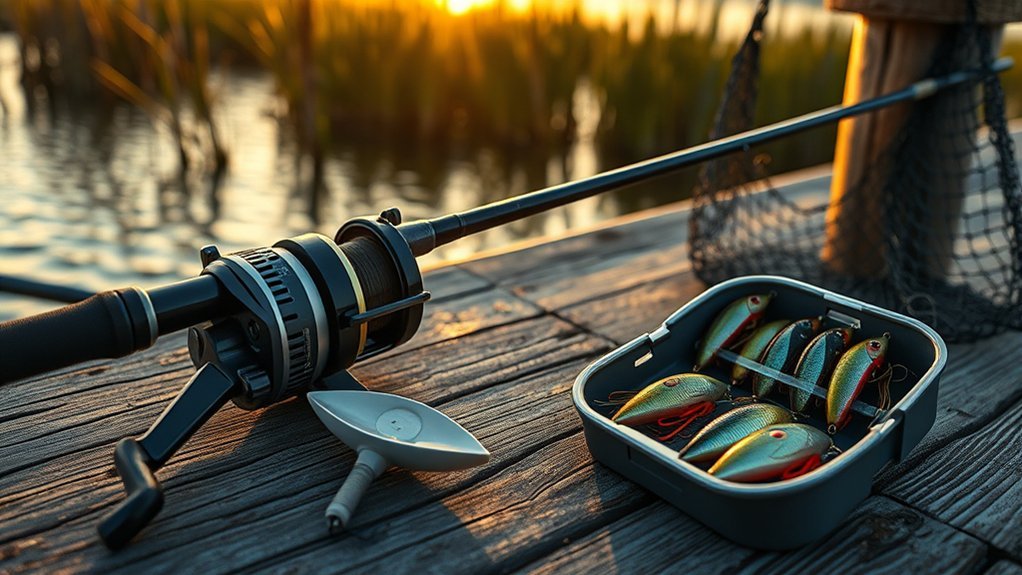
After you learn to read water and commit to long casting sessions, the right gear becomes the other half of the equation. A stout 7- to 9-foot muskie rod can work, with roughly 8’6″ to 9′ being a practical casting range for many modern setups. Match rod power to the lure weights you actually plan to throw rather than choosing extra-heavy power automatically.
For context, Minnesota DNR recommends a stout 7- to 9-foot rod, a baitcasting reel, heavy braided line, and a bite-resistant steel or fluorocarbon leader for muskellunge fishing.
Pair your rod with a high-quality baitcasting reel that has durable gears, smooth drag, and enough spool capacity for heavy braided line. A faster reel can help you pick up slack during follows, figure-8 turns, and sudden direction changes.
You’ll want 80–100 lb braided line for many dedicated muskie casting setups. Heavy braid gives you strength, low stretch, and control around large lures and boatside surges. Some lighter-lure muskie setups use lower breaking strengths, but light bass tackle is not an appropriate default for deliberately targeting muskies.
Add a muskie-grade steel or wire leader, or roughly 100–150 lb fluorocarbon for many casting situations. Match the leader and hardware to lure size, abrasion risk, and presentation instead of treating one pound-test range as universal.
Your tackle selection should focus on balance. Match rod power to lure weight, make sure the reel can handle heavy braid, and use reliable knots, snaps, split rings, and hooks.
Match rod power to lure weight, check reel capacity for heavy braid, and tie knots that will not slip under hard pressure.
As a muskie angler, you are choosing gear that lets you fish hard, stay confident during strikes, and land fish that test every weak point in your setup.
Warning: Do not target muskies with light bass tackle on purpose. Light line, weak leaders, and small tools can lead to long fights, lost lures, damaged fish, and unsafe hook removal.
[Amazon Products Picked for You]

ABU GARCIA BEAST 8' CASTING ROD: Built for all-water use, these casting rods are perfect for targeting powerful fish, with a 2-piece construction and specialized tapers designed for throwing large swimbaits.
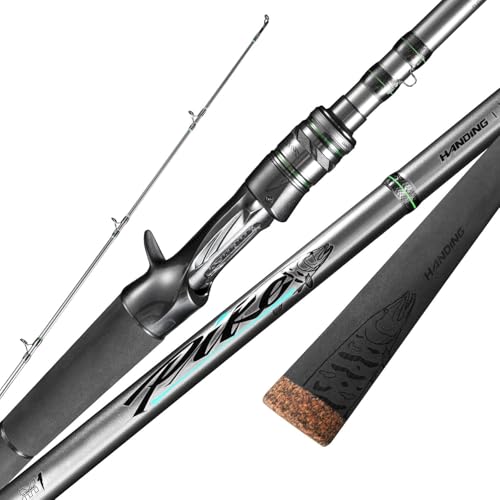
Heavy-Duty Power for Big Game: The HANDING Pike Rod Is a Powerhouse Designed for Big Game Fishing. With an Impressive 18.7 lb Max Load Capacity, It Effortlessly Tackles Massive Fish and Overcomes Heavy Cover With Confidence
Line, Leaders, and Terminal Tackle
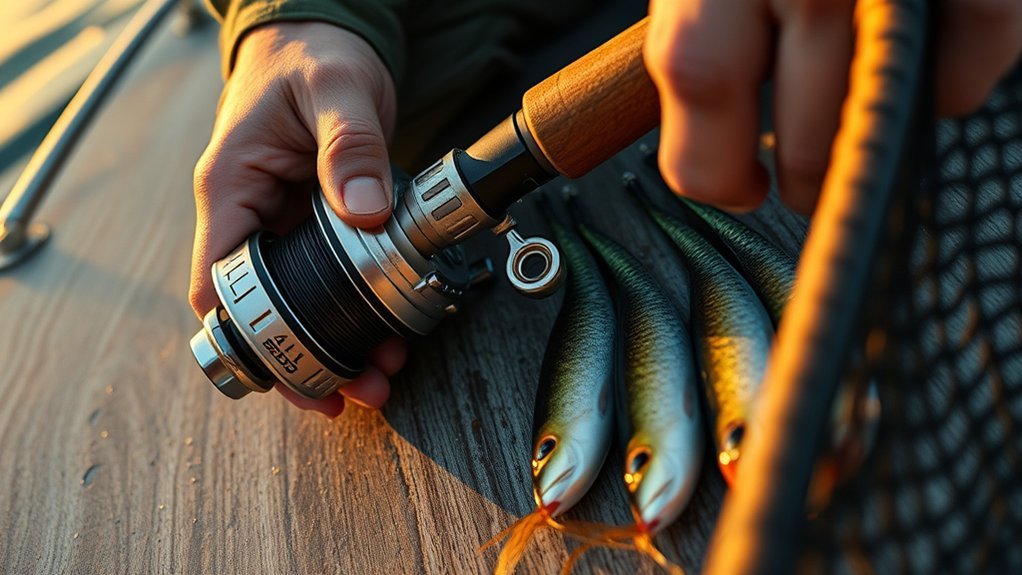
When you rig up for muskies, do not skimp on the connection between rod and lure. Choose 80–100 lb braid for many dedicated casting setups, especially when throwing bucktails, big rubber, jerkbaits, and heavy topwater lures.
Use a muskie-grade steel or wire leader, or roughly 100–150 lb fluorocarbon for many casting setups, to protect against sharp teeth. Leader strength, length, stiffness, and material should suit the lure and water you are fishing.
Use a quality barrel swivel or solid ring connection when your lure creates line twist. Bucktails, prop baits, and some rotating lures can twist line fast, so good terminal tackle keeps your presentation cleaner.
Fit a strong locking snap at the leader’s end so you can swap lures quickly without shortening your leader. Avoid cheap snaps, weak split rings, and light-wire hooks because muskies expose small failures.
Check knots before fishing. A Palomar knot works well for braid to a suitable solid terminal connection, while FG knots and double uni knots can work for appropriate line-to-leader connections when tied correctly. Many muskie anglers use pre-built leaders because they save time and reduce rigging mistakes.
Inspect leaders for nicks after every fish, snag, or hard contact with rocks. Replace any leader that shows abrasion, kinks, broken coating, or rough spots.
Sharpen and inspect hooks before you launch. Dull hooks cost you fish because muskies often strike fast, turn hard, and shake violently. Keep a small terminal tackle kit in the boat with extra leaders, swivels, snaps, split rings, replacement hooks, split-ring pliers, and a hook file.
Rig smart, maintain gear, and you will spend more time chasing fish and less time fixing preventable failures.
[Amazon Products Picked for You]

MATERIALS: The fishing Wire is made of high quality stainless steel wire covered with nylon, durable, corrosion-resistant and long-lasting.
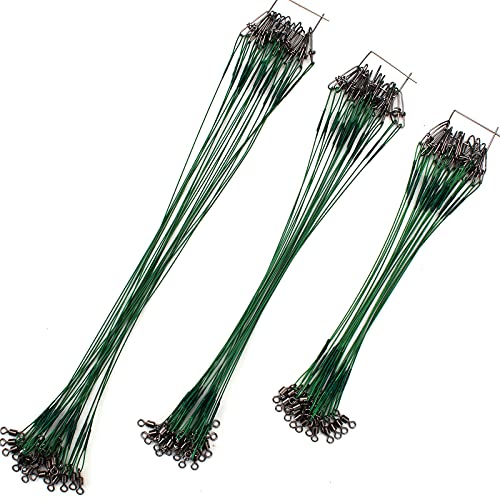
Fishing tackle leader, test:25 kg or 50 pounds, made of premium stainless steel, nylon-coated, to ensure these high-quality leaders are tough enough for sharp teeth, stronger. You will not lose the big fish.

PURE FLUOROCARBON: Built from 100 percent fluorocarbon rather than a coated copolymer, so the low visibility and sinking behavior run through the whole line, not just its surface
Best Lures for Beginners
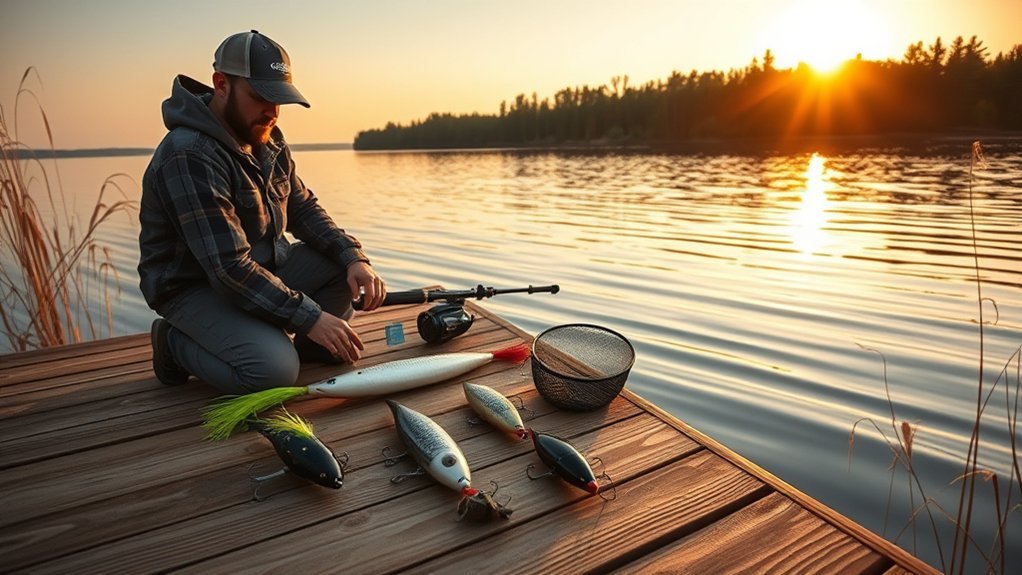
Start with easy-to-fish bucktail inline spinners. They are reliable, simple to cast and retrieve, and effective around shallow bays, weedlines, points, and open-water edges.
Add a couple of straightforward topwater options like prop baits and large buzzbaits for suitable warm-water periods, low-light conditions, and shallow cover.
Carry at least one diving plug, one glide bait, and one soft-plastic swimbait once you understand basic casting and hooksets. These lures help you cover different depths and fish moods without overloading your tackle box.
Practice the figure-8 beside the boat on every cast. Many muskies follow without striking until the lure changes direction at close range. Keep the lure moving and make broad turns that give a large fish room to follow.
[Amazon Products Picked for You]
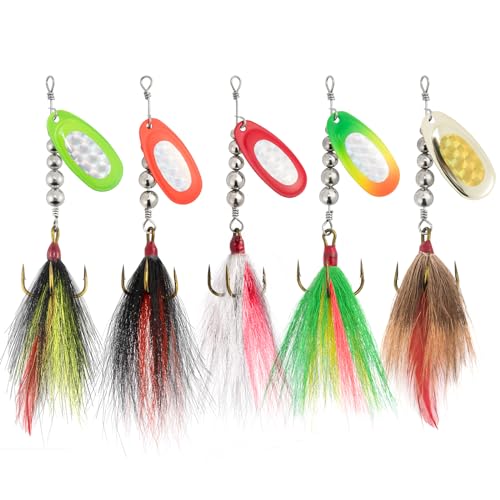
MUSKY BUCKTAIL LURES: Inline Spinnerbaits composed of high-quality colorful bucktail, French sequins, stainless steel bearings, beads, and #3/0 triple hooks provide excellent performance.

UNLEASH THE BEAST IN FRESHWATER AND SALTWATER: Your ultimate Bucktail fishing lure for both freshwater and saltwater adventures! Crafted with meticulous attention to detail right here in the USA, The Berserker is a top-tier inline spinner musky lure that embodies the perfect balance of form and function.
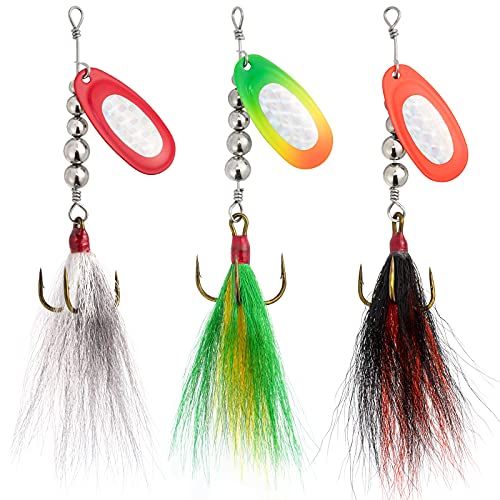
Features a premium metal blade with Zinc coating, stainless steel wire and metal bead spacers that provide flawless performance.
Easy-To-Fish Bucktails
Because they are simple to use and work in many situations, bucktail inline spinners are one of the best beginner lures for muskie fishing.
They create flash, vibration, and a steady profile that helps muskies track the lure from a distance without requiring complicated rod work.
Use smaller, easier-to-cast bucktails when you want a subtler presentation. Move to larger blades when you need more vibration, when vegetation grows thicker, or when you want to call fish from farther away.
Vary retrieval speed and depth until you learn what triggers reactions. Run the lure above weed tops, along outside edges, and across points where baitfish move.
These lures forgive mistakes and teach you lure control, boatside discipline, and how fish respond to changes in speed.
Simple Topwater Options
If you are new to muskie topwater fishing, stick with a few simple noisy lures. Prop-style baits and large buzzbaits can be beginner-friendly because they create obvious surface commotion without requiring complex retrieves.
Use topwater lures in shallow water during appropriate warm-season periods, low-light windows, and stable conditions. They can also work over weed tops when subsurface lures foul too often.
Use prop baits around cover, lanes, and calm pockets. Try a large buzzbait over sandy shallows, sparse weeds, and active feeding zones when fish are willing to move upward.
Vary retrieve speed and watch carefully for follows. A fish that appears without striking gives you useful information about location, lure depth, and activity level.
Beginner Lure Colors and Sizes
Choose lure colors by water clarity and forage. In clear water, natural patterns like perch, sucker, walleye, silver, white, and black can look convincing. In stained water, brighter colors, chartreuse accents, orange blades, and high-contrast patterns can make the lure easier to track.
Do not overthink color before you control speed, depth, and location. A well-placed lure in the right zone usually beats a perfect color in the wrong water.
For size, start with manageable muskie lures that you can cast effectively for hours. Oversized baits have their place, especially during periods when fish favor large forage, but beginners often fish better with lures they can control consistently.
How Do You Do a Muskie Figure-8?
The figure-8 is a boatside change of direction designed to keep a following muskie interested instead of ending the presentation at the rod tip. Minnesota DNR specifically describes it as a core muskie technique.
- As the lure and leader approach the rod tip, keep the lure in the water and lower the rod tip beside the boat.
- Sweep the lure into a broad oval or figure-8. Avoid tiny, abrupt turns because a large muskie needs room to change direction.
- Keep watching behind and below the lure. If a fish follows, continue the maneuver instead of lifting the bait out after one turn.
- If the fish eats beside the boat, stay controlled, keep your hands away from the hooks, and use a firm sweeping hookset rather than a panicked upward jerk.
Practice the motion when no fish is visible so it becomes automatic. A muskie can follow deeper than you can see.
Pro Tip: Do a figure-8 even when you do not see a fish. Muskies can track below or behind the lure, and a strike may happen beside the boat.
How to Fish Different Lure Types
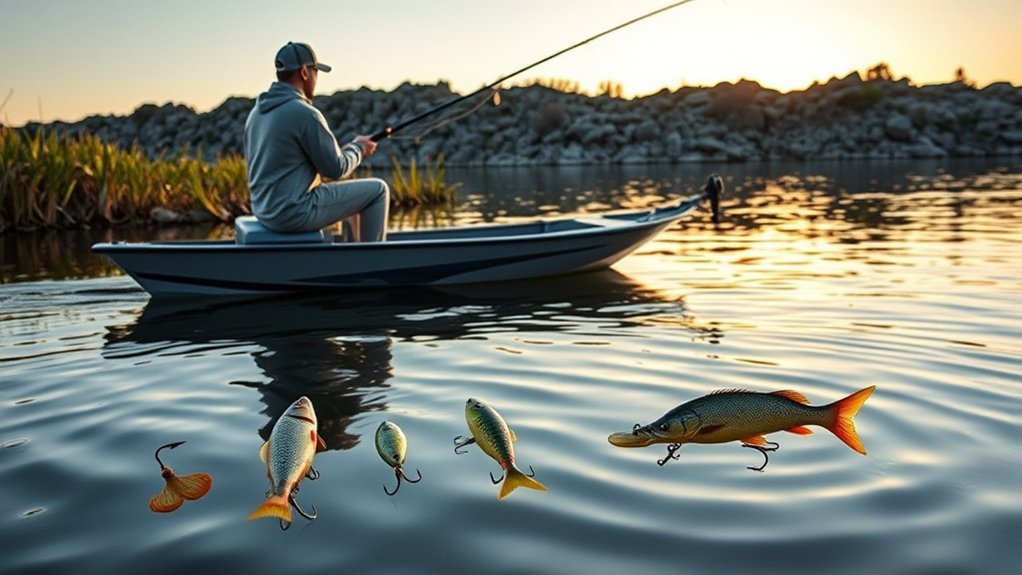
When you match lure choice to conditions and presentation, you get more consistent muskie opportunities. Each lure type calls for a different combination of retrieve speed, pause rhythm, and depth control.
Diving plugs work best when they reach the depth where fish or bait are holding. Check the lure maker’s running-depth guidance, then vary speed and pauses instead of assuming every plug runs at the same depth.
Glide baits need controlled twitches, taps, or pulls to create side-to-side action. Pause after the glide and let the bait hang briefly because a following fish may react when the lure changes speed.
Soft-plastic swimbaits can cover several depth zones. Use a steady retrieve to imitate baitfish, slow-roll them near weeds, or lift and drop them near deeper edges. Slower presentations can become more useful as fish become less willing to chase.
Topwater retrieves depend on lure design. Use the cadence the lure requires while keeping your rod ready for a strike without reacting before the fish actually loads the rod.
Bucktails are versatile inline spinners. Change depth with blade size, lure weight, rod angle, and retrieve speed. Run them high over weeds, work them deeper along edges, or keep them just under the surface when fish are active.
| Lure Type | Beginner Retrieve | Best Adjustment |
|---|---|---|
| Bucktail | Steady retrieve | Change speed and rod angle |
| Diving Plug | Steady retrieve + pauses | Change running depth |
| Glide Bait | Controlled twitches + pauses | Vary pause length |
| Swimbait | Steady or slow-roll retrieve | Change depth and speed |
| Topwater | Steady lure-specific cadence | Change pace without stopping the lure unnaturally |
If fish follow but do not strike, change speed first. If they still refuse, change depth, casting angle, profile, or color. That sequence gives you a repeatable adjustment system instead of random lure changes.
Seasonal Patterns and Where to Find Muskies
Muskie location changes with water temperature, forage, vegetation, weather, and the individual lake or river. Use seasonal patterns as starting points, then let baitfish, healthy cover, electronics, and actual follows tell you whether to stay shallow or move deeper.
During legal early-season periods, recently spawned fish may use shallow vegetated bays, channels, points, and nearby structure. In summer, healthy weed edges and wind-blown structure can hold fish, but the productive depth varies greatly by waterbody.
As fall progresses and vegetation changes, focus increasingly on bait concentrations, outside edges, points, humps, drop-offs, and other structure that connects feeding areas with deeper water.
Pre-Spawn Hotspots
Before spawning, warming water can move muskies toward shallow, structure-rich flats, bays, and adjacent points where baitfish gather. During active spawning, however, muskies may feed very little, and fishing seasons may be closed or delayed depending on the jurisdiction.
Watch water temperature and structure, but check the current local regulations before targeting muskies. Seasons, size limits, possession rules, and waterbody-specific restrictions vary widely.
- Check shallow points that funnel baitfish toward shore.
- Target submerged logs and rock changes where muskies can ambush prey when the season is legally open.
- Follow weed edges that border clean flats without fishing only inside thick weeds.
- Pay attention to warming trends and daily changes in conditions.
- Keep notes on productive spots so you can return with purpose.
Summer Weedlines
In summer, focus on healthy weedlines where muskies can follow forage and use vegetation as ambush cover. On some waters productive weeds may be shallow; on clear lakes healthy vegetation can extend substantially deeper, so do not treat 3–8 feet as a universal rule.
Scan edges where open water meets weeds. Watch for fleeing forage, surface boils, bait dimples, and small openings in vegetation. Muskies often use these gaps as ambush lanes.
Low-light periods, cloud cover, and wind-blown edges can be productive because changing light and surface conditions may help predators move and feed.
Cast bucktails, topwaters, shallow-running plugs, or other lures that can work cleanly around the vegetation without constantly burying hooks in weeds.
Vary the retrieve with speed changes and controlled pauses when the lure style allows it. Stay mobile until you identify the depth, edge, or structure holding fish.
Fall Deep-Water Staging
When water cools and vegetation changes, expand your search toward outside weed edges, drop-offs, basin edges, points, humps, and other structure associated with baitfish. Do not assume every fall muskie will be deep.
A 15–25-foot zone can be relevant on some waters, but productive depth varies with lake shape, clarity, forage, turnover, and weather. Use electronics and visual clues to find bait rather than choosing a depth before you arrive.
- Scout steep breaks and submerged humps where baitfish gather.
- Use large swimbaits, crankbaits, jerkbaits, or other presentations that reach the fish you mark.
- Use electronics to mark bait schools and stay mobile.
- Drift, cast, or hold along points to cover water efficiently.
- Expect hard strikes and use a firm, controlled hookset.
Let the location of forage guide lure size, speed, and depth instead of fishing a fixed seasonal formula.
Warm-Water Fish-Care Warning: Very warm water can increase stress on muskies during the fight and release. When water temperatures are unusually high for your fishery, consider targeting another species and follow current local fisheries-agency guidance.
Boat Positioning, Casting Strategy, and the Grid Method
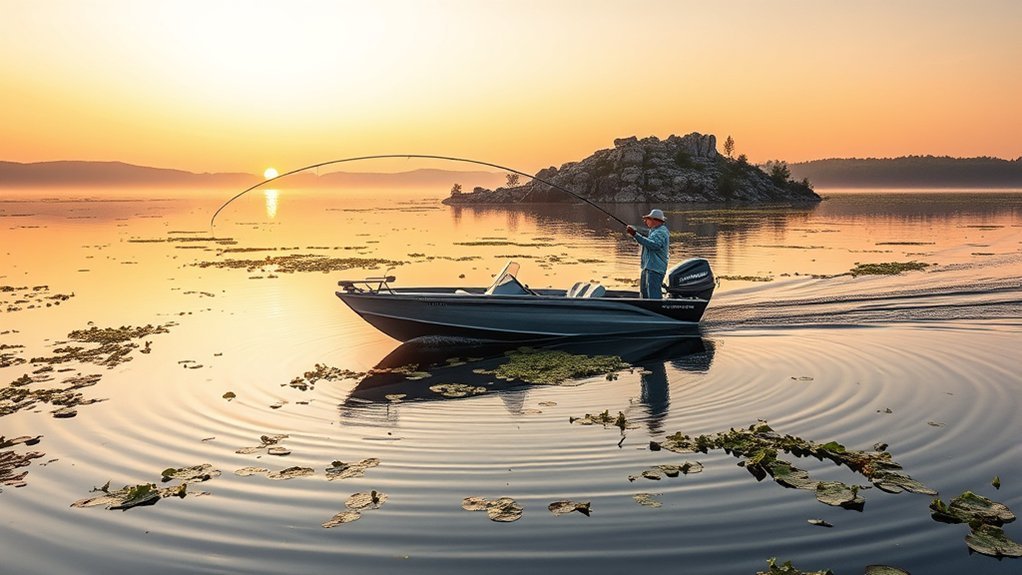
Start by positioning your boat over deeper or less intrusive water and use a trolling motor to hold a steady pace so you can systematically work the strike zone. Disciplined boat positioning keeps you from repeatedly running over the structure you want to fish.
Cast ahead of the boat, retrieve with intention, and vary speed when fish show themselves but refuse the lure.
Use the grid method by mentally dividing an area into lanes or squares. Space casts closely enough that you do not leave large gaps, especially around weed points, inside turns, rock tips, and sharp depth changes.
Move the boat methodically between grid lines while keeping noise down. Avoid banging lids, dropping tools, or driving directly across the most promising structure.
Stay balanced and ready near the end of each retrieve. Many muskies strike near the boat, so prepare for the figure-8 before the lure reaches your rod tip.
Rotate lures to test profiles, depths, and speeds, but make changes with a reason. When a fish follows, record what happened before abandoning that presentation.
Precise boat position, disciplined casting, and a simple grid make it easier to cover each strike zone without relying on random casts.
Hooksets, Playing Fish, and Shortening Fight Time
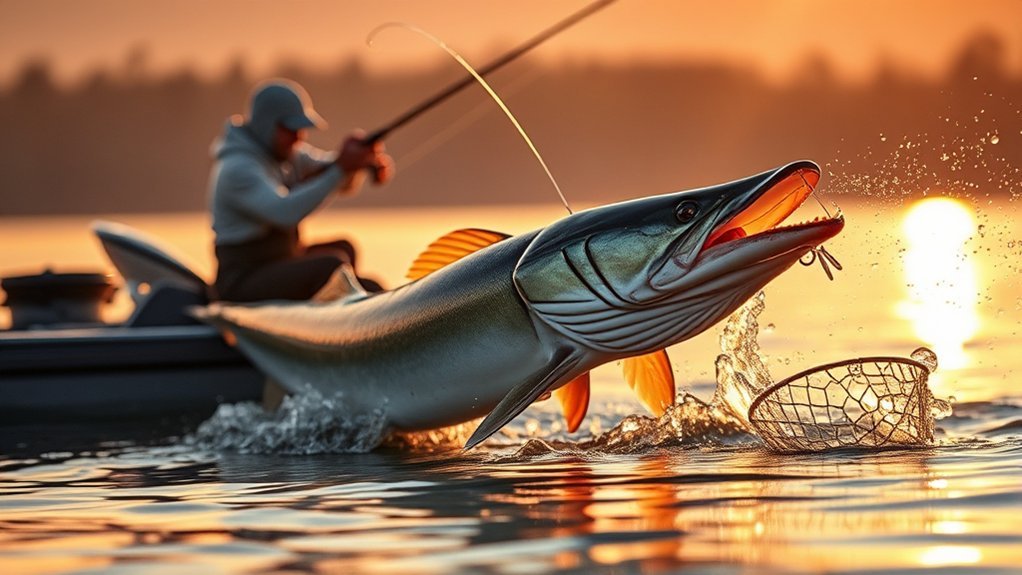
Because muskies are powerful fish and many muskie lures carry stout hooks, use a firm, committed hookset. Sweep hard and drive the hooks home while maintaining control of the rod.
After the hookset, keep steady pressure and reel efficiently. Your goal is to control the fish, avoid unnecessary exhaustion, and keep the fight reasonably short.
You want solid hooksets and controlled actions that protect both you and the fish.
- Set the hook confidently rather than hesitating after a clear strike.
- Keep continuous pressure while playing the fish and avoid unnecessary slack.
- Anticipate rolls beside the boat because muskies can twist during the fight.
- Use barbless hooks or crushed barbs when practical if they suit your fishing situation and local rules.
- Bring the fish under control efficiently and minimize time out of the water.
A controlled fight is better than deliberately exhausting the fish. Wisconsin DNR specifically advises anglers not to play a muskie to complete exhaustion when planning to release it.
Note: Set your drag before fishing. It should be tight enough for a solid hookset with your tackle but smooth enough to give line during a sudden surge without exceeding the limits of the rod, line, leader, or hooks.
Landing, Handling, and Proper Catch-and-Release
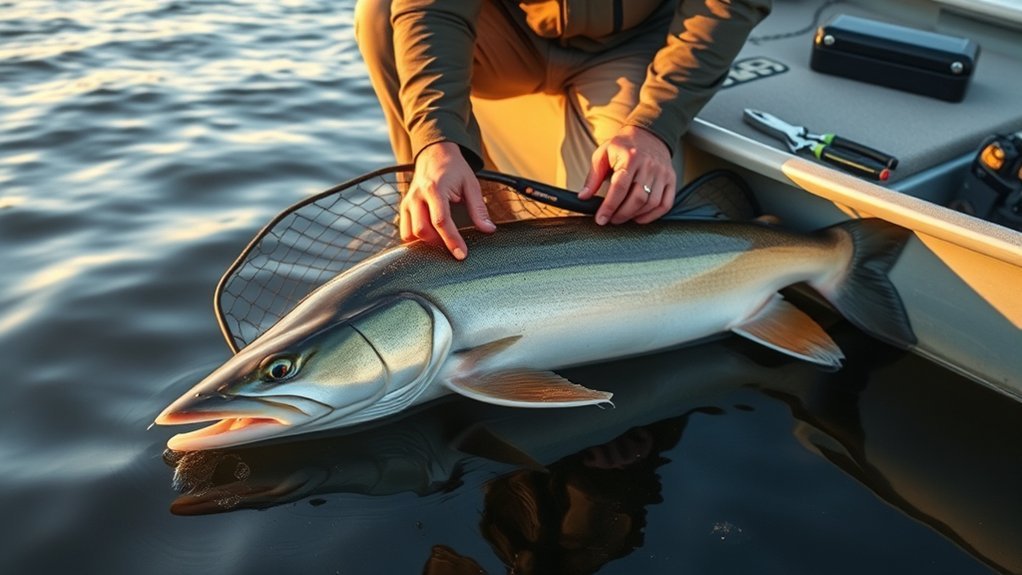
When you land a muskie, use a large hooped net with deep, fish-friendly mesh and keep the fish in the water whenever possible. The net can act as an in-water holding area while you prepare to remove hooks.
Remove hooks boat-side with long needle-nose pliers, a suitable hook-out tool, and hook cutters. If a hook cannot be removed safely and quickly, cutting the hook can be better than repeatedly twisting or pulling at it.
Wet your bump board before measuring and minimize handling time. If you lift a fish briefly, support it horizontally rather than hanging its full body weight from the jaw.
Safe Landing Techniques
One clear rule matters most: land muskies with gear and technique that protect their skin, fins, jaw, and gill structures. Careful handling gives a released fish a better chance to recover.
Use a large, deep-hooped net with fish-friendly mesh to keep control beside the boat without dragging the fish onto a dry surface.
- Keep the fish mostly in the net and avoid dragging it onto carpet, docks, rocks, or dry surfaces.
- Wet hands, boards, and the net before contact to help protect the slime coat.
- Remove hooks while the fish’s body is supported in the net when practical, using long pliers or hook-out tools.
- Have a hook cutter ready for deeply embedded hooks or dangerous hook angles.
- If the fish must be lifted briefly, support its body horizontally with two hands.
- Measure quickly on a wet bump board and return the fish promptly.
Quick Hook Removal
Start by keeping the muskie mostly in the net and work deliberately. Supporting its body in deep, fish-friendly mesh lets you use long needle-nose pliers, hook cutters, or a hook-out tool without placing the fish on a dry deck.
Barbless hooks or crushed barbs can speed hook removal when appropriate. They can reduce the force needed to free a hook, especially when a lure carries multiple hook points.
Grip the hook securely, back it out smoothly when practical, and avoid repeatedly yanking at a difficult angle. If removal is likely to cause additional injury or put your hands in danger, use suitable cutters rather than forcing the hook.
Wet your hands if you must touch the fish. Use a bump board only after moistening it, and keep measurements and photos brief.
Wisconsin DNR recommends preparing long-nose pliers or a hook remover plus cutters before fishing and keeping the fish in the water whenever possible.
Minimize Handling Time
Keeping the fish in the water is one of the most useful habits you can develop. Land muskies with a large, deep-hooped net and remove hooks while the fish stays partly submerged whenever conditions allow.
Prepare tools before the fight ends so you are not searching through compartments after the fish is already in the net.
- Use a deep-hooped net to cradle the fish and avoid squeezing.
- Remove hooks while the fish remains supported whenever practical.
- Wet your bump board before a brief measurement.
- Keep hands wet and out-of-water exposure as short as practical.
- Support the fish horizontally if you lift it.
- Release it once hooks are out, any quick photo is finished, and the fish is upright and ready.
Move calmly rather than rushing blindly. Efficient preparation is what makes a quick release possible.
Mindset, Persistence, and Learning the Local Water
Patience pays in muskie fishing, so expect long periods of casting and observation without an immediate reward.
Use a repeatable strategy instead of changing everything after a few blank casts. Rotate lures with a reason, vary retrieve speed, and focus effort where seasonal structure and bait movement suggest feeding opportunities.
Learn your local water whenever visibility and access conditions allow you to study weed edges, rock, timber, points, and shoreline changes. Mark waypoints and build your own map of high-percentage areas.
Talk with experienced local anglers when you can. Their knowledge of seasonal timing, productive structure, access, and subtle presentation changes can shorten the learning curve.
Keep notes after every trip. Record water temperature, wind direction, sky conditions, lure type, retrieve speed, follows, strikes, lost fish, and time of day. Over multiple trips, those notes can reveal patterns that memory alone misses.
Evaluate what worked, what failed, and what you should try next. Treat follows and sightings as useful information, not wasted effort.
Muskie Fishing for Beginners: Your First Trip Plan
A beginner does not need dozens of lures or a complicated strategy. A simple, repeatable first-trip plan keeps you focused on safety, efficient casting, and learning the water.
- Check the current regulations. Confirm the legal season, size and possession limits, protected areas, and any water-specific rules before fishing.
- Prepare one balanced setup. Match a stout muskie rod, strong baitcaster, heavy braid, bite leader, snap, hooks, and lure weights so the system works together.
- Stage release equipment first. Put the large net, long pliers, hook cutters, and wet measuring board where you can reach them immediately.
- Choose several high-percentage areas. Start with weed edges, points, rock transitions, drop-offs, or structure holding bait and cover them methodically.
- Keep lure changes simple. Start with a moving bait such as a bucktail, then change speed and depth before repeatedly swapping colors or lure styles.
- Finish every retrieve. Stay alert at boatside, perform a wide figure-8, and record follows so you can revisit productive fish under different conditions.
If you complete those six steps consistently, even a trip without a landed muskie gives you information you can use next time.
Common Beginner Muskie Mistakes
Many beginners struggle because they fish muskie water with no system. They cast randomly, change lures constantly, skip the figure-8, or leave a productive area without considering whether conditions are about to improve.
Another common mistake is using gear that is too light. Light rods, weak leaders, and undersized release equipment can make casting difficult, lengthen fights, and increase the chance of losing a fish or leaving tackle attached to it.
Beginners also forget to prepare release tools. Before your first cast, keep long pliers, hook cutters, a wet bump board, and a large net ready. A muskie can strike at any time, and handling problems should be solved before the fish is hooked.
Finally, do not ignore follows. A follow tells you a fish used that location and responded to part of your presentation. Record the lure, speed, angle, time, light, and wind, then use that information when you return.
Frequently Asked Questions
What is the secret to muskie fishing?
The closest thing to a secret is disciplined persistence. Fish high-percentage structure, match lure depth to the water you are actually seeing, keep hooks sharp, practice the figure-8, record follows, and change one variable at a time instead of casting randomly.
What lures should a beginner use for muskie?
Beginners can start with bucktails, soft swimbaits, topwater lures, and diving plugs. These lure types cover several depths and retrieves without requiring an oversized tackle collection. Add specialized glide or jerk baits after you are comfortable with the basic presentations.
Is 20 lb braid enough for muskie?
A 20 lb braid is not a good default for deliberately targeting muskies with normal muskie lures. Dedicated casting setups commonly use much heavier braid along with a bite-resistant steel, wire, or heavy fluorocarbon leader so the tackle can handle large lures, hard hooksets, and powerful fish.
What time of day do muskies bite?
Dawn, dusk, overcast periods, wind changes, and other weather transitions can produce active windows, but muskies can also strike in the middle of the day. Track follows and strikes on your own water instead of assuming one clock time is always best.
Do you need a leader for muskie fishing?
Yes. Use a bite-resistant leader when intentionally fishing for muskies. Their teeth can damage ordinary fishing line, while a muskie-grade steel, wire, or heavy fluorocarbon leader protects the lure connection.
Why do muskies follow but not strike?
A following muskie may be interested without fully committing. Change retrieve speed first, then experiment with depth, casting angle, profile, or color. Always finish at boatside with a broad figure-8 because the direction change can give a following fish another opportunity to strike.
What rod and line should a beginner use for muskie?
A stout muskie rod around 8 to 9 feet, a durable baitcasting reel, and 80–100 lb braid are a practical starting point for many dedicated casting setups. Match the rod power to your actual lure weights and add a muskie-grade bite leader.
Should you fish for muskies in very warm water?
Very warm water can increase stress during a fight and release. When temperatures are unusually high for your fishery, consider targeting another species and follow current guidance from the fisheries agency that manages the water you are fishing.
How do you safely release a muskie?
Use a large fish-friendly net, keep the muskie in the water whenever practical, and have long pliers and hook cutters ready before fishing. Wet your hands and measuring board, support the fish horizontally if it is briefly lifted, and minimize fight and air-exposure time.
Conclusion
You now have the core muskie fishing basics: a balanced heavy-tackle setup, beginner-friendly lures, seasonal location principles, systematic casting, figure-8 technique, controlled hooksets, and safer catch-and-release.
Before your next trip, check the current local regulations, stage your release tools, pick a small set of lures you can fish confidently, and make every cast with a purpose. Keep notes on follows and conditions. Muskie fishing rewards patience, but a repeatable plan gives that patience direction.