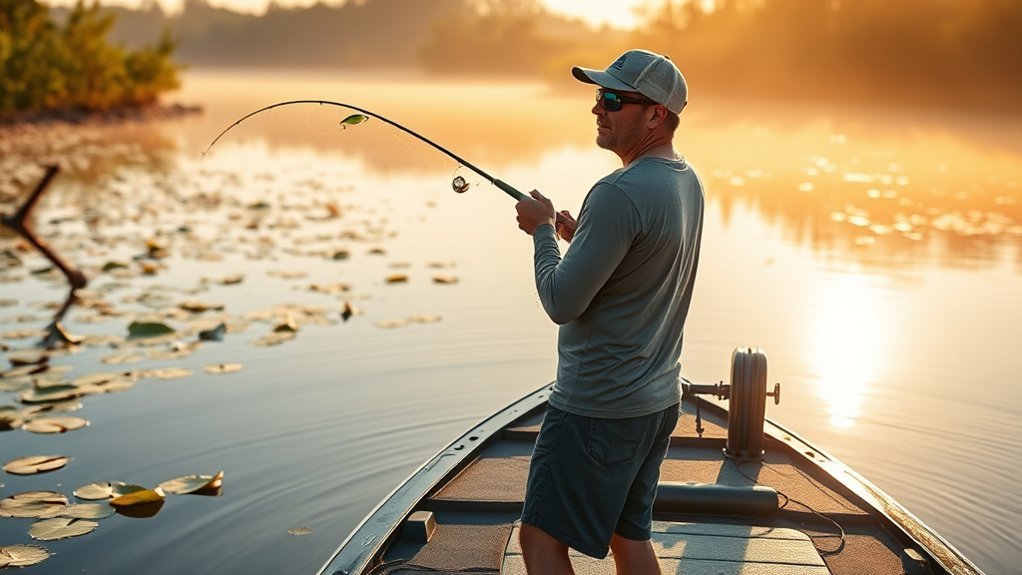
After the spawn, bass rarely stay in one place for long. You’ll often find males guarding fry in shallow water while larger females recover, feed, and slide toward nearby cover, points, docks, creek channels, and deeper structure. The best post-spawn bass fishing comes from reading those changeover zones, matching the local forage, and switching presentations before the bite fades.
Quick Answer
To catch post-spawn bass, start near shallow fry-guarding areas, then follow fish toward docks, hard-bottom points, grass edges, creek channels, and the first deeper structure outside spawning pockets. Use topwater early, spinnerbaits around cover, crankbaits or swimbaits around shad, and a Carolina rig when bass move deeper.
Key Takeaways
- Post-spawn bass often split by role: males stay shallow to guard fry, while females recover and move toward nearby feeding and holding areas.
- Focus on transition routes from spawning pockets to deeper water, especially docks, hard bottoms, grass, flooded bushes, points, ledges, and creek channels.
- Match lure size and speed to forage. Use shad-style baits when baitfish are active and smaller plastics when bass get selective.
- Use reaction baits to cover water, then slow down with a Carolina rig, soft plastic, or finesse bait when you locate fish.
- Handle bedding and fry-guarding fish carefully, follow local regulations, and release fish quickly when practicing catch and release.
At a Glance
| Best Time | Late spring into early summer, depending on your region, water temperature, and spawning progress. |
| Difficulty | Moderate, because fish can move shallow, suspend, or slide deeper within the same day. |
| Best Lures | Topwater, buzzbaits, spinnerbaits, crankbaits, swimbaits, jerkbaits, soft plastics, jigs, and Carolina rigs. |
| Main Pattern | Fish the path between spawning pockets, fry cover, baitfish schools, and the first reliable deep structure. |
Understanding Post-Spawn Bass Behavior
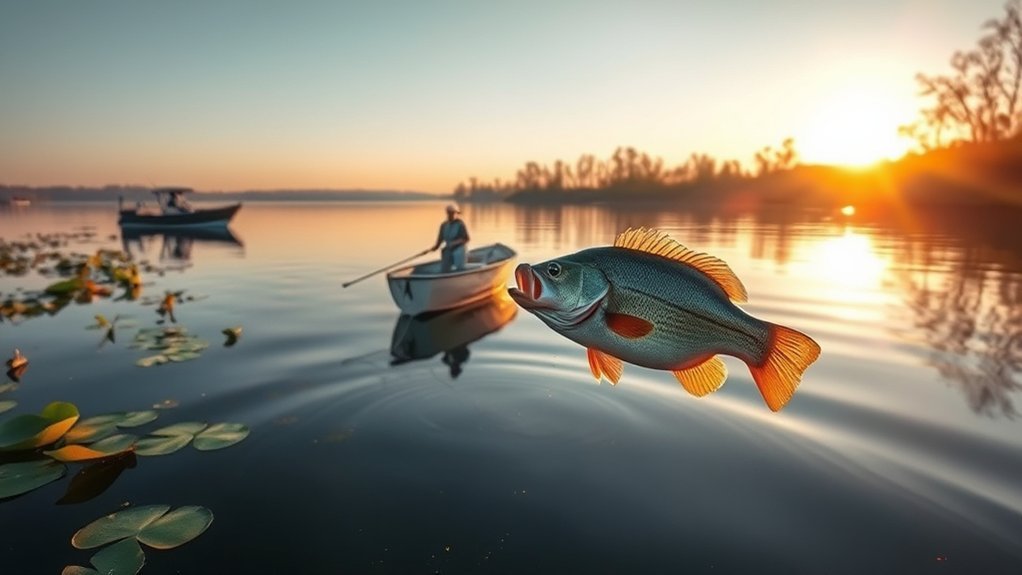
After spawning, bass shift into a short recovery and feeding phase. Males often stay near beds and fry, while many females move away from the immediate nest area to recover, suspend, or feed near the first useful cover.
After spawning, bass become more location-specific. Males often guard fry shallow, while larger females usually recover and feed near nearby cover, points, or deeper transition routes.
You’ll see post-spawn bass erupt near shallow margins when fry, bluegill, minnows, or shad are present. Early and late in the day, these fish may feed aggressively around grass, docks, laydowns, flooded brush, seawalls, and shallow points.
As the sun rises or the water warms, bass often pull toward shade, deeper grass edges, creek channels, or the first drop outside the spawning area. Water clarity and temperature help you decide how fast to move. Clear water often pushes fish deeper or tighter to shade, while stained water lets them hold shallower and closer to cover.
Don’t waste time guessing. Start where spawning pockets connect to feeding areas, then follow the most obvious escape route toward deeper water. Fish aggressively when bass chase bait or defend fry, but slow down when fish suspend or sit tight to cover.
Warning: If you target fry-guarding bass, handle them quickly, keep them wet, and release them near the capture spot. Always follow local seasons, size limits, and catch-and-release rules.
Use this practical, focused approach to control outcomes and fish with purpose. Post-spawn fishing rewards anglers who make quick decisions, but it punishes anyone who stays too long in dead water.
Best Locations to Target After the Spawn
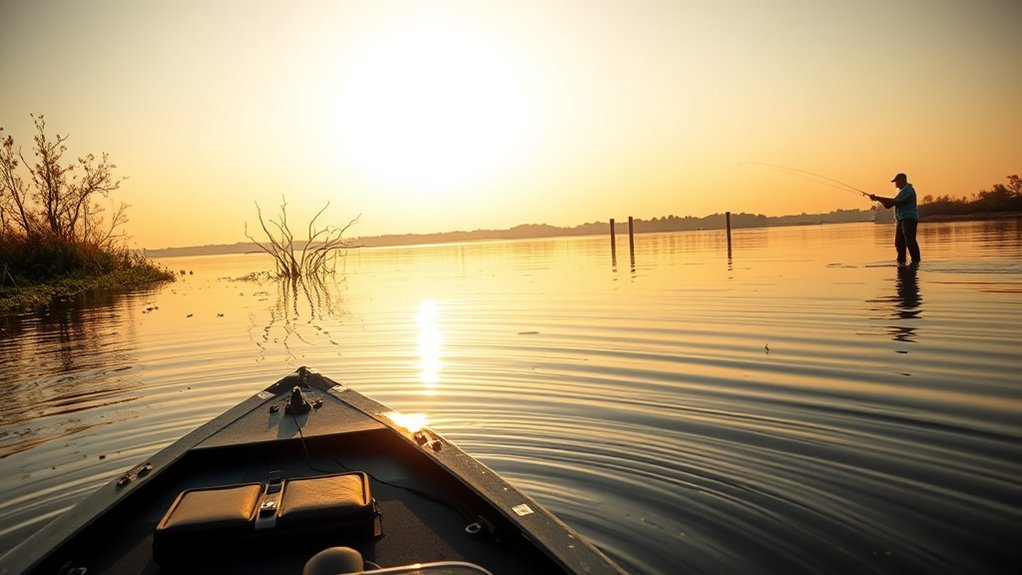
When post-spawn behavior settles, target hard bottoms and calm water near creek channels, vegetation, docks, and points where bass can feed without moving far.
You’ll find the best locations by focusing on changeover zones between spawning areas and deeper water. Fish flooded willows, bushes, grass lines, dock walkways, rocky points, and channel swings where fry and bait congregate. These are the areas where aggressive males and migrating females often overlap.
Read the water, follow the shad, and claim pockets of cover that let you control the strike. A strong post-spawn area usually has three things close together: a spawning flat, cover or shade, and fast access to deeper water.
- Creek channels and ledges — prime fishing points where post-spawn fish slide toward deeper water with nearby cover.
- Flooded vegetation and willows — summer holdouts that shelter bass; they’re compact, predictable targets.
- Docks and hard-bottom points — concentrated ambush zones near spawning areas’ edges; you can pressure fish efficiently.
You want liberation on the water: move deliberately, hit productive locations quickly, and exploit these compact areas until patterns break.
High-Percentage Transition Areas
The best post-spawn spots usually sit between the beds and the summer pattern. Start at the back of a spawning pocket, then work outward toward secondary points, main-lake points, channel bends, bridge pilings, deep dock ends, or grass edges.
If you catch a small male shallow, keep moving nearby. A larger female may be on the closest shade line, dock corner, stump row, or drop-off. If you catch a female on the first deep break, mark the depth and look for that same setup in similar pockets.
- Shallow cover: Fry balls, bluegill beds, laydowns, flooded bushes, willow lines, and grass pockets.
- Mid-depth cover: Dock posts, brush piles, stump fields, riprap, and secondary points.
- Deep access: Creek channels, ledges, drains, channel swings, and the first hard-bottom drop.
Pro Tip: When you find baitfish flickering on the surface or bluegill nosing around shallow cover, make several casts before leaving. Post-spawn bass often feed in short windows.
Top Lures and Bait Presentations
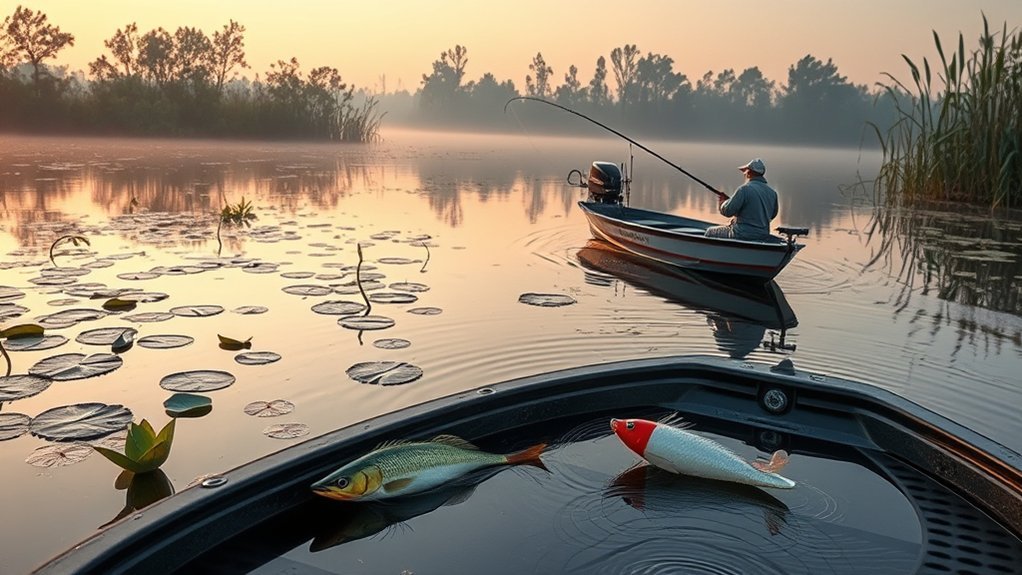
As post-spawn bass shift between shallow cover and deeper water, pick lures that match their mood. Use big crankbaits and lipless crankbaits to quickly cover flats, swimbaits and jerkbaits to mimic active shad, and downsized three- to four-inch plastics when fish favor smaller prey.
You’ll want a mix: bigger crankbaits for cruising fish, topwater bait and buzzbaits for explosive surface strikes, and swimbaits or jerkbaits for patterned shad action. When shad spawn or baitfish school near hard cover, a moving bait helps you find active fish fast.
Throw spinnerbaits near beds, bushes, grass, and dock shade to draw reaction strikes from protective males and lingering females. Carry a range of soft plastics, including small shad-shape worms, stick worms, finesse worms, and Senko-style baits in fry, shad, green pumpkin, watermelon, and bluegill shades for edges and docks.
Target shallow cover with spinnerbaits and topwater early, then keep small shad-style soft plastics ready for slower bites along docks, grass edges, and points.
When fish move deep, switch to a Carolina rig with brush hogs, creature baits, lizards, finesse worms, or jelly worms to probe contours slowly. Cast tight to structure, use stop-start retrieves and vertical hops, and let presentation tempo free you to adapt quickly during the post spawn.
Best Lure Choices by Bass Mood
Post-spawn bass can change moods fast, so don’t lock yourself into one bait. Start with something that covers water, then slow down once you get follows, short strikes, or scattered bites.
| Bass Mood or Situation | Best Presentation | How to Fish It |
|---|---|---|
| Active around shad | Swimbait, crankbait, jerkbait | Match the bait size and work near hard cover, points, and surface activity. |
| Fry guarding shallow | Spinnerbait, popper, small worm | Cast past the fry ball and bring the bait through the strike zone. |
| Suspended or recovering | Jerkbait, weightless stick bait, finesse worm | Use pauses and let the bait hang longer near shade or vertical cover. |
| Deeper on points or ledges | Deep crankbait, Carolina rig, football jig | Probe the bottom slowly after you contact rock, shell, brush, or a depth change. |
Proven Tactics: Deep Cranking and Carolina Rig
For deep crankbait selection, use Strike King 5XD for roughly mid-depth work and larger 8XD or 10XD crankbaits when you need to reach deeper structure, matching colors to conditions. Matte or dull colors can help on cloudy days, while shad patterns with chartreuse or subtle flash can stand out on sunny days or in stained water.
For Carolina rig presentation, fish a heavy 7’3″ rod with 20 lb fluorocarbon, adjust weight to bottom type, and cast across points or drag parallel to structure.
Combine the two approaches to cover deep water efficiently and trigger reaction strikes from post-spawn bass. Deep cranking helps you find active fish, while a Carolina rig helps you slow down after you identify a productive point, ledge, brush pile, or shell bed.
Deep Crank Bait Selection
Pick crankbaits that reach the bass’ feeding depth and match conditions: Strike King 5XD for mid-depth targets and the 8XD or 10XD for deeper water, with dull or matte colors on cloudy days and natural shad plus chartreuse accents in sun or stained water.
You’ll pursue post-spawn bass aggressively with the right deep cranking bait and tackle. Use a medium-heavy rod with a moderate fast tip and 10 lb fluorocarbon to feel subtle taps, control the lure in current, and help treble hooks stay pinned during the fight.
Match color and profile to local forage so you’ll catch fish more often and reclaim your day on the water.
- Test retrieve speed: slow to moderate, pause, then resume.
- Change color if strikes drop off.
- Move structure until fish react.
Carolina Rig Presentation
While post-spawn bass pull out to deeper water, the Carolina rig gives you a precise, bottom-hugging presentation that triggers big, lethargic fish. Set a sliding weight from ½ to 1¼ oz ahead of a leader and soft plastic to keep the bait in the strike zone and let fish eat naturally.
You’ll use Carolina rigging to probe areas of the lake where bass retreat, casting across points, dragging parallel to structure, and covering water until you find holding fish.
Choose Zoom brush hogs or 10-inch jelly worms in grape or cherry, rigged weedless so you can pull the bait through cover without fouling. Creature baits, lizards, finesse worms, and floating soft plastics also work well when bass want a slower look.
Fish a heavy rod with 20 lb fluorocarbon for sensitivity and hooksets. Shorten the leader when bass stay close to bottom, and lengthen it when fish suspend slightly above grass, rock, or brush.
This practical fishing information helps you catch bass and reclaim freedom on the water.
Adjusting to Water Conditions and Forage
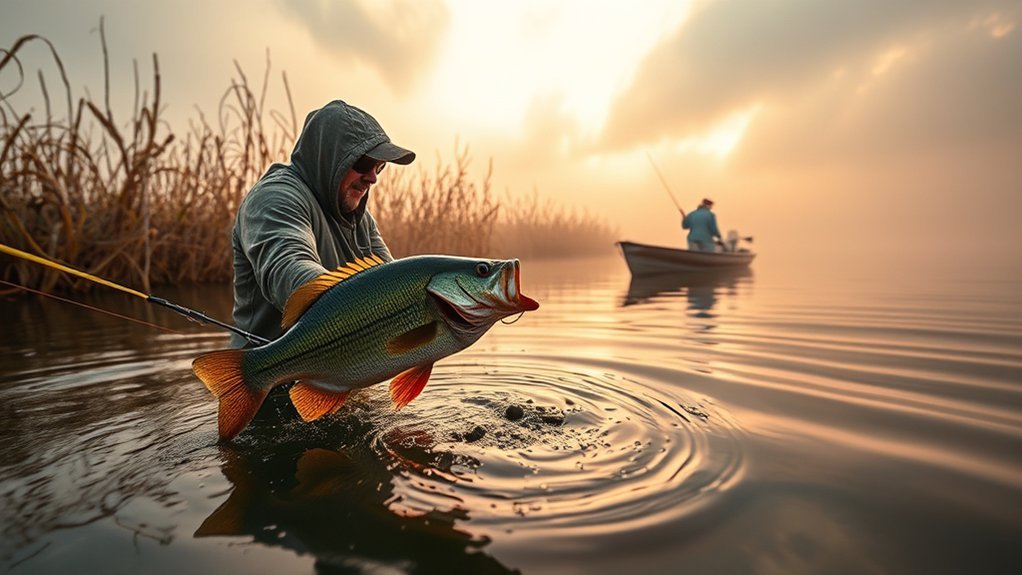
Because post-spawn bass base their decisions on cover, temperature, light, and available forage, you need to match your approach to those changing conditions. Shallow bass will hold if sunfish, bluegill, fry, or minnows are abundant. Stained water keeps fish tighter to cover, while clear water often pushes them deeper, farther from the bank, or into shade.
Post-spawn bass follow cover, temperature, light, and forage. Match depth, lure size, and retrieve speed to the conditions you see that day.
Rising temperatures, sunny skies, and active shad can call for deeper presentations or reaction baits like crankbaits and swimbaits. Cloud cover, wind, and stained water can keep bass shallow longer, especially around grass, riprap, flooded bushes, and docks.
Downsizing to 3- to 4-inch offerings during the post-spawn will often trigger more strikes when fish get selective. You’ll read water and move with the fish: focus on pockets of cover when spawning activity leaves forage nearby, shift deeper as water temperature climbs, and target shifting zones where bait concentrates.
Be deliberate. Match bait profile to dominant forage and adjust size to selective post-spawn mouths. Stay mobile, confident, and willing to change tactics quickly; liberation on the water comes from adaptability.
Practice these principles and you’ll increase your catch rates consistently.
- Read cover and forage.
- Match presentation to water clarity.
- Downsize when fish are selective.
Water Clarity and Color Choices
Clear water usually rewards natural colors, lighter line, longer casts, and quieter entries. Try shad, translucent, green pumpkin, watermelon, smoke, or subtle bluegill tones when fish can see well.
Stained water lets you use stronger vibration, bigger profiles, and brighter accents. Chartreuse, white, black-and-blue, bold bluegill, and darker silhouettes can help bass track the bait around cover.
Muddy water calls for slow, close presentations. A spinnerbait, squarebill, vibrating jig, jig, or Texas-rigged soft plastic can help when bass stay tight to wood, grass, dock posts, or riprap.
Forage Patterns to Watch
Post-spawn bass often key on whatever food is easiest to trap. Shad, bluegill, fry, minnows, crawfish, and young baitfish can all drive the bite. Watch the bank, not just your electronics. Surface flickers, bluegill beds, swirls, and birds can reveal feeding zones before you make a cast.
- Shad present: Use swimbaits, jerkbaits, spinnerbaits, crankbaits, and topwater near points, riprap, seawalls, and docks.
- Bluegill active: Use poppers, swim jigs, Texas rigs, wacky rigs, and bluegill-colored soft plastics near shallow cover.
- Crawfish around rock: Use jigs, Carolina rigs, crankbaits, and creature baits along hard bottoms and points.
- Fry balls visible: Use small topwater, weightless plastics, finesse worms, and compact spinnerbaits near the fry without overworking one spot.
Note: Post-spawn timing changes by region. In southern waters, this period can arrive much earlier than it does in northern lakes or higher-elevation reservoirs.
Gear, Rods, Lines, and Rigging Choices
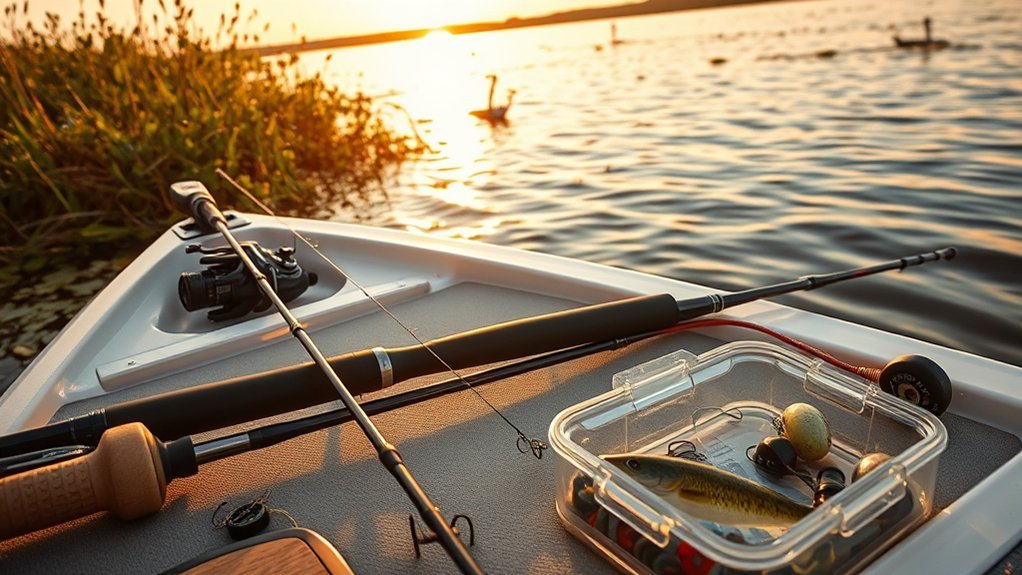
Equipment shapes success on the water, so choose rods, lines, and rigs that match the presentation and environment you’ll face. You’ll want gear that lets bass move freely into your offering across various stages of post-spawn behavior.
For deep cranking, use a medium-heavy rod with a moderate fast tip and 10 lb fluorocarbon to control depth in 10–20 ft. The softer action helps keep treble hooks loaded when fish surge near the boat.
Carolina rigging calls for a 7’3″ heavy rod and 20 lb fluorocarbon for sensitivity and durability when dragging structure. For finesse with spinning tackle, pick a light-to-medium rod to feel Shad Shape worms, finesse worms, or Senkos. Flip thick tules, bushes, and grass with braid and a heavy flipping stick to prevent break-offs.
Choose egg weights for rocky or muddy bottoms, bullet weights for grass, and size Carolina weights from ½ oz to 1¼ oz based on depth, wind, current, and bottom contact.
| Presentation | Setup |
|---|---|
| Deep cranking | Med-heavy rod, 10 lb FC |
| Carolina rig | 7’3″ heavy, 20 lb FC |
| Finesse | Light-med rod, spinning |
| Flipping | Braid, flipping stick |
| Weights | Egg vs bullet, ½–1¼ oz |
Simple Post-Spawn Rod and Line System
You don’t need a boat full of rods to fish the post-spawn well. A simple four-setup system covers most conditions and keeps you moving.
- Topwater and moving baits: Use a medium or medium-heavy casting rod with monofilament, copolymer, or braid-to-leader depending on the cover.
- Crankbaits: Use a moderate-action casting rod and fluorocarbon to help the bait dive and stay connected.
- Soft plastics and jigs: Use a medium-heavy to heavy casting rod with fluorocarbon or braid around heavy cover.
- Finesse baits: Use a spinning rod with light braid and a fluorocarbon leader for clear water, docks, and pressured fish.
Common Post-Spawn Mistakes to Avoid
Many anglers struggle after the spawn because they fish old bed areas too long. Bass may still be close, but the better fish often shift to shade, cover, bait, or the first deeper route out of the pocket.
A second mistake is using one lure speed all day. Post-spawn fish can feed in bursts, then shut down quickly. Cover water during active windows, then slow down when you find fish that follow, bump, or short-strike your bait.
- Staying too shallow: If the bank looks empty, check the first point, dock end, channel swing, or grass edge outside the spawning area.
- Ignoring shade: Dock shade, overhanging limbs, grass mats, and bridge shadows can hold fish during bright conditions.
- Missing the forage clue: Match shad, bluegill, fry, or crawfish instead of throwing random colors and sizes.
- Leaving too fast after one bite: Post-spawn bass can group up. Make repeated casts from different angles after a strike.
- Fishing too loud in clear water: Use longer casts, lighter line, and natural colors when bass can see well.
Sample Post-Spawn Game Plan
Start your morning around spawning pockets, shallow points, dock shade, grass openings, and visible fry. Use topwater, buzzbaits, spinnerbaits, or small swimbaits to locate active fish.
By midmorning, move toward secondary points, deep dock ends, brush, rock, and the first drop outside the pocket. Use crankbaits, Texas rigs, jigs, or Carolina rigs until you identify the best depth.
In the afternoon, focus on shade, wind-blown banks, deeper grass, channel swings, and hard-bottom areas. If wind pushes bait onto a point or riprap bank, return to a moving bait. If the lake goes slick and bright, slow down with a finesse worm, wacky rig, or Carolina rig.
- First hour: Fish shallow cover, fry areas, and topwater zones.
- Midmorning: Follow bass toward points, docks, ledges, and creek channels.
- Afternoon: Slow down around shade or deeper structure unless wind activates baitfish.
- Last light: Return to shallow feeding areas with topwater, swimbaits, or spinnerbaits.
Frequently Asked Questions
What is the best way to catch post-spawn bass?
The best way to catch post-spawn bass is to fish the transition from spawning pockets to deeper water. Start shallow around fry, docks, grass, and hard cover, then move to points, ledges, creek channels, and deep dock ends. Use topwater and moving baits early, then slow down with soft plastics, jigs, or a Carolina rig.
What is the 80/20 rule in bass fishing?
The 80/20 rule in bass fishing means a small number of spots, patterns, and presentations often produce most of your fish. During the post-spawn, focus on the highest-percentage 20% of the lake, such as transition banks, points, docks, hard bottoms, grass edges, and baitfish areas.
What is the 90/10 rule for bass fishing?
The 90/10 rule means a large share of bass often use a small share of available water. Instead of fishing every bank, narrow your search to productive habitat changes, forage-rich areas, shade, cover, and routes from spawning flats to deeper summer structure.
Where do bass go right after spawn?
Right after the spawn, male bass often stay shallow to guard fry, while many females move to nearby cover or deeper transition areas. Look for vegetation, docks, rocks, brush, points, creek channels, and the first drop outside spawning flats.
Are post-spawn bass hard to catch?
Post-spawn bass can be tricky because they move often and feed in short windows. They are not impossible to catch, though. You’ll do better when you stay mobile, follow baitfish, fish transition routes, and switch between reaction baits and slower bottom presentations.
What colors work best for post-spawn bass?
Use natural shad, green pumpkin, watermelon, and bluegill colors in clear water. In stained water, try chartreuse accents, white, black-and-blue, darker silhouettes, or brighter moving baits. Let water clarity and local forage guide your color choice.
Conclusion
Post-spawn bass fishing rewards anglers who read the water and act decisively. Stick to docks, hard bottoms, creek channels, grass, points, ledges, and changeover zones where fry, bluegill, shad, and other baitfish concentrate.
Match forage with big crankbaits, swimbaits, jerkbaits, topwater, spinnerbaits, soft plastics, jigs, or a Carolina rig. Adjust retrieves, colors, and depth for clarity, temperature, light, and forage. Rig with stout rods, braided lines when cover demands it, and fluorocarbon leaders or main line when sensitivity and stealth matter.
Stay sharp, adapt fast, and you’ll put more bass in the boat when conditions line up. The key is simple: start near the spawn, follow the transition, and let the fish tell you when to speed up or slow down.
Sources
- U.S. Fish & Wildlife Service: Largemouth Bass — background on largemouth bass species identification and habitat.
- Florida Fish and Wildlife Conservation Commission: Black Bass — general black bass management and freshwater bass information.
- Texas Parks & Wildlife: Largemouth Bass — largemouth bass biology, habitat, and feeding information.
- Take Me Fishing: Catch and Release Fishing — practical catch-and-release handling guidance.