If you’re starting out with pike fishing, focus on three things first: where pike ambush prey, how to rig strong gear, and how to handle toothy fish safely. Northern pike are aggressive predators, but they are not random. They use weeds, inlets, drop-offs, current edges, and cooler water to trap baitfish. Learn those patterns, carry the right gear, and you will make your first pike trip safer, simpler, and more productive.
Quick Answer
The easiest way to catch northern pike is to fish weedy bays, inlets, points, and drop-offs with a medium-heavy rod, braided line, and a wire leader. Use flashy spoons, inline spinners, jerkbaits, swimbaits, or live bait where legal, then handle every pike with long pliers, a net, wet hands, and minimal air exposure.
Key Takeaways
- Start around shallow weeds, swampy inlets, protected bays, and nearby drop-offs because pike use these areas to ambush baitfish.
- Use a strong rod, quality reel, braided line, and a wire or heavy fluorocarbon leader to prevent bite-offs.
- Carry spoons, spinners, jerkbaits, topwater lures, swimbaits, and live bait options so you can adjust to water clarity and fish mood.
- Handle pike with a landing net, long pliers, wet hands, and body support to protect yourself and the fish.
- Check local licenses, seasons, size limits, bait rules, and harvest limits before every trip because pike regulations vary by waterbody.
At a Glance
| Time Required | 2 to 6 hours for a beginner-friendly trip |
| Difficulty | Beginner to moderate, depending on boat control, casting accuracy, and fish handling |
| Tools Needed | Medium-heavy rod, reel, braid, wire leaders, lures, net, long pliers, jaw spreader, cutters, and unhooking mat |
| Cost | Low to moderate if you already own basic freshwater tackle; higher if you need a dedicated pike rod, reel, and safety tools |
Where to Find Northern Pike

Wondering where to start your pike hunt? Begin with the places pike naturally use as ambush cover. Good northern pike hotspots include Vermont waters in New England, plus New York, Michigan, Minnesota, Wisconsin, the Dakotas, Colorado reservoirs, and remote Canadian lakes where pressure can be lower and fish may grow larger.
Focus on ideal habitats such as swampy inlets, shallow bays, weedy points, cabbage beds, creek mouths, backwaters, and drop-offs. Pike often hold near cover and wait for perch, shiners, suckers, and other baitfish to move past.
You’ll want to do pre-scouting with aerial images and depth maps before you launch. Look for inlets, vegetation beds, inside turns, outside weed edges, flats that drop into deeper water, and channels that connect protected bays to the main lake.
It’s a good idea to mark sheltered bays and travel routes that connect to open water. Pike use those routes to move between feeding areas, spawning zones, and cooler holding water. When you arrive, scan for surface activity, baitfish, weed edges, shade lines, current seams, and structure changes.
Stay adaptive. If one bay looks perfect but stays quiet, move to the next weedline, point, or inlet instead of repeating the same cast for an hour. Pike can be aggressive, but they still respond to weather, water temperature, light, and fishing pressure.
You’ll locate more fish and fish more confidently when you pair mapped intel with on-water observation. That simple habit removes guesswork and helps you build a repeatable pattern.
Note: Northern pike regulations can change by state, lake, river, and season. Check your local fish and wildlife agency before you fish, especially if you plan to keep fish or use live bait.
Essential Pike Fishing Gear

A solid setup makes pike fishing more productive and less stressful. For most beginners, a medium-heavy 7- to 8-foot rod paired with a sturdy spinning reel or baitcasting reel works well. Choose a reel with a smooth drag, strong gears, and enough line capacity for repeated long casts.
Many pike anglers use 15- to 40-pound braided line because braid casts well, cuts through vegetation, and gives you strong hook-setting power. Add a wire leader or heavy fluorocarbon leader to reduce bite-offs from sharp pike teeth.
Reliable pike gear starts with braid for strength and sensitivity, plus a bite-resistant leader that protects your lure from sharp teeth.
Choose a reel and rod combo that balances power and reach so you can cast larger lures, control hard runs, and steer fish away from weeds. Bring long needle-nose pliers for safe, quick hook removal and a sturdy landing net to secure fish without scraping or dropping them.
Add an unhooking mat if you practice catch-and-release, especially when fishing from a boat, dock, or rocky shoreline. A mat protects the fish’s slime coat and keeps hooks away from your legs and hands.
Pack spares: extra leaders, replacement snaps, a spool of braided line, split-ring pliers, hook cutters, and basic terminal tackle. Pike can bend weak hardware, so inspect hooks, snaps, and split rings often.
With compact, purposeful gear, you’ll feel confident on the water and ready to handle aggressive strikes cleanly and humanely.
[Amazon Products Picked for You]

SPINNING COMBO - The 78-inch-long medium-action fiberglass bass fishing combo collapses into two parts for easy storing and features a split EVA foam handle for a secure grip, making it ideal for fishing walleye, pike, catfish, and more.

【PERFECT FISHING COMBO BY PLUSINNO EXPERTLY CURATED】PLUSINNO fishing backpack with rod and reel combo is designed by our seasoned fishing experts and refined through extensive customer research. This premium fishing backpack combo includes a high-performance fishing pole and reel + a fishing line + a tackle box with fishing lures + fishing tool kit, featuring fish grippers, hook removers, and fishing pliers. Every fishing gear you need is right here, with no extra fishing tools required.

Expert Freshwater Companion: Masterfully designed as the perfect fishing lure for freshwater, the Reed Runner Tandem Spin Spinner bait excels in attracting bass, pike, and muskies, making it a must-have in your tackle box
Lure, Bait, and Fly Choices
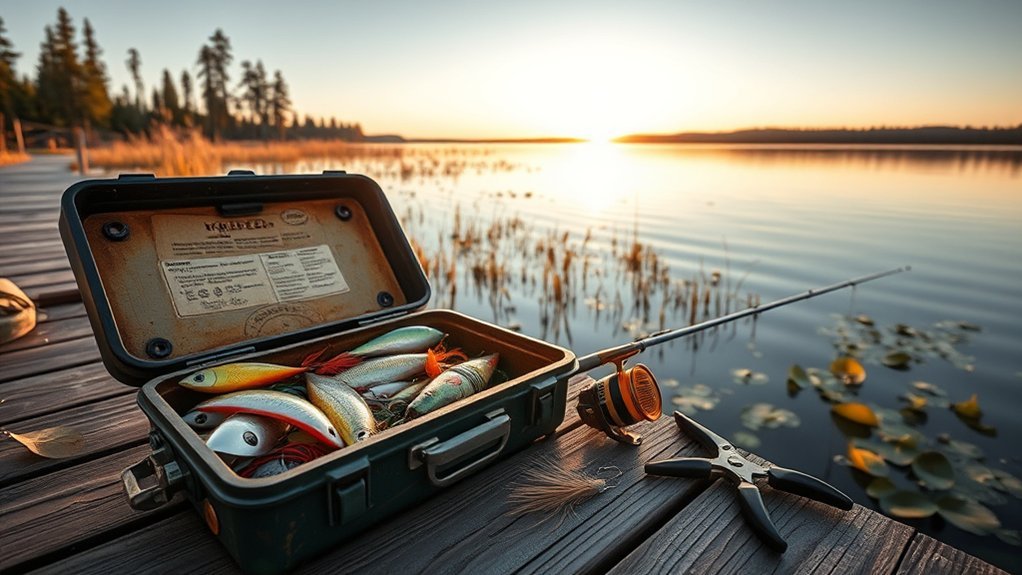
Choosing the right lure, bait, or fly makes pike fishing more predictable and productive. You’ll want a mix of inline spinners, spoons, jerkbaits, swimbaits, minnow plugs, and soft plastics. White, yellow, orange, silver, firetiger, and chartreuse can all work because they flash, contrast, or imitate wounded prey.
For live bait, use shiners, suckers, or other legal baitfish on a bobber or drift rig to cover different depths. Always check local bait rules first because some waters restrict live bait, bait transport, or certain species.
On a fly rod, throw large streamers or surface flies sized 4 to 8 inches to imitate baitfish. Use strong tippet, a bite guard, and barbless or pinched-barb hooks if you plan to release fish quickly.
Topwater lures like Jitterbugs or Zara Spooks can shine in late spring and early summer over weed beds at dawn and dusk. They also help you learn how pike strike because you can see follows, swirls, and missed hits.
Vary presentations until you find what provokes strikes. Try steady retrieves, slow rolling, pause-and-twitch retrieves, slow jigging, wide sweeps, or erratic pops. If a pike follows without biting, pause the lure, change speed, or make a figure-eight near the boat.
Pack a selection and adapt during your fishing trip. That freedom to change tactics is practical, not random. Pike may want fast-moving flash one hour and a slow, wounded baitfish look the next.
| Type | When to Use | Typical Action |
|---|---|---|
| Spinners/Spoons | Open water, weed edges, windy banks | Flashing, steady retrieve |
| Live bait | Variable depths, cold fronts, slow bites | Natural movement, drift |
| Topwater lures | Dawn/dusk, weeds, calm shallows | Surface pops and wakes |
| Streamers/flies | Fly fishing, clear water, shallow cover | Big, baitfish imitation |
Pro Tip: When a pike follows but does not strike, do not lift the lure out of the water. Keep it moving, add a pause, or sweep it beside the boat to trigger a reaction bite.
[Amazon Products Picked for You]
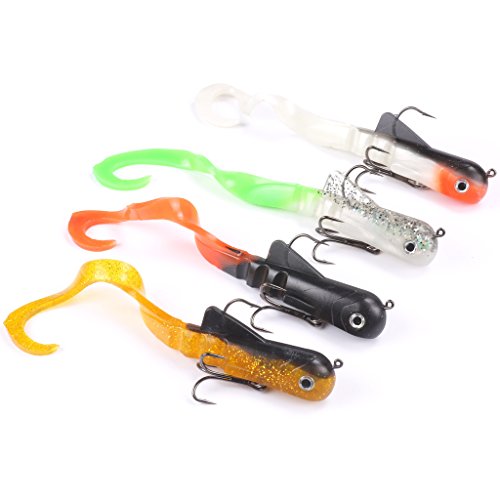
OPTIMAL SIZE AND WEIGHT FOR VERSATILE FISHING: Pike Musky Dawg Fishing Soft Bait Lure 8"/200mm 45g Swimbait, 4 Colors, this soft bait lure allows casting long distances and reaching deep-water habitats where trophy pike, musky, and bull coarse fish reside

𝗘𝗫𝗔𝗨𝗥𝗔𝗙𝗘𝗟𝗜𝗦 𝗙𝗶𝘀𝗵𝗶𝗻𝗴 𝘀𝗽𝗼𝗼𝗻 Lures have a wild, unpredictable action, with a unique weight balance that makes furious movement without twisting the line. Jerking the line makes the spoon Jumping around like a hurt minnow escaping its way, that is a great attraction for predators. When retrieving the line, fast or slowly, the spoon makes a 180° rotation left and right cyclically, producing a significant flash and vibration, attracting trout, salmon, walleye and pike to strike.

【High Level of Simulation】This pike lures sets is designed with a high degree of realism and has a good baiting effect to attract more fish to the bait and increase the success rate of catching fish
Pike Fishing Techniques for Lakes and Bays
Now take those lure and bait choices out onto lakes and bays where structure and season shape how you fish.
When you’re pike fishing for beginners, focus on good water first. After ice-out and during early spring, check mouths of swampy inlets, shallow flats, dark-bottom bays, and 3- to 10-foot water that warms faster than the main lake.
As spring warms, shift toward weedy points, emerging vegetation, mid-bay shoals, and the first breaks outside spawning areas. Pike often feed near shallow cover, then slide toward deeper weedlines as the water gets warmer.
Fish for pike near deeper weedlines that connect to cooler water. These edges are especially useful in summer because they give pike both ambush cover and quick access to comfort zones.
For bait, rig a small float with a size 1/0 hook and a snelled wire leader for bobber work, or use a drift rig to sweep long structures with proper sinker weight. Adjust the float depth so your bait rides just above weeds instead of burying in them.
Lure anglers should pick white, yellow, silver, orange, and chartreuse plugs and spoons. Use steady retrieves for minnow patterns, stop-and-go retrieves around weed pockets, and flutter retrieves near drop-offs.
When water warms into the active feeding range, jig along 6- to 10-foot drop-offs with 2- to 3-foot hops to tempt hiding predators. Let the lure fall on a semi-tight line because many strikes happen as the bait drops.
Wind can help. A light chop pushes baitfish, breaks up sunlight, and makes pike less wary. On bright, calm days, fish a little deeper, slow your retrieve, or target shade from weeds, docks, and overhanging banks.
You’re choosing the right gear and moves to catch bigger fish and gain confidence. Stay bold, adapt to conditions, and enjoy becoming a successful northern pike angler.
Rigging and Tackle Setup

If you want reliable hookups and fewer lost fish, match your rod, reel, line, and leaders to how you’ll fish. Use a 7-foot medium-action rod for lighter casting or step up to a medium-heavy rod for large lures, heavy weeds, and trolling.
Pair your rod with a reel that has a smooth drag. For casting, a reel with at least 15 pounds of usable drag is plenty for many beginner setups. For trolling, bigger lures, or heavier line, a stronger reel with around 20 to 25 pounds of drag gives you more control.
Spool braid sized to your reel and lure weight. A lighter setup may use 15- to 20-pound braid, while a heavier setup may use 30- to 40-pound braid. The goal is not just brute strength. You also want clean casting, good lure action, and enough power to move fish away from cover.
Rigging and tackle setup is about freedom on the water: pack the right gear in your tackle box, set the drag system to allow firm hook sets without ripping hooks free, and add a wire leader or 40- to 50-pound fluorocarbon leader to resist pike teeth.
Tie lures with secure knots like the improved clinch knot, Palomar knot, or loop knot where appropriate. Check connections before you cast, especially after a strike, snag, or missed fish. Pike teeth can nick leaders, weaken knots, and damage lure hardware.
Keep a simple, durable setup so you can adapt quickly, move where fish are, and trust your gear to hold. Confidence comes from preparation, so rig for power, not panic.
- Choose your rod, reel, and braid based on lure size and cover.
- Add a wire leader or heavy fluorocarbon leader before every lure or bait rig.
- Set your drag for a solid hook set while still letting the fish run.
Warning: Never lip-grip a pike the way you might handle a bass. Pike have sharp teeth, hard head shakes, and treble-hooked lures that can injure your hands quickly.
[Amazon Products Picked for You]

Ugly Tech Construction

Lightweight and Sensitive IM6 Graphite Blanks – Centron Lite Spinning Combos feature a sensitive and light-weight IM6 Graphite blank designed to provide exceptional value and performance for all anglers. All combos are 2 pc and come in 4 lengths from 6’ to 7’6”.

Premium Rod - Sougayilang Megalodon two-piece fishing rods are constructed with 30-ton carbon matrix blank technology, which is powerful and accurate. The fishing pole is suitable for bass fishing, trout fishing, walleye fishing, or as a salmon rod, steelhead rod, or saltwater fishing rod.
Landing and Handling Pike Safely
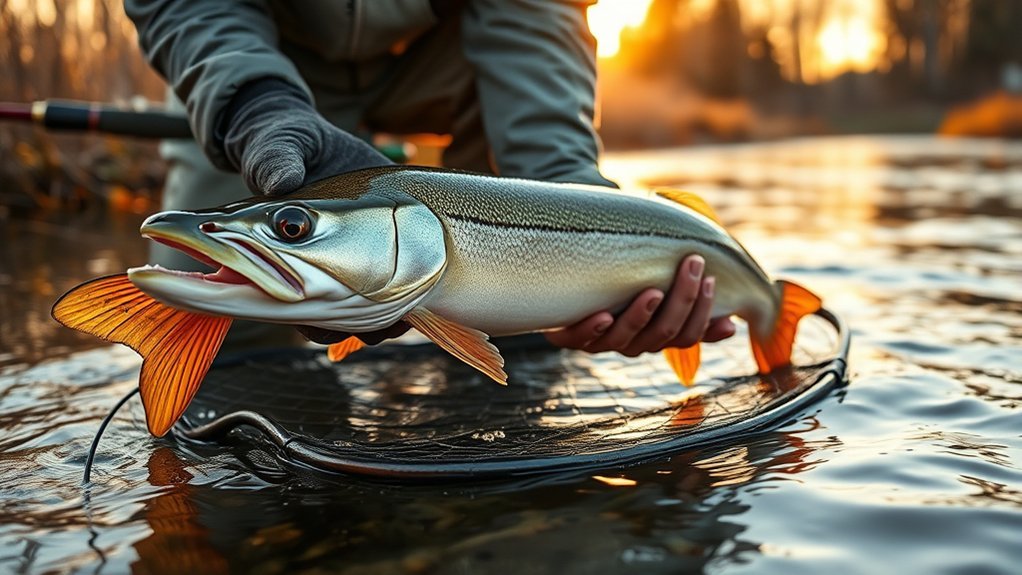
When you’ve got a pike in the net, focus on calm, controlled moves. Use the landing net to control the fish, keep larger fish supported in the water, and prepare your pliers before you lift the fish.
For quick handling, support the pike with one hand near the head and the other under the belly. Avoid squeezing the body, gills, or eyes. If you are unsure how to hold a large pike, keep it in the net and unhook it in the water.
Because pike have sharp teeth, don’t put your fingers near the jaw. Use long needle-nose pliers, hook cutters, or a jaw spreader for safe hook removal. Pinch down the barbs on lures before fishing if you plan to release fish, especially when using treble hooks.
Handle with care throughout. Keep the fish low, wet, and calm, and minimize air exposure. A fish that thrashes on a dry dock, boat floor, or rocky bank can lose protective slime, split fins, or damage its jaw.
If the fish is large, keep it in the water while you unhook or revive it. Point the fish into clean water and let it regain balance before release. Do not push it back and forth hard, and do not release it until it can swim away under its own power.
These steps protect you and the fish, letting you practice responsible angling that values safety, skill, and freedom on the water.
Cleaning and Caring for Your Catch
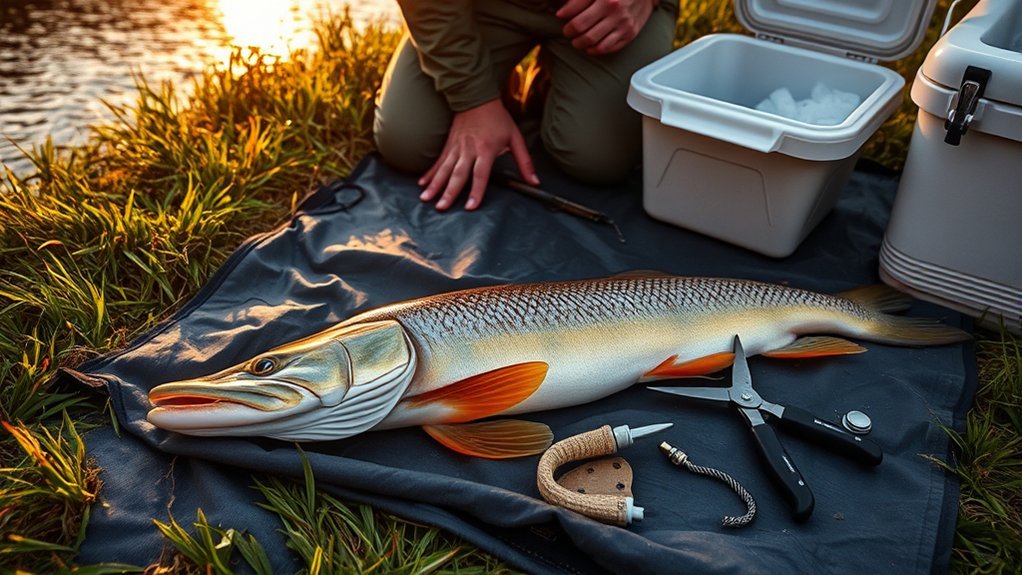
Before you start filleting, make sure you have a sharp knife, a clean work surface, cold water, paper towels, a cooler with ice, and a bucket for offal so the job goes quickly and cleanly.
If you plan to keep pike, dispatch the fish humanely where legal, bleed it if you prefer cleaner fillets, and chill it as soon as possible. Warm fish spoils faster, so do not leave your catch in direct sun or sitting in warm water.
You’ll cut behind the gills to the backbone, then slice along the spine to lift clean fillets without tearing the flesh. Remove the skin because it can have a stronger taste than the meat. Work slowly around the rib cage and keep your knife strokes smooth.
Don’t forget the Y-bones. Northern pike are famous for these extra bones, so take time to remove them before cooking. A five-fillet method or careful V-cut can make the finished meat much easier to eat.
- Rinse fillets in cold water to remove blood and scales.
- Pat dry, then store in an airtight container if you’ll eat them soon.
- For longer life, freeze in quality freezer bags or vacuum-sealed packaging to help prevent freezer burn.
Treat cleaning as part of the skill of self-reliant fishing: precise, efficient, and respectful. Good fish care starts the moment you decide to keep a fish, not when you reach the kitchen.
When you care for your catch properly, you control flavor, safety, and how long your pike will keep.
Common Beginner Mistakes to Avoid
Many new pike anglers lose fish because they fish the right places with the wrong setup. The most common mistake is tying a lure directly to light monofilament. Pike teeth can cut weak line quickly, so use a wire or heavy fluorocarbon leader.
Another mistake is moving too fast without reading the water. Covering water helps, but random casting wastes time. Start with weeds, points, inlets, and drop-offs, then adjust based on follows, baitfish, wind, and water clarity.
Beginners also rush the landing. Keep steady pressure, guide the fish away from weeds, and net it headfirst when possible. Once the fish is secure, slow down and focus on safe hook removal.
Finally, do not ignore regulations. Pike limits, seasons, slot rules, and bait restrictions can differ from one lake to the next. A legal setup in one area may not be legal on another waterbody.
Frequently Asked Questions
What licenses or permits do I need to fish for pike locally?
You need the fishing license required by your state, province, or local agency. You may also need to follow special pike seasons, size limits, harvest limits, bait rules, and waterbody-specific regulations. Check the current rulebook before each trip because regulations can change.
Can pike fishing be done from a kayak or float tube safely?
Yes, you can fish for pike from a kayak or float tube, but safety matters. Wear a life jacket, keep tools within reach, avoid rough weather, use stable positioning, and unhook larger fish in the water when possible. Pike are strong and toothy, so do not bring a large fish into your lap with loose treble hooks swinging.
How does seasonal water temperature affect pike activity?
Pike often move shallow in cool spring conditions, feed around weeds and bays as water warms, and may slide toward deeper weed edges or cooler water during hot summer periods. In fall, they often feed heavily again as baitfish move and water temperatures drop.
Are there specific conservation rules for releasing large pike?
Some waters have special size limits, slot limits, trophy rules, or mandatory release rules for large pike. Even where release is optional, large fish deserve careful handling. Keep them wet, support the body, use long tools, limit air exposure, and release them only after they regain balance.
What are the best times of day for pike catch rates?
Morning and evening are often productive because lower light helps pike ambush prey. Overcast days, light wind, and changing weather can also create strong feeding windows. Still, pike can bite at midday if you fish shade, weeds, drop-offs, or cooler water.
Do I always need a wire leader for pike?
A wire leader is the safest beginner choice because it resists pike teeth well. Heavy fluorocarbon leaders can also work, especially in clear water, but they must be thick, inspected often, and replaced when nicked. Never fish pike with light line tied directly to the lure.
Conclusion
You’re ready to try pike fishing with more confidence. Pick weedy shallows, inlets, points, bays, and drop-offs, then use a sturdy rod, braided line, and a bite-resistant leader. Keep flashy lures, live bait options where legal, and topwater baits ready so you can adjust to the conditions.
Handle every pike carefully with a net, long-nosed pliers, wet hands, and body support. If you release your fish, keep it low, wet, and out of the air as much as possible. If you keep one, chill it quickly and remove the Y-bones for better eating.
Northern pike can grow over 40 inches and attack prey with sudden speed, so expect aggressive strikes and powerful runs. Respect the fish, follow local regulations, and each trip will teach you how to find better water and make smarter casts.
Sources
- Minnesota Department of Natural Resources — Northern Pike — supports northern pike behavior, habitat, and species background.
- Vermont Fish & Wildlife — Fishing Regulations — supports the need to check local license, season, and harvest rules.
- New York State Department of Environmental Conservation — Freshwater Fishing Regulations — supports waterbody-specific regulation reminders.
- U.S. Food & Drug Administration — Selecting and Serving Fresh and Frozen Seafood Safely — supports safe fish storage and seafood handling guidance.