About 35.5% of global fish stocks are now overfished, and that figure should make you pause. You depend on healthy oceans for food, jobs, and climate resilience, yet industrial fishing, harmful subsidies, illegal fishing, and weak management keep eroding those services. Understanding what drives overfishing helps you see why the problem is not just environmental. It is also about food security, coastal livelihoods, fair rules, and the future health of marine ecosystems.
Quick Answer
Overfishing happens when fish are caught faster than they can reproduce. It reduces fish populations, damages food webs, threatens coastal jobs, and weakens food security. The strongest solutions include science-based catch limits, better enforcement, selective fishing gear, protected habitats, subsidy reform, traceable seafood, and community-led fisheries management.
Key Takeaways
- Overfishing means fish are removed faster than populations can replace themselves through reproduction.
- Industrial fleets, harmful subsidies, illegal fishing, rising seafood demand, and climate change all increase pressure on fish stocks.
- The damage reaches beyond the ocean because millions of people rely on wild capture fisheries for income and food.
- Proven fixes include science-based quotas, marine protected areas, stronger monitoring, selective gear, and transparent supply chains.
- Your seafood choices and policy support can help reward responsible fisheries and reduce demand for poorly managed products.
What Is Overfishing and Why It Matters
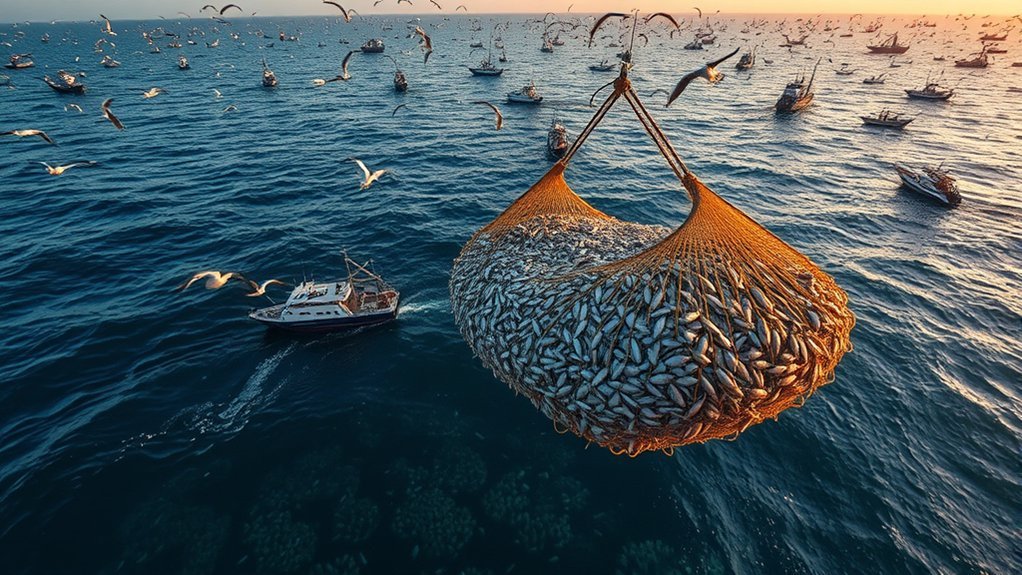
Although you might not see it from shore, overfishing happens when people remove fish faster than those fish can reproduce. Over time, that pressure causes populations to shrink, makes catches less reliable, and disrupts the marine food webs that keep oceans productive.
You need to know that roughly 35.5% of global fish stocks are classified as overfished. The Food and Agriculture Organization of the United Nations tracks assessed marine fishery stocks and has reported a long-term rise in unsustainably fished stocks since the 1970s.
This is not abstract. Declining fish populations can erode biodiversity, weaken marine ecosystems, and reduce the ocean’s ability to cope with climate shocks, habitat loss, pollution, and warming waters.
You will feel economic consequences too. Tens of millions of people work directly in capture fisheries, and many coastal communities depend on fish for income, trade, and daily nutrition. When unsustainable fishing practices continue for years, families lose income, local seafood supplies shrink, and food security becomes less stable.
You can advocate for change by supporting science-based catch limits, transparent management, stronger enforcement, and community-led sustainable fishing. These tools help restore fish stocks while protecting coastal economies.
Acting now protects biodiversity, secures livelihoods, and defends your right to thriving seas rather than depleted ones.
Overfishing is not just a problem of catching too many fish. It is a management failure that affects ecosystems, workers, consumers, and future seafood supplies.
Historical Rise of Industrial Fishing
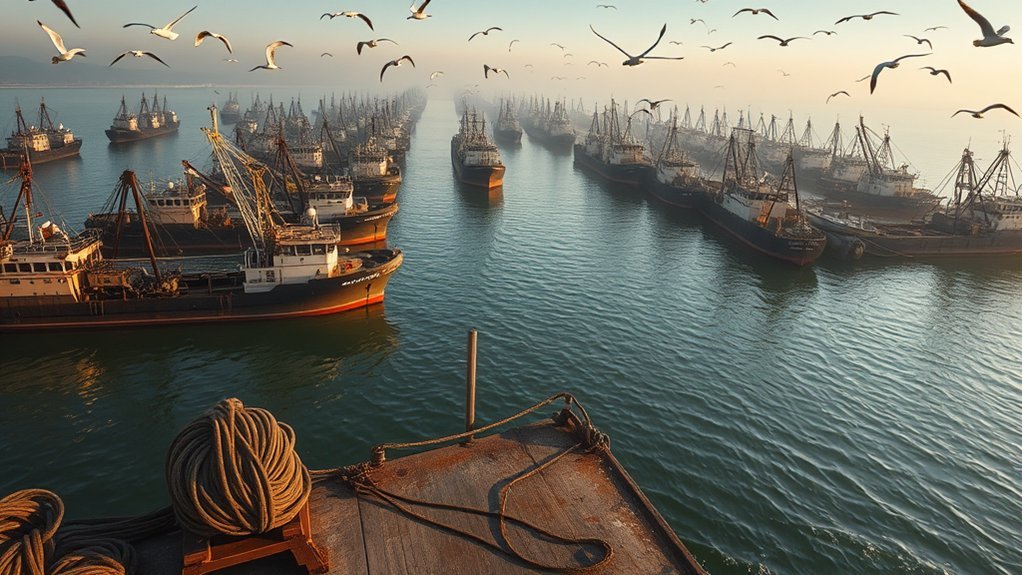
Understanding how we got here means looking back to when fishing shifted from small-scale coastal work to vast industrial operations. For centuries, most fishing happened close to shore with smaller vessels, local knowledge, and limited gear. That changed as engines, refrigeration, sonar, synthetic nets, and distant-water fleets expanded what people could catch.
You will see that mid-20th-century government policies and subsidies expanded fishing capacities. Fleets adopted new fishing technology, larger vessels, and more aggressive fishing techniques. By the late 1980s, global marine capture production had reached a very high level, and many wild capture yields later flattened rather than growing endlessly.
Mid-century subsidies and policies expanded fleets and technology; global catches peaked around the late 1980s, then largely stalled.
As industrial fishing grew, many coastal communities lost access and bargaining power. Distant-water fleets targeted deeper and farther-offshore stocks, while local fishers faced shrinking catches, higher fuel costs, and tighter competition.
Some well-known collapses showed the risk clearly. Atlantic cod off Newfoundland and Labrador declined so sharply that a moratorium closed the commercial fishery in the early 1990s. California sardines also became a historic example of how intense fishing pressure, environmental shifts, and poor timing can combine to devastate a fishery.
You can trace how overfishing followed the mechanization and capital intensification of the industry. Boats went farther, gears grew larger, and marine ecosystems bore the cost.
If you want recovery for fish and people, support policies that reverse subsidies driving excess capacity, restore local stewardship, and prioritize rebuilding depleted populations. Those actions help coastal communities and ecosystems recover together.
Main Drivers of Overfishing Today
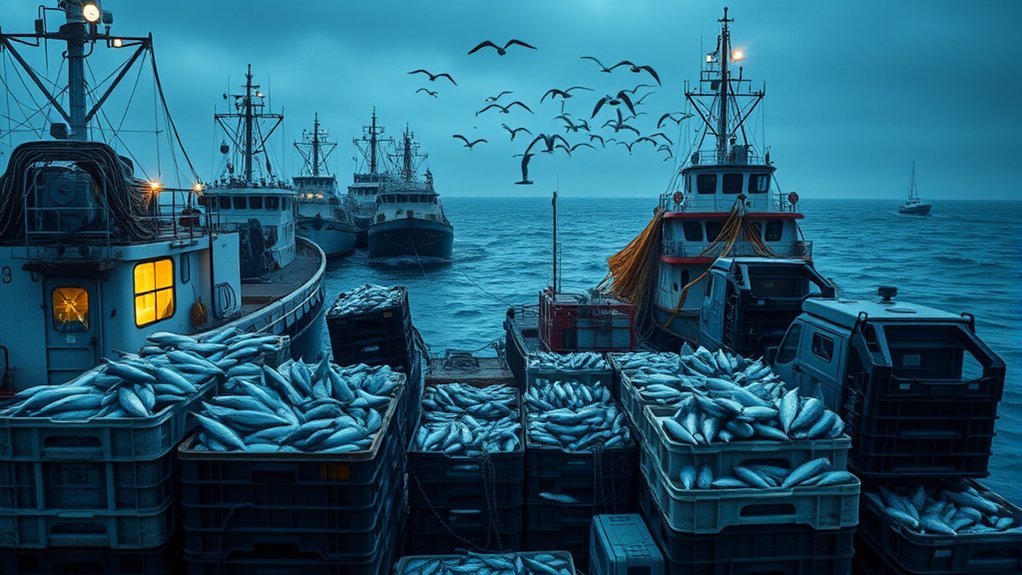
Because demand for seafood keeps rising, today’s fishing pressure comes from market forces, policy choices, weak oversight, and environmental change. These pressures can push fleets beyond sustainable limits, especially when rules do not match the real condition of fish stocks.
You see overfishing when seafood consumption outpaces management. High-value species, including some tuna, cod, snapper, sharks, and groupers, often face intense demand because they bring strong market prices. When catch limits are too high, poorly enforced, or missing altogether, fishing pressure can rise faster than populations can recover.
Harmful government subsidies can make this worse. Fuel support, vessel construction support, and other capacity-enhancing aid can keep too many boats fishing even when stocks are already under pressure. That can make fishing look profitable in the short term while weakening the resource that fishers depend on.
Illegal, unreported, and unregulated fishing also undermines honest management. It hides real catch levels, weakens stock assessments, undercuts law-abiding fishers, and makes recovery plans less effective.
Climate change adds another layer. Warming waters, oxygen loss, acidification, and shifting currents can move fish away from historic fishing grounds. That makes old rules less reliable and can increase conflict as fleets follow changing migrations.
| Driver | Effect |
|---|---|
| Rising seafood consumption | Increased harvest pressure |
| Government subsidies | Overcapacity, unsustainable fishing |
| Illegal fishing | Undermines management of high-value species |
| Climate change | Alters migrations, stresses fish stocks |
You can push for change by exposing harmful subsidies, strengthening surveillance against illegal fishing, demanding traceable supply chains, and supporting rights-based access that helps rebuild fish populations.
Act with evidence, reclaim ocean commons, and hold institutions accountable to rebuild resilient fisheries.
Warning: Do not assume a seafood label means the fishery is healthy. Look for credible certification, country-of-origin details, traceability, and species-specific guidance before you buy.
Environmental and Socioeconomic Impacts
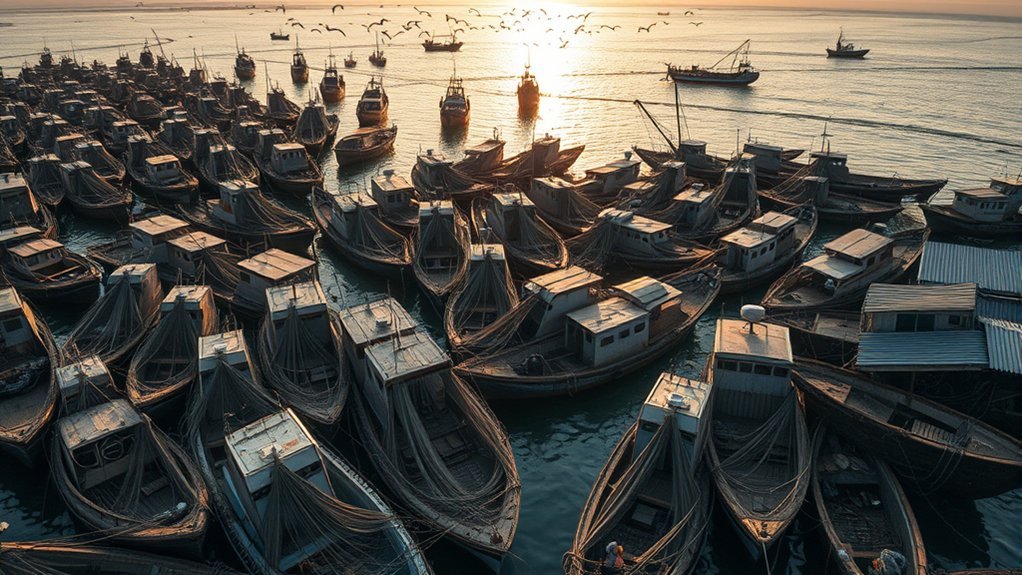
When fish populations are fished beyond sustainable limits, ecosystems and communities pay the price. Overfishing reduces the abundance of target species, but it can also change predator-prey relationships, damage habitats, and leave marine food webs less balanced.
You witness marine biodiversity erode as key species decline. Large predators may become rarer. Smaller forage fish may face heavy pressure. Reef, pelagic, and coastal nursery systems can lose important ecological links that help them stay productive.
Bycatch makes the impact worse. Non-target species such as turtles, seabirds, sharks, rays, juvenile fish, and marine mammals can be injured or killed when fishing gear is not selective enough. Bottom-contact gear can also disturb seafloor habitats when used in sensitive areas.
This is not only an environmental issue. Overfishing is also a socioeconomic issue that strips power and security from working communities.
Roughly 38 million people work in capture fisheries, and many more people depend on fishing, processing, trading, transport, and aquaculture for livelihoods. When fisheries collapse, like the Grand Banks cod fishery, jobs vanish, local culture suffers, and food security falters.
Seafood is an essential protein source for more than 3 billion people. For many communities, fish supplies a major share of daily animal protein and important micronutrients. Depleted stocks can therefore mean real hunger, nutritional loss, and higher pressure on other food systems.
You should frame overfishing as intertwined ecological harm and social injustice. That view leads to better solutions because it protects ecosystems while also respecting food access, fair labor, Indigenous rights, and small-scale fishing communities.
How to Recognize More Sustainable Seafood Choices
You do not need to become a fisheries scientist to make better seafood choices. A few practical checks can help you avoid products linked to overfishing, weak traceability, or destructive methods.
- Check the species: General names like “snapper,” “cod,” or “tuna” can hide many different species with different risk levels.
- Look for the catch area: A fishery can be healthy in one region and depleted in another, so origin matters.
- Ask how it was caught: Pole-and-line, handline, traps, and well-managed gear can reduce bycatch in many fisheries, depending on the species and location.
- Use credible guides: Seafood guides and certification programs can help you compare options when details are unclear.
- Value transparency: Responsible sellers should be able to explain species, origin, harvest method, and certification status.
Pro Tip: When two seafood options look similar, choose the one with the clearest species name, harvest location, and fishing method. Traceability is one of the easiest consumer-level signals of better management.
Sustainable Fishing Practices and Solutions
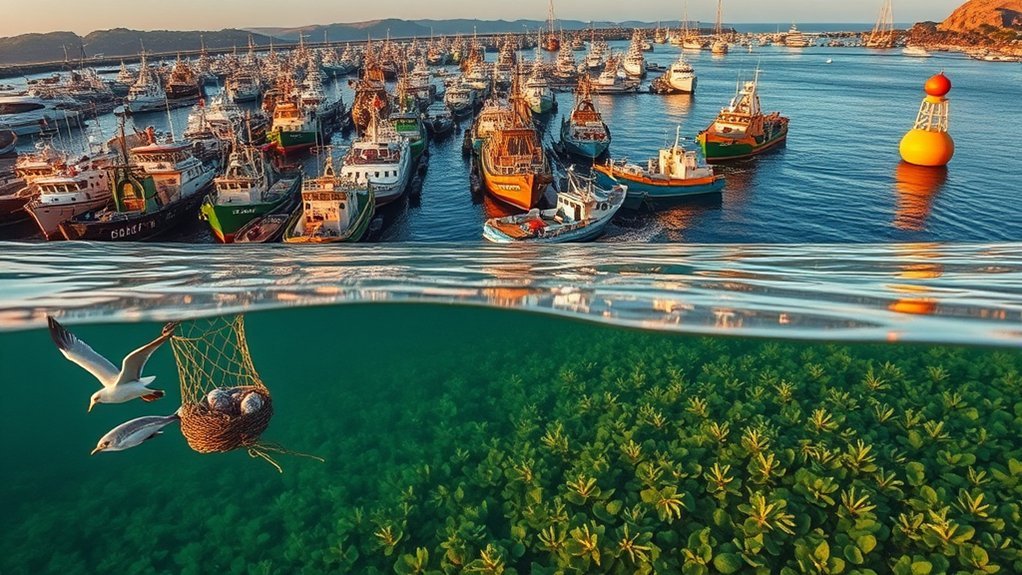
If fish populations are managed to remain healthy, we can restore ecosystems and secure food and jobs. Better practices can rebuild depleted stocks, reduce waste, and make long-term catches more stable.
You can push for sustainable fishing practices that rebuild stocks. Rigorous fishery management uses science-based quotas, harvest control rules, gear restrictions, seasonal closures, and monitoring to stop overfishing and let ecosystems rebound.
Catch limits work best when managers set them from strong stock assessments and update them as conditions change. If a stock is depleted, rebuilding plans should reduce fishing pressure long enough for young fish to mature and reproduce.
Gear changes also matter. More selective hooks, escape panels, turtle excluder devices, acoustic deterrents, circle hooks, and bycatch-reduction designs can help fishers target the right species while reducing unwanted catch.
Support Fishery Improvement Projects that unite fishers, buyers, managers, and conservation groups to upgrade fishing methods, traceability, data collection, and compliance. These projects can help fisheries move from weak practices toward stronger verified standards.
Back Marine Protected Areas to shelter breeding grounds, nursery habitats, reefs, and other important areas. When protected areas are well-designed and enforced, fish populations can recover inside them and sometimes spill over into surrounding fishing zones.
Favor certification like the Marine Stewardship Council where independent audits verify sustainable outcomes and create accountability across supply chains. Certification is not perfect, but credible audits can help buyers reward better-managed fisheries.
Reject harmful fishing subsidies that prop up excess capacity. Ending them can redirect effort away from destructive competition and toward justice, resilience, and long-term abundance.
These concrete tools protect livelihoods, restore ecological balance, and advance freedom from exploitative systems. You can demand and implement them locally and globally to secure long-term abundance.
Note: A fishery can recover, but recovery usually takes years of lower pressure, strong enforcement, good data, and cooperation from fishers, buyers, regulators, and consumers.
Global Policies, Certifications, and Recovery Efforts
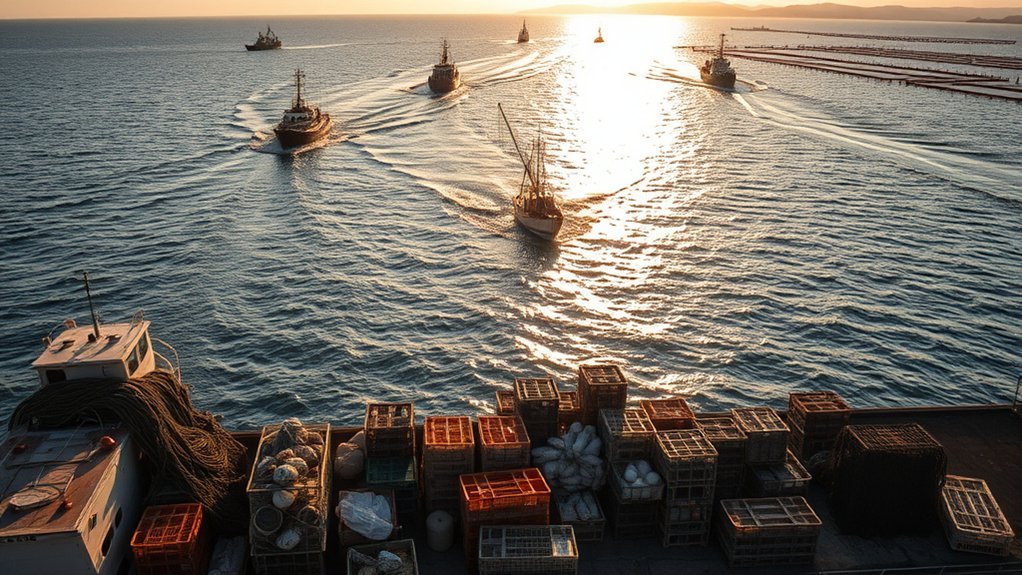
Although global fisheries recovery depends on local action, coordinated policies, certifications, and recovery initiatives set the rules that let sustainable practices scale. You can push for them through voting, public comments, seafood choices, and pressure on companies.
You should support global policies that curb harmful fishing subsidies. The World Trade Organization has worked on rules to limit subsidies connected to illegal, unreported, and unregulated fishing, overfished stocks, and excessive fleet capacity.
Strong national laws are just as important. Effective fisheries management needs catch documentation, vessel monitoring, port inspections, observer coverage, electronic monitoring, transparent licensing, and penalties that are strong enough to deter illegal fishing.
Trust evidence from well-managed fisheries. The Food and Agriculture Organization has reported that a large share of landings comes from biologically sustainable stocks, which shows fisheries management can work when rules are based on science and properly enforced.
Use certifications like the Marine Stewardship Council to guide choices. MSC’s standards and audits create accountability across supply chains, especially when buyers also demand traceability and honest reporting.
Champion Fishery Improvement Projects that unite fishers, buyers, and NGOs to rehabilitate overfished stocks through targeted recovery efforts. Advocate corporate commitments from retailers, restaurants, distributors, and seafood brands so sustainability standards become normal instead of optional.
Your purchasing power and policy advocacy pressure governments and companies to phase out destructive subsidies, strengthen fisheries management, and expand certifications and FIPs for lasting liberation of ocean ecosystems.
What Governments, Fishers, and Consumers Can Do
Overfishing does not have one single fix because the problem comes from several systems working together. Governments set the rules, fishers work on the water, seafood companies shape demand, and consumers influence the market.
What Governments Can Do
- Set science-based catch limits: Quotas should reflect the real condition of each stock, not short-term political pressure.
- Stop harmful subsidies: Public money should not encourage overcapacity, illegal fishing, or fishing on depleted stocks.
- Protect essential habitats: Spawning areas, nursery grounds, coral reefs, seagrass beds, and mangroves need targeted protection.
- Improve enforcement: Vessel tracking, port controls, inspections, and penalties help stop illegal fishing.
- Respect small-scale fishers: Fair access rights and local participation improve compliance and protect coastal livelihoods.
What Fishers and Industry Can Do
- Use selective gear: Better gear reduces bycatch and avoids catching juvenile fish before they reproduce.
- Report catches accurately: Good data helps managers set fair and realistic limits.
- Support traceability: Documentation from vessel to plate helps keep illegal seafood out of the market.
- Join improvement projects: Fishery Improvement Projects can help fisheries move toward stronger practices and better market access.
- Protect long-term income: Rebuilding stocks often means more stable catches and safer livelihoods over time.
What You Can Do as a Consumer
- Ask questions: Ask what species it is, where it came from, and how it was caught or farmed.
- Use seafood guides: Choose options rated as better choices when you can.
- Support transparent sellers: Reward restaurants and stores that provide clear sourcing information.
- Try lower-pressure species: Diversifying your seafood choices can reduce pressure on popular overfished species.
- Support policy reform: Consumer action matters more when paired with better laws and enforcement.
Frequently Asked Questions
What is overfishing in simple terms?
Overfishing means people catch too many fish too quickly, so fish populations cannot replace themselves. When that happens, stocks shrink, marine ecosystems lose balance, seafood supplies become less reliable, and fishing communities face economic harm.
What are three facts about overfishing?
First, overfishing happens when catch levels exceed the ability of fish populations to recover. Second, it can damage food webs, habitats, and biodiversity. Third, it affects people directly because many communities rely on fisheries for food, income, trade, and cultural identity.
What fish get overfished the most?
Frequently pressured groups include some cod, tuna, sharks, rays, snapper, grouper, haddock, flounder, sardines, mackerel, and other high-value or heavily targeted fish. The risk depends on the exact species, fishing region, management strength, and harvest method.
What is the best solution for overfishing?
The best solution is a full management system, not one single action. Strong fisheries need science-based catch limits, habitat protection, selective gear, monitoring, traceability, enforcement, subsidy reform, community participation, and seafood buyers who reward responsible practices.
How does illegal fishing make overfishing worse?
Illegal fishing hides real catch levels, weakens stock assessments, and undercuts fishers who follow the rules. When managers do not know how much fish is actually being removed, catch limits and rebuilding plans become less accurate.
Can overfished stocks recover?
Yes, many overfished stocks can recover when fishing pressure drops and strong rebuilding plans stay in place. Recovery usually requires time, accurate data, enforcement, habitat protection, and enough adult fish left to reproduce successfully.
Conclusion
You are standing at a forked river where one path drains life and the other restores it. Your choices help decide which way fish, communities, and oceans go. Evidence shows overfishing has already pushed many stocks past safe limits, but sustainable practices, strong policies, fair access, and market incentives can rebuild abundance.
Advocate for science-based quotas, protected areas, selective gear, subsidy reform, transparent seafood, and responsible buying. Those steps act like a compass that turns decline into recovery and secures food, livelihoods, and healthier oceans for future generations.
Sources
- FAO, The State of World Fisheries and Aquaculture — global fish stock status, fisheries production, and seafood livelihood context.
- NOAA Fisheries: Overfishing, Overfished and Rebuilding Stocks — definitions of overfishing, overfished stocks, and rebuilding approaches.
- World Trade Organization Fisheries Subsidies — global policy work on harmful fishing subsidies and illegal fishing.
- Marine Stewardship Council Fisheries Standard — certification standards for sustainable wild-capture fisheries.
- World Wildlife Fund Sustainable Seafood — fishery improvement, seafood sourcing, and responsible supply chain practices.