Redfish are one of the most popular inshore game fish along the Atlantic and Gulf coasts, and beginners can catch them consistently once they understand habitat, tides, tackle, bait, and local regulations. You’ll want to know where redfish hold, when they feed, and how to present lures or live bait without spooking them. This guide gives clear, practical steps on tackle, tides, rigs, presentation, and responsible harvest so you can start catching fish and avoid common beginner mistakes that waste time and bait.
Quick Answer
To catch redfish, fish moving tides around marsh drains, oyster bars, grass flats, docks, jetties, and muddy flats. Use a 7-foot medium or medium-heavy rod, 3000–4000 reel, 10–20 lb braid, a 20 lb leader, and either live shrimp, crabs, mullet, paddle-tail plastics, popping corks, or Carolina rigs.
Key Takeaways
- Focus on moving water because tides push shrimp, crabs, mullet, and baitfish past redfish ambush points.
- Start with simple tackle: a 7-foot medium to medium-heavy rod, 3000–4000 reel, braid, and a short mono or fluorocarbon leader.
- Fish structure first, especially oyster edges, grass lines, marsh drains, docks, jetties, cuts, points, and potholes on flats.
- Use live shrimp or mullet when fish are picky, and switch to paddle tails, spoons, topwaters, or popping corks when you need to cover water.
- Check your state’s current redfish slot, bag limit, season rules, and tag rules before keeping any fish.
At a Glance
| Time Required | 2–4 hours for a beginner trip, or longer if you are scouting several flats, drains, and docks. |
| Difficulty | Beginner to intermediate. Finding fish is usually harder than fighting them. |
| Tools Needed | Medium or medium-heavy rod, 3000–4000 reel, braid, leader, circle hooks, jig heads, soft plastics, live bait, pliers, measuring device, and polarized sunglasses. |
| Cost | Low to moderate if you already own inshore gear. Live bait, terminal tackle, and local license fees vary by state. |
Where Redfish Live and How They Move

When you’re hunting redfish, start where the water’s brackish. Estuaries, lagoons, tidal creeks, bayous, bays, and marshes are prime because they concentrate bait and offer cover.
You’ll also find redfish along the U.S. Atlantic and Gulf coasts near submerged grass beds, oyster reefs, jetties, docks, mangrove edges, spoil islands, and sandy potholes inside grass flats. These places give redfish shade, current breaks, and easy ambush points.
You’ll work inshore most of the time, reading channels, flats, creek mouths, drains, and cuts where structure funnels prey. Watch for schools pushing bait, nervous mullet, shrimp skipping on the surface, gulls dipping low, or bronze backs and tails flashing in shallow water.
Redfish often move in small groups, and bigger fish may cruise alone or in loose schools. During active feeding periods, they can form tight groups and push bait hard, which makes them easier to spot from shore, kayak, skiff, or boat.
Pay attention to seasonal movements driven by water temperature, salinity, oxygen, and food availability. In warm months, many fish use docks, jetties, bridges, channels, deeper grass edges, and shaded structure during the hottest parts of the day. In cooler periods, they often slide onto shallow muddy flats when the sun warms the bottom.
Use tides and current to predict where bait concentrates. Target the edges of submerged grass beds, oyster reefs, points, creek mouths, and drains where ambushes happen.
Stay mobile, keep gear light, and let the fish’s patterns guide you. That tactical freedom gets you on more fish and keeps your approach purposeful and resilient.
Note: Redfish may feed in only a few inches of water. If you see tails, wakes, mud puffs, or bait scattering on a flat, slow down and make quiet casts before walking or motoring closer.
Best Times and Seasons to Target Redfish

You’ll want to plan around seasonal movement patterns. Fall’s larger redfish activity, spring’s warming-triggered bite, summer heat, and winter cold fronts all change where and how you fish.
Match your sessions to the best tidal windows. Incoming tides and high slack can concentrate fish near flats, grass lines, docks, and jetties, while outgoing tides often pull bait through drains, cuts, and creek mouths.
Target early morning or late afternoon peak bite times, especially during warm weather. Use topwater plugs or popping-cork tactics in spring and fall, then switch to shallow-structure fishing in summer when fish hold near shade and current.
In winter, focus low-light periods on warmer, muddy flats during stable weather. Use slow, scented baits to tempt sluggish fish, and avoid rushing your retrieve.
Seasonal Movement Patterns
Although redfish show up year-round in many coastal areas, their habits change with the seasons. Knowing those shifts will help you pick the right time, depth, and spot to target them.
You’ll watch seasonal movements so you can fish with intention. Fall often brings heavy feeding as larger redfish gather near passes, beaches, bays, and deeper edges. Spring’s warmer days stir activity on marshes and shallow flats. Summer drives many fish toward shade, moving water, and deeper structure. Winter fishing can still produce when reds use dark, soft-bottom flats to warm up.
| Season | Where to Focus |
|---|---|
| Fall | Flats, passes, bay edges, beaches, and migration routes |
| Spring | Marshes, shallow flats, drains, and grass edges |
| Summer | Docks, jetties, bridges, deeper water, and shaded structure |
| Winter | Shallow muddy flats, creek mouths, and warmer backwaters |
| All | Follow temperature, tide, salinity, current, and food availability |
Best Tidal Windows
After watching seasonal shifts, the next step is to match your timing to the tides. Redfish usually feed best during moving water, so planning around high and low windows can improve your catch rate.
You’ll find the best time to fish is often when current starts, strengthens, slows, or changes direction. Those tidal movements push bait into predictable lanes and trigger strikes.
In spring and fall, target shallow inshore flats on incoming and outgoing tides. Seasonal movements bring hungry fish into easier reach, especially near grass lines, drains, oyster bars, and creek mouths.
In summer and winter, follow the current to deeper water, shaded structure, or warm mud flats. Switch gear and presentation when the tide, depth, or water clarity changes.
Morning and late afternoon low light can amplify activity, so pair those hours with tide changes for prime fishing opportunities.
Stay mobile, read the water, and let tides free your success.
Daily Bite Timing
Think of redfish activity like a daily clock. They often bite best in the low-light windows of early morning and late afternoon, so plan your key presentations for those times and match your gear to where fish are holding that season.
Your daily bite timing hinges on tidal movements and feeding patterns. Fish may push shallow on high tide, so hit flats, shorelines, mangrove edges, and flooded grass when water covers those areas.
On a falling tide, focus on drains, creek mouths, cuts, and oyster edges where bait gets pulled from the marsh or flat. Redfish often wait at these pinch points instead of chasing bait across open water.
In spring and fall, you’ll find prime fishing opportunities as redfish feed heavily. Focus efforts on bait-rich edges.
Winter calls for warm-day flat and creek work. Keep lures light and presentations slow.
In summer, shift to deeper structure, docks, bridges, jetties, and grass edges during midday, then return to shallow flats early and late.
Read water, follow tides, and you’ll free yourself from wasted hours and missed bites.
Essential Tackle and Line Choices
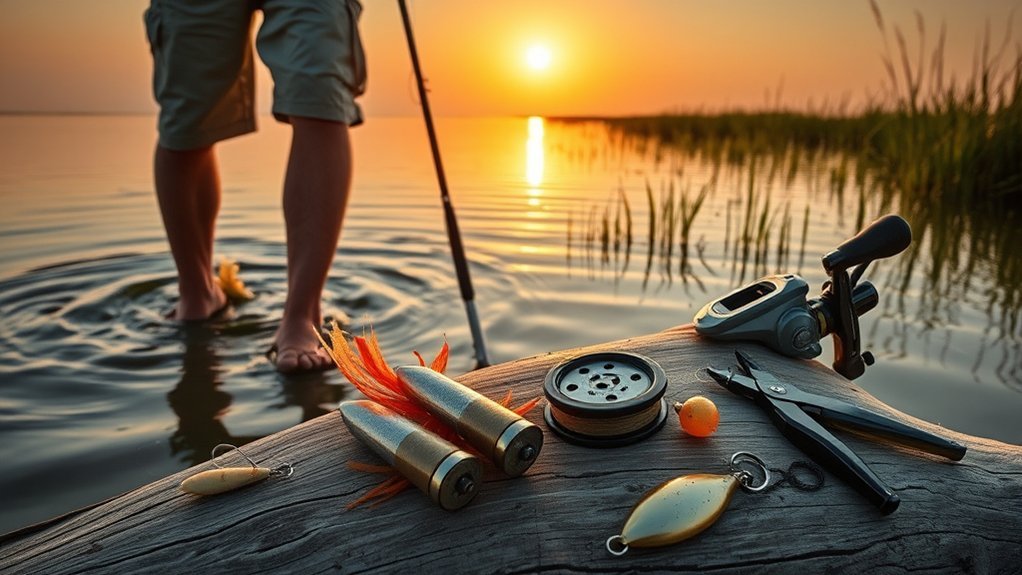
When you’re gearing up for redfish, pick a 7-foot medium to medium-heavy spinning or casting rod. This gives you enough backbone for bigger fish while keeping enough feel for subtle bites.
Pair it with a 3000–4000 series spinning reel spooled with 10–20 lb braid for a strong balance of casting distance, sensitivity, and control. Use a 2500–3000 reel if you’re targeting smaller fish in open water, and step up when you fish heavy current, docks, rocks, or jetties.
You’ll rig a solid rod and reel combo, then tie your braided line to a 20 lb monofilament or fluorocarbon leader with a clean knot. Keep the connection tidy to avoid hangups on structure.
Good knots matter. Use a uni-to-uni, FG knot, or Alberto knot for braid-to-leader connections, and use a loop knot when you want more lure movement.
Pack paddle tail shad lures in 3–5 inch sizes on 1/8–1/4 oz jig heads for versatility in shallow flats. Carry heavier jig heads, such as 3/8 oz or 1/2 oz, when you fish deeper channels, bridge current, or jetties.
Wear polarized sunglasses with amber or copper lenses to read water, spot tailing fish, see potholes, and identify oyster bars before you get too close.
Inshore fishing asks for simplicity and resilience: strong line, dependable leaders, reliable gear, and practical organization so you can cast freely and claim the water as your own.
[Amazon Products Picked for You]

【30 Ton Graphite Telescopic Fishing Rod】All graphite rod reduces by 20% physical weight to others made from a mix of carbon and fiberglass, which is not only more responsive, but also don’t reduce firmness. The ceramic guide ring adopts weaving + resin technology, which can prevent the guide ring from falling off and prolong the service life.
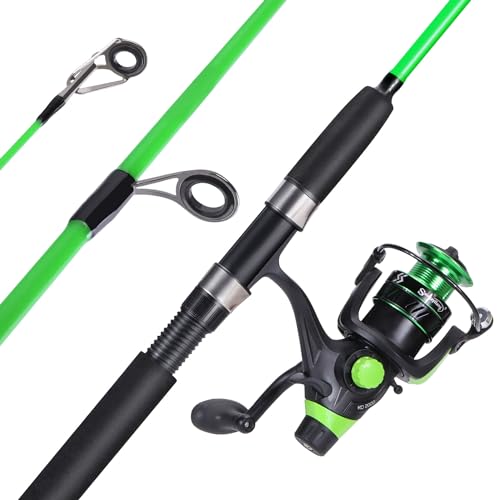
Sensitive & Strong – The spinning rods constructed from Composite Graphite and Glass Blanks which are designed for unbelievable toughness and durability.It allows you cast heavy lures or rigs a long way and master big fish, like catfish and salmon.
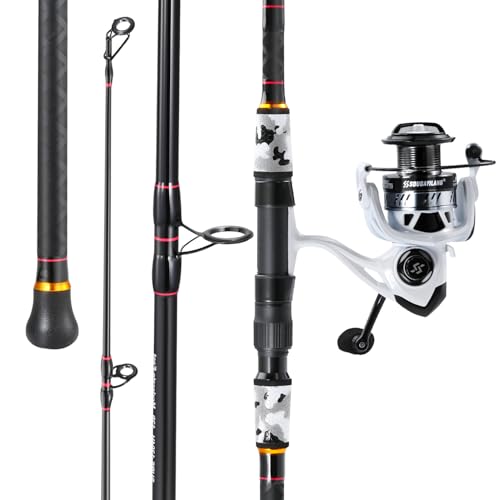
Sougayilang Surf Fishing Rod and Reel Combo, 4 Piece MH/H Saltwater Fishing Combo with 5000 Size Spinning Reel(15' Gray)
Simple Beginner Redfish Setup
If you are starting from scratch, keep your setup simple. A 7-foot medium spinning rod, 3000 reel, 10–15 lb braid, and 20 lb leader will handle most slot-sized redfish in bays, marshes, and flats.
Add a small tackle tray with 1/8 oz, 1/4 oz, and 3/8 oz jig heads, 3–5 inch paddle tails, gold spoons, popping corks, circle hooks, split shot, swivels, and a few egg sinkers. This compact kit covers most beginner situations without weighing you down.
Pro Tip: Rinse rods, reels, pliers, and lures with fresh water after every saltwater trip. Salt buildup can damage reels, hooks, guides, and split rings faster than many beginners expect.
Top Lures and Live Bait for Redfish

When you’re choosing soft plastics for redfish, pick 3–5 inch paddle-tail shads rigged on 1/8–1/4 oz jig heads. Use natural colors in clear water and brighter colors like chartreuse, white, yellow, or green when the water is stained.
For topwater action early or late, throw a Zara Super Spook, MirrOlure Top Dog, walking plug, or small chugger over shallow flats and grass edges. Pause after a blowup because redfish often miss topwaters on the first strike.
Switch to live shrimp, small crabs, finger mullet, mud minnows, pinfish, or other legal local bait on a Carolina rig when fish are holding near the bottom.
Use circle hooks in the 3/0–5/0 range on live bait to improve corner-of-the-mouth hookups and reduce deep hooking.
[Amazon Products Picked for You]

Realistic Swimming Action: Extra-large paddle tail creates a natural, fish-like kicking motion that triggers aggressive strikes.

Realistic Swimming Action: Extra-large paddle tail creates a natural, fish-like kicking motion that triggers aggressive strikes.

Realistic Swimming Action: Extra-large paddle tail creates a natural, fish-like kicking motion that triggers aggressive strikes.
Best Soft Plastics
Lures matter, and for redfish that usually means soft plastics that mimic small baitfish and shrimp. Paddle-tail shads in the 3–5 inch range are reliable starters in chartreuse, white, root beer, opening-night, pearl, and natural baitfish colors.
You’ll want soft plastic lures that swim naturally. Scented baits such as Gulp! Swimming Mullet can help because their action and scent may trigger bites when redfish are tracking by smell in stained water.
Rig a half-ounce leadhead jig with a paddle tail shad for deeper water or stronger current. Use slow hops, steady retrieves, bottom bounces, or a lift-and-fall retrieve until fish show you what they want.
Don’t ignore local conditions. Water color, depth, current, and forage dictate what redfish want, and switching colors or profiles can boost catch rates.
- Match paddle tail shads to local forage and current.
- Use a leadhead jig for controlled presentations.
- Try scented options like Gulp! Swimming Mullet when water is stained or fish are feeding slowly.
- Use lighter jig heads over grass and heavier jig heads near channels, bridges, jetties, and deeper holes.
Live Bait Choices
Soft plastics catch a lot of redfish, but live bait often seals the deal. Shrimp, small crabs, finger mullet, mud minnows, pinfish, and other local baitfish are natural meals, so putting something alive in the water can raise your odds.
You’ll rig live bait on a 3/0–5/0 circle hook so it swims freely and hooks cleanly. Add a light weight only when current, depth, or wind makes it necessary.
Scent with fish oils or use fresh bait for extra attraction. When you need artificial lures, pair half-ounce leadhead jigs with 3–4 inch soft plastic tails like Gulp! Swimming Mullet. Topwater plugs work best at dawn, dusk, and during calm low-light periods.
| Bait Type | Hook | Best Use |
|---|---|---|
| Shrimp | 3/0–5/0 circle hook | Flats, shallow grass, docks, and popping cork rigs |
| Crab | 3/0 circle hook | Structure, oyster beds, deeper holes, and larger redfish |
| Gulp! Swimming Mullet | Jig head | Versatile option for clear, stained, shallow, or deeper water |
Best Lure Colors for Water Conditions
Color choice does not need to be complicated. In clear water, start with natural baitfish, pearl, silver, translucent, or light brown tones. In stained or muddy water, use chartreuse, white, gold, root beer, black, or brighter patterns that help redfish find the lure.
Gold spoons remain a classic redfish lure because they cast far, flash well, and work over grass, flats, and open potholes. Retrieve them just fast enough to wobble without spinning.
Effective Rigs and Presentation Techniques
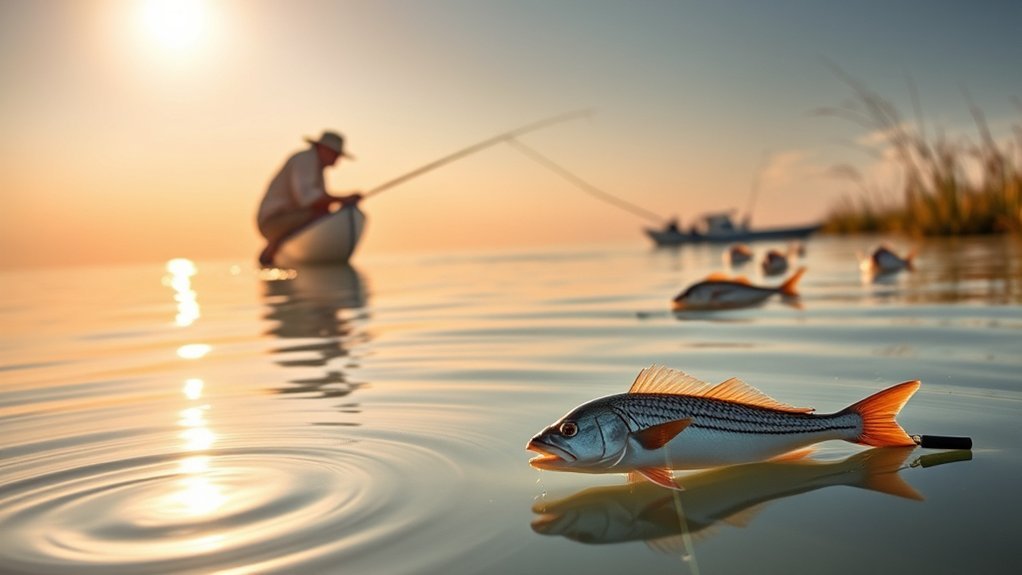
Because redfish feed on or near the bottom, you’ll want rigs that keep your bait low and natural-looking. Think stationary bottom rigs or Carolina rigs for steady presentation and popping corks to add sound and attract fish during active feeding windows.
Because redfish often feed low, use Carolina rigs for a natural bottom presentation and popping corks to add sound when fish are scattered, shallow, or feeding by vibration.
You’ll pair a Carolina Rig with soft plastics or live bait to keep the bait near the bottom while allowing some movement. A popping cork rig adds surface commotion and helps draw curious redfish in clear, stained, calm, or lightly choppy water.
Use jigs sized to depth and current: 1/8 oz on shallow flats, 1/4 oz for everyday inshore work, and 3/8 oz or heavier in deeper holes, strong current, or windy conditions.
For sight fishing, cast about three feet ahead of visible fish and use twitching, slow rolling, or stop-and-go retrieves to imitate prey. If the fish is moving fast, lead it more. If it is tailing or feeding in place, cast beyond it and bring the lure quietly into its path.
Match colors to water clarity. Use subtle tones in clear water and brighter patterns when visibility drops.
- Bring both a Carolina Rig and popping cork rig so you can adapt fast.
- Pack 1/8, 1/4, and 3/8 oz jigs for better depth control.
- Practice casts ahead of sighted redfish and refine presentation techniques.
- Use circle hooks for live bait and avoid hard hooksets with them.
- Pause your lure after a bump because redfish often follow before fully committing.
[Amazon Products Picked for You]

PACKAGE INCLUDES: 6pcs 0.5oz egg sinkers fishing rigs and 10pcs 2/0 circle hooks, 10pcs 3/0 octopus hooks
PACKAGE INCLUDES: 6pcs 1oz egg sinkers fishing rigs and 10pcs 3/0 circle hooks, 10pcs 4/0 octopus hooks
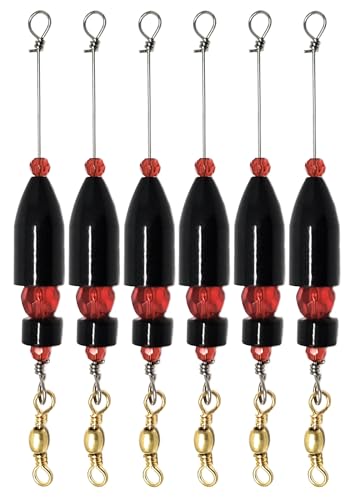
CAROLINA RIG KIT: A complete pre-rigged Carolina setup built for dragging soft plastics across the bottom; the brass barrel weight clicks against the bead to call fish in and trigger reaction bites
How to Work a Popping Cork
A popping cork helps beginners cover water and keep bait in the strike zone. Cast it near grass edges, oyster bars, docks, drains, and potholes. Pop the cork once or twice, then let the bait settle.
In calm water, use lighter pops and longer pauses. In stained or choppy water, use sharper pops so nearby redfish can feel and hear the disturbance.
How to Fight and Land Redfish
When a redfish eats, keep steady pressure and let the drag work. Avoid locking the drag down, especially near boatside, because redfish often make a final run.
Use a landing net with a fish-friendly mesh when possible. Wet your hands before handling the fish, support its belly, and keep it out of the water only as long as needed for measuring, photos, or release.
Warning: Oyster shells, jetties, hooks, and dorsal spines can cut skin, line, and leaders. Wear protective footwear in shallow water, use pliers to remove hooks, and retie after every rough fight around structure.
Reading Structure, Tides, and Water for More Bites

When you learn to read tides, structure, and water conditions, you’ll start finding redfish more consistently. Focus first on tidal flow around points, cuts, drains, and oyster edges where current funnels bait and triggers feeding.
You’ll plan outings around tides. Rising and falling flows near stronger moon phases can create more water movement, but local wind, rain, pressure, and salinity can also change the bite.
Learn the local structure. Docks, jetties, oyster bars, mangroves, grass flats, creek bends, and potholes hide redfish and concentrate prey, so work those edges methodically.
Pay attention to water temperature shifts. Warm summer water can keep fish active early and late, while cooling fall and spring waters often spark feeding as fish bulk up.
Watch water clarity. Slightly murky water gives redfish cover and can improve your odds, while crystal-clear days demand stealth, longer casts, lighter leaders, and natural colors.
Favor low light conditions, especially early morning and late evening, when redfish leave cover to hunt. Cloud cover, a light ripple, and a moving tide can extend that bite window.
Read the scene, move with purpose, and let tides, structure, and water guide you to more consistent bites and the freedom to fish on your terms.
Signs Redfish Are Feeding Nearby
Look for nervous bait, shrimp popping, birds hovering, wakes crossing a flat, tails waving above the surface, copper flashes, or muddy puffs in shallow water. These clues often tell you more than a random cast.
Listen, too. Redfish can make a distinct drumming sound, and feeding fish may push water against grass, oysters, or bait schools. When you notice several signs in one area, slow down and fish it carefully.
Shore, Inshore, and Boat Strategies

If you want consistent redfish action, tailor your approach to where you’re standing or floating. Shore anglers should fan-cast with a jig, spoon, soft plastic, or bait rig and use a jig-jig-stop retrieve to tempt nearby fish.
Inshore anglers should work deeper dock and jetty edges with live shrimp, finger mullet, crabs, or small baitfish on circle hooks.
Boat anglers should slowly probe oyster beds, grass flats, creek mouths, and submerged structure where reds feed and shelter.
You’ll adapt your fishing techniques to season and mood: popping corks in fall, scented slow baits in winter, topwater early and late, and deeper presentations during heat, wind, or strong current.
On shore, fan-cast to cover migrating schools and target cuts near structures. Keep your shadow off the water when possible, and avoid stomping along docks, seawalls, or shallow banks.
Inshore fishing rewards patience around docks and jetties with live bait presented on circle hooks. Cast upcurrent and let the bait move naturally toward the strike zone.
From a boat, quarter upwind or upcurrent and quietly work oyster beds and grass flats so you don’t spook wary reds. Use a trolling motor, push pole, stakeout pole, or drift when conditions allow.
Embrace freedom on the water. Experiment, read the scene, and commit to what the fish tell you.
- Vary retrieve speed to match activity.
- Fish edges first, then move outward.
- Use scent or sound to trigger strikes.
- Make long casts in clear, shallow, or calm water.
- Leave an area and return later if the tide is wrong.
Kayak and Wade Fishing Tips
Kayaks and wading give you a quiet advantage in shallow redfish water. Move slowly, stop often, and cast before you enter a promising flat or creek mouth.
When wading, shuffle your feet in areas where stingrays may be present, avoid stepping on oysters, and keep a safe route back as the tide changes. When kayaking, secure pliers, tackle, and rods so one strong redfish does not turn a hookset into lost gear.
Common Beginner Mistakes to Avoid
Many new redfish anglers struggle because they fish good-looking water at the wrong tide, use tackle that is too heavy, or move too loudly in shallow areas. Small adjustments can make a big difference.
Do not cast directly on top of tailing or cruising redfish. Lead the fish and bring the bait into its path. A lure landing too close can spook the fish before it has a chance to eat.
Avoid staying in dead water too long. If you see no bait, no current, no birds, no wakes, and no structure, move until you find life.
Do not ignore your leader. Oyster shells, dock posts, rocks, and gill plates can nick line quickly. Check for rough spots after every fish or snag.
- Fishing slack water too long when bait is not moving.
- Using loud footsteps, hatches, coolers, or boat noise in shallow water.
- Retrieving too fast in cold water or too slowly when fish are chasing bait.
- Forgetting to measure fish before harvest.
- Handling fish with dry hands or keeping them out of water too long before release.
Regulations, Size Limits, and Responsible Harvesting
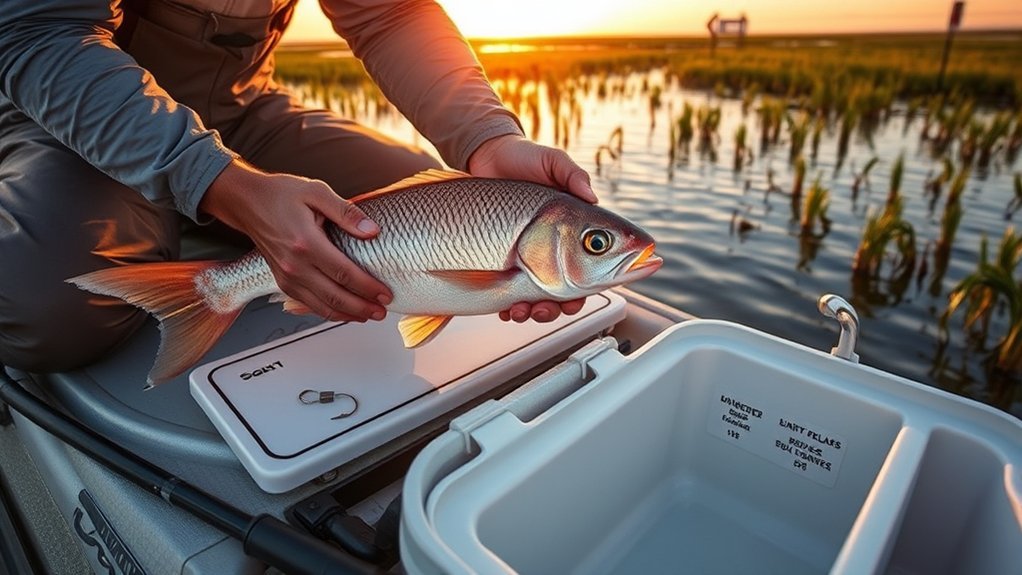
Although regulations vary by state, you need to know and follow the rules before you fish. Daily limits, slot sizes, seasons, closed areas, gear rules, and special tags can directly shape what you can legally keep.
Know local rules before you fish. Daily limits, slot sizes, seasons, and special tags determine what you can legally keep.
Some states use slot limits to protect young fish and large breeding adults. For example, Texas has used a slot system and a special tag system for oversized red drum, while states such as Virginia and Maryland also manage red drum with state-specific size and possession rules.
Because rules can change, check your state fish and wildlife agency before you launch. You are responsible for current compliance, even if an older article, video, app, or dockside conversation gives different information.
Practice responsible harvesting to protect sustainable fish populations and your freedom to fish. Follow size limits and daily bag limits, release protected-size fish quickly, and handle all fish gently.
Favor catch and release for large breeding adults when required or when conservation is the better choice. If you harvest a legal fish, use quick, humane dispatch, keep it cold, and report tag use when required.
These routines respect ecosystems, uphold the law, and keep future fishing open and liberating for everyone who wants to fish responsibly.
Frequently Asked Questions
What should I know before fishing for redfish?
You should know the local fishing regulations, slot limits, best habitats, seasonal patterns, tide impact, tackle choices, bait options, and conservation practices. Focus on moving water, fish around structure, use quiet presentations, and check current rules before keeping any redfish.
What is the best setup for redfish?
A strong beginner setup is a 7-foot medium or medium-heavy spinning rod, 3000–4000 reel, 10–20 lb braid, and a 20 lb mono or fluorocarbon leader. Use lighter tackle for open flats and step up around docks, rocks, jetties, oysters, and heavy current.
How old is a 40-inch redfish?
A 40-inch redfish is usually an older adult, often around 10 years or more, but exact age depends on growth rate, habitat, food supply, sex, and local conditions. Large redfish are valuable breeders, so many anglers release them carefully unless local rules allow harvest and harvest is appropriate.
What bait should you use for redfish?
Use live shrimp, finger mullet, small crabs, mud minnows, pinfish, or other legal local bait when redfish are picky. For artificial lures, start with paddle tails, gold spoons, topwater plugs, scented soft plastics, and popping cork rigs. Match bait size and color to local forage and water clarity.
Are redfish better on incoming or outgoing tides?
Both can be good. Incoming tides let redfish push onto flats, grass, and shorelines. Outgoing tides pull bait through drains, cuts, and creek mouths, creating ambush points. The best tide is usually the one that creates steady current near bait and structure.
What is the best lure for beginner redfish anglers?
A 3–5 inch paddle-tail soft plastic on a 1/8–1/4 oz jig head is one of the easiest beginner lures. It casts well, works in many depths, mimics baitfish, and can be retrieved slowly, steadily, or with short hops along the bottom.
Conclusion
You’ve got the basics to start targeting redfish confidently: habitats, tides, tackle, baits, rigs, presentation, fish handling, and responsible harvest. Redfish reward anglers who stay observant, move with the tide, and adjust instead of forcing one lure or one spot all day.
Start with marsh drains, grass edges, oyster bars, docks, and flats with visible bait. Practice accurate casts, watch tides, swap lures with conditions, and follow size limits. Keep learning on the water, respect local rules, and enjoy steady, rewarding bites.
Sources
- NOAA Fisheries: Red Drum — red drum species background, range, biology, and fishery context.
- Texas Parks and Wildlife: Saltwater Bag and Length Limits — state red drum harvest rules and slot-limit reference.
- Virginia Marine Resources Commission: Recreational Fishing Regulations — Virginia saltwater recreational regulation reference.
- Maryland Department of Natural Resources: Recreational Fishing — Maryland recreational fishing rules and current regulation reference.
- Florida Fish and Wildlife Conservation Commission: Saltwater Recreational Fishing — state saltwater rules and responsible fishing reference.