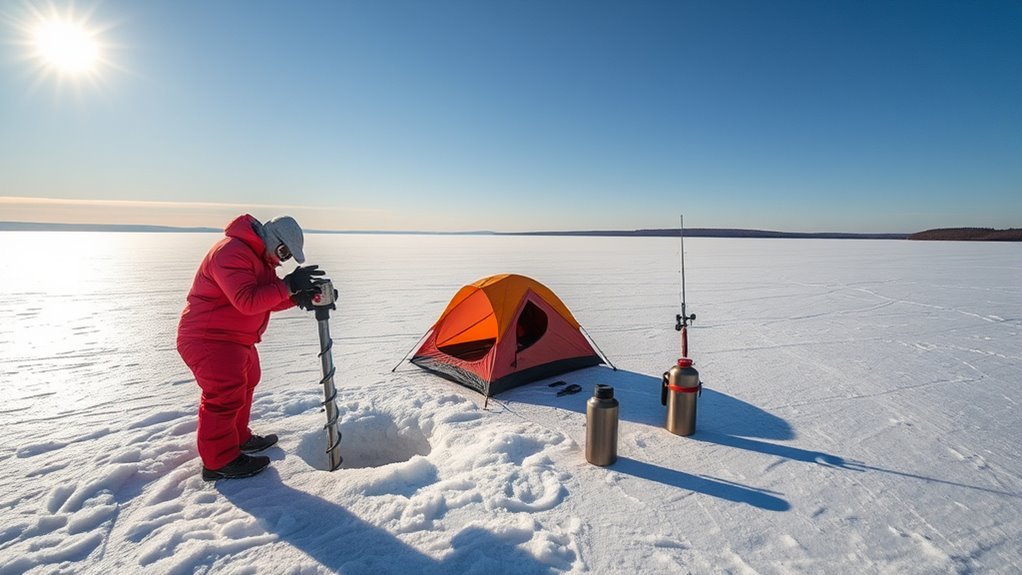
Ice fishing is an exciting winter adventure where you catch fish through holes drilled into frozen lakes, ponds, or slow-moving backwaters. To get started, you need safe ice, warm clothing, a hand auger, a short ice rod, simple tackle, and bait that matches your target fish. Safety’s essential, so always check ice thickness before you walk out, avoid moving water, and fish with a partner whenever possible. With a simple setup, a few smart techniques, and warm snacks nearby, you can turn a cold day into a fun and memorable time on the ice.
Quick Answer
To start ice fishing, choose a lake with safe, clear ice, bring basic gear, dress in warm waterproof layers, drill a hole with an auger, and fish with live bait or small jigs. Beginners should target 3 to 20 feet of water, watch the line closely, and make safety the first priority.
Key Takeaways
- Start with simple gear: a hand auger, short ice rod, small reel, line, jigs, hooks, bait, scoop, and safety picks.
- Clear, solid ice of at least 4 inches is often used as a minimum for walking, but local conditions can change fast.
- Live bait, small jigs, and tip-ups work well for beginners because they are easy to use and match winter fish behavior.
- Dress in layers, keep your hands and feet dry, and bring warm drinks so the trip stays comfortable.
- Make the day fun with snacks, simple games, and short fishing sessions, especially when kids are joining you.
At a Glance
| Time Required | 2 to 5 hours for a relaxed beginner trip |
| Difficulty | Beginner-friendly when ice conditions are safe and gear is simple |
| Tools Needed | Ice auger, ice scoop, short rod, reel, line, jigs, hooks, bait, bucket or sled, ice picks, cleats, and warm clothing |
| Cost | Low to moderate if you start with basic gear and rent or borrow items before upgrading |
Ice Fishing Basics
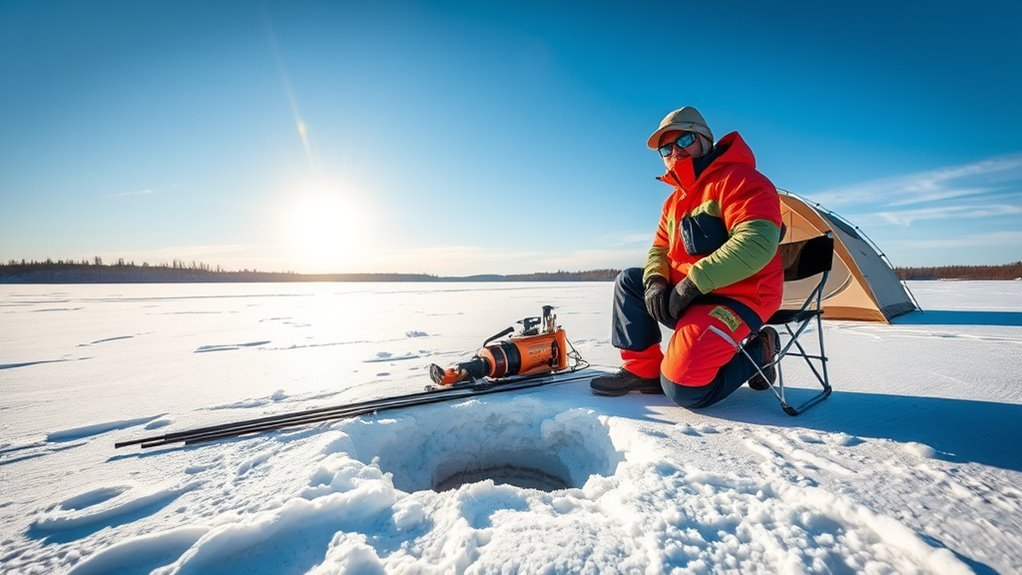
Ice fishing can be an exhilarating experience, especially when you know the basics before you step onto the lake. Start by choosing a popular local waterbody where other anglers fish safely, then check local rules, weather, access points, and ice reports before you go.
First, verify you’re on safe ice. Many anglers use 4 inches of clear, solid ice as a common minimum for walking, while 6 inches or more gives you a wider safety margin for a small group standing near fishing holes. Ice that looks white, slushy, honeycombed, cracked, or layered can be much weaker than clear ice.
Use a hand auger to drill holes in promising spots, targeting depths of 3 to 20 feet where fish are often more active in winter. Shallow weed edges, drop-offs, rock piles, points, humps, and basin edges can all hold fish depending on the lake and species.
Make sure your fishing gear is ready before you leave home. A short ice rod, small spinning reel, light line, live bait, jigs, an ice scoop, and a bucket can handle many beginner trips without creating a heavy load.
Keep an eye on ice thickness as you move farther from shore, especially near streams, springs, bridges, pressure ridges, docks, trees, and current. These areas can have thinner ice even when nearby ice looks solid.
Warning: No ice is guaranteed safe. Check conditions often, spread out from other anglers, avoid driving on unfamiliar ice, and leave immediately if you hear cracking, see water on top, or notice changing weather.
With these ice fishing tips, you’ll be well on your way to a successful day on the ice. Some days may produce steady action, while other days teach patience, reading conditions, and moving until you find fish.
Enjoy the thrill of the chase, but keep safety, warmth, and simple planning ahead of everything else.
Essential Gear for Beginners
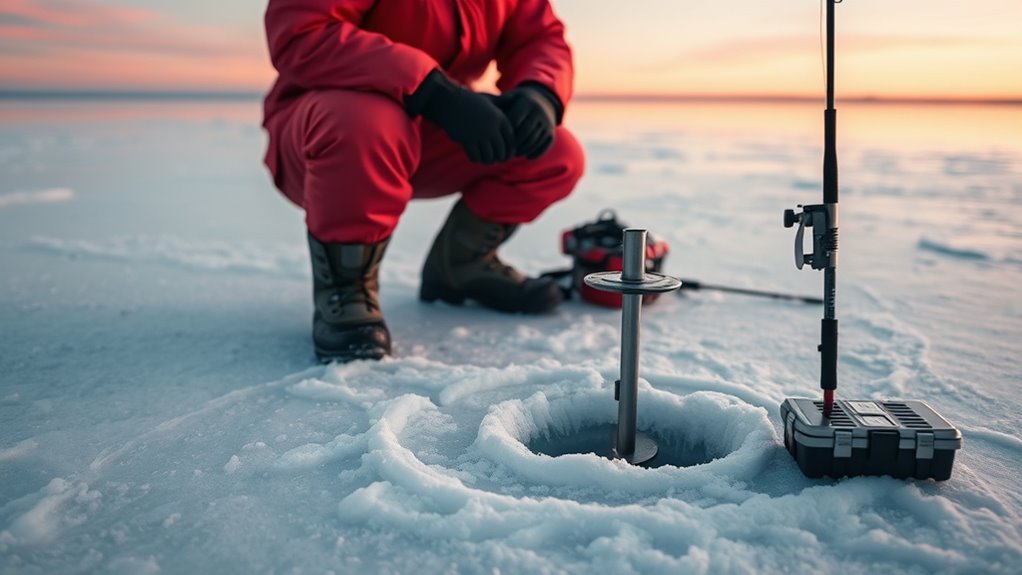
Getting started with ice fishing means equipping yourself with the right gear to create a safe, comfortable, and enjoyable experience.
You’ll need essentials like a hand auger, a short rod, quality bait, and a few small lures to attract fish without overloading your sled or bucket.
Don’t forget to dress in layers and wear waterproof snow pants or bibs to stay warm while you wait, jig, and move between holes.
Must-Have Equipment
When you venture out onto the frozen landscape for ice fishing, having the right gear can make all the difference in your experience.
Start with an ice auger to drill holes. Hand augers are perfect for beginners because they are affordable, quiet, lighter than powered augers, and easy to control. Choose a 6-inch or 8-inch auger for most panfish, trout, walleye, and similar beginner targets.
Pair a short ice fishing rod of about 24 to 36 inches with a small spinning reel and 4 to 8-pound fishing line. Lighter line helps small jigs move naturally, while slightly stronger line gives you more control when larger fish bite.
Tip-ups are fantastic for fishing for beginners because they let you cover a second hole and signal bites with a raised flag. They are especially useful when fishing live bait for pike, walleye, trout, or other larger fish where legal.
Don’t forget your tackle box stocked with assorted jigs, small spoons, hooks, split shot, bobbers, and live minnows or waxworms to attract fish. A few simple lure colors, such as silver, gold, white, chartreuse, and glow, are enough for a beginner kit.
Finally, prioritize fishing safety by bringing ice picks, traction cleats, a throw rope, a whistle, a headlamp, and a charged phone in a waterproof pouch. A sled also helps you carry gear safely without tiring yourself before you even start fishing.
Equip yourself right, and you’ll enjoy a more comfortable and productive day out on the frozen waters.
Clothing for Warmth
After you’ve gathered your ice fishing gear, staying warm becomes your next priority.
Start by dressing in layers, with a wool or fleece base layer that traps warmth and wicks moisture away from your skin. Avoid cotton base layers because they hold moisture and can make you colder once you sweat or sit still.
Invest in a quality winter coat and waterproof snow pants or insulated bibs for protection against wind, snow, and kneeling on the ice. A windproof outer layer matters because even a light breeze can feel harsh on open water.
Your winter boots should be slightly larger to allow for insulation and warm air circulation, keeping your feet dry and comfortable. Choose waterproof boots with thick soles, then add traction cleats when the ice is slick.
Use a two-layer sock approach: a thin moisture-wicking sock paired with a thicker insulating sock for enhanced warmth. Keep one dry backup pair in your bag in case snow or slush gets inside your boots.
Finally, keep hand warmer packets handy to battle the chill during long periods of inactivity on the ice. Warm gloves, a spare pair of mittens, a neck gaiter, and a winter hat can make the difference between leaving early and enjoying the day.
Stay warm and enjoy your ice fishing adventure!
Licenses and Local Rules
Before you fish, check whether you need a fishing license, trout stamp, shelter tag, or special permit for your state or province. Most places require anglers to follow the same fishing rules in winter that apply during open-water seasons, but ice seasons can also include special limits, bait rules, and shelter rules.
Look up the legal number of lines, hook styles, bait restrictions, daily limits, size limits, and allowed species before you set up. Some waters may have special rules for trout, northern pike, walleye, panfish, or protected species.
Note: Rules can change by lake, season, and species. When in doubt, check your local fish and wildlife agency before keeping fish or using live bait.
Safety Tips for Ice Fishing

As you prepare for your ice fishing adventure, prioritizing safety is essential to guarantee a fun and worry-free experience on the frozen lake. Keep in mind the critical factors surrounding ice thickness, ice quality, current, snow cover, and weather conditions.
| Ice Thickness | Recommended Use | Safety Tips |
|---|---|---|
| 4 inches of clear ice | Walking for one person | Regularly test ice as you move |
| 6 inches or more of clear ice | Fishing with extra caution and spacing | Carry ice picks, rope, and cleats |
| 8 inches or more of clear ice | Some snowmobiles/ATVs where allowed | Inform someone of plans and check local guidance |
Dress in layers, including a wool or fleece base layer, and make certain your outerwear is waterproof. Always monitor the weather forecast before heading out, as conditions can change quickly and warm spells, rain, wind, and currents can weaken ice.
Carry a compass or GPS, know the shoreline direction, and learn basic emergency procedures before you go. If you fall through, try to stay calm, turn toward the direction you came from, kick your feet, use your ice picks, and roll away from the hole once you get out.
By following these safety tips, you’ll enjoy your ice fishing experience while minimizing risks.
Where Ice Is Often Weak
Ice rarely forms evenly across an entire lake. The edge near shore may be thick while the center is thin, or the main lake may be safe while a current area stays dangerous.
- Stay away from inlets, outlets, channels, bridges, culverts, and moving water.
- Use extra caution near docks, logs, weed beds, pressure ridges, cracks, and dark patches.
- Avoid ice covered by deep snow because snow can insulate weak ice and hide slush or cracks.
- Test the ice often with a spud bar or auger instead of trusting footprints, tracks, or other anglers.
What to Do Before You Leave Home
A safe ice fishing trip starts before you reach the lake. Tell someone where you are going, where you plan to park, and when you expect to return.
Pack a basic safety kit with ice picks, rope, cleats, first aid items, a whistle, a headlamp, extra gloves, extra socks, and a charged phone. Bring water and food, even on short trips, because cold weather can drain energy quickly.
If you are new to the area, talk to local bait shops, conservation officers, or experienced anglers. They can often tell you which access points are used, which areas to avoid, and which species are biting.
Choosing the Right Bait
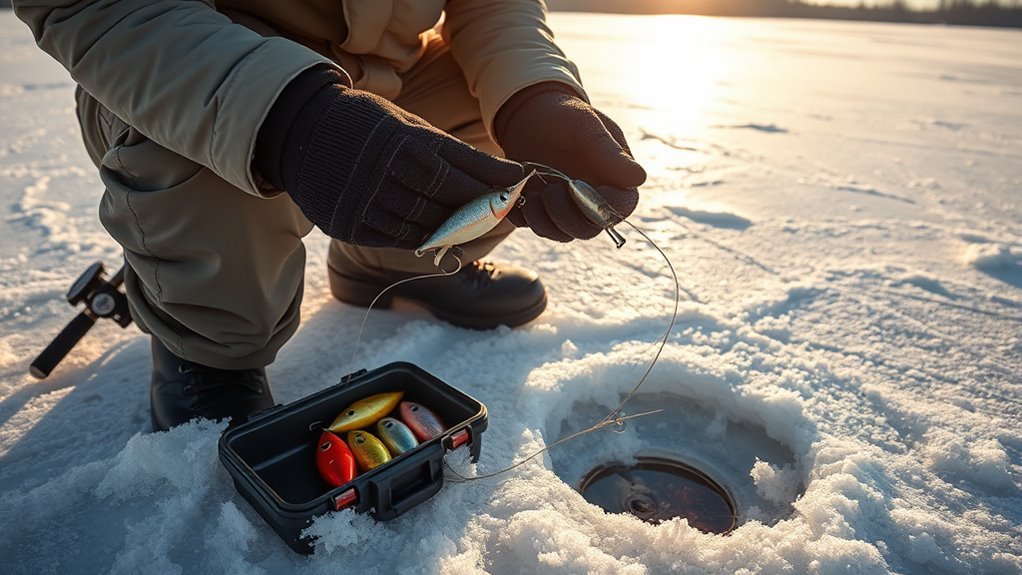
Once you’ve confirmed your safety on the ice, the next step is selecting the right bait for your fishing expedition.
Choose bait that matches the fish you want to catch, then keep your presentation small, slow, and natural in cold water.
For beginners, live bait, like shiners and chubs, is often the most effective choice, mimicking the natural food sources fish seek during winter. Nightcrawlers are also versatile, attracting various species when used with jigs or spoons, boosting your chances of catching fish.
When rigging live bait, hook it lightly so it moves naturally in the water, which can lure more fish in. For minnows, many anglers hook them under the dorsal fin or lightly through the lips depending on the setup, depth, and local rules.
If you’re feeling adventurous, try jigs like the Swedish Pimple paired with small pieces of meat, waxworms, spikes, or minnow heads. Small spoons, tungsten jigs, teardrop jigs, and glow jigs can yield impressive results, especially for active fish.
Keeping your bait choices simple and focusing on these effective options will help you learn the basics of ice fishing without feeling overwhelmed.
Happy fishing!
Best Bait by Common Fish Type
| Fish Type | Beginner Bait | Simple Presentation |
|---|---|---|
| Panfish | Waxworms, spikes, small jigs | Tiny jig with subtle shakes |
| Walleye | Minnows, minnow heads, spoons | Slow jigging near bottom |
| Trout | Small minnows, worms, spoons | Fish different depths until you find cruising fish |
| Northern pike | Larger minnows where legal | Tip-up near weeds or drop-offs |
Techniques for Catching Fish
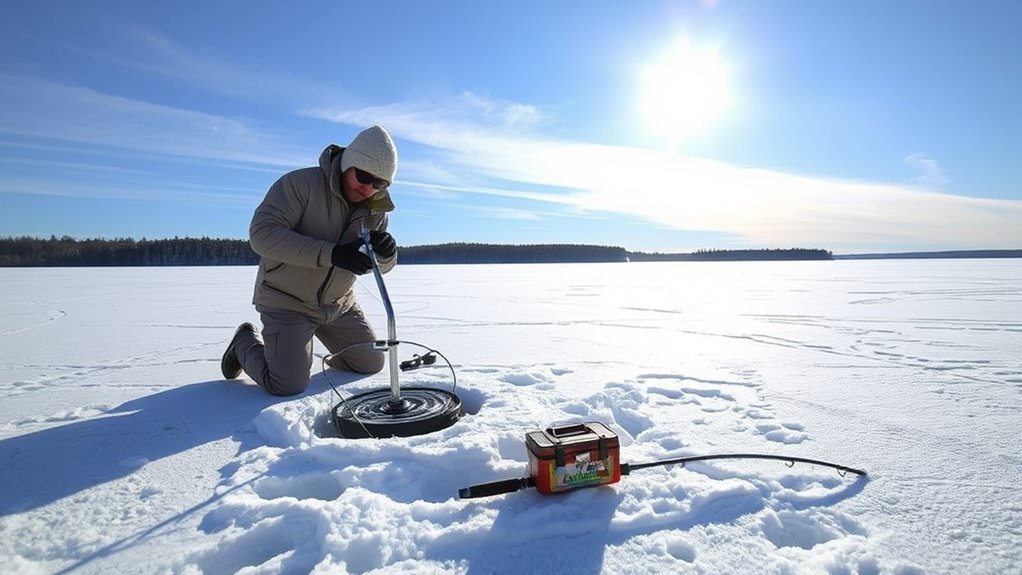
Mastering a few key techniques can greatly enhance your ice fishing success. Here are some effective methods to evaluate:
- Vary depth: The best fishing often occurs in water depths of 3 to 20 feet, so set traps or drill test holes at different depths.
- Jigging: Use a gentle bouncing motion to attract fish, especially near the bottom. Pause often because many bites happen when the bait stops moving.
- Tip-ups: When using these, position live minnows naturally to mimic real movement and boost your chances.
- Line sensitivity: Stay alert. Fish bites can be light in cold conditions, so pay attention and be ready to set the hook.
Engaging in friendly competition with fellow anglers not only makes the experience enjoyable but also allows you to learn new techniques for catching fish.
With practice and patience, you’ll be reeling in your catch in no time!
How to Jig Through the Ice
Jigging is one of the easiest ways to start ice fishing because it keeps you active and helps you feel what fish are doing below the hole.
- Drop your jig until it reaches the bottom.
- Reel up a few inches so the bait sits just above the bottom.
- Lift the rod tip gently, then let the jig fall back on a semi-slack line.
- Pause for several seconds and watch the rod tip or line for tiny taps.
- If fish look interested but will not bite, use smaller movements or switch bait.
Pro Tip: Drill several holes before you start fishing, then move every 10 to 20 minutes if you do not see marks, feel bites, or catch fish. Mobility often matters more than one perfect lure.
How to Read Bites in Cold Water
Winter fish often bite softly. Instead of a hard pull, you may notice the line twitch, slacken, move sideways, or feel slightly heavier than normal.
Keep one finger near the line when jigging so you can feel small changes. When something feels different, lift the rod smoothly instead of jerking too hard. A controlled hookset helps keep small hooks from tearing free.
Where to Drill Your First Holes
Beginners often catch more fish by drilling near structure instead of choosing random open ice. Start near weed lines, points, drop-offs, rock piles, or areas where the bottom changes from mud to sand or gravel.
For panfish, try shallow weeds early and late in the day, then move deeper during midday. For walleye, focus near bottom around evening. For trout, test several depths because they often cruise higher in the water column.
Making Ice Fishing Fun for Everyone
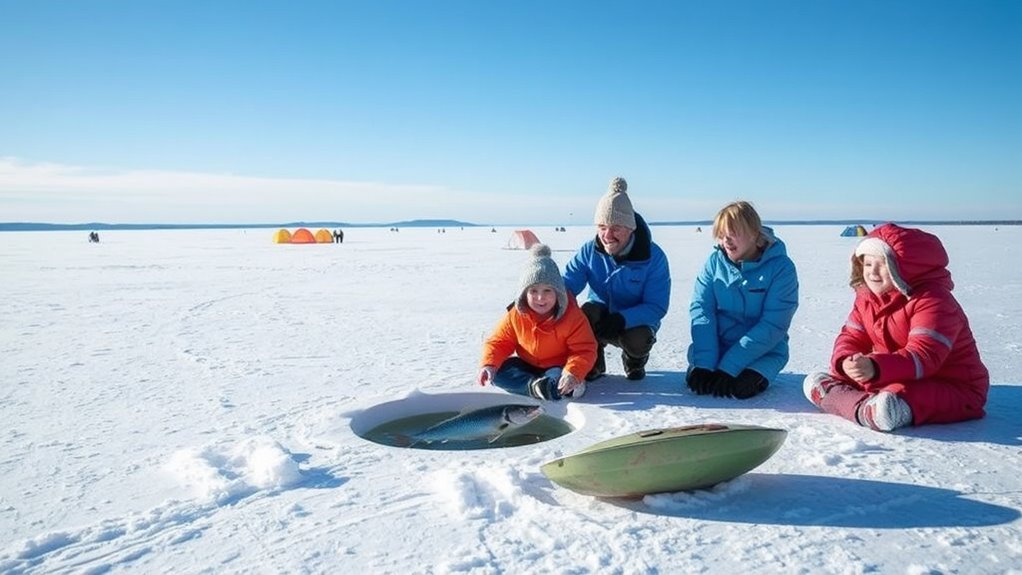
To make ice fishing an unforgettable experience for everyone, keep the energy high with fun activities like snowball fights, building snowmen, or tossing a football on the ice when conditions are safe.
Don’t forget to pack a variety of snacks and some warm drinks to create a cozy atmosphere that encourages sharing and laughter.
These simple touches can turn a day on the ice into a memorable adventure for all ages.
Engaging Activities for Kids
While ice fishing can be a peaceful escape for adults, it’s vital to keep kids engaged and excited about the experience.
To guarantee a memorable day of fishing, incorporate these engaging activities:
- Build snowmen or have snowball fights to keep the fun alive.
- Toss a football on the ice, adding a playful twist to the adventure.
- Introduce simple fishing games, like a competition for the biggest catch, to foster camaraderie.
- Allow kids to help drill holes and rig lines, creating a sense of accomplishment.
These activities not only create a cozy atmosphere but also encourage kids to keep an eye on the fishing lines while enjoying their time outdoors.
Make your ice fishing trip an important experience for the whole family!
Snacks and Warm Beverages
After a day of fun activities like building snowmen and tossing a football, you’ll want to keep the energy up with tasty snacks and warm beverages.
Pack hearty snacks like venison jerky, Pringles, sandwiches, trail mix, granola bars, fruit, and doughnuts to maintain those energy levels during slow fishing periods. Bringing along a thermos filled with hot cocoa, tea, soup, or coffee can help keep everyone warm and enhance your ice fishing experience.
Sharing these snacks fosters camaraderie among fellow anglers, making the fishing trip even more enjoyable.
Consider adding a portable cooking option, like a propane grill, where legal and safe, to whip up warm meals right on the ice. Keep flames and heaters away from loose clothing, shelter fabric, and fishing line.
These moments not only keep everyone engaged but also create lasting memories that you’ll cherish for years to come.
Comfort Tips for Longer Days
A few comfort items can make ice fishing much easier, especially for beginners. Bring a foam pad or folding chair so you do not have to sit directly on a cold bucket all day.
A small sled helps carry gear and keeps items off wet ice. Sunglasses can reduce glare, sunscreen can protect your face on bright days, and a small towel keeps your hands dry after handling fish or bait.
If you use an ice shelter or heater, keep ventilation in mind. Never run fuel-burning heaters in tight spaces without fresh air, and follow all safety instructions for the heater you bring.
Related Guides
Frequently Asked Questions
What Is Needed to Start Ice Fishing?
To start ice fishing, you’ll need a valid fishing license where required, knowledge of local regulations, safe ice, warm layered clothing, an ice auger, a short ice rod, small reel, fishing line, hooks, jigs, bait, an ice scoop, and safety gear such as ice picks and cleats.
What Is the Best Fishing Method for Beginners?
For beginners, a small jig tipped with live bait is one of the easiest methods because it lets you feel bites and adjust depth quickly. Tip-ups with live bait are also beginner-friendly where legal, especially in depths of 3 to 20 feet near weeds, points, or drop-offs.
How Does Ice Fishing Work?
Ice fishing works by drilling a hole through safe ice, lowering bait or a lure into the water, and using a short rod or tip-up to detect bites. Fish still feed in winter, but they often move slower, so small baits, subtle jigging, and patience usually work best.
Is Ice Fishing an Expensive Hobby?
Ice fishing doesn’t have to be expensive. You can start with a hand auger, one rod, a small tackle box, bait, warm clothing you already own, and basic safety gear. Costs rise when you add shelters, electronics, powered augers, heaters, sleds, or premium clothing.
How Thick Should Ice Be Before You Walk on It?
Many anglers use 4 inches of clear, solid ice as a common minimum for walking, but local conditions matter more than a single number. Avoid slushy, cracked, white, or current-worn ice, and test thickness often as you move.
What Fish Can Beginners Catch Through the Ice?
Common beginner targets include bluegill, crappie, perch, trout, walleye, and northern pike, depending on your area. Panfish are often the easiest starting point because they bite small jigs, live bait, and light tackle.
Conclusion
So, is ice fishing just about catching fish, or is it a way to connect with nature and create lasting memories? The truth is, it’s both. As you venture out onto the frozen expanse, you’ll discover the thrill of the chase, the calm of winter scenery, and the joy of sharing the day with family or friends.
With the right gear, safety measures, bait choices, and simple techniques, you can transform a chilly day into an unforgettable experience. Start small, choose safe ice, keep moving when fish are not biting, and focus on learning one skill at a time.
So grab your gear, bundle up, and step into the adventure that waits beneath the ice.