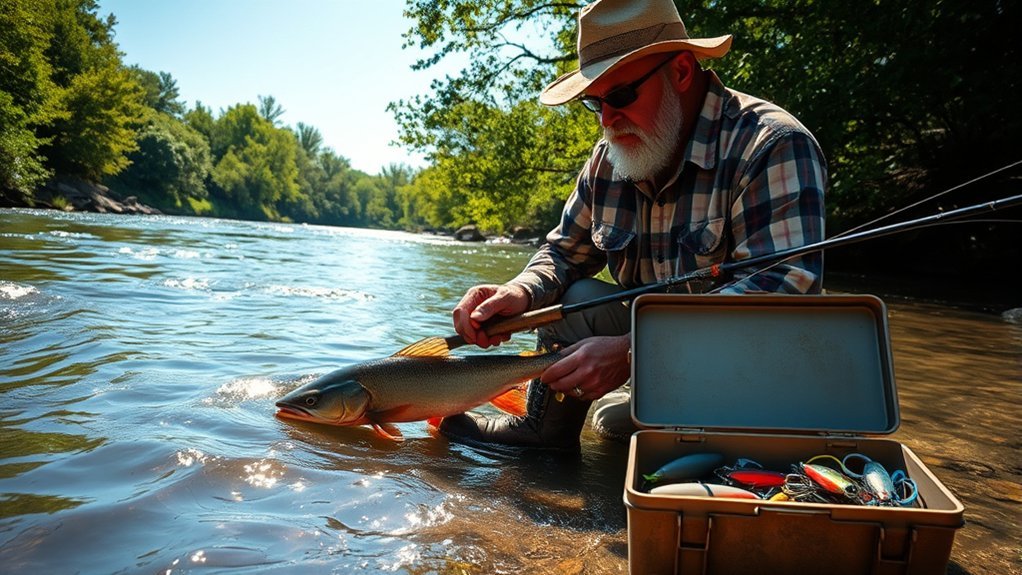
To catch catfish from the bank, fish a reachable depth change, current seam, creek mouth, dam tailwater, logjam, or deep hole, then keep a fresh bait on a simple bottom rig long enough to test the spot. Match the bait and tackle to the catfish species you want, use only enough weight to hold your presentation where it belongs, and move or change depth when a promising bank stays inactive.
Quick Answer
To catch catfish from the bank, fish near current seams, drop-offs, creek mouths, dam tailwaters, logjams, or deep holes close to shore. Use a sliding sinker rig, circle hook, fresh bait, and enough weight to hold your presentation near the bottom. Channel catfish respond well to nightcrawlers, liver, prepared bait, and cut bait; blue catfish commonly take fresh cut bait; flatheads usually favor live baitfish where legal. Fish productive low-light periods, give each spot a fair test, then adjust depth, bait, or location if bites do not come.
Key Takeaways
- Channel catfish, blue catfish, and flathead catfish use different habitat and food sources, so match your bait and bank position to the species you want.
- The best bank spots usually put deep water, current, cover, baitfish, or a natural travel route within casting range.
- A sliding sinker rig is a strong all-around starting setup, but float or lifted-bait presentations can be better over weeds, soft mud, or snaggy bottom.
- Nightcrawlers, chicken liver, prepared bait, fresh cut bait, and legal live bait can all work when matched to the target species.
- If a strong-looking spot stays quiet after a fair test, change depth, bait, casting angle, or location instead of waiting in the same dead water all night.
Bank Catfish Decision Guide
| Target | Bank Zone | First Bait to Try | Presentation |
|---|---|---|---|
| Channel catfish | River pools, current breaks, pond and lake edges, creek mouths, shallows at night | Nightcrawlers, chicken liver, prepared bait, or small cut bait | Sliding sinker rig near bottom |
| Blue catfish | Big-river current seams, channel edges, outside bends, deeper pools, tailwaters | Fresh cut shad, skipjack, or another legal local baitfish | Bottom rig with enough weight to hold position |
| Flathead catfish | Deep pools near submerged timber, logjams, undercut banks, rock, or other heavy cover | Lively legal baitfish; large nightcrawler presentations can also work | Strong bottom setup placed close to cover without burying the rig in snags |
Bait and tackle rules vary by state and waterbody. Confirm local regulations before collecting, transporting, or using baitfish.
At a Glance
| Time Required | Flexible. Allow enough time to test more than one depth, casting angle, or bank spot if the first setup stays inactive. |
| Difficulty | Beginner to moderate, depending on current, casting room, snags, and the size of catfish you target. |
| Tools Needed | Medium to medium-heavy rod for general fishing, a stronger setup for trophy fish or heavy cover, reel, line, circle hooks, sinkers, swivels, leader line, bait, pliers, landing net, rod holders, and a headlamp for night fishing. |
| Line Starting Point | About 15 to 20-pound line is a practical general channel-catfish range. Flathead fishing, heavy cover, strong current, or trophy water can require 30-pound or heavier tackle. |
| Cost | Low to moderate if you already own basic fishing gear. Bait, hooks, sinkers, and replacement line are the main recurring costs. |
What Catfish Species Can You Catch From the Bank?
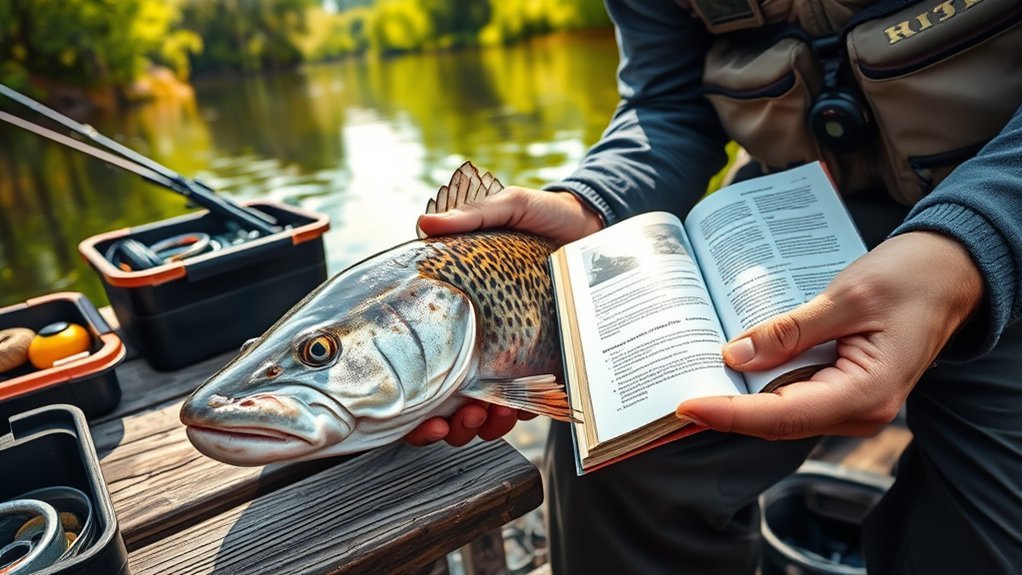
Channel, blue, and flathead catfish are three major U.S. bank-fishing targets, but they do not use water or food in exactly the same way. Knowing which species you are likely to encounter helps you choose the bait, tackle, and bank feature before you cast.
Channel catfish are an accessible target for many bank anglers because they occur in rivers, lakes, ponds, and reservoirs. They commonly take nightcrawlers, chicken liver, prepared baits, and cut bait. They also feed heavily at night in many waters, making evening bank fishing especially practical.
Blue catfish are the giants of the group. In strong fisheries, they commonly reach substantial size, and verified modern records exceed 100 pounds. They are strongly associated with big-river habitat, including pools with current, channel edges, swift chutes, and other areas where fish forage is available. Fresh cut bait from a legal local baitfish is a strong starting choice.
Flathead catfish are powerful fish-oriented predators. Adults commonly use deep pools, submerged logs, logjams, drift piles, rocks, and other heavy cover. Large live baitfish are a standard flathead presentation where local rules allow them, although large nightcrawler presentations can also produce fish.
Fish-Consumption Note: Contaminant levels vary by fish species, fish size, and waterbody. Some contaminants can accumulate more in older and larger fish. Check the current local fish-consumption advisory before keeping catfish to eat.
Your species changes the plan. For channel cats, scented or natural baits and accessible feeding lanes are a practical starting point. For blues, focus on big-water current, deeper travel routes, and fresh cut bait. For flatheads, put a legal live bait presentation close to heavy cover without placing the rig where every fish will immediately bury you in a snag.
Where Should You Bank Fish for Catfish?
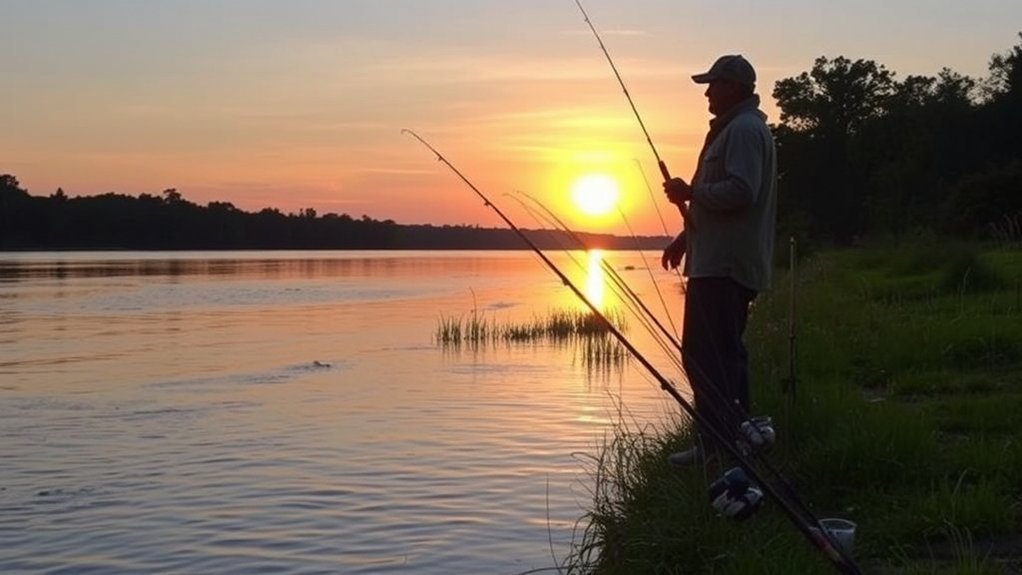
A productive bank gives catfish food, cover, depth, current, or an easy travel route. A stronger bank combines several of those features within casting range. Instead of choosing a spot only because it has room for a chair, choose the underwater feature first and the comfortable bank second.
Start by scouting areas with safe footing and open casting lanes. Quieter banks can reduce tangled lines and fishing pressure, but do not automatically ignore parks, boat ramps, or other developed access if they put you within reach of a channel edge, creek mouth, riprap bank, or other productive structure.
Use mapping or satellite tools before the trip to identify points, creek mouths, outside river bends, bridges, riprap, marina edges, flats beside deeper channels, and drop-offs that approach the shoreline. Once you arrive, use visible current, wind direction, bottom feel, baitfish activity, and changes in shoreline slope to refine where you actually cast.
River, Lake, and Pond Bank Locations
- Rivers: Prioritize current seams, outside bends, tributary mouths, deep pools, bridge structure, rock, timber, and tailwaters where legal access is available.
- Lakes and reservoirs: Look for points, wind-affected banks, riprap, creek-channel edges, flats beside deeper water, marina edges where fishing is permitted, and shoreline drop-offs.
- Ponds: Focus on the deepest reachable water, inflow or outflow areas, shade, cover, and shallow feeding zones during low light.
Tailwater areas below dams can be productive because current can concentrate bait and create distinct feeding lanes. Major creek arms with bluffs, stump fields, rock, or timber can provide similar combinations of depth and cover. In rivers, current seams are especially useful: if regulations allow multiple rods, you can test the faster edge and the slower side instead of putting every bait in the same flow.
Warning: Bank areas below dams can be dangerous. Water levels and current can change quickly, rocks can be slick, and restricted zones exist for a reason. Stay outside posted closures, wear secure footwear, and leave the bank if rising water or current makes the area unsafe.
Season matters, but avoid treating a calendar date as a guarantee. As water warms, channel and flathead catfish can use shallower feeding areas, especially during lower-light periods. During colder periods, deeper water and slower presentations often become more important. Current, water level, forage movement, and local habitat can matter as much as the month.
Always check the regulations for the exact water you plan to fish. Rules can cover seasons, harvest limits, bait species, bait transport, rod numbers, size limits, night access, snagging restrictions, and closed areas.
What Is the Best Rig for Bank Fishing Catfish?
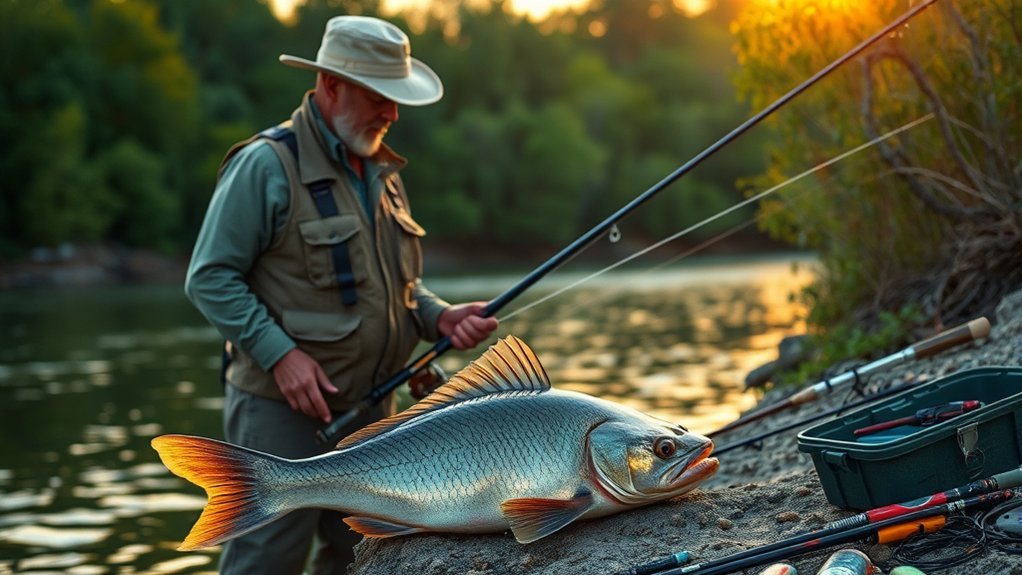
A sliding sinker rig is the best all-around starting rig for bank catfishing because it keeps the bait near the bottom while allowing line to move through the weight. A basic setup is main line, sliding sinker, swivel, leader, and circle hook. Add an optional bead between the sinker and swivel if you want to cushion the knot.
Slide an egg sinker, no-roll sinker, or other appropriate bottom weight onto the main line, then tie the line to a swivel. Add roughly 18 to 36 inches of leader and finish with the hook. Leader length is adjustable rather than fixed: shorter leaders can control bait better in current or near snags, while a little more length gives natural movement on cleaner bottom.
Choose the Rig by Bottom and Current
- Open or firm bottom: Start with the basic sliding sinker rig.
- Stronger current: Use a no-roll or other current-holding sinker and only enough weight to keep the bait in the target zone.
- Soft mud or weeds: Add a small peg float on the leader or use a float presentation to lift the bait above the bottom.
- Snaggy riprap or timber: Shorten the leader, cast beside rather than deep inside the cover, or suspend the bait enough to reduce repeated hang-ups.
Do not automatically use the heaviest sinker you can cast. In calm water, a lighter sinker may hold perfectly. In stronger flow, increase weight until the bait stops rolling out of the feeding lane. Too much weight adds casting stress and can make the setup unnecessarily cumbersome.
For general channel-catfish fishing, 15 to 20-pound line is a practical starting range. Heavy cover, strong current, flathead fishing, or trophy water may call for 30-pound or heavier tackle. Monofilament is simple and forgiving; braid provides high strength at a smaller diameter but benefits from a tough leader where abrasion is a concern.
Pro Tip: With circle hooks, do not make a hard traditional hookset. When the rod loads steadily, reel down and apply firm pressure so the hook can rotate toward the corner of the mouth.
Match hook size to the bait rather than choosing it only by the fish’s maximum size. A roughly 4/0 to 6/0 circle or bait hook is one practical starting range for a general channel-cat setup, while larger cut bait or large live bait may require a larger hook. Whatever the size, leave the hook point clear of scales, skin, or excess bait.
What Are the Best Baits for Bank Catfish?
The best bank bait depends on species and local forage. Catfish use chemical and mechanical senses to find food, so natural scent, bait condition, and placement usually matter more than novelty.
- Nightcrawlers: A simple option for channel catfish in ponds, lakes, creeks, and rivers. They also attract many other species, so bait theft is common.
- Chicken liver: A classic channel-cat bait with strong scent. Because it is soft, use elastic bait thread or another legal method to keep it on the hook during a hard cast.
- Cut bait: Fresh shad, skipjack, sucker, bluegill where legal, or another permitted baitfish can be excellent for blue catfish and larger channel cats.
- Live bait: A primary flathead option where legal. Keep the bait lively and position it near deep pools, timber, logjams, or current breaks without burying the rig in cover.
- Dip bait or punch bait: Useful for channel catfish, especially in warmer water and slower environments.
- Shrimp and other simple grocery baits: Convenient alternatives for channel-cat fishing when natural bait is difficult to obtain.
For blue catfish, fresh cut bait is a strong first choice because larger blues feed heavily on fish. Keep pieces firm enough to survive the cast, and expose the hook point. For channel cats, natural bait, liver, worms, or prepared baits can all be productive, so carry more than one option when practical.
Note: Bait laws vary by state and waterbody. Some places restrict live bait, cut bait, use of game fish as bait, cast nets, or transport of bait between waters. Check the current rules before collecting or using baitfish.
What Rod, Reel, Line, and Hook Should You Use?
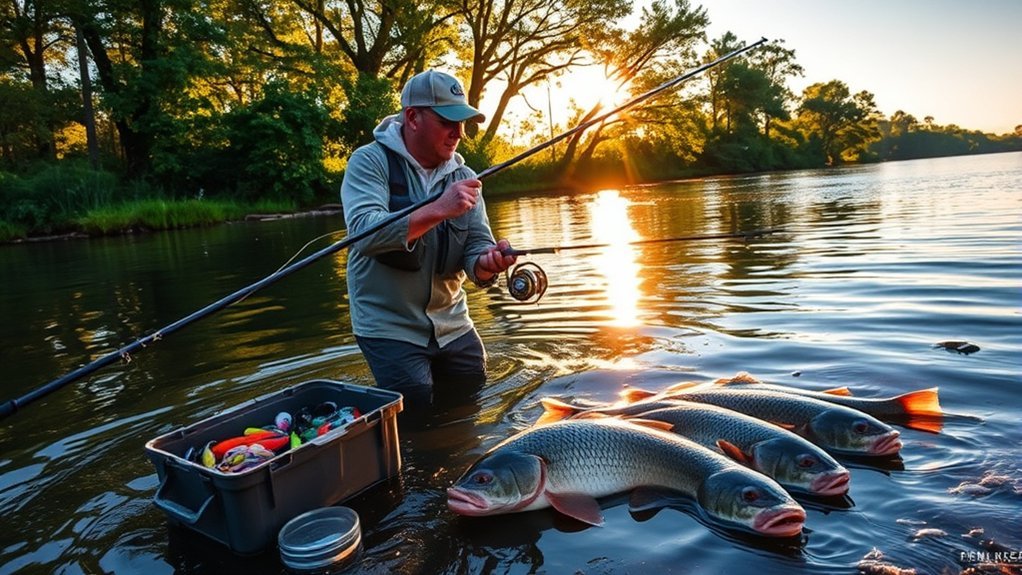
For general bank fishing, a rod around seven feet long with medium or medium-heavy power is a practical starting point. It offers enough length for casting while remaining manageable around common shore access. If you expect large blue or flathead catfish, heavy current, or substantial sinker weight, step up to a stronger rod matched to that load.
A 7- to 9-foot rod can help when you need more casting distance or want to keep line above shoreline grass, rocks, and brush. Shorter rods can be easier in wooded creeks, tight ponds, and banks where the casting lane is restricted. Rod length should therefore match the bank as much as the fish.
Baitcasting reels are popular for heavier line and sinkers, but a sturdy spinning reel also works well and is often easier for beginners. More important than reel style is a smooth drag, adequate line capacity, and enough frame strength for the fish and sinker weight you plan to use.
For general channel cats, 15 to 20-pound monofilament is a useful baseline. Heavy cover, strong current, or flathead fishing may require 30-pound or heavier line. Braid provides high strength and sensitivity, while abrasion-resistant monofilament or leader material can help around rock, timber, and shells.
For hook size, start by matching the gap to the bait. A 4/0 to 6/0 circle or bait hook is a useful general reference for channel-cat fishing, but there is no single correct size for every bait and species. Large chunks of cut bait and large live baitfish require more hook gap than a small worm or liver presentation.
Do not forget the rod holder. A secure holder maintains a steady rod angle, keeps tackle out of shoreline debris, and prevents a hard-running fish from pulling an unattended rod into the water. Push or anchor the holder firmly enough for the bank material and expected fish size.
How to Catch Catfish From the Bank: Step by Step
A repeatable setup makes bank fishing faster and reduces tangles after dark. Read the bank first, choose a target feature, then build the presentation for that water instead of casting randomly.
- Choose the target species. Decide whether your water is more likely to produce channel, blue, or flathead catfish and select bait accordingly.
- Pick a target zone. Aim for a drop-off, current seam, creek mouth, tailwater lane, cover edge, channel edge, or deep hole you can reach safely from shore.
- Set the rod holder first. Position it so the rod tip points toward the bait and the line does not rub across rocks, weeds, or branches.
- Tie the presentation. Start with a sliding sinker rig, then adjust it for current, mud, weeds, or snags if needed.
- Add fresh bait. Match it to the species and leave the hook point exposed.
- Cast with control. Smooth acceleration keeps soft bait on the hook better than a violent cast.
- Set the drag. Keep enough pressure to control the fish without locking the system so tightly that a surge breaks the line.
- Watch the rod and line. Small taps may be baitfish or a cautious catfish; a steady load or purposeful movement is a stronger signal.
- Reel into a circle-hook bite. Let the rod load, then apply steady pressure instead of snapping the rod upward.
- Change something if the spot stays dead. Try another depth, casting angle, bait, presentation, or bank position instead of repeating the same cast indefinitely.
If multiple rods are legal, use them to test different water rather than putting every bait in one place. For example, fish one bait nearer a shallow feeding area, one on a drop-off or channel edge, and another near deeper water or cover. Once one zone produces consistent bites, concentrate more of your effort there.
How Long Should You Fish a Bank Spot Before Moving?
There is no universal timer for catfish. Fish move with forage, current, light, water level, temperature, and weather. Your goal is to give a strong-looking location a fair test without turning patience into hours of repeating an unproductive presentation.
Channel catfish commonly feed strongly at night, and low-light periods are especially useful for shore anglers because fish may move into shallower, reachable water. Daylight can still produce fish, particularly around deeper cover, current, stained water, shade, or changing water levels. Flatheads can also become more active at night around shallow feeding routes.
As a practical starting rule rather than a biological cutoff, 30 to 45 minutes with fresh bait in a strong location is enough to consider a change if nothing happens. Before abandoning the bank completely, move one bait deeper, cast closer to a current edge, shorten or lift the leader, change bait size, or test another casting angle.
A bump-and-run approach works well on long fishable banks. Test one high-percentage feature, then move to the next point, riprap section, creek mouth, bend, or current break if the first area remains inactive. The objective is to locate feeding fish rather than prove that one chosen spot must eventually produce.
If you see taps without solid hookups, inspect the bait and hook before moving. Small fish may be stripping soft bait, scales may be covering the hook point, or the bait may be poorly matched to the hook. Refresh it, make one useful adjustment, and then move if the pattern does not improve.
Night Fishing Safety and Fish Care
Many bank-catfish trips happen after dark, so organize for safety before the first cast. Bring a headlamp, backup light, charged phone, pliers or a dehooking tool, landing net, and small first-aid kit. If you fish alone, tell someone where you are going and when you expect to leave.
Choose stable footing before darkness makes the bank harder to read. Mud, wet rock, riprap, steep slopes, and sudden drop-offs deserve extra caution. Keep rods, tackle, bait containers, and loose line out of walking paths, and monitor storms or changing water levels.
Catfish do not have a venomous “stinger,” but their dorsal and pectoral spines can cause a painful puncture. Control smaller fish carefully behind the spines and use a landing net for fish that are too large to hold securely. A wet rubber or knotless net is preferable when you plan to release the fish.
For release, minimize air exposure and handling, support the body, and dehook the fish in or close to the water when practical. If a hook is swallowed deeply and cannot be removed without major damage, cutting the line close to the hook can be safer than prolonged digging.
If you keep catfish, follow all size and harvest rules and chill the catch promptly. If you release a large fish, support its body and return it once it can maintain balance and swim under its own power.
Common Bank Catfishing Mistakes
Most bank-catfishing problems are not caused by a lack of expensive gear. They usually come from fishing unproductive water, using the wrong presentation for the bottom, or failing to adjust after the fish show you something.
- Fishing random water: Cast toward structure, depth changes, current seams, travel routes, or visible bait activity instead of empty shoreline.
- Assuming farther is always better: The best feature may be close to shore. Cast to the structure or depth change, not automatically to maximum distance.
- Using stale or damaged bait: Refresh bait when it loses scent, becomes mushy, or gets stripped from the hook.
- Setting a circle hook too hard: Reel steadily and let the rod load instead of making a violent traditional hookset.
- Fishing every bottom the same way: Lift bait above mud and weeds or adjust the leader when snags make a standard bottom rig inefficient.
- Ignoring local rules: Check bait, harvest, rod-number, access, size, and night-fishing regulations before the trip.
- Using weak rod holders: A hard-running catfish can pull an unsecured rod into the water.
- Leaving a strong spot immediately: Give a high-percentage feature a useful test, especially during active feeding periods.
- Staying indefinitely in dead water: Change depth, bait, presentation, or location when repeated casts produce no useful signs.
Source Note: This September 2026 update cross-checked catfish biology and common rigging guidance against Minnesota Department of Natural Resources and Missouri Department of Conservation information, catch-and-release handling against NOAA Fisheries guidance, and fish-consumption guidance against the U.S. Environmental Protection Agency. Local fishing and bait regulations can differ, so verify the rules for your exact waterbody before fishing.
Frequently Asked Questions
What is the best rig for bank fishing catfish?
The best all-around starting rig is a sliding sinker rig with a sinker on the main line, a swivel, a leader, and a circle hook. It keeps bait near the bottom without forcing the fish to move the full sinker immediately. Over weeds, soft mud, or snaggy bottom, lift the bait with a small peg float or use another suspended presentation.
What is the best bait for bank catfish?
The best bait depends on species. Nightcrawlers, chicken liver, prepared bait, and small cut bait are practical channel-cat choices. Fresh cut bait is a strong option for blue catfish. Flatheads usually favor live baitfish or large natural baits near cover where those bait methods are legal.
Where should you bank fish for catfish?
Good bank spots include creek mouths, dam tailwaters, outside river bends, bridge structure, riprap, logjams, deep pools, current seams, and drop-offs close to shore. Look for places that combine food, depth, cover, or current within casting range.
How do you catch catfish from a bank?
Choose a reachable bank feature such as a depth change, current seam, creek mouth, cover edge, or deep pool. Match the bait to the target species, use a sliding sinker or another bottom-oriented presentation, keep the hook point clear, watch for a steady rod load, and change depth or location if the water stays inactive.
What time is best for bank catfishing?
Dusk, night, and early morning are productive starting periods, especially for channel catfish. Daytime can still be good around deep cover, current, stained water, shade, or changing water levels. Season, species, forage, current, and local conditions can shift the best window.
Should your bait sit on the bottom for catfish?
Bottom fishing is a strong starting approach because channel, blue, and flathead catfish commonly use bottom structure and cover. However, the bait does not always need to lie directly on the substrate. A small peg float or float rig can suspend it above weeds, soft mud, rocks, or snags.
Can you catch catfish from the bank during the day?
Yes. Night fishing is productive for many channel-cat situations, but daytime bank fishing can work around deeper pools, timber, shade, current breaks, stained water, or periods of changing water level. During daylight, focus more heavily on structure and depth instead of assuming fish must be shallow.
How far should you cast for catfish from the bank?
There is no ideal casting distance. Cast to the best reachable feature, whether it is ten yards away or near the limit of your tackle. A drop-off, current seam, creek mouth, cover edge, or feeding flat close to shore is usually more valuable than an extra-long cast into featureless water.
What size hook should you use for bank catfish?
Match the hook to the bait first. A roughly 4/0 to 6/0 circle or bait hook is a practical general reference for channel-cat fishing, while large pieces of cut bait or large live baitfish may need a larger hook. Leave enough hook gap exposed for the point to work cleanly.
Conclusion
Learning how to catch catfish from the bank is mainly a process of putting the right bait in the right reachable water. You do not need a boat, but you do need to identify depth, current, cover, forage, or a travel route before you cast.
Start with a sliding sinker rig, bait matched to your target species, and a safe bank near a high-percentage feature. Test the water deliberately, then adjust bait, depth, presentation, or location when the fish do not respond. Check local fishing and fish-consumption rules before the trip, and treat every quiet spot as information that helps you make a better next cast.