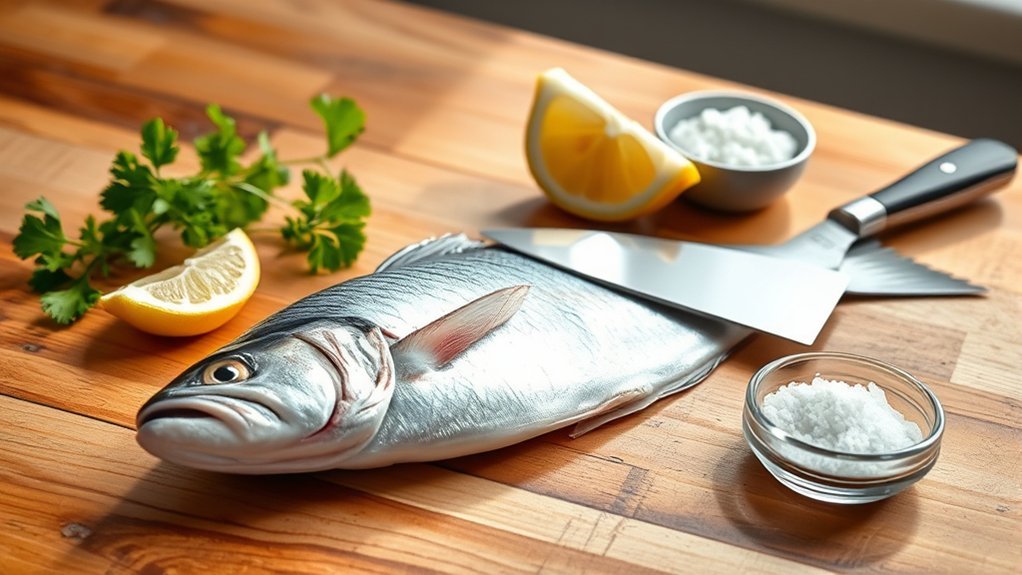
To clean a fish safely, keep it cold, decide whether you want it whole or filleted, scale it only if you will keep the skin, make a shallow belly cut if gutting, remove the entrails without puncturing them, rinse away blood and debris with cold clean water, then dry and chill the fish promptly. A sharp fillet knife, stable cutting board, clean hands, and ice make the process safer and help protect texture.
Last updated: September 11, 2026 — storage, food-safety, FAQ, source, and schema guidance reviewed against current FDA, EPA, NOAA, and FoodSafety.gov guidance.
Quick Answer
- Keep the fish cold on ice until you are ready to work.
- Dispatch it promptly if you are keeping it for food; bleed it only when appropriate for the species and your method.
- Scale it before cutting if you plan to keep scaly skin on the finished fish.
- If gutting, make a shallow cut from the vent toward the head and remove the entrails without puncturing them.
- Fillet or skin the fish if that is your preferred final cut.
- Briefly rinse cleaned fish with cold, clean water, avoid splashing, and pat it dry.
- Refrigerate it cold over draining ice or freeze it in moisture-proof packaging.
Key Takeaways
- Use a sharp fillet knife, a stable cutting board, cold clean water, towels, ice, and a dedicated waste container before you begin. Cut-resistant gloves are optional but useful around sharp fins and blades.
- Keep fish cold before and after cleaning to slow spoilage and protect meat quality.
- Make shallow cuts when gutting so you do not puncture the intestines or contaminate the flesh.
- Check local fish consumption advisories before eating fish from lakes, rivers, or coastal waters.
- Cook fish to an internal temperature of 145°F (63°C), or until the flesh is no longer translucent and separates easily with a fork.
At a Glance
| Time Required | Varies by fish size, species, final cut, and experience; beginners should work slowly rather than race a timer |
| Difficulty | Beginner-friendly with careful knife control and a clean setup |
| Tools Needed | Fillet knife, cutting board, scaler or spoon, gloves, clean water, ice, towels, and a waste container |
| Cost | Low if you already own a knife and cutting board; moderate if buying dedicated fish-cleaning tools |
Essential Tools for Cleaning Fish

A sharp, flexible fillet knife gives you better control around the backbone and ribs than a dull or very rigid blade. A 6–8-inch blade suits many small-to-medium fish, while a shorter blade can give more control on panfish and a longer blade can help on larger fish. Match the blade to the fish you clean most often and keep the handle dry enough to grip securely.
A sturdy plastic cutting board gives you a sanitary surface that can be washed and disinfected after use. A board with a non-slip base is even better because fish slime can make surfaces slick. A scaling tool or a simple spoon helps remove scales if you plan to cook the fish with the skin on. If you plan to skin the fillets, scaling may not be necessary.
A cut-resistant glove on the non-knife hand can add protection around sharp fins, bones, and blades, but it does not replace handwashing. A dedicated cleaning station keeps raw-fish juices away from ready-to-eat foods. Use food-safe storage containers, resealable bags, clean towels, and plenty of ice so cleaned fish can be dried, covered, and chilled promptly.
Prepare the Fish Before Cleaning
Good fish cleaning starts before the first cut. If you are keeping a legal fish for food, chill it promptly on ice and keep meltwater drained away. Cold fish is easier to handle, and fast chilling helps preserve texture and freshness. If you also practice catch-and-release, see how to handle fish safely for fish you plan to return to the water.
Before cleaning fish at the water, check the rules for that species and location. Regulations can cover cleaning stations, carcass disposal, possession limits, and whether a fish must remain identifiable during transport. Review fishing regulations basics, then confirm the current rules with the agency that manages the water you are fishing.
Warning: Never clean fish on the same surface you use for ready-to-eat foods unless the surface has been thoroughly washed and sanitized first. Raw fish juices can spread bacteria to vegetables, bread, utensils, and cooked food.
How to Clean a Fish Step by Step
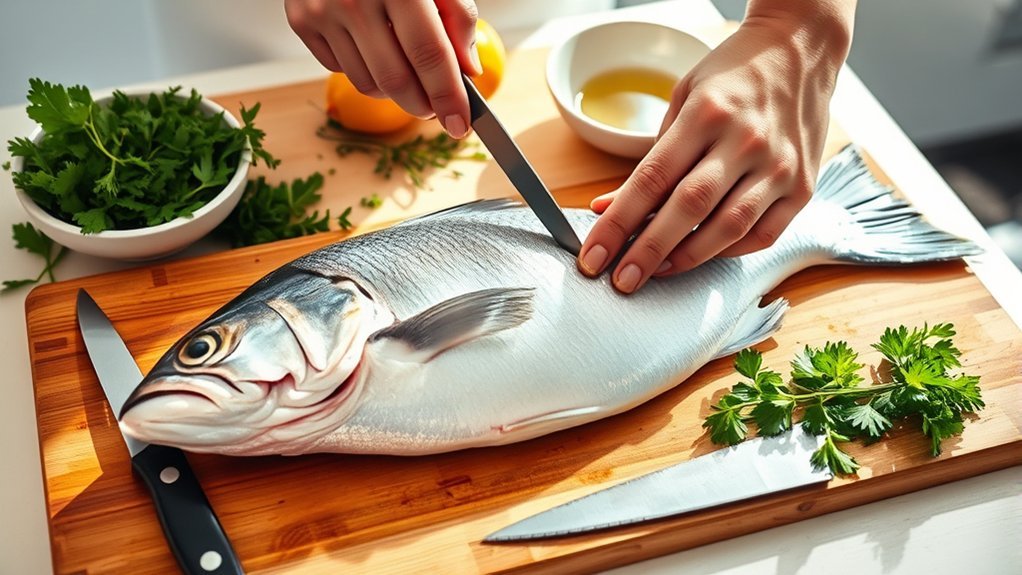
Decide on the final cut before you start. If you want to cook a scaly fish whole with the skin on, scale and gut it. If you want skinless fillets, you can usually skip scaling because the scales leave with the skin. Skin-on fillets are easier to prepare if you scale first. This general method fits many common round fish; flatfish and species with unusual bone or skin patterns need different cuts.
| Your Goal | Scale First? | Gut First? |
|---|---|---|
| Cook whole with skin | Yes, if the species has removable scales | Yes |
| Skin-on fillets | Usually yes | Optional, depending on species and method |
| Skinless fillets | Usually no | Optional, depending on species and method |
Should You Bleed a Fish Before Cleaning?
If you are keeping a fish for food, dispatch it promptly using a method that is appropriate for the species and legal where you are fishing. Bleeding is common for some species and preparations, but it is not a required step for every fish. If you choose to bleed the fish, do it immediately after dispatch and then chill the fish on ice.
| Step | Action | Purpose |
|---|---|---|
| 1. Dispatch | Use a species-appropriate, lawful method | Stop unnecessary handling before cleaning |
| 2. Bleed if appropriate | Follow species-specific guidance | Reduce retained blood when that method benefits the final preparation |
| 3. Chill | Place the fish on ice promptly | Protect freshness before the next cut |
Cleaning Station Preparation
A well-prepared cleaning station reduces slips and cross-contamination. Wash and sanitize the work surface and tools before you begin. Use a stable, washable cutting board; if you want a disposable liner for easier cleanup, use a clean food-safe liner rather than placing the fish directly on printed paper.
Gather your essential tools: a sharp knife, scaler if needed, sturdy cutting board, clean towels, cold potable water, and a waste disposal container. Keep a separate cooler or pan with ice ready for cleaned fish. Do not leave fillets soaking in meltwater; keep them covered and cold, with drainage when possible.
How to Scale a Fish
If you plan to cook a scaly fish with the skin on, scale it before gutting or filleting. Hold the fish firmly by the tail and scrape from tail to head with a fish scaler, spoon, or the back of a knife. Use short strokes and work carefully around the fins. When finished, briefly rinse away loose scales with cold clean water and pat the fish dry so it is easier to grip.
Work slowly around the belly, fins, and collar because scales often cling to these areas. If you are filleting and removing the skin, you can usually skip scaling. However, scaling first can still make the fish easier to grip and cleaner to handle.
Pro Tip: Scale fish outdoors or inside a deep sink when possible. Scales scatter easily, and a contained work area saves cleanup time.
How to Gut and Rinse a Fish
When you’re ready to gut and rinse your fish, start by positioning it securely on your cutting board. Insert the knife tip into the anal vent and make a shallow cut toward the head. Keep the blade tip shallow so you do not puncture the intestines or spill waste into the body cavity.
Carefully open the belly and remove the entrails without crushing them. Scrape away the dark kidney tissue and bloodline along the backbone. Then briefly rinse the cavity with cold potable running water to remove blood and loose tissue. Keep the water pressure controlled so raw-fish juices do not splash onto nearby food or surfaces.
If needed, cut out the vent area in a small V shape for complete cleaning. Rinse the exterior only as needed, wipe away loose scales or tissue, and pat the fish dry before cooking, filleting, or storage. Avoid soaking cleaned fillets for long periods because it can soften the texture.
| Step | Action |
|---|---|
| 1. Open the belly | Make a shallow cut from the vent toward the head |
| 2. Remove entrails | Lift them out without puncturing them |
| 3. Rinse briefly | Use cold potable water and avoid splashing |
| 4. Dry | Pat the fish dry before the next step |
How to Fillet a Fish
To fillet a fish, place it on its side with the back facing you. Cut behind the gill plate and pectoral fin until the knife reaches the backbone. Turn the blade toward the tail and guide it along the backbone with smooth, controlled strokes.
Let the bones guide the knife instead of forcing the blade. Once the first fillet comes free, flip the fish and repeat the same process on the other side. Trim away rib bones, feel along the flesh for pin bones, and remove them with fish tweezers or small pliers. Pin-bone patterns differ by species, so use the fish’s anatomy rather than forcing one identical cut on every catch.
How to Skin a Fish Fillet
If you prefer skinless fillets, place the fillet skin-side down on the cutting board. Hold the tail end firmly, angle the knife slightly downward, and slide the blade between the skin and flesh. Use a gentle sawing motion while pulling the skin tight with your other hand.
Keep the knife close to the skin to reduce waste. A sharp, flexible fillet knife makes this step much easier because it follows the natural shape of the fillet without cutting too deeply into the meat.
Safety Considerations When Cleaning Fish

Fish-cleaning safety has three separate parts: whether the fish is safe to eat from that waterbody, whether you keep raw juices away from other food, and whether the fish is cooked safely. A fish can look and smell fresh yet still contain chemical contaminants; the EPA says those pollutants cannot be identified by sight or smell. Check local advisories, use clean tools and surfaces, and cook the fish to a safe internal temperature.
How Do You Know If a Fish Is Safe to Eat?
Start with the advisory for the exact waterbody where the fish was caught. Advisories can vary by species, size, location, and the person eating the fish. The EPA fish-advisory guidance explains that chemical contamination cannot be confirmed from a fish’s appearance or smell, so freshness checks and contamination checks are not the same thing.
Freshness still matters. Fresh fish typically have firm flesh, bright or clear-looking eyes, shiny skin, and a mild smell. Sour, rancid, strongly fishy, or ammonia-like odors are warning signs. The FDA advice about eating fish also provides extra guidance for pregnant or breastfeeding people and children.
For cooking safety, FoodSafety.gov lists 145°F (63°C) for fin fish, or until the flesh is no longer translucent and separates easily with a fork.
| Safety Check | What to Use |
|---|---|
| Chemical contamination | Current local, state, Tribal, or territorial fish advisory |
| Freshness | Firm flesh, clean smell, bright appearance; reject sour, rancid, or ammonia-like odors |
| Cooking temperature | 145°F (63°C) |
Handle Sharp Tools
Knife control matters as much as food safety. Use a sharp fillet knife because a dull blade needs more force and is harder to guide along bones and skin.
A cut-resistant glove is optional but useful on the non-knife hand when you are learning or working around sharp fins and bones. Keep the work area uncluttered, cut away from your body, keep your non-dominant hand out of the cutting path, and wash your hands even if you wore gloves.
Familiarizing yourself with the anatomy of the fish also helps you work safely. Knowing where the backbone, ribs, pin bones, fins, and gill plates are makes each cut more controlled and reduces the chance of injury.
Prevent Cross-Contamination
Raw fish can spread bacteria through juices, slime, knives, gloves, boards, and towels. Use separate tools and surfaces for raw fish and ready-to-eat foods. Wash your hands before and after cleaning fish, especially before touching phones, coolers, door handles, or cooked food.
After cleaning, wash knives, boards, sinks, and counters with hot soapy water. Then sanitize the work area with a food-safe sanitizer or diluted bleach solution according to the product label. Let surfaces air-dry when possible.
How to Store Cleaned Fish Safely
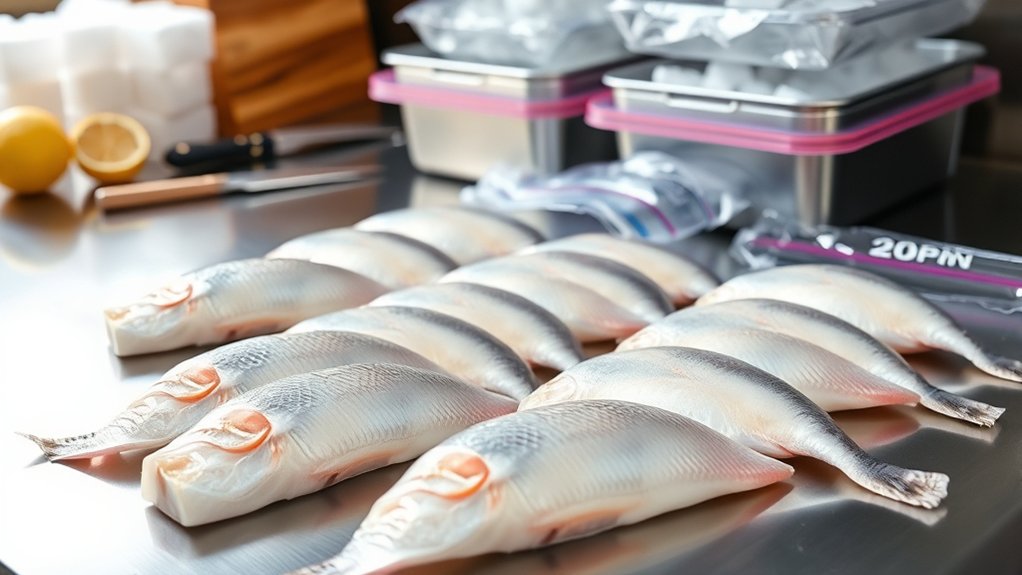
Store cleaned fish cold, covered, and dry enough that it is not sitting in meltwater. Use airtight containers, sealed bags, or tight wrapping to limit contamination and moisture loss.
When refrigerating, keep the fish at 40°F (4°C) or below. NOAA recommends packing dressed whole fish on ice and keeping sealed fillets or steaks cold with ice while allowing meltwater to drain. Replace ice as needed so the fish stays cold without soaking.
If you’re planning to freeze cleaned fish, wrap it tightly in plastic wrap followed by aluminum foil, freezer paper, or a freezer-safe bag to reduce freezer burn. Remove as much air as possible before sealing. Label the package with the date and type of fish for easy identification.
For simple home planning, use fresh cleaned fish quickly. The FDA advises using refrigerated seafood within 2 days after purchase, while the FoodSafety.gov cold-storage chart lists fin fish at 1–3 days in the refrigerator at 40°F (4°C) or below. Freezer-quality times vary by species: fatty fish are listed at about 2–3 months, while lean fish are commonly listed at about 4–8 or 6–8 months at 0°F (-18°C) or below. These freezer ranges are quality guidance, not a rule that every fish keeps the same length of time.
Cooking Methods for Your Fresh Catch
Choose the cooking method by fish thickness, fat content, and whether you are cooking whole fish or fillets. Pan-frying suits thin fillets and small fish, baking works well for thicker portions and whole fish, grilling favors firmer fish or skin-on portions, poaching uses gentle moist heat, and broiling gives fast top heat for browning.
Do not rely on one fixed minutes-per-side rule because thickness, starting temperature, equipment, and species change the cooking time. Use a food thermometer when practical. FoodSafety.gov recommends 145°F (63°C) for fin fish, or cooking until the flesh is no longer translucent and separates easily with a fork.
Note: Cooking time changes with thickness, species, starting temperature, and equipment. Temperature and doneness cues are more reliable than a universal timer.
Common Fish Cleaning Mistakes to Avoid
One common mistake is waiting too long before chilling or cleaning the fish. Warm fish spoils faster and can develop a stronger flavor. Keep your catch cold from the start, especially on hot days.
Another mistake is cutting too deeply during gutting. A deep cut can puncture the intestines and spread waste inside the cavity. Use shallow knife strokes and take your time. Rushing often creates more mess and more waste.
Many beginners also forget to remove the bloodline, kidney tissue, or small pin bones. These parts can affect taste and texture. After rinsing, run your fingers lightly over the fillet to feel for bones, then pull them with fish tweezers or small pliers.
Where to Check Rules and Fish Advisories
Use authoritative sources for the parts of fish cleaning that change by location. Check your state, Tribal, territorial, or local fish-and-wildlife agency for harvest, cleaning, transport, and carcass-disposal rules. For consumption advisories, start with the EPA fish and shellfish guidance. For seafood handling and vulnerable groups, use current FDA fish-consumption guidance.
Technique videos can still help with hand position and knife angle, but match the demonstration to the species you actually caught. Round fish, flatfish, catfish, and large saltwater fish do not all break down the same way.
Frequently Asked Questions
How do I know when the fish is fresh?
Look for firm flesh, bright or clear-looking eyes, shiny skin, and a mild clean smell. Sour, rancid, strongly fishy, or ammonia-like odors are warning signs. Freshness does not tell you whether a wild-caught fish contains chemical contaminants, so check the local fish advisory separately.
Can I use regular kitchen knives for cleaning fish?
Yes, but a sharp flexible fillet knife is usually easier to guide along the backbone, ribs, and skin. Whatever knife you use, keep the handle secure and the blade sharp enough that you do not need excessive force.
Do I have to gut a fish before filleting it?
Not always. Many anglers fillet common round fish without opening the belly first, while other methods start with gutting. For beginners, choose the method that gives you the best control for that species and avoid cutting into the viscera. If you plan to cook the fish whole, gut it before cooking.
How often should I sharpen my fillet knife?
Sharpen or hone the knife when the edge stops slicing cleanly and starts needing extra pressure. Frequency depends on the blade steel, cutting surface, bones, scales, and how much fish you process. Check the edge before each cleaning session instead of using a fixed number of uses.
Is it necessary to wear gloves while cleaning fish?
No. Gloves are optional. A cut-resistant glove on the non-knife hand can protect against sharp fins, bones, and accidental blade contact, while disposable food-safe gloves can reduce direct contact with raw juices. Gloves still need to be changed when contaminated, and you should wash your hands before and after cleaning.
Do I need to scale a fish before cleaning it?
Scale the fish if you plan to cook it with scaly skin on. If you plan to remove the skin from the fillets, scaling is usually optional because the scales leave with the skin.
Should I rinse fish after cleaning?
Briefly rinse a cleaned whole fish or fillet with cold, clean water when you need to remove blood, scales, or loose tissue, then pat it dry. Keep the water pressure controlled to avoid splashing raw-fish juices, and do not soak fillets for long periods.
How long can cleaned fish stay in the refrigerator?
Use cleaned fish quickly and keep it at 40°F (4°C) or below. FDA consumer guidance uses a 2-day rule for refrigerated seafood after purchase, while FoodSafety.gov lists fin fish at 1–3 days depending on type. Keep the fish covered and cold, and keep meltwater drained away.
How soon should I clean a fish after catching it?
Clean it as soon as practical, especially in warm weather. If you cannot clean it right away, keep it thoroughly chilled on ice and out of meltwater. Temperature control matters more than racing a universal timer.
Sources
- FDA Advice About Eating Fish — fish-consumption guidance, including advice for pregnant or breastfeeding people and children.
- EPA Choose Fish and Shellfish Wisely — current local-advisory and contamination guidance for wild-caught fish.
- FoodSafety.gov Safe Minimum Internal Temperatures — 145°F cooking guidance for fin fish.
- FoodSafety.gov Cold Food Storage Chart — refrigerator and freezer-quality ranges for fatty and lean fin fish.
- NOAA Fisheries Seafood Storage and Handling — icing, wrapping, drainage, and cold-storage practices.
- FDA Selecting and Serving Fresh and Frozen Seafood Safely — freshness, cross-contamination, refrigeration, and handling guidance.
Conclusion
For your next catch, make the key decisions in this order: confirm the fish is legal to keep, chill it promptly, choose whole fish or fillets, scale only when the finished skin needs it, use shallow controlled cuts, and keep raw-fish juices away from other food.
Before eating a locally caught fish, check the current waterbody advisory. Store cleaned fish cold and covered, and cook fin fish to 145°F (63°C) or until the flesh is no longer translucent and separates easily with a fork.