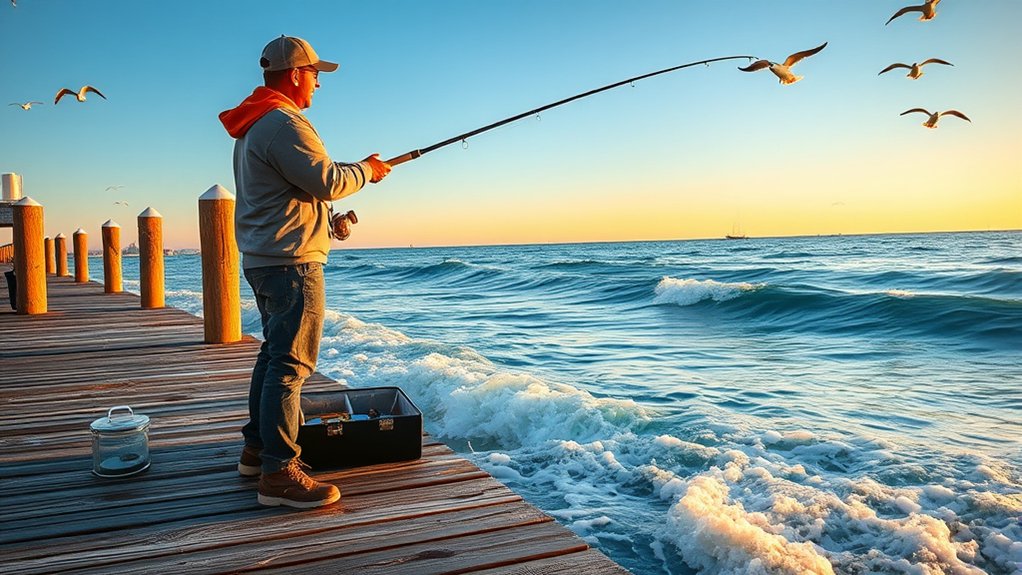
Funny enough, you might pick up your first saltwater rod the same day a neighbor talks about their catch. You do not need a boat, expensive gear, or years of experience to begin. You need to understand the main types of saltwater fishing, choose a basic rod-and-reel setup, learn a few simple rigs, and fish places where beginners can practice safely. Once you know how to cast, pick bait, read tides, and handle a hooked fish, you can start with confidence.
Quick Answer
To start saltwater fishing, use a 7-foot medium or medium-heavy spinning rod, a 3000–4000 size spinning reel, 15 lb monofilament or 20 lb braid with a fluorocarbon leader, basic hooks, sinkers, pliers, and a valid saltwater fishing license. Begin from piers, beaches, jetties, or calm inshore spots.
Key Takeaways
- Start with shore-friendly spots such as piers, surf, jetties, bays, and inshore flats before trying offshore trips.
- A 7-foot spinning rod with a 3000–4000 size reel handles many beginner saltwater situations.
- Use simple rigs, fresh bait, and local advice instead of buying too much tackle at first.
- Check tides, weather, size limits, bag limits, and license rules before every trip.
- Wet your hands, use pliers, reduce air exposure, and release fish carefully when you are not keeping them.
At a Glance
| Time Required | 1–2 hours to set up and practice; half-day trips are ideal for beginners |
| Difficulty | Beginner-friendly with basic casting, knot, and safety practice |
| Tools Needed | Spinning rod, spinning reel, line, leader, hooks, sinkers, bait, pliers, net, ruler, license, and sun protection |
| Cost | Low to moderate; start with one reliable combo and a small tackle box |
Types of Saltwater Fishing You Should Know
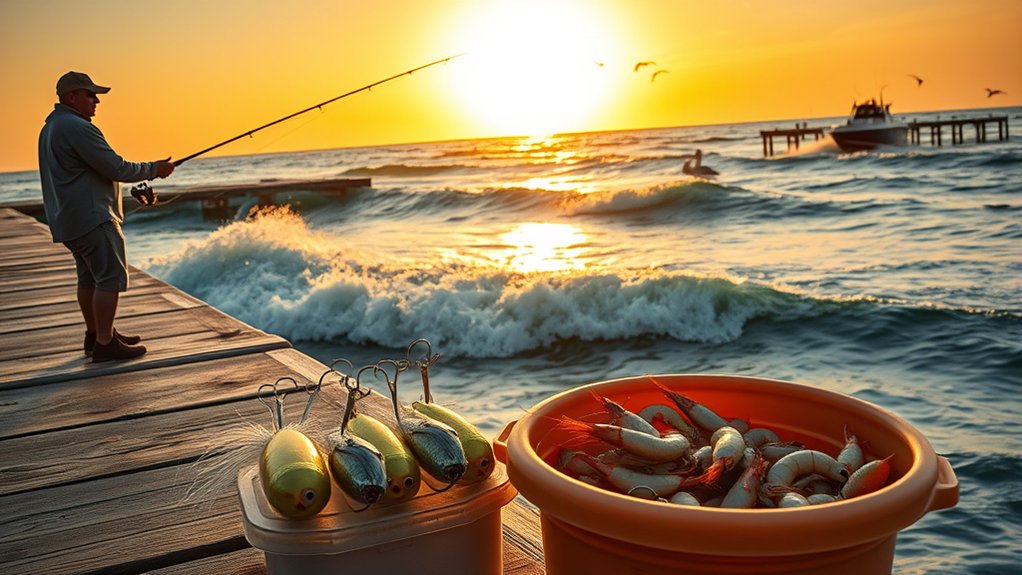
When you’re getting into saltwater fishing, it helps to know the main styles so you can pick the right gear, bait, and spots. Each type has its own pace, cost, safety concerns, and common target species.
Inshore saltwater fishing covers shallow habitats such as flats, backwaters, channels, marsh edges, bridges, and bays. You might pursue flounder, spotted sea trout, redfish, snook, sheepshead, or similar species using lighter tackle, quiet movement, and accurate casts.
Inshore fishing targets shallow flats, backwaters, channels, and bays where lighter tackle, stealth, and smart tide timing often matter more than long casts.
Surf fishing puts you on the shoreline or wading into the wash. It is accessible for beginners and can be effective for bluefish, whiting, pompano, striped bass, flounder, and other coastal fish. You need longer casts, durable bait rigs, and awareness of waves, currents, and beach traffic.
Bay fishing blends protected water, saltwater variety, and easier access. You can use live shrimp, baitfish, cut bait, spoons, soft plastics, or popping corks to chase sport fish in calmer coastal water.
Pier fishing gives you a low-stress platform to learn lines, knots, timing, and fish handling without buying a boat. You can watch experienced anglers, ask local questions, and practice casting around structure.
Jetty fishing places you near rocks, current breaks, and bait movement. It can be productive, but slippery rocks, waves, and snags make footwear and safety extra important.
Deep-sea fishing aims at bigger offshore fish such as tuna, mahi-mahi, sailfish, marlin, grouper, and snapper. It usually requires a larger boat, specialized setups, and more planning. Beginners often learn faster by booking a licensed charter before buying offshore gear.
As a new saltwater angler, choose the style that matches your comfort level. Skill, safety, budget, access, and target species should guide your first trips.
Essential Rods, Reels, and Line for Beginners
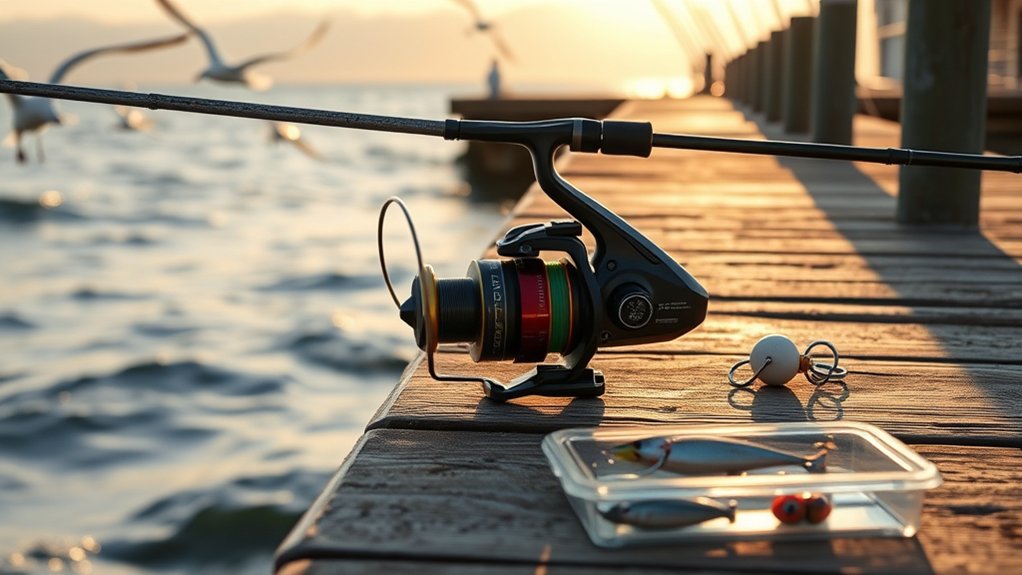
You’ll want a versatile setup that can handle casting, jigging, bait fishing, and light bottom fishing. For many beginners, a 7-foot medium or medium-heavy spinning rod paired with a 3000–4000 size spinning reel is the easiest place to start.
Start with 15 lb monofilament if you want simple handling and fewer tangles. Move to 20 lb braid with a 15–25 lb fluorocarbon leader once you want better sensitivity, longer casts, and stronger hooksets around current or structure.
Keep your line, guides, drag, and spinning reel clean. Saltwater damages gear quickly when you ignore it. Rinse rods and reels lightly with fresh water after each trip, dry them, and store them away from direct sun.
Rod and Action Types
Start with a 7-foot medium or medium-heavy spinning rod and a 3000–4000 size reel. This combo gives you versatility for many inshore saltwater species while keeping casting and handling straightforward.
Rod action affects how the rod bends. A fast-action rod bends more near the tip and helps with sensitivity and hooksets. A moderate-action rod bends deeper and can feel more forgiving when fish surge or shake near the surface. For beginners, medium power with moderate-fast or fast action gives a useful mix of feel, control, and backbone.
Use 15 lb fishing line to start if you want a forgiving setup. Monofilament stretches, handles well, and helps you learn without fighting wind knots all day. As you gain confidence, braid with a fluorocarbon leader can help when targeting structure, deeper water, or larger fish.
Set your reel drag to about one-third of the line’s breaking strength as a starting point. For 15 lb line, that means roughly 5 lb of drag. This practical approach gives you control without snapping line during sudden runs.
| Feature | Purpose |
|---|---|
| Rod | Leverage, casting distance, and bite detection |
| Action | Balance between sensitivity and shock absorption |
| Reel | Line storage, drag control, and retrieve speed |
| Line | Strength, handling, stretch, and abrasion resistance |
| Upgrade | Braid plus fluorocarbon leader for sensitivity and stealth |
Reel Sizes Explained
Pick a 4000-size spinning reel for most inshore saltwater work. You get enough line capacity and drag for common species without overcomplicating your setup.
Reel sizes vary by brand, so use them as general guidance rather than strict rules. A 2500–3500 size reel suits smaller targets, light lures, and 10–15 lb braid. A 4000–5000 size reel handles bigger fish, stronger current, heavier lures, and structure with 20–30 lb braid.
Pair a 3000 or 4000 size spinning reel with a 7-foot medium-heavy rod for balanced power and sensitivity during inshore fishing. For surf fishing, you may prefer a longer 8- to 10-foot rod and a larger reel to improve casting distance and line control.
For beginners, spool with 15 lb monofilament line to reduce tangles and build confidence. As your skill grows, move toward braided line for better feel, stronger hooksets, and longer casts.
Choose gear that helps you fish boldly, but do not overbuy. One balanced spinning combo teaches more than a garage full of rods you do not understand yet.
Line Choices and Leaders
One smart approach is to begin with 15 lb monofilament on your 7-foot medium or medium-heavy rod and 3000–4000 size spinning reel. Monofilament is forgiving, affordable, and easier to manage while you learn.
Braided line offers less stretch, more sensitivity, and strong casting performance. It also shows mistakes quickly. Wind knots, rough drag settings, and poor knots can cost fish. Pair braid with a fluorocarbon leader when fish are line-shy or when you need more abrasion resistance near shells, rocks, docks, or bridge pilings.
Practice knot techniques before your first trip. A double uni knot is reliable for joining leader to main line, while an improved clinch knot or loop knot can work well for hooks and lures. Trim tag ends neatly so they do not catch weeds or weaken the knot.
| Line Type | Common Beginner Strength | Purpose |
|---|---|---|
| Monofilament fishing line | 15 lb. | Beginner-friendly, forgiving, and easy to handle |
| Braided line | 10–20 lb. | Sensitivity, casting distance, and stronger hooksets |
| Fluorocarbon leader | 15–25 lb. | Lower visibility and better abrasion resistance |
Pro Tip: Test every knot before you cast. Pull firmly on the main line and leader. If the knot slips, curls, or looks burned from friction, retie it before fishing.
Terminal Tackle and Must-Have Tools
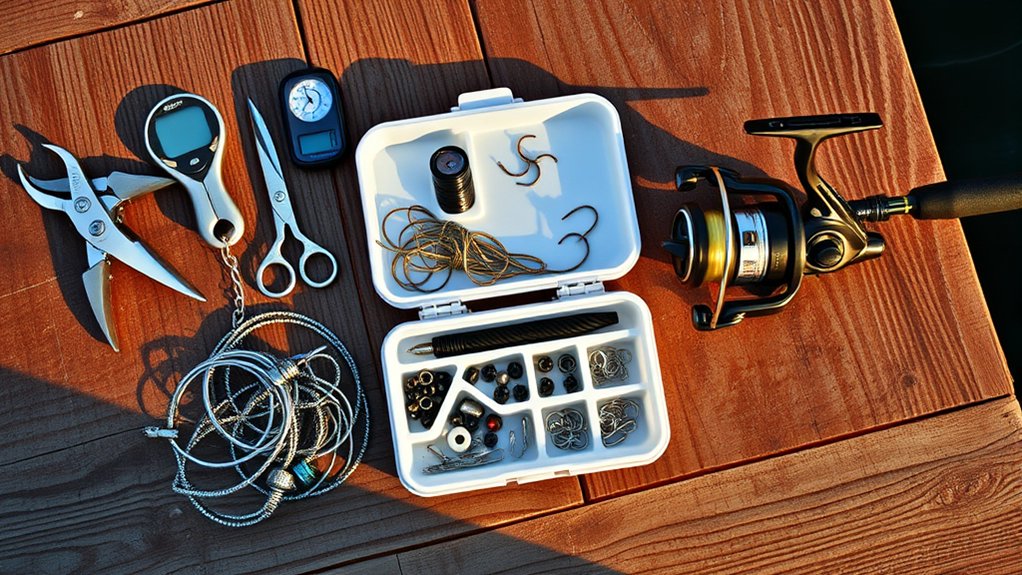
When you head out saltwater fishing, having the right terminal tackle and tools keeps you organized, safer, and more effective. Hooks, weights, floats, swivels, leaders, and a selection of lures let you match conditions and species without carrying too much.
Pack terminal tackle that covers common situations: J-hooks and circle hooks in 1/0–5/0, split shot, egg sinkers, pyramid sinkers, barrel swivels, popping corks, and floats. Add lures that mimic local baitfish, shrimp, crabs, or small prey.
Bring lead jigheads paired with soft plastic tails for redfish, trout, flounder, snook, and similar inshore targets. Carry suspended lures, small spoons, bucktail jigs, and topwater plugs when baitfish are active near the surface.
Organize everything in a tackle box so you can change rigs fast. Separate hooks from soft plastics, rinse metal tools after saltwater use, and replace rusty tackle before it fails.
Carry needle-nose pliers, a landing net, fish grippers, a measuring ruler, a bait knife, sunscreen, polarized sunglasses, a small first-aid kit, and a towel. If you fish at night or near rocks, add a headlamp and non-slip footwear.
Tie fluorocarbon leaders to braid with a double uni knot to keep strength and low visibility. Don’t forget your fishing license. It gives you legal access and helps support responsible fisheries management.
Simple Saltwater Rigs for Beginners
Begin with rigs that are easy to tie, easy to fix, and proven across many coastal species. You do not need complicated setups to catch fish. You need rigs that keep bait in the strike zone and match the bottom, current, and target species.
Fish Finder Rig
A fish finder rig works well for surf fishing and bottom fishing. It uses a sliding sinker, swivel, leader, and hook. The sinker holds the rig near the bottom while the bait can move naturally. Use this rig with cut bait, shrimp, mullet, squid, or sand fleas.
Popping Cork Rig
A popping cork rig is great for shallow bays, grass flats, and calm inshore water. The cork makes noise and keeps bait suspended above grass or shell. Use live shrimp, small baitfish, or soft plastics under the cork when targeting trout, redfish, and similar species.
Jighead and Soft Plastic
A jighead with a paddle tail, shrimp imitation, or curly tail grub is simple and versatile. Cast it near structure, let it sink, then retrieve with short hops or steady swimming motion. Use lighter jigheads in shallow water and heavier ones when current or depth increases.
High-Low Rig
A high-low rig uses two hooks above a sinker. It is common for pier, bridge, and surf fishing because it lets you present bait at two levels. Keep the rig simple and avoid using more hooks than local rules allow.
Note: Circle hooks often work best when you let the fish pull against the line before reeling steadily. Avoid a hard hookset unless your rig, bait, and hook style call for it.
Casting Techniques and Rigging Basics
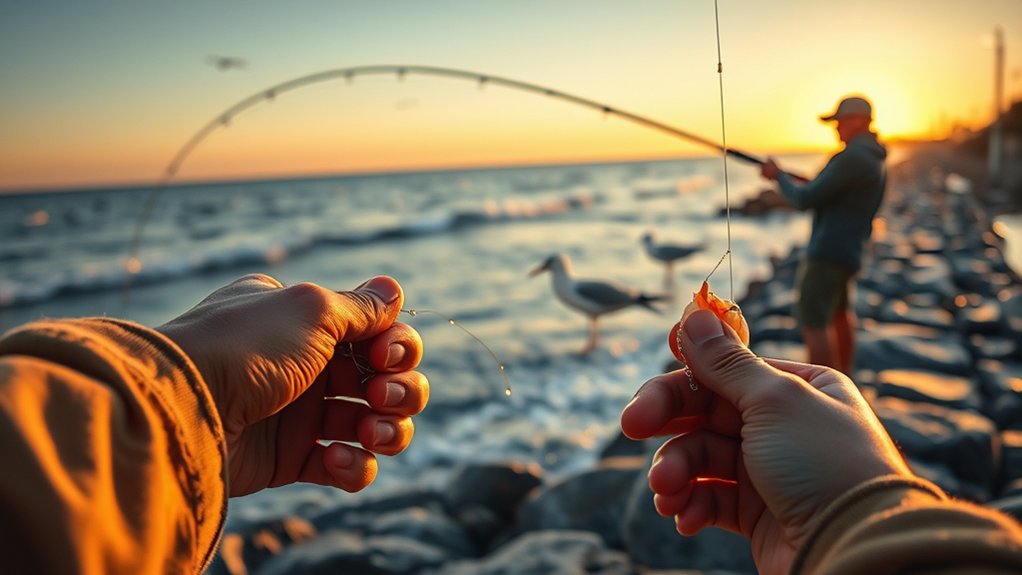
Start by mastering a smooth casting motion. Hold the line with your index finger, flip the bail, pull the rod back, swing it forward, and release the line as the rod points toward your target.
Practice that casting technique until it feels natural. Smooth timing matters more than force. A hard, jerky cast can snap bait off the hook, create tangles, or send your lure off target.
Keep your fishing line properly spooled and tangle-free. If line twists around the rod tip, stop and fix it before casting. A small twist can turn into a broken tip or lost lure.
For rigging basics, select J-hooks or circle hooks in the 1/0–5/0 range and seat them firmly in your bait so they do not fly off during your cast.
When fishing near the bottom, pair a lead jighead with a soft-plastic tail to mimic prey movement. Let the lure touch bottom, then lift, pause, and reel slowly. Many bites happen on the fall.
Learn terminal tackle such as weights, floats, swivels, and leaders. These small items control bait depth, reduce line twist, improve casting, and keep your presentation natural.
Treat your saltwater fishing gear like a tool for control. Precise casting techniques and solid rigging basics give you confidence and better chances at landing fish.
Use these fishing tips every trip: check your drag, inspect your leader, wet your knots before tightening, and replace damaged line before it costs you a fish.
Bait and Lure Selection for Inshore Trips
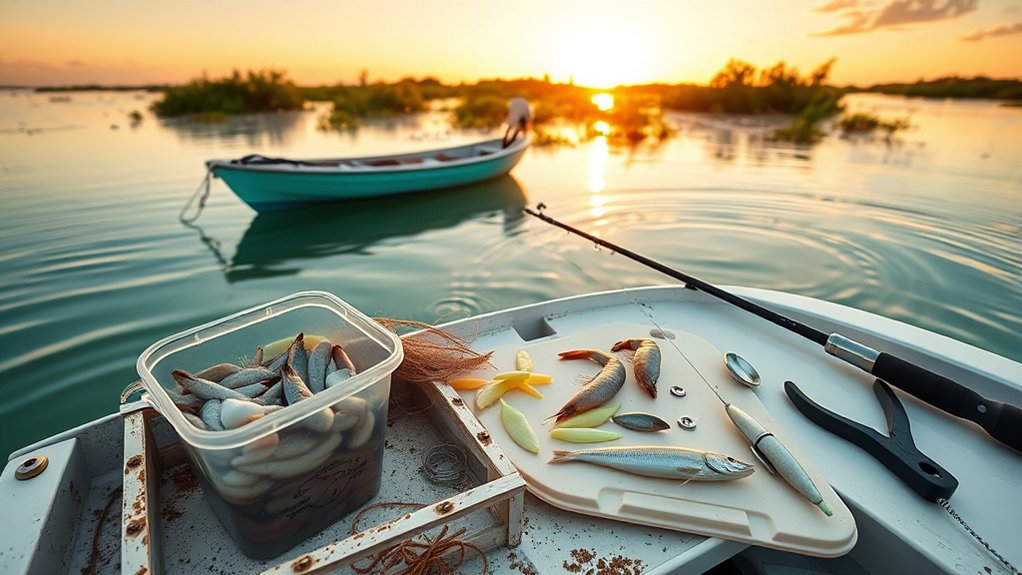
Choose your bait and lures to match the local forage and feeding window. Doing that will improve hookups on inshore trips because predators usually want food that looks natural, moves naturally, and appears at the right depth.
You’ll want live bait like shrimp, mullet, mud minnows, pinfish, or small baitfish when targeting redfish, snook, flounder, and speckled trout. Natural scent and movement trigger strikes faster than most artificials when fish are cautious.
Fresh dead bait can also work well. Cut mullet, squid, shrimp, clams, and fish strips often attract bottom feeders, surf species, and larger predators. Keep bait cool and replace it when it washes out or loses scent.
For artificial options, use soft plastic lures. Paddle tail shads in 3–5 inch sizes on 1/8 or 1/4 ounce jig heads mimic prey in shallow flats, channels, and current seams. Use natural colors in clear water and brighter or darker profiles when water is stained.
When fish feed at the surface during low light, switch to topwater lures such as walking plugs, poppers, or similar surface baits for explosive visual strikes. Work them slowly at dawn, dusk, or under cloudy skies.
Keep gold metal spoons and white bucktail jigs in your box for versatility. Their flash, vibration, and simple action work across structure, current seams, grass edges, and open water.
Always match size, shape, and color to local baitfish and the moment’s mood. That focused selection lets you fish confidently and consistently on inshore fishing trips.
How to Read Tides, Weather, and Water Conditions
Tides and weather often decide whether a saltwater trip feels easy or frustrating. Fish move with bait, current, light, water temperature, and pressure changes. You do not need to master every detail at once, but you should check conditions before leaving home.
Moving water usually beats still water. Incoming tides can push bait into grass, troughs, flats, and backwaters. Outgoing tides can drain bait through cuts, creek mouths, bridge openings, and channels. Fish often wait where current carries food to them.
Wind direction matters too. Onshore wind may push bait toward beaches but can make casting harder. Offshore wind may flatten the surf but can also change where bait gathers. Strong wind, lightning, rough surf, or fast current can make beginner trips unsafe.
Water clarity affects lure choice. Clear water often favors natural colors, lighter leaders, and subtle movement. Stained water may call for vibration, scent, contrast, or brighter profiles.
Look for signs of life. Diving birds, nervous baitfish, shrimp jumping, slicks, current seams, oyster bars, and shadow lines near docks can all point to feeding fish.
Warning: Do not fish exposed beaches, rocks, jetties, bridges, or piers during lightning, dangerous surf, storm surge, or strong currents. Conditions can change quickly in saltwater.
Best Places to Fish: Piers, Surf, and Jetties
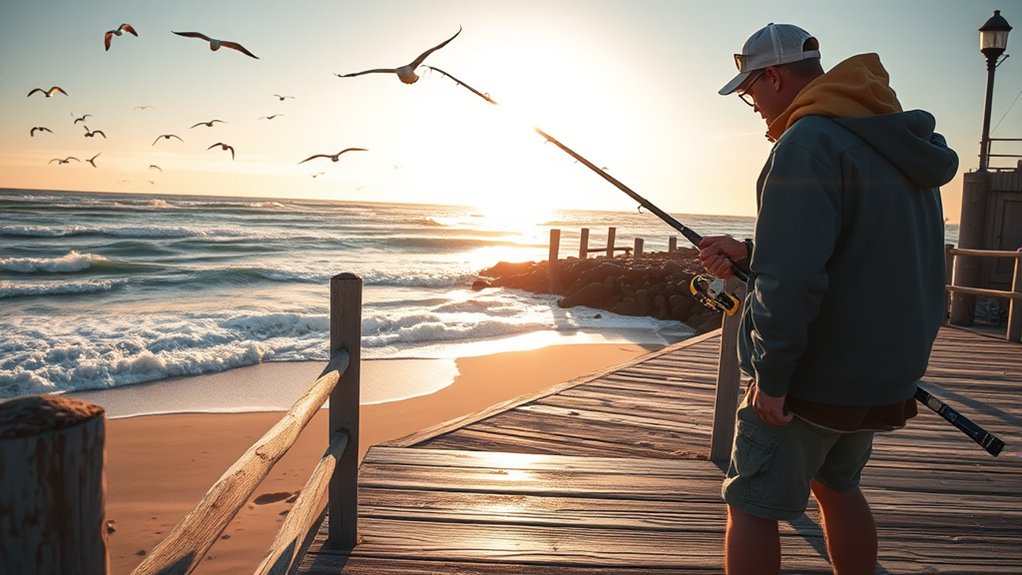
Three prime shore-based options give you easy, productive access to saltwater species without a boat: piers, surf, and jetties.
Piers offer steady platforms for gear and casting. During moving tides, you can hook snook, flounder, redfish, sheepshead, bluefish, Spanish mackerel, and other fish depending on your coast.
Surf fishing lets you work migrating schools. Bluefish, whiting, pompano, striped bass, flounder, and other species may respond well to timed casts from the shoreline at dawn and dusk.
Jetties concentrate bait and predators. Fish the corners, tips, current edges, and calmer pockets with shrimp, baitfish, jigs, or spoons. Watch your footing because wet rocks and wave wash can be dangerous.
- Scout local fishing spots through bait shops, tide charts, public access maps, and recent local reports.
- Time your outings for moving water, dawn, dusk, or cooler parts of the day when feeding may improve.
- Use live bait near structure on jetties and piers; vary casting distance when surf fishing.
- Respect other anglers on crowded piers; rotate spots, avoid crossing lines, and give people room to land fish.
Practice these tactics, trust local knowledge, and you’ll gain the confidence to fish smarter and more often in saltwater.
Landing, Handling, and Releasing Fish Safely
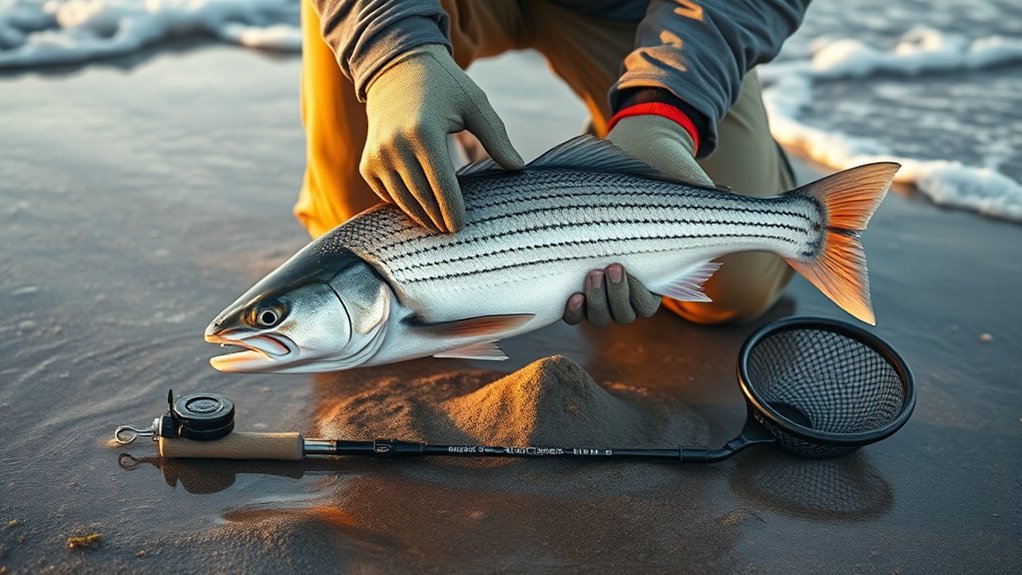
When you land a fish, keep constant tension on the line, lift the rod tip, and use a landing net for larger catches. This helps you avoid losing the hook, breaking the line, or injuring the fish.
Handle fish with wet hands or gloves, use needle-nose pliers and a fish gripper to remove hooks quickly, and limit out-of-water time as much as possible. Shorter handling time usually improves release success.
Follow local size and bag limits and use careful release techniques so fish recover and populations stay healthy.
Proper Landing Techniques
Landing fish safely starts with control. Keep your rod tip up to reduce slack and maintain steady pressure so the hook stays set. Use a landing net for larger fish or guide small fish carefully to hand.
Do not lift large fish by the line or rod tip. That can break the line, snap the rod, or tear the hook free. Instead, lead the fish toward the net head-first and lift smoothly.
You’ll want efficient, humane steps that protect both you and the fish.
- Elevate the rod to maintain tension and tire the fish without breaking the line.
- Use a landing net designed for saltwater to secure larger catches safely.
- Guide small fish gently to hand or into a net, avoiding sudden drops or twists.
- Keep handling brief, wet your hands, and follow catch-and-release handling techniques and local rules.
Safe Release Methods
Start by minimizing air exposure. Keep the fish in the water as you control and land it, using a rubber- or soft-mesh net when needed. Lift it out only for quick, essential tasks such as hook removal, measuring, or a fast photo.
Practice safe release methods to minimize stress and protect the fish’s chances. Wet your hands or gloves to avoid stripping the protective slime layer. Support larger fish horizontally instead of holding them only by the jaw.
Use a landing net with soft mesh to reduce scale and skin damage. Avoid dragging fish across dry sand, hot pavement, rocks, or pier decking.
Master hook removal techniques. Use needle-nose pliers and work calmly to extract hooks with minimal trauma. If a fish is deeply hooked or visibly injured, cut the line close to the hook rather than digging aggressively.
Revive tired fish by holding them upright in the water facing into gentle current until they kick away on their own. Your restraint helps their survival.
Conservation, Licensing, and Responsible Angling
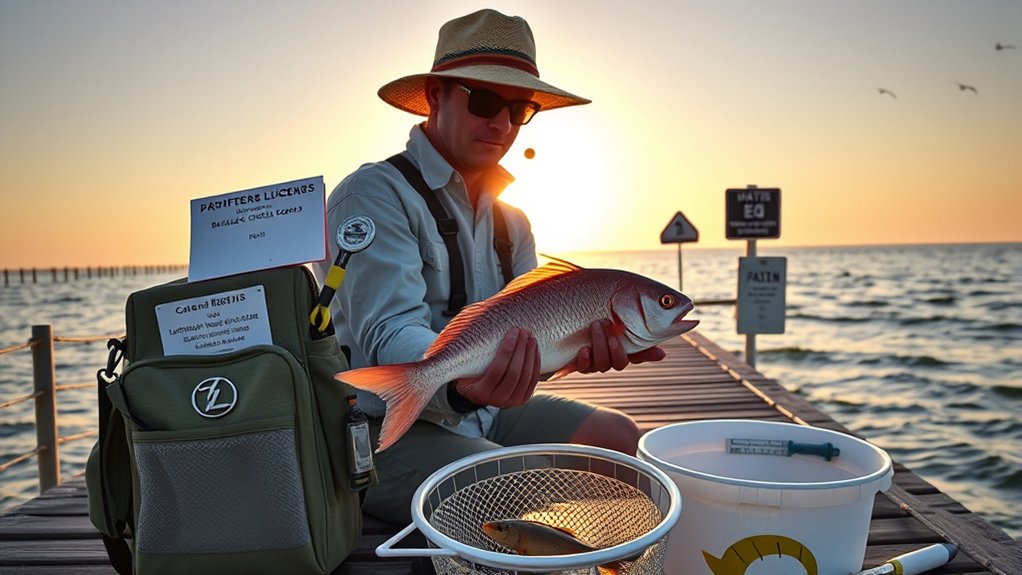
Although you’re out to enjoy the water, you’re also responsible for protecting it. Get a valid saltwater fishing license, follow local size and bag limits, and practice quick, careful catch-and-release handling to reduce stress on fish.
Enjoy the water, but protect it: carry a saltwater license, respect limits, and handle catch-and-release fish with care.
You’ll fish with more confidence when your actions support conservation and sustainable practices. Learn fishing regulations for your area before each trip because seasons, slot limits, closed areas, and gear rules can change.
- Obtain licensing online, by phone, or through approved vendors before fishing where a license is required.
- Follow size and bag limits so fish populations can reproduce and remain available.
- Practice proper catch and release: minimize air time, use wet hands or gloves, and revive tired fish before release.
- Join habitat restoration and beach cleanups to protect shorelines, grass beds, reefs, and public access.
Act deliberately. Learn how overharvest, habitat loss, litter, and careless handling affect fisheries. Model ethical behavior and support access that protects both anglers and coastal ecosystems.
Common Beginner Mistakes to Avoid
Most saltwater mistakes are easy to fix once you know what to watch for. Beginners often struggle because they rush gear choices, ignore conditions, or fish the wrong depth.
- Using freshwater gear without rinsing it: Salt corrodes reels, hooks, pliers, and guides quickly. Rinse and dry your gear after every trip.
- Fishing dead water: Look for current, bait, birds, structure, shade, and tide movement instead of casting randomly.
- Buying too much tackle: Start with a few hooks, sinkers, leaders, jigheads, soft plastics, spoons, and bait rigs. Add gear after you learn your local fishery.
- Ignoring regulations: Check license rules, seasons, slot limits, bag limits, and protected species before keeping any fish.
- Setting drag too tight: A locked-down drag can snap line or pull hooks. Start around one-third of your line strength and adjust as needed.
- Handling fish with dry hands: Dry hands can damage the slime coat. Wet your hands or use fish-friendly gloves.
- Standing too close to waves or rocks: Watch surf, current, boat wakes, and slippery surfaces, especially near jetties.
Basic Saltwater Fishing Trip Checklist
A short checklist helps you avoid forgotten gear and unsafe choices. Pack light, but make sure you have the essentials before you leave.
- Saltwater fishing license or proof of exemption
- Rod, reel, line, leader, and backup leader material
- Hooks, sinkers, swivels, floats, jigheads, and a few lures
- Fresh bait, artificial bait, or both
- Needle-nose pliers, line cutters, fish gripper, and landing net
- Measuring ruler, local regulations, and a cooler if you plan to keep legal fish
- Polarized sunglasses, hat, sunscreen, water, and weather-appropriate clothing
- First-aid kit, phone, light, and non-slip footwear for rocks, piers, or wet surfaces
- Trash bag for used line, bait packaging, and any litter you find
Frequently Asked Questions
How do you fish in saltwater as a beginner?
Start with a simple spinning combo, a valid saltwater fishing license, basic hooks and sinkers, and easy access spots such as piers, beaches, jetties, or bays. Learn one or two rigs, use fresh bait, check tides, and practice safe fish handling before trying more advanced techniques.
What is the 90/10 rule in fishing?
The 90/10 rule says many fish often concentrate in a small percentage of the water. Instead of casting everywhere, focus on high-percentage areas such as current seams, bait schools, docks, rocks, drop-offs, troughs, grass edges, and tide drains.
What should you get to start saltwater fishing?
Get a 7-foot medium or medium-heavy spinning rod, a 3000–4000 size spinning reel, 15 lb monofilament or 20 lb braid, fluorocarbon leader, hooks, sinkers, swivels, bait, pliers, a ruler, and a tackle box. Add a net, polarized sunglasses, sunscreen, and local regulations.
What pound line should you use for saltwater fishing?
Use 15 lb monofilament for general beginner saltwater fishing. Move to 20–30 lb braid when fishing heavier structure, stronger current, larger species, or longer casts. Add a 15–25 lb fluorocarbon leader for abrasion resistance and lower visibility.
Is saltwater fishing better at high tide or low tide?
Moving tide often matters more than high or low tide alone. Incoming water can push bait into shallow areas, while outgoing water can pull bait through cuts, channels, and creek mouths. Fish the moving water and look for bait, current seams, and structure.
Can you saltwater fish from shore?
Yes. Shore fishing is one of the best ways to start. Beaches, piers, bridges, jetties, seawalls, public docks, and bays can all produce fish. Check access rules, watch your footing, and fish around moving water, structure, or visible bait.
Conclusion
You’ve learned the basics to get started: rod, reel, line, tackle, rigs, casting, baits, safe handling, licensing, and conservation. Start inshore from a pier, beach, jetty, or bay, then build skill one trip at a time.
Keep your first setup simple, practice knot work at home, and use local bait shop advice to narrow down the best tide, bait, and spot. Saltwater fishing rewards patience, observation, and steady improvement.
Most importantly, follow local regulations, handle fish carefully, and leave the water cleaner than you found it. Every responsible cast helps protect the fishery you came to enjoy.
Sources
- NOAA Fisheries Recreational Fishing — supports responsible saltwater fishing, conservation, and fishery stewardship.
- NOAA Tides & Currents — supports checking tides, currents, and coastal conditions before fishing.
- U.S. Fish & Wildlife Service Fishing — supports fishing access, conservation, and responsible angling practices.
- Florida Fish and Wildlife Conservation Commission Saltwater Recreational Fishing — example of state-level saltwater rules, licensing, bag limits, and size limits.
3 thoughts on “Saltwater Fishing Basics: Beginner’s Guide”