Last updated: September 11, 2026
If you are learning ocean fishing for beginners, keep your first trip simple: choose one safe shore or inshore location, use a basic spinning setup, learn one bait rig and one lure setup, and check the weather, tides, and fishing rules before you leave. For many beginners, a roughly 7-foot medium or medium-heavy spinning rod with a saltwater-capable reel is easier to learn than specialized surf, offshore, or conventional tackle.
This guide focuses on the decisions that matter on your first ocean-fishing trips: where to start, how to match your gear to the location, which simple rigs to learn, how to read water and surf structure, and how to handle fish safely. For a broader overview of the different styles of saltwater angling, see our saltwater fishing basics for beginners.
Quick Answer
For a first shore or inshore ocean-fishing setup, start with a medium or medium-heavy spinning rod around 7 feet long and a saltwater-capable spinning reel in roughly the 3000 to 4000 class. About 15 lb monofilament or 10 to 20 lb braid with a suitable leader covers many light inshore situations, but line, reel, hook, and sinker size should change with the fish, structure, current, surf, and the rod manufacturer’s ratings. Start from a public pier, protected bay, calm beach, or another safe access point and use simple bait such as shrimp, squid, cut bait, or local baitfish.
Key Takeaways
- A spinning setup is usually the simplest way to learn casting, bait rigs, and basic lure fishing without adding the backlash learning curve of conventional or baitcasting tackle.
- Choose your fishing location first, then match the rod, line, leader, hook, and sinker to that location rather than buying one oversized setup for every situation.
- Learn one bottom rig and one simple lure setup before adding more tackle.
- Ocean safety comes first. Check the marine forecast, tide or current information, local regulations, and your escape route before you fish.
- Handle fish with wet hands, minimize air exposure, release unwanted fish quickly, and take every piece of line, hook, and trash home.
At a Glance
| First-Trip Prep | Practice one casting motion and one or two knots at home, then arrive early enough to check access, water movement, and safe footing before you rig. |
| Difficulty | Beginner-friendly from protected shore access, with extra caution needed around surf, rocks, tides, current, boats, and sharp hooks. |
| Tools Needed | Rod, reel, line, leader, hooks, sinkers, pliers, line cutters, bait or lures, measuring tool, required license or permit, drinking water, and location-appropriate safety gear. |
| Cost | Varies widely by location and what you already own. A basic shore setup requires fewer specialized items than offshore boat fishing or a guided charter. |
How Do You Start Ocean Fishing as a Beginner?
Your first goal is not to own every piece of tackle. It is to make a safe, controlled first trip where you can cast, keep a bait or lure in the strike zone, recognize a bite, land a fish, and pack up without damaging yourself, the fish, or your equipment.
- Choose the location first: A public pier, protected bay, calm beach, or easy-access shoreline is usually simpler than exposed rocks, heavy surf, or offshore water.
- Check conditions and rules: Review the marine forecast, tide or current predictions, access rules, license requirements, seasons, size limits, and bag limits before leaving home.
- Rig one simple setup: Start with a fish-finder or high-low bait rig, or use a jig head and soft plastic if you prefer artificial lures.
- Fish visible structure: Look for current seams, pier pilings, channel edges, troughs, cuts, sandbar edges, baitfish, or diving birds instead of casting randomly.
- Change one thing at a time: If nothing happens, first adjust depth, casting position, bait size, retrieve speed, or sinker weight before replacing your entire setup.
Which Ocean-Fishing Location Should a Beginner Choose?
| Location | Why Start There | Main Caution |
|---|---|---|
| Public pier | Stable footing, access to deeper water, and easy use of simple bait rigs. | Crowds, railings, sharp hooks, and fish lifting or netting from height. |
| Protected bay or flat | Good place to practice accurate casts, light tackle, and reading shallow structure. | Soft bottom, oysters, changing water depth, and fast tidal movement in channels. |
| Calm beach | Teaches surf structure, bottom rigs, and how waves reveal troughs and sandbars. | Breaking waves, rip currents, changing surf, and wading hazards. |
| Jetty | Strong current edges and structure can concentrate bait and fish. | Wet rocks, waves, snags, sharp structure, and difficult fish landing. |
| Kayak or small boat | Provides access beyond the shoreline and lets you move between productive areas. | Wind, current, boat traffic, navigation, cold-water exposure, and emergency planning. |
Essential Saltwater Gear: Rods, Reels, and Lines

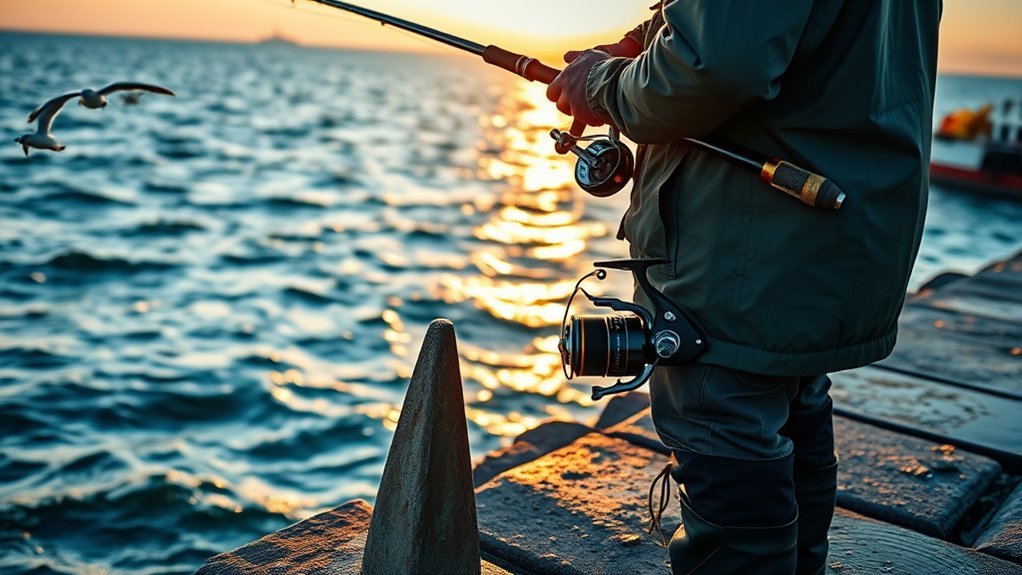
A good first setup should match your fishing location rather than trying to cover everything from calm flats to heavy offshore fishing. For many shore and light-inshore beginners, a rod around 7 feet in medium or medium-heavy power paired with a saltwater-capable spinning reel is a practical place to start.
A reel in roughly the 3000 to 4000 size class is common for light inshore use, but reel numbering is not standardized between manufacturers. Check the reel’s line-capacity specifications and match the reel to the rod, target fish, and line instead of choosing by the size number alone.
For main line, roughly 15 lb monofilament or 10 to 20 lb braid covers many lighter inshore situations. Monofilament has stretch and is inexpensive, while braid has a thinner diameter for its strength and transmits bites and bottom contact more directly. Use a monofilament or fluorocarbon leader when abrasion, visibility, shell, rocks, pilings, or rough fish mouths make a separate leader useful.
Increase tackle strength when the location requires it. Heavy surf, bridge pilings, large fish, sharp rocks, and strong current can justify heavier line or a different rod. Calm flats, small species, and open water may not.
Do not overlook reel quality. Saltwater can accelerate corrosion on exposed metal components. Choose equipment intended for saltwater use when practical and follow the reel manufacturer’s cleaning and maintenance instructions after each trip.
After fishing, remove loose sand and salt, rinse or wipe equipment as recommended by its manufacturer, dry it, inspect line and guides for damage, and store it in a dry place. Avoid forcing water or grit into reel openings while cleaning.
Note: Rod powers and reel sizes are not universal across every brand. Treat the numbers in this guide as starting ranges, then match the setup to your local fish, water depth, current, structure, casting load, and manufacturer ratings.
Basic Terminal Tackle Every Beginner Should Carry
Saltwater fishing gets easier when your tackle box stays simple. You do not need every hook, jig, lure, or sinker on the wall. Start with proven basics, then add items after you understand your local water.
- Hooks: Carry circle hooks and J-hooks that fit the bait and target fish. Smaller baits need smaller hooks, while larger baits and species need appropriately stronger tackle. Some fisheries have specific hook requirements, so check local regulations.
- Sinkers: Egg sinkers, pyramid sinkers, bank sinkers, and split shot cover different situations. Pyramid sinkers can grip sand in surf, while sliding sinkers allow bait to move with less resistance.
- Leaders: Keep monofilament or fluorocarbon leader material in strengths appropriate for your main line, structure, and target species.
- Swivels: Barrel swivels can reduce line twist in bait rigs and other setups that tend to spin.
- Pliers: Corrosion-resistant long-nose pliers or fishing pliers make hook removal and some terminal-tackle work safer.
- Line cutters: Carry scissors or cutters that cleanly cut the line you use.
- Measuring tool: Carry a ruler or fish measuring board so you can check legal size before keeping a fish.
Keep tackle organized in small boxes or bags. Separating hooks, sinkers, leaders, and lures by type lets you change one part of the presentation without rebuilding your entire kit.
Choosing Bait and Effective Lures

Choosing the right bait or lure starts with two questions: what local fish are eating and where in the water column they are feeding.
Live or natural bait such as shrimp, mullet, mud minnows, pinfish, squid, cut bait, fish strips, or another locally common forage can be effective because it provides natural scent and movement. Availability and legal bait rules vary by location, so check local regulations before collecting or using baitfish.
Artificial lures give you more mobility. Bucktail jigs, soft-plastic swimbaits, shrimp-style lures, topwater plugs, metal spoons, and suspending lures let you search different depths and retrieve speeds without rebaiting after every cast.
Match the presentation to the location. A jig can reach channels, bridge edges, and deeper current. A soft plastic can be worked slowly across flats. A spoon covers open water quickly. A popping cork can hold bait or a soft plastic above shallow grass or shell.
When you arrive at a new area, ask a local tackle shop or experienced local angler what bait is currently present, which species are legal to target or keep, and which part of the tide has recently been productive.
Pro Tip: If fish follow a lure but do not strike, change one variable at a time. Slow the retrieve, add a pause, change depth, or try a smaller profile before replacing the entire lure selection.
Simple Beginner Rigs for Ocean Fishing
You only need a few rigs to cover many early saltwater trips. Learn how each one presents the bait, then choose the rig based on bottom type, current, and depth.
Fish-Finder Rig
A fish-finder rig lets bait move while a sinker keeps the presentation near the bottom. Slide an appropriate sinker or sinker slide onto the main line, add a bead if the rig calls for one, tie on a swivel, and attach a leader and hook. It is useful for surf, pier, inlet, and other bottom-fishing situations where a natural bait presentation is useful.
Popping Cork Rig
A popping cork suspends bait or a lure above grass, shell, or shallow bottom. Twitching the cork creates sound and movement. It works well when you need to control presentation depth over shallow structure rather than dragging the bait across it.
High-Low Rig
A high-low rig positions one or two hooks above the sinker. It is useful from beaches and piers because it presents bait near the bottom while keeping the hooks off the seabed. Match the hook and bait size to the fish you expect to encounter.
Jig and Soft Plastic
A jig head with a soft-plastic tail is one of the simplest artificial setups to learn. Cast it, let it sink to the intended depth, then swim, hop, or slowly retrieve it. Use the lightest jig that lets you maintain contact with the strike zone without exceeding your rod’s printed lure-weight rating.
Casting Techniques and Rigging Basics
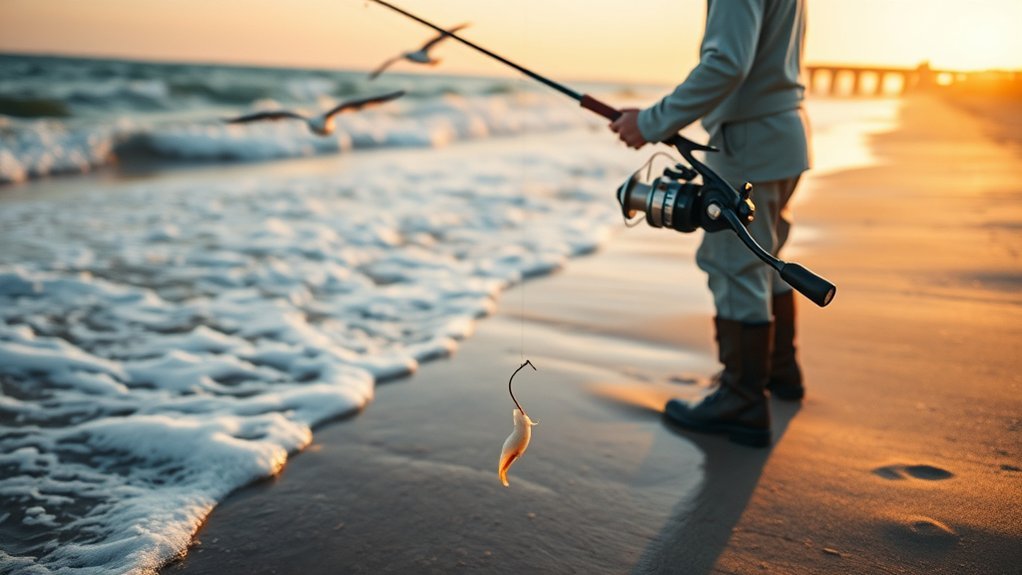
For consistent casts, focus on control rather than force. With a spinning reel, hold the line with your index finger, open the bail, bring the rod back smoothly, accelerate forward, and release the line as the rod moves toward the target.
Smooth casts beat hard casts. Control the line, load the rod gradually, and release toward the target instead of trying to overpower the cast.
Practice short, controlled casts before trying for maximum distance. Snapping the rod too hard can throw bait off the hook, create tangles, reduce accuracy, or overload a rod when a heavy sinker is attached.
For rigging, learn a reliable line-to-leader connection such as a double uni knot and one dependable terminal knot for hooks, swivels, or lures. Practice them at home until you can tie them correctly without rushing.
When bottom fishing, use the lightest sinker that reliably holds the presentation where you want it. Current, waves, water depth, bait size, and bottom type all affect how much weight you need. Never cast a sinker or lure that exceeds the rod manufacturer’s stated lure or casting-weight rating.
If your bait will not stay near the bottom, increase weight gradually. If the rig feels unnecessarily heavy or stops transmitting bites, reduce weight when conditions allow.
What Tide, Current, and Weather Should You Check Before Fishing?
Ocean fish do not spread evenly through the water. Tide stage, current direction, wind, waves, bottom contours, and bait movement can change where fish hold from one hour to the next.
Look for current seams, tide lines, sandbar cuts, bridge shadows, points, grass edges, oyster bars, drop-offs, and color changes. These features can concentrate moving water or bait and give you a more specific target than open, featureless water.
Low tide can reveal channels, holes, rocks, bars, and grass edges that disappear as water rises. Higher water can give fish access to shallow grass, marsh edges, docks, mangroves, and other flooded cover. Visiting the same safe location during different tide stages can teach you more than constantly changing fishing spots.
New and full moons are associated with spring tides, when the average difference between high and low water is larger. That does not mean every location will have the same current speed or that fishing will automatically improve. Use local tide and current predictions for the exact area you plan to fish. NOAA explains the relationship between moon phase and spring tides in its spring and neap tide guidance.
Wind also changes a fishing spot. Onshore wind may push waves and floating material toward the beach, while offshore wind can create different surface conditions and becomes especially important for kayaks and small inflatables. Strong wind, lightning, dense fog, or dangerous surf should end or postpone a beginner trip.
Warning: Do not fish exposed rocks, jetties, beaches, kayaks, or boats during lightning, dangerous surf, heavy fog, or rapidly worsening wind. The National Weather Service advises checking the latest marine forecast and warnings before going out.
Best Places to Fish: Pier, Surf, Jetty, and Flats

You will learn faster when you match your tactics to the spot. A pier provides fixed access to deeper water. Surf fishing teaches you to read waves and beach structure. Jetties concentrate current around hard structure but create extra footing and wave hazards. Flats reward quiet movement, accurate casts, and an understanding of changing water depth.
For a first trip, choose the location with the safest access and easiest conditions rather than the location that promises the biggest fish. A public pier, calm beach, or protected bay is often easier to manage than exposed rocks or heavy surf.
Pier Fishing Tips
Piers give beginners a stable platform and access to pilings, shade lines, bait schools, lights, and deeper water without using a boat.
A general-purpose spinning setup can handle many light pier situations, but the correct gear changes with pier height, current, structure, fish size, and how you will land a hooked fish. On a high pier, plan how you will safely land a fish before casting; a suitable pier net may be necessary instead of trying to lift a heavy fish on the fishing line.
Fish different depths rather than assuming everything is on the bottom. Watch for baitfish around pilings, shadows, lights, current edges, or the end of the pier. If one depth stays quiet, change your presentation depth before changing all of your tackle.
Species, seasons, size limits, and legal baits vary by coast and jurisdiction, so identify the fish and confirm the rules before keeping it.
Surf Casting Basics
Surf fishing is less about making the longest cast and more about putting bait or a lure into water that fish are using. Before setting up, spend a few minutes reading the beach.
Look for a trough or deeper strip of water running along the shoreline, breaks or cuts in an offshore sandbar, darker patches that suggest deeper water, points, baitfish, birds, and places where waves break differently from the surrounding beach. A gap in a consistent line of breaking waves can indicate deeper water through a bar.
Surf rods are usually longer than general inshore rods because they must cast larger rigs and keep line above breaking waves, but the right length and power depend on the beach and casting load. Match the sinker and bait to the rod’s printed rating instead of assuming a heavier sinker will automatically fish better.
Do not automatically cast as far as possible. Fish often use the first trough or other nearshore structure when food is present. Cast to a specific feature, watch what the current does to the rig, and move along the beach if a section remains inactive.
- Scout: Look for troughs, cuts, darker water, bait, birds, and changes in wave pattern.
- Rig: Choose a sinker and bait that match the surf while remaining within the rod’s rating.
- Target: Cast to a visible feeding lane or depth change instead of selecting distance alone.
- Adjust: Change distance, weight, bait, or position one step at a time.
Jetty and Flats Strategies
Jetties create current breaks at corners, pockets, tips, and submerged rocks. Those same features can snag hooks and create slippery footing, so beginners should choose calm conditions and remain well back from dangerous edges.
On flats, look for grass beds, potholes, sand edges, oyster bars, small channels, and other depth changes. Lower water can reveal the layout, while rising water can reopen shallow feeding areas.
| Location | Tip |
|---|---|
| Jetty corners | Work current edges with bait or a lure while keeping clear of unsafe rocks and breaking waves |
| Jetty tips | Watch current seams, submerged rocks, changing waves, and the route you would use to retreat safely |
| Flats | Cast quietly toward grass edges, potholes, channels, or other visible depth changes |
| Shift zones | Move with changing water depth and target places where current carries bait past structure |
Safety, Navigation, and Weather Preparedness
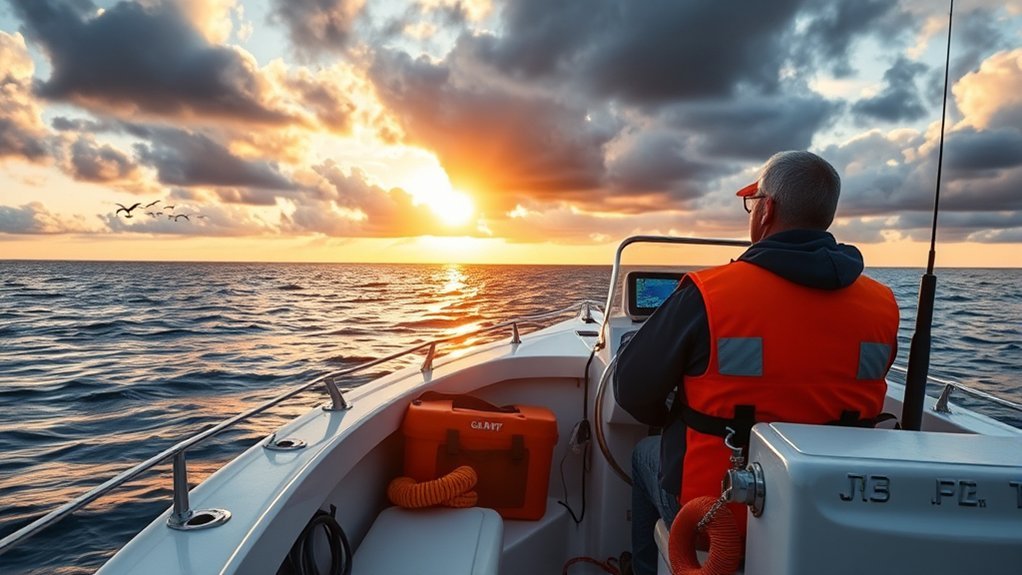
The ocean can change quickly, so check safety conditions before you rig a rod. The National Weather Service recommends checking the forecast before going on the water and making sure required or appropriate safety and communication equipment is available.
Wear a properly fitted life jacket when boating or kayaking and whenever conditions around strong current, cold water, or slippery exposed structure make accidental immersion a realistic risk. For boating, use a U.S. Coast Guard-approved life jacket that is the correct size and type for the activity.
If you fish from a boat, check required equipment, your route, fuel or battery range, navigation information, and communication equipment. A VHF marine radio is an important communication tool where appropriate. Tell a reliable person where you are going and when you expect to return; the U.S. Coast Guard recommends leaving a float plan.
Prepare before you cast: check the forecast, know your exit route, wear the right flotation when needed, and tell someone where you are going.
Monitor changing wind, waves, visibility, lightning, and marine warnings during the trip. The National Weather Service notes that marine conditions can change suddenly and recommends obtaining the latest marine forecast and warning information before setting out.
Cold water deserves separate attention. Air temperature does not tell you how your body will react after an unexpected fall into the water. In cold conditions, dress for the water temperature and use appropriate flotation and protective clothing. The National Weather Service specifically advises dressing for water temperature rather than air temperature.
If thunderstorms are possible, postpone exposed fishing. The National Weather Service warns that thunderstorms can quickly create hazardous wind, waves, lightning, and reduced visibility on the water.
Fish Handling, Landing, and Release Practices
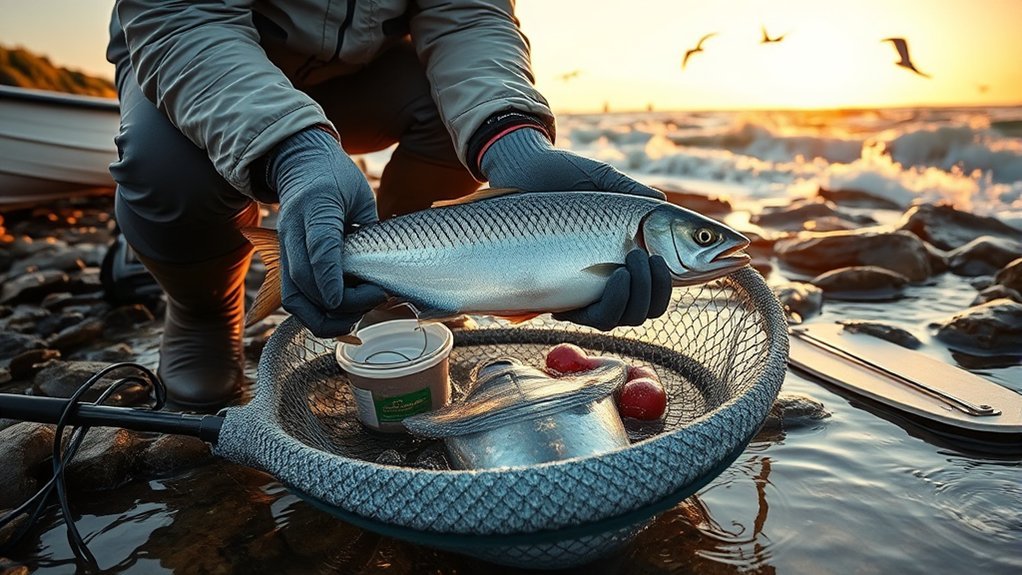
Plan how you will land and release a fish before the first bite. The goal is to control the fish without exhausting it or causing unnecessary damage.
When practical, use a wet soft-mesh or rubber landing net for fish that need netting. Keep fish in the water during dehooking when possible, and handle them only with wet hands. Avoid touching the eyes and gills.
NOAA Fisheries recommends minimizing air exposure; when a fish must leave the water, keep the handling period as short as practical. Support the fish’s body rather than suspending a heavy fish by its jaw or lip.
For catch-and-release, circle hooks, barbless hooks, or crimped barbs may make release easier, and some fisheries require particular hook types. Always check the local rule before choosing terminal tackle.
If a fish has swallowed a hook that cannot be removed easily, NOAA advises cutting the line as close to the hook as possible instead of causing additional injury by forcing the hook out.
Fish brought up from deeper water can suffer barotrauma. Signs can include bulging eyes, a bloated body, difficulty swimming down, or tissue protruding from the mouth. NOAA notes that fish caught in deeper water can benefit from being returned to depth with an appropriate descending or recompression device.
If you keep a legal fish, dispatch and chill it appropriately, follow local cleaning and transport rules, and keep only fish you can legally possess and use.
See the current NOAA Fisheries catch-and-release best practices for additional guidance.
Conservation, Regulations, and Responsible Angling
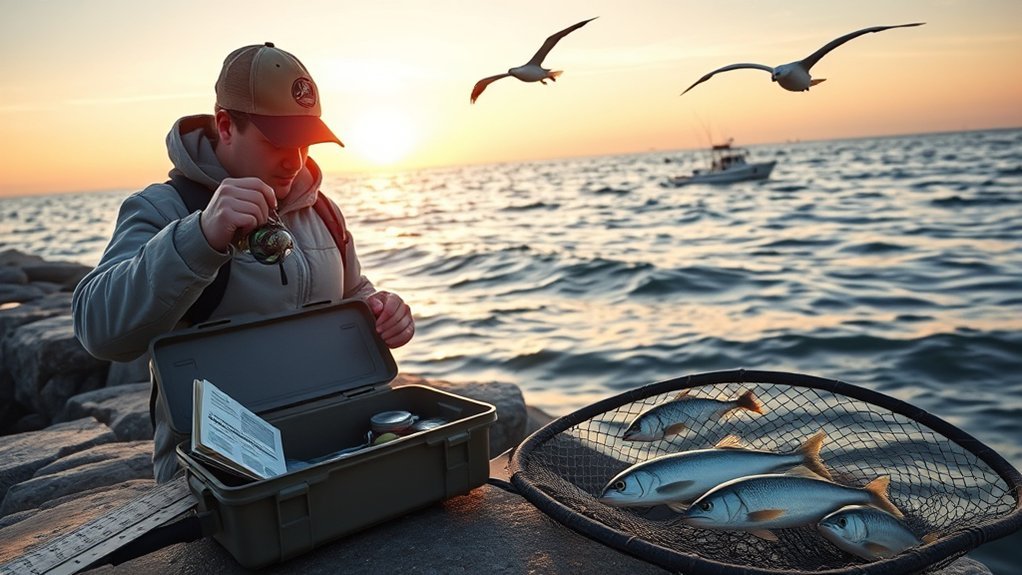
Fishing regulations can change by jurisdiction, species, season, fishing method, and water boundary. Check the rules for the exact place and date you plan to fish, including licenses or registrations, size limits, bag limits, gear restrictions, protected species, and seasonal closures.
For U.S. anglers, NOAA Fisheries directs people fishing in state waters to the appropriate state fish and wildlife agency for state licensing and regulations. Certain federal fisheries may have additional permit requirements.
Pack out all trash and discarded tackle. Fishing line, hooks, leaders, bait packaging, and damaged lures can injure wildlife long after you leave.
Follow Local Regulations
Check regulations before the trip and again before keeping a fish. A species can be legal to catch but illegal to retain because of size, season, bag limit, area, or gear rules.
- Confirm the license or registration: Use the official agency for the location where you will fish.
- Check the species rule: Verify current season, size, bag, gear, and protected-species requirements.
- Measure before keeping: Use a measuring tool appropriate for your local regulation.
- Release uncertain catches: If you cannot confidently identify a fish or confirm that it is legal to keep, do not place it in your cooler.
Leave No Gear
Inspect the area before you leave. Pick up discarded leaders, hooks, bait bags, line clippings, food packaging, and any other trash you safely can.
Keep used line in a container or dedicated pocket instead of stuffing loose coils into an open bag where they can escape. Use fishing-line recycling stations where available.
Responsible angling protects wildlife, access, and the fishing area for the next person.
Common Beginner Mistakes to Avoid
Most beginner mistakes come from trying to solve every problem with more gear. Start by controlling location, safety, presentation, and basic equipment.
- Buying before choosing where to fish: A surf setup, flats setup, and pier setup do not have identical requirements. Pick your main location first.
- Using equipment without checking its ratings: Match line, lure, and sinker load to the rod and reel specifications.
- Fishing with damaged line: Check for abrasion, fraying, rough spots, or knot damage before casting.
- Ignoring tides and water movement: Record the tide stage and conditions when you get bites so patterns become easier to recognize.
- Casting past productive water: In the surf, inspect the first trough, cuts, and nearshore bait before trying for maximum distance.
- Changing everything after a few quiet casts: Change one variable at a time so you know what improved the presentation.
- Leaving bait unchecked: Small fish, crabs, current, and casting can remove or damage bait without an obvious bite.
- Standing too close to dangerous edges: Wet rocks, surf wash, pier edges, and boat decks can become hazardous quickly.
- Keeping fish before checking rules: Identify and measure the fish, confirm current regulations, then decide whether it can be kept.
Frequently Asked Questions
What do I need to start ocean fishing as a beginner?
Start with a medium or medium-heavy spinning rod around 7 feet long, a compatible saltwater-capable spinning reel, suitable main line and leader, a few hooks and sinkers, one simple bait rig, one basic lure setup, pliers, line cutters, a measuring tool, any required fishing license or permit, and safety equipment appropriate for the location. Choose the fishing spot first so you can match the tackle to the actual conditions.
Can I use freshwater fishing gear in saltwater?
Some freshwater rods and reels can physically catch fish in saltwater, but salt and sand can accelerate corrosion and wear on equipment that is not designed for coastal use. If you use freshwater gear temporarily, keep it away from sand and submersion and follow the manufacturer’s cleaning instructions immediately after the trip. For regular saltwater fishing, equipment designed for saltwater exposure is the better long-term choice.
What tide is best for ocean fishing?
There is no single best tide for every species or location. Moving water often creates feeding opportunities, but the productive stage may be incoming, outgoing, high, or low depending on the spot. Learn one location by fishing it at different stages and record when you see bait or get bites. New and full moons produce larger average tidal ranges called spring tides, but local current and fishing conditions still vary.
How do I book a charter or hire a fishing guide?
Compare local charter operators by trip length, target species, recent reviews, vessel type, and what the price includes. Before booking, ask whether licenses, tackle, bait, fish cleaning, and safety gear are provided. Confirm the weather and cancellation policy, meeting location, departure time, what you should bring, and whether gratuity is customary.
Can I fish from a kayak or small inflatable boat?
Yes, but beginners should start in calm, protected water. Wear an appropriate life jacket, check wind, weather, tides, current, and boat traffic, secure loose gear, carry suitable communication equipment, and tell someone your route and expected return. Offshore wind, strong current, cold water, rough surf, and worsening weather can turn a short trip into an emergency.
What licenses or permits are required for tourists?
Requirements depend on the country, state or territory, age, water type, species, and fishing method. In the United States, tourists commonly need the appropriate nonresident license or short-term permit when one is required. Some licensed charter vessels or piers may provide different coverage. Check the official fish and wildlife or fisheries agency for the exact location before fishing.
How do I transport fish on a long drive home?
Keep legally retained fish cold in an insulated cooler with sufficient ice or another appropriate chilling method. Prevent contamination and leaking with clean food-safe bags or containers where appropriate. Before cleaning or filleting a fish, check local possession and transport rules because some jurisdictions require the species, skin, head, or other identifying features to remain intact during transport.
Are there medical risks from saltwater exposure while fishing?
Yes. Sunburn, dehydration, seasickness, hook injuries, cuts, and wound infections can occur. CDC guidance notes that bacteria naturally present in coastal water can infect open wounds. If a cut contacts salt or brackish water, wash it thoroughly with soap and clean running water as soon as possible. Seek prompt medical care for a serious puncture, severe allergic reaction, fever, rapidly spreading redness or swelling, severe pain, or signs that a wound is becoming infected.
What is the easiest saltwater fish for beginners to catch?
There is no universal easiest species because the answer changes by coast, season, water temperature, access point, and local population. Beginners usually have the best chance by targeting abundant legal species that are currently feeding near an accessible pier, beach, bay, or bridge. Ask a local tackle shop what is active and legal that week rather than planning around one species nationwide.
Should beginners use bait or lures for ocean fishing?
Natural bait is often simpler when you want to hold a presentation in one feeding area, while lures help you search water and learn casting, depth, and retrieve control. A practical beginner kit can include one simple bait rig plus one jig or soft-plastic setup so you can switch methods without carrying a large tackle box.
Conclusion
You now have a practical way to start ocean fishing: choose the location first, match a simple spinning setup to that location, learn one bait rig and one lure setup, and target visible structure rather than casting randomly.
Before every trip, check the marine forecast, tides or currents, local access rules, and current fishing regulations. During the trip, change one variable at a time, keep clear of dangerous water and edges, and handle every fish as quickly and carefully as possible.
Your first successful trip does not require the longest cast or the largest tackle box. It requires safe conditions, a correctly matched setup, a productive piece of water, and enough patience to learn what the fish and tide are doing.
Sources
- National Weather Service Safe Boating — marine-weather, lightning, boating, and general safety guidance.
- National Weather Service Cold Water Safety — supports cold-water immersion, flotation, and dressing for water temperature.
- U.S. Coast Guard Boating Safety Division — supports life-jacket and recreational boating guidance.
- U.S. Coast Guard Float Plan — supports leaving trip and expected-return information with a reliable person.
- NOAA Fisheries Recreational Fishing — supports recreational fishing regulations, permits, conservation, and responsible angling guidance.
- NOAA Fisheries Catch-and-Release Fishing Best Practices — supports fish handling, hook removal, landing-net, air-exposure, and barotrauma guidance.
- NOAA Ocean Service: Spring and Neap Tides — supports the explanation of larger average tidal ranges around new and full moons.
- U.S. Fish & Wildlife Service Fishing — supports fishing access and stewardship awareness.
- CDC Vibrio Prevention — supports wound precautions after exposure to salt or brackish coastal water.