Flats fishing offers a unique experience that’s both approachable and rewarding for beginners. You’ll fish shallow coastal areas where tides, grass beds, sand bars, mud flats, channels, and baitfish all shape the bite. Redfish, tarpon, snook, permit, and bonefish can all show up on the flats, but success depends on patience, quiet movement, accurate casts, and careful reading of the water.
Quick Answer
Flats fishing is shallow-water fishing on sand, mud, or grass flats. Beginners should focus on stealth, tide timing, polarized sight fishing, and accurate casts with light to medium inshore gear. Start near grass edges, channels, bars, mangroves, and areas with bait, birds, tailing fish, or nervous water.
Key Takeaways
- Fish move across flats with the tide, so high water, falling water, and nearby channels can all create good opportunities.
- Stealth matters more than speed. Walk, pole, paddle, and cast quietly so you do not spook fish in shallow water.
- Polarized sunglasses, sun protection, braided line, fluorocarbon leader, and a reliable drag system make flats fishing easier.
- Look for signs of life, including baitfish, birds, rays, tailing fish, wakes, mud puffs, and nervous water.
- Check local fishing rules, license requirements, seasons, and size limits before you keep any fish.
At a Glance
| Best For | Redfish, snook, tarpon, permit, bonefish, and other shallow-water gamefish |
| Difficulty | Beginner to intermediate, depending on wind, visibility, tides, and target species |
| Gear Needed | 7 to 9-foot rod, reliable reel, braided line, fluorocarbon leader, lures or bait, polarized sunglasses, hat, and sunscreen |
| Best Conditions | Moving water, clear visibility, light wind, active bait, and safe tide windows |
What Is Flats Fishing?
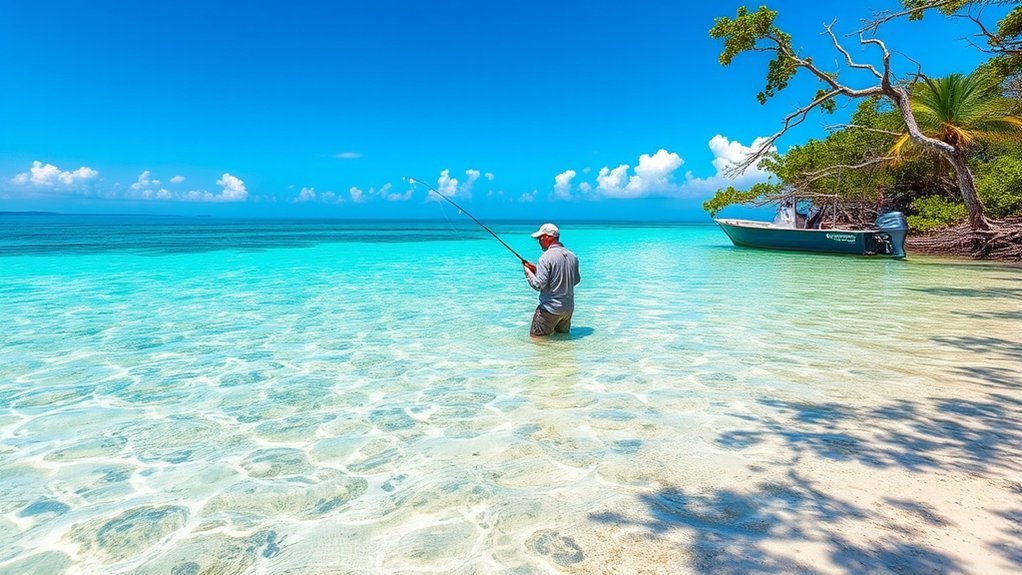
Flats fishing is an exciting and dynamic way to connect with nature while pursuing some of the most sought-after gamefish. This technique involves fishing in shallow coastal areas with flat seabeds, often made of mud, sand, shell, or seagrass, influenced by tidal movement.
Target species like redfish, tarpon, snook, permit, and bonefish thrive in these nutrient-rich ecosystems. Many flats also hold shrimp, crabs, mullet, pinfish, glass minnows, and other small prey that draw predators into skinny water.
To be successful, you’ll need to understand the interaction between baitfish and predatory gamefish, as these flats serve as prime feeding grounds during moving tides. Stealth and precision are essential, since fish in these areas can be skittish and easily spooked by noise, boat slap, hard footsteps, or sudden casts.
Pay close attention to the habitat’s complexities, including grass beds, bars, potholes, mangrove edges, oyster areas, and channels that attract various fish species. By mastering these elements, you’ll enhance your chances of reeling in that trophy catch while enjoying the beauty of the flats.
Note: “Flats” does not always mean water you can safely walk across. Soft mud, sharp shell, stingrays, strong current, and sudden drop-offs can make shallow areas risky. Move slowly and check conditions before wading.
Understanding the Flats

To truly grasp flats fishing, you need to understand the different types of flats and how they affect fish behavior.
The unique structures and tidal influences create dynamic environments where fish actively feed, travel, and shelter. A flat that looks empty at low tide can become a prime feeding zone once enough water covers it.
Types of Flats
Shallow coastal areas hold a variety of flat types that cater to different fishing experiences. You’ll encounter mud flats and sand flats, each offering unique advantages.
Mud flats, often rich in nutrients, attract diverse baitfish and crustaceans, while sand flats provide a cleaner environment that appeals to sight-feeding predators. Grass flats can be especially productive because seagrass holds small fish, shrimp, crabs, and other forage.
Tidal actions play an essential role. Low tides expose these flats and reveal channels, potholes, and travel routes, whereas high tides create feeding opportunities for gamefish. A rising tide may push fish onto the flat, while a falling tide can pull them toward drains, cuts, and edges.
Look for features like grass beds, bars, potholes, shell edges, mangrove points, and channels, as they form critical habitats that entice baitfish.
Understanding these diverse ecosystems will enhance your fishing success. By recognizing the interactions between baitfish and predatory fish, you can strategically target your catch in these dynamic environments.
Fish Behavior Dynamics
Understanding how fish behave in these environments is essential to becoming a successful angler. Tidal movements greatly impact fish activity, especially during moving water when prey is easier to ambush. Look for nervous water, wakes, mud puffs, pushing fish, or tailing activity, especially for species like permit, bonefish, and redfish.
Fish often shelter in structures like grass beds, bars, potholes, mangroves, and channels, making these prime spots to target. On clear flats, fish may see you before you see them, so long casts and slow movement help.
| Condition | Best Strategies |
|---|---|
| High Tide | Focus on flooded grass, mangrove edges, and areas with nervous water |
| Falling Tide | Target drains, channels, cuts, and edges where bait leaves the flat |
| Bright Days | Use polarized glasses, sight fish carefully, and avoid sudden movement |
| Murky Conditions | Use vibration, scent, contrast, or slower presentations near structure |
| Windy Conditions | Cast with the wind when possible and use heavier flies, lures, or bait rigs |
Accessing the Flats

Accessing the flats can be done in several effective ways, each offering unique advantages for anglers. A popular choice is using a skiff, designed to glide through shallow waters without disturbing the environment. Many guides use a poling technique to maneuver quietly, helping you spot fish without creating motor noise.
Wading through shallow water is another favored method, allowing you to get close to fish and enhance your bait presentation. Stealth is essential here; being near fish improves your bait delivery and decreases the chance of spooking them.
Alternatively, kayaks or paddleboards provide a quiet, less intrusive way to explore the flats. These options not only keep you close to the action but also allow you to navigate areas that larger boats can’t reach.
Regardless of the method you choose, remember that being stealthy can greatly boost your chances of a successful fishing experience.
Warning: Watch for stingrays when wading. Shuffle your feet instead of taking high steps, avoid grabbing unseen bottom structure, and wear suitable footwear for shell, rock, and grass flats.
Target Species

Flats fishing offers a diverse range of target species that can make your experience both exciting and challenging. Each species has its unique behaviors, requiring you to adapt your techniques accordingly. Here’s a quick overview of some key targets:
| Species | Characteristics | Beginner Approach |
|---|---|---|
| Redfish | Often found in schools, known for strong fights. | Cast soft plastics, spoons, shrimp, or crab-style baits near grass edges and potholes. |
| Tarpon | Aggressive, spectacular jumps; needs precise hook-setting. | Use strong leaders, keep steady pressure, and bow the rod when a tarpon jumps. |
| Snook | Thrives in mangroves; requires stealthy approaches. | Work lures or live bait near mangrove edges, points, docks, and current seams. |
| Permit | Elusive; look for nervous water and tailing. | Use crab or shrimp patterns and make quiet, accurate presentations ahead of moving fish. |
| Bonefish | Fast swimmers; often found in schools along sandy shores. | Lead the fish with small shrimp or crab imitations and avoid lining the school. |
Understanding their feeding patterns and behaviors influenced by tides and conditions is essential. With this knowledge, you’ll increase your chances of success while flats fishing, making every outing a thrilling adventure.
Iconic Flats Fishing Locations
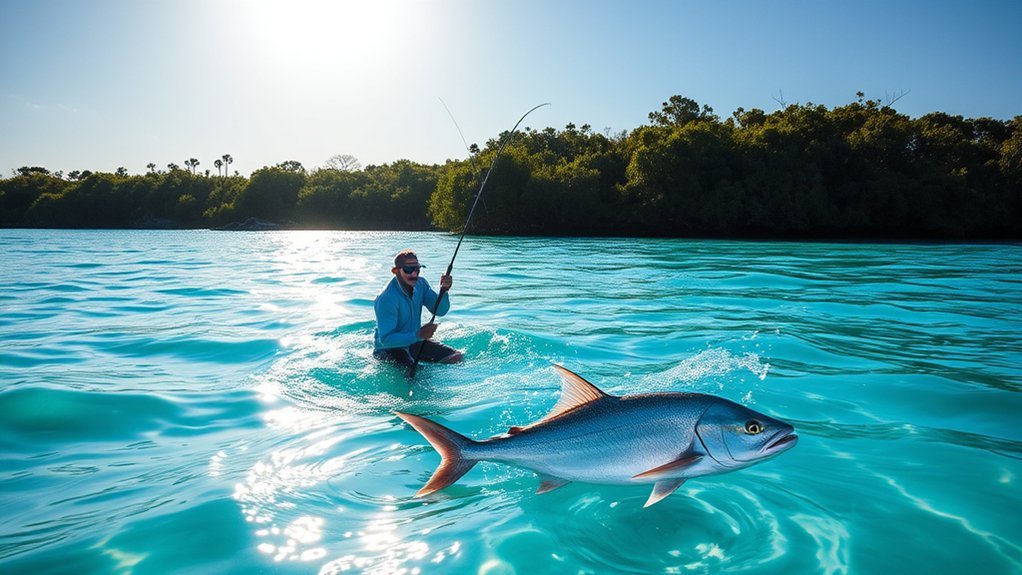
When it comes to iconic flats fishing locations, you can’t overlook the Everglades and the Florida Keys.
The Everglades offers diverse ecosystems where you can target species like tarpon and snook, while the Keys provide stunning scenery and prime conditions for bonefish and permit.
Each destination presents unique fishing experiences that every angler should explore. Before you go, review local boating rules, park rules, fishing licenses, marine zones, and current harvest regulations.
Everglades National Park
Everglades National Park is a hidden gem for anglers seeking iconic flats fishing experiences. Spanning over 1.5 million acres, the park’s diverse ecosystems host a variety of species like tarpon, snook, and redfish.
The abundant grass flats and mangrove shorelines create ideal feeding grounds, especially during spring and summer. You can access these waters via kayak, canoe, or flats boat, allowing for a stealthy approach to the best fishing spots.
The intricate network of tidal creeks and channels provides diverse fishing opportunities, as water movement influences fish behavior.
With its serene beauty and rich biodiversity, Everglades National Park stands out as one of the premier flats fishing destinations in the United States, attracting anglers from around the world.
Florida Keys Adventure
If you’re seeking an unforgettable fishing adventure, the Florida Keys offers some of the best flats fishing locations in the world.
Key Largo, Islamorada, and Big Pine Key are iconic spots that boast stunning scenery and diverse species like tarpon, bonefish, and permit. The clear waters and shifting tides create perfect conditions for sight fishing, letting you spot your target with ease.
Spring and summer are peak seasons for many flats anglers, as migratory species and warm-water patterns can create exciting opportunities.
The unique geography, featuring seagrass beds, mangroves, channels, and nearby coral reef habitat, not only attracts fish but also enhances your experience, providing a vibrant backdrop for your fishing escapade.
Pack your gear and get ready for an adventure!
Flats Fishing Gear Essentials
To succeed in flats fishing, having the right gear is essential. Start with a quality rod in the 7 to 9-foot range; it offers the versatility you need for casting accuracy and handling various species. Pair it with a reliable reel that allows you to manage drag effectively while maintaining finesse for precise casts.
Next, choose braided fishing line for its sensitivity and strength. This line lets you feel subtle bites and react quickly. Don’t forget to add a fluorocarbon leader to your setup; its low visibility helps prevent spooking skittish fish.
Lastly, gear up with essential accessories. Polarized sunglasses will reduce glare and enhance your visibility, while a comfortable hat provides sun protection.
And don’t overlook sunscreen to keep your skin safe. With this gear in hand, you’re well-equipped to tackle the flats and enjoy a successful fishing experience.
Basic Spinning Setup
A medium-light to medium spinning rod works well for many beginner flats situations. Choose a reel with smooth drag and enough line capacity for fast fish that make long runs.
For many inshore flats species, braided main line with a fluorocarbon leader gives you a good mix of casting distance, bite feel, and abrasion resistance. Use a lighter leader in clear water and a heavier leader near mangroves, shell, docks, or larger fish.
Basic Fly Fishing Setup
If you want to fly fish the flats, start with a balanced rod, reel, fly line, leader, and a small set of baitfish, shrimp, and crab patterns. Many anglers use lighter setups for bonefish and heavier setups for tarpon or windy conditions.
Practice casting before your trip. On the flats, you may get only one clean shot at a moving fish, so accuracy matters more than distance.
Lures, Bait, and Flies
Soft plastics, weedless jerkbaits, shrimp imitations, spoons, plugs, crab patterns, and live bait can all work on the flats. Match your presentation to the local forage and water conditions.
In clear water, natural colors and subtle action often work well. In stained water, vibration, scent, contrast, or a slightly larger profile can help fish find your bait.
Techniques for Successful Flats Fishing
While steering through the shallow waters of flats fishing, mastering effective techniques can greatly enhance your success.
Begin by approaching the flats with stealth to avoid spooking skittish fish. Since visibility is high in shallow waters, any sudden movement can send fish fleeing. Look for signs of activity, like nervous water or tailing, to pinpoint where to cast for species such as permit and bonefish.
Your casting technique should be precise; accurate bait delivery is essential in the complex flats environment.
Don’t forget to adapt your strategies based on environmental conditions, including tidal changes and water clarity. This flexibility can markedly improve your chances of success.
Lastly, leverage tools like Google Earth to scout potential fishing spots and understand habitat changes.
This insight will enhance your awareness of fish behavior and feeding patterns, setting you up for a rewarding day on the flats.
Pro Tip: Cast ahead of a moving fish, not directly on top of it. Let the fish reach your bait or fly, then move it with short, natural twitches.
How to Read the Water
Reading the water is one of the most useful flats fishing skills. Watch for bait spraying, birds dipping, rays moving across the bottom, fish wakes, small pushes on the surface, and color changes that show grass, sand, potholes, or drop-offs.
Nervous water looks like a tight ripple or trembling patch that does not match the wind. Tailing fish may show fins, tails, or backs as they feed with their heads down. Mud puffs can show where fish recently fed or moved away.
Casting and Presentation
Keep casts low and controlled when wind allows. A hard splash can ruin a good shot, especially in calm, clear water. If a fish is moving, lead it by enough distance so your lure or fly lands softly in its path.
After the cast, pause before working the bait. Many flats species react better to a natural presentation than a fast, constant retrieve. Use short strips, twitches, pauses, or slow rolls based on the species and bait type.
Common Beginner Mistakes
- Walking too fast and pushing fish before you can cast.
- Casting directly at fish instead of leading them.
- Ignoring tide movement and fishing dead water too long.
- Using tackle that is too heavy for clear, shallow conditions.
- Forgetting sun protection, water, and safe footwear.
- Keeping fish without checking current size, season, and bag limits.
Environmental Factors Affecting Fishing
Successful flats fishing doesn’t just rely on your techniques; environmental factors play a significant role in determining where and how to fish.
Tidal changes are vital, as high tides often draw predators into the shallows and falling tides can concentrate bait near drains and deeper edges. Pay attention to water clarity, too; clear waters allow you to spot fish more easily, while murkiness may force you to adapt your methods.
Light conditions matter as well. On bright days, larger species are more visible, while overcast skies can prompt increased feeding. Wind can be a double-edged sword; a light breeze helps mask your movements, but strong gusts can disrupt casting and fish behavior.
Finally, keep an eye on the ecosystem. The presence of birds, sharks, rays, bait schools, or surface commotion can signal active feeding areas, guiding you to the best spots.
Tides, Current, and Moon Phase
Moving water usually matters more than the exact tide height. Fish use current to ambush prey, so points, cuts, creek mouths, potholes, and channel edges can turn on when water starts moving.
Moon phase can affect tidal range in many coastal areas. Stronger tides may move more bait and make fish feed aggressively, but they can also make wading or anchoring harder. Always plan around safe water movement and your route back.
Water Temperature and Season
Seasonal changes affect where flats fish feed. In cooler periods, fish may slide into dark mud, deeper edges, or sun-warmed pockets. In warmer periods, early morning, late afternoon, shade lines, and moving water may be more comfortable for fish.
Local patterns matter. A guide, tackle shop, or official fishing report can help you understand what species are active and which presentations are working.
Preparing for Your Fishing Trip
Before you hit the flats, it’s vital to prepare by checking off your essential gear checklist and planning for the weather.
Don’t forget to take into account booking a guide who can provide local insights and help you make the most of your trip.
A little preparation goes a long way in ensuring a successful fishing experience.
Essential Gear Checklist
When gearing up for your flats fishing adventure, having the right equipment can make all the difference in your experience.
Start with a quality rod in the 7 to 9-foot range for ideal casting and bite sensitivity. Pair it with a reliable reel featuring a strong drag system to handle powerful gamefish like tarpon and permit.
Opt for braided fishing line for its strength and sensitivity, and don’t forget a fluorocarbon leader to avoid spooking wary fish.
Essential accessories include polarized sunglasses to cut glare, a comfortable hat for sun protection, and sunscreen to shield against UV rays.
Finally, pack snacks, sun shirts, and a raincoat to guarantee comfort and readiness for whatever weather you encounter.
- Rod and reel matched to your target species
- Braided main line and fluorocarbon leader
- Soft plastics, spoons, plugs, flies, live bait, or terminal tackle
- Polarized sunglasses and a brimmed hat
- Reef-safe or water-resistant sunscreen, sun shirt, and neck gaiter
- Water, snacks, rain jacket, and a small first-aid kit
- Pliers, hook remover, line cutters, measuring tool, and landing net if needed
- Fishing license, local rules, and emergency contact plan
Weather Considerations
Understanding the weather is essential to maximizing your flats fishing experience. Before heading out, check the local weather forecast; wind speed and direction can greatly influence fish behavior and your strategy.
Tides are also vital because water movement affects where bait and predators travel. Dress in lightweight, moisture-wicking clothing for warmth, and bring layers for unexpected changes.
Pay attention to the sun’s position and cloud cover; bright days enhance visibility for sight fishing, while overcast conditions may require you to adjust your approach.
Finally, consider how recent rain impacts water clarity. Heavy rains can lead to murky conditions, changing fish behavior and requiring different tactics. Prepare accordingly to boost your chances of success!
Booking a Guide
How can booking a guide elevate your flats fishing adventure? When you connect with a knowledgeable guide through platforms like AnyCreek, local marinas, tackle shops, or guide directories, you gain access to local expertise that can enhance your experience.
Here are some tips to guarantee a successful trip:
- Communicate Preferences: Discuss your fishing goals, skill level, target species, and any specific needs with your guide.
- Check the Weather: Stay updated on the local forecast to pack appropriate gear for the conditions.
- Know What’s Provided: Many guides supply licenses, gear, and tackle, but you should confirm this before the trip.
- Pack Essentials: Bring snacks, sunscreen, hats, polarized sunglasses, sun shirts, water, and a raincoat to stay comfortable throughout the day.
- Ask About Regulations: Confirm harvest rules, catch-and-release expectations, and safe fish handling before you fish.
With these steps, you’re set for an unforgettable adventure!
Responsible Flats Fishing and Conservation
Flats are sensitive ecosystems, so responsible fishing helps protect the habitat and the fish you came to catch. Avoid running over shallow grass beds, dragging anchors through seagrass, or trampling fragile bottom areas while wading.
Handle fish with wet hands, keep them in the water when possible, and use barbless or crushed-barb hooks when catch and release is your goal. Revive tired fish by holding them upright into gentle current until they swim away strongly.
Follow posted zones, marine sanctuary rules, park rules, and local harvest limits. If you are unsure about a species, release it carefully and check the regulations before your next trip.
Tips for New Anglers
Are you ready to plunge into the exciting world of flats fishing? Start by familiarizing yourself with the flats’ unique environment. These shallow coastal areas are bustling with baitfish and predatory gamefish, so understanding tidal influences is key to your success.
Invest in quality gear; a 7 to 9-foot flats fishing rod and braided line will give you the sensitivity and strength needed for species like redfish, snook, and tarpon.
Utilize stealthy techniques like wading or using a skiff to enhance your bait presentation. Pay attention to indicators such as nervous water or feeding indentations in the sand; these clues can greatly boost your fishing strategy.
Finally, be patient and adaptable. Successful flats fishing demands continuous learning and adjusting your techniques based on conditions. Trust the guidance of local experts, and you’ll find yourself reeling in more catches in no time!
Frequently Asked Questions
What Is the 80/20 Rule in Fishing?
The 80/20 rule in fishing means 80% of your success often comes from 20% of your efforts. For flats fishing, that means focusing on productive water, moving tides, accurate casts, and signs of active bait instead of covering random areas all day.
What Is the 90/10 Rule in Fishing?
The 90/10 rule in fishing means most fish are often found in a small portion of the available water. On the flats, focus your efforts on grass edges, bars, potholes, channels, mangroves, drains, bait schools, and areas with nervous water.
What Do Beginners Need for Fly Fishing?
You’ll need a quality fly rod, a reliable reel, suitable fly line, leaders, and a few baitfish, shrimp, or crab patterns. Don’t forget polarized sunglasses, sun protection, and casting practice. Learn local forage patterns so you can choose the right flies effectively.
What Basics Do I Need to Start Fishing?
You’ll need a quality rod and reel, braided line with a fluorocarbon leader, a small tackle selection, polarized sunglasses, sunscreen, water, and safe footwear. Familiarize yourself with local tides and consider hiring a guide for expert tips.
What Is the Best Tide for Flats Fishing?
The best tide depends on the flat, species, and season, but moving water is usually the key. Rising tides can push fish onto shallow feeding areas, while falling tides can concentrate bait and predators near drains, cuts, and channels.
Can You Flats Fish Without a Boat?
Yes, you can flats fish by wading, using a kayak, or fishing accessible shoreline areas. Move slowly, watch the tide, protect your feet, and avoid soft mud, deep channels, stingrays, and boat traffic.
Conclusion
Flats fishing gives you a front-row seat to some of the most exciting shallow-water action in coastal fishing. Once you understand tides, structure, bait movement, and stealth, the flats start to feel less confusing and far more productive.
Start simple. Pick a safe flat, watch the water, move quietly, and make careful casts near signs of life. If you don’t catch fish right away, use each trip to learn how the tide, wind, light, and habitat affect fish behavior.
With the right gear, patient observation, and respect for the ecosystem, you’ll build confidence fast. Before long, you’ll be spotting nervous water, reading edges, and making smarter casts at redfish, snook, tarpon, bonefish, permit, and other prized flats species.
Sources
- National Park Service: Everglades National Park — supports Everglades location, park context, and protected-area awareness.
- NOAA Florida Keys National Marine Sanctuary — supports Florida Keys habitat, marine-zone awareness, and conservation context.
- NOAA Tides & Currents — supports checking tide and current information before fishing coastal flats.
- Florida Fish and Wildlife Conservation Commission: Saltwater Recreational Fishing — supports license, season, size-limit, and harvest-regulation reminders.
- NOAA Fisheries: Recreational Fishing — supports responsible fishing, fish handling, and conservation-minded angling practices.