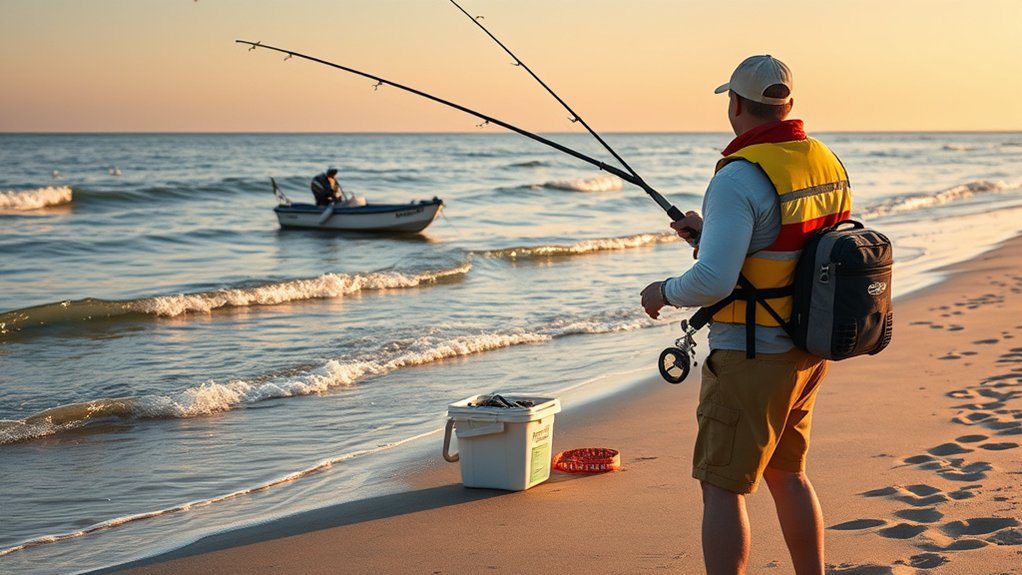
Shark fishing for beginners starts with regulations, species identification, heavy tackle, a legal bait-and-hook setup, and a release plan prepared before the first cast. The right setup depends on where you fish, which sharks are present, and whether state or federal rules apply. Before choosing bait or deploying a line, confirm protected species, hook requirements, harvest limits, shore-based restrictions, and safe-release rules. This guide covers tackle and rigging, bait placement, chumming, boat and surf techniques, fighting a shark, and responsible release.
Last updated: September 21, 2026 — regulations, circle-hook requirements, chumming guidance, and release practices rechecked.
Quick Answer
To start shark fishing, first identify the species and rules that apply where you fish. Use heavy tackle matched to the expected shark, an abrasion-resistant leader, legal natural bait, and release tools staged before the first cast. In Atlantic federal recreational shark fisheries, shark-targeting lines generally require non-offset, non-stainless steel circle hooks except when using qualifying flies or artificial lures. State rules can add separate permits, hook rules, chumming restrictions, size limits, and handling requirements. Keep released sharks in the water whenever required or practical, and cut the leader close to the hook if safe removal would delay release.
Key Takeaways
- Check state and federal shark fishing rules immediately before every trip because protected species, permits, hook rules, size limits, seasons, and shore-based restrictions vary by location.
- Match your rod, reel, line, leader, and hook to the sharks you reasonably expect to encounter and use tackle heavy enough to avoid unnecessarily long fights.
- Common natural baits include oily fish such as mackerel, bunker, bonito, bluefish, mullet, or ladyfish when those baits are legal to possess and use.
- Prepare long pliers, bolt or cable cutters, gloves, a dehooking tool, and a clear release plan before you hook a shark.
- For catch and release, minimize handling, keep prohibited sharks in the water as required, and never delay release solely for photos.
At a Glance
| Best For | Beginner to intermediate anglers fishing from a boat, beach, inlet, or pass where shark fishing and safe release are permitted; piers and bridges may have additional restrictions or make release difficult |
| Difficulty | Moderate, with substantially higher risk around large sharks, strong surf, rocks, crowded beaches, or elevated structures |
| Core Gear | Heavy rod, high-capacity reel, strong main line, abrasion-resistant leader, legally compliant hooks, pliers, gloves, cutters, dehooking tool, and measuring device |
| Safety Priority | Keep hands away from the mouth, never wrap line around your hand, keep prohibited sharks in the water, and release without unnecessary delay |
If you are completely new to coastal fishing, review the saltwater fishing basics for beginners first. Shark fishing adds heavier tackle, stricter identification requirements, and more demanding release procedures.
Which Shark Species Should Beginners Know?
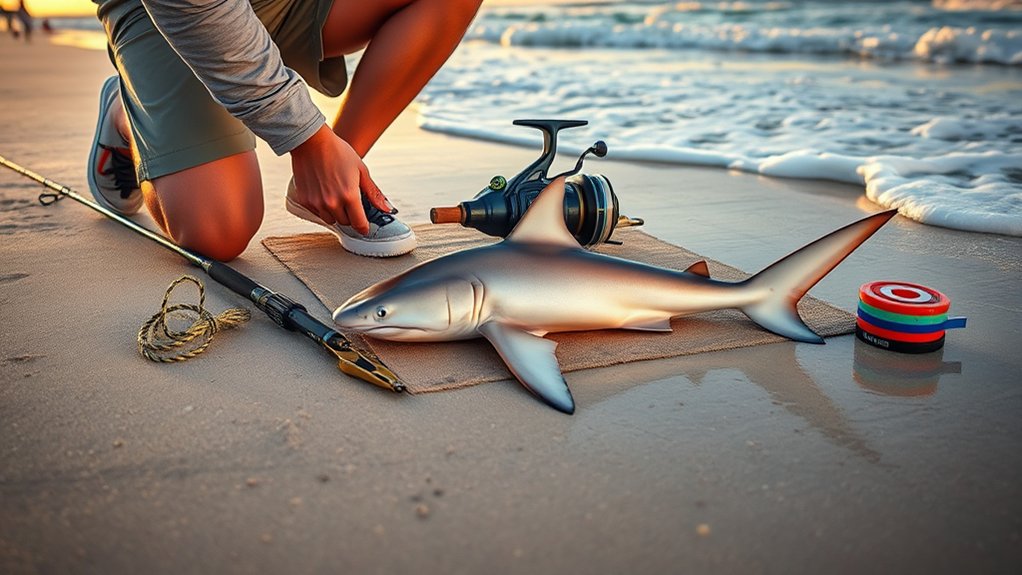
Before selecting tackle or bait, learn the species you may encounter so you can match tackle, bait, and handling practices to the shark’s size, habits, and legal status. Identification matters because a species that may be harvestable under one jurisdiction can be protected under another.
Learn local shark species before the trip. Correct identification affects legal gear, harvest eligibility, handling, and how quickly a protected shark must be released.
Bull sharks are powerful coastal predators that often use estuaries, inlets, and river mouths. Tiger sharks grow large and feed on a wide range of prey. Both require heavy tackle, careful leader control, and enough clear space to manage the fish without putting anglers or beachgoers at risk.
Blacktip sharks are common along many warm coastal areas and are known for fast runs. Atlantic sharpnose sharks and smooth dogfish are smaller species many coastal anglers encounter. Their harvest status, size limits, and bag limits still depend on the jurisdiction, so identification must come before any decision to keep a shark.
Hammerhead sharks require extra caution because regulations differ sharply by species and location, and some jurisdictions prohibit their harvest entirely. If you cannot identify a shark with confidence, treat it as release-only, keep it in the water when required, and minimize handling.
Sharks may use estuaries, reefs, sandy flats, inlets, passes, deep channels, current edges, and surf troughs. Habitat can help you anticipate likely species, but it should never replace positive identification before harvest.
Warning: Never keep a shark unless you can identify the species and confirm that harvest is legal in that exact location. Protected sharks may have to remain in the water during release. If you do not know the species, let it go.
What Shark Fishing Rules Should You Check First?
Shark fishing rules change by jurisdiction, species, season, and fishing method. Before each trip, check your state wildlife agency and any federal rules that apply offshore. For Atlantic federal recreational shark fishing, consult NOAA Fisheries Atlantic Highly Migratory Species guidance. State rules may be more restrictive.
For example, Florida FWC shark regulations require non-offset, non-stainless steel circle hooks when targeting or harvesting sharks with live or dead natural bait, require a device capable of quickly cutting the hook or leader, prohibit beach chumming, and impose additional shore-based shark-fishing requirements. These Florida rules are examples, not nationwide standards.
Pay close attention to these rule categories:
- Protected species: Some sharks must be released immediately and may not be removed from the water.
- Permits and endorsements: Federal Atlantic HMS shark fishing and some state shore-based fisheries require specific permits, endorsements, courses, or licenses.
- Minimum and maximum sizes: Legal size ranges and measurement methods differ by species and jurisdiction.
- Hook rules: Circle-hook material, offset, and bait requirements can be mandatory rather than optional.
- Bag limits: Daily or trip limits may apply per person, vessel, or species group.
- Landing rules: Regulations may control whether a shark can leave the water, where shore-based shark fishing is allowed, and how retained sharks must be landed.
- Chumming and bait deployment: A method that is legal from a vessel may be restricted or prohibited from shore.
When a rule or species identification is uncertain, choose the release-first option. Keep the shark in the water when required, avoid delaying release for photos, and cut the hook or leader when attempting removal would create additional risk.
What Gear Do You Need for Shark Fishing?
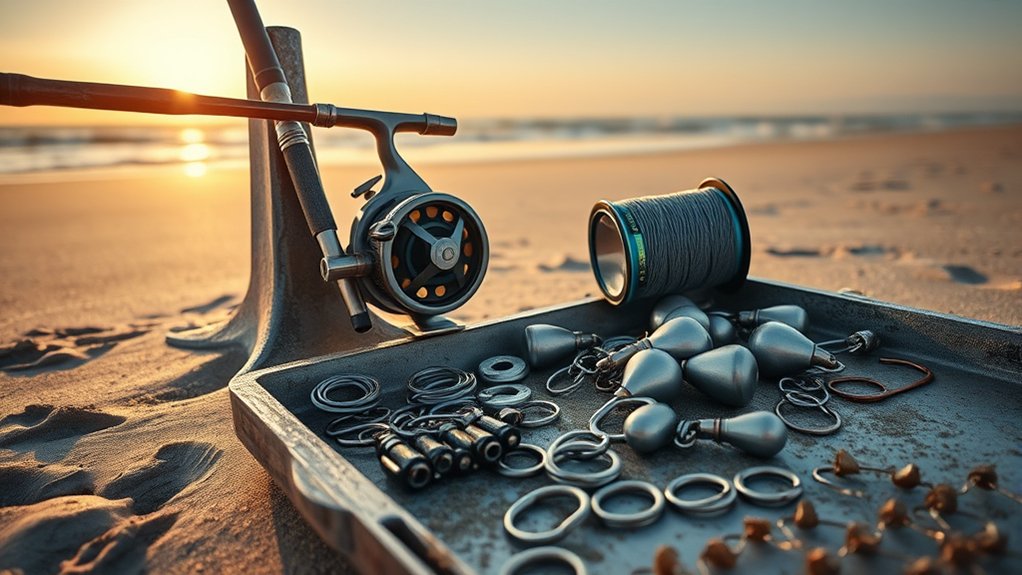
Gear choices affect fight duration, line control, and release safety. Match your rod, reel, main line, leader, hook, and terminal tackle to the largest shark you can reasonably expect at that location rather than choosing gear only for casting convenience.
For smaller coastal sharks, a medium-heavy or heavy saltwater rod with a high-capacity spinning or conventional reel may be appropriate. Larger sharks, heavy current, long bait placements, surf, and structure require substantially stronger equipment. Reel-size numbers are not standardized across manufacturers, so line capacity, drag performance, rod rating, and the expected fish matter more than the number printed on the reel.
Use strong main line and enough capacity for the fishing method. Avoid treating one pound-test range as universal. As a jurisdiction-specific benchmark, Florida FWC’s Shark-Smart guidance recommends heavy tackle with a minimum of 80-pound test when targeting sharks. Elsewhere, follow local agency guidance and size your tackle to shorten the fight without exceeding the rod, reel, knots, or terminal tackle ratings.
Use an abrasion-resistant leader because shark skin, teeth, rocks, pilings, shells, and other structure can damage line. Heavy monofilament may provide a rub section, while wire or cable may be appropriate for the bite section where legal. Leader material and length should match the shark, bait, fishing method, and local rules.
Use a durable hook sized to the bait and expected shark. In Atlantic federal recreational shark fisheries, non-offset, non-stainless steel circle hooks are generally required on lines targeting sharks except when using qualifying flies or artificial lures. States can impose separate or additional requirements, so verify the rule before rigging.
A basic shark rig usually combines the main line, a strong swivel or connection, an abrasion-resistant leader, and a legal hook. Beach anglers may also need a shock leader when safely casting a heavy sinker and bait. If you are still learning connections, practice them before the trip using this fishing knot practice guide.
Inspect knots, crimps, swivels, clips, hook points, leader material, line guides, and drag operation before deploying bait. Replace damaged components before they fail under load.
Basic Shark Fishing Gear Checklist
- Medium-heavy, heavy, or extra-heavy rod matched to the expected shark and fishing method
- Saltwater-capable spinning or conventional reel with smooth drag and sufficient line capacity
- Strong main line matched to target size, current, casting or deployment distance, and local guidance
- Heavy mono, fluorocarbon, wire, or cable leader as appropriate and legal
- Non-offset, non-stainless circle hooks wherever required
- Swivels, sinkers, sinker slides, and other terminal tackle rated for the setup
- Long-nose pliers, long-handled dehooking tool, bolt or cable cutters, and protective gloves
- Measuring device, headlamp when appropriate, first-aid kit, and cutting tool
- Current state and federal shark regulations saved or available offline
Pro Tip: Check drag operation before fishing, then adjust within the safe working limits of your line, rod, reel, knots, and leader. The goal is controlled pressure and an efficient fight, not simply maximum drag.
What Is the Best Bait for Shark Fishing?

Once your legal setup is ready, bait selection and placement determine how naturally the presentation fishes and how well it stays on the hook. Common shark baits include oily fish such as mackerel, bunker, bonito, bluefish, mullet, ladyfish, or jack where those species are legal to possess and use as bait.
Use bait in good condition and rig it through a firm section so it stays secure. Whole or cut bait can be effective depending on target size, current, casting method, and local rules. Avoid assuming that any locally caught fish is automatically legal bait; bait-species regulations can differ from shark regulations.
Use a chum slick only where the practice is expressly legal and safe. Chumming rules can differ between vessels and shore-based fishing. Florida, for example, prohibits chumming from the beach while fishing for any species. Even where chumming is legal, avoid creating a scent trail near swimmers, crowded beaches, marinas, or heavy boat traffic.
If local rod limits, space, current, and safety allow, stagger two or more baits at different distances or depths rather than stacking every bait in the same line. Keep enough separation to avoid crossing lines during a run, and never exceed local rod or line limits.
Adjust sinker weight to current, surf, and bottom conditions so the bait remains in the intended zone without exceeding the rod’s casting rating. With a circle hook, the goal is controlled tension as the line comes tight rather than a violent hookset.
Watch baitfish, birds, rays, current seams, nervous surface water, and changes in tide or current. These observations can help you decide whether to move a bait, change depth, or relocate rather than repeatedly adding more chum.
Stay disciplined: keep the fishing area organized, manage every baited line, and stop fishing if swimmers, surfers, wildlife, weather, or surf conditions make the setup unsafe.
How Do You Shark Fish From a Boat, Beach, or Drift?
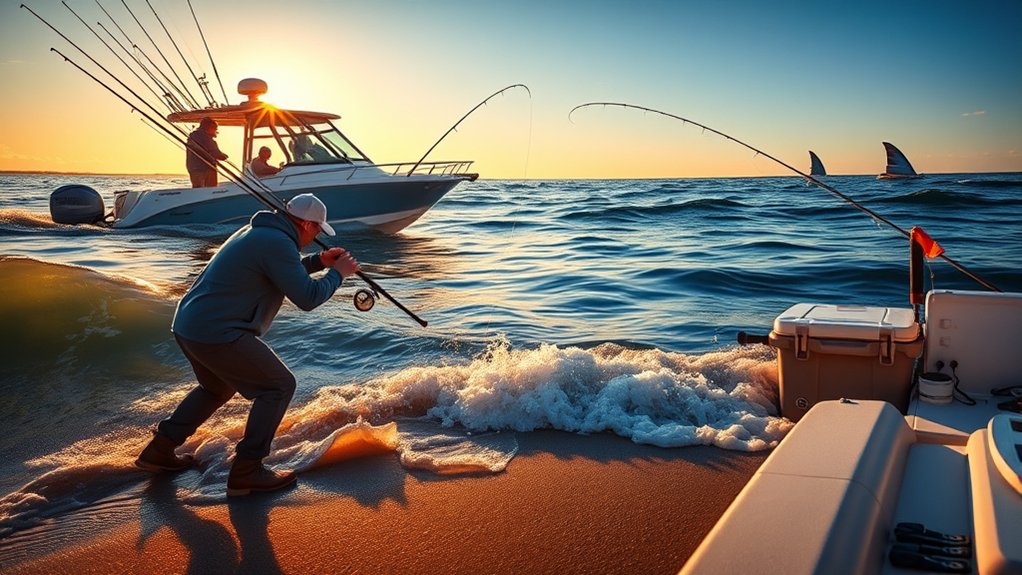
Boat, surf, and drift shark fishing require different line angles, weights, bait placement, and release plans. Before deploying bait, decide how the shark will be controlled and released at that exact location.
Boat Shark Fishing
For boat shark fishing, you can deploy baits at different distances or depths when local rules and available space allow. Keep rods in secure holders, prevent loose gear from covering the deck, and make sure cutters and dehooking tools are reachable before a strike.
Use the boat to maintain a safer line angle and keep the shark away from the propeller, anchor rope, pilings, reefs, or other structure. Assign one person to fight the fish while another watches hazards and prepares release tools when enough crew are available.
Surf Shark Fishing
For surf fishing, use bait, leader material, sinkers, and hooks appropriate for the expected shark and local rules. Cast only as far as you can safely control the rig. Alternative bait-deployment methods such as kayaks, drones, or other devices can create additional safety and regulatory requirements, so beginners should not assume they are legal or suitable at a given beach.
Choose a beach section away from swimmers, surfers, pets, and crowded recreation areas. Set rods where you can reach them quickly, keep baited lines attended, and do not fish rough surf if you cannot land and release a shark safely.
For general beach-reading, casting, and surf-safety fundamentals, see the surf fishing beginner’s guide.
Drift Shark Fishing
In drift fishing, a legal chum slick may be used to create a scent trail while baits are presented at controlled depths. Adjust weight as current changes so the bait does not rise out of the intended zone or drag uncontrollably along the bottom.
When a shark takes a bait on a circle hook, avoid a hard sweeping strike. Let the line come tight, reel steadily, and apply controlled pressure so the hook can rotate toward the jaw. For more detail on how hook style changes technique, see the hook-setting guide.
Keep lines organized and under appropriate tension, and stop adding lines if the spread becomes difficult to control safely.
Note: Fisheries agencies recommend tackle heavy enough to avoid unnecessarily prolonged fights and handling. Research on post-release survival varies by species and fishing method, so the safest general practice is efficient capture, minimal handling, limited air exposure, and prompt release.
How Do You Fight a Shark Without Losing Control?
Once hooked, a shark may run hard, change direction, or head toward structure. Keep the rod loaded, maintain controlled pressure, and avoid suddenly locking down the drag. Excessive drag can break line, pull the hook, damage tackle, or pull an angler off balance.
Use short, controlled rod movements rather than exaggerated swings. Gain line when the shark allows it, then reel while lowering the rod without creating slack. Keep your feet balanced on wet decks, rocks, beaches, or other slippery surfaces.
If the shark turns toward you, reel to remove slack. If it runs away, allow the properly set drag to work. Near the boat or shoreline, keep line away from engines, anchor ropes, pilings, barnacles, rocks, and other anglers.
Never wrap main line, wire, cable, or leader around your hand or body. These materials can cut deeply under load. Wear appropriate gloves for controlled leader work, but do not grab the leader until the shark is close, the line is stable, and the release plan is ready.
How Do You Safely Release a Shark?
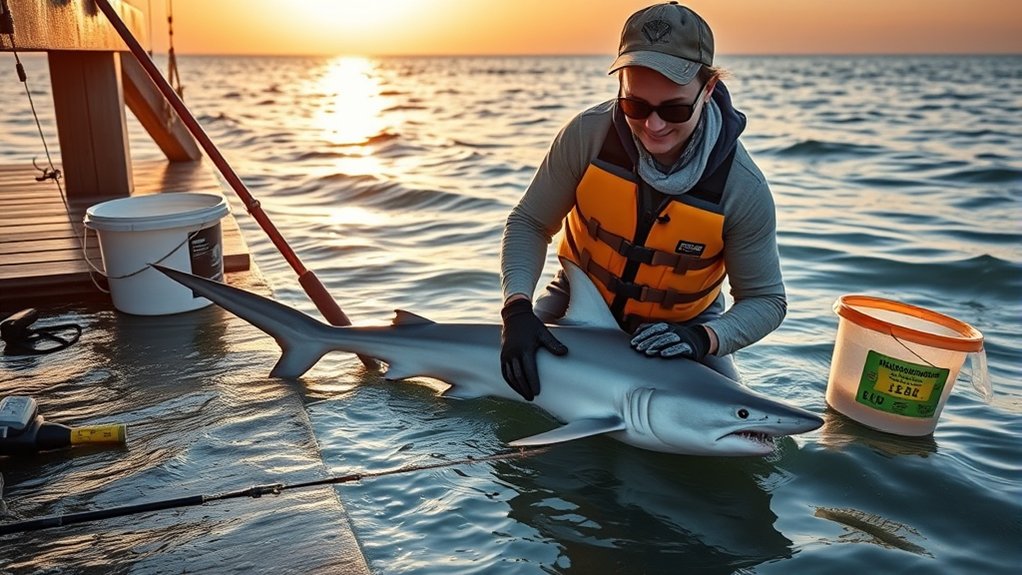
When you hook a shark, protect both human safety and the animal’s chance of survival. Prepare long-nose pliers, a long-handled dehooking tool, bolt or cable cutters, and gloves before the shark reaches the boat or shoreline. If hook removal cannot be completed quickly and safely, be prepared to cut the hook or leader close to the hook.
Keep the shark in the water whenever required and whenever conditions make that the safest release option. Use a long-handled dehooking tool to maintain distance from the mouth. Protected species may have specific rules requiring the gills to remain submerged or prohibiting removal from the water altogether.
For medium-to-large sharks, divide tasks when another capable person is present: one person controls the rod or line angle while the other handles release tools. Never bring a large shark aboard a small boat simply for a photo, and do not drag a shark onto dry sand when it must be released in the water.
If hook removal would delay release or create danger, cut the hook when practical or cut the leader as close to the hook as safely possible. Avoid leaving a long length of line trailing from the shark.
Current agency guidance emphasizes minimizing handling time and unnecessary air exposure. When helping a tired shark recover, orient its head into natural current or move it gently forward so water flows through the mouth and over the gills. Do not pull a shark backward through the water.
Quick Release Steps
- Keep the shark in the water if required by law or if removal would create unnecessary risk.
- Control the rod and leader without wrapping line around your hand or body.
- Identify the hook location from a safe distance.
- Use long-handled pliers, a dehooking tool, or appropriate cutters.
- Remove the hook only when it can be done quickly and safely.
- Cut the hook or leader close to the hook if removal would delay release or endanger anyone.
- If the shark appears tired, face its head into current or move it gently forward until water flows over the gills and the shark can swim away under its own power.
What Shark Fishing Mistakes Should Beginners Avoid?
Many shark-fishing problems begin before the first cast. Common causes include undersized tackle, weak or damaged leaders, misunderstood regulations, unsafe locations, and release tools that are still buried in a tackle box when the shark arrives.
- Using questionable bait: Use bait that is legal to possess and in good enough condition to remain securely on the hook.
- Skipping regulations: State waters, federal waters, beaches, piers, bridges, and vessels can operate under different rules.
- Using tackle that prolongs the fight: Match gear to the shark and fishing environment rather than deliberately fishing too light.
- Fishing near swimmers: Move away from swimming areas and do not create chum or bait activity around beach users.
- Taking photos before release: Prepare the camera beforehand and never delay a required or safety-critical release for a picture.
- Grabbing line barehanded: Use appropriate gloves and tools, and never wrap line or leader around your hand.
- Assuming a pier is automatically safe: Elevated structures can make in-water release difficult; check local rules and whether you can release a shark without lifting it unnecessarily.
Frequently Asked Questions
How do you shark fish for beginners?
Start by identifying local shark species and checking state and federal regulations. Choose heavy tackle that matches the sharks you expect, use a legal leader-and-hook setup, stage release tools before baiting the hook, and fish away from swimmers and other hazards. Use legal natural bait, maintain line control, and release sharks quickly when harvest is prohibited or you are practicing catch and release.
What is the best bait for sharks for beginners?
Oily natural bait is a common starting point. Mackerel, bunker, bluefish, mullet, bonito, ladyfish, and jack can work where those species are legal to possess and use as bait. Choose bait that stays firmly on the hook and confirm local bait regulations before fishing.
What is the best setup for shark fishing?
A beginner shark setup should use a medium-heavy, heavy, or extra-heavy saltwater rod; a reel with enough line capacity and smooth drag; strong main line; an abrasion-resistant leader; and a hook that complies with local rules. The exact rod power, line strength, leader, hook, and reel capacity should be matched to the expected shark, current, structure, casting or deployment distance, and release conditions.
Is 50 lb braid enough for sharks?
There is no universal pound-test answer because shark size, structure, current, distance, and local guidance vary. Fifty-pound braid may be used in some lighter applications, but it should not be treated as a general beginner standard. For example, Florida FWC’s Shark-Smart guidance recommends heavy tackle with at least 80-pound test when targeting sharks. Use gear strong enough to control the expected fish efficiently.
Should you use circle hooks for shark fishing?
Yes where regulations require them, and they are commonly used for natural-bait shark fishing because they are designed to lodge near the jaw rather than being set with a hard strike. Atlantic federal recreational shark rules generally require non-offset, non-stainless steel circle hooks on shark-targeting lines except when using qualifying flies or artificial lures. State rules can also impose circle-hook requirements.
Can you keep a shark you catch?
Only when the species, size, season, location, permit status, and applicable bag or trip limit allow harvest. Many sharks are prohibited or subject to special restrictions. If you cannot positively identify the shark and confirm the rule, release it promptly and safely.
Do you need a special permit to fish for sharks?
Sometimes. Requirements depend on the jurisdiction and fishing method. Atlantic federal recreational shark fishing requires the appropriate HMS vessel permit and shark endorsement. Some states add separate requirements; Florida, for example, requires qualifying shore-based shark anglers to complete an educational course and obtain a no-cost shore-based shark fishing permit. Check the rules for the exact water and access method you will use.
What is the best time to go shark fishing?
There is no single best time for every shark species or coast. Feeding activity changes with species, season, water temperature, bait movement, tide, and current. Instead of relying on a universal dawn, dusk, or tide rule, check local seasonal patterns and recent conditions, then fish when the location can be used safely and without conflict with swimmers or other beach users.
Conclusion
Shark fishing for beginners is mainly a preparation problem: know the species, check the rules, choose tackle strong enough for an efficient fight, use a legal bait-and-hook setup, and decide how the shark will be released before you cast.
Keep dehooking tools and cutters within reach, avoid crowded swimming areas, use chum only where legal, and keep protected sharks in the water as required. Recheck state and federal regulations immediately before each trip because shark seasons, retention rules, permits, and gear requirements can change.
Sources
- NOAA Fisheries — Atlantic Highly Migratory Species — federal shark management, permitting, gear, and recreational fishing context.
- NOAA Fisheries — Shark Species Directory — shark identification, species status, and fishery information.
- Florida Fish and Wildlife Conservation Commission — Recreational Shark Fishing — current Florida shark rules, Shark-Smart tackle, shore-based requirements, chumming rules, and release guidance.
- South Atlantic Fishery Management Council — Best Fishing Practices — general release-focused fishing practices, handling guidance, and dehooking principles.
