
Centerpin fishing uses a freely rotating float reel, a long rod, floating mainline, a float, split shot, a swivel, and a lighter leader to produce a controlled downstream presentation in moving water. For a general Great Lakes steelhead setup, an 11- to 13-foot float rod, a reel around 4.5 inches, 8-12 pound floating monofilament mainline, and a 4-8 pound leader are practical starting points. Heavier salmon or stronger current may require heavier tackle.
You get the biggest advantage from a centerpin when you learn to control spool speed, keep excess line from dragging the float, set the correct depth, and adjust your shot pattern as the river changes. Those skills matter more than simply casting farther.
Last updated: September 22, 2026. Editorial note: The setup ranges and equipment details below were cross-checked against current manufacturer and specialist centerpin guidance. This guide does not claim in-house field testing.
Quick Answer
Centerpin fishing uses a freely rotating reel and a long float rod to feed line smoothly while a float carries bait downstream. For steelhead, a practical beginner baseline is an 11- to 13-foot rod, a centerpin reel around 4.5 inches, 8-12 pound floating monofilament mainline, and a lighter 4-8 pound leader. Build the rig in this order: mainline, float, split shot, swivel, leader, then hook and bait.
Key Takeaways
- A traditional centerpin reel spins freely so the float can pull line from the spool with very little resistance.
- An 11- to 13-foot float rod covers many steelhead situations, with 13 feet being a versatile starting length for open medium-size rivers.
- For many Great Lakes steelhead conditions, 8-12 pound floating mono mainline paired with a lighter 4-8 pound leader is a practical baseline.
- Drift speed, depth, shot pattern, and float balance usually matter more than maximum casting distance.
- Fishing regulations vary by river, season, and species, so confirm current local rules before using bait, hooks, scent, or specialized rigs.
At a Glance
| Time Required | Rigging becomes quick once familiar; consistent casting and drift control develop through repeated practice |
| Difficulty | Beginner to intermediate |
| Tools Needed | Centerpin reel, float rod, mainline, leader, float, split shot, swivels, hooks, bait or legal artificial presentation, forceps, landing net, and vest or pack |
| Cost | Varies widely by rod and reel; prioritize smooth spool operation, rod balance, and correct line before premium materials or cosmetic upgrades |
Understanding Centerpin Fishing
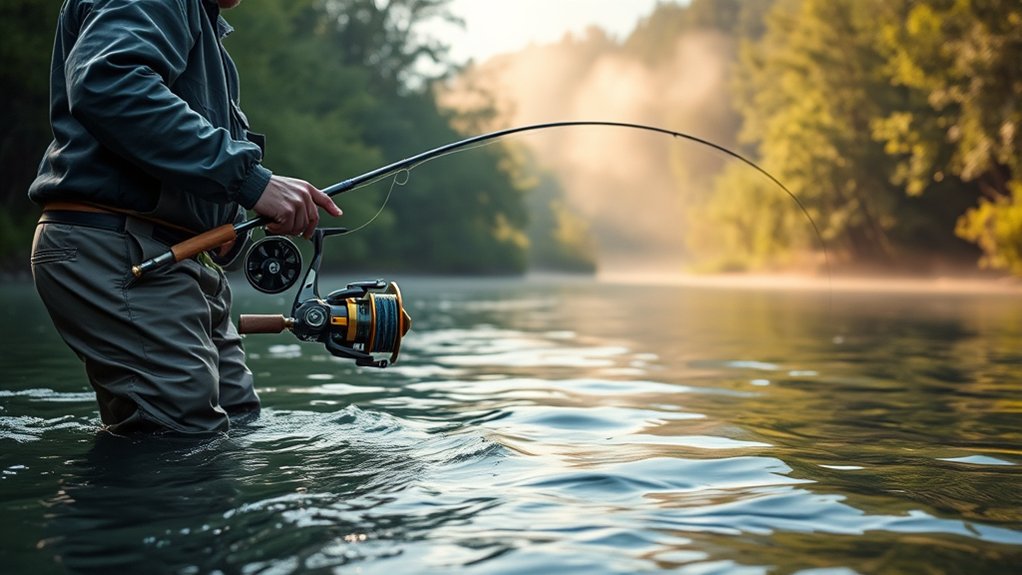
Centerpin fishing is a float-fishing technique built around controlled line feed. A long centerpin rod helps keep unnecessary line off the water, while the reel lets current pull line from the spool with very little resistance. The goal is to let your bait or artificial presentation travel through a river lane without the mainline dragging the float unnaturally.
Steelhead, salmon, and river trout are common targets. The method is especially useful in long seams, pools, runs, tailouts, and current transitions where you can follow the float for an extended drift.
Traditional centerpin reels do not use a conventional mechanical drag during the fight. Instead, the angler applies controlled pressure to the exposed spool rim with a hand or finger. Some modern float reels add mechanical drag, so check the design of your specific reel before fishing. Retailer guidance from FishUSA distinguishes traditional no-drag centerpins from newer drag-equipped models.
Your terminal rig matters just as much as the reel. The float must support the shot pattern, the leader should suit the water clarity and fish size, and the depth must keep the bait near the holding zone without constantly snagging bottom.
Watch the float for a clean submersion, pause, twitch, sideways movement, or other change that does not match the current. When something looks wrong, remove slack and make a controlled hook set rather than a violent jerk.
Note: The free drift is the easy part to understand. The real learning curve is controlling spool speed, preventing cross-current line belly, setting depth, casting without overruns, and changing the rig as current speed and depth change.
Essential Gear for Centerpin Fishing

A basic centerpin system only needs a few matched components. If you are brand new to tackle, our beginner fishing checklist guide covers general fishing tools and safety items before you build a specialized float setup.
- Centerpin Reel: A reel around 4.25 to 4.5 inches is common for steelhead float fishing. Smooth startup, an exposed spool rim, balance, and reliable bearings or bushings matter more than cosmetic features. Okuma’s current RAW-II, for example, uses a 4.5-inch spool.
- Float Rod: An 11- to 13-foot rod covers many common steelhead situations. A 13-foot rod is a useful all-around length when you have enough casting room.
- Mainline: For many Great Lakes steelhead conditions, start with 8-12 pound floating or easy-to-mend monofilament. Heavier line may be appropriate for larger salmon, powerful current, or heavier terminal tackle.
- Leader Line: A 4-8 pound fluorocarbon or suitable leader material is a common steelhead range. Use the heavier end around larger fish, stronger current, or abrasive cover, and lighter line only when conditions and fish size allow it.
- Floats: Carry more than one buoyancy rating. The float must support the total shot and bait weight without riding excessively high.
- Split Shot: Use enough weight to reach the target depth while keeping the rig balanced. A graduated pattern can help the terminal tackle settle progressively instead of collapsing in one heavy clump.
- Swivel: A small swivel creates a clear connection point between the mainline side of the rig and the lighter leader.
- Hooks: Match hook style and size to your legal bait or artificial presentation rather than choosing one hook size for every situation.
- Accessories: Carry forceps or pliers, spare leader, extra floats, split shot, swivels, hooks, a landing net, line cutters, and a vest or pack.
Current manufacturer guidance shows how broad the category can be. Douglas Outdoors’ centerpin guide lists 11- to 13-foot rods, 8-12 pound high-visibility mono, and 4-8 pound fluorocarbon leader as common steelhead starting points. Shimano’s current centerpin lineup also includes dedicated 11- and 13-foot models.
Setting Up Your Centerpin Rig

Build your centerpin rig in a consistent order so every component has a clear job. The exact float, shot, leader, and hook will change with the river, but the basic layout stays simple.
| Order | Component | Job |
|---|---|---|
| 1 | Mainline | Feeds from the reel and carries the float rig |
| 2 | Float | Shows the drift and suspends the terminal rig |
| 3 | Split Shot | Gets the presentation down and controls how it settles |
| 4 | Swivel | Creates a connection point and can reduce line twist |
| 5 | Leader | Provides a lighter, replaceable connection to the hook |
| 6 | Hook + Bait | Presents the legal bait, bead, jig, worm, or other offering |
Selecting the Right Reel
A first centerpin reel should start easily, continue spinning smoothly, and balance the rod comfortably. You do not need the largest reel available.
- Spool Diameter: Reels around 4.25 to 4.5 inches are common steelhead choices. A larger diameter picks up more line per spool revolution, but reel weight and balance matter too.
- Spool Startup: The float should be able to pull line from the reel without excessive resistance. Smooth bearings or properly maintained bushings are more important than a long unloaded spin test by itself.
- Spool Rim: An exposed rim lets you feather the reel during a cast and apply pressure while fighting a fish.
- Retrieve Direction: Choose the direction that lets you keep your preferred hand on the rod. Many traditional centerpins can be fished left- or right-hand retrieve by spooling them appropriately, but always follow the specific reel’s instructions.
- Balance: Mount the reel where the rod feels neutral enough to hold comfortably through repeated drifts.
The current Okuma RAW-II Float Reel is one example of a traditional-style float reel with an exposed spool rim, two bearings, and an on/off click ratchet. Its spool diameter is 4.5 inches.
How to Spool and Mount a Centerpin Reel
Before adding line, decide which side of the rod you want the reel handles on and check the reel manual for its retrieve-direction instructions. Traditional free-spool centerpins can often be used in either direction, while drag-equipped models may require a specific conversion procedure.
- Mount the reel first: Position it in the reel seat or sliding rings so the outfit feels balanced in your normal grip.
- Check whether backing is appropriate: Some anglers use inexpensive backing so they do not have to fill the entire spool with fishing mainline. Follow the reel manufacturer’s capacity guidance rather than guessing how much backing to add.
- Attach the line securely: Tie the backing or mainline to the spool with a suitable arbor connection.
- Spool under light, even tension: Loose line can create coils, overruns, and tangles during casting.
- Do not overfill: Leave enough room that the line does not spill over the spool rim during handling or casting.
Spooling details differ among reel designs, so treat the reel manual as the final authority for capacity, retrieve conversion, lubrication, and clicker operation.
What Centerpin Rod Length Should You Use?
Rod length affects line control, casting room, fatigue, and the amount of mainline that touches the water. Current dedicated centerpin models commonly sit around 11 to 13 feet, while longer specialty rods are available for bigger water.
| Rod Length | Best For | Trade-Off |
|---|---|---|
| About 10-11 feet | Tighter streams, brush, limited casting room | Easier handling but less reach for long line control |
| About 12-13 feet | General steelhead rivers | Strong balance of casting room, mending, and fish control |
| About 14-15+ feet | Wide rivers and specialized long-drift fishing | More reach, but heavier and less convenient in confined water |
As one current manufacturer reference, Shimano’s Compre Salmon/Steelhead Centerpin line includes dedicated 11- and 13-foot models with moderate actions.
How Should You Set Up the Leader, Float, and Shot?
Your float, shot, leader, and hook need to work as one system. A float that is too buoyant, a heavy clump of shot, or a leader that is too strong for the conditions can make the presentation harder to control.
- Mainline and Float: Install the float according to its fixed-float or slip-float design and make sure its buoyancy can support the shot below it.
- Shot Pattern: Add enough split shot to reach the target depth without overloading the float. Graduating the shot from heavier pieces higher in the rig to lighter pieces toward the leader can create a more progressive sink.
- Swivel: Use a small swivel below the shot pattern when your rig design calls for one.
- Leader: For many steelhead situations, begin around 4-8 pound test and adjust for water clarity, current, fish size, and abrasion risk.
- Leader Length: A leader of roughly 2 to 4 feet is a useful starting range for many float rigs, but depth, clarity, bait style, and local rules should determine the final length.
- Hook: Match the hook to the bait or artificial presentation and keep the point sharp.
Pro Tip: If the float repeatedly leans, drags, stalls, or races ahead, check depth and shot balance before changing bait. Surface bubbles are a useful reference, but the current around your bait can move at a different speed from the surface.
How Do You Cast and Control a Centerpin Drift?
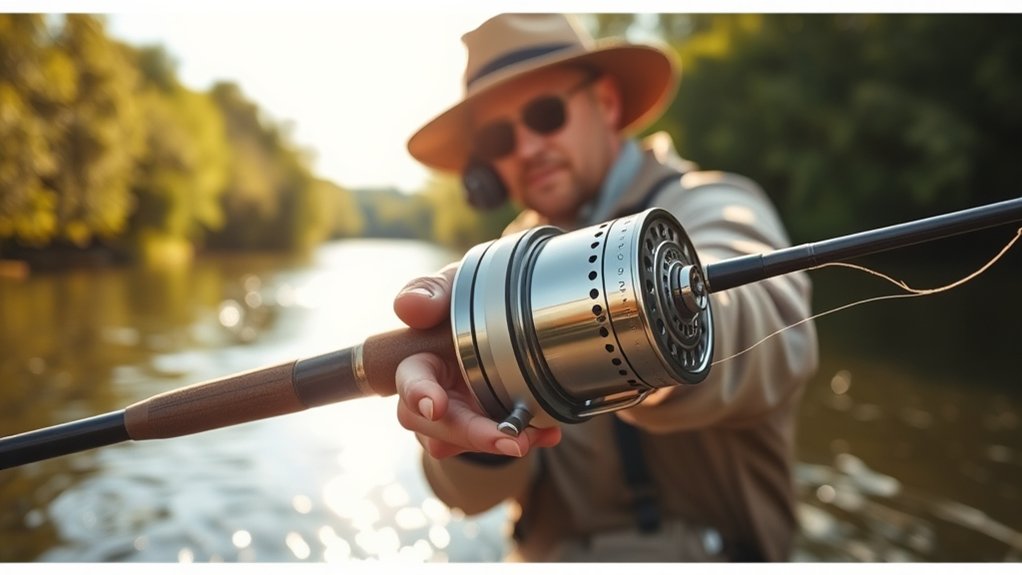
A centerpin does not cast like a spinning reel. You control the spool directly, so start with short, repeatable casts before trying to reach the far bank.
Beginner Pull or Pendulum Cast
For early practice, pull a manageable amount of line from the reel, let the weighted float rig hang safely away from the rod tip, and use a smooth pendulum-style swing to send the rig upstream or across the current. Release the prepared line cleanly and feather the spool rim so it does not overrun.
This simple cast teaches three things at once: how quickly the spool starts, how much pressure stops it, and how the float behaves when it lands. Practice accuracy before distance.
Wallis or Pull Cast
The Wallis cast is a more advanced direct-from-the-spool technique. As the rod accelerates forward, the line hand pulls line from the reel to start the spool rotating. The spool then continues feeding line as the rig travels outward. Your casting hand feathers the rim to control spool speed and stops it as the float lands.
This cast requires timing. Learn it gradually with an open casting lane because too much spool speed creates overruns, while too much braking kills distance. Established centerpin casting references also describe the Wallis or pull cast as a technique that depends on coordinating the line pull, rod movement, and spool control.
Controlling the Drift
After the float lands, allow the current to pull line from the reel while keeping unnecessary mainline from forming a large downstream belly. Use the long rod to reposition or mend the line without yanking the float out of its lane.
Do not automatically force the float to match every bubble you see. Surface water and subsurface water can move at different speeds. Instead, watch the whole rig: if the float leans downstream, repeatedly stalls, races ahead, or constantly hangs bottom, adjust line tension, depth, shot placement, or your casting angle.
Work through a run systematically. Start near the top, make several clean drifts through a lane, then change the angle, depth, or position before moving downstream. Current seams, soft edges, pool heads, tailouts, troughs, and current breaks are all worth testing.
Setting the Hook and Fighting Fish
When the float disappears or changes direction unnaturally, remove slack and sweep the rod firmly rather than making an exaggerated snap. The long rod helps absorb shock and protect a lighter leader.
With a traditional no-drag centerpin, apply pressure to the exposed spool rim gradually as the fish runs. Do not clamp the spool suddenly unless you need to prevent an immediate collision with cover. Too much pressure can break a light leader; too little can allow the fish to gain unnecessary line. Drag-equipped centerpin reels should be used according to their manufacturer’s instructions.
How Do You Read Water for Better Centerpin Drifts?
Reading water decides where your carefully rigged presentation actually travels. Look for places that give fish slower holding water beside faster current carrying food.
Good centerpin water often includes:
- Current seams: Boundaries where faster and slower current meet.
- Pool heads: Areas where incoming current enters deeper water.
- Tailouts: The lower end of a pool where depth decreases and migrating fish may stage.
- Soft edges: Reduced current near banks, rocks, logs, bends, and other breaks.
- Depth changes: Troughs, ledges, slots, and drop-offs that provide holding water.
- Bubble lines: Useful surface clues showing a current lane, although they do not guarantee that your bait is moving at the same speed below the surface.
Start by observing foam, bubbles, debris, and obvious current boundaries. Then make controlled drifts through several lanes. If the rig constantly hangs up, shorten the depth slightly. If it never approaches the expected strike zone, increase depth or adjust the shot so the bait settles sooner.
How Should You Choose Bait for Centerpin Fishing?
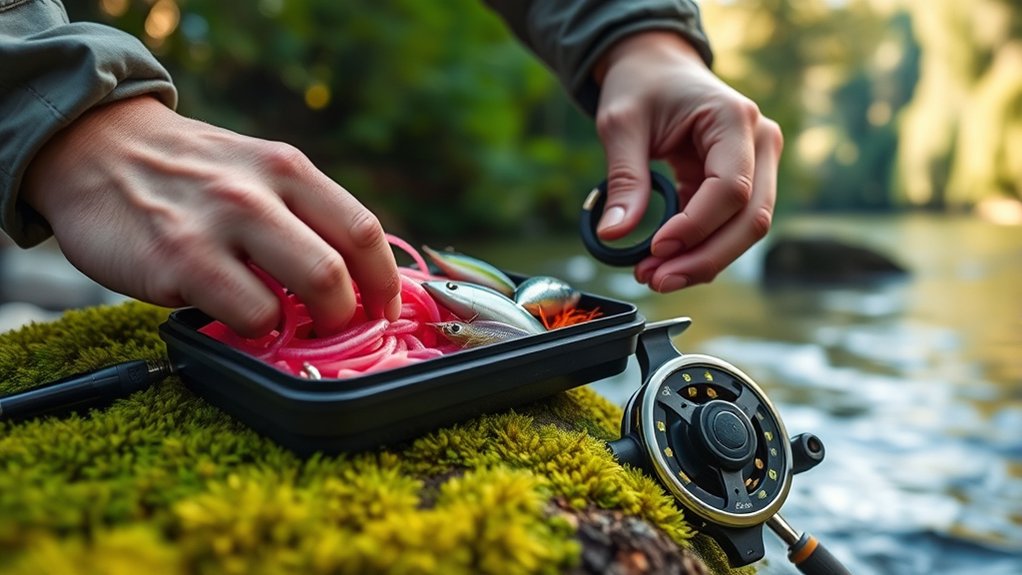
Choose bait or artificial presentations according to target species, local rules, water clarity, current, depth, and fishing pressure. The reel does not make one bait universally better; its advantage is presenting whatever you legally use with precise float control.
- Start with a confidence presentation: Use one legal bait, bead, worm, or jig you understand well before rotating through many options.
- Adjust depth first: A good bait outside the holding zone is unlikely to be effective.
- Change profile gradually: In clear water, smaller and subtler presentations can be useful. In stained water, a more visible profile may be easier for fish to locate.
- Change one variable at a time: Adjust depth, drift lane, size, color, or bait separately so you can tell what changed the response.
Common centerpin presentations include roe bags where legal, beads or egg imitations, worms, small jigs, wax worms, nightcrawlers, and other float-fished offerings. The legal choices vary considerably between fisheries.
Warning: Bait, hook, scent, season, harvest, and tackle restrictions can change by river and by section of the same river. For example, New York applies special hook and fishing-method rules to portions of the Salmon River during part of the year. Always check the current regulations for the exact water you plan to fish.
Common Centerpin Fishing Mistakes
Most beginner problems come from losing control of depth, line, or spool speed rather than from using the wrong brand of reel.
- Overweighting the rig: Excessive shot can make the float difficult to read and cause the terminal tackle to drag unnaturally.
- Fishing too shallow: If the presentation stays above holding fish, even a clean drift can pass unnoticed.
- Fishing too deep: Constant bottom contact, snagging, or an upstream-leaning float can indicate excessive depth.
- Allowing a large line belly: Cross-current mainline can pull the float faster or slower than the intended lane.
- Trying to cast too far too soon: Learn spool control and accurate short casts before increasing distance.
- Stopping the spool abruptly: Sudden pressure can break light leaders during the fight.
- Ignoring reel balance: A reel mounted in an uncomfortable position makes a long rod more tiring to control.
- Changing bait before fixing presentation: Correct depth, drift speed, and shot balance before assuming the bait is the problem.
- Staying in one lane too long: After several controlled drifts, adjust depth, angle, presentation, or position.
Tips for Improving Your Centerpin Skills
Improve one skill at a time. During your first sessions, prioritize short accurate casts and clean spool control. Once those become consistent, focus on line management and depth adjustments. Distance can come later.
Watch fishing conditions. Water clarity, current speed, depth, temperature, and fishing pressure can change where fish hold and how visible your presentation should be. Rising or colored water may push fish toward softer edges, while clear water may reward quieter approaches and lighter terminal tackle.
Use a leader strength that matches the fish and environment instead of following a fixed “two pounds lighter” rule. For many Great Lakes steelhead situations, 4-8 pound leader material is a practical range beneath an 8-12 pound mainline. Larger salmon, strong current, or abrasive structure may justify heavier tackle.
Practice knots before you need them in cold or fast water. Our fishing knot practice guide covers basic line-to-hook and line-to-line skills that are useful when rebuilding leaders on the river.
Finally, diagnose the presentation before rotating through tackle. If your float moves unnaturally, fix the line or shot. If you keep touching bottom, change depth. If the drift is clean but fish ignore the offering, then experiment with bait size, profile, or color. If you want to broaden your options beyond natural bait, see our artificial bait fishing techniques.
Safety and Fishing Etiquette
Centerpin fishing often takes place in cold, fast, slippery water. Wear footwear appropriate for the river bottom, use a wading belt with chest waders, and do not enter current that exceeds your ability or safe footing. Cold-water immersion can become dangerous quickly even when the air temperature feels comfortable.
Give other anglers enough room to complete their drifts. On rivers where anglers work downstream through a run, avoid stepping directly below someone who is actively fishing or casting across another person’s float.
Handle released fish with care. Wet your hands first, support the fish rather than squeezing it, minimize time out of the water, and follow any local rules governing wild fish, protected populations, harvest, or mandatory release.
Regulations are location-specific. New York’s Great Lakes and tributary regulations, for example, show that hook and fishing-method restrictions can change by waterbody, river section, and season. Use the current regulations from the agency responsible for the exact water you are fishing.
Related Guides
Frequently Asked Questions
What is a good centerpin setup for beginners?
For general steelhead fishing, a practical beginner setup is an 11- to 13-foot float rod, a centerpin reel around 4.5 inches, 8-12 pound floating monofilament mainline, a suitable float and shot pattern, a small swivel, and a 4-8 pound leader. A 13-foot rod is a versatile choice when you have enough casting room. Increase tackle strength for larger salmon, powerful current, or abrasive cover.
How do you cast a centerpin reel for beginners?
Start with short pull or pendulum-style casts. Pull off a manageable amount of line, swing the weighted float rig smoothly toward the target, release the prepared line, and feather the spool rim to prevent an overrun. Once you can control short casts, learn the Wallis or pull cast, which starts the spool by pulling line from the reel as the rod accelerates forward.
How do you set up for centerpin fishing?
Mount and spool the reel according to its manual, then build the fishing rig in this order: mainline, float, split shot, swivel, lighter leader, and hook with your legal bait or artificial presentation. Adjust float depth and shot placement until the rig reaches the holding zone without constantly dragging bottom.
What line should you use on a centerpin reel?
For many Great Lakes steelhead situations, 8-12 pound floating or easy-to-mend monofilament is a practical mainline range. Pair it with a lighter 4-8 pound leader when conditions allow. Larger salmon, heavy current, or abrasive cover may require stronger line. Braided line can also be used in some centerpin systems, but floating mono is a straightforward starting choice for beginners.
Do centerpin reels have drag?
Traditional centerpin reels normally rely on a freely rotating spool rather than a conventional mechanical drag. The angler controls pressure by palming or feathering the exposed spool rim. Some modern float reels include mechanical drag systems, so check the specifications and instructions for your exact reel.
Is centerpin fishing hard to learn?
The basic rig is simple, but spool control, casting, line management, depth adjustment, and reading current take practice. Beginners usually improve faster by learning accurate short casts and clean drifts before working on long-distance casting.
Can you use a centerpin reel for trout?
Yes. Centerpin reels work for river trout wherever float fishing is legal and practical. Trout setups can use smaller floats, lighter leaders, smaller hooks, and more subtle presentations than setups intended for larger steelhead or salmon.
Conclusion
Centerpin fishing works because it gives you unusually direct control over a float moving through current. Start with a balanced 11- to 13-foot rod, a smooth centerpin reel, manageable floating mainline, a lighter leader, and a correctly balanced float rig. Then spend your practice time on short casts, spool control, depth, and clean drifts rather than chasing maximum distance.
Once those basics are consistent, refine how you read seams, tailouts, soft edges, and depth changes. Adjust one variable at a time so you can tell whether depth, shot pattern, line control, or bait made the difference. Most importantly, check the current rules for the exact river you fish before choosing bait, hooks, tackle, or harvest plans.
Sources
- Douglas Outdoors — Centerpin Fishing 101: Setup, Gear, and Proven Tips for Success — current guidance on centerpin rod length, mainline, leader, floats, shot, and basic drift technique.
- Okuma RAW-II Float Reel — manufacturer reference for a current traditional-style centerpin reel, including construction and reel features.
- Shimano Compre Salmon/Steelhead Centerpin — manufacturer reference for current 11- and 13-foot dedicated centerpin rod configurations and line ratings.
- New York State DEC — Great Lakes and Tributaries Special Regulations — example of river-, section-, and season-specific steelhead and salmon fishing rules.
